



WWW.THECOLLECTOR.COM
8 Black Inventors Who Changed the World
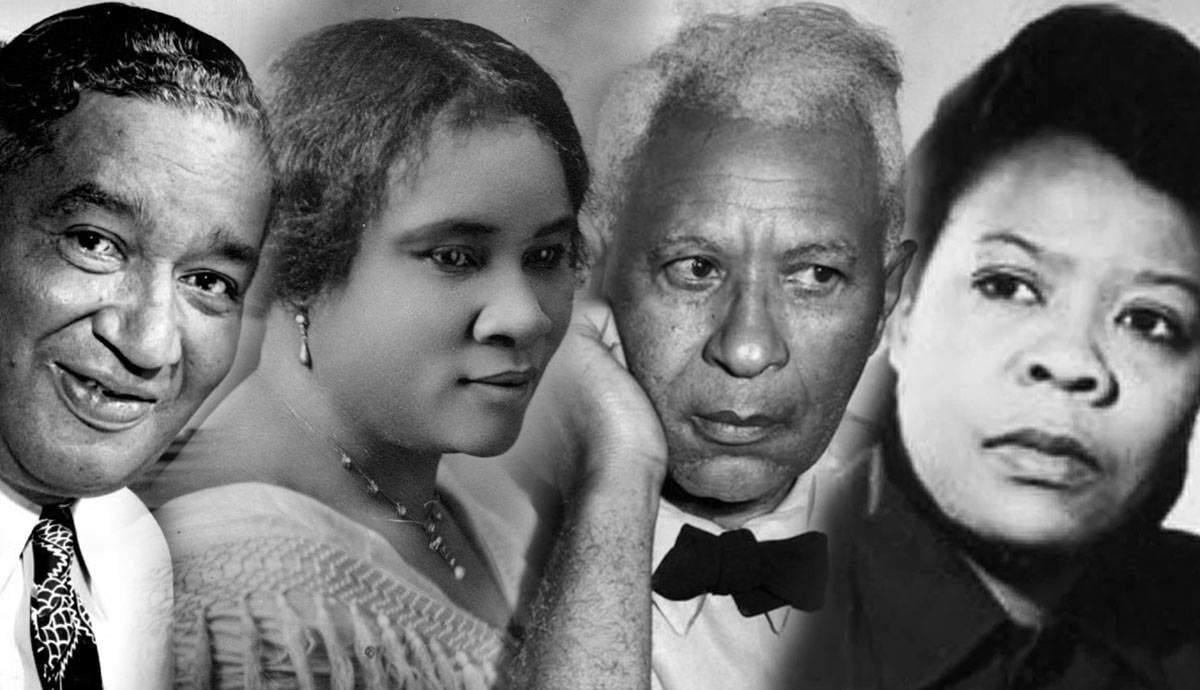
Thousands, perhaps millions, of people have been credited with inventions throughout human history. Whether large or small, these inventions change how people live in fundamental ways. As in so much of history, however, contributions from traditionally marginalized groups are often overlooked. African Americans have produced numerous inventions that have shaped the world as we know it yet have often gone unrecognized. From traffic lights to color monitors, here are eight inventions from Black Americans that have revolutionized American life.1. Marie Van Brittan Brown: Home Security SystemsMarie Van Brittan Brown. Source: Brinks Home SecurityIts hard to believe that the modern home security system did not exist until 1966. But thats the year Marie Van Brittan Brown (1922-1999) filed for a patent for her innovative home monitoring system. Brown lived in Queens, New York, in the 1960s. At that time, it was not a safe neighborhood to live in, and her husband worked irregular hours. This meant that she was often alone during the day or during the night. Police response also left something to be desired, so Marie decided to take her safety into her own hands.Illustration from Browns 1969 patent for a home security system. Source: U.S. Patent and Trademark OfficeBrowns system had peepholes of varying heights, with a camera on the opposite side that showed what was outside. Essentially, this allowed someone inside to see who was at the door. The camera was accompanied by a microphone to be able to communicate. The final component was a button that could alert the police if there was an intruder.Though basic by todays standards, Browns invention became the basis of modern home security systems, which still function largely the same way.2. Elijah McCoy, Ironing BoardElijah McCoy. Source: BiographyElijah McCoy (1844-1929) was a brilliant man with 57 patents to his name. Hes even believed to be the origin of the phrase the Real McCoy. One of his most notable creations is an oil cup that allowed trains to be lubricated while the train was moving; prior to this, a train needed to be stopped to be oiled. That, however, is an invention that most people would never come into contact with. The invention people are most familiar with is also likely something theyve never thought twice about: an ironing board.Fashion lovers and history buffs alike often find the Victorian era in which McCoy lived to be one of the most interesting when it comes to dress. There were large hats and even larger dresses. Yet even those deeply interested in the period have probably never considered how they kept those layers and layers of garments wrinkle-free.McCoy patented a moveable ironing board, something almost every house has today. It came to be in 1874 and allowed peopleor rather, womento iron out wrinkles on an even surface. Moveable is also an important keyword here. McCoys invention allowed women to take the ironing board wherever they needed because it was both light and easy to fold up without assistance.3. Garrett Morgan, Traffic LightsGarrett Morgan. Source: Cleveland.comThe concept for the automobile dates back as far as 1885. For most drivers today, traffic signs and their popular counterpart, traffic lights, are a part of everyday life. One might even assume that they have always been coupled together. After all, creating traffic must mean that traffic lights followed, right? Well, not exactly.The traditional three-signal light in use today was first patented by Garrett Morgan (1877-1963) as a three-position traffic signal in 1923, nearly 40 years after automobiles were invented. Prior to the three-signal lights, there were only two-signal lights that were stop or go. The lights were also manually operated.With pedestrians, automobiles, bicycles, and horses on the roads, accidents were inevitable. The three-signal traffic light increased safety for all by adding an extra interval between stop and go, providing extra time to appropriately respond to the changing light.4. Alexander Miles, Automatic Elevator DoorsAlexander Miles, c. 1895. Source: Duluth Public LibraryModern department store shoppers, busy moms pushing strollers, and high-rise residents, among others, use elevators every day and probably never stop to appreciate that the doors close automatically behind them. But this wasnt always the case.When elevators were first invented, riders (or operators) needed to manually open and close the elevator doors. Elevators did not wait for doors to close before moving. Open elevator doors meant that someone could fall to their death if they did not pay attention.Alexander Miles (1838-1918), a barber by trade, addressed the problem of manual elevator doors with his invention: the automatic door closing system. He made elevators safer by attaching a belt to the elevator shaft, which allowed doors to open and close as the elevator moved floors with a series of levers. He was awarded a patent for his invention in 1887.5. Frederick McKinley Jones, Truck RefrigerationFrederick McKinley Jones. Source: BiographyPrior to the 1920s, food could not easily be transported long distances if it was perishable. There was no refrigeration on trucks to keep food cold like we see today, and the traditional methods of ice blocks and salt for preservation were not effective over great distances.In 1938, Frederick McKinley Jones (1893-1961) is credited with creating the first refrigerated unit. Jones creation was a small unit with a compressor that kept the food on board at a cooler temperature. With the cooling unit, foods could travel farther and longer, increasing the food supply network across the United States. His invention was used not only in trucks; it was also found on railroad cars, ships, and planes.Jones, who went on to co-found Thermo King Corp to mass produce his refrigeration device, revolutionized food transport in the US, which led him to be the first Black American to be awarded the National Medal of Technology.6. Patricia Bath, Laser Cataract TreatmentDr. Patricia Bath. Source: BiographyCataracts are an eye condition that causes cloudiness on the lens of the eye; the eyes may look almost white in severe cases. Cataracts are not only a change in appearance; they also make it more difficult to see, and for much of history, treatment was riskyClaude Monet famously refused to have cataract surgery for fear it would jeopardize his painting.Dr. Patricia Bath (1942-2019), an ophthalmologist and the first woman to chair an ophthalmology residency program in the US, is credited with creating the laserphaco probe, which is today used to treat cataracts. Initially inspired by the many blind patients she encountered while working at Harlem Hospitals Eye Clinic, it took Bath over five years of research and testing to create the final patented product. The procedure was revolutionary when it came out and recovered the site of countless people who were otherwise blind from cataracts.7. Mark Dean, Innovating Personal ComputersPhoto of Mark Dean. Source: Unique ColoringConsidering the nontraditional faces of technological inventionthat is, not white and maleAva Lovelace, who wrote the first algorithm for a machine, often comes to mind. But Lovelace is just one of many who broke the mold in the realm of technology and computing.Mark Dean (1957- ), an electrical engineer then employed by IBM, helped develop the ISA slot. Essentially, this slot allowed users to plug external equipment, like microphones, memory discs, printers, and monitors, into their computers. Such a small invention allowed computers to become more usable and accessible, ultimately evolving into the technology that reigns today, the PC: Personal Computer.Dean also helped develop something taken for granted today: color monitors. While it would be a challenge to find a black-and-white monitor in 2025, just a few decades ago, the color monitor was simply a dream. His team at IBM also created the first gigahertz chip, dramatically increasing PCs data processing speeds. In 1995, Dean was named IBMs first Black fellow. He retired from the company in 2013 with more than 20 patents to his name.8. Sarah Breedlove Walker, African American Beauty ProductsMadam C.J. Walker c. 1912 by Addison Scurlock. Source: SmithsonianFor much of history the standard of female beauty was, and often still is, pale and blonde, and beauty products have been designed for women who meet that standard. The millions who do not have been largely ignored.Sarah Breedlove Walker (1867-1919) answered the call of Black women. Early in her life, Walker struggled with hair loss and began to experiment with different hair care formulas to address her needs. Her products softened her hair, eased scalp irritation, and helped her hair regrow. She renamed herself Madam C. J. Walker and began to advertise her products to the world once she found a formula that worked. Her products were made specifically for African American hair texture.As Madam Walker continued to sell her products in the 1910s and 1920s, she became the first Black, female self-made millionaire in the United States. By addressing the concerns of her community, she was able to gain wealth and, in return, gave large sums of her money back to the community. In addition, she hired and trained Black women to work for her company, empowering them financially at a time when low-paying domestic labor was their primary option.
0 التعليقات
0 المشاركات
7 مشاهدة






 English
 French
 Spanish
 Portuguese
 Deutsch
 Turkish
 Dutch
Dutch
 Italiano
 Russian
 Romaian
 Portuguese (Brazil)
 Greek
Greek