How Historically Accurate Is the History Channels Vikings?
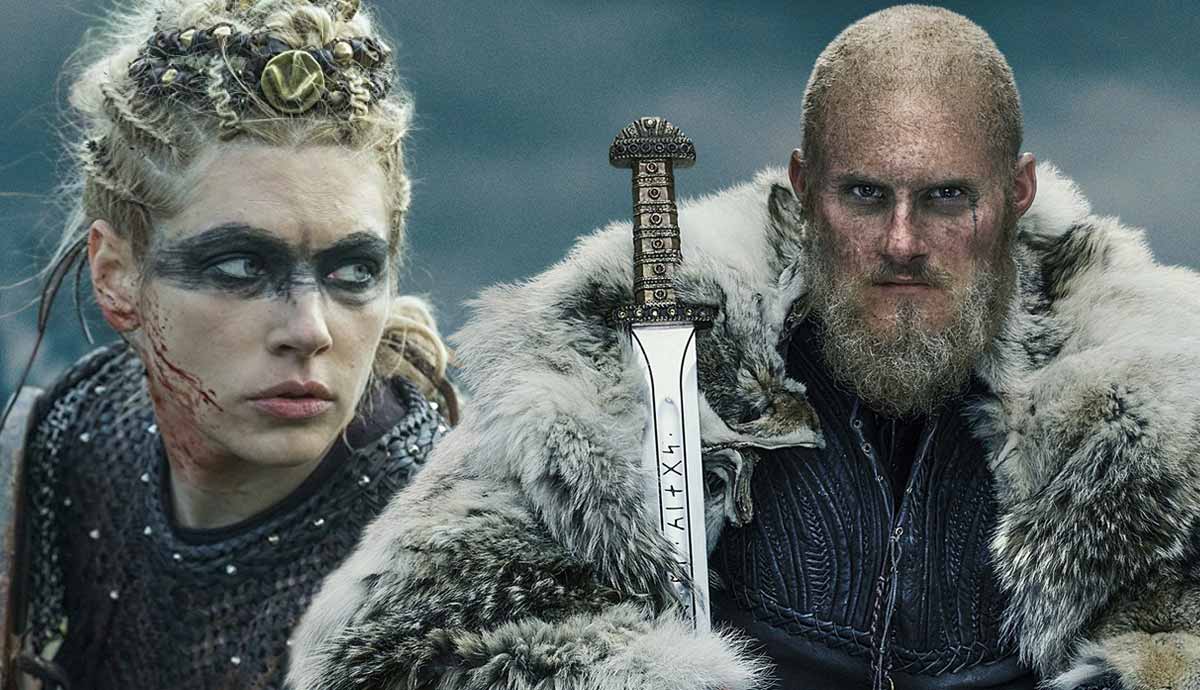
Launched in 2013 and running for six seasons, the History Channels Vikings has become a pop-culture phenomenon. Initially meant to be a limited mini-series, its popularity not only gave us 89 episodes of the original series but also three seasons of Vikings: Valhalla, set around 100 years later. The creator, Michael Hirst, is also said to be working on a new project called Bloodaxe, which will no doubt be set in the same universe but focus on the famous Viking Erik Bloodaxe. With the original program, the History Channel created a realistic world grounded in Viking history, while taking artistic license to propel the drama forward and keep viewers engaged. The result is certainly fun to watch, but how closely does it reflect real Viking history?Ragnar LodbrokStill of Travis Fimmel as Ragnar Lodbrok, Vikings (2013-). Source: History ChannelThe series casts Ragnar Lodbrok and his sons as its main characters. Ragnar is played by the charismatic Travis Fimmel, whose portrayal is a major component of the shows immediate popularity.Ragnar almost certainly was a real historical person who probably lived in the late 8th or early 9th century. However, he was already legendary by the time the story of Ragnar and his sons was recorded in several Icelandic sagas in the 13th century. In those sagas, he is larger than life, and his exploits have been embellished with fantastical tales. For example, he supposedly slew a dragon. He is also linked to the royal families of Denmark, Sweden, and Norway, muddying the waters of his identity and suggesting that they were all keen to claim his legacy. The creators of Vikings follow the precedent of the authors of the sagas by embellishing Ragnars life story.The series begins with Ragnar discovering the neighboring island of England, where they encountered a poorly defended monastery that offered easy pickings. As well as looting the monastery for gold, they kidnap the monks and take them back to Scandinavia. This is how the monk Athelstan finds himself in the Viking community, which we observe through his eyes. The budding friendship between Ragnar and Athelstan is another central part of the story.Still of George Blagden as Athelstan, Vikings (2013-). Source: History ChannelThis casts Ragnar as one of the raiders of Lindisfarne monastery, which happened in 793 CE, and marks the start of significant Viking raids in England. However, it is not true that the Vikings did not know about England before this time. The Old English poem Beowulf is a testament to contact between England and the Vikings as early as the 7th century CE. The Viking raids in England saw many people brought back as slaves, either to work on farms in Scandinavia or sold on to the east. Slaves were the biggest commodity traded by the Vikings.However, Ragnar probably was not involved in the first raids on England, as he was probably born about a generation later than those Vikings at the start of the 9th century. We know from Frankish accounts that he was involved in the sack of Paris in 845, which is portrayed in season three of Vikings. However, the ruse to enter the city in which Ragnar pretends to be dead, and his body is allowed to enter the city, does not belong to his story. This is borrowed from a later story about his son Bjorn Ironside, who used this strategy to breach the walls of Luna in Italy. Ragnars brother Rollo can be identified with Rollo of Normandy, a Viking who became the Count of Rouen and then the first ruler of Normandy. But there is no evidence that he was related to Ragnar, and he was famous for his involvement in a later siege of Paris, in 885-886. He was believed to be married to Gisela of France, who the series portrays.Still of Travis Fimmel as Ragnar Lodbrok being led to execution, Vikings (2013-). Source: History ChannelHowever, the sagas do describe Ragnar as leading later raids on England in the mid-9th century, killing King Hama of Northumbria and various Scottish leaders. We see this in the series, with Ragnar making an enemy of Aella of Northumbria. However, the series focuses on a relationship between Ragnar and King Ecbert of Wessex, who lived about a generation before Ragnar (c. 770-839 CE) but did fight the Vikings in the final years of his reign.In one version of his life, as Ragnar aged, he began to worry that he was being eclipsed by his sons. To prove himself, he decided to conquer England with just two ships. He was defeated, captured by the Northumbrians, and executed by being thrown into a snake pit, a horrifying way to die recreated by the series. The story of Ragnars flirtation with Christianity is possible, but the Vikings would not seriously begin converting to Christianity for another 150 years.Ragnars Sons & WivesStill of Katheryn Winnick as Lagertha, Vikings (2013-). Source: History ChannelMany of the other main characters in the series are Ragnars sons and wives. In the series, his most important wife is Lagertha, played by Katheryn Winnick, another fan favorite.In the show, Lagertha is Ragnars first wife, and she has already made a name for herself as a shieldmaiden. According to the sagas, Ragnar attacked King Fro of Sweden for killing his grandfather, King Siward of Norway. Women from the royal household, whom Fro had banished to a brothel, dressed as men and joined the fight, including Lagertha. She was so courageous in the battle that Ragnar credits her with winning the day, and he starts to pursue her romantically. They marry in Norway and have a son, Friedlief, and two daughters.After a while, Ragnar must return to Denmark to deal with unrest there, and he ends up marrying someone else, Thora, with whom he had two sons, Eirik and Agnar. This ends his marriage to Lagertha, but not their connection. In the series, Lagertha helps Ragnar mount another raid on England. In the sagas, she once sent Ragnar 120 ships to help him deal with issues in his homeland. The 12th-century Danish historian Saxo Grammaticus also says that Lagertha killed her next husband with a spear hidden in her dress and began to rule in her own right, another story we see unfold in season two of Vikings.Still of Alexander Ludwig as Bjorn Ironside, Vikings (2013-). Source: History ChannelThe show gives Lagertha a much larger part to play than she had in the sagas, and they also make her the mother of Bjorn Ironside, which is one of the shows significant historical departures. According to the sagas, after the death of Thora, Ragnar meets a mysterious woman named Kraka on an island, and they fall in love. Fortunately, she is not the humble girl she appears to be, but reveals her identity as Aslaug, the daughter of the hero Sigurd and the shieldmaiden Brynhildr. This makes her a suitable wife for Ragnar, and the two marry. Together, they have several sons, the oldest of whom was Ivar the Boneless, followed by Bjorn Ironside, Halfdan Hvitserk, Rognvald, and Sigurd Snake-in-the-Eye.In the TV series, they place the famous Bjorn Ironside with Lagertha to create conflict between Ragnars most famous sons. They also make Ivar the Boneless the youngest, giving him an extra chip on his shoulder beyond his disability. They replace Bjorn in the group with Ubbe, who Viking mentioned as a son of Ragnar, but by another unknown woman. We lose Rognvald, about whom almost nothing is known.We dont know why Ivar had the nickname boneless, but it is extremely unlikely that he was born with a serious disability. Just as depicted in the show, deformed babies were usually exposed. Child mortality rates were high in general, and a child with a serious disability was unlikely to survive and would just take food out of the mouths of other family members.The Great Heathen Army & the EnglishStill of Alexander Hogh Anderson as Ivar the Boneless, Vikings (2013-). Source: History ChannelIn season four, Ragnars sons are all young men preparing to make lives for themselves when Ragnar is killed in England. They formed the Great Heathen Army to invade England and avenge their father. This follows what the sagas suggest.According to the sagas, Ragnar expelled his sons with Aslaug from his realm. It was the Viking custom to send off younger sons to make their fortune and protect the interests of their older sons, in this case, Eirik and Agnar. Ragnar gave them ships and resources, and Ivar, as the oldest and most cunning, was the leader of the group. They set themselves up on Zealand where they raided nearby Viking territories, including Jutland, Gotland, Oland, and other minor islands. When their older brothers were killed by King Eystein of Sweden, they banded together to take revenge. The younger brothers were then invited back into the fold, with Ivar even ruling Danish territories in his fathers place while he was off raiding.Still of Linus Roache as King Ecbert, Vikings (2013-). Source: History ChannelBut when Ragnar was killed, Ivar and Ubbe, and some of the other brothers, though it is not clear which, gathered a great army to avenge their father, perhaps with around 400 ships in 865 CE. Apparently, on arrival, the brothers rushed into battle and suffered some defeats, except for Ivar, who refused to fight and was instead busy making alliances. He carved out a kingdom for himself based around York, and from there, the Vikings were able to successfully get vengeance. They killed Aella using the blood eagle, as we see in the show, and went on to raid further south. The army was active in England until 878 CE, when the Vikings lost the Battle of Edington. This enabled a treaty that allowed some Vikings to settle in England, while others failed for France to take advantage of the death of Charles the Bald.We have already seen that King Ecbert, who forms a friendship with both Ragnar and Lagertha in the TV show, was pushed out of time. He died in 839 CE, and Ragnar probably wasnt active in England until the 850s. He was succeeded as king of Wessex by his son Aethelwulf, who is portrayed in the show. He ruled until 858 CE, so he also died well before the arrival of the Great Heathen Army.Still of Jeannie Jacques as Judith, Vikings (2013-). Source: History ChannelAethelwulf was ruled by a succession of four of his sons, Aethelbald, Aethelberht, Aethelred, and then Alfred the Great. We meet the last two in the series. Aethelred was the ruler of Wessex when the Great Heathen Army arrived and was defeated when the Vikings pushed from Northumbria and East Anglia into Wessex. He was succeeded by his younger brother Alfred in 871, because both of his sons were still infants. Alfred was known for dealing with the Viking threat, through treaty rather than battle, and becoming the first king of the united Anglo-Saxon kingdoms.In the show, Aethelwulf is married to the formidable Judith, who is portrayed as the daughter of King Aella. She has an affair with Athelstan, leaving her pregnant with Alfred, an invention to keep the popular monk central to the storyline. Judith is named for Judith of Flanders, who was the daughter of the Carolingian emperor Charles the Bald and was married to Aethelwulf for a period. She is also an amalgam of Osburh, who was another wife of Aethelwulf and the mother of Alfred the Great.Locations: Kattegat, Norway, & IcelandStill of Alyssa Sutherland as Aslaug, Vikings (2013-). Source: History ChannelThe main center of power of Ragnar and his sons throughout the show is Kattegat, which was not a major historical city during the Viking Age. It is the name of the sea that sits between the Jutland peninsula in the west, the Danish Straits, and Sweden in the east. This places it at the center of the Viking world, though the city is considered part of Norway in the TV show.We know this because, in the show, King Harald Fairhair needs to take control of Kattegat to name himself the king of all Norway. According to tradition, Harald Fairhair was a powerful king in Norway from 872 to 930 CE, but there is no contemporary evidence that he was ever considered the king of a united Norway. This idea seems to emerge in the Icelandic sagas in the 12th and 13th centuries, which claim that Haralds power and tax demands were the main reasons that many Norwegians migrated to Iceland. Historic evidence suggests that the first king of a united Norway was Harald Bluetooth, king from 958 to 986, who proclaimed this feat on monumental runestones.Still of Peter Franzen as Harald Fairhair, Vikings (2013-). Source: History ChannelIceland was mainly settled between 874 and 930 CE, shortly after the exploits of the Great Heathen Army, as the show implies. According to the Icelandic saga, the first permanent settler was Ingolfur Arnarson, a rich and influential Norwegian chieftain who built a homestead on the site of Reykjavik. In the TV show, this job is given to Floki, a character from the early seasons who was left with little to do but was still a fan favorite.The TV show makes it clear that the new settlement was plagued by infighting and feuds, and this draws on the historic evidence. The sagas often describe blood feuds between families, with the Viking requirement of honor killings leading entire families to be wiped out in the sparsely populated region that could be characterized as the Viking version of the Wild West.Still of Gustaf Skarsgard as Floki, Vikings (2013-). Source: History ChannelThe TV show also has Floki and Ubbe go on to Greenland and even the Americas, bringing something that wouldnt happen for another hundred years forward to add to the action. The Norwegian explorer Erik the Red discovered Greenland in 982 CE, and it was the Greenland Vikings who found North America around the year 1000.The Kievan RusStill of Danila Kozlovsky as Oleg with Alexander Hogh Anderson as Ivar the Boneless, Vikings (2013-). Source: History ChannelIn the TV show, Bjorn Ironside takes Kattegat back from Ivar the Boneless, though there is no reference to conflict between the two brothers in the sagas. The sources also suggest that Ivar stayed in England after the Great Heathen Army was disbanded and may even have set himself up as a petty king in Ireland.In the TV show, he travels east to the Kievan Rus. This was a kingdom of Norse, Slavic, and Finnic people that set up their kingdom north of the Black Sea near the end of the 9th century, so they too have been brought forward in time. They would not yet have been as organized as they appear in the TV show in the 880s, and they were also still pagan until sometime in the 10th century, while the Rus in Vikings are Christian.Olegs character is based on Oleg the Wise, who reigned from Novgorod from 879 to 912. He was the regent for his young son Igor, who is his nephew in the show, and he deposed the brothers Askold and Dir, whom we also meet in the show, to consolidate his power.Human SacrificeStill of John Kavanagh as the Seer, Vikings (2013-). Source: History ChannelWe see a few examples of human sacrifice in the TV series, and these are based on historical records. First, in season one, Ragnar takes his family to the temple at Uppsala, where he plans to offer Athelstan as a human sacrifice, but his Christianity makes him unsuitable. This information is delivered by the Seer, a disfigured male character, but Viking witches, Volva, were almost all women.The German bishop Thietmar of Merseburg, writing between 908 and 1018, records that Vikings met at Lejre in Zeeland every nine years in January and sacrificed 99 humans to the gods, alongside an equal number of horses, dogs, and hawks, which aligns with what happens in the show. This story is echoed by another Christian author, a monk called Adam of Bremen, writing in 1072. He records a similar tradition at Gammel Uppsala in Sweden, where there was a temple of Thor, Odin, and Freyr. He said that they met every nine years to ensure the goodwill of the gods by sacrificing nine males of all kinds, including dogs, horses, and humans.Still of Lagerthas funeral, Vikings (2013-). Source: History ChannelWe also see a girl offer herself to be sacrificed alongside Lagertha and accompany her to Valhalla. This comes from an Arab scholar and traveler called Ibn Fadlan, who was traveling in the early 10th century. He met a group of Swedish Vikings living on the Volga River. He recalls witnessing the funerary rituals for a dead chief, which involved the sacrifice of a slave girl to be burned beside him. He describes rituals to prepare the girl, which included giving her intoxicating drinks and being raped by six men. He then says that four men held her down by her hands and feet next to the body of the dead chief. The presiding priestess, known as the Angel of Death, then wrapped a cord around her neck and gave the ends to another two men. She then proceeded to stab the girl in the ribs with a knife while they strangled her until she was dead. She was then burned on the funeral pyre, alongside her master.There is also evidence of this type of human sacrifice in the archaeological record. There are many examples of more than one body in a grave, such as the famous Oseberg ship burial that contained the bodies of two women. These may be examples of master and slave burials.Fact vs FictionStill from Vikings (2013-). Source: History ChannelThere are many other questions we could explore about the historical accuracy of Vikings. The clothing and hairstyles are based on what we know of the Viking age, though they are certainly tweaked to appeal to modern style aesthetics. We know that the Vikings wore black makeup around their eyes, as they do in the show, but it is uncertain whether they had a culture of tattooing. Without archaeological conditions to preserve skin, this is difficult to verify, but they would have known about the technology.The show also does a good job of equipping the Vikings with appropriate weapons. The Vikings mostly fought with a round shield and spear, with swords relatively rare because they were so expensive. The shows Vikings carry these weapons and the typical axe that every Viking carried on their belt. Their shallow ships that could sail down rivers, considered inaccessible until the Vikings turned up, are also pretty accurate, as is how dangerous they were during a storm at sea.So, the overall verdict is that the History Channel does a very good job of creating a realistic vision of the Viking world, inspired by history but updated for modern audiences. They make some changes to what we know about Ragnar and his sons, about whom we know relatively little with absolute certainty, mostly to keep popular characters like Ragnar, Lagertha, and Ivar at the center of the action. They also pull some events out of time to condense the action in the lifetimes of our leads. But that artistic license has been used wisely to create a compelling show that has led many more people to a fascination with the Viking world.








 Arabic
 French
 Spanish
 Portuguese
 Deutsch
 Turkish
 Dutch
Dutch
 Italiano
 Russian
 Romaian
 Portuguese (Brazil)
 Greek
Greek