


WWW.THECOLLECTOR.COM
The Story of the Female Convicts That Built Australia
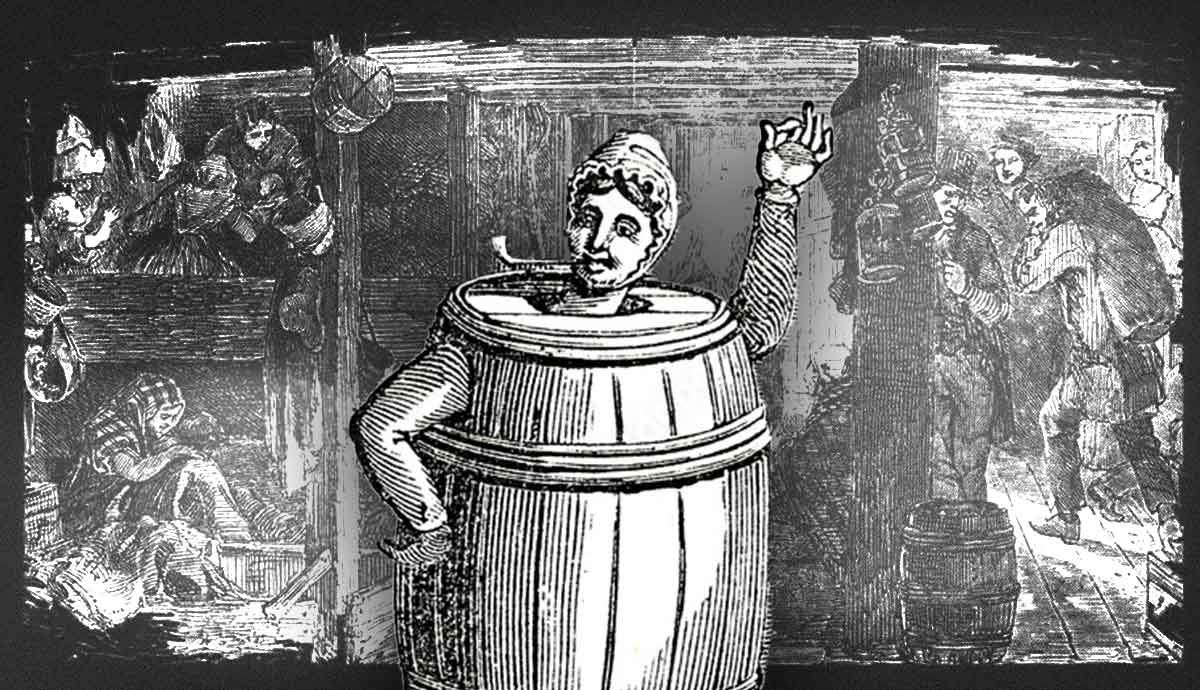
Margaret Butler was transported to Tasmania in 1845 for stealing potatoes, leaving behind four children. After remarrying, she was beaten to death by her second husband. Mary Jones, transported at 18 for petty theft, became a wealthy widow, leaving a substantial inheritance to her children.Between 1820 and 1853, around 12,500 female convicts were sent to Tasmania, Australia forced to abandon their families and endure hardship, yet offered the chance to live with adequate food, and medical care, and to make their own life choices. These two stories highlight the vastly different outcomes convict women could face in Tasmania, and how these women had a higher potential for both new opportunities and new tragedies.The Logic of TransportationGin Lane, by William Hogarth, 1751, this painting depicts the poor who were perceived to be destroying London. Source: Wikimedia CommonsTransportation was the British term for sending convicts to the colonies. The idea behind the policy was that women sent to Australia no longer stole from Britains wealthier citizens and became unpaid laborers for settlers, cooking and cleaning for at least a sentence of seven years. The British state hoped that convict labor would reform these women into useful members of society. Additionally, the British state considered transportation a practical alternative to the death penalty, which was a more common sentence than you might imagine.Britain had not truly created a prison system yet, seeing prisons as a quaint American idea. Therefore a prisoner could receive the death penalty for stealing minuscule amounts of money or even for cutting down a tree. In the 19th century, about half of all prisoners who were condemned to death had their sentences reduced to transportation. Women were more likely to have their sentence commuted to transportation than men, especially if they were pregnant.The Convicts CrimesSketch of life aboard a convict ship to Tasmania. Source: The Hulton ArchiveThe women sent to Tasmania were primarily poor British and Irish women. Between 1843 and 1853, 86% of convicts had been convicted of petty theft, with 60% of stolen items being basic necessities. Only a small percentage were hardened criminals; most, like Margaret Butler, stole out of necessity. Of the 12,500 women transported, 67% received seven years, the lightest possible sentence, and only 3% were sentenced to life.The Trip to TasmaniaSketch of a woman being punished on the Lady Juliana, on its trip to Australia in 1789. Source: Wikimedia CommonsThe women convicted of transportation were in for a long journey, which could be a pleasant or terrible experience depending on the surgeon on board. While these surgeons were there to be doctors they also controlled a large portion of the convicts time, leading prayers, handing out rations, and often mediating convicts disputes. Some, such as Dr. Clifford, were thanked for their kind attention and humanity by the convicts of the ship Harmony in 1829 after they landed. Then there were surgeons like James Hall. He was known for locking women up in cramped spaces for weeks at a time on the voyage to Tasmania, and in a few instances he hit women so hard he drew blood.Overall, the womens health improved during the journey, as they were fed well and given fresh air and freedom on deck from 8 am to sunset. There were never any serious contagious disease outbreaks on any of these ships, and the surgeons seemed to have followed a rigorous system of isolating prisoners and fumigating these clothes immediately if they showed any sign of having a contagious illness. Women were also forced to have, at minimum, a weekly bath and change all their clothes to maintain good hygiene. As a result of these measures, only two percent of women being transported to Tasmania died, and when they did they usually died of a previous condition.Ship Log of all the women who made the voyage. Source: The Hulton ArchiveIn theory, there was a very strict schedule that women were supposed to follow on these ships, but they usually seemed to have been given a freer reign than that. They often made clothes on these trips and attended school classes and religious services, but they were allowed to talk freely among themselves, and even with the sailors as long as the conversation seemed proper. On many voyages, women enjoyed even more freedom, often leading to illicit sex. The surgeon on the Mary Ann complained that one of his patients, a wicked woman, had been impregnated by one of the sailors and now seemed to be suffering from a miscarriage. While the captain and surgeon were supposed to prevent such behavior, on many voyages they chose to have sex with the women instead. For instance, aboard the Duke of Cornwall, the surgeon fathered at least one stillborn.Babies struggled during these trips. Even though young mothers or very pregnant women were not supposed to be transported, they often ended up on the ships anyway. Many births aboard ships were either stillborn or children that died very quickly. Womens milk often dried up on ships, and with no alternative on board, the infant would die. Many surgeons were outraged by this system, such as the Surgeon of Mary III who railed in his journal at the inhumanity of sending young infants on such a long journey. Mary III had 28 infants under twelve months on board, and over the course of the journey, six of the children dieda dreadfully high child mortality rate.Servants in TasmaniaCascades Female Factory, Tasmania. Source: Libraries TasmaniaWhether women arrived in Tasmania relaxed from a pleasant voyage or grieving the loss of a child, women were quickly reintegrated into the system as convicts. They were first interviewed about their crimes, then sent to work as servants or, if they arrived between 1843 and 1847, they attended a six-month domestic training course. Children under the age of three would be sent to the convict nursery and older children would be sent to an orphan school that had been created specifically to raise the children of convicts.Domestic labor in the 19th century was very grueling, and few of these convicts had backgrounds that prepared them for such work. Women had to manage wood stoves and cook to a high standard while using only basic ingredients. For women who had simply been petty thieves in Britain or Ireland, being asked to do housework competently was asking a lot.These women also struggled to shed the stigma of their past life. For example, a woman named Jane Miller worked as a servant for one household until she became very ill. Because of her background as a thief, the mistress of the house believed she was lying about her sickness and therefore pretended she had stolen something to humble her. Jane was given a year of hard labor as punishment and sent to the nearby female factory.Marriage approval document from the 1850s. Source: Female Convicts Research Centre IncWhile society accepted that male convicts would swear, get drunk, and openly have sex, women faced severe punishments for similar behavior. In addition, women were often locked up for stealing clothes or calico cloth to use as menstrual pads. Before 1842, the women had no money of their own so if their master refused to give them basic necessities, stealing was their only option.Grace Heinburys experience is a prime example. In her first assignment, her master refused to give her soap, as he was not technically required to. In her second assignment, she faced even worse conditions when her master expected her to work as a prostitute to bring the household money, and in her third assignment, she was sexually assaulted by a fellow servant. When she ran away to escape the abuse, she was punished with six months of hard labor.Convicted women were completely at the mercy of the system. For instance, the day after one of her twins died, Sarah McArdle was charged with drunkenness and sent for two months of hard labor. No one cared she had just lost a child. Womens lives could also be lost to uncaring masterssuch as Christina McClinnis who died because when she fell sick her master sent her to the female factory for being useless as opposed to calling for a doctor. The system showed little compassion for these women.Marriage in TasmaniaMap of Hobart Town, the capital of Tasmania, drawn in 1858. Source: Wikimedia CommonsWomen in Tasmania were often encouraged to abandon their marriages in England or Ireland and remarry locally, under the belief that a husband would civilize them, particularly if they were considered unruly. To marry, convicts had to apply to the government, with recent offenders at risk of having their petition denied.For instance, Sarah Waters had to apply four times between 1831 and 1833 before being granted permission to marry. Additionally, the master of the man they wished to marry had to approve and promise that any resulting children would not become a burden on the state. Women who would never have found a husband at home got married in Tasmania. For instance, Sarah Myers, previously a prostitute, married, and led a respectable life.Oftentimes women who had been troublemakers disappeared from the records after marriage. While some, like Mary Jones, had happy marriages, others, like Margaret Butler, were abused or killed by their husbands. Men could take their wives to court for misbehavior. For instance, Annie Spong was brought into court in 1849 for using obscene language in front of her husband and sentenced to one month of hard labor. Such threats may have simply convinced women to conform to the role of a quiet and proper wife.FreedomOrphan School, Hobart, 1858. Source: Libraries TasmaniaAfter gaining their freedom, many convict women faded into the background of Tasmanian society. A third of them never committed another crime or infraction, and only existed in records because they were tracked as convict servants. These women enjoyed a higher standard of living than their Irish and English counterparts with access to a better diet and medical care, at a time when women in England had to pay for hospital beds. They likely focused on enjoying their children and daily lives, free from the constant struggle for existence they had waged back home.The main record of these women involves efforts to reunite with their children. Women often lost track of their children, as they could be sent into service before their mothers sentence ended. One woman, Jane Bradshaw, put an advertisement in the paper in 1855, looking for her missing twelve-year-old by the name of Mary Jane. Many women petitioned the state, claiming that due to a new marriage or a new job, they now could raise their children. Interestingly enough, women sometimes had their new husbands write these letters. James Hollorrway wrote for his new wife that The mother is languishing on account of their absence from her. Women hoped a respectable man would be enough to get their children released to them.Headstone of convict Sarah Moses. Source: St. Johns OnlineThey also often promised to teach the child a trade. Women were much more likely to receive control of their children if they promised that their husbands could teach them useful skills. Unfortunately, there was no guarantee the authorities would release a child to their parents care. If their child had already been apprenticed elsewhere, the request would be refused even if the authorities deemed that the mother seemed responsible enough to look after their child. Ultimately, many family members lost track of each other in Tasmania.Women who never married, or lost their husbands, were left alone without enough money to sustain themselves. These women ended up right where they started, in pauper establishments that were often created in old female factories following the end of transportation. These facilities were poorly managed, with insufficient food, overcrowding, and poor hygiene. Women could be punished for minor infractions as if they were convicts again. In the wintertime women in these invalid depots had to find somewhere to go from 7 am to 5 pm because the shelter would kick them out.In 1860, Mary Mcdonald and several other women died from inhaling carbonic gas at one of these establishments. In response, a reporter came to examine the facility and he discovered that there were only eleven nurses for 114 patients. He said that many of the weakest patients had gauze put all over their faces because they could not brush the flies away. These places were the cruelest outcome for women who had fought hard for a better life in Tasmania, only to fall back into poverty.ConclusionA poem about a girl sentenced to transportation. Source: National Library of AustraliaThese women, having endured traumatic experiences, largely faded from historical records, quietly marrying and raising children. Despite the fact that in the 19th and 20th centuries, Tasmania had a higher percentage of convicts than anywhere else in Australia, the crime rate was remarkably low. Once free, many of these women led lives not unlike those they might have had in Europeexcept they were better fed, with access to medical care and more opportunities to choose their path.However, a woman in Tasmania had little chance of surviving independently. Women simply could not make enough wages to sustain themselves. Therefore, these women mostly spent their time finding a man and working with them to pull off a life in Tasmania. Some, like Margaret Butler, died from choices forced on them through transportation, while others, like Mary Jones, overcame it to leave a better future for their children.Yet, most simply survivedaccepting their circumstances and doing the best they could in a land far away from home. Their struggles are largely forgotten by history but their legacy lives on in the families they built, and in the quiet ways they helped to create modern-day Australia.
0 Comments
0 Shares
4 Views

 Arabic
 French
 Spanish
 Portuguese
 Deutsch
 Turkish
 Dutch
Dutch
 Italiano
 Russian
 Romaian
 Portuguese (Brazil)
 Greek
Greek