5 Famous Women Shunned for Marrying for Love
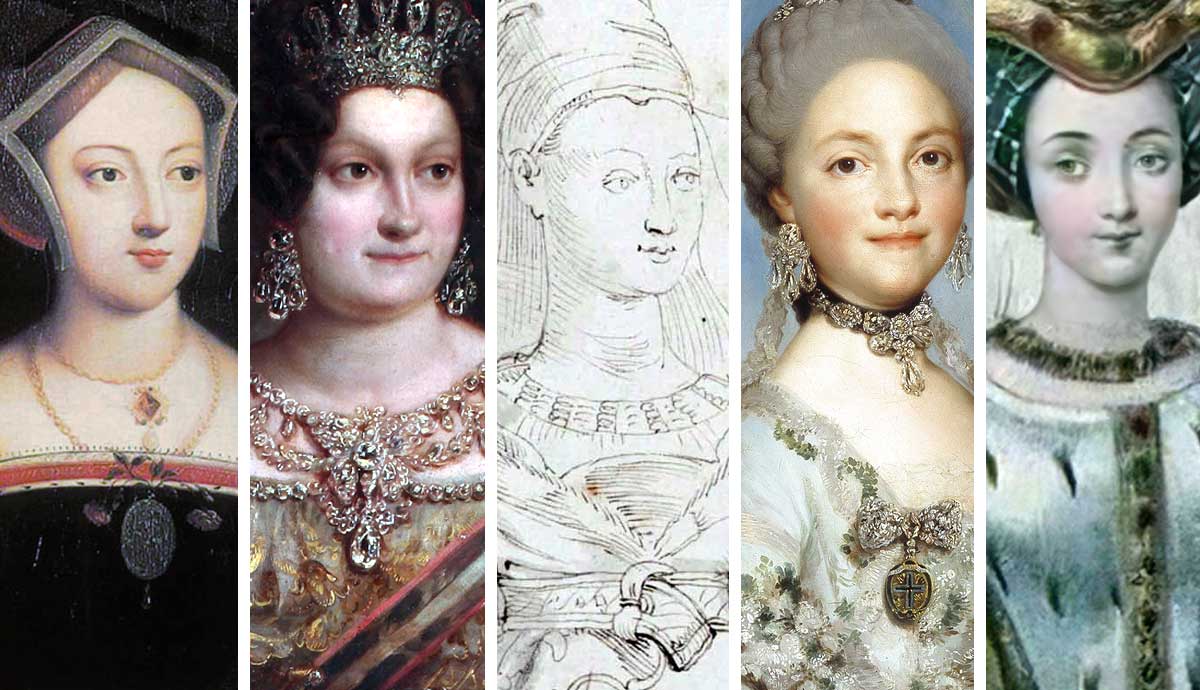
While peasant women may have had a harder life in nearly every other regard, they certainly had an easier time when it came to marriage. In a world where geopolitical alliances took precedence over personal feelings, noblewomen who dared to marry for love were shunned, exiled, or forced into attempted obscurity. From Jacquetta of Luxembourg, who shrugged off convention to wed a knight, to Mary Boleyn, whose romantic choices left her forever in historys shadows, these famous women defied the norms of their eras to fulfill the desires of their hearts. These relationships dared to challenge the status quo and they leave us with some truly fascinating love stories.1. Jacquetta of Luxembourg: A Duchess Dares to Defy the Crown for LoveMedieval Woman, from the Codex Manesse, 14th century. Source: GetArchiveShe was centerstage in the medieval equivalent of a royal matchmaking frenzy. Jacquetta of Luxembourg, recently widowed duchess, was Englands most eligible highborn bachelorette. As the young widow of John, Duke of Bedford, brother to the late King Henry V, she had it allwealth, power, and connections up to her ruffled collar. The royal plan: marry her off to some English lord, ideally one with loads of cash and a small enough ego to appreciate a wealthy woman as a hand-me-down. Instead, Jacquetta went for a knight in shining armor, quite literally. Sir Richard Woodville was handsome, dashing, and, lacking in aristocratic ties (she was the daughter of a count while he was the grandson of the sheriff of Northamptonshire).He, as the diseased dukes chamberlains son, was the man tasked with escorting her back to court. Evidently, he also was the one who managed to sweep her off her feet before any return could happen. They felt the sparks ignite, causing a whirlwind romance complete with a scandalous secret marriage that no one at the English court saw coming. This wasnt just bending the rules; this was telling the highest rulers in the land where they could shove it. The king, Henry VI, blew a royal gasket and slapped the couple with a 1,000 fine, roughly the medieval equivalent of a small countrys GDP.Jacquetta of Luxemburg, by Peter Paul Rubens, 17th century. Source: The British MuseumThanks to the dower estate Jacquetta had from her first marriage, this wasnt an impossibility for the newly established couple. Jacquetta and Richard just shrugged and made themselves at home. The final eyewatering cost was Jacquettas lands, her title, and the approval of a lot of rather scandalized aristocrats.Jacquetta and Richard went on to have quite a successful marriage with 14 children who would rise up the ranks anyway. Their daughter, Elizabeth, heiress of her mothers legendary beauty, would eventually marry King Edward IV and become his queen. This was a rather huge elevation for the daughter of a woman who went from a duchess in a loveless marriage to a poor knights very contented wife.2. Mary Boleyn: The Boleyn Who Ditched Royalty for a Scandalous SoldierMary Boleyn, attributed to Remigius van Leemput, 1630-70. Source: Wikimedia CommonsMary Boleyn was a Boleyn by birth and a pawn for the familyraised to charm her way into influential circles as well as be an ornament to the fashionable courts of Europe. Henry VIII, king of such a court, found her particularly charming. As his mistress, Mary, elder sister of Anne, spent years embroiled in the high-stakes game of keeping the monarch entertained while his marriage to Catherine of Aragon slowly corroded to dust. It is likely Mary spent this time producing two of his illegitimate children while she was at it, though the king never claimed Catherine or Henry Carey as his own.During their entire fling Mary remained wed to a noblemanand King Henrys own cousin through the Beaufort line, no less. However, when William Carey died, the king moved on to Marys own sister, and, with two small children in tow, Mary pulled a disappearing act. She only returned to court years later, stunning everyone with the manner in which she did so: as a married lady with her belly full of a legitimate baby made within the bonds of wedlock.Henry VIII, after Hans Holbein the Younger, 1540-7. Source: Art UKThe entire Boleyn clan and the court at large were utterly shaken. Why? Because this time, Mary had made a choice for herself. She married for love and without her sister the queens permission, to a man low in stationWilliam Stafford, a soldier with no title and minimal fortune. Her familys vision of power and influence couldnt have been more insulted.Anne, despite being perched on her throne and the mother of the Tudor heir, didnt react well to Marys new husband. Banned from court, Mary held her head high, writing to Cromwell that shed rather beg [her] bread with him than be the greatest Queen christened. This wasnt about ambition anymoreit was about freedom, that very precious thing the Boleyns had never been able to offer her.In 1536, the Boleyn castle in the sky came crashing down with Annes and Georges executions. Mary, however, emerged like a phoenix from the ashes as the last Boleyn standing and found herself with a fair bit of inheritance. With it, she and Stafford settled into a new life, far from the cutthroat politics of courta life of quiet and happiness for herself and her children.3. Marie Louise: The Teenage Empress Who Dodged Napoleons LegacyMarie Louises Farewell to Her Family in Vienna, by Pauline Auzou, 1812. Source: Chateau VersaillesMarie Louise didnt exactly swoon her way to Napoleons side. She was sent to him by her father, the holy Roman emperor, who had spent years locked in bitter conflict with the French upstart. By marrying her off to Napoleon, the Habsburgs got a truce and a peace treaty. Meanwhile, Napoleon got what he wanted most: a wife who could finally give him a legitimate heir. After all, hed pushed aside his first love, the charming and slightly libertine Josephine, specifically because she couldnt give him a son. He may have been smitten with Josephine until the end of his days, but dutyand his craving for an heir with ties to one of Europes oldest noble familieswon out. Without much delay, it was done, and Napoleon and Marie Louises son was born. No more children would come from this unwelcome union.Marie Louise was just 18, thrust into a political marriage with a man who was more than twice her age and not very interested in knowing her. It was clear to all parties this wasnt going to be some fairytale match. Napoleon, for all his love of spectacle and his apparent soft spot for Josephine, wasnt exactly winning Marie Louise over with his charm. He was, as shed been raised to think, the enemy who kept bullying his way to more and more land that threatened aristocratic houses and holdings. It is hardly shocking that she might have sought companionship elsewhere.According to somesuch as the author behind the book The Second EmpressMarie Louise didnt meet Count Adam Albert von Neipperg after Napoleons fall (as is the commonly accepted narrative) but knew him beforehand. Perhaps there was a quiet friendship between them even before she marriedor maybe even the beginnings of something more.Marie Luisa of Parma, by Anton Raphael Mengs, 1765. Source: Museo del PradoNeipperg was no stranger to Napoleon either. He was the kind of guy whod lost an eye fighting against the French, and he despised Napoleon with a passion that ran deep. Yet there he was, visiting the Napoleonic court, passing messages between Marie Louise and her Habsburg family. Whether or not sparks flew immediately, Marie Louise and Neipperg would later develop a bond that was, by all accounts, genuinely affectionatea stark contrast to her marriage with Napoleon, who never really cared much for courtly manners and charm.When Napoleons empire crumbled and he was packed off to Elba in 1814, Marie Louise did what any pragmatic and probably homesick Habsburg princess would do: she went home to Austria. There with her son safely tucked away from his empire-minded father, she made no secret of her connection to Neipperg. She was all but ready to move on and was not part of the movement to restore Napoleon to his throne.When her marriage was legally over, she and Neipperg made their relationship official in 1821, living quietly together in a morganatic marriage and raising three children. As far as she was concerned, her life with Napoleon was just a chapter in a very different kind of storythe kind written by a hand not her own. The story she wrote herself was one of true love, warm motherhood, and the competent ruling of the Duchy of Parma.4. Catherine of Valois and the House of TudorCatherine of Valois, by Edward Hargrave, 1842. Source: PinterestCatherine of Valois was young, vibrant, and unfortunately for the charismatic girl, married off to Henry VEnglands hero of Agincourt. At 15 years her senior, he was kind of a dull husband for a spirited queen. However, Catherine did her wifely duty, had a son, and, two years after their marriage, buried her husband. Catherine, only 21 at the time of the kings death, served as queen dowager and mother to the future king. Despite the oversight of parliament and the close watch of the differently aligned courtiers, Catherine chose to take control of her life and the direction of the country.Catherines royal handlers expected her to wait around, demure and obedient, for her son Henry VI to grow up and approve of any potential husbands. Yes, Catherine was supposed to wait to remarry until she could ask her son for permission to do so (the same son who was barely a toddler when his father passed him the throne).Somehow, despite the constrictions put on her person and all the folks watching her every step, Catherine quietly married a certain Welsh servant whose lineage was in no way equal to the queens. With a name like Owain ap Maredudd ap Tudur, he may not have had a title, but he had the passion and, evidently, the charms to sweep the queen mother off her slippered feet.Tudor Family Tree. Source: FindAGraveWhat came of their relationship was a secretive union that produced a slew of royal half-siblings for the baby king and the kind of political scandal that would have had medieval gossip columns in a frenzy if only theyd existed. The children from Catherine and Owens most unlikely union were the founders of the Tudor Dynasty: one of the most famous dynasties in English history. Catherines and Owens offspring would go on to include tyrant King Henry VIII and Elizabeth I.Despite all of these children and her royal position, in 1436, the truth came out. Catherine was sent off to Bermondsey Abbey, where she died the following year. Owen, meanwhile, was thrown into Newgate Prison though he eventually escaped. In 1461, the former lover of the English queen was caught, captured, and promptly beheaded by the Yorkist faction. Legend has it he quipped, The head that once lay on Queen Catherines lap must now lie on the executioners block. Bold to the end, that Owen.While it is Henry VII who would go down in history as the first Tudor king, lets be clear: it all started with Owen Tudor and his scandalous association with a widowed queen. Catherine and Owen brought both forbidden love and self-determination to their shared bloodline in spades.5. Maria Christina: From Her Old-Man Uncle to a Dashing SoldierMaria Christina, by Valentin Carderera, 1831. Source: Wikimedia CommonsWhile in the youthful flush of her 20s, Maria Christina was married off to a man who was two decades older than her, her uncle, and her brother-in-law. This made her marriage more of a wreath than an additional branch of the family tree. Now, Ferdinand wasnt just any unclehe was a three-time widower who had not a single living heir. There was no doubt exactly what he was marrying his young niece for.Maria Christina, the queen of Spain, was all of 27 and the regent for her baby daughter, while she was expected to live a chaste, respectable life throughout her widowhood. Which she didfor about three months. That is when she took one look at Agustn Fernando Muoz, a royal guard sergeant and quite the suave operator, and decided to throw chastity and respectability to the wind.Maria Christina and Muoz married in a clandestine ceremony, knowing full well that if she admitted to marrying a commoner, shed lose the power of the regency in her daughters minority. They managed to keep the marriage under wraps for a while, though the court gossip knew that something was amiss. The whispers of her fancy man were almost as commonly acknowledged as her struggle against Infante Carlos, who claimed he was the rightful heir, not Maria Christinas little Isabella. Among all these palace intrigues, mutinous guards, and tense courtroom politics, the very adoring couple couldnt quite manage to keep their love quiet.Maria Christina, by Vicente Lpez Portaa, 1830. Source: Museo del PradoThe secrecy of their union didnt last. Eventually, the army and Carloss faction decided theyd had enough. Maria Christinas private life became an open scandal, her political support plummeted among rumors of her being unfaithful to the beloved (but dead) king, and in 1840 she and Muoz were told to leave if they wanted ten-year-old Isabella to hold the throne. They went first to the Vatican, where the pope blessed their union, and then off to France, where they took up luxurious apartments in the Palais-Royal.Muoz at last gained titles more befitting of a royal consort via the generosity of his stepdaughter Isabella. As queen, the girl was quite the fan of her mothers fancy man. Muoz became the duke of Rinsares, then marqus of San Agustn, and even a knight of the Golden Fleece for good measure.Muoz lived his post-military days collecting railways, titles, and the occasional stock market fortune, and, despite the mistrust of so many who saw him as a usurper, appeared to have no political ambitions of his own. Social climbing may not have been his favorite pastime, but he treasured the heart of a queen whod defied the odds for him for the rest of their lives. Their seven children became dukes, counts, and marchionesses, proving that their mother and father had shared a union that was both passionate and powerful enough to suffuse the next generation with titles and money.










 English
 Arabic
 French
 Spanish
 Portuguese
 Deutsch
 Turkish
 Dutch
Dutch
 Italiano
 Romaian
 Portuguese (Brazil)
 Greek
Greek