



• WWW.THECOLLECTOR.COM
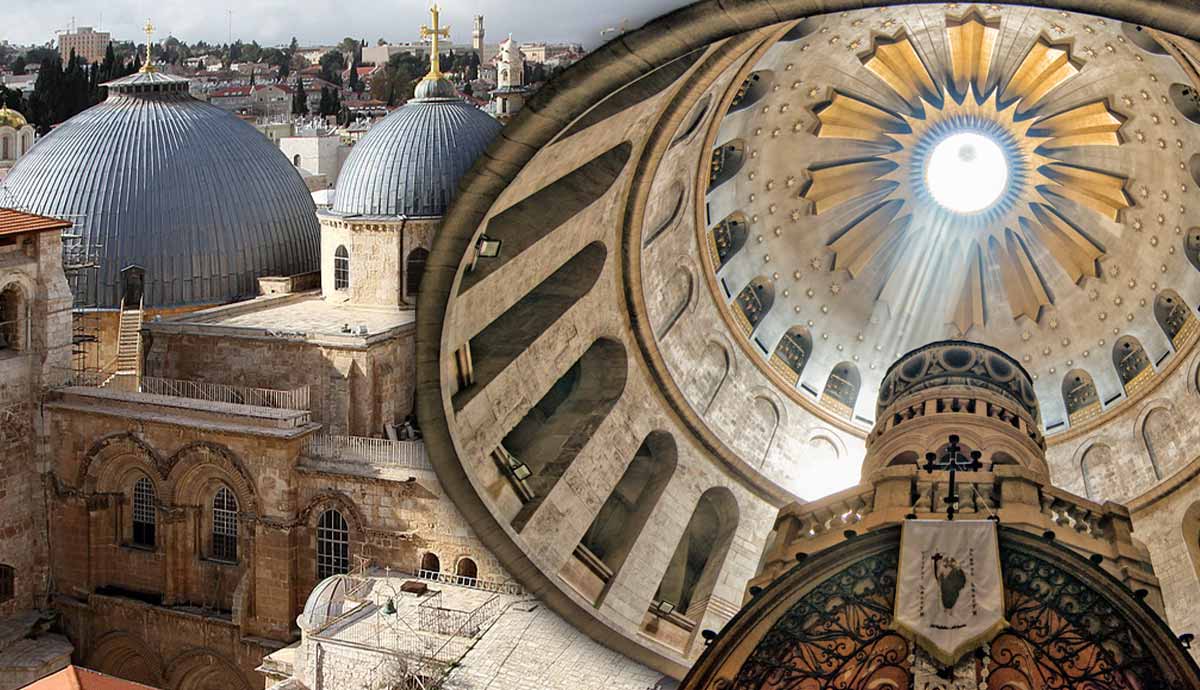
    The History & Significance of the Church of the Holy Sepulcher in Jerusalem
    The Church of the Holy Sepulcher is one of the most important sites in Christianity. According to Christian belief, it encompasses the place where Christ was crucified, buried, and resurrected. As such an important location, the church built on the location has become a focal point for Christian belief and a holy relic of the highest magnitude. Over the centuries, especially during the crusades, countless pilgrims visited the location, and many have risked their lives to defend it. This is the history of the Church of the Holy Sepulcher.Humble BeginningsSack of Jerusalem by the Romans, by Francois Joseph Heim, 1824. Source: Metropolitan Museum of Art, New YorkAround the year 33 CE, revolutionary Jewish preacher Jesus of Nazareth was executed by crucifixion. According to the Bible, this took place at a location known as Golgotha, or the Place of the Skull, which was believed to be a disused stone quarry just outside the walls of the city of Jerusalem. His body was then placed in a nearby tomb hewn out of rock, where he was said to have resurrected after three days. While Christs followers spread the word of his teachings, the Roman Empire, which ruled the region, had other concerns for Jerusalem.In the year 70 CE, the Romans captured Jerusalem in response to a Jewish revolt, bringing utter destruction to the city. Decades later, in 130 CE, the Emperor Hadrian ordered the construction of a pagan temple on Golgotha. This temple, dedicated to either Jupiter or Venus (the sources vary), stood on the spot for several centuries. At the same time, Christians were slowly gaining influence throughout the empire. In 313 CE, Emperor Constantine issued the Edict of Milan, ending the persecution of Christians. In 326 CE, the pagan temple was replaced by a church on the site where it was believed Christ was crucified and buried, which was consecrated in 335 CE.The Crucifixion, by the Circle of Jan Provoost, 1495. Source: Metropolitan Museum of Art, New YorkIn 614, the Sassanids invaded Jerusalem and destroyed the Church, which was subsequently restored by the Byzantine emperor in 630. When Jerusalem fell to Islamic forces in 637-638, the Sepulcher was respected and undamaged by the conquering forces. Over the next few centuries, it was damaged by earthquakes and several fires, but was rebuilt each time. The worst damage occurred in 1009 when the Sepulcher was destroyed by the caliph of the Fatimid Caliphate. In 1048, the Byzantine Emperor Constantine IX restored the church, despite Jerusalem not being part of the Byzantine Empire. The style of the building was changed, and it was rebuilt as a smaller structure with a number of separate chapels instead of one large structure. Although Jerusalem was under Islamic control, the actual Sepulcher was overseen by Christians and remained a major pilgrimage site for devout Christians.The CrusadesGold Coin from the Kingdom of Jerusalem, presumably minted in Acre, 1253. Source: British Museum, LondonIn 1095, Pope Urban II called for the First Crusade, ostensibly to help the Byzantine Empire against pressure from the Seljuk Turks. As the armed pilgrimage was underway, the target became liberating Jerusalem for Christendom. In 1099, after a brutal siege, the city fell to the crusaders. Rather than surrender control of the site to the Byzantines, the Catholic crusaders seized control of the location. Once securely in power, they began rebuilding the Sepulcher in the style of a Romanesque cathedral, a design that was popular in western Europe at the time. The new cathedral was larger and more elongated than the rounder Byzantine structure. It was also shaped in the form of a cross, a common motif found in Catholic churches. The new Church of the Holy Sepulcher was finally consecrated in 1149.With the Sepulcher and Jerusalem under the control of Latin Christianity, it once again became a major site of pilgrimage. It was also made the seat of the Latin Patriarch of Jerusalem and housed the kingdoms Scriptorium, the place where monks would transcribe books, a time-consuming and laborious task before the invention of the printing press. The sepulcher was also the burial location for at least eight of the Kingdom of Jerusalems monarchs, though these graves have been lost to history, probably destroyed by a fire in 1808.Missal of the Holy Sepulcher, Kingdom of Jerusalem, 1135-1140. Source: Bibliothque nationale de France, ParisChristian control over both the kingdom and the Sepulcher would eventually come to an end in 1187, when Islamic forces under the leadership of Saladin invaded the Kingdom of Jerusalem and captured the city. In response, European kings organized and launched the Third Crusade, aiming to regain control over Jerusalem. This would ultimately fail, though a treaty would allow pilgrims to travel to and worship at the church.Knights of the SepulcherStatue of Godfrey of Bouillon in Brussels, by Eugene Simonis, 1848. Source: Wikimedia CommonsAfter the First Crusade captured the city of Jerusalem, the foundations of a new militant holy order were laid. The leader of the crusade, Godfrey of Bouillon, became the first ruler of the newly established Kingdom of Jerusalem. Godfrey, however, refused to be crowned king in the same place where Christ walked, so he settled on a much more humble title, Advocatus Sancti Sepulchri or Advocate of the Holy Sepulcher. He spent much of his short reign consolidating his kingdom and fending off outside threats, such as the Fatimids in Egypt. To help him in these difficult tasks, Godfrey instituted the Order of the Canons of the Holy Sepulcher. With Godfreys death in 1100, the throne would pass to his brother Baldwin, who was crowned king. In 1103, Baldwin assumed command of the Order, which was recognized by the pope in 1113.The Equestrian Order of the Holy Sepulcher of Jerusalem was a militant holy order similar to other militant orders, such as the more famous Knights Templar and Hospitallers. All of these groups protected the Holy Land against outside threats, but the Knights of the Holy Sepulcher gave higher priority to defending the Sepulcher and other holy sites, rather than the broader mission of protecting pilgrims traveling from Europe. Their heraldry features a red Jerusalem cross, a variant of the cross that has a perpendicular cross piece at the end of each bar, surrounded by four other red crosses.Silver Coin of James II of Cyprus, featuring a Jerusalem Cross on the reverse, 1463-1473. Source: Classical Numismatic GroupAlthough most of the Orders operations were centered in the Holy Land, they also established priories throughout Europe to attract more recruits. During the turbulent history of the Kingdom of Jerusalem, the Knights of the Sepulcher fought in many battles and campaigns to protect the kingdom. Their direct guardianship over the Sepulcher ended in 1187 with the capture of the city by Saladin. The order continued to exist, but in a greatly reduced capacity, until 1291, when the last crusader stronghold in Acre fell. Though some knights participated in the Reconquista in Spain, for the most part, the militant activities of the Order ceased. The Order was revived, but with a mission based on charity, advocating for the rights of Christians in the Holy Land, and fostering religious and spiritual devotion, which it continues to this day.Layout of the Sepulcher TodayThe Church of the Holy Sepulcher, 2010. Source: Wikimedia CommonsAfter the Crusaders were driven from the Holy Land in 1291, the Sepulcher continued to be visited by Christian pilgrims, but the heyday of European pilgrimages was long over. The Romanesque building of the 12th century serves as the basis for the current structure, although major renovations were undertaken in the 16th century. In 1808, a major fire destroyed much of the building, including the collapsed dome, which required an extensive rebuilding project. An earthquake in 1927 also necessitated major renovations. Since then, the Church has, and continues to require, extensive maintenance to keep the nearly millennia-old structure intact.The Church of the Sepulcher is believed to contain the locations where Christ was crucified, his body anointed, and buried before the resurrection, all in the same building. After passing through the gate on the outside, a visitor enters a courtyard flanked by chapels, with the main entrance located to the north. Almost directly in front of the entrance is the Stone of Anointing, where Christs body was prepared for burial. To the left is the Rotunda, where, surrounded by numerous chapels, the focus of the Sepulcher, and arguably all of Christianity, is located: the Tomb of Jesus. To the right of the entrance, there is a set of stairs that lead to the second level, and to Golgotha, or Calvary, the place where Jesus was crucified. The exact location can be seen today as a hole carved into the stone to accommodate a wooden cross underneath a Greek Orthodox altar.Christian Pilgrims celebrate the ceremony of the Holy Fire at the Tomb of Christ during Easter celebrations, April 2022. Source: TimesofIsrael.comAround the rest of the Sepulcher are many separate chapels, each one believed to be a location where significant portions of Christs crucifixion occurred. These include the place where Christ was kept as a prisoner with two thieves, where lots were cast for Jesus garments, and where the True Cross was found by St. Helena, the emperor Constantines mother. There are also chapels dedicated to various saints, such as Mary Magdalene and St. Longinus, as well as the tomb of Joseph of Arimethea. Directly under Golgotha is the Chapel of Adam, where tradition states that the blood of Christ dripped down onto the skull of Adam, the first human. The rest of the Sepulcher is divided into numerous chapels, monasteries, and other sacred locations.Control of the Sepulcher and the Immovable LadderThe Church of the Holy Sepulcher, Jerusalem, by Domenico dalle Greche, 1546. Source: Metropolitan Museum of Art, New YorkThere are many Christian denominations today, so which one controls the Sepulcher today? Unfortunately, there is no easy answer. Currently, the denominations that claim control over the church are the Catholic Church, the Greek Orthodox Church, the Armenian Apostolic Church, the Ethiopian Orthodox Church, the Coptic Church, and the Syriac Orthodox Church. Each one has claimed the Sepulcher as theirs to oversee, leading to near-constant bickering. This, for the most part, ended in 1852 due to a proclamation by the Ottoman Empire that divided the building between the sects, a state of affairs called the Status Quo. Some of the buildings are universal, owned collectively, while smaller chapels, monasteries, and annexes are controlled by each sect individually.Generally, peace and tranquility are the norm in the church, with a complex series of rituals and procedures about who can travel to which section and under what circumstances. Still, tensions flare, and this can lead to outright violence. In 2002, a brawl broke out between the Coptic and Ethiopian monks over ownership of a part of the roof. To stake their claim, the Copts rotate a monk who sits in a chair to watch the roof. However, on a blisteringly hot day, the monk assigned to this role moved the chair about eight inches to find shade. This was taken as a violation of the Status Quo, and both sides came to blows, and eleven monks were sent to the hospital.The Immovable Ladder, 2011. Source: Wikimedia CommonsThen theres the Immovable Ladder. It is a common wooden ladder, placed against an outside second-floor window sometime in the 1700s. No one knows who put it there or why, but to prevent an incident, it has remained propped against the wall, since one denomination moving it would be seen as a violation of the Status Quo. Its not entirely immovable, having been moved several times, twice after being stolen, and once by mutual agreement to accommodate scaffolding during renovations. Each time it was removed, it was placed back exactly where it was, and will remain there for the foreseeable future. This otherwise innocuous ladder has become a symbol of the division over the Holy Sepulcher and Christianity as a whole.With this internal fighting, the keys to the Sepulcher are in the most unlikely of hands. The keys to the most holy location in all of Christianity are held by a pair of Muslim families, who have held this position since at least the 12th century. Since they are not Christians, they are generally seen as a neutral party and can be trusted to be impartial. This is purely a symbolic gesture, but it demonstrates the complexity of the question of ownership of the Sepulcher.This state of affairs has lasted for centuries and will almost certainly continue to do so for years to come. The center of Christian faith is at the forefront of division, an ironic state of affairs for the holiest place in the spiritual life of billions.
    0 Comentários 0 Compartilhamentos 11 Visualizações
  • ALLTHATSINTERESTING.COM
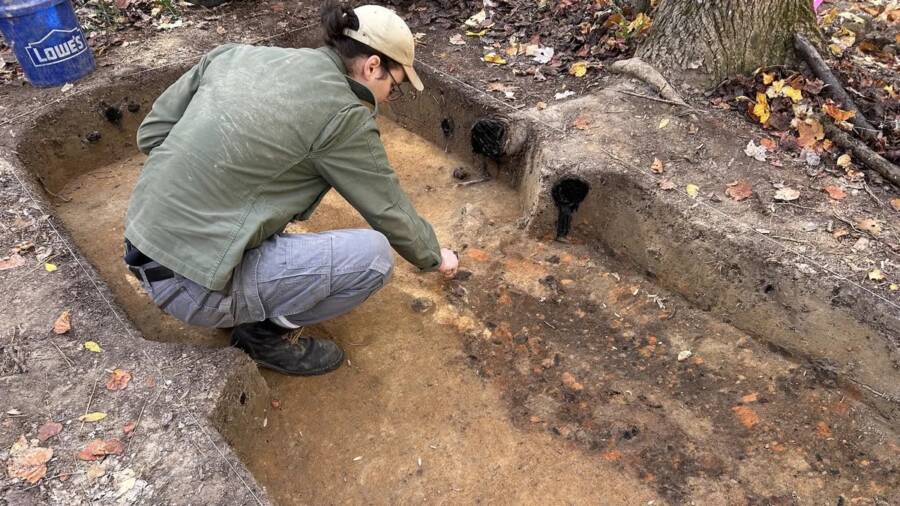
    Archaeologists In Virginia Have Uncovered Long-Lost Native American Settlements Described By John Smith In 1608
    Julia KingA team from St. Marys College of Maryland has unearthed 11,000 Indigenous artifacts along the Rappahannock River.Over 400 years ago, English explorer John Smith wrote of several Indigenous settlements along a river in modern-day Virginia. Smiths journals also described an attack on his men by Native Americans from one of these villages. Yet, no evidence of them had ever turned up. Some scholars disputed Smiths claims outright. Now, however, archaeologists may have vindicated the explorers records. For months, a team of researchers from St. Marys College of Maryland has been surveying the land around the Rappahannock River for signs of these early settlements. At first, their work seemed like a lost cause. Then, this summer, the team unearthed thousands of artifacts, including beads, pieces of pottery, stone tools, and tobacco pipes. In total, they uncovered around 11,000 objects that may corroborate John Smiths journal entries. Lost Villages On Rappahannock Tribal LandWhen Captain John Smith explored the Rappahannock River in 1608, he wrote down his observations of the land belonging to the Rappahannock tribe. Smiths journals describe a thriving civilization with at least 14 villages mapped along the rivers northern banks, including three heavily fortified towns atop Fones Cliffs: Wecuppom, Matchopick, and Pissacoack.Smith noted the tribes sophisticated use of the terrain, describing villages surrounded by flat fields and cleaner gardens than those in England. Despite initial hostilities including an ambush at Fones Cliffs in which warriors camouflaged as bushes rained arrows upon Smith and his men relations eventually warmed through the mediation of Mosco, a Native American guide. Public DomainEnglish explorer John Smith wrote extensively of Native American tribes in Virginia.As the Washington Post notes, the U.S. government only formally recognized the Rappahannock tribe in 2018. The tribe had been trying to reclaim its ancestral land for years, but that effort proved to be difficult. Indian people have long known of the land and our history and presence here, said Rappahannock chief Anne Richardson. But so often things arent considered real until theyre found or discovered.'John Smith was meticulous in keeping records of his travels across America. He spent much of his time mapping the land and writing about the Native American groups he encountered. But he was also a notorious self-promoter. Most historians agree that his maps and basic observations were largely accurate, but other journal entries such as his encounters with Pocahontas are clear embellishments, if not outright fabrications. Public DomainSmiths map of Virginia, which shows Native American territories.This has caused some scrutiny to be applied to his records in more recent years, which has, in part, contributed to the erasure of some of the Rappahannock tribes history. Smith wrote about their villages along the river, but since modern researchers had not found any physical evidence to back that up, Smith was dismissed even when oral histories of the tribe corroborated his account. My people have lived here since the beginning, Richardson explained on the podcast Tribal Truths back in 2022. Rappahannocks would have been able to look down both sides of the river here and see potential enemies or guests coming before they ever got here. And so this was a very strategic place for them to live, for many reasons.The oral history of the tribe was often dismissed as well. Oral history gets a bad rap in some quarters because memories are not perfect, but documents arent either, Julia King, a professor of anthropology at St. Marys College of Maryland who led the recent excavations at Fones Cliffs, told Live Science. The strategy is to read both with and against the grain of both sources and to question everything.As frustrating as that has been for the Rappahannocks, though, new discoveries between 2022 and 2025 have supported their oral history and Smiths account.Thousands Of Artifacts Found Along The Rappahannock RiverJulia KingA collection of some of the artifacts unearthed along the Rappahannock River.King and her fellow excavation team members looked both to old documents and the tribes oral history to identify the locations of centuries-old villages along the river. They trekked through the woods, dug shallow pits, and hunted for physical proof of the Rappahannock tribes presence. Finally, after months of searching, they started to find Rappahannock artifacts thousands of them. The presence of these artifacts confirms both oral histories and documents that suggested settlements were located here in 1608, when Captain John Smith spent several weeks mapping the Rappahannock River, King said. Nearly 11,000 artifacts were uncovered during their excavations, ranging from small beads and shards of painted pottery to stone tools and pipes. All of it was found on land the Rappahannocks have been trying to reclaim land that John Smith correctly identified as the tribes more than 400 years ago.After reading about the Indigenous artifacts unearthed along the Rappahannock River, learn about Jamestown Colonys Starving Time. Then, go inside the story of John Rolfe, the English colonist who married Pocahontas.The post Archaeologists In Virginia Have Uncovered Long-Lost Native American Settlements Described By John Smith In 1608 appeared first on All That's Interesting.
    0 Comentários 0 Compartilhamentos 11 Visualizações
  • ALLTHATSINTERESTING.COM
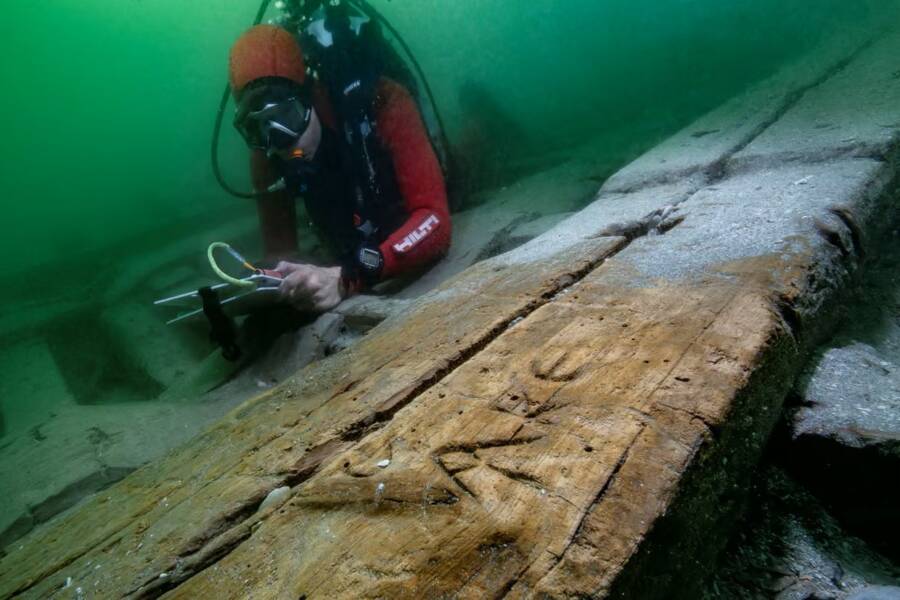
    Archaeologists Near Alexandria Just Found A 115-Foot Party Boat Once Enjoyed By Ancient Egyptian Elites
    Christoph Gerigk & Franck Goddio/Hilti FoundationThe wreck is about 2,000 years old and matches descriptions of ancient Egyptian pleasure barges written by the Greek historian Strabo.Archaeologists have discovered the 2,000-year-old wreck of an ancient Egyptian pleasure boat off the coast of Alexandria.A type of party barge known as a thalamagos, this vessel dates back to the early years of the first century C.E. It was found in what used to be Alexandrias ancient port, near the now-submerged island of Antirhodos.Furthermore, the wreck was found about 160 feet from Alexandrias legendary Temple of Isis, which is currently undergoing excavation. And these are far from the only ancient finds made in this storied setting.However, the boat remains a special discovery, as this is the first ancient Egyptian pleasure barge ever uncovered, despite the fact that scholars had known about their existence for centuries.The Ancient Egyptian Party Barge Found Off The Coast Of AlexandriaChristoph Gerigk & Franck Goddio/Hilti FoundationThe boat was designed to be very wide in order to accommodate a center pavilion and cabin.Archaeologists uncovered the boats hull, which was more than 115 feet long and 23 feet wide, according to a statement from the European Institute for Underwater Archaeology (IEASM), which organized this underwater excavation. The vessel was extremely wide in order to accommodate a pavilion and an elaborately decorated cabin at its center.Based on the flat design of the hull, the boat was likely used to traverse shallow and calm waters, rather than the open sea. The vessel likely required at least 20 rowers, who moved the boat forward using oars.Archaeologists also uncovered graffiti written in Greek on the boats central carling. While the actual message has yet to be deciphered, researchers were able to date it back to the first half of the first century C.E., making the graffiti approximately the same age as the boat. The graffiti also helped archaeologists deduce that the ship was likely made locally in Alexandria, famous for its lighthouse, one of the Seven Wonders of the Ancient World.Christoph Gerigk & Franck Goddio/Hilti FoundationA scan of the full length of the shipwreck.Its extremely exciting because its the first time ever that such a boat has been discovered in Egypt, IEASM founder Franck Goddio told the Guardian.Archaeologists concluded that the ship likely sank during a catastrophic series of earthquakes and tidal waves in 50 C.E., when the nearby Temple of Isis was also destroyed.There are several hypotheses as to what the boat was used for. One possibility is that it was used to traverse the canals of Alexandria, probably as a pleasure vessel, but perhaps also for cargo. The other theory is it held some ritual importance and may have belonged to the Temple of Isis.How This Find Fits Into The Submerged History Of Ancient AlexandriaWikimedia CommonsThe Palestrina mosaic features boats similar to the one just found near Alexandria.Goddio added that large pleasure boats such as this one show up in iconography like the famed Palestrina mosaic, a 2,000-year-old Roman work of art depicting scenes of ancient Egypt. A boat like the one found in the wreck was also described by ancient Greek historian Strabo when he visited Alexandria between 29 B.C.E. and 25 B.C.E.These vessels are luxuriously fitted out and used by the royal court for excursions; and the crowd of revellers who go down from Alexandria by the canal to the public festivals; for every day and every night is crowded with people on the boats who play the flute and dance without restraint and with extreme licentiousness, Strabo wrote in Geography.This isnt the first time that archaeologists from the IEASM have uncovered remarkable ancient finds in the waters surrounding Alexandria. In 2000, the team located the submerged city of Thonis-Heracleion. Amongst the numerous finds were two colossal statues of a Ptolemaic queen and king.More recently, in 2019, the team found another shipwreck near the sunken city. This ship matched descriptions written by Greek historian Herodotus. And now, Goddio and his team are excavating the Temple of Isis, located not far from the shipwreck.While research into the wreck is still in its beginning stages, archaeologists are confident that there is much to learn from this astonishing sunken vessel. That said, there are no plans to bring the ship to the surface, as doing so might damage it.But even with the boat still sitting in its watery grave, it may shed much more light on one of the lesser-studied corners of ancient Egyptian history. After reading about the 2,000-year-old boat found near Alexandria, check out the giant blocks from the lighthouse of Alexandria that were pulled out of the Mediterranean Sea. Then, learn about the rise and fall of the Library of Alexandria.The post Archaeologists Near Alexandria Just Found A 115-Foot Party Boat Once Enjoyed By Ancient Egyptian Elites appeared first on All That's Interesting.
    0 Comentários 0 Compartilhamentos 11 Visualizações
  • ALLTHATSINTERESTING.COM
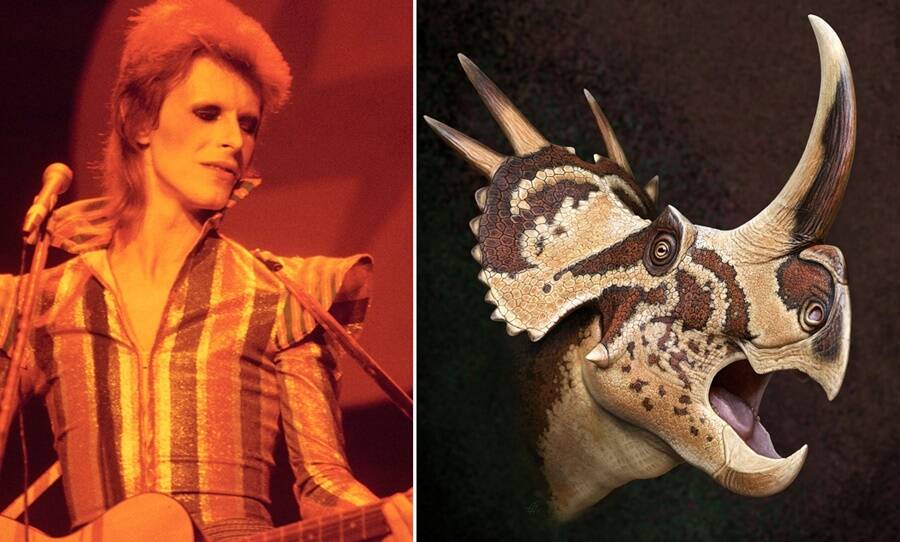
    Recently-Discovered Dinosaur Named Star Lizard In Honor Of David Bowie
    Getty/South West News ServiceThe Stellasaurus is a new species of dinosaur possessing ornate horns and a star-shaped skull.Its no secret scientists take personal liberties in naming their discoveries. For a newly discovered dinosaur that sported some flamboyant headgear, scientists chose the name Stellasaurus or star lizard in honor of the true Starman himself, David Bowie.According to the Daily Mail, fossils unearthed in Montana belonged to a dinosaur that roamed the territory some 75 million years ago. The dinosaur possessed a parrot-like beak, a horn on its nose, bony frills, and a star-like skull.The dinosaur genus was given the name Stellasaurus ancellae. The first word is derived from a combination of the Latin word stella meaning star and saurus which is Greek for lizard. It will henceforth be the first member of the new genus of Stellasaurus.A study on the new star lizard was published in Royal Society Open Science.The Stellasaurus belongs to the ceratopsians, a group of plant-eating beaked dinosaurs which includes the similar-looking Triceratops. During the Cretaceous period, Stellasaurus stomped around the Earth alongside other ferocious dinosaurs like the Tyrannosaurus rex and raptors.Wilson et alAn isolated partial skull of the ceratopsid with the main bone in the frill at the back of the head.A 20-foot long body that weighed roughly two tons and unique horn features an important tool for attracting potential mates distinguished this newly discovered species. The skull ornamentation is astonishing almost star-like, said paleontologist Jack Wilson at Montana State Universitys Department of Earth Sciences who is a self-professed fan of British rock. The name of the new dinosaur is a reference to its star-like features and an homage to Bowie, whose song Starman was a 1972 hit.Like Bowies glam fashions, this dinosaurs skull was covered with intricate ornaments that were sure to attract attention. Its skull featured a long, upright horn above the nose, pointed horns above the eyes, and a frill at the back of the head with four spikes. Ceratopsids evolved many different forms of ornamentation on their heads including horns above the nose, eyes and large bony frills which projected from the back, Wilson said. Their horns and frills were unique and varied between different individuals, he explained, similar to peacocks that each have their own unique set of tail feathers to attract a mate.Wikimedia CommonsStyracosaurus which later evolved into the Stellasaurus.The fossils of the Stellasaurus were first discovered in the town of Cut Bank, near the border between U.S. and Canada in 1986 by paleontologist Carrie Ancell. However, like many fossil artifacts that remain unexamined in museum archives, this Bowie dino is only just being reexamined and was finally declared a new species.The Stellasaurus also represents a missing link in the dinosaur family tree. It was preceded by a dinosaur called Styracosaurus albertensis, a heavily-spiked ceraptopsian, which eventually evolved into the Stellasaurus. After that, the Stellasaurus, in turn, evolved into the Einiosaurus.The ornamental horns and spiky frills on the skulls of these animals are what changed the most through evolution, Wilson said. The new species has skull ornamentation which is intermediateThis gives us evidence these species are members of a single, evolving lineage this type of evolution is called anagenesis.This hypothesis of evolution was first proposed by the famous paleontologist Jack Horner in 1992. But his theory was not confirmed until the discovery of the Stellasaurus.The science of Stellasaurus is remarkable and tells the story of millions of years of unbroken evolutionary change within a single lineage, Wilson said. So you can add evolution to the list of things the Stellasaurus shares with its namesake an unforgettable artist whose career went through many ch-ch-changes.After learning about the newly-discovered Stellasaurus dinosaur named after rock icon David Bowie, read about the largest dinosaur footprint ever found. Then, learn about the Nodosaur dinosaur mummy unveiled with its skin and guts intact.The post Recently-Discovered Dinosaur Named Star Lizard In Honor Of David Bowie appeared first on All That's Interesting.
    0 Comentários 0 Compartilhamentos 11 Visualizações

  • WWW.THEKITCHN.COM
    Find Your Holiday Personality and Get the Decor to Match It
    The holidays are a time for joyful gatherings with family and friends. Theyre also a time for movie marathons on the couch under as many blankets as possible. Whichever youre in the mood for, some extra festive home decor will help you enjoy it even more.These mood boards have something for everyone, and everything is available at QVC!READ MORE...
    0 Comentários 0 Compartilhamentos 11 Visualizações
  • TECHCRUNCH.COM
    Hinge CEO steps down to launch Overtone, an AI dating app
    Overtone is described as "an early-stage dating service focused on using AI and voice tools to help people connect in a more thoughtful and personal way."
    0 Comentários 0 Compartilhamentos 11 Visualizações
  • Global Apparel Market Trends: Growth, Share, Value, Size, and Analysis By 2030
    As per MarkNtel Advisors The Global Apparel Market size was valued at around USD 1.34 trillion in 2023 & is projected to reach around USD 1.78 trillion by 2030. Along with this, the market is estimated to grow at a CAGR of around 4.3% during the forecast period, i.e., 2025-30. Global Apparel Market Systems Market Outlook: The Russian Seed Market is rapidly evolving,...
    0 Comentários 0 Compartilhamentos 13 Visualizações
  • YUBNUB.NEWS
    University Administrator Attempts to Block ICE From Arresting Registered Sex Offender
    Oh, man. So if you listen to the entire clip, you learn that in Minneapolis Police Chief Brian O'Hara's opinion, there are no illegal aliens, just American citizens and "people who have simply lived here
    0 Comentários 0 Compartilhamentos 11 Visualizações

  • YUBNUB.NEWS
    Two Twin Brothers Arrested for Threatening to Hang Trump Official
    The peaceful left strikes again. Two twin brothers have just been arrested for violent threats against DHS Assistant Secretary Trisha McLaughlin. Ricardo Antonio Roman-Flores and Emilio Roman-Flores
    0 Comentários 0 Compartilhamentos 11 Visualizações

  • YUBNUB.NEWS
    Another Year, Another Opportunity for Schools to Churn Out Dishonest Journalists
    When it comes to people saying things that I know to be wrong, I tend to assume the mistake was made in good faith. I don't want to say people are lying just because they're wrong. There's a difference
    0 Comentários 0 Compartilhamentos 11 Visualizações