• YUBNUB.NEWS
    US Border Patrol to Charge $5,000 Apprehension Fee for Illegal Border Crossers
    A Border Patrol agent organizes illegal immigrants who have gathered by the border fence after crossing from Mexico into the United States in Yuma, Ariz., on Dec. 10, 2021. Charlotte Cuthbertson/The Epoch
    0 Comentários 0 Compartilhamentos 9 Visualizações
  • YUBNUB.NEWS
    Living Close for Comfort in Alaskas Town Under One Roof
    Begich Towers in Whittier, Alaska, on Nov. 4, 2025. About two-thirds of the city's 272 residents live inside the 14-story apartment building. Allan Stein/The Epoch TimesWHITTIER, AlaskaLorelei Gurung
    0 Comentários 0 Compartilhamentos 9 Visualizações
  • YUBNUB.NEWS
    How the Feds Unmasked, Caught Jan. 6 Pipe Bomb Suspect
    The FBI used phone records, bank data, and vehicle information spanning years to determine who placed pipe bombs near the Republican and Democratic national headquarters in Washington, D.C., on Jan. 5,
    0 Comentários 0 Compartilhamentos 9 Visualizações
  • YUBNUB.NEWS
    Tim Walz Whines to Reporters That People Are Calling Him the 'R-Word' - And It's Trump's Fault
    Minnesota Gov. Tim Walz says he is deeply concerned after people reportedly began shouting the r-word at his home, a reaction he attributes to comments made by President Donald Trump. The
    0 Comentários 0 Compartilhamentos 9 Visualizações
  • YUBNUB.NEWS
    Disparate Impact
    Google settled a racial bias lawsuit for $50 million. Merrill Lynch paid $20 million. Maryland taxpayers will have to
    0 Comentários 0 Compartilhamentos 9 Visualizações
  • Chaotic new sandbox game MineMogul casts the automation of Satisfactory across vast, Minecraft-style tunnel networks
    Chaotic new sandbox game MineMogul casts the automation of Satisfactory across vast, Minecraft-style tunnel networks I'm a real sucker for the beautiful automation of a well-oiled Satisfactory base. Seeing all your carefully engineered solutions ticking along efficiently is an incredibly rewarding feeling, and a big part of why Coffee Stain's creation is one of the best sandbox games...
    0 Comentários 0 Compartilhamentos 13 Visualizações
  • Upcoming retro-inspired RPG channels Elder Scrolls and Dark Souls predecessor King's Field with a demo you can try today
    Upcoming retro-inspired RPG channels Elder Scrolls and Dark Souls predecessor King's Field with a demo you can try today If you had told me this year would see the release of a modern-retro take on FromSoftware's debut game King's Field - the franchise that sent the productivity software company down the path of creating Armored Core and commandeering the Soulslike genre - I'd… well, I'd...
    0 Comentários 0 Compartilhamentos 15 Visualizações
  • WWW.LIVESCIENCE.COM
    New NASA, ESA images show 3I/ATLAS getting active ahead of its close encounter with Earth
    NASA and ESA both shared new images of the interstellar comet 3I/ATLAS this week, as the agencies gear up for the mysterious object's closest approach to Earth on Dec. 19.
    0 Comentários 0 Compartilhamentos 15 Visualizações
  • WWW.THECOLLECTOR.COM
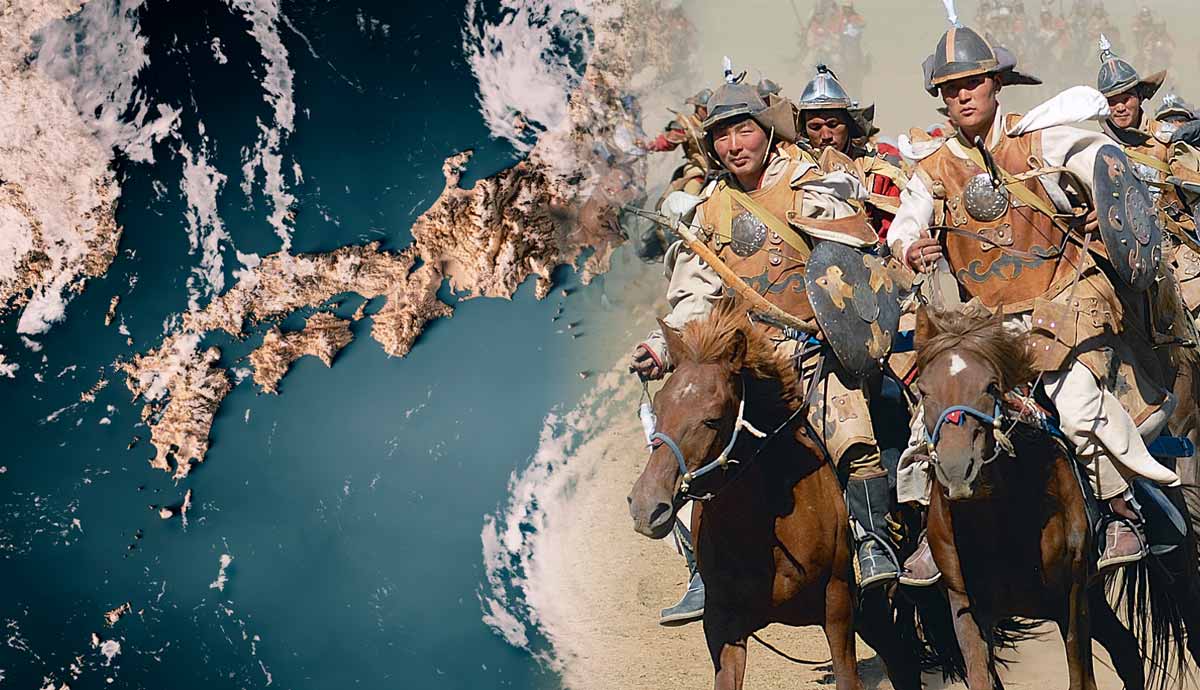
    How Typhoons Stopped Kublai Khans Invasion of Japan
    The Mongols conquered the largest land empire in recorded history. Their realm stretched across the Asian continent from China all the way to present-day Russia, Poland, Hungary, and the Balkans in Europe before declining in the mid-14th century. They are known today for their military capabilities and swiftness with which they defeated their competitors, oftentimes overpowering centuries-old empires. However, in the case of Japan, they were not so lucky. What happened? The story of the Mongols two failed attempts at invading Japan involves politics, naval warfare, and divine winds.Kublai KhanGenghis Khans GrandsonMap of the territory of the Yuan Dynasty around 1290, based on the Encyclopedia of Mongolia and the Mongol Empire by Christopher P. Atwood (2004). Source: Wikimedia CommonsBy the late 13th century, the Mongol empire in East Asia was being led by Kublai Khan, grandson of the first Mongol leader Genghis Khan. Genghis Khans original name was Temjin, meaning blacksmith or of iron, before being changed to Genghis Khan, a title which meant universal ruler.Although the separate Mongol tribes across Central Asia were united under Genghis, the new empire became divided into four separate regions in the decades after his death in 1227. Each region was led by one of his sons and eventually their descendants. Kublai Khan was the son of Tolui, the youngest son of Genghis Khan, who was assigned to the land of Eastern Mongolia.Kublai Khan continued Toluis territorial legacy by continuing Mongol expansion and power in East Asia. Like his grandfather, Kublai was a strategic military leader, and would eventually name his part of the Mongol empire the Yuan, or origin of the universe. This is the empire Marco Polo would come into contact with during his travels to China, even meeting with Kublai Khan himself in 1275. This meeting blossomed into a 17-year relationship, during which Marco Polo served as a personal diplomat for Kublai Khan in his royal court.An Unstoppable Object Meets an Unmovable Force- Diplomacy Between Kublai and BakufuA Japanese Samurai and Ainu in Hokkaido, unknown Edo-period artist, 1775. Source: Hakodate City Museum, HokkaidoBefore the arrival of Marco Polo and the subjugation of China under Kublai Khan, however, the Mongol leader also had his eye set on a territory east of Korea: present-day Japan. There are many theories as to why Kublai Khan wanted to conquer Japan. Some scholars theorize that expansion into Japan was Kublais desire to increase Mongol power and territory, like Kublais grandfather Genghis Khan.Japan was abundant with resources such as gold, silver, iron ore, and other minerals. Additionally, they were equipped with a strong military force. Samurais, meaning ones who serve, were high up in the hierarchical caste system of feudal Japan. The fighting capabilities of the samurai, who began training in childhood and were expert archers and swordsmen, could have made Kublais army unstoppable.Both these factors would have been appealing to Kublai. Some historians, however, argue that the invasion of Japan, at least initially, was part of a military strategy to weaken southern China, at that time under the Southern Song Dynasty (Sasaki, p. 27). Kublai perceived Japan as the lifeline keeping the Southern Song afloat, at least, economically. This point will be explored in more detail below. In order to fully take over the Song, Kublai needed to sever its relationship with Japan.Boat Scene from the Mko Shrai Ekotoba, unknown artist, 13th century. Source: Museum of the Imperial Collections at Tokyo Imperial PalaceKublai sent an ambassador to Japan in 1266 to extend a diplomatic olive branch which was covered in thorns. What Kublai demanded was recognition of his power and tribute to be paid to his empire. This approach was typical of the Mongols; they encountered new territories by offering their absorption into the Mongol empire on the condition the region provide them with tribute. In the case of refusal, the Mongols would turn to warfare.Japan at the time was being ruled by the Kamakura Bakufu or shogunate, a regime in which the emperor was effectively a puppet of the shogun or commander-in-chief. After a lack of response from the shogun, Kublai abandoned his diplomatic efforts and began military preparations. Kublai during that time continued to expand his territory, eventually gaining control over Korea in 1273. Before letting his new subjects catch their breath, he demanded an extensive fleet of ships to be built in order to attack Japan.Although the Mongols were skilled at fighting on land, they were heavily reliant on the newly subjected Koreans and Chinese for maritime knowledge. Much of the manpower used to build and sail these ships was supplied by the Koreans and Chinese, who may have also taught Mongol soldiers. By the summer of 1274, a fleet of 900 ships were ready to be launched from Korea to head towards Hakata Bay in Japan.The Invasion of 1274Scene from the Mko Shrai Ekotoba depicting Mongol bombs, unknown artist, 13th century. Source: Museum of the Imperial Collections at Tokyo Imperial PalaceWhen the Mongol fleet left the ports of Korea, they took over the islands of Tsushima and Iki before arriving in Hakata Bay on the Japanese island of Kysh, in present-day Fukuoka City. Upon their arrival, they were met by Japanese soldiers led by Kikuchi Takefusa, a member of the Kikuchi clan, an important samurai group.Mongol military tactics and technology were new to the Japanese soldiers. The samurai were taken by surprise by the group fighting tactics used by the Mongols. Additionally, the Mongols had a type of weapon they had yet to encounterthe exploding iron bomb.The use of gunpowder to make bombs existed in China prior to the Mongols as early as the 11th century, and were even used against the Mongols by the Song military. This technology not only caused physical damage, but the loud bang it produced was also extremely disorienting for soldiers and horses alike. One can only imagine the chaos of sounds that erupted during this conflict.The Mongol Invasion by the workshop of Kawashima Jimbei II, after Morizumo Yugyo, 1904. Source: The Walters Art Museum, BaltimoreThis chaos is depicted in the Mko Shrai Ekotoba, or Illustrated Scrolls of the Mongol Invasion, which were commissioned by samurai Takezaki Suenaga, who fought against both invasions. Nonetheless, the samurai still were able to force the Mongols to retreat, splitting them into two groups who reconvened at Sohara in north-western Fukuoka.The fighting continued in the bay until the Japanese retreated inland to Mizuki. Japanese soldiers waited there for an attack by the Mongols that never came. The Mongols burned Hakata to the ground, including the Shinto shrines of Sumiyoshi and Hakozaki, but instead of moving inland, left Hakata the next day. Although this first attack on Japan by the Mongols has been written off as Mongol failure, it may not have been intended to fully subject Japan.The initial Mongol attack on Japan could have been intended to weaken the trading link between Japan and China. This is because Hakata Bay was the port that supported the maritime trade between Japan and the Southern Song. This trade helped the Southern Song finance their military expenditureif the Mongols could break the trade route, they could undermine Kublais primary target. By disrupting trade links, the Mongols secured their strategic objectives without any need for further action.The Second Attack and the KamikazeScene from the Mko Shrai Ekotoba or Illustrated Scrolls of the Mongol Invasion, unknown artist, 13th century. Source: Museum of the Imperial Collections at Tokyo Imperial PalaceIf the intention of Kublai Khan was to weaken the Southern Song, he succeeded. Southern Song fell to Kublai in 1279 and southern China was officially absorbed into the Yuan Dynasty. However, if Kublais intention was to weaken the Southern Song, why did he decide to attack Japan a second time? If there really was a storm that weakened the Mongol fleets, perhaps Kublai Khan perceived the invasion of Japan as an unfinished feat. Perhaps, now armed with the strength and numbers of the Southern Song military, he felt fully confident in a positive outcome for attack.It should be noted that again Kublai sent a second ambassador to Japan in 1275. Allegedly, the response by the Kamakura was to behead the envoy. Such an action violated diplomatic norms and would have been cause for war, though the exact reason why Kublai decided to attack Japan a second time has been lost in the sands of time. However, what we do know is that an even greater number of vessels and soldiers accompanied this second attempt.After his conquest of Southern Song, Kublai now had access to an extensive maritime fleet, and double the number of soldiers. Kublai prepared another attack on Japan in 1281, but this time, the number of ships totalled to around 4,400. Kublai also pursued a different strategy for the second invasioninstead of a single attack, Kublai organized two separate fleets that would attack from different directions. However, this strategy could have been a massive mistake.Scene from the Mko Shrai Ekotoba or Illustrated Scrolls of the Mongol Invasion, possibly Mongol ship, unknown artist, 13th century. Source: Museum of the Imperial Collections at Tokyo Imperial PalaceWhen the eastern fleet arrived from Korea at Iko Island, they were supposed to meet a fleet arriving from southern China. Instead, the admiral commanding the southern fleet got sick and had to be replaced, delaying the arrival of the southern fleet by a month. There are reports that the eastern fleet was running out of food and its soldiers were exhausted. Finally, the southern fleet arrived at Iko Island, and both fleets headed towards Hakata Bay.Japan was prepared for a second attack by the Mongols, and spent the years between the first attack in 1274 and 1281 building a 20-kilometer or 12-mile stone wall to defend Hakata. Kublais fleets made it all the way to Imari Bay. After a few days of combat, a typhoon came that destroyed almost 90 percent of the ships. The typhoon mostly impacted the southern fleet, killing between 70,000 and 100,000 soldiers. Allegedly, the ones who survived turned to fighting each other in order to clamber aboard the remaining ships. The eastern fleet returned to Korea, making this event the last time Kublai would try to attack Japan.ImpactsDefeat of the Mongols in the Western Sea by Utagawa (Gountei) Sadahide, 1863. Source: Metropolitan Museum of Art, New YorkThe second attack orchestrated by the Mongols in 1281 would have a lasting legacy on the culture and self-perception of the Japanese people. Japan referred to the arrival of the typhoon as a divine intervention from god, referring to it as the kamikaze, or divine wind. This name would be adopted by Japanese fighter pilots in World War II, whose sacrifice in suicidal missions was perceived like the destructive winds of the 1281 typhoon. This divine intervention signified the superiority of the Japanese people.Additionally, the ability to resist attacks on two separate occasions by a political and military force that overtook places like China and Baghdad reinforced this perceived military superiority. In the 21st century, the defeat of the Mongol invasions continues to be a source of Japanese collective memory and national pride. The bay of Hakata is even a tourist attraction, which could perhaps lead to larger questions about war-related tourism.As for the impact on the Mongols, Japan would always remain a sore spot for Kublai Khan. He began plans for a third attack, but was convinced by his subordinates to abandon them. The attack of 1281 cost Kublai a fortune in terms of weapons and soldiers, and he may not have been able to afford a third invasion of Japan even if he wanted to.Likewise, Kublai enjoyed limited success in his other ventures to invade various Southeast Asian states, and Mongol control of China began to deteriorate in the decades following his death in 1294. Mongol rule in China lasted until 1368, when the Yuan Dynasty was overthrown by the Ming Dynasty.Sources cited:Sasaki, R. J. (2015).The Origins of the Lost Fleet of the Mongol Empire. Texas A&M University Press.
    0 Comentários 0 Compartilhamentos 9 Visualizações
  • WWW.THECOLLECTOR.COM
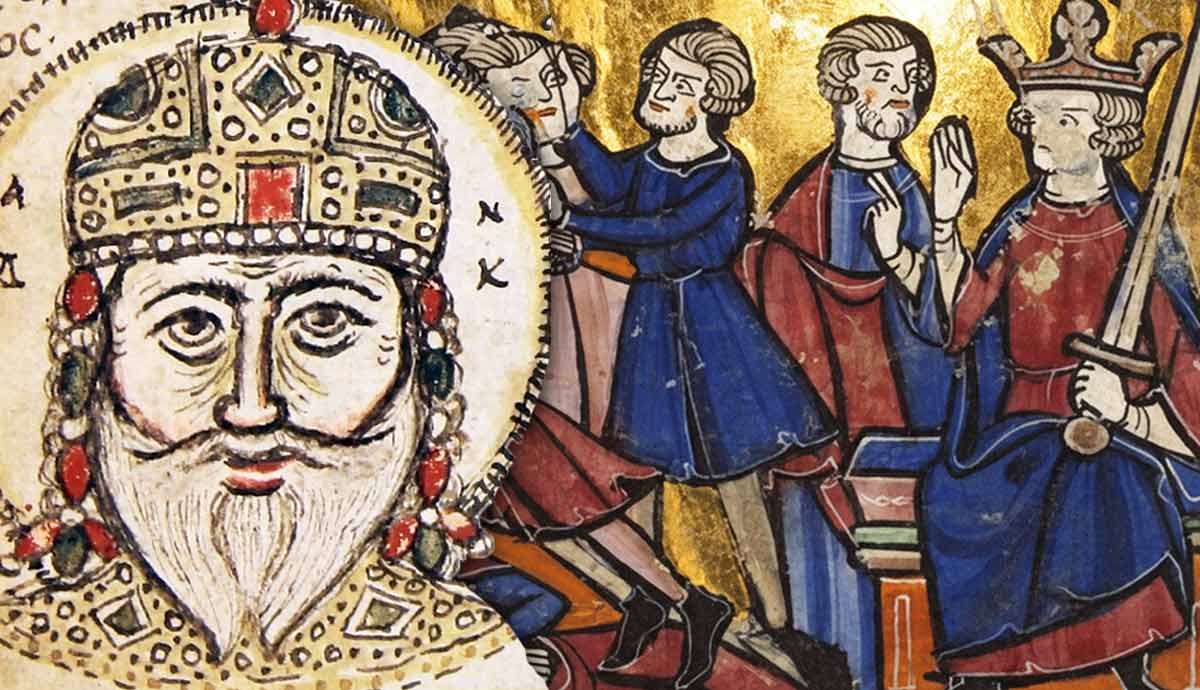
    4 Byzantine Emperors Who Did Everything to Win Power
    As the continuation of the Roman Empire, the Byzantine Empire also did not have a clear order of succession. The emperor was seen as Gods representative on Earth. In theory, anybody could have become emperor if it was Gods will. As a result, the Byzantine state is famous for its countless civil wars and succession crises. There were many dynasties throughout Byzantiums long history, but most of them did not last very long. In this article, we present four examples of the Byzantine emperors whose rise to power was marked by political intrigues, conspiracies, and civil wars.1. Bloody Comeback: Rises and Falls of Justinian II (685695 and 705711)Coin of Justinian II with Jesus Christ on the obverse, c. 692695 CE. Source: Dumbarton OaksAlthough not as famous as his namesake Justinian the Great, the life of Justinian II represents one of the most intriguing stories. He was one of the only two Byzantine emperors who had two separate reigns. The first reign was very eventful, despite the fact that he was only 16 or 17 years old when he came to power. He fought many campaigns against Arabs, Slavs, and Bulgars. These wars were very expensive, which often came at the cost of the aristocracy, whom he forced to fund his campaigns and lavish building projects.A strong discontent with his rule ended in a coup in 695, led by Leontius, who became the next emperor (695698). As punishment, Justinians nose was cut off, and he was exiled to Cherson in the Crimea. Justinian II spent the next ten years in exile with only one thing on his mindrevenge and return to power.Mutilation of Justinian II, from a 15th-century French manuscript. Source: Wikimedia CommonsMeanwhile, a general named Apsimarus took the Byzantine throne and ruled as Emperor Tiberius III (698705). Justinian fled from Cherson in 702/703 CE to seek an alliance with the Khazars. He even married the Khagans daughter, who converted to Christianity and took the name Theodora. Emperor Tiberius III bribed the Khazar ruler to conspire against Justinian. They sent two assassins, whom Justinian personally strangled after his wife informed him about the plan. After that, they fled to Bulgaria, where Justinian acquired the help of the Bulgarian Khan Tervel.In the spring of 705 CE, Justinian II and Tervel showed up in front of the walls of Constantinople with a strong Bulgarian and Slav army. Justinian knew that the walls of Constantinople were unbreachable, so he took another approach. Along with some of his men, he entered the city through an underground water pipe. They staged a coup, and Justinian II regained the throne, despite the fact that he was mutilated.Emperor Philippicus sends his men to execute Justinians son Tiberius, from a 14th-century Bulgarian manuscript. Source: Wikimedia CommonsHe awarded Khan Tervel with the title of Caesar, making him the first non-Roman to hold that title. The second reign of Justinian II was marked by blood and repression. His predecessors, Leontius and Tiberius, were publicly humiliated and beheaded. Ecumenical Patriarch Callinicus was blinded and exiled to Rome. He also ordered a punitive expedition against the city of Ravenna because of the anti-imperial sentiment. The whole city was raided in the brutal campaign. Because of his brutality and repression, Justinians rule became increasingly unpopular.The final end of Justinian II started in the same city he was first exiled to, Cherson. The soldiers he sent to put down the rebellion turned against him. In 711 CE, Justinian II was captured and beheaded by the general Bardanes. His head was sent to Italy to be paraded in Rome and Ravenna. Bardanes was proclaimed as Emperor Philippicus (711713). In Constantinople, Justinians son was captured and slaughtered, putting a bloody end to the dynasty of Heraclius.2. From Peasant to Emperor: Basil I, Macedonian (867886)Basil I, underdrawing from a 9th-century Byzantine manuscript. Source: Bibliothque nationale de FranceWhen young Basil came to Constantinople in c. 840 CE, he was just a poor and illiterate village boy looking for a better life. 27 years later, he became the emperor of the Romans. Basils early life and rise to power are obscured by the popular legends and tales spread during the reign of the Macedonian Dynasty.Byzantine sources described young Basil as handsome and beautiful, so it is not difficult to imagine that he used his charm to get what he wanted. We do know that he eventually became a groom in the service of Theophilitzes. Theophilitzes was a relative of Caesar Bardas, uncle of the Emperor Michael III, and one of the most powerful men in the empire. One day, while he accompanied Theophilitzes in the city of Patras, Basil caught the eye of a wealthy widow, Danielis. It seems that he influenced her so much that she gave him great fortune.As the story goes, the emperor noticed Basil when he defeated a Bulgarian champion during a wrestling match. Because of his abilities, Basil soon became the emperors personal horse tamer and a bodyguard.Basil defeats a Bulgarian wrestler, from a 12th-century manuscript. Source: Library of CongressWhile at the court, Basil managed to exert a great influence on the young emperor Michael III, and the two became close companions. Basil even divorced his wife in order to marry the emperors mistress, Eudokia Ingerina. However, the emperor kept a relationship with her. At the same time, Basil was involved with Thekla, the emperors sister.Basils main opponent was Caesar Bardas, so he decided to put him away. He managed to convince the emperor that Bardas was plotting against him, so the two of them conceived a plan to kill Bardas. A supposed campaign against Arabs was organized, only to get Bardas out of Constantinople. One day, Bardas was brutally slaughtered by Basil and his companions in the presence of the emperor in 866 CE. With Bardas dead, Basil became the most influential man in the court. Not long after these events, Michael III publicly crowned Basil as his co-emperor.Murder of Caesar Bardas, from a 12th-century manuscript. Source: Library of CongressIt is important to note that much of the bad reputation of Michael III stems from propaganda spread during the Macedonian Dynasty. Because of that, Michael was remembered as a reckless drunkard. Some of his decisions might seem strange, but we do not know the whole truth. It appears that Michael III saw through Basils intentions as he started to mistrust him. He even publicly mocked his proclamation as co-emperor on one occasion.One night in 867 CE, when the emperor was sleeping drunk in his chambers, Basil and a few of his companions brutally slaughtered the emperor, who was only 27 years old. Since Michael III did not have any children, Basil automatically became the sole Emperor of the Romans. The occasion marked the bloody beginning of the Macedonian Dynasty, which would rule the Byzantine Empire until 1057 CE.Controversy marked Basils ascension. Nevertheless, his reign was stable and successful. He issued many new laws, which were later collected in the Basilika, one of the most important works of Byzantine law. He pursued an active policy in the West, which improved Byzantine positions in southern Italy.3. From Rogue Prince to Ruthless Tyrant: Andronikos I Komnenos (11831185)A miniature of Andronikos I Komnenos, 15th century. Source: Estense Digital LibraryThe reign of the last emperor of the Komnenos Dynasty was short and bloody. In contrast, his life before coming to power was full of rebellious adventures, scandalous love affairs, and political intrigues. Andronikos grew up with his cousin and the future Emperor Manuel I Komnenos (11431180). Although the two were great friends, their relationship soon turned to rivalry.In the early 1150s, Andronikos entered into a relationship with Eudokia, his and Manuels niece. At the same time, he plotted against Manuel together with Geza II, King of Hungary. Because of this, Manuel imprisoned Andronikos in 1155. He managed to escape in 1159, only to be caught and imprisoned again. He escaped for a second time in 1164 and fled to Prince Yaroslav of Galicia to seek an alliance against Manuel. However, Manuel soon formed an alliance with Yaroslav, and Andronikos had to reconcile with his cousin. Only two years had passed, and Andronikos was banished from Constantinople. He refused to swear an oath to Prince Bela III of Hungary, who was designated as heir to the Byzantine throne at the time. He was given a post in Cilicia, far away from the capital.Andronikos I blinds his enemies, miniature from a 13th-century French manuscript. Source: Portail BiblissimaFrom Cilicia, Andronikos fled to Antioch, where he had another scandalous affair. This time, he seduced Philippa of Antioch, who was the sister of Manuels wife, Maria. They soon fled to the Kingdom of Jerusalem, where Andronikos left Philippa for Theodora, daughter of his cousin Isaac Komnenos. Andronikos and Theodora had a long-lasting relationship, which produced two children.Emperor Manuel ordered Andronikos to come back to court, but he refused and fled Jerusalem with Theodora. Two of them wandered through Anatolia and the Caucasus for several years. During that time, they were welcomed to the courts of many different states. After Manuels officials captured Theodora in 1180, Andronikos was forced to come back to Constantinople and beg for forgiveness. Manuel I made him a governor of Paphlagonia, where he lived with Theodora for the next two years.After Manuel I died, he was succeeded by his underage son Alexios II (11801183). The real power was in the hands of his mother, Maria, who ruled as regent. Andronikos came to Constantinople in 1182 at the invitation of Maria, who faced substantial opposition in the capital.Death of Andronikos I, miniature from a 15th-century French manuscript. Source: Portail BiblissimaAndronikos soon turned against Maria and even forced 13-year-old Alexios II to sign a document that condemned her to death. Although Andronikos presented himself as a savior of Alexios II, that did not stop him from ordering his murder in 1183. To boost his legitimacy, Andronikos married eleven-year-old Empress Agnes of France, wife of the late Alexios II.Andronikos had a lot of internal enemies, many of whom he blinded or executed. Nobles were especially hostile towards his rule because of his anti-aristocratic policies, which were enforced brutally. Although his reforms did improve the lives of the peasantry, Andronikoss reign is mostly remembered for political purges and the reign of terror. Ultimately, his reign greatly destabilized the empire. Many nobles who escaped persecution sought aid from the Empires enemies. In the end, Andronikos was captured in Constantinople during the uprising against him. He was publicly tortured for several days. After he died, his remains were left unburied for several years.4. Master of Political Intrigue: Michael VIII Palaiologos (12591282)A miniature of Michael VIII Palaiologos, 15th century. Source: Estense Digital LibraryThe early life and career of Michael Palaiologos remain largely unknown. His father, Andronikos, served as a megas domestikos (commander-in-chief) of the Nicene Empire. Michael is recorded as a governor of two important towns in Thrace in c. 1246. It seems that Emperor John III Vatatzes (12221254) became suspicious of Michael, as he accused him of treason. As suggested by the Metropolitan Bishop Phokas of Philadelphia, Michael was put on trial by ordeal, with a red-hot iron used to prove his innocence or guilt. Apparently, Michael avoided the trial by suggesting that he would gladly accept the red-hot iron if Metropolitan Phokas would give it to him from his own hands.Because Michael had considerable support from the army and political elites, charges were soon dropped. After the trial, Michael was given command of the Latin mercenaries. When Emperor John III died in 1254, he was succeeded by his son Theodore II Laskaris (12541258). A new emperor took a particularly harsh stance against the aristocracy, which he mistrusted.Seal of Michael VIII Palaiologos, c. 12611282. Source: Dumbarton OaksMichael fled to the Seljuk Sultanate of Rum, where he commanded Christian mercenaries. His motives are unclear, but it is possible that he sought Seljuk assistance to overthrow Theodore II. However, his plan failed when Theodore II settled a peace agreement with the Seljuks, and Michael had to return to Nicaea. Theodore II died in 1258, leaving his eight-year-old son, John IV Laskaris (12581261), as the new emperor. In his testament, Theodore II appointed his protovestiarios, George Muzalon, as a regent and guardian for his son. He was soon killed in a conspiracy led by Michael, who replaced him as Johns regent.From this point onward, Michaels rise only accelerated. By November of 1258, he was given the titles of megas doux and despotes, and on January 1, 1259, Michael Palaiologos was crowned co-emperor. In 1261, one of Michaels generals managed to get into Constantinople and retake it after 57 years of Latin rule. Michael VIII triumphantly entered the city and was crowned again, this time in Hagia Sophia. The main obstacle to his power was the young John IV, who was blinded and detained in a castle.Miniature of Emperor Michael VIII Palaiologos, 14th century. Source: Munich LibraryMichael VIII used diplomacy against the numerous enemies of his restored empire. He managed to secure the East from the Mongols by marrying his illegitimate daughters to Mongol rulers. His main enemy and rival was Charles of Anjou, who had just become the King of Sicily in 1266. Just as ambitious as Michael, Charless main goal was restoring the Latin Empire.In order to stall Charless plans, Michael attempted to negotiate a Church union with Pope Gregory X (12711276). While these negotiations bought time, they also caused a significant internal division. By 1281, Charles had gathered a large naval force for the attack on Constantinople. Ultimately, Michael VIII was victorious.The old Byzantine emperor conspired with Peter III of Aragon to overthrow Charles from Sicily, which eventually happened after the rebellion called the Sicilian Vespers. Michaels Italian ambassadors took an active role in instigating a revolt. Despite his success, Michael VIIIs reign came at a cost to his successors, who couldnt prevent the Byzantine Empire from declining again.

    0 Comentários 0 Compartilhamentos 9 Visualizações