
• WWW.THECOLLECTOR.COM
    How Interaction Between First Nations and Europeans Birthed Canadas Pidgin Languages
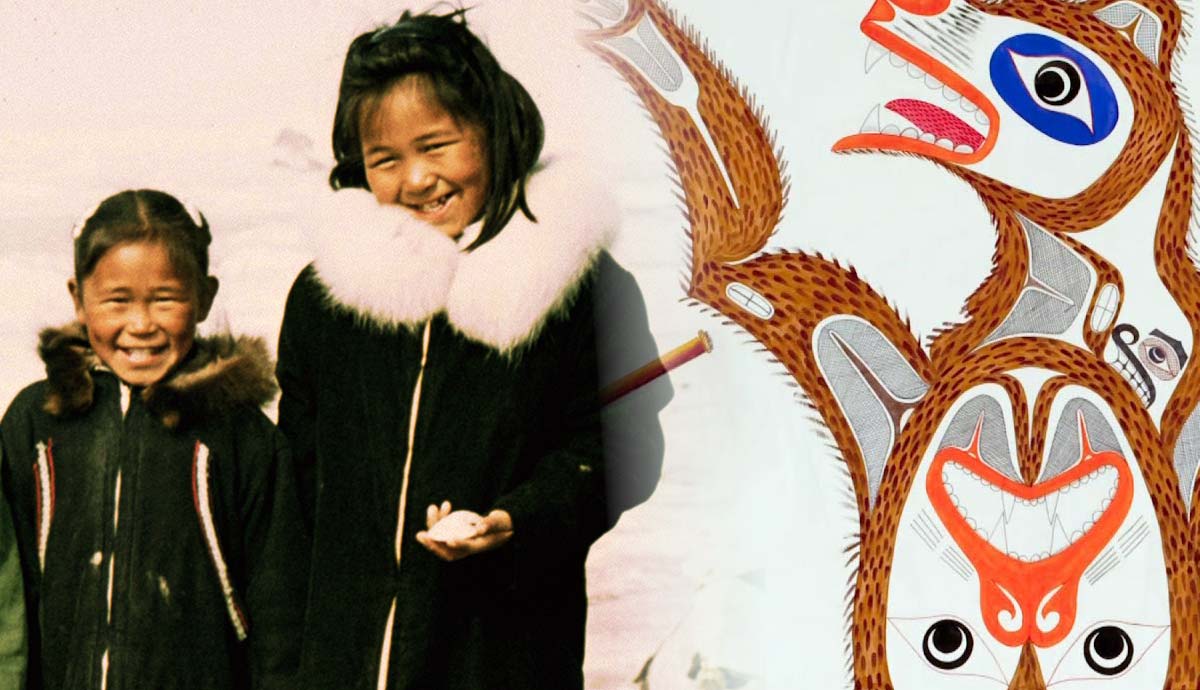
    From the Pacific Northwest to the Atlantic Provinces, from the Arctic to the Great Lakes region, the colonization of present-day Canada completely altered the lives of the First Nations who had lived there since time immemorial. Their health declined as European-imported diseases swept through Indigenous communities. Their diets changed as settlers and loggers invaded their hunting grounds. Alliances shifted. Entire communities were disrupted. Colonial authorities deliberately targeted their languages, preventing children in residential schools from speaking them. However, new contact languages emerged across Canada to facilitate communication between Anglophone and Francophone newcomers and First Nations. These simplified languages are known as pidgins.Eskimo Trade JargonInuit, by Louise Nigyok. Source: Meadows Museum of ArtThe Inuit refer to Herschel Island, located in the Beaufort Sea off the coast of Yukon, as Qikiqtaruk, an Inuvialuktun term that translates simply as island. East of Herschel Island is Point Barrowknown locally as Nuvukwhich is the northernmost point of the United States, located in what is now Alaska. South of Point Barrow lies Point Hope, just above the Arctic Circle.Its strategic position in the Point Hope landhead allowed the local Inuit to hunt whales more easily, hence its local name, Tikiaq, which translates as forefinger. Further south, nestled on the Baldwin Peninsula in Kotzebue Sound along the eastern coast of present-day Alaska, is Kotzebue. Known in the Iupiaq language as Qikiqtaruk (or Kikiktagruk) meaning small island or resembling an island, Kotzebue was an important trading center during the 18th and 19th centuries.Indigenous Children in Alaska, by the UC Berkeley, Department of Geography. Source: UnsplashDespite the vast distances that separate them, all these places are united by a pidgin language (or jargon) that emerged during the 19th century when the local population needed a shared means of communication with European whalers, traders, and Russian settlers. This language is known as Eskimo Trade Jargon. Now extinct, it combined elements from various Indigenous languages, particularly those of the Inuit and the Yupik, as well as vocabulary primarily related to trade goods like whaling products, fur, and fish, from English and Russian.Despite being a pidgin (a simplified language by definition) the Eskimo Trade Jargon had at least four dialects that emerged along the coast of present-day Alaska and in Yukon, Canada, at Herschel Island, Point Barrow, Point Hope, and Kotzebue. By the early-mid-20th century, Eskimo Trade Jargon had already fallen out of use.While widely used in the 18th and 19th centuries and during most of the 20th century, the term Eskimo used to describe the closely related Indigenous peoples of the Arcticthe Inuit and the Yupik (or Yuit)is generally considered offensive today.The Inuit and the FrenchKimmirut, Nunavut, photograph by Isaac Demeester. Source: UnsplashToday, Inuktitut () is widely spoken in the Canadian Arctic, throughout most of what is now the Inuit Nunangat ( ), the place where Inuit live. However, it is referred to as Inuktitut mainly by the non-Inuit population and in Nunavut, where it is an official language, alongside English, French, and Inuinnaqtun. In Nunavik (northern Quebec), one of the four Inuit homelands that make up Nunangat, it is called Inuttitut. In Nunatsiavut (northern Labrador), it is referred to as Inuttut.Over the years, various Inuktitut-English pidgins emerged across Nunangat as Inuit communities encountered English-speaking whalers, sealers, and fur traders. Between the 1550s and the 1620s, Basque fishermen and whalers established various outposts in Southern Labrador, typically living and working there for a few months from summer until late fall.Inuit artist Aggeok Pitseolak with other Inuit in Keatuk, Baffin Island, Nunavut. Source: Canadian Museum of HistoryBasque newcomers inevitably interacted with the local First Nations. Although they had good trading relations only with the Montagnais and the Iroquoians, they engaged also with Inuit communities, whose descendants today wish to be known as Labradormiut.In his work Trade Languages in the Strait of Belle Isle, Peter Bakker notes that a Basque fisherman from Bayonne reported in 1542 on his encounters with the local Inuit, whom he referred to as Indians. The Inuit he met were able to understand any language, French, English and Gascon and their own tongue.Around 1580, the so-called Algonquian-Basque pidgin (or Souriquois) emerged in the Gulf of Saint Lawrence, with the Basque language serving as its main lexifier. Evidence indicates that it was widely used across a large area, ranging from Southern Labrador to New England and along the St. Lawrence River.The St. Lawrence River, photograph by Karl-Heinz Mller. Source: UnsplashDuring the 17th and 18th centuries, the French replaced the Basque fishermen and established new outposts in the Strait of Belle Isle (Beautiful Island, in French), an important waterway in the southeast of the Labrador Peninsula that separates Labrador from Newfoundland. A new pidgin, initially called Broken French, developed as a result of contact, which is now known as Labrador Inuit Pidgin French (LIPF), or Inuit French Jargon.While the Inuktitut-English pidgins that originated across Nunavut had English as their lexifier, the Labrador Inuit Pidgin was influenced mainly by French. In the 1740s, French Canadian entrepreneur Jean-Louis Fomel reported that this pidgin borrowed words not only from French but also from Breton, Basque, Spanish, and Dutch.Finally, in 1763, Britain took possession of Labrador, and the French and Basque outposts were subsequently overtaken by whalers and fishermen from present-day New England and Britain. By the 18th century, most non-English-based pidgins gradually fell out of use.Slavey JargonA group of Slavey people gathered to receive treaty money from the Dominion Government, 1914. Source: Wikimedia CommonsThe Slavey Jargon (also known as Broken Slavey or Broken Slav) was a Slavey-based pidgin used throughout the 19th century in Yukon, particularly along the areas two main rivers, the Athabasca River and the Mackenzie River (known in Inuvialuktun as Kuukpak, meaning the great river). The Slavey Jargon combined English and Chipewyan (Dene Suline) nouns with French verbs and pronouns, along with elements from Slavey, the Athabaskan language spoken by the Dene First Nation.The Custodians of a vast area stretching from northern Alaska and the Canadian Arctic, south of Inuvialuit, to the southwestern United States, the homelands of the Dene encompassed western Yukon, the Mackenzie Valley, the northern regions of British Columbia, Saskatchewan, Alberta, and Manitoba. The Slavey Jargon was spoken not only by the Dene people but also by the Mtis and Inuit.Mackenzie River, photograph by Alan Emery. Source: UnsplashOver the years, linguists and missionaries, including Father milePetitot (1838-1916), debated the proportions of English and Chipewyan elements in Slavey Jargon, as well as the similarities and differences between the Slavey Jargon and the so-called Loucheux Pidgin. Petitot, in particular, maintained that the Loucheux Pidgin was predominantly spoken along the Peel River, the northernmost tributary of the Mackenzie River, as well as along sections of the Yukon River.The Yukon River, one of the longest rivers in North America, flows north from the northwest corner of British Columbia across Yukon and into Alaska before emptying into the Bering Sea, traversing the ancestral lands of the Tlingit (ingt, the people of the tides), Han (Trondk Hwchin), Southern and Northern Tutchone, and Tagish (Carcross). At the end of the 19th century, especially during the 1896-1903 Klondike Gold Rush, the shores and waters of the Yukon River became a site of interaction, trade, and sometimes conflict, between Europeans and First Nations. It was along these shores that the Loucheux Pidgin emerged and developed.Nootka JargonThe Nuu-chah-nulth were (and continue to be) the Traditional Custodians of the west coast of Vancouver Island, photograph by Conrad Stel, 2023. Source: American Museum of Natural HistoryThe Nootka Jargon, also known as Nootka Lingo, was widely used across the Pacific Northwest during the late 18th and early 19th centuries. The term Nootka is the English name of Nuuaanu (or Nuu-chah-nulth), the Southern Wakashan language spoken by the Nuu-chah-nulth, the Traditional Custodians of the west coast of Vancouver Island.Interestingly, Nuuaanu translates to all along the mountains and sea. Their ancestral lands extended from Point-no-Point in the south to Brooks Peninsula in the north, encompassing Ucluelet, Yuquot, and what is now called Nootka Island. It was here, at Yuquot, that Captain James Cook first encountered the Nuu-chah-nulth in 1778, and it was Cook who named them Nootka after the group he first encountered directed his ship to come around the harbor. Nuutkaa means to circle around or to go around.Nootka Sound, British Columbia, the inlet where James Cook first encountered the Nuu-chah-nulth, photograph by Conrad Stel. Source: UnsplashThe Nuu-chah-nulth were hunter-gatherers and skilled whalers, as well as among the first people in the Pacific Northwest to interact with Europeans. Tragically, within less than 50 years, about 90% of the Nuu-chah-nulth population on Vancouver Island perished after coming into contact with European-imported highly infectious diseases to which they had virtually no immunity. Diseases like malaria and smallpox spread rapidly throughout Vancouver Island, devastating communities that were once thriving.A Nuuaanu-based pidgin, the Nootka Jargon emerged to facilitate communication between the Nuu-chah-nulth and Russian, European, and American whalers, traders, and mercantilists. Some linguists believe that the Nootka Jargon may have been a precursor to the Chinook Jargon, as the Nuu-chah-nulth language contributed much of the words of the Chinook Jargon.Chinook JargonFort Vancouver, as depicted in Joseph Gastons Centennial History of Oregon, 1827. Source: Wikimedia CommonsThe Chinook Jargon is commonly referred to as the language of the Pacific Northwest. As mentioned above, the Nuu-chah-nulth-based Nootka Jargon likely served as a foundation for the Chinook Jargon, given the significance of Vancouver Island and Nootka Sound in early interactions between local populations, James Cook, and traders.From the late 18th century, various Nuu-chah-nulth word lists circulated among Anglophone and Francophone fur traders operating in present-day British Columbia, along the Columbia River, and on Vancouver Island. These word lists are believed to be the basis from which the Chinook Jargon developed. Traveling along trading routes, the Jargonalso known as Chinook Wawa, with wawa meaning talkquickly evolved, incorporating terms and grammatical structures from French, English, and various Salish languages.Columbia River, photograph by Jamie Pilgrim. Source: UnsplashWhen the Hudsons Bay Company (HBC) constructed Fort Vancouver between 1824 and 1825, approximately 150 km (93 miles) inland on the north shore of the Columbia River to manage trade from Alaska to California, the Chinook Jargon became the primary language spoken among the people working there. Roman Catholic priest Modeste Demers even compiled a dictionary of Chinook that became widely used among employees of the Hudsons Bay Company, trappers, coureurs des bois (wood-runners, as they were known in English), Protestant and Catholic missionaries, as well as Chinese immigrants and Indigenous and non-Indigenous workers in canneries and mills.In the 19th century, Chinook Jargon was spoken not only in British Columbia but also in parts of Alaska, present-day Oregon, Washington, Idaho, Montana, and Northern California. Today, despite its rapid decline in the early 20th century, Chinook Jargon remains the most well-known of the many pidgin languages spoken across Canada during the Colonial Period.Death of Captain Cook, painting by George Carter, 1781. Source: National Museum of AustraliaStarting in the mid-16th century, pidgins emerged across present-day Canada and the United States. These were simplified languages with a reduced vocabulary and basic grammatical structures meant to facilitate communication between local Indigenous populations and newcomers, such as settlers, traders, missionaries, or employees of the Hudsons Bay Company.In most cases, these newcomers were either Anglophone or Francophone, but in particular regions, such as the Arctic, the Inuit also encountered Spanish and Russian traders and Basque fishermen. The pidgins that arose from these interactions, such as the Eskimo Trade Jargon, the Labrador Inuit Pidgin French, the Chinook Wawa, and the Slavey and Nootka Jargons, offer important insights into the complex colonial history of North America.
    0 Commenti 0 condivisioni 4 Views
  • WWW.THECOLLECTOR.COM
    4 Heroines of the Titanic Who Braved the Waters
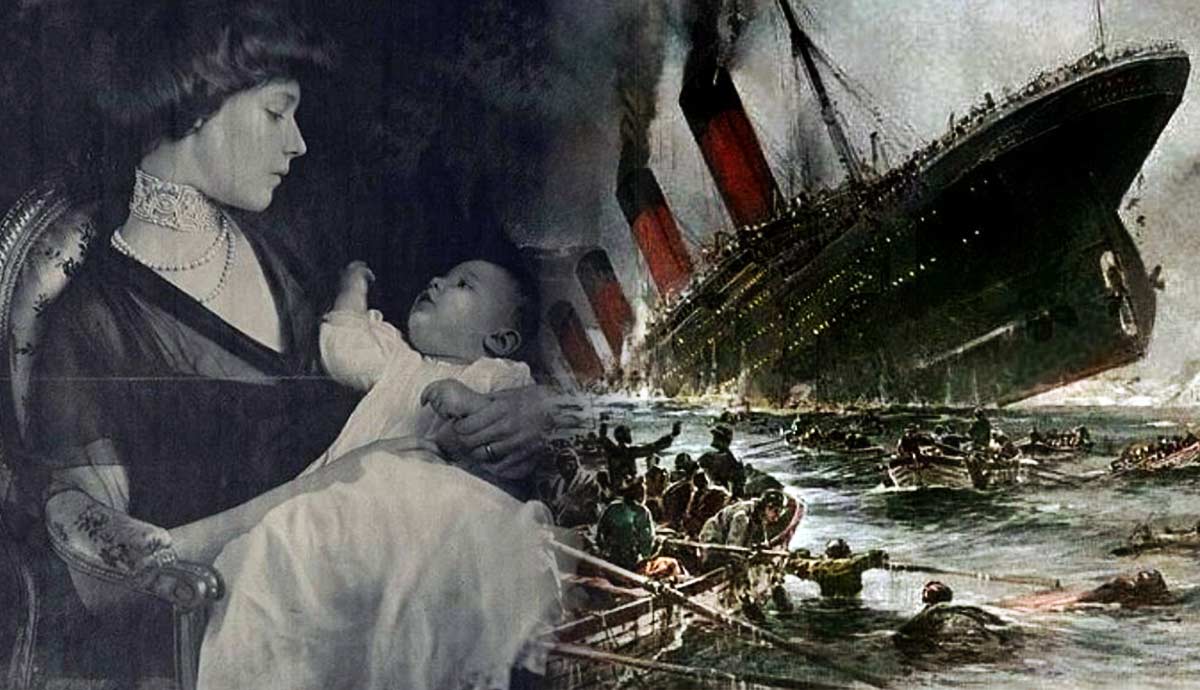
    The Titanic is known for its grandeur, its tragic end, and the stories of those who perished. Not nearly discussed enough however are the stories of incredible feminine heroism. Some of the Titanics most remarkable survivors were women who defied traditional expectations, showing unshakeable courage in the face of disaster.1. Mary Kelly: The Irishwoman Who Saved Two OrphansWoman and Titanic, by Coolarts223. Source: DeviantArtMary Kellys story is not just about survivalthough getting off the Titanic from steerage was quite the achievement. It is also about her unexpected role in one of the most curious mysteries swirling about that infamous night. At 22, Mary, from County Westmeath, boarded the Titanic in Queenstown with dreams of starting a new life overflowing with opportunity in New York with her fianc, John Heslin. After navigating the chaos of the sinking ship and finding her way to collapsible Lifeboat D, she became an impromptu guardian to two curly-haired French boys.Called the Titanic Waifs, these two boys were improperly dressed for the cold conditions and couldnt speak a word of English. No one at the time knew, but Edmond and Michel Navratil, aged two and three, were smuggled aboard the Titanic by their father, Michel Sr., under the alias Louis Hoffman. He had taken them in a dramatic act of defiance against their mother in France and the courts that had just awarded her custody of their sons amid their separation.As the ship sank, Michel Sr. did the last decent thing a parent could dohe handed his boys to a stranger, probably knowing he wouldnt be there to see them grow up. The boys were quite lucky: this was the last lifeboat to leave the Titanic as the water was making its way up the final stairwell leading to the deck.Here the boys stories intersect with that of Mary Kelly, whose maternal instincts kicked in while the ships orchestra was probably playing Nearer, My God, to Thee (just jesting, this is an apocryphal though epic story concerning the band). She took the little boys under her wing, comforting and trying to warm them as the lifeboat drifted in the freezing Atlantic. When they finally reached the Carpathia, no one had any idea who the boys wereEdmond and Michel were too young to explain their situation and could have been easily too traumatized to speak at all.Like the boys in her care, Mary had been blessed by fate to get a spot on the last lifeboat. In fact, she hadnt taken the stairs to get to safety like most others had done. Mary, following the guidance of a domestic ship worker, pushed herself up an air shaft to leave third-class rooms behind.The last lifeboat successfully launched from the Titanic, 1912. Source: National ArchivesThe press, as you can imagine, had a field day with the story of the puzzlingly unparented tots, and Mary found herself briefly at the center of a media storm. However, Mary wasnt in it for fame or fortune. After handing the boys over to a rather assertive wealthy first-class passenger, Margaret Hays, Mary quietly went on her way to meet her fianc in New York.The boys were eventually reunited with their mother, Marcelle Navratil, though that was a process in and of itself. Ms. Hays didnt want to hand over the children, and Marcelle had to tell things about her sons to authorities that only their mother could know. The family of three was successfully reunited after some time.Marys story doesnt end with the Titanic, but it certainly gives her quite the origin tale in the New World. She married, raised six children, and lived out her life at least in part on Coney Island Avenue. Her survival, combined with her innate compassion, earned her a place not just in her familys long memory, but in Titanic lorea reluctant hero with a heart big enough to shelter two lost souls.2. Countess of Rothes: The Noblewoman Turned LeaderThe Countess of Rothes. Source: WikitreeLucy Nol Martha Dyer-Edwards, better known as the Countess of Rothes, showed that grace under pressure was not just a lofty idealit was a part of her inner grit. This aristocrat-turned-unlikely-boat captain took command of a lifeboat on the night of the Titanic disaster, proving that calm capability and compassion could overcome even the most terrifying circumstances.Nol boarded the Titanic on April 10th, 1912, with her parents (who disembarked in Cherbourg), her cousin Gladys Cherry, and her maid, Roberta Cissy Maioni. She was on her way to Vancouver to reunite with her husband, Norman Evelyn Leslie, the 19th Earl of Rothes. Instead of a grand reunion, she found herself on a sinking ship in the middle of the frigid Atlantic Ocean.Titanic departing Southampton, 1912. Source: Wikimedia CommonsWhen the iceberg struck, Nol and her cousin had just settled in their first-class cabin for the night. At first, they werent overly concerned about the odd scraping noise they heard, but once Captain Smith recommended they fetch lifejackets, they realized that their night was quickly going to worsen. Nols calm control shone even then, comforting her terrified maid with a fortifying glass of brandy before they all made their way to the boat deck. Once there, the trio was loaded onto lifeboat no. 8, the first one to be lowered from the port side.Here is where the story veers from three unmoored women fleeing the sinking ship to an unbending lady leading the charge. Nol was no passive passenger once secure in the lifeboat; able seaman Thomas Jones quickly noticed her capable presence. In his words, I heard the quiet, determined way she spoke to the others, and I knew she was more of a man than any we had onboard. That was high praise and well-earned.Jones ordered her to the tiller, trusting her to steer lifeboat no. 8 as they rowed into the blackness, away from the dying Titanic. When Jones stated that he wanted to go back to find other survivors and pull them from the icy waters, Nol wholeheartedly expressed her support for the plan. However, these two brave souls were outvoted by their fellow lifeboat passengers, who feared that the suction from the sinking liner would pull their tiny dingy into the depths with her.Titanic sinking, colorized, by Willy Stower, after 1912. Source: GetArchiveIt wasnt just Nols leadership in the frosty dark that impressed. When one of the lifeboats passengers, a newlywed named Maria Peasco, was devastated by the loss of her husband, Nol stepped away from steering to offer comfort (no brandy was conveniently on hand this time).After being rescued by the Carpathia, the countess of Rothes didnt stop for a wellness day. She continued to care for her fellow survivors, nursing the injured and using her sewing skills to fashion warm clothing from blankets for those in second and third class who were suffering in the cold. Her humble, no-nonsense attitude about her role only added to her legend. While Joness account of her heroics spread through the press, Nol brushed off any notion of being a heroine, focusing instead on the people she had helped.The countess and Jones had formed a true friendship aboard that lifeboat, the kind that can only be found amongst those whove survived something shocking together and came out on the other side with respect for how one another handled it. The two exchanged regular correspondence for the rest of their lives, and their families have met up in recent years to celebrate two people who, on the surface, couldnt have been more different but, deep beneath societys trappings and expectations, had matching mettle.The countess of Rothes may have boarded the Titanic as a noblewoman, but she left it as a shining example of female stalwartnessa rare beacon of strength, empathy, and quiet heroism in the face of an unexpected catastrophe on an unsinkable ship.3. Madeleine Astor: A Young Mothers StrengthYoung Madeleine Astor, 1910. Source: PicrylMadeleine Astor was the epitome of upper-crust New York societywithout quite being part of the Four Hundred club that her mother-in-law, the famed Caroline Astor, would have approved of. Her family came from a respectable lineage: her mother, Katherine Talmage Force, boasted a former Brooklyn mayor in her family tree, while her father, William Hurlbut Force, owned a shipping company and held a seat in the New York Chamber of Commerce. They may not have had the gravitas of the Astor name but were certainly a class above mere new money.Described by a Paris correspondent as a sweet girl who, knew how to twine herself around the heart of anybody, Madeleine seemed destined for a comfortable life, though perhaps not the grandeur she found in her marriage to a recently divorced Astor. All that came to an end when fate threw her into the watery chaos of the Titanic disaster.As the ship struck the iceberg, Madeleine and her much older husband, Colonel John Jacob Astor IV, werent immediately filled with worry. In fact, they were passing the time relaxing on the mechanical horses in the ships gymnasium while other passengers scrambled for the lifeboats. Astor, ever the steady seaman, remained convinced that the ship would stay afloat, though he still insisted Madeleine bundle up for warmth. He even played the ladys maid and assisted her in changing into warmer clothes, right there on the deck.It was as panic truly set in that Madeleine showed her own fortitude. When she spotted third-class passenger Leah Aks clutching her infant son in desperation, Madeleine handed over her scarf to wrap the baby in. It was a small gesture, but one that illustrated her natural compassioneven in the face of looming disaster. It was also an act of kindness from one mother to another, seeing each other in the midst of turmoil.Madeleine and the Titanic Baby, 1916. Source: Library of CongressWhen it came time to board the lifeboats, Colonel Astor famously tried to join his wife but was told only women and children could go. Whether or not he protested, no ones sure, but he sent her off with all the gallant dignity youd expect from a man of his status. As Madeleines lifeboat, No. 4, hit the freezing water around 1:55 a.m., a man in a state of great excitement leaped aboard at the last moment, landing in the boat alongside her. He then was too afraid to make himself useful in any way and spent his time cowering.Now, here is where Madeleines real backbone showed. As the women rowed frantically to escape the sinking ship, the force of Titanics final plunge pulled their lifeboat dangerously close. Icy sea water splashed into the boat, and Madeleine, along with the others (except for our excited man, who hid under blankets), bailed it out as if their lives very accurately depended on it.In the dead of night, freezing, soaked, and terrified, the visibly pregnant Madeleine kept her composure. When the boat finally managed to distance itself from the deadly suction, Madeleine and the crew demonstrated the courage to row back and pull six men from the freezing waterthough two of them died from exposure soon after. Madeleine Astor was not exactly what her social equals would have expected from the fragile wife of one of Americas wealthiest men, but she handled herself with gumption and grace.John Jacob Astor IV, c. 1895. Source: Wikimedia CommonsThe press later painted Colonel Astor as the great hero of the night for having helped save not only his wife but two other women. Madeleines own heroism presented itself in different ways. Despite the stress and trauma of the Titanic disaster, she carried her pregnancy to term, giving birth to John Jacob Astor VIdubbed the Titanic babyin August that same year.Because life in high society never strays too far from legal drama, by then the details of Colonel Astors will had become public. He left Madeleine a cool $100,000 outright (a tidy $2.75 million in todays terms), the use of his home on Fifth Avenue, and a $5 million trust fund. Their son received a $3 million trust of his own. After all, who wouldnt need the equivalent of an $80 million trust fund to help ease the trauma of losing a father on the Titanic? However, Madeleines benefits only lasted as long as she was willing to remain single.4. Edith Rosenbaum: A Journalist With a Lucky PigAdvert for Ediths Business, 1922. Source: Wikimedia CommonsEdith Louise Rosenbaum (aka Edith Russell) was a remarkable woman, born into a wealthy Jewish family in Cincinnati, Ohio, on June 12, 1879. Her father, Harry Rosenbaum, was a successful clothes manufacturer who had emigrated to the US from Germany before her birth. Edith, an only child, grew up surrounded by affluence, and it wasnt long before she made her way to Europe to carve out her own path in journalism, fashion, and the limelight.By 1912, Edith had become a well-established fashion correspondent, and she was in Paris covering French fashion at the Easter Sunday races when she decided it was time to return home. She booked her first-class passage on the Titanic at Cherbourg, occupying cabin A-11, and paying 27 14s 5d for her ticket. However, the grandeur of the Titanic did not sit well with Edith. In a letter sent from Queenstown to her secretary in Paris, she expressed her feelings of unease. I cannot get over my feeling of depression and premonition of trouble, she wrote, a chilling foreshadowing of the tragedy to come.Bow of Titanic wreck, 2004. Source: NOAAEdiths premonition wasnt unfounded. The Titanic struck that infamous iceberg on April 14, 1912, and despite the initial reassurances from the crew that there was no immediate danger, Edith found herself in a life-or-death situation. As chaos began to unfold, Edith recalled being pushed by White Star Line director Bruce Ismay toward a lifeboat. Though petrified, Edith eventually boarded Lifeboat 11.It was not just fear and a strong survival instinct that got her through that awful nightit was also a music-box toy pig, a gift from her mother after she had survived a car accident in France. The pig, said to be a symbol of good luck, played a popular tune when its tail was twisted. Edith would later credit this quirky keepsake with helping to soothe both her and the wailing children in the lifeboat during their long, cold wait for rescue.Edith Rosenbaum, photo by Henri Manuel, before 1947. Source: PicrylEdiths life was forever changed by the Titanic disaster. In the years that followed, she became a sought-after speaker, recounting her experiences on the ship and in the aftermath. Often, curious onlookers would ask her about the famous details of the disaster: Did you hear Nearer, My God, to Thee? Were you frightened? Was the water cold? Edith would answer these questions with a mix of grace and dry wit, but it was clear that her connection to the Titanic would shape the rest of her life. The courage she forged that night would get her through her years of war reporting from the field in WWI, marking her as one of the few women to do so.In the decades following the sinking, Edith crossed the Atlantic many times but steadfastly (and somewhat ironically) refused to fly, preferring the relative safety of steamships. She lived a full life, continuing her work in fashion and maintaining a busy social calendar, but the night of the Titanic remained an ever-present chapter in her story. The tragedy not only defined her but also turned her into a symbol of survival and resilience.
    0 Commenti 0 condivisioni 4 Views
  • WWW.DUALSHOCKERS.COM
    Romeo Is A Dead Man Releases On February 11th
    Suda51, the alias of famed developer Goichi Suda, is a man of his word.
    0 Commenti 0 condivisioni 12 Views
  • TECHCRUNCH.COM
    Chicago Tribune sues Perplexity
    The newspaper is alleging copyright infringement and calling out Perplexity's Retrieval Augmented Generation (RAG) as a culprit.
    0 Commenti 0 condivisioni 4 Views

  • TECHCRUNCH.COM
    All the biggest news from AWS big tech show re:Invent 2025
    Amazon Web Services' giant tech conference re:Invent 2025 is happening this week with news ranging from chips to AI services.
    0 Commenti 0 condivisioni 4 Views
  • WWW.LOVEMEOW.COM
    Kittens Born Shortly After Cat was Taken in, Now They're Living the Dream Life They Were Meant to Have
    Four kittens were born shortly after their mother cat was taken in. Today, they're living the dream life they were always meant to have. Skittles, KitKat, Twizzler, and Tootsie RollLori WhiteIt all began when a Good Samaritan crossed paths with a street cat who clearly needed help.The cat was heavily pregnant and searching for a safe place for her kittens. Without hesitation, the kind woman took her in, offering food and shelter. Soon after, the mother cat brought four beautiful kittens into the world.From their first moments, they were protected, warm, and loved. Lori WhiteOnce the kittens were weaned, their mother was ready to let them spread their wings. She could finally be spayed and return to her carefree life, enjoying everything she loved in safety, warmth, and comfort. But the kittens, still a bit shy around people, needed help building confidence through socialization.That's when Lori White, a dedicated volunteer with ARPO (The Alliance for Responsible Pet Ownership), stepped in to help. KitKat and TwizzlerLori WhiteLori welcomed the kittens into her home and prepared a cozy space just for them. At first, they were nervous, clinging to their carrier. But once they realized that food was abundant and always available, their fears melted away."All the white kittens have gray marks on their heads, and the gray kitten has the cutest gray nose," Lori shared. KitKat, Twizzler, Tootsie, and SkittlesLori WhiteThe gray kitten, KitKat, was the tiniest of the bunch and needed a little extra TLC. With proper care, nurturing, and patience, KitKat began to gain weight.Tootsie Roll, the only girl in the litter, arrived with a big personality and an even bigger appetite. "She doesn't like anyone getting in the way of her eating. Her favorite way to eat is to put her foot in the bowl to make sure that portion is hers." Tootsie RollLori WhiteOnce the kittens settled into their routine, mealtime became a full-on spectacle. They turned into tiny food-driven torpedoes, bursting out the door the second it opened and attempting to leap over the baby gate. If Lori was even a minute behind schedule, they made sure the entire household knew it."They are little jumping beans (at mealtime)." Lori WhiteAs they grew, their personalities blossomed. Tootsie's baby blues changed to a striking heterochromia, two different-colored eyes, and she was determined to stand out in every way possible.One day, she spotted a large cone belonging to a resident dog and immediately dove inside to "test" it. Skittles, her equally inquisitive brother, joined her to help with "quality assurance." Skittles and Tootsie RollLori WhiteThe kittens with the delicate gray brushstrokes on their heads loved piling together in a warm cuddle heap, often with KitKat tucked in the middle. When they weren't zipping across the room or pouncing on toys, they transformed into the sweetest snuggle squad.Their purrs rumbled so loudly that it sounded like a chorus from heaven. Lori WhiteAs the holiday season arrived, snow blanketed the world outside, but the kittens stayed warm and cozy indoors with their humans nearby. They "helped" Lori decorate the living room and eagerly devoured their very first Thanksgiving breakfast.After weeks in foster care, they were finally ready for their next chapter. Lori WhiteTootsie and KitKat have found their forever home, while Twizzler and Skittles are still waiting for a family who will cherish them endlessly. "Snow fell last night, and Twizzler and Skittles were warmly tucked away in their bed."Thanks to the compassionate people who opened their homes to this little family, they have flourished. From now on, their winters will always be filled with warmth, comfort, and love. Lori WhiteShare this story with your friends. More on the kittens (in Indianapolis, IN) and Lori's fosters on Instagram @dreaming_of_foster_kittens, and ARPO @arporescue.Related story: Cat Found Curled Up in Leaves Comes Up to Person Who Calls Out to Her, Changing Her Life Forever
    0 Commenti 0 condivisioni 4 Views
  • Strategic Developments Steering the Copper Clad Laminates Market Forward
    Across a wide array of industries, the demand for advanced electronic components continues to expand as companies pursue innovation-driven product development. Copper-clad laminates, acting as the core structural layers of printed circuit boards, play a vital role in enabling the functionality of modern electronic devices. Whether used in communication networks, smart appliances, or automotive...
    0 Commenti 0 condivisioni 7 Views
  • Market Forces Reshaping the Worldwide Aerosol Container Market
    Across industries, the need for functional, reliable, and sustainable packaging continues to expand, driving notable progress within the Aerosol Container Market. Aerosol packaging plays a prominent role in maintaining product stability, enabling hygienic application, and allowing for controlled dispensing—qualities highly valued across consumer and industrial sectors. As global...
    0 Commenti 0 condivisioni 7 Views
  • Pharma Blister Packaging and Its Impact on Healthcare Delivery
    Medication safety and patient compliance are key priorities in modern healthcare, driving demand for packaging solutions that ensure product integrity and usability. The Pharma Blisters Packaging Market addresses these needs by providing protective and user-friendly packaging for solid oral dosage forms. Blister packs safeguard medicines from moisture, oxygen, and contamination while offering...
    0 Commenti 0 condivisioni 6 Views
  • YUBNUB.NEWS
    Jim Acosta Says Trump Should Be Impeached Over Hateful Comments About the Somali Community
    Remember, during his first term, when President Donald Trump referred to Haiti as a "s**thole country"? Celebrities started posing in their "Haiti Is Great Already" T-shirts they got from Conan O'Brien,
    0 Commenti 0 condivisioni 5 Views