



WWW.THECOLLECTOR.COM
How Interaction Between First Nations and Europeans Birthed Canadas Pidgin Languages
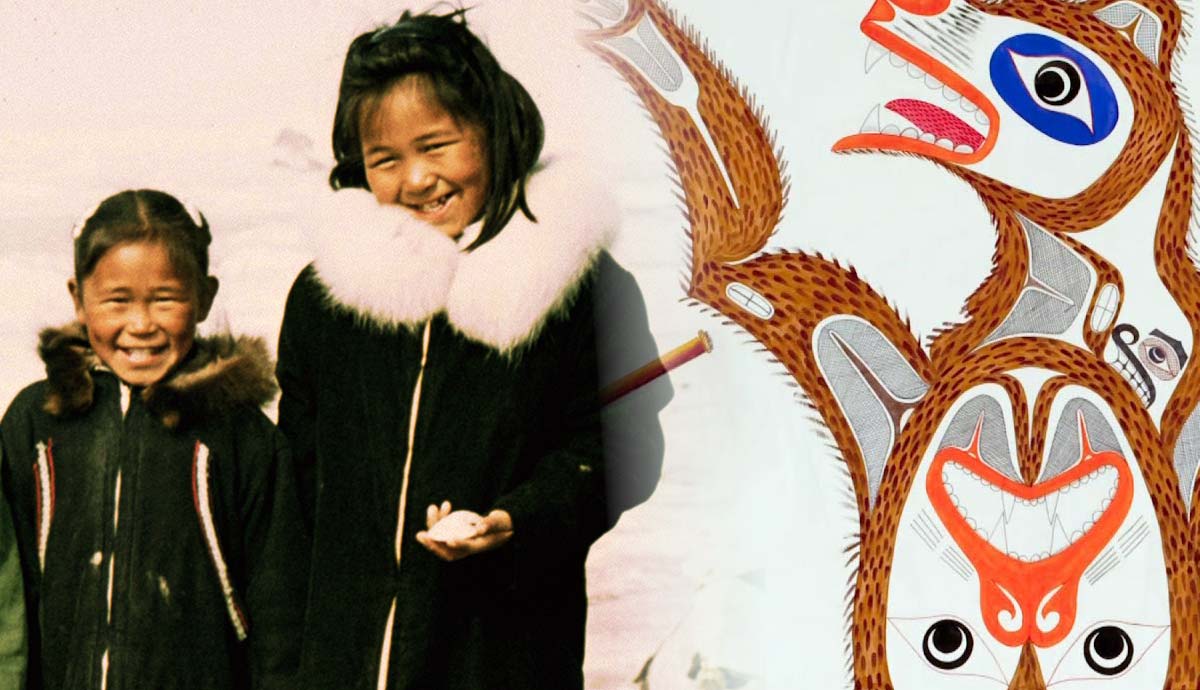
From the Pacific Northwest to the Atlantic Provinces, from the Arctic to the Great Lakes region, the colonization of present-day Canada completely altered the lives of the First Nations who had lived there since time immemorial. Their health declined as European-imported diseases swept through Indigenous communities. Their diets changed as settlers and loggers invaded their hunting grounds. Alliances shifted. Entire communities were disrupted. Colonial authorities deliberately targeted their languages, preventing children in residential schools from speaking them. However, new contact languages emerged across Canada to facilitate communication between Anglophone and Francophone newcomers and First Nations. These simplified languages are known as pidgins.Eskimo Trade JargonInuit, by Louise Nigyok. Source: Meadows Museum of ArtThe Inuit refer to Herschel Island, located in the Beaufort Sea off the coast of Yukon, as Qikiqtaruk, an Inuvialuktun term that translates simply as island. East of Herschel Island is Point Barrowknown locally as Nuvukwhich is the northernmost point of the United States, located in what is now Alaska. South of Point Barrow lies Point Hope, just above the Arctic Circle.Its strategic position in the Point Hope landhead allowed the local Inuit to hunt whales more easily, hence its local name, Tikiaq, which translates as forefinger. Further south, nestled on the Baldwin Peninsula in Kotzebue Sound along the eastern coast of present-day Alaska, is Kotzebue. Known in the Iupiaq language as Qikiqtaruk (or Kikiktagruk) meaning small island or resembling an island, Kotzebue was an important trading center during the 18th and 19th centuries.Indigenous Children in Alaska, by the UC Berkeley, Department of Geography. Source: UnsplashDespite the vast distances that separate them, all these places are united by a pidgin language (or jargon) that emerged during the 19th century when the local population needed a shared means of communication with European whalers, traders, and Russian settlers. This language is known as Eskimo Trade Jargon. Now extinct, it combined elements from various Indigenous languages, particularly those of the Inuit and the Yupik, as well as vocabulary primarily related to trade goods like whaling products, fur, and fish, from English and Russian.Despite being a pidgin (a simplified language by definition) the Eskimo Trade Jargon had at least four dialects that emerged along the coast of present-day Alaska and in Yukon, Canada, at Herschel Island, Point Barrow, Point Hope, and Kotzebue. By the early-mid-20th century, Eskimo Trade Jargon had already fallen out of use.While widely used in the 18th and 19th centuries and during most of the 20th century, the term Eskimo used to describe the closely related Indigenous peoples of the Arcticthe Inuit and the Yupik (or Yuit)is generally considered offensive today.The Inuit and the FrenchKimmirut, Nunavut, photograph by Isaac Demeester. Source: UnsplashToday, Inuktitut () is widely spoken in the Canadian Arctic, throughout most of what is now the Inuit Nunangat ( ), the place where Inuit live. However, it is referred to as Inuktitut mainly by the non-Inuit population and in Nunavut, where it is an official language, alongside English, French, and Inuinnaqtun. In Nunavik (northern Quebec), one of the four Inuit homelands that make up Nunangat, it is called Inuttitut. In Nunatsiavut (northern Labrador), it is referred to as Inuttut.Over the years, various Inuktitut-English pidgins emerged across Nunangat as Inuit communities encountered English-speaking whalers, sealers, and fur traders. Between the 1550s and the 1620s, Basque fishermen and whalers established various outposts in Southern Labrador, typically living and working there for a few months from summer until late fall.Inuit artist Aggeok Pitseolak with other Inuit in Keatuk, Baffin Island, Nunavut. Source: Canadian Museum of HistoryBasque newcomers inevitably interacted with the local First Nations. Although they had good trading relations only with the Montagnais and the Iroquoians, they engaged also with Inuit communities, whose descendants today wish to be known as Labradormiut.In his work Trade Languages in the Strait of Belle Isle, Peter Bakker notes that a Basque fisherman from Bayonne reported in 1542 on his encounters with the local Inuit, whom he referred to as Indians. The Inuit he met were able to understand any language, French, English and Gascon and their own tongue.Around 1580, the so-called Algonquian-Basque pidgin (or Souriquois) emerged in the Gulf of Saint Lawrence, with the Basque language serving as its main lexifier. Evidence indicates that it was widely used across a large area, ranging from Southern Labrador to New England and along the St. Lawrence River.The St. Lawrence River, photograph by Karl-Heinz Mller. Source: UnsplashDuring the 17th and 18th centuries, the French replaced the Basque fishermen and established new outposts in the Strait of Belle Isle (Beautiful Island, in French), an important waterway in the southeast of the Labrador Peninsula that separates Labrador from Newfoundland. A new pidgin, initially called Broken French, developed as a result of contact, which is now known as Labrador Inuit Pidgin French (LIPF), or Inuit French Jargon.While the Inuktitut-English pidgins that originated across Nunavut had English as their lexifier, the Labrador Inuit Pidgin was influenced mainly by French. In the 1740s, French Canadian entrepreneur Jean-Louis Fomel reported that this pidgin borrowed words not only from French but also from Breton, Basque, Spanish, and Dutch.Finally, in 1763, Britain took possession of Labrador, and the French and Basque outposts were subsequently overtaken by whalers and fishermen from present-day New England and Britain. By the 18th century, most non-English-based pidgins gradually fell out of use.Slavey JargonA group of Slavey people gathered to receive treaty money from the Dominion Government, 1914. Source: Wikimedia CommonsThe Slavey Jargon (also known as Broken Slavey or Broken Slav) was a Slavey-based pidgin used throughout the 19th century in Yukon, particularly along the areas two main rivers, the Athabasca River and the Mackenzie River (known in Inuvialuktun as Kuukpak, meaning the great river). The Slavey Jargon combined English and Chipewyan (Dene Suline) nouns with French verbs and pronouns, along with elements from Slavey, the Athabaskan language spoken by the Dene First Nation.The Custodians of a vast area stretching from northern Alaska and the Canadian Arctic, south of Inuvialuit, to the southwestern United States, the homelands of the Dene encompassed western Yukon, the Mackenzie Valley, the northern regions of British Columbia, Saskatchewan, Alberta, and Manitoba. The Slavey Jargon was spoken not only by the Dene people but also by the Mtis and Inuit.Mackenzie River, photograph by Alan Emery. Source: UnsplashOver the years, linguists and missionaries, including Father milePetitot (1838-1916), debated the proportions of English and Chipewyan elements in Slavey Jargon, as well as the similarities and differences between the Slavey Jargon and the so-called Loucheux Pidgin. Petitot, in particular, maintained that the Loucheux Pidgin was predominantly spoken along the Peel River, the northernmost tributary of the Mackenzie River, as well as along sections of the Yukon River.The Yukon River, one of the longest rivers in North America, flows north from the northwest corner of British Columbia across Yukon and into Alaska before emptying into the Bering Sea, traversing the ancestral lands of the Tlingit (ingt, the people of the tides), Han (Trondk Hwchin), Southern and Northern Tutchone, and Tagish (Carcross). At the end of the 19th century, especially during the 1896-1903 Klondike Gold Rush, the shores and waters of the Yukon River became a site of interaction, trade, and sometimes conflict, between Europeans and First Nations. It was along these shores that the Loucheux Pidgin emerged and developed.Nootka JargonThe Nuu-chah-nulth were (and continue to be) the Traditional Custodians of the west coast of Vancouver Island, photograph by Conrad Stel, 2023. Source: American Museum of Natural HistoryThe Nootka Jargon, also known as Nootka Lingo, was widely used across the Pacific Northwest during the late 18th and early 19th centuries. The term Nootka is the English name of Nuuaanu (or Nuu-chah-nulth), the Southern Wakashan language spoken by the Nuu-chah-nulth, the Traditional Custodians of the west coast of Vancouver Island.Interestingly, Nuuaanu translates to all along the mountains and sea. Their ancestral lands extended from Point-no-Point in the south to Brooks Peninsula in the north, encompassing Ucluelet, Yuquot, and what is now called Nootka Island. It was here, at Yuquot, that Captain James Cook first encountered the Nuu-chah-nulth in 1778, and it was Cook who named them Nootka after the group he first encountered directed his ship to come around the harbor. Nuutkaa means to circle around or to go around.Nootka Sound, British Columbia, the inlet where James Cook first encountered the Nuu-chah-nulth, photograph by Conrad Stel. Source: UnsplashThe Nuu-chah-nulth were hunter-gatherers and skilled whalers, as well as among the first people in the Pacific Northwest to interact with Europeans. Tragically, within less than 50 years, about 90% of the Nuu-chah-nulth population on Vancouver Island perished after coming into contact with European-imported highly infectious diseases to which they had virtually no immunity. Diseases like malaria and smallpox spread rapidly throughout Vancouver Island, devastating communities that were once thriving.A Nuuaanu-based pidgin, the Nootka Jargon emerged to facilitate communication between the Nuu-chah-nulth and Russian, European, and American whalers, traders, and mercantilists. Some linguists believe that the Nootka Jargon may have been a precursor to the Chinook Jargon, as the Nuu-chah-nulth language contributed much of the words of the Chinook Jargon.Chinook JargonFort Vancouver, as depicted in Joseph Gastons Centennial History of Oregon, 1827. Source: Wikimedia CommonsThe Chinook Jargon is commonly referred to as the language of the Pacific Northwest. As mentioned above, the Nuu-chah-nulth-based Nootka Jargon likely served as a foundation for the Chinook Jargon, given the significance of Vancouver Island and Nootka Sound in early interactions between local populations, James Cook, and traders.From the late 18th century, various Nuu-chah-nulth word lists circulated among Anglophone and Francophone fur traders operating in present-day British Columbia, along the Columbia River, and on Vancouver Island. These word lists are believed to be the basis from which the Chinook Jargon developed. Traveling along trading routes, the Jargonalso known as Chinook Wawa, with wawa meaning talkquickly evolved, incorporating terms and grammatical structures from French, English, and various Salish languages.Columbia River, photograph by Jamie Pilgrim. Source: UnsplashWhen the Hudsons Bay Company (HBC) constructed Fort Vancouver between 1824 and 1825, approximately 150 km (93 miles) inland on the north shore of the Columbia River to manage trade from Alaska to California, the Chinook Jargon became the primary language spoken among the people working there. Roman Catholic priest Modeste Demers even compiled a dictionary of Chinook that became widely used among employees of the Hudsons Bay Company, trappers, coureurs des bois (wood-runners, as they were known in English), Protestant and Catholic missionaries, as well as Chinese immigrants and Indigenous and non-Indigenous workers in canneries and mills.In the 19th century, Chinook Jargon was spoken not only in British Columbia but also in parts of Alaska, present-day Oregon, Washington, Idaho, Montana, and Northern California. Today, despite its rapid decline in the early 20th century, Chinook Jargon remains the most well-known of the many pidgin languages spoken across Canada during the Colonial Period.Death of Captain Cook, painting by George Carter, 1781. Source: National Museum of AustraliaStarting in the mid-16th century, pidgins emerged across present-day Canada and the United States. These were simplified languages with a reduced vocabulary and basic grammatical structures meant to facilitate communication between local Indigenous populations and newcomers, such as settlers, traders, missionaries, or employees of the Hudsons Bay Company.In most cases, these newcomers were either Anglophone or Francophone, but in particular regions, such as the Arctic, the Inuit also encountered Spanish and Russian traders and Basque fishermen. The pidgins that arose from these interactions, such as the Eskimo Trade Jargon, the Labrador Inuit Pidgin French, the Chinook Wawa, and the Slavey and Nootka Jargons, offer important insights into the complex colonial history of North America.
0 Comments
0 Shares
1 Views





 Arabic
 French
 Spanish
 Portuguese
 Deutsch
 Turkish
 Dutch
Dutch
 Italiano
 Russian
 Romaian
 Portuguese (Brazil)
 Greek
Greek