• After scratching my Command and Conquer itch, Tempest Rising comes for Starcraft by making its 'secret' third faction suddenly playable
    After scratching my Command and Conquer itch, Tempest Rising comes for Starcraft by making its 'secret' third faction suddenly playable I was already looking forward to new Tempest Rising update Superior Firepower, which introduces highly requested superweapons to 2025's strongest Command and Conquer spiritual successor. But developer Slipgate Ironworks has gone one step further,...
    0 Commentaires 0 Parts 17 Vue
  • "Joke's on them," says No Man's Sky lead as rival survival game confirms it's replacing an eerily familiar cosmetic
    "Joke's on them," says No Man's Sky lead as rival survival game confirms it's replacing an eerily familiar cosmetic Once Human continues to persevere in what is a super competitive time for survival games, with developer Starry Studio rolling out some big new features in recent months. A new class system, the PvP-focused Raid Zone, and even a crossover with survival rival Palworld have...
    0 Commentaires 0 Parts 16 Vue
  • WWW.LIVESCIENCE.COM
    China has planted so many trees it's changed the entire country's water distribution
    Huge "regreening" efforts in China over the past few decades have activated the country's water cycle and moved water in ways that scientists are just now starting to understand.
    0 Commentaires 0 Parts 15 Vue
  • WWW.UNIVERSETODAY.COM
    These Two Galaxies Are Tying The Knot And Producing Stars
    The European Space Agency has release its ESA/Webb Picture of the Month and it features a pair of dwarf galaxies engaged in a tentative dance, like nervous partners at a social. The pair are a staggering 24 million light-years away. But even at that great distance, the pair of galaxies is the closest-known interacting pair of dwarfs, other than the Milky Way's Magellanic Clouds, where both the stellar populations and the gas bridge linking the galaxies have been observed.
    0 Commentaires 0 Parts 15 Vue
  • WWW.IFLSCIENCE.COM
    Scheerer Phenomenon: Those White Structures You See When You Look At The Sky May Not Be "Floaters"
    Also known as "blue field entoptic phenomenon" and "blue sky sprites", the little dots move in time with your heartbeat.
    0 Commentaires 0 Parts 15 Vue
  • WWW.THECOLLECTOR.COM
    Boom, Bust, and Boom! The History of Nevada
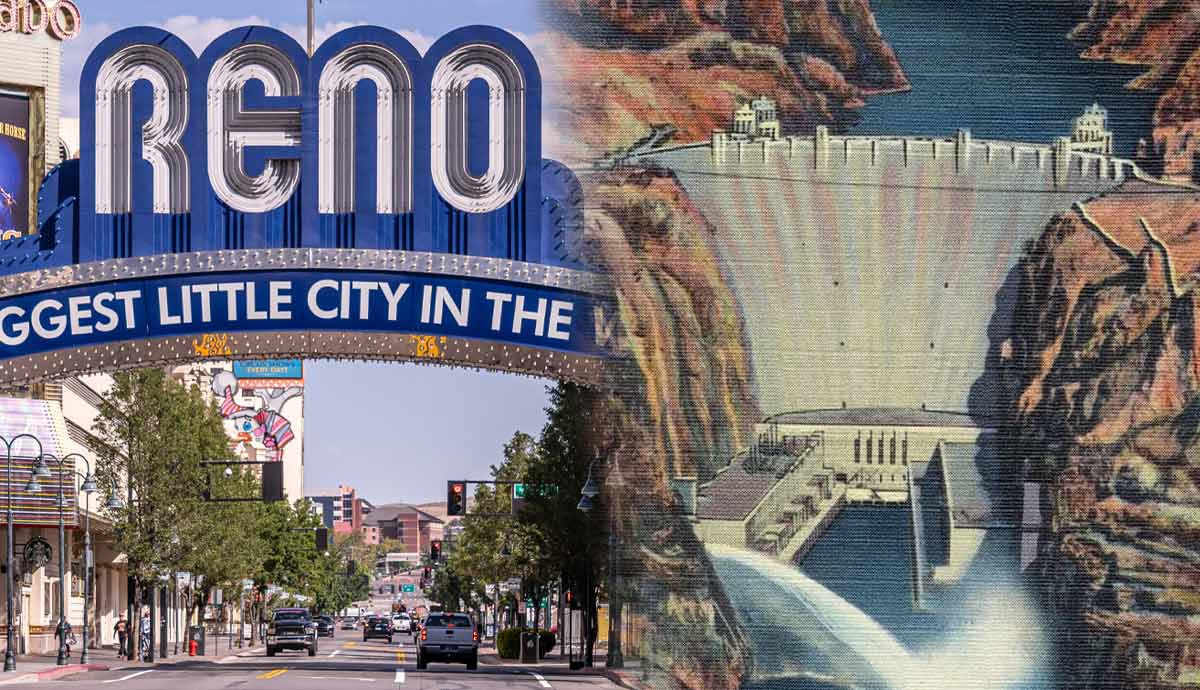
    Nevada, the 36th state admitted into the Union, has a rich and unique history. Behind the glitz and glamor of the neon-lit resorts and casinos of the cities, Nevada is filled with abandoned mines, ghost towns, and a legacy of struggle. There is far more to the states past than first meets the eye.Nevada Before NevadaFaded over millennia, the petroglyphs near Lake Winnemucca are the oldest in the United States. Source: Wikimedia CommonsAlthough the inaugural date for the state of Nevada is October 31, 1864, this does not mean the land did not have a history beforehand. The history of human habitation in this area stretches back many thousands of years. In fact, Nevada is the home to the oldest known rock art in the United States. These petroglyphs are located near Lake Winnemucca and are estimated to be between 10,500 and 14,800 years old. The archaeological record suggests that settlements in the area date back even further to around 20,000 years ago.Relatively little is known about the people who inhabited the region so long ago. Around 700 years ago, the ancestors of the Shoshone and the Northern and Southern Paiute People entered the region. Several hundred years later, their descendants would be the ones to meet European settlers for the first time, ushering in a new era for the land and its people.Red Rock Canyon, Nevada. Source: goodfon.comThe Spanish were the first Europeans to make contact with the Indigenous people but held little regard for any sense of Indigenous land rights. By 1790, most of North and South America had been claimed or annexed by the Spanish Empire, from the southern tip of South America all the way to the edges of what is now Alaska. The Spanish named the area Nevada, an adjective in Spanish meaning snowy or snow-covered, in reference to the snow-covered mountains in winter.War with the nascent United States would challenge claims on the North American continent, and the two nations would come to blows as the United States expanded westward. From 1846 to 1848, the Mexican-American War was fought, which ended in disaster for Mexico. The Treaty of Guadalupe-Hidalgo ended the conflict, and Mexico was forced to cede vast amounts of territory. Among these lands was Nevada, the first part of the Utah Territory, and then, as a separate entity, Nevada Territory, in March 1861.Statehood in the Civil WarThe location of Nevada in the United States. Source: Wikimedia CommonsAlthough Mexico and the Spanish Empire before it had claimed what is now Nevada, neither of these nations made any serious attempts at settling the area. In the early 19th century, American settlers had already reached the territory, but their presence was not permanent.The first permanent non-Indigenous settlers were Mormons, who, in 1851, set up waystations on their route to the California gold fields. The first population boom occurred in 1859 after the discovery of silver deposits. The Comstock Lode ushered in a new era for the area as pioneers flocked to the west, making their homes in Carson City, which had been established one year earlier.With the boom in population, the foundation was laid for Nevada to become a state. The following years, however, plunged the nation into conflict as the South seceded and the North fought bitterly to save the Union in the American Civil War.It is a common misconception that the Union sought statehood for Nevada to access its wealth, which would help the Union cause. When Nevada achieved statehood in late 1864, the truth was that the war was already winding down, and the Union was well on its way to victory over the Confederacy.Carson City in the early 1860s. Source: aroundcarson.comNevada and its electoral votes were considered valuable for the re-election of Abraham Lincoln, who faced significant opposition. A three-way race for the presidency was on the cards for 1864, as the Republican Party had split into two factions. Lincoln led the moderate faction called the National Union, which believed the Confederate States should be readmitted into the Union with a reasonable set of conditions. Facing him was General John C Fremont, who had formed the Radical Democracy Party and wanted harsher penalties for the Confederate States.The Democrats were represented by General George B. McClellan, who wanted to exonerate the Confederate states completely. Fremont and the Radical Democracy Party withdrew from the race before voting.Nevada was perceived to be heavily pro-Unionist and strongly Republican, and by thus achieving statehood would likely throw significant weight behind Lincoln. On October 31, 1864, Nevada became the 36th state and contributed to Lincolns re-election several days later. The admission also meant that Lincoln had another state that would back his anti-slavery amendments.In the following years, the state territory would expand at the expense of its neighbors. The southernmost point of Nevada was taken from Arizona, but since Arizonans had had significant Confederate sympathy during the war, their protests carried little weight.Economic StruggleMiners in Mohawk Mine in Goldfield, Nevada, c. 1900-1905. Source: Wikimedia CommonsIn the 1870s, the boom times for Nevada were tempered by federal decisions that reduced the value of silver. The United States had yet to formally declare its move to the gold standard, but the process had already begun, and Nevadas silver miners found themselves with significantly reduced profits. Many Nevadans tried their hand at ranching, but inconsistent fortunes did not bode well for this industry either.Nevadas population declined, but the bad times for the state would not last forever. At the turn of the century, new strikes of silver were discovered in Tonopah in the south, while gold was discovered nearby in aptly named Goldfield, and copper was found in Ely to the north. These discoveries reversed Nevadas fortunes, and the states economy began to recover.Technological advancements led to a great demand for minerals in the 20th century, and, coupled with the huge demand generated by the First World War, Nevadas mining industry surged.With the newfound economic prosperity, railroads were built, and irrigation infrastructure was laid. Transport costs were greatly reduced as a result, and ranching became a viable industry.However, economic prosperity did not last. Like the rest of the country, Nevada was plunged into economic disaster during the Great Depression, an era that initiated hard times and was felt globally.Downstream Face of Boulder Dam (Hoover Dam). Source: rawpixel.comThe legalization of gambling and the initiation of the Hoover Dam project would help limit the damage to Nevadas economy and aid in industrial development. Gambling turned the city of Reno into a tourist hotspot but also attracted crime syndicates who wished to capitalize on opportunities linked to the trade. These syndicates were also linked to the prostitution trade (which is currently legal in licensed brothels in ten of Nevadas 16 counties). As such, a well-developed criminal underworld thrived.Meanwhile, government expenditure in Nevada was the highest per capita of any state during the Great Depression. As a result, Nevadans generally suffered less than their out-of-state compatriots.Rapid Urban Expansion: Las Vegas & Nuclear TestingLas Vegas. Source: needpix.comThe economic fortunes tied to Nevadas southern region in the early 20th century resulted in a significant increase in population. As a result, the city of Las Vegas was founded in 1905. Within the city limits is an old Mormon fort built in the area as a halfway point between Salt Lake City and Los Angeles.Like in Reno, crime syndicates opened their operations in Las Vegas, and the city thrived as entrepreneurs were drawn to the city to grasp opportunities for commercial expansion. In March 1936, the Hoover Dam was completed, and Las Vegas became its first customer.The dams construction formed Lake Mead, and combined with the pull of gambling and the states liberal laws on marriage and divorce, Las Vegas became a major destination for tourists.Panorama of Lake Mead. Source: Wikimedia CommonsThe criminal element, however, made Las Vegas a dangerous place. Mafia bosses competed with each other and eventually drew the attention of police authorities who spent decades trying to stamp out the criminal operations.Meanwhile, from the 1940s onward, another industry brought prosperity to Nevada. The Department of Defense saw Nevada as a perfect place to train in harsh conditions and, most importantly, to test nuclear weapons. The opportunities surrounding the opening of military bases also led to higher employment rates, helping Nevada flourish.In the 1950s, the state became a tourist hotspot for those wishing to see the explosions and mushroom clouds of nuclear weapons testing! The Nevada Test Site, 65 miles north of Las Vegas, was the site of many hundreds of tests. In the 1950s, many of these tests were conducted above ground and were visible from many parts of the city, drawing huge crowds of onlookers and journalists who came to witness the events.In 1967, Nevada passed the Corporate Gaming Act, which removed financial background checks for applicants seeking gambling licenses. This attracted corporations and entrepreneurs to the state, who invested in casinos, slowly replacing mafia control with legitimate investment. From the 1990s, this trend saw Nevada cities, particularly Las Vegas, change, with hotels, casinos, and resorts being built that offered far more family-oriented experiences.Nevada TodayReno, Nevada, 2020. Source: Wikimedia CommonsWhile Nevadas fortunes steeply climbed in the latter half of the 20th century, the 21st century has brought new challenges that could completely reverse this trend. The legalization of gambling in other states and the advent of online gambling have threatened Nevadas dominance of the gambling industry, hurting tourism in the processan industry also greatly affected by the COVID-19 pandemic.Before the surge in unemployment caused by the pandemic, Nevada had an unemployment rate of 4%, which was exactly on par with the national average. In 2020, the national average skyrocketed to 15% before returning to 4% within two years. At the same time, Nevada was hit incredibly hard, and the state unemployment rate rose to 31% in April 2020 before recovering. The state unemployment rate as of September 2024 remains at 5.5%, the highest in the United States.Coupled with an increasingly unaffordable housing market and high rent, prospects for young Nevadans are not as high as they had been for their parents and grandparents.Nevertheless, the Silver State still echoes the deeds of the pioneers and entrepreneurs who built it. It is a place of beauty and opportunity with a unique character among the 50 states. As the times change, much of the states history has yet to be written.

    0 Commentaires 0 Parts 13 Vue
  • WWW.THECOLLECTOR.COM
    How Early Civilizations Made and Enjoyed the First Sports Balls
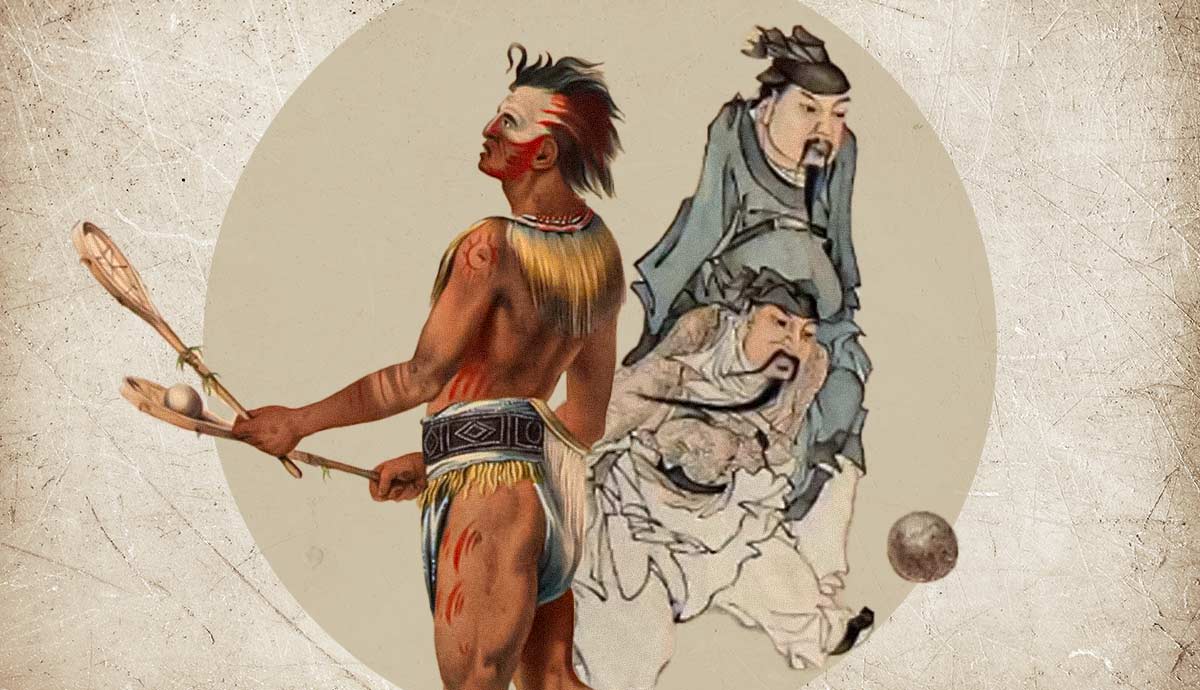
    It comes as no surprise that the earliest human civilizations made and enjoyed the first sports balls. Even today, when people walk down the street, they often casually kick a stone or pine cone and follow it up for a while. Chasing the ball seems to be an integral part of the human psyche. Through early artwork, archaeological finds, and ancient documents, researchers recognize the important roles that sports balls have played in history.The Americas: Olmec People Become First to Design and Kick the BallCastilla elastic. Source: Terance Kaluthanthiri, PixelsTwelve rubber balls from 1600BCE were found ina present-day Veracruz, Mexico bog, which was once a very early Olmec sacrificial area.It is possible that archaeologists will uncover even earlier sporting sites in the future.The Olmec civilization, or people from rubber trees, is believed to be the first to develop rubber balls in the Southern Mexico area of Mesoamerica. This historic area includes the current countries of northern Costa Rica, Nicaragua, Honduras, El Salvador, Guatemala, Belize, and central to southern Mexico. The Olmec culture, which influenced later societies such as the Maya and Aztec, originated with the Pre-Olmec civilization of about 2500 BCE. These people are recognized for theirmonuments, including stone-head carvings of lauded human rulers made out of huge boulders, and other elaborate artwork in jade and ceramics.Painted scenes of Maya players of the Mesoamerican ballgame. Guatemala, 700-800 CE. Source: St. Louis Art Museum, MissouriTo make their rubber sporting items, the Olmec people extracted a milky white natural substance called latex from theCastilla elasticatree. They dried and formed it into thin rectangular strips, which were wrapped over each other to increase the size of the ball. Finally, the ball was covered with a thin layer of latex to hold the strips together and enhance the bounce qualities.The Olmecs ball playing was used for both entertainment and religious purposes. The game, where the ball was contacted and transported by the sportsmans hip, often characterized the fight of good versus evil. In a war ceremony game, for example, the events losers were sometimes sacrificed. Balls of all sizes were also made as offerings to the gods and sometimes buried in consecrated areas.The Olmecs sport was simply called ball game, although other cultures knew it by other names, such as pitz for Mayan players. This game was sometimes held to reduce local wars. Rather than fighting in battles, local kings confronted one another in a ball game. Noblemen also competed to resolve personal disagreements.Olmec Ball Playing Influences Neighboring CulturesXochiacalco ball court (700-900 CE) in Mexico. Source: Public DomainOver time, the Mesoamerica ball games spread throughout many neighboring regions, each with its own scoring and playing rules. Archaeologists have discovered more than 2,000 ball courts throughout Mexico as well as Guatemala, Belize, western Honduras, and El Salvador. These numerous sports arenas were simple rectangles set between two stone walls, but they served a number of different societal functions. In the game Ulama, a variation played by Aztecs, teams bounced the ball through stone hoops, which were long used as part of their culture. The circular hoop symbolized wholeness and health, as well as personal, communal, national, and universal peace.Ball Players, by G. Catlin. Source: British LibraryAnother common game similar to lacrosse, which also originated in Mesoamerica, was played by several Native American tribes like the Cherokee. Two teams of players, each carrying two sticks, or kabocca, shot the woven leather ball, or towa, into the oppositions goal to score. Hands could never be used, only the kabocca. These stickball games frequently lasted several days from sunup until sundown on the plains between villages, with as many as one thousand competitors. The goals, which could be huge boulders or trees, were located 500 yards to several miles from each other. The flexible rules were only announced the day before the event.The Mediterranean: Greeks Designed a Very Early Game of FootballGreek ball sports. Source: British Museum, LondonThe early Greeks, in about 900 BCE, enjoyed several different ball games. Episkyros, for example, was played with two opposing teams, each with 12 to 14 players. The ball, rounder and smaller than the one used today in soccer, was made from pieces of leather sewn together with animal entrails. The outside was brightly painted.Episkyros is often called the first game of football because of its many similarities to the one played today in the US. It was also very similar to rugby. The field was marked with lines to determine the correct positioning of play. Full contact with hands was allowed. The aim was to continually toss the ball over the heads of the opposition and move forward. A team scored when it forced its opponents behind their end line.Episkyros was entertaining but also very dangerous, especially in Sparta. Because of full bodily contact and use of great strength and skill, players frequently struggled off the court with broken bones.The Greek Game Is Picked up by RomeGreek ballplayer. Source: Louvre Museum, ParisThe game harpastum (another name for handball) was the Roman variation of episkyros. It was enjoyed for approximately 750 years during the Roman Empire in the 5th Century BCE and often called the small ball game. Once again, the teams numbered between 12 and 14. Instead of kicking and throwing a ball the size of one used in soccer, the harpastum players tossed several different balls about the size and strength of a present-day softball. These consisted of attached leather strips filled with a variety of materials. The smallest ball was stuffed with feathers. The largest one contained an air-filled bladder.It is believed that harpastum was even more brutal than its Greek equivalent because the match included wrestling, where players deliberately held on to one another to deter scoring. Historians believe that Rome brought their sports ball games with them when expanding into the British Isles. Thus, once again, the sporting arenas expanded.East Asia: Chinese Cuju Gets the Ball RollingCuju playing in China. Source: FIFA MuseumChinas earliest ball game, cuju, dates back to the 3rd century BCE. Cuju or tsu-chu, with the literal meaning of kick ball, was played commonly during the late Han Dynasty (202 BCE to 220 CE). It became an interesting mix of what was to become American football, basketball, and volleyball. Similar to other types of early sporting activity, cuju was not originally played for competition and entertainment. The athletic event actually began as a military drill for fitness training. Confucian scholars stressed that sport was important to strengthen the soldiers fighting power.During the Tang Dynasty (618 to 907 CE), cuju was transformed into a professional sport to enhance economic development. It became popular with all classes from nobility to labor. In the game, two teams of six competed against each other and attempted to kick a ball through a circular goal at the center of the field. Rules did not allow players to use their hands to propel the ball, which had to remain in the air at all times. Although cuju was a very popular game for several hundred years, the Ming Dynasty (1368-1644 CE) emperor eventually banned the game because of its growing corruption.Cuju Gaming Spreads Outward to JapanThe Kemari Festival, Tazan Shrine, Sakuri, Japan. Source: Creative CommonsCujus popularity expanded to other East Asian countries, such as Korea and Japan. Researchers believe that kemari, the Japanese ball sport from 600 CE, was an offshoot of this Chinese ball game. Kemari was played with an eight-inch round deerskin-covered ball stuffed with sawdust or barley grains. Over the years, it was followed first by the nobles and samurai and then the general public.Unlike cuju, kemari was never used for military purposes. With no winners or losers, it was instead played to reinforce camaraderie and cooperation among the players and provide entertainment for viewers of all backgrounds. The object was to continually pass the ball as long as possible to fellow players without having it touch the ground.A formal game of kemari consisted of six to eight players, typically four primary players and four assistants. At the beginning, the first player kicked the ball to the second and so forth down the line. Only a foot could propel the ball, although a players body was able to stop its movement or direct it toward someone else. How long could the players keep the ball aloft? That was the only question of importance.Onestory relates how an emperor and hiskemariteam kept the ball in the air for over one thousand kicks. Poets watching the event claimed the ball seemed suspended, hanging in the sky. Interest in this enjoyable game declined as sumo wrestling grew in popularity. However, every spring and summer, the Tanzan Shrine in Sakurai stages the game as it was played over a thousand years ago to celebrate and commemorate this early history. Numerous local community members and tourists attend the yearly events to recall this rich history.Modern soccer balls. Source: Andre Pombal, PexelsBecause of the importance of ball play and events over the past thousands of years worldwide, it appears that such competition and entertainment will continue to play an essential role in future societies. Today, millions and millions of sports enthusiasts and players continue to love the way these balls keep on rolling.
    0 Commentaires 0 Parts 13 Vue
  • 0 Commentaires 0 Parts 13 Vue
  • 0 Commentaires 0 Parts 13 Vue
  • WWW.PCGAMESN.COM
    After scratching my Command and Conquer itch, Tempest Rising comes for Starcraft by making its 'secret' third faction suddenly playable
    I was already looking forward to new Tempest Rising update Superior Firepower, which introduces highly requested superweapons to 2025's strongest Command and Conquer spiritual successor. But developer Slipgate Ironworks has gone one step further, sneaking in something even more exciting: a third playable faction. That's right, the Veti are finally in our hands courtesy of the public test branch for one of the best RTS games of the year, and we've got two full weeks to test them out and offer feedback.Read the full story on PCGamesN: After scratching my Command and Conquer itch, Tempest Rising comes for Starcraft by making its 'secret' third faction suddenly playable
    0 Commentaires 0 Parts 17 Vue