• YUBNUB.NEWS
    REPORT: Trump Issues Major Ultimatum To Maduro As Venezuelan Conflict Heats Up
    President Donald Trump slapped Venezuelan strongman Nicols Maduro with a blunt, take-it-or-leave-it exit deal before shutting down the countrys skies, the Miami Herald reported a high-stakes
    0 Commentarii 0 Distribuiri 7 Views
  • WWW.LIVESCIENCE.COM
    See the last Supermoon of the year with these Cyber Monday skywatching deals
    The Cold Moon will be lighting up the sky on December 4, and it's the last supermoon of the year shop the best skywatching deals, including Celestron's special edition 'Moon Mission' lineup.
    0 Commentarii 0 Distribuiri 11 Views
  • 0 Commentarii 0 Distribuiri 11 Views
  • WWW.IFLSCIENCE.COM
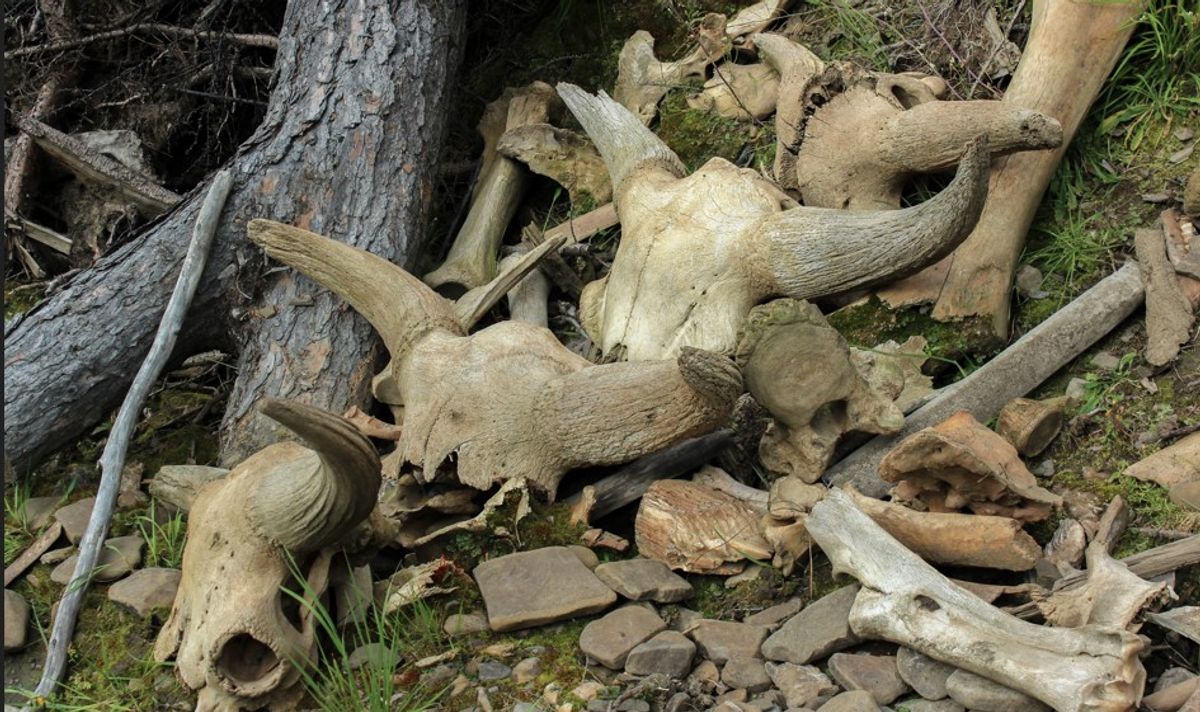
    Humans Werent Capable Of Mass Hunting Until 50,000 Years Ago What Changed?
    Around 50,000 years ago, all modern humans around the world underwent some massive cultural shift at the exact same time, and no one knows why.
    0 Commentarii 0 Distribuiri 11 Views
  • WWW.IFLSCIENCE.COM
    What's The Difference Between Buffalo And Bison?
    Sorry, Americans, but your "buffalo" aren't actually buffalo.
    0 Commentarii 0 Distribuiri 11 Views
  • WWW.THECOLLECTOR.COM
    15 Medieval Phrases That Prove Old English Slang Was Funnier and Grosser Than Ours
    Language is alive. It changes and evolves with the cultures that use it, reflecting their values and unique aspects of daily life. Considering how the slang of younger generations can seem indecipherable to older folks, its no surprise that the English spoken in Medieval times can almost seem like a foreign language. That said, many phrases we use today have Medieval origins, some amusing and others frankly disgusting.1. The Wrong End of the StickReplica of a toilet stick. Source: Wikimedia CommonsWhen we say someone has the wrong end of the stick, we mean that they have misunderstood something. But the phrase has frankly disgusting origins. In the Medieval era, public toilets were long stone benches with carved holes side by side for users. There was no toilet paper, but a sponge that soaked in vinegar or salt water between uses, attached to a communal stick that was passed along. It was rather unpleasant if you accidentally grabbed the wrong end of the stick.2. A Pig in a PokeMedieval Market scene, 15th century. Source: Wikimedia CommonsIf you went to a Medieval market, you would receive your animal or animal meat from the butcher inside a cloth sack called a poke. When purchasing, you had to ensure that you received what you expected in your bag. Those who didnt and waited to get home to open up their bag could be disappointed and find that they had been given something much less appetizing inside. This gave rise to the phrase pig in a poke as a warning against accepting something without identifying it as what you expected.3. Eat Humble PieA 14th-century butcher shop, c. 1350. Source: Wikimedia CommonsWhen you must apologise for something when you dont really want to, we sometimes call this eating humble pie. But while this phrase represents swallowing your pride today, in the Middle Ages, it literally meant eating offal pie. When animals were butchered, the best pieces went to the wealthy nobles, while the leftovers, such as the liver and lungs, were minced up to make pies for poorer folk. These were called umble pie in England, adapting the Norman-French word nombles, which means dear innards. Eating these pies became a metaphor for being put in your place.4. By Hook or By CrookKing John on a stag hunt, 14th century. Source: The British LibraryWhen we say by hook or by crook today, we mean achieving something no matter what and by whatever means necessary. This phrase can be traced back to the 14th century, when most forests were owned by the crown. As such, while commoners were allowed to enter forests to collect things such as firewood, they were specifically barred from cutting branches from fallen trees using a billhook or pulling them down with a shepherds crook. Since this would have been difficult to monitor, many peasants likely got away with gathering extra wood using these illicit tools, obtaining what they needed by fair means or foul.5. Caught Red HandedThe Bessant familys living conditions in rural Hampshire may have resembled those depicted in The poacher arrested, by Thomas Rowlandson. Source: Boston Public LibraryToday, we use the phrase caught red-handed to indicate that someone has been caught in the act of doing something. But the term was initially coined because laws in 15th-century Scotland stated that a person could only be convicted if they were caught in the act or with the blood still on their hands, turning them red. This could apply to murdering a fellow man, but more usually applied to poaching and killing livestock. The phrase remains popular today because Sir Walter Scott used it in his popular 1819 novel Ivanhoe.6. Drawn and QuarteredThe Execution of Guy Fawkes, by Claes (Nicolaes) Jansz Visscher, 1919. Source: National Portrait GalleryThe phrase drawn and quartered reflects the bloody sense of humor of the Medieval era. One of the most common forms of execution was to be hanged, drawn, and quartered. This saw a person hanged but cut down before dying so that they could suffer their genitals being removed, bowels extracted and burned, and then beheaded. The head was then displayed on a spike. In 1305, when William Wallace, of Braveheart fame, was killed, his body was famously divided into four parts. Today, we say that someone should be drawn and quartered when they need some serious consequences.7. Sink or SwimDepiction of a sink or swim ordeal from Witches Apprehended, Examined and Executed, 1613. Source: Wellcome CollectionThe phrase sink or swim also has violent origins. In the Medieval era, there was a belief in signs from the divine. Trial by ordeal could allow the divine to indicate if a person was guilty or innocent. Unfortunately, the general rule was that the innocent would sink, and therefore possibly drown, while the guilty would float, pushed out of the baptismal waters. Today, the phrase means jumping in the deep end and seeing what happens: success or failure.8. No Mans Land15th century York, by E. Ridsdale Tate, 1914. Source: York CastleNo mans land has been used since World War I to describe the land between the trenches of the two opposing sides. It has become more broadly popular to refer to a dangerous area where men fear to tread. But it is actually an older Medieval phrase from the 11th-century Domesday Book, written nanesmanesland to describe uninhabited and desolate areas, such as waste grounds (garbage dumps) outside cities.9. By My TrothManuscript of the Tale of Melibee, by Chaucer, mssEL 26 C 9, folio 153v, c. 1400-1410 CE. Source: Huntington LibraryThe word troth meant true in Medieval England, so by my troth just means by my truth. In the 14th century, the phrase was commonly used to swear that what a person was saying was true. It appears frequently in Geoffrey Chaucers Canterbury Tales, in which it appears as a common, everyday oath. It remained popular for centuries and even appeared in Shakespeare, such as in Henry IV, Part Two.10. Memento MoriAllegory of Death by Florens Schuyl, 1629-1669. Source: Rijksmuseum, AmsterdamMemento Mori was a Latin phrase commonly used in the Medieval world, reminding people that death is inevitable: remember that you must die. It was used to chastise, reminding believers that life could be over at any moment, and to live righteously. It became a popular phrase in devotional art, appearing in macabre scenes alongside skulls.11. By Gods BonesObscene scene from the manuscript Maastricht Hours, c. 14th century. Source: British LibraryBy Gods Bones was a popular way to swear in Medieval England, referring to the physical remains of Christ. Sometimes the word bones was replaced with eyes, nails, or something else. It was used as a kind of blasphemous oath, taking the lords name in vain in the most vulgar fashion. It was considered doubly offensive because of how seriously people took oaths, as communities were built on trust.12. The World, the Flesh, and the DevilTitle page of the Book of Common Prayer, 1662. Source: British LibraryIn the Middle Ages, the world, the flesh, and the devil were the three great enemies of the Christian soul, representing external, internal, and spiritual temptation. This phrase was used repeatedly in sermons and theology, making it a widely familiar Medieval idiom. It was used as late as 1662, when it appears in the Book of Common Prayer.13. Blood is Thicker Than WaterThe Baptism of a Child, by Nicola Grassi, 1697-1750. Source: The British MuseumThe common phrase blood is thicker than water suggests that the bonds of family are stronger than those of any other relationship. This phrase can be traced back to 13th-century Germany, where it was used to suggest that water could dilute blood ties, possibly referring to the potential impact of baptism. By the 15th century, the phrase was used in England with a reversed meaning, because while water leaves no mark, blood is hard to wash off.14. One Bad AppleHistoric photo of apple barrels, Iowa, c. 1900s. Source: Hood River History MuseumWe often use the phrase one bad apple to refer to the impact that just a small amount of negativity can have. The original phrase is one bad apple spoils the whole barrel, and specifically refers to fruit storage. If you accidentally place a bad apple in a barrel, it can quickly spread and ruin the rest of the produce. It became a metaphor for Juman behavior, with Geoffrey Chaucer referring to a bad apple in his The Cooks Tale, to describe someone who causes problems for others.15. More Irish Than the IrishMaurice FitzGerald, Lord of Llanstephan, an Anglo-Norman involved in the invasion of Ireland, as shown in a manuscript of the Expugnatio Hibernica, MS 700, f77, right margin, 1189. Source: National Library of IrelandDuring the 12th century, the Normans started to invade and settle Ireland. While they formed a noble upper class, they also became deeply immersed in local customs and culture. This concerned the Anglo-Norman leadership back in England, so by 1366, the Statutes of Kilkenny were introduced to limit cultural assimilation. The phrase more Irish than the Irish was coined to refer to those who enthusiastically migrated and then adopted the local culture.
    0 Commentarii 0 Distribuiri 7 Views
  • WWW.THECOLLECTOR.COM
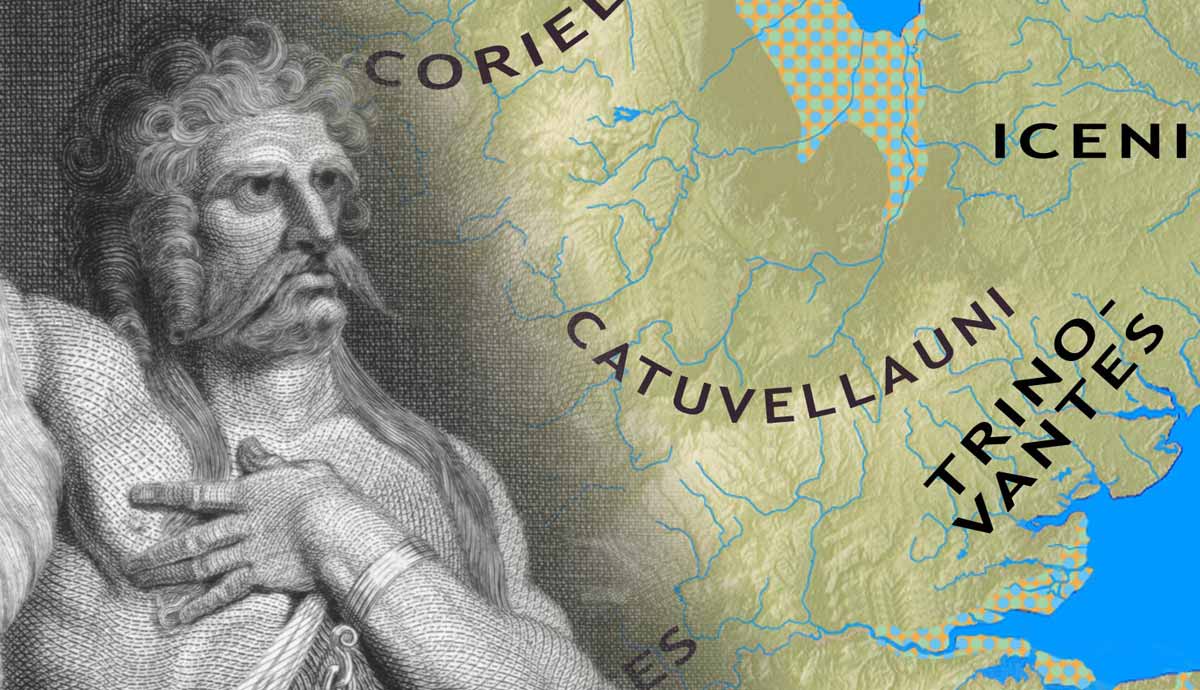
    Celtic Kingdoms in Britain: Did the Catuvellani Rule the Silures?
    In the pre-Roman era, Britain was populated by Celtic tribes, and the Catuvellani were among the most powerful. During Caesars invasion of Britain in 54 BCE, their king, Cassivellaunus, was the leader of an alliance of tribes that resisted the Romans. It was based around the London area, encompassing a large portion of the surrounding country. However, there is some evidence to suggest that their influence may have extended even further than generally thought. It is possible that the Silures tribe, as far west as southeast Wales, may have been subject to the Catuvellani.Geography of the Catuvellauni and the SiluresMap of the tribes of southern Britain, based on Ptolemys description in c. 150 CE. Source: Wikimedia CommonsTo begin with, let us examine what we know about the distribution of the tribes of pre-Roman southern Britain. In the southeast corner, there was the Cantiaci tribe, which gave its name to the modern county of Kent. To the west was the Atrebates tribe, which extended at least as far west as Winchester. Still further in that direction was the Durotriges tribe, extending into the West Country. Immediately north of these three tribes were three other tribes. Approximately speaking, above the Cantiaci were the Trinovantes, in the Essex area; above the Atrebates were the Catuvellauni, in the London area; and above the Durotriges were the Dobunni.This latter tribe touched the eastern border of what is now southern Wales. Bordering them to the west, inhabiting southeast Wales, was the Silures tribe. Although they appear far away from the Catuvellauni, they were only separated from them by a single tribe, albeit a large one. Nevertheless, there is some evidence that the Silures were subject to the kings of the Catuvellauni.Evidence From the Activities of CaratacusCaractacus at the Tribunal of Claudius in Rome, Andrew Birrell, 1792. Source: Wikimedia CommonsOne piece of evidence comes from the recorded activities of a king named Caratacus. He was from the Catuvellauni tribe. His father, Cunobelinus, had been the powerful king of the tribe and was on generally friendly terms with the Romans. Cunobelinus eldest son, Togodumnus, succeeded him and was ruling during the Claudian invasion of Britain in 43 CE. Caratacus, although not the king at that time, still held a prominent position and joined Togodumnus side in fighting against the Romans.However, very early on in the Roman invasion, Togodumnus was killed. This is reported by Dio Cassius. However, he does not explain what happened to Caratacus, despite having mentioned him earlier. Presumably, Caratacus may have succeeded Togodumnus as king of his tribe, although Dio does not specifically mention this. If this did happen, then it could only have been a very brief rule, since the Romans swiftly conquered Catuvellauni territory in the wake of Togodumnus death.Caradog, by Thomas Prytherch, 1906. Source: National Library of WalesThe next reference to Caratacus in the history of the Roman invasion of Britain is seen in the writings of Tacitus. He refers to Caratacus as leading the Silures in southeast Wales in guerrilla warfare against the Romans. The final battle between Caratacus and the Romans, in which the former was defeated, occurred in 50 CE. Hence, Caratacus appears to have been active as the ruler of this tribe in southeast Wales for some seven years.The fact that Caratacus was a prince of the Catuvellauni tribe in the southeast of England makes his appearance shortly afterward as the leader of the Silures in southeast Wales rather conspicuous. Was he a fugitive prince who was warmly welcomed by the Silures and set up as their ruler? Or, alternatively, had the Catuvellauni tribe already exerted some level of control over the Silures, thus making Caratacus leadership role perfectly natural and even expected? The latter is certainly a distinct possibility, even if it cannot be definitively confirmed.Evidence From Roman RecordsSilver coin of the Dobunni tribe, c. 30-45 CE. Source: Wikimedia CommonsAs mentioned earlier, the Catuvellauni and the Silures were separated by the large Dobunni tribe. It would obviously not be possible for the Catuvellauni kings to have dominated the Silures if the Dobunni tribe was not also subject to them. Is there any evidence that this was the case? As it happens, there is some evidence from the writings of Dio Cassius.After referring to the initial defeat of Togodumnus and Caratacus, prior to the battle that killed the former, Dio mentions that the Romans subdued a part of the Bodunni. He states that this tribe was ruled by the Catuvellauni. Now, who were the Bodunni? No other records speak of a tribe by that name. For this reason, many scholars agree that Dio intended to refer to the Dobunni.If soand this conclusion does seem likelythen this would mean that the power of the Catuvellauni extended at least as far as the border of Wales.Evidence From ArchaeologyIllustration of a Celtic chariot burial discovered at Chlons in 1901. Source: Wikimedia CommonsCan archaeology reveal anything useful about this issue? Unfortunately, unlike most of the tribes in England, the tribes of Wales did not mint coins, so we cannot learn anything through this corpus of evidence. Nevertheless, one interesting archaeological find which might be relevant is a chariot burial in Pembrokeshire. Chariot burials were very common among the tribes of what is now eastern England, stretching from at least as far north as Yorkshire to at least as far south as Essex.The fact that only a single chariot burial has been found in Wales suggests that it was not common there. Of course, more may still be found, but the evidence as we now have it suggests that the Welsh tribes did not generally use chariot burials.Could this be evidence that members of the elite class from the tribes of eastern England had spread as far west as Pembrokeshire? If so, this would put them past the Silures.Bronze terret ring from a chariot, Lesser Garth, near Cardiff, c. 1st century BCE. Source: Museum WalesOf course, this could just be a trace of Caratacus relocation to Wales after the defeat of Togodumnus in 43 CE. After all, it is clear that Caratacus did not just arrive there in the territory of the Silures with a few warriors by his side. This is evident from Tacitus report that Caratacus wife and daughters were captured after his defeat in 50 CE. He had thus relocated his whole family to Wales.Therefore, perhaps the chariot burial in Pembrokeshire, which dates broadly to the middle of the 1st century CE, could have been the burial of one of Caratacus men. On the other hand, individual pieces of chariots have been found in the territory of the Silures from long before Caratacus arrival there. One example is a bronze terret ring found near Cardiff, dating to the 1st century BCE. It has a red enamel inlay, just like those found much further east.This supports the possibility that Catuvellauni warriors may have been present in south Wales from as early as the 1st century BCE.Evidence From Later TraditionFolio from Brut Tysilio found in the Jesus College MS 28, showing Tenvantius described as the Earl of Kerniw on the first line, 1695. Source: Bodleian Library, OxfordOne final piece of evidence comes from later medieval tradition. Geoffrey of Monmouth, in his Historia Regum Britanniae of 1137, preserved extensive amounts of authentic Welsh tradition. Togodumnus, for example, appears as Guiderius, a form of his name which must have undergone centuries of corruption.Therefore, it is notable that in his account of the reign of Cassivellaunus, Geoffrey mentions a nephew of the king named Tenvantius. This is widely accepted as the historical Tasciovanus, a king attested through coinage evidence in the second half of the 1st century BCE. Notably, Geoffrey calls him the Duke of Cornwall. A Welsh translation of Geoffreys account calls him the Earl of Kerniw. While Kerniw is indeed a Welsh word for Cornwall, it is also the name of a large region, attested in medieval times, in southeast Wales, the territory of the Silures.Historian Miles Russell attempted to explain Cornwall as a mistake for Catuvellauni, but this is transparently unconvincing. Understanding it as a mistake for the attested region of Kerniw in southeast Wales is more consistent with Geoffreys description and it does not require any corruptions of spelling.Did the Catuvellauni Really Rule the Silures?Gold coin of the Catuvellauni tribe, c. 1st century CE. Source: Wikimedia CommonsIn conclusion, what does the evidence suggest regarding the possibility that the Catuvellauni ruled over the Silures? Between the former and the latter was the Dobunni tribe, and evidence from Dio Cassius suggests that the Dobunni were indeed subject to the Catuvellauni kings. We cannot fail to note that Caratacus, after the death of his brother and the defeat of his tribe in 43 CE, appeared shortly afterward as the leader of the Silures until 50 CE. This suggests that the Silures may have already been subject to the Catuvellauni, thus making it easy and natural for Caratacus to make himself their new ruler.Furthermore, archaeology shows what may be signs of this subjugation. Evidence of chariots like those of eastern England have been found near Cardiff and in Pembrokeshire, dating to the 1st century BCE/CE, respectively. Finally, later tradition makes a nephew of Cassivellaunus the Earl of Kerniw, a territory that was in the land of the Silures. None of this evidence is definitive, but together, it supports a reasonable case that the Silures may have been subject to the Cassivellauni.
    0 Commentarii 0 Distribuiri 7 Views
  • WWW.THECOLLECTOR.COM
    6 Most Famous Occupants of the Trinity Church Cemetery in New York
    Walk Trinity Church cemetery, and know that youre stepping into a time machine of New York history, complete with revolutionaries, inventors, and even a bit of scandal. The bones resting under these headstones saw it allthe birth of a nation, the rise of a metropolis, and more drama than a Broadway show. Lets uncover the inventions and intrigues of some of the most infamous souls laid to rest here.1. Richard and Ann Churcher: The Earliest Known GravesTrinity Church, by Alexander Jackson Davis, 1827. Source: PicrylWhen you think of the oldest grave in a place that dates back to the 1600s, it is easiest to imagine a stately, elderly gentleman who fought in some great war, or maybe a matronly figure who lived through some textbook-worthy moment in history. This assumption would be wrong, as the oldest legible grave belongs to a five-year-oldlittle Richard Churcherwho died in 1681. Speculation has it that Richard was one of many children to die in the areas smallpox outbreak around this time. A short life perhaps but his stone is holding up better than many a New York building.Located in the northeast section of the yard, Richards small marker is a quiet reminder of the areas early history, when life in New Yorkthen New Amsterdamwas harsh and fleeting for many. Buried next to him is Ann Churcher, likely a relative (some have hypothesized that this is his sister), who passed away a decade after Richard did. These graves predate the founding of Trinity Church itself by a handful of years and provide a glimpse into the citys colonial past.Although little is known about the Churcher family, their presence in the churchyard highlights the diverse range of people interred here, from children to adults, all representing the early days of the citys development.2. William Alexander, Lord Stirling: A Patriot of the American RevolutionLord Stirling. Source: New York Public LibraryOf all the graves at Trinity Churchyard, few hold as much technological significance as that of William Alexander, aka Lord Stirling. A key figure in the American Revolution, Stirling served as one of George Washingtons most diligent generals. He first witnessed the steadfastness of Washington during the French and Indian War and became a dedicated supporter of the American cause after growing disenchanted with British overreach in the colonies.Born on Christmas Day in 1726, Stirling was the kind of guy who believed in America before it was the trend. His defining moment came during the Battle of Long Island in 1776, when Stirling held off the Redcoats just long enough to let Washington and his troops melt away from the battlefield to safety. It was a sacrificeStirling ended up getting captured. However, he was back in action after a few months as a prisoner, eager to fight again.Born to privilege, Stirlings aristocratic roots were complicated by his fathers Jacobite loyalties, which had forced the family to seek freedom in America. Despite his noble title and elite upbringing, Stirling was a rebel from the beginning of the conflict, choosing to fight for America over the British Crown. Today, his gravestone stands as a reminder of his critical role in shaping the nations future as well as its attitudes concerning privilege versus achievement.3. Robert Fulton: Steamboat PioneerThe Clermont, Robert Fultons steamboat, as rebuilt 1806-7. Source: Free LibraryRobert Fultons name is synonymous with the steamboat, although it is worth noting that he did not invent the technology, he was the broker who made it a commercial success. Born in Pennsylvania in 1765, Fulton initially pursued a career as a portrait painter, but his inventive mind eventually led him to revolutionize transportation in America.In the early 1800s, Fultons steamboat, the Clermont, made its historic first voyage up the Hudson River, carrying passengers for a fare of five cents per mile. With its sleek design and powerful steam engine, the Clermont opened up new possibilities for both travel and trade, contributing significantly to the Industrial Revolution that changed America from agrarian leanings to a country of manufacturing. Fultons innovation made river travel much more accessible, cheaper, and reliable, playing a key role in the nations westward expansion as well.Unfortunately, Fulton didnt get to enjoy his success for longhe died in 1815, but not before cementing his place in American innovation history (and Trinity Church graveyard).4. The Hamilton-Schuyler Clan: Founders and FlirtationsMemorial of Eliza Hamilton, by Wally Gobetz. Source: FlickrYou cant talk about Trinity Churchyard without giving a nod to the guy who practically built Americas financial system from scratch. After all, in 1789, when he became the first Secretary of the Treasury under George Washington, Hamilton didnt just stop at making sure this new nation could pay for things. This rather complicated genius set up the National Bank, created the first US monetary system, and even got the tax system up and running.Aside from his own eight children with his dedicated wife Elizabeth, many forget he is also the father of the Customs Service and the national debt. All Americans who enjoy their functioning and globally sound economy owe Mr. Hamilton a thank you. While Alexander Hamiltons large monument draws scores of tourists each year, the less frequented graves of his in-laws, including Angelica and Peggy Schuyler, rest nearby.Angelica Schuyler Church, sister to Hamiltons wife Eliza, is remembered for her wit, intelligence, and playful flirtations with the founding father himself. Her relationship with Hamilton has been the subject of much speculation, though historians generally interpret their letters as a friendly, if somewhat flirtatious, exchange (she had a very similar literary setup with Hamilton-hater, Thomas Jefferson). Angelica spent much of her life in Europe, traveling between Paris and London, where she mingled with political luminaries such as the royal family, Benjamin Franklin, and the Marquis de Lafayette.Alexander Hamilton, by John Trumbull, 1806. Source: Wikimedia CommonsEliza Hamilton remained a devoted member of Trinity Church, frequently bringing her children to services. The Schuyler sisters presence in the cemetery speaks to the strong ties between their families and the early days of American independence.Margarita Peggy Schuyler, the youngest of the three most famous Schuyler sisters, is also buried at Trinity. Much like Angelica, she maintained correspondence with her brother-in-law for most of her short life. Known for her boldness, Peggy once thwarted a British attempt to kidnap her father during the Revolution, proving herself as courageous as she was charming. Although her story is less well-known than those of her sisters, Peggys legacy as a key figure in the Revolution lives on in Trinity Churchyard.5. Charlotte Temple: Fiction Meets RealityPortrait of Fictional Charlotte, 1870. Source: Library of VirginiaCharlotte was the title character in Charlotte, A Tale of Truth, the first American bestseller, written by Susanna Rowson in 1794. The book was a tragic story about a young woman who got knocked around by life and died after giving birth out of wedlock. Readers, whose heartstrings were certainly tugged by Charlottes struggles, came to believe the story was real.A gravestone for Charlotte popped up in the Trinity Churchyard, and folks came from miles around to pay their respects. However, as Charlotte Temple was not based on a single real woman, many attribute the sudden appearance of her burial marker at Trinity Church to unsurpassable hype man, P.T. Barnum.Visitors would come to mourn the fictional character as if she were once an actual young woman. The grave remains a curious piece of literary history, a testament to the power of storytelling and the blurred boundaries between fiction and reality in early America.6. Madeleine Talmage Force: Titanic Survivor and Society DarlingMadeleine and Son, 1916. Source: Get ArchiveMadeleine Talmage Force was just 18 when she became a Titanic survivorand thats far from the most interesting thing about her. Born into wealth in 1893, Madeleine was the it girl of her time, educated at fancy schools like Miss Elys and Miss Spences, where she excelled in just about everything. She rode horses with an elegant mastery, was a fixture in New Yorks social plays, and had a place in the Junior League sisterhood to boot. Thats not even mentioning her grandfather, one of Brooklyns former mayors.Then came John Jacob Astor IV, one of the richest men in the world and fresh off an odious and quite public divorce. Despite the gossip swirling around themdivorce wasnt exactly considered decent in 1911Madeleine and John married at his vast mansion in Newport. Societal uproar ensued, as the Titanic movie of 90s fame got right: his little wifey there, Madeleine, is my age in a delicate condition. See how shes trying to hide it, quite the scandal.Just months later, they boarded the Titanic. Madeleine, pregnant and barely out of her teens, was put into Lifeboat No. 4 while her husband was denied a seat. She survived the sinking, displaying what one report called the greatest courage and fortitude during the chaos.After the tragedy, she gave birth to their son, John Jacob Astor VI (aka the Titanic baby), and went on to remarry her childhood friend, William Karl Dick. She had two sons with this husband, an industrialist, and a member of the New York Yacht Club.From socialite to survivor, Madeleines life was a whirlwind of societal scandal, romance, and resilience. She now rests at Trinity Church, leaving behind a story that is rather more unsinkable than the legendary ship she once sailed on.Trinity Churchyard: Resting Place of Revolutionary Heroes and Modern IconsTrinity Churchyard. Source: Wikimedia CommonsTrinity Churchyard is more than a peaceful cemeteryit is a monument to real American achievement. Beneath its stone markers eternally sleep individuals who shaped America, from the days of revolution to the bustling metropolis we know today. This article has only scratched the surface of the notables who are buried there in the hallowed grounds of Trinity Churchyard.There is John Peter Zenger, whose defiant stand in a libel trial established the freedom of the pressa right that still stands today. Visitors to this Upper Manhattan cemetery can also wander to the Soldiers Monument, which commemorates the Americans who perished in British captivity during the Revolution. Talk about a place steeped in sacrifice.Fast forward to more recent history: jazz pianist John Lewis rests here, his music echoing in the annals of American culture. He is joined by Robert Lowery, the first Black Fire Commissioner of New York City, and even Ed Koch, the legendary mayor who gave NYC its signature untouchable swagger in the 1980s.Trinity isnt just a place to mournit is a place to remember how these men and women shaped the country we live in today. From generals to mayors, spies to surgeons, Trinity Churchyard tells the story of American exceptionalism, one headstone at a time.

    0 Commentarii 0 Distribuiri 7 Views
  • Evanescence 2026 World Tour With Spiritbox + Poppy Announced
    Evanescence Announce 2026 World Tour Dates With Spiritbox + PoppyEvanescence have announced a massive world tour for 2026 and they're bringing along some heavy-hitting opening acts.The tour will be Evanescence's first as a headlining act in nearly four years.Who is Opening for Evanescence in 2026?In September, Amy Lee of Evanescence teamed up with Cortney LaPlante of Spiritbox and Poppy to...
    0 Commentarii 0 Distribuiri 13 Views
  • Enter to Win a Signed Wolfgang Van Halen Mammoth Guitar
    Enter to Win a Signed Wolfgang Van Halen Mammoth GuitarHow would you like to win a Wolfgang Van Halen-signed Mammoth guitar? Luckily the Mammoth frontman was willing to drop his signature on his standard Wolfgang EVH guitar and you now have a chance to win the instrument courtesy of the Loudwire Nights radio show.It's been another big year for the Mammoth leader as he just issued his third...
    0 Commentarii 0 Distribuiri 9 Views