Monkeys have a basic intuition for geometry, study suggests
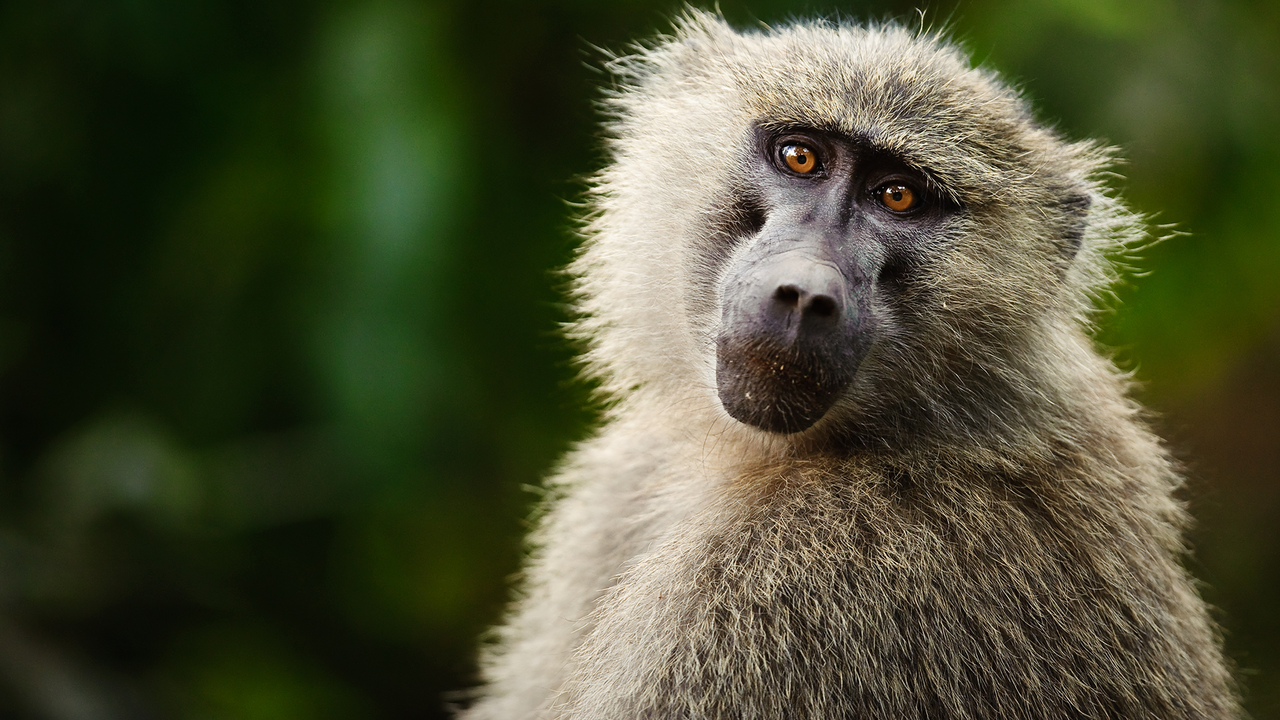
Monkeys use some of the same basic mental strategies as people do to perceive abstract relationships between shapes, a new study suggests. The findings challenge the idea that humans crossed a sharp evolutionary divide when they learned to recognize geometric properties like symmetry, parallel lines and right angles, the researchers say. "While humans do come up with geometric descriptions that are more abstract than what nonhumans can do, there's still some overlap, some similarity in the kinds of geometric intuitions you see in humans and those of non-primates," study co-author Jessica Cantlon, a professor of developmental neuroscience and psychology at Carnegie Mellon University, told Live Science. "So there's a thread of continuity that runs through geometric reasoning between humans and nonhumans."The research, published July 20 in the journal PNAS, adds to a long-standing scientific debate over whether humans possess entirely unique forms of abstract thought or unusually sophisticated versions of abilities found elsewhere in the animal kingdom. "For decades, cognitive scientists have searched for the 'special ingredient' that distinguishes human intelligence from that of other animals," Elizabeth Brannon, a professor of psychology at the University of Pennsylvania who was not involved in the research, told Live Science in an email. "This study provides compelling evidence that, at least for geometric reasoning, the difference between humans and other primates is more quantitative than qualitative."In other words, the study suggested that baboons and macaques don't lack the ability to reason about geometry. Instead, they just aren't as proficient at it as humans, meaning that humans didn't evolve a new unique skill in understanding geometry. A geometric matching gameThe researchers tested eight adult monkeys: four rhesus macaques (Macaca mulatta) and four olive baboons (Papio anubis). The olive baboons participated through the Primate Portal, a touch-screen system installed at Seneca Park Zoo in Rochester, New York. One baboon, Kalamata, was especially enthusiastic."Every day he came to the touch screen," Jialin Li, a doctoral student at Carnegie Mellon University and first author of the study, told Live Science. "He just sat there and worked for two hours, three hours straight, completing thousands of trials. That's just amazing."The macaques participated separately at Carnegie Mellon University, having prior experience with matching tests in other experiments.The researchers then compared the animals' performance with that of 58 U.S. preschoolers ages 3 to 6, and 79 adults from the Tsiman, an Indigenous farmer-forager society in Bolivia whose members received little formal education. A separate experiment in the larger project involving rotating shapes also included 21 U.S. adults. In all of the study's cohorts, the participants played a game known as a match-to-sample task. "[The participants] see a sample shape first," Li said. "For example, it's a square. Then they need to tap the square to make sure that they are looking at it. When they tap it, there will be two shape choices that come up: one on the left and one on the right. They need to choose which shape matches with the sample shape." The researchers made the choice shapes half the area of the sample shape, thus preventing the participants from solving the task by simply matching overall size or pixel count. In another version of the test, they rotated the choice shapes, thereby forcing the participants to identify the underlying form despite its changed orientation. Two olive baboons participated in the Primate Portal experiments at the Seneca Park Zoo in Rochester, New York. (Image credit: Rochester Institute of Technology)Correct answers earned the monkeys fruit-flavored cereal pellets, preschoolers collected stickers that could later be exchanged for prizes, and adults received verbal feedback. Incorrect answers triggered a "bonk" sound and a short timeout from the game. Despite their limited formal education, the adult group had little trouble with the game, but the monkeys and the children had to put considerable thought into their choices. "We often think that this matching task will be super easy for humans," Li said. "But actually, young kids were struggling in completing the task in telling the shapes apart, which makes them more similar to monkeys." Ultimately, the children and monkeys could find the matches, Cantlon said, but only after taking a long time to think about the problem.The researchers then used computer models to investigate which visual properties best predicted participants' decisions. One model represented simple details, such as edges and lines. Another represented more complex information about a shape's overall form. A third encoded discrete geometric properties, such as equal sides, equal angles, symmetry and parallelism an approach the researchers described as "symbolic."According to Cantlon and Li, the term "symbolic" does not mean the monkeys were mentally applying rules such as "a square has four equal sides." Much of the apparent symbolic effect could be explained by the ability to recognize a shape regardless of its orientation, known as rotation invariance.If abstract geometry depended on a uniquely human symbolic system, only the human participants would have shown evidence of using that thought process. Instead, both monkeys and humans appeared to rely on a mixture of complex visual information and symbolic-like features. Adult humans generally performed the best, followed by preschoolers and monkeys, but their results overlapped. This finding suggests that the differences were quantitative, meaning humans are simply better at the same underlying kind of geometric reasoning rather than possessing an entirely unique ability., Monkeys relied roughly three times more strongly on the symbolic model when the shapes were rotated than when they remained upright. Brandon said one of the study's most intriguing findings is that what looks like uniquely human symbolic reasoning for understanding geometry may actually grow out of flexible, abstract ways of representing information that are shared by humans and other primates. Ancient roots of geometryThe results do not mean that monkeys understand formal mathematics, Brannon cautioned. "Human mathematical reasoning extends far beyond recognizing geometric regularities it includes language, formal proof, recursive reasoning and cultural transmission." Rather, this study provides evidence that some of the building blocks of mathematical thought have deeper evolutionary roots than previously recognized, she said.Giorgio Vallortigara, a professor of neuroscience at the University of Trento in Italy who was not involved in the study, agrees with Brannon and her colleagues' conclusions.Vallortigara explained in an email to Live Science that previous studies have often focused on how animals understand the geometry of their surroundings, such as navigating spaces. What makes these findings different is that they show animals can also reason about the geometric properties of individual objects. Related stories'They reliably chose the statistically more favorable option': A crow researcher explains how these winged geniuses process numbers, and what it could reveal about human math smartsCrows understand the 'concept of zero' (despite their bird brains)Bees Can Solve Math Problems That Would Stump the Average ToddlerComparing species can help scientists trace the origins of geometry before language or arbitrary symbols became involved, Vallortigara said. It may also reveal whether similar abilities depend on mechanisms inherited from a common ancestor or evolved independently in animals with different nervous systems.Li and Cantlon are now breaking down shapes into components such as angles, side lengths and numbers of sides to identify which properties are the hardest for monkeys and humans to understand. Cantlon described the follow-up as "a deconstructed geometry task."The research could also help educators understand the geometric intuitions children bring into the classroom, Cantlon said, allowing lessons to build upon those abilities rather than treating geometry as something learned entirely from scratch."Evolution rarely invents entirely new mechanisms from scratch," Brannon said. "More often, it refines, recombines and extends existing ones."What do you know about chimpanzees and great apes? Test your smarts with our primate quiz!









 English
 Arabic
 French
 Spanish
 Portuguese
 Turkish
 Dutch
Dutch
 Italiano
 Russian
 Romaian
 Portuguese (Brazil)
 Greek
Greek