How to watch 'Shark Week' 2026 schedule, dates & episodes
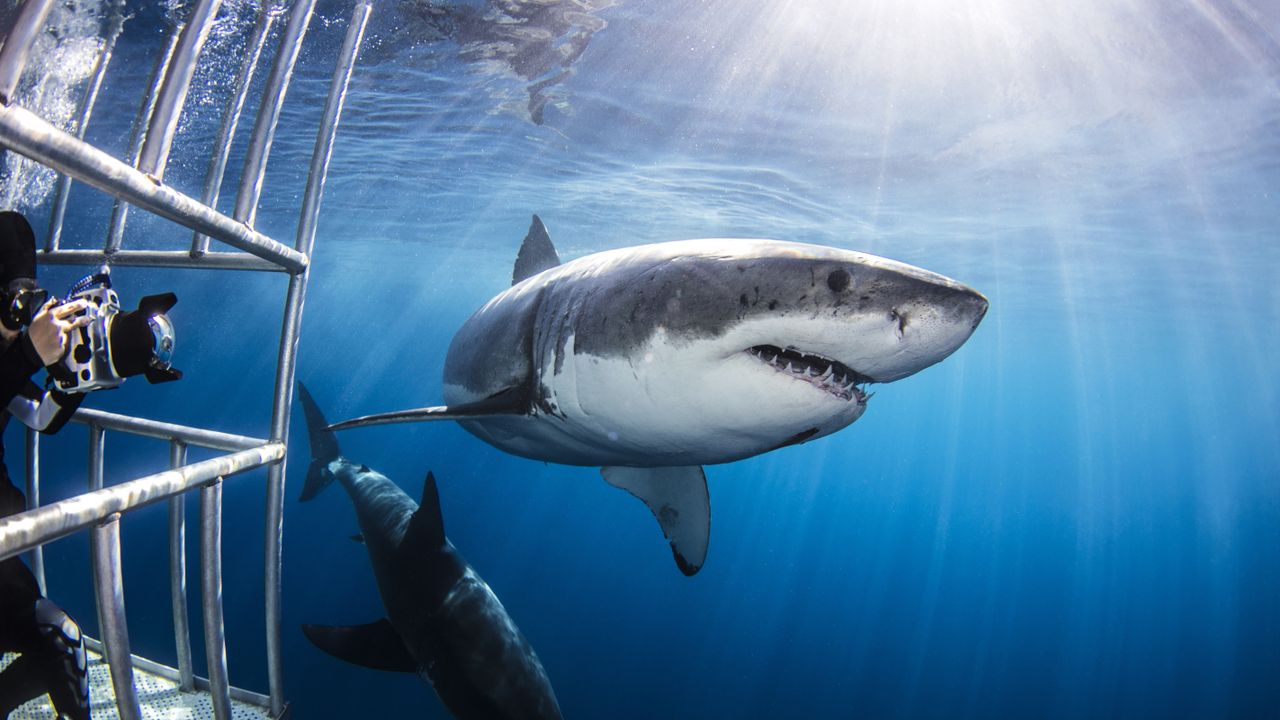
Shark Week 2026 is here! This year's highlights include experiments testing great white intelligence, Molly Carlson's death-defying freefall dive into a reef shark feeding frenzy, and a deep-dive on the threshers tail strike. The 20-strong lineup of shows airs across seven nights, and Live Science is here with all the TV and streaming details. How to watch "Shark Week" Quick Guide Dates: Sunday, July 26 Saturday, August 1 TV: Discovery (US) US streams: YouTube TV / DirecTV / Hulu + Live TV / HBO Max Watch anywhere: Get 85% off Surfshark VPNShark Week still packages its science with ominous music and blockbuster titles, but its strongest moments challenge the familiar "mindless killer" myth, presenting sharks instead as intelligent, highly specialized predators whose decline could destabilize the worlds oceans.Look out for a great study of the highly aggressive and erratic sharks in the waters off Marshall Islands, where the United States military detonated 67 nuclear bombs between 1946 and 1958. And if you're a tech fan, there's plenty of new camera systems and tagging technology to discover. Read on as we explain how to watch "Shark Week" 2026 from anywhere.How to watch "Shark Week" 2026 in the U.S."Shark Week" 2026 comprises 20 brand-new TV specials that will air on Discovery from 8 p.m. ET/PT every evening from Sunday, July 26 to Saturday, Aug. 1. If you don't have the Discovery channel on cable, it's available on a streaming basis from several cable alternatives. Best of all, many offer a free trial to new customers.YouTube TV usually costs $82.99 per month but comes with a free trial and $15 off each of your first five months.The DirecTV MyEntertainment genre pack costs $42.99 per month after a 5-day free trial, and Hulu + Live TV costs $89.99 per month after a 3-day free trial.Alternatively, you can watch Shark Week 2026 on HBO Max (from $10.99 per month). Can you watch "Shark Week" 2026 in the U.K.?"Shark Week" programming typically airs on Discovery Plus in the U.K. at a later date.At the time of publication, plans for the 2026 slate of specials are still firmly under wraps.If you're currently in the U.K. for work or on vacation from the U.S., you can still catch "Shark Week" 2026 by using a VPN, such as Surfshark.Watch "Shark Week" 2026 from anywhereIf you're traveling abroad you can access your usual streaming services from anywhere with a good VPN.A VPN, or virtual private network, is a piece of internet security software that can alter your device's digital location, unlocking the geo-restrictions on most streaming platforms.Our expert colleagues at TechRadar rate Surfshark as one of the best VPNs. Not only is it great for unblocking streaming services, it has top-level security features, a reasonable price tag and, right now, a big discount.Save 85% off Surfshark VPNLive Science x Surfshark Exclusive "Shark Week" DealWhether you're tuning into Discovery's Shark Week or diving deep into the web, privacy matters. Surfshark keeps your connection encrypted and your data out of sight no matter what waters you're navigating.Protect unlimited devices for just $2.39/mo + 4 Extra Months. Save 85%! Shark Week Special runs from July 26 to August 1, 2026. From $2.39 per month Block ads, trackers, scams, and malware 30-day money-back guarantee 4 Extra monthsView Deal"Shark Week" 2026 trailerWhen is "Shark Week" 2026?"Shark Week" 2026 runs from Sunday, July 26 to Saturday, Aug. 1 in the United States."Shark Week" 2026 episodesSunday, July 26 8 p.m. ET/PT "K-Pop Shark Heroes"After a recent series of shark encounters off the Korean Peninsula, actor and comedian Ken Jeong joins forces with Grammy-nominated singer and lifetime shark lover Rei Ami on a mission to reshape the perception of sharks across East Asia and around the globe, fueled by the power of K-pop. 9 p.m. ET/PT "Air Jaws: Red, White and Breach"A new phenomenon is emerging as great white sharks are captured on film breaching in California like never before. Filmmaker Jeff Kurr, marine biologist Alison Towner, and cinematographer Andy Casagrande set out to capture this unprecedented behavior and uncover the secrets behind the Great American Breach. 10 p.m. ET/PT "Invasion of the Mega Sharks"Shark researcher Neil Hammerschlag, joined by Shark Week expert Paul de Gelder, leads a team to track down Big Rose, a record-breaking great white believed to be one of largest predators in the North Atlantic. Using innovative tagging technology and daring field operations, they venture to a newly discovered shark hotspot off Nova Scotia aiming to transform our understanding of these ocean giants.Monday, July 27 8 p.m. ET/PT "Bull Shark Dinner Bell"Shark attack survivor and advocate Paul De Gelder teams up with apex predator specialist Rosie Moore in Jupiter, Florida to investigate what triggers giant bull sharks to confront humans. The team tests how human behavior in the ocean, extreme weather events and prey preferences influence shark attacks. 9 p.m. ET/PT "House of Sharks"Off the coast of New Zealand lies a hidden shark battleground, where three distinct groups of great whites organize into competing "houses" and may be competing with one another to gain control of a major seal feeding ground. Marine biologist Tristan Guttridge and underwater cinematographer Kina Scollay venture into the middle of the action on an epic expedition. As they investigate, they uncover the possibility that these clans of great whites recognize their kin and return season after season to their ancestral territories, raising the theory that these predators aren't solitary hunters but rival dynasties at war. 10 p.m. ET/PT "Biggest Mako on Earth"For decades, rumors have swirled about massive, 15- to 20-foot-long (4 to 6 meters) mako sharks patrolling the deep waters off Southern California. Long dismissed as fishers' tales, new footage, along with a recently published photo capturing a mako that appears to stretch 15 feet, is now forcing scientists to rethink everything they know about these oceanic apex predators. Marine biologist Tristan Guttridge, alongside conservationist Kendyl Berna and shark tagger Keith Poe, go on an investigation to determine whether the world's biggest mako is real and hunting in the coastal waters of Santa Catalina.Tuesday, July 28 8 p.m. ET/PT "Jurassic Sharks"In a Shark Week first, revolutionary CGI resurrects the ocean's most bizarre Jurassic (201 million to 143 million years ago) sharks, bringing them to life like never before. Guided by the rare living sharks that once shared their seas, real-world expeditions seamlessly merge with cutting-edge visual effects to uncover stories from the deep and prehistoric seas in ways never before possible. 9 p.m. ET/PT "Jaws vs Orca"For millennia, the great white shark has reigned as the ocean's ultimate apex predator. But now, a new challenger is emerging: the orca. Around the world, sharks are washing ashore with their livers removed with chilling precision while in the Strait of Gibraltar, orcas are targeting sailboats ramming hulls, crippling rudders and sinking vessels. To investigate this shift in behavior, Tristan Guttridge explores orcas' attacks on boats to reveal how these predators hunt and how they may be taking down great white sharks. 10 p.m. ET/PT "Chum Island: Catching a Killer"In this Shark Week whodunnit, a rare surge of highly aggressive shark attacks hit a tight-knit community off Australias southern coast, prompting marine biologist Riley Elliott to find and tag the oceanic suspects. But when he discovers this could be a new, elusive population of sharks, he builds the world's first "chum island" to lure them in and uncover if they are the ones responsible for the attacks.Wednesday, July 29 8 p.m. ET/PT "Expedition X: Atomic Sharks"Phil Torres and Heather Amaro travel 5,000 miles (8,000 kilometers) west of the U.S. to the remote Marshall Islands, home to the world's largest shark sanctuary, where apex predators are exhibiting highly aggressive behaviors and erratic swimming patterns. Between 1946 and 1958, the United States military detonated 67 nuclear bombs around the island, raising questions about their lasting impact on marine life. Now, the team dives into these dangerous waters to investigate reports of "mutant" sharks and uncover whether atomic blasts could be to blame. 9 p.m. ET/PT "Expedition Unknown: Shark Secrets"Global explorer Josh Gates travels back in time and dives into the history behind some of the worlds most infamous shark encounters, from the earliest known shark attack to the mystery surrounding the shark feeding frenzy faced by sailors following the sinking of the USS Indianapolis. He also investigates the legendary "Stronsay Beast," a mysterious creature that washed ashore in Scotland in 1808. 10 p.m. ET/PT "Alien Sharks: Untamed America"In celebration of Americas 250th anniversary, wildlife biologist Forrest Galante embarks on a nationwide quest to find the nations most bizarre and dangerous "alien" sharks from glowing swell sharks to elusive sawfish.(Image credit: Discovery)Thursday, July 30 8 p.m. ET/PT "What Shark Attacked?" Shark attacks are extremely rare, but when they happen, the first question is always the same: What kind of shark was it? Leading shark scientists Tom Hird and Rosie Moore, alongside conservationist Kinga Philipps, investigate mysterious attacks from around the world using cutting-edge forensic analysis including bite pattern comparison, geographic profiling, video evidence, and eyewitness testimony to identify the species responsible and uncover why these life-threatening encounters occur. 9 p.m. ET/PT "How to Train a Great White"Tristan Guttridge ventures into shark-infested waters off New Zealand to answer a provocative question: Can sharks be trained? Using techniques pioneered by the U.S. Navy to train dolphins in complex cognitive tasks, the team tests whether these apex predators can learn, solve problems and respond to cues. If successful, the experiment can potentially redefine shark intelligence and transform our understanding of one of the ocean's most misunderstood predators. 10 p.m. ET/PT "Ultimate Shark Dive"World-class Red Bull high diver Molly Carlson leaps from a helicopter hovering above the open ocean, targeting a narrow plexiglass cage surrounded by circling reef sharks, or risking a direct plunge into a chum-filled feeding frenzy. From concept to execution, Carlson pushes herself to the limit with a record-setting stunt that no high diver has ever attempted.Friday, July 31 8 p.m. ET/PT "Secrets of the Great White Kill"For centuries, great whites were believed to simply stalk their prey. Now, groundbreaking science suggests that these alpha sharks are highly intelligent predators that adapt their hunting techniques in real time. In this program, the full range of great white hunting tactics is revealed, reinforcing the species' status as one of the ocean's top predators. 9 p.m. ET/PT "Sharkzilla Takes New York"After a wave of mauled marine life washes ashore in New York, conservation biologist Craig O'Connell launches an investigation to find the culprit. When it leads to an old nuclear dumping ground teaming with great whites and makos, he is left with the theory that the predator may be radioactive. A deeper dive reveals an unexpected hotspot for massive makos off the coast of the Hamptons, suggesting that these waters may be hiding something even bigger beneath the surface. 10 p.m. ET/PT "My Strange Shark Addiction"How far will people go to fuel their fascination with sharks? For four devoted shark "fin-atics," their obsession shapes every aspect of their lives. From a dentist who spends every spare moment searching for life-size shark replicas to a woman who insists she has a special connection with her shark "boyfriend," and a world-record holder covered in shark tattoos, this special explores how their daily routines, relationships and finances revolve entirely around sharks.Saturday, August 1 8 p.m. ET/PT "Great White Highway"Great white sharks are pushing farther up the East coast than ever before and in far greater numbers, leading to close encounters and forcing beach closures. Now, a team of shark scientists races to install high-tech receivers and tag as many great whites as possible. 9 p.m. ET/PT "Thresher Shark: Stun to Kill"The physics behind the thresher sharks devastating tail strike has long remained a mystery until now. For the first time ever, the discovery of a shallow-water feeding ground has made observing this behavior possible. Now, shark scientist Craig OConnell and marine biologist Aliah Banchik dive into the direct line of fire as they attempt to reveal exactly how these predators use their tails to stun and kill.Is there a "Shark Week" 2026 host?John Cena and Jason Momoa have hosted recent editions of "Shark Week", but the 2026 incarnation won't have a single overarching presenter stitching its constituent parts together.We test and review VPN services in the context of legal recreational uses. For example: 1. Accessing a service from another country (subject to the terms and conditions of that service). 2. Protecting your online security and strengthening your online privacy when abroad. We do not support or condone the illegal or malicious use of VPN services. Consuming pirated content that is paid-for is neither endorsed nor approved by Future Publishing.














 English
 Arabic
 French
 Spanish
 Portuguese
 Deutsch
 Turkish
 Dutch
Dutch
 Russian
 Romaian
 Portuguese (Brazil)
 Greek
Greek