Imre Nagy: The Naive Hungarian Revolutionary Prime Minister
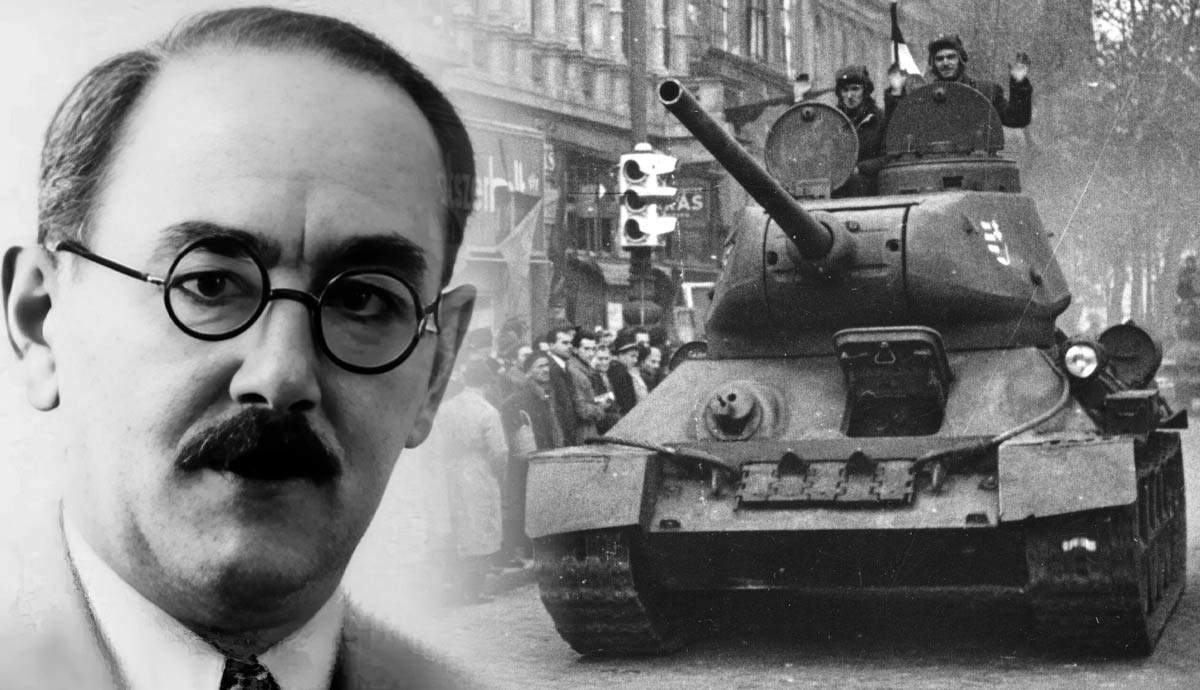
Imre Nagy is a national hero in Hungary. He was a moderate communist in an era of severe oppression by Soviet occupation. He briefly led the country during the Hungarian Revolution of 1956, and he was executed for his actions. Despite his popularity, Nagys lack of judgment eventually led him to make fatal mistakes.Nagys OriginsImre Nagy, 1956. Source: Wikimedia Commons/FORTEPAN/Jnosi KatalinImre Nagy [pronounced Im-reh Nodge] was born in 1896 in the Hungarian city of Kaposvrunder the Austro-Hungarian Empire. His family were peasants, and Nagy was learning to become a locksmith before he was drafted in World War I. By the time of the Russian Revolution of 1917, Nagy was a communist working in the underground party in Hungary. For more than a decade he lived in the Soviet Union and was an informer for the Soviet secret police, the NKVD, from 1933 to 1941.He returned to Hungary in 1944, when he became the minister of agriculture. His land reforms were quite favored among the poor and working class. Then, he served as interior minister from 1945 to 1946. At the time, Mtys Rkosi, the general secretary of the Hungarian Working Peoples Party, was the de facto leader of Hungary, and he led a brutal regime. Rkosi was fiercely hated by the population.In 1953, the moderate Imre Nagy succeeded him as prime minister.Nagy was the prime minister from 1953 to 1955, and again from October 23, 1956, the first day of the Hungarian Revolution, to November 4, 1956. The freedom fighters and student organizers wanted Nagy in charge, as they believed in him and his willingness to change Hungary for the better. He was the unelected political leader of the Hungarian Revolution. Today, Nagy is still hailed as a revolutionary hero and a martyr.He was kind and trusting; some would call him nave, but recognizing treachery is often easier in hindsight.Imre Nagys Political BackgroundImre Nagy, his wife Mria get, and their daughter, Erzsbet, 1929. Source: Wikimedia Commons/FORTEPAN/Jnosi KatalinImre Nagy pledged to introduce a New Course in his first tenure as prime minister in 1953, promising to release the many thousands of political prisoners who were falsely imprisoned. On top of that, he also vowed to close the internment camps, end discrimination against kulaks (rich peasants), let farmers leave the collective farming system, allow the class enemies to return home, and authorize private businesses to operate again. Nagy was known as a man of his word, and his promises were significant. Nagys reforms would never have happened during Stalins lifetime.Nagy did not adhere to Stalins tyrannical style of domination. Prime Minister Rkosi was a Stalinist, and he also ruled with an iron thumb. In 1953, there were many old Stalinists in Hungarys government who did not appreciate Nagys radical changes. As a result, he received pushback and could not fulfill his promises to the country.He was too radical for the Stalinists. He and Rkosi struggled with each other for power, and by 1955, Nagy was removed. Andrs Hegeds, a stooge for Rkosi and the Soviets, took office as prime minister. However, Nagy was held responsible for Hungarys economic issues.Meanwhile public dissent against Rkosi was growing. Many believed that releasing political prisoners who were incarcerated during Rkosis regime was a way to liberalize Hungary. That was one reason the revolutionaries wished for Nagy to regain power. Between 7,500 and 8,000 political prisoners were released during the Hungarian Revolutionsome of whom were freed by vigilante freedom fighters.When the Hungarian Revolution BeganHungarian Parliament in Budapest, Andrew Shiva, 2015. Source: Wikimedia CommonsOn October 23, 1956, around 200,000 protesters gathered in the streets of Budapest. The demonstrators called for Nagy to address the crowd.Nagy began his speech by addressing them as comrades, which was a communist term, and the protesters did not appreciate the way he tried to placate them. He continued by saluting them, calling them democratic Hungarians who wished for socialist reforms. He then told them the government was adamantly working on the reforms they wanted. Nagy advised them to be complacent and lied to them. The speech was recorded by a journalist in the crowd (Sebestyen, 2006).The crowd heckled him. While they did not believe his speech, many protesters still wished for him to lead Hungary.Later that night, the Soviets at the Kremlin in Moscow decided to appoint Nagy as the prime minister to quell the unrest.However, tensions continued to rise. On October 23, around midnight, the Hungarian Revolution began. It technically ended on November 4, but the resistance kept fighting until November 11. For twelve days, up to 26,000 freedom fighters, primarily students in their teens and early twenties, faced Soviet tanks and troops. Some fought for the duration of the revolution, and others joined only briefly. They formed several groups and created strongholds around the city, using guerrilla warfare tactics and acquired tanks and weapons from the Soviets as they fought.By October 28, there was a ceasefire, and Nagy praised the freedom fighters for their bravery, finally embracing the revolutions cause. Nagy performed a juggling act. While he had to keep his reputation as a leader of the people, he also had to maintain the Soviets trust.Nagys Poor JudgementImre Nagy and his grandson Karcsony, 1951. Source: Wikimedia Commons/FORTEPAN/Jnosi KatalinMany things should have made Nagy suspicious of the Soviets and their intentions, but he always kept his faith in them.One instance was when Yuri Andropov tried to convince Nagy to sign a letter backdated to October 23, stating that Hungary requested military intervention. Andropov was the Soviet ambassador to Hungary, and he was ordered to tie up this loose end.On October 23, it was Ern Ger (the first secretary of the Hungarian Working Peoples Party) who verbally requested Russian troops to reinforce Hungary and stop the protests; the Soviets were willing and ready, but they needed an official request in writing. Without that written request, the Soviets could not have legally sent Russian troops in. It would have been an unlawful and aggressive invasion of a satellite state, which did not have much freedom from the USSR.When he requested the Soviets intervention, Ern Ger was not the prime minister. Andrs Hegeds held that office on October 23, so Ger should not have made that call.Nagy was not appointed as the prime minister until after Soviet intervention had been requested that night, so it would not have made sense for him to sign this backdated letter. When Andropov asked him to sign it, it should have raised a red flag that foul play was afoot.In the end, Nagy denied the request, and Andropov instead asked Andrs Hegeds to sign the letter. Hegeds signed willingly and then fled for the Soviet Union.They Lied to His Face, and He Believed ThemImre Nagy, 1956. Source: Wikimedia Commons/FORTEPAN/Jnosi KatalinOn October 31, the new cabinet of ministers met to discuss their next moves. Rumors were circulating that the Russians were moving their troops back into Hungary instead of retreating as they were supposed to be doing. The Russians tactics confused the Hungarians, but Nagy did not want the press to learn the rumors.That day, Nagy went to say goodbye to two Soviets as they boarded their flight back to Moscow. Anastas Mikoyan and Mikhail Suslov were sent to Budapest to oversee the transfer of power to Nagy when the revolution began.Nagy asked them why the Russians were seen coming back into Hungary. They explained that the military movements were routine, it was not an invasion, and there was nothing to worry about. Nagy believed them. He naively continued to believe each lie the Russians told him, and he thought that the Hungarians had come out victorious in the revolution.In fact, the days between October 31 and November 4 were the calm before the storm.On November 1, Nagy announced to the country that Hungary was withdrawing from the Warsaw Pact and declaring herself neutral. That was necessary if Hungary wished to receive international intervention to fight off the Soviets, but he did not yet ask for help, and by November 4 it was too late.Operation WhirlwindHungarian freedom fighters on a tank, 1956. Source: Wikimedia Commons/FORTEPAN/Pesti SrcOn November 4, General Kirly woke after midnight to the news that the Soviets were ready to attack. He rang Nagy to warn him, insisting that either he or Nagy make an immediate radio broadcast to tell the troops that war was imminent and to prepare themselves. Nagy refused to make the announcement. He also did not let Kirly make the call.Operation Whirlwind was already underway, but the Hungarian troops and freedom fighters were not prepared to face the Soviet army that time.On that day, 150,000 Soviet troops from 10 divisions and 2,500 tanks were sent in to restore peace, and up to 60,000 more soldiers were reportedly on standby. Not only that, but 20,000 troops had been stationed up and down the Hungary-Austria border. They went in equipped with anti-tank guns and everything they could possibly need including bazookas, walkie-talkies, armored vehicles, newer, more agile tanks, and even flame-throwers. Additionally, each soldier had a submachine gun.At 4 a.m., the assault began. General Kirly again called Nagy and begged for the orders to open fire, but Nagy again refused. He told Kirly: Calm down, the Russian Ambassador is here in my office. He is calling Moscow right now. There is some misunderstanding. You must not open fire. (Aczel, 1957)Abandoning His PostChain Bridge in Budapest from Castle Hill, 2015. Source: Wikimedia CommonsKirly called Nagy four times with information about the Russian tanks movements in Budapest, and Nagy was dismissive. The Soviets had breached the defensive barrier around Budapest. Nagy even told Kirly not to update him with any more reports, even though just hours before he had asked Kirly to continue keeping him informed. Kirly thought it was strange that the prime minister did not want reports from the commander-in-chief of the military about the invasion.Nagy was not concerned with the updates because he was on his way to the Yugoslav Embassy, having already taken their offer of sanctuary. The Yugoslavs had agreed to neutralize Nagy and keep him isolated so the Soviets could invade, but Nagy believed they were acting out of kindness rather than with ulterior motives in mind.By 5:20 a.m., Nagy agreed to make a broadcast: This is Imre Nagy speaking. Today at daybreak Soviet troops attacked our capital with the obvious intention of overthrowing the legal Hungarian democratic government. Our troops are in combat. The government is at its post. (Sebestyen, 2006)Nagys announcement was not true.Andropovs bosses were pleased with his performance. He had strung Nagy along by beating around the bush and lying to keep Nagy in the dark so that Hungary could be completely disarmed by the time the Soviets got there.Jnos KdrJnos Kdr, 1977. Source: Wikimedia CommonsThe Soviets chose Jnos Kdr to become the next prime minister of Hungary after they ousted Nagy on November 4. Kdr previously served as the minister of the interior from 1948 to 1950, in 1951 he was imprisoned during the political purges of the Rkosi regime. Hungarys purges were modeled after the violent purges in the USSR. Imre Nagy released Kdr from prison in 1954 during his first term as prime minister.When the Soviets removed Ern Ger from his position as general secretary of the Hungarian Working Peoples Party on October 25, 1956, Kdr replaced him. Thus, he was a member of Nagys revolutionary government.Soon, however, Kdrs facade dropped, and he revealed himself as a traitor. He repeatedly promised Nagy that he would not be harmed or prosecuted and that could return home if he came out of hiding at the Yugoslav Embassy.On November 21, a written guarantee declared that Nagy and the other 41 Hungarians who had taken refuge at the embassy could return to their homes unharmed, with immunity. Nagy believed that Kdr would not foolishly betray him during his first month as prime minister.Nagy left the embassy the next day. He said his goodbyes and gave thanks to the Yugoslavs for their hospitality. They had only offered him sanctuary as a favor to the Soviets, but they failed to get Nagy to formally resign as prime minister and pledge loyalty to the Kdr government.The Deceit and Nagys DeathMemorial plaque for Imre Nagy, 2019; with Statue of Imre Nagy, Attila Terbcs, 2007. Source: Wikimedia CommonsA bus with obvious KGB officers onboard went to pick the Hungarians up and take them home. The bus driver even warned Nagy that not all was as it seemed. Nagy was a little spooked and he got off the bus, but the Yugoslavs persuaded him that the KGB were there as protection. So, Nagy and the other Hungarians got back on the vehicle.Not long after taking off, the driver was ordered to pull over, and the Hungarians were pulled out and arrested. The trickery and abduction were planned.Kdr had more revolutionary leaders fooled and arrested. He went back on his word that freedom fighters would not be punished or imprisoned. For the next few years, the new Peoples Courts of Hungary convicted over 22,000 people for participating in the revolution, 330 of whom were executed. An unknown number of people were deported; some say it was upwards of 50,000 people.After his arrest, Nagy was deported to Romania, along with his wife, his daughter, and grandchildren. He was returned to Hungary, tried for treason, and hanged on June 16, 1958. He was hanged alongside the revolutionary minister of defense, Pl Malter, and a journalist named Mikls Gimes. His Chief of Staff, Jzsef Szilgyi, and the minister of state, Gza Losonczy, were hanged around the same time. They were all buried in a prison courtyard.In 1961, their bodies were exhumed and reburied in unmarked plots in a Budapest cemetery. The exact location was an official secret. It was not discovered until 1988 after an investigation.On June 16, 1989, 31 years later, all five men were exhumed once again and buried in Budapests New Public Cemetery. At least 250,000 people attended the reburial ceremony.Reference ListAczel, Tamas. (1957). Hungarys Revolt by Rebel Leaders. Life, 18 Feb 1957, 105-129.Gati, Charles. (2006). Failed Illusions: Moscow, Washington, Budapest, and the 1956 Hungarian Revolt. Stanford University Press.Korda, Michael. (2006). Journey to a Revolution: A Personal Memoir and History of the Hungarian Revolution of 1956. HarperCollins, New York.Mertz, Dawn-Eve. (2024). Young Men Go West: The Hungarian Revolution of 1956 and One Teenagers Risky Escape. Kleo Press.Michener, James. (1957) The Bridge At Andau. Random House, Inc.Sebestyen, Victor. (2006). Twelve Days: The Story of the 1956 Hungarian Revolution. Pantheon Books.










 English
 Arabic
 French
 Spanish
 Portuguese
 Deutsch
 Dutch
Dutch
 Italiano
 Russian
 Romaian
 Portuguese (Brazil)
 Greek
Greek