0 Σχόλια
0 Μοιράστηκε
5 Views
Κατάλογος
Elevate your Sngine platform to new levels with plugins from YubNub Digital Media!
-
Παρακαλούμε συνδέσου στην Κοινότητά μας για να δηλώσεις τι σου αρέσει, να σχολιάσεις και να μοιραστείς με τους φίλους σου!
-
WWW.BGR.COMHere's Why Storing Electronics In Your Garage Is A Bad IdeaThe garage is a great place for so many things, including a home gym, an extra bedroom, the obvious parking spot, and a large storage space.0 Σχόλια 0 Μοιράστηκε 5 Views -
WWW.BGR.COMHow Long Do Owners Say Projectors Last?If you're considering a projector for your home entertainment, here's what to know before you buy and what projector owners say about how long they last.0 Σχόλια 0 Μοιράστηκε 5 Views -
TECHCRUNCH.COMAnthropics landmark $1.5B copyright settlement is approvedThe final approval settles one case, but it doesn't resolve the broader issue of using copyrighted works to train AI models.0 Σχόλια 0 Μοιράστηκε 5 Views -
Five Good Emperors Built Rome’s Greatest Century — Then One Chose WrongFive Good Emperors Built Rome’s Greatest Century — Then One Chose Wrong Skip to content ← Back to the front page From 96 to 180 CE, five emperors transformed Rome through competence, restraint, and a...0 Σχόλια 0 Μοιράστηκε 11 Views
-
WWW.BGR.COMThis State Wants To Make It Illegal For Tech Companies To Hide Software Support TimelinesA new bill could change how long tech companies are required to support the devices you already own, and this state could set the standard for the country.0 Σχόλια 0 Μοιράστηκε 5 Views -
WWW.BGR.COMShould Your Soundbar Be The Same Brand As Your TV?Here's what to consider when buying a soundbar and TV combo for your home entertainment system and whether buying matching brands actually matters.0 Σχόλια 0 Μοιράστηκε 5 Views -
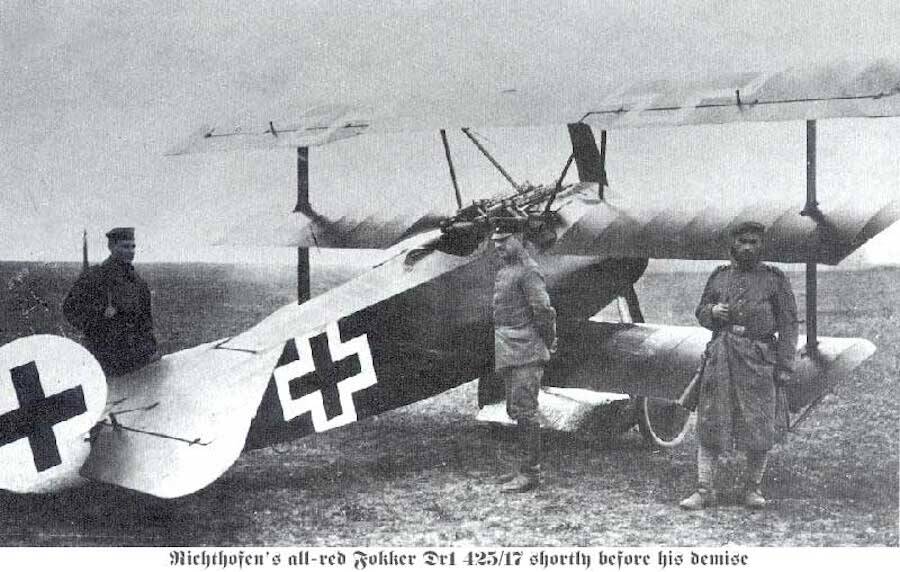
ALLTHATSINTERESTING.COM30 Vibrant Illustrations That Adorned Fighter Planes During The World WarsAs the original major global conflict, World War I brought many firsts: the first widespread deployment of poison gas, the first use of tanks in combat, and the first war fought on land, at sea, and in the air. Airplanes were still a fairly recent invention in 1914, and as pilots began to use aircraft in battle, they also started to personalize them.Nose art soon emerged as a way to boost morale. Early examples were fairly simple, such as a name or small logo painted on the side of a plane. But by World War II, the illustrations had become much more intricate.Click here to view slideshowThe most popular nose art depicted pin-up models and other female figures, but cartoon characters and military motifs were also common. As the war raged on, pilots began adding small images of bombs, swastikas, or Japan's Rising Sun to indicate the number of missions they had completed or how many enemies they'd shot down.Below, read more about the use of nose art during the World Wars. And above, look through 30 historical photos of the paintings that once adorned fighter planes.How Fighter Pilots Started Decorating Their PlanesOrville and Wilbur Wright made the first successful powered, heavier-than-air flight on Dec. 17, 1903, marking the advent of the age of aviation. Airplanes were first used in battle during the Italo-Turkish War in 1911, but it wasn't until World War I that they became widespread.Great War Observer/Wikimedia CommonsThe Red Baron with his painted aircraft during World War I.German fighter pilots were among the first to begin decorating their planes. Manfred von Richthofen, better known as the Red Baron, famously painted his Fokker Triplane a vivid red, and his squadron came to be called the "Flying Circus" because of their brightly colored aircraft.Pilots from other countries took notice, and they soon followed suit. Rather than painting their entire planes, however, most of them stuck to nose art depicting simple names, logos, or mascots. British and French pilots often added insignia that hearkened back to the days of medieval knights, while Americans preferred illustrations of Uncle Sam, Native Americans, and bison. Francesco Baracca, Italy's top flying ace, had a black horse painted on his plane. Baracca died in battle in June 1918, but after the war, race car driver Enzo Ferrari happened to meet his parents. According to the Ferrari website, Baracca's mother asked, "Ferrari, why don't you put my son's prancing horse on your cars? It'll bring you good luck." Ferrari agreed and he later repurposed it as the logo for his luxury car company.Public DomainFrancesco Baracca pictured with his prancing horse emblem in April 1918, two months before his death. Nose art mostly faded out of use during the smaller-scale military conflicts that took place in the 1920s and '30s, but when World War II broke out in 1939, it reached a whole new level of popularity.The Golden Age Of Nose Art During World War IITechnology changed rapidly between the two World Wars, and fighter planes were no exception. The biplanes of World War I developed into sleek jets with more room on the fuselage for nose art.Young Americans drafted into the armed forces during World War II were leaving behind a society that emphasized and valued individuality, and they had to quickly adapt to the conformity of the military. As such, nose art was a way to express their individuality as well as the collective identity of the crew.Public DomainNose art on a U.S. B-29 depicting caricatures of the crew of Waddy's Wagon.The United States Army Air Forces (USAAF; the predecessor of the modern U.S. Air Force) recognized that nose art boosted morale and allowed the practice, while the Navy and Marine Corps mostly prohibited it. The USAAF did have rules surrounding the content of the art, though. The illustrations couldn't depict nudity, and commanders had to approve any unofficial names painted on aircraft.The nose art was either selected by the pilot or agreed upon by an entire crew, and it was typically painted by airmen who had careers in the arts outside of the military or were simply creatively inclined. The artists would be paid in cash or free beer.Throughout the war, common themes emerged. Perhaps unsurprisingly, female figures were the most popular of all.Common Nose Art Themes And MotifsMore than half of all nose art during World War II depicted women, primarily pin-up girls. Pilots were inspired by artists like Alberto Vargas and George Petty, who drew idealized versions of the female figure for Esquire. Petty sent pilot Robert K. Morgan an illustration for the Memphis Belle, the first fighter plane to complete 25 missions and return safely to the U.S. during the war.Pin-up model nose art was more common in the Pacific Theater than in Europe, perhaps because men stationed in remote tropical islands could go weeks or months at a time without seeing women. San Diego Air & Space Museum ArchivesPonderous Peg, a B-29 with a promiscuous piece of nose art that just barely avoided full nudity.Instead of models, some pilots added depictions of their wives or sweethearts back home to their planes. Dick Bong, America's top flying ace, famously had his wife's image on his plane, which was named Marge in her honor. General Paul Tibbets named his Boeing B-29 Superfortress bomber Enola Gay after his mother. The plane made history on Aug. 6, 1945, by dropping an atomic bomb on Hiroshima.Cartoon characters were also popular forms of nose art. Superman, Mickey Mouse, and Bugs Bunny adorned many planes. One featured an Elmer Fudd-inspired figure holding up Adolf Hitler's severed head, while another depicted Dumbo flying in a torpedo with the caption "We Never Miss."Some pilots kept things simpler, painting humorous phrases like "Bucket of Bolts" or "A Wing and 10 Prayers." Others kept tallies on the sides of their planes, adding a small image of a bomb for each successful mission they completed or a Nazi or Japanese flag for every enemy they shot down.Still more planes were decorated with paintings of animals. One of the most popular motifs was the shark mouth. It was famously used by the Flying Tigers, the First American Volunteer Group that helped defend China from Japanese invasion during World War II.Nose art became far less common after World War II, though it can still be seen on some military planes today. But while many countries have adopted the practice in dozens of wars over the decades, the most iconic examples of the craft remain the illustrations that adorned USAAF planes in the 1940s.After reading about nose art during World War I and II, learn about America's "doomsday plane" that's always standing by in case of nuclear war. Then, go inside the heroic story of the Night Witches, the all-female squadron of World War II.The post 30 Vibrant Illustrations That Adorned Fighter Planes During The World Wars appeared first on All That's Interesting.0 Σχόλια 0 Μοιράστηκε 5 Views -
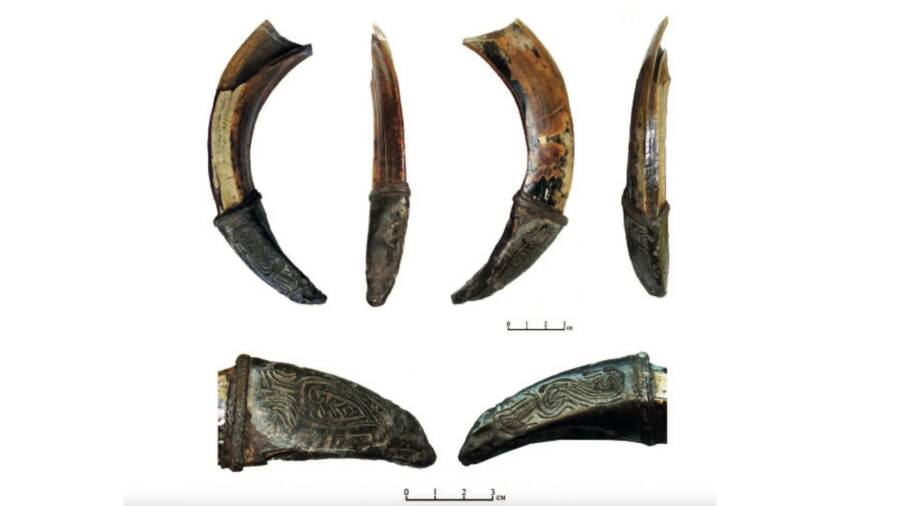
ALLTHATSINTERESTING.COMThis Nearly 1,000-Year-Old Engraved Boar Tusk May Have Been A Prized Medieval Good Luck CharmTyanina, E. A., et al., 2026Researchers believe the 12th-century wild boar tusk served as a good luck amulet for an elite member of society.When archaeologists in the Russian city of Veliky Novgorod discovered a large wild boars tusk from 900 years ago in 2020, they knew it was a rare find.Now, after closer study of the object, researchers believe the tusk, which was set in intricately-engraved tin, served as a good luck amulet or hunters trophy of a high-status member of the city.The Metal-Mounted Wild Boar Tusk Found In Veliky NovgorodAccording to the researchers from Moscow State University, who recently published their findings in The Volga River Region Archaeology journal, the tusk was from the 12th or 13th century, and likely came from a wild boar that was at least eight years old and over 220 pounds. Its extraordinary because of its size. Its extremely big, Natalia Eniosova, co-author of the study and a metal scientist in the Department of Archaeology at Moscow State University, told Live Science.Tyanina, E. A., et al., 2026The tusk was set in an almost-fully tin alloy with intricate engravings.Although the tusk was not fully preserved, its close to four inches long and a little over an inch wide. The size of the tusk was also a clue for the researchers on why the artifact was made and kept 900 years ago. Such an animal would not have been hunted for food, Eniosova said.At the time, people in Veliky Novgorod had domesticated pigs, which, the researchers explained, would have been a more practical source for food than a hunted wild boar. Still, the researchers are unsure, and believe the boar may have been eaten anyway, but under more ritualistic circumstances than utilitarian ones.The team also think the tusk was special due to it being set in a decorated sheet of metal. Although the design looks like it is made of silver, it is actually a tin-lead alloy made to imitate the gleam of silver. Nine hundred years ago, silver was still more valuable than tin, but tin sources were not abundant in 12th-century Europe, so the tin design was still rare.Tyanina, E. A., et al., 2026The tusk was found in an excavation area in a wealthy neighborhood in Veliky Novgorod.Making such intricate engravings on the tin alloy, a softer metal, also showed the researchers that great care and craftsmanship went into the object. It wouldnt have been easy, and this ornament is quite elaborate. Its a very, very well-done object, Eniosova said.What This Unique Discovery Reveals About The Elite In Medieval RussiaResearchers believe that, due to the size, design, and location of the tusk, the artifact served as a charm or amulet of an elite member of the city.The boar tusk might have been worn as a necklace, as animal amulets worn as necklaces were popular in Veliky Novgorod during this time period. Boar tusk amulets specifically, however, were more common in the first half of the 11th century and earlier, so this 12th-century tusk would have been a rare amulet made for a wealthy individual.Although historians still debate about its origins, the city of Veliky Novgorod has been dated to around 9th century C.E. and was a major trading hub in the medieval state of Kievan Rus. Some of the towns first settlers were Scandinavian, which has led the researchers to analyze the amulet for links to Scandinavian mythology.Around the time the boar tusk artifact was made, archaeologists believe Veliky Novgorod was largely inhabited by landowners and fur traders. In particular, the area the tusk was discovered inthe Troitsky XVI excavation areawas likely the citys elite neighborhood.In Russia during medieval times, it has also been documented that wild boar hunting was a privilege of the druzhina or elite troops, and nobility.It is highly probable that this mounted tusk functioned as a martial or hunting talisman, the researchers wrote in the study. It symbolized the transfer of the beasts physical prowess to the hunter and served concurrently as a charm for good fortune.This find is a highly significant and unusual discovery, Alexei Gippius, a philologist at HSE University in Moscow who is familiar with Novgorod archaeology, told Live Science.Gippius, who was not involved in the study, also said that the research contributes to the understanding of the origins and functioning of the mythological beliefs of the early Rus elite.After reading about the decorated 900-year-old wild boar tusk found in Russia, learn about Olga of Kiev, the the 10th-century princess of Kievan Rus that got revenge for her husbands death. Then, see the mammoth tusk found by a deer hunter in Texas.The post This Nearly 1,000-Year-Old Engraved Boar Tusk May Have Been A Prized Medieval Good Luck Charm appeared first on All That's Interesting.0 Σχόλια 0 Μοιράστηκε 5 Views -
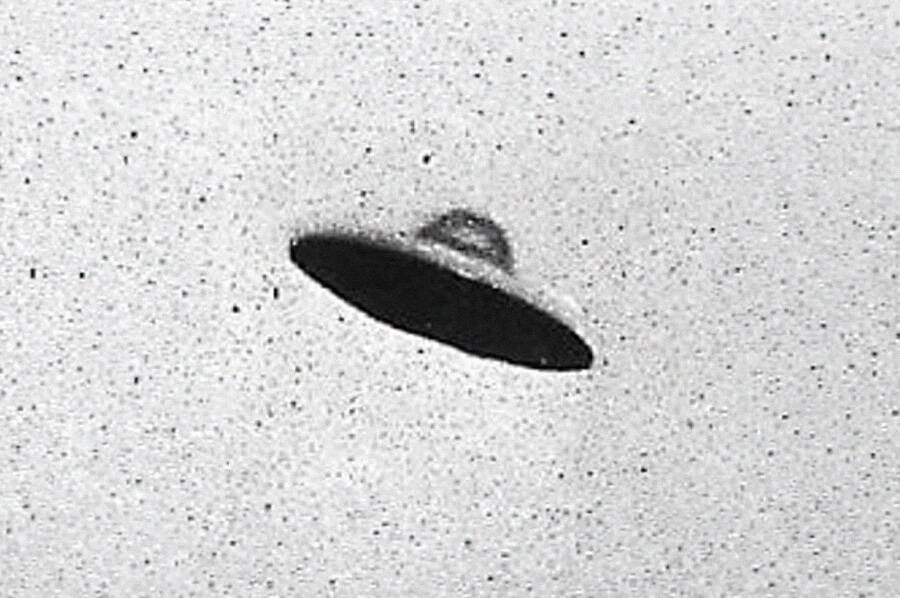
ALLTHATSINTERESTING.COMRomans Viewed It As A Divine Sign: Ancient Romans Recorded Metallic Objects Moving Through The Sky. Could They Have Been UFOs?Public DomainThe ancient Roman reports of strange objects have been compared to modern UFO sightings.While we may think of UFOs as a relatively modern phenomenon, people have been seeing and writing about strange objects in the sky for much of recorded history.Often, sightings that were once inexplicable now make sense thanks to our improved understanding of science and weather. For example, some fiery signs from the sky noted throughout history are now widely believed to have been auroras.However, some historical events puzzle even the most well-read experts. For example, why are there multiple reports of ancient Romans seeing mysterious objects fly through the sky?Did Ancient Romans Really See UFOs?In a video with over 13,000 views, TikTok user Michael Grimm (@mikeygrimm13) claims that there are numerous examples of ancient Romans recording metallic objects, phantom ships, silver rain, and entire armies moving through the sky and some of these accounts were written down by the most respected historians of the ancient world.While Grimm says that hes not saying the Romans saw UFOs, he notes that there are many peculiar sightings in ancient history that leave modern historians wondering what really happened.One of the strangest stories tells of a battle in which a mysterious metallic disc-like object supposedly fell from the sky, Grimm recounts. The Romans viewed it as a divine sign and a gift from the gods, because that event was followed by a massive Roman victory.There were also multiple reports of ships seen floating above the Earth.Ronnie Robertson/Wikimedia CommonsA 218 B.C.E. account reports phantom ships sailing in the skies above Italy.In 218 B.C., during the terrifying days of the Second Punic War, ancient accounts claim that strange phantom ships were seen in the sky above Rome, Grimm states. Decades later, in 173 B.C., a Roman historian recorded another bizarre event near the ancient city of Lanuvium. And, according to his account, a great fleet of ships appeared in the sky not one, an entire army of ships.These accounts are paired with other strange phenomena seen in the sky. Grimm says that, in 76 B.C.E., a spark appeared in the sky, grew to be the size of the Moon, and then receded. In the first century C.E., a Jewish historian named Josephus claimed there were armies and chariots seen hurtling themselves through the clouds. Then, in 196 C.E., Grimm states that a strange, silver rain fell from a perfectly clear sky. While samples of this metallic substance were collected, they later disappeared. So, what did they actually see? Was it natural phenomena they couldnt understand, and they explained it the only way that they could? Were they stories exaggerated over centuries? Or did the people of the ancient world occasionally witness something in the heavens that even we today, with all our modern knowledge, would struggle to explain? Grimm concludes.The Evidence Of Ancient UFOs And Other Phenomena In The SkiesGrimm is correct that ancient historians occasionally recorded bizarre events in the skies. Whether they actually happened or occurred in the way they described is a different story.Overall, the dates and events described by Grimm really were recorded in the way that he says, though he gets some details wrong. For instance, he states that the appearance of a mysterious metallic disc-like object was viewed by the Romans as a divine sign, as it preceded a massive Roman victory. However, according to Plutarchs Life of Lucullus, the object was shaped like a wine jar and upon seeing it, both armies were astonished and simply separated without fighting.But what were all of these ancient sightings? Given that much of the record at the time only made passing reference to these phenomena, it is difficult to say. However, some modern historians have theories.For example, Plutarchs Life of Lucullus may be referencing a bolide, or an exceptionally bright meteor. Although the text describes it as wine-jar shaped, a Roman wine jar was round at the bottom with a thin spout. The comparison may have been intended to describe a trail following the larger object. A bolide may also explain the spark that seemed to grow to the size of the Moon.KPNO/NOIRLab/Wikimedia CommonsThe Romans may have actually been seeing bright meteors rather than UFOs.Claims of ships appearing in the sky have other potential explanations.In the case of the 218 B.C.E. account of phantom ships seen over Italy, Livys report pairs this event with reports of a talking infant, a self-moving spear, white human-like figures, a shower of stones, and an ox climbing a building. This section is also prefaced with a note saying that, given the anxieties of the time, many of these portents were being reported and believed without evidence. All of these factors make it difficult to determine what actually occurred and what was simply reported out of fear.There are plenty of alternate explanations for these and other similar tales. Historians may have been referring to clouds that bore a striking resemblance to ships. They could have also been describing events not literally but symbolically, with the sight of ships in the sky meant to demonstrate how coming events were forewarned.Public DomainThe phenomena in the sky described by Roman historians may have been strange cloud formations, such as those pictured in this Renaissance painting of a miraculous summer snowfall in Rome.But as far as the silver rain is concerned, no one is sure. While Cassius Dio wrote that it occurred, there is no surviving chemical description, preserved sample, independent eyewitness account, or reported smell, texture, or temperature. Still, historians have tried to determine what the substance could have been, with theories ranging from falling spider silk to a metaphor for ongoing political turmoil.So, did the Romans really see UFOs? Or were they simply a mix of mirage, metaphor, misunderstanding, and mythmaking? We may never know. @mikeygrimm13 #fyp #foryoupage #factsyoudidntknow #rome #storytime original sound Grimm History All Thats Interesting reached out to Grimm via email.After reading about the UFOs spotted by ancient Romans, discover nine ancient mysteries that still puzzle historians to this day. Then, learn about Commodus, the most disastrous ruler of ancient Rome.The post Romans Viewed It As A Divine Sign: Ancient Romans Recorded Metallic Objects Moving Through The Sky. Could They Have Been UFOs? appeared first on All That's Interesting.0 Σχόλια 0 Μοιράστηκε 5 Views