
• WWW.THECOLLECTOR.COM
    Gloria Steinem: The Journalist Who Became a Feminist Icon
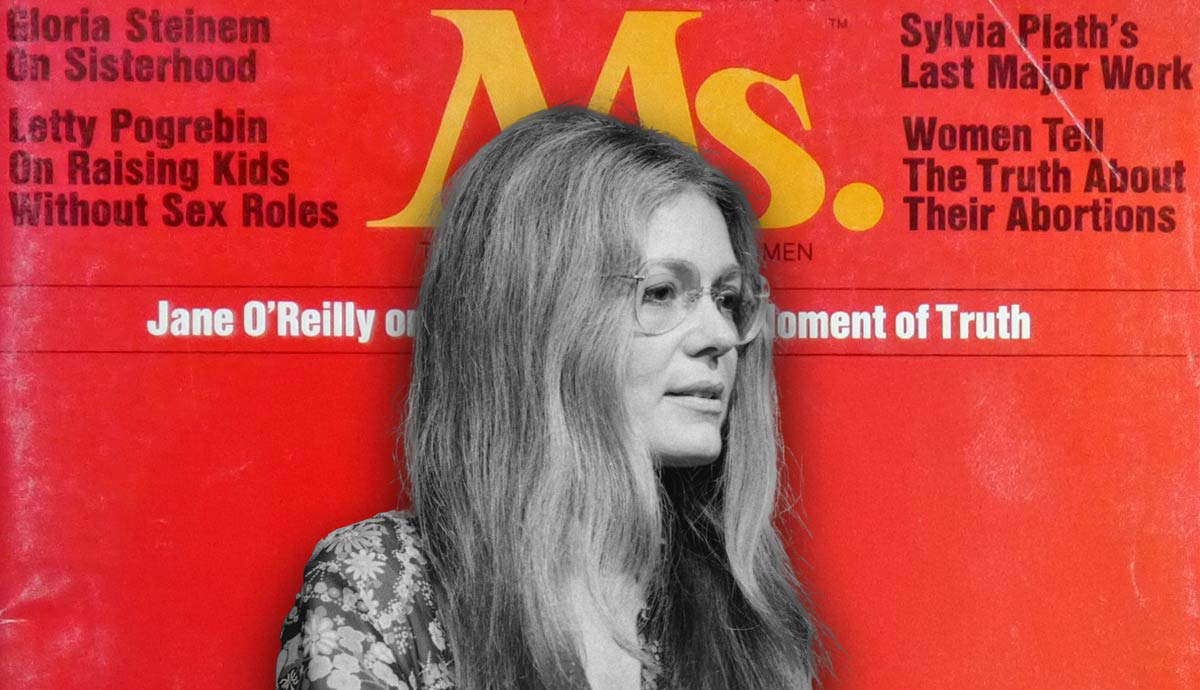
    Gloria Steinem is one of the most vocal feminists, supporting multiple causes that fight the oppression of different groups of people. During the second half of the 20th century, it was dangerous for women to speak their minds in the manner Gloria did. She openly challenged then-taboo subjects, such as abortion rights, pay equality, and domestic violence. She also had a great deal of influence in the battle for closing the gender gap. Read on to discover more about Gloria Steinems life and activism.Gloria Steinems Early Life, Childhood, and EducationGloria Steinem in her home, photograph by Lynn Gilbert, 1977. Source: Wikimedia CommonsBorn in Toledo, Ohio, on March 25, 1934, Gloria Steinem had an eventful and somewhat turbulent childhood that influenced her later life and career. Her father was an antique dealer who moved his family often, traveling in their house trailer. Her mother was a journalist who suffered from some mental health challenges, especially depression, which left a significant mark on Glorias fight for equality and feminism.Due to the different aspirations and wants in lifeand probably her mothers undiagnosed mental illnessGlorias parents divorced when she was ten years old, and she moved with her mother to Toledo, Ohio. Her mothers condition and the fact that she was a single parent caring for a young child made Gloria witness firsthand how difficult it was for a woman to find her way in society. In the 1950s, women were expected to fit a certain role, and society was not kind to single mothers. Her early life and the states failure to protect her mother planted a feminist seed.Even though her life was not without challenges, Gloria Steinem excelled in school, and her good grades gained her admission to the prestigious Smith College in Massachusetts on a scholarship. There, Gloria studied political science and journalism and became involved in various activist causes. As one of the colleges best students, she graduated magna cum laude in 1956. She later received a fellowship that allowed her to continue her studies in India for two years.While in India, Gloria Steinem became acquainted with Mahatma Gandhis philosophy and activism, including his support for nonviolent resistance. Witnessing the situation in India and the struggles people faced helped Gloria develop her own activism and personality. In particular, while living in India, Gloria began connecting feminism with human rights.Undercover Playboy BunnyNew York Playboy Club Bunnies Waren Smith, Tiki Owens, and Liz James on the quarterdeck of missile cruiser USS Wainwright, by US Navy, c. 1971. Source: Wikimedia Commons/US Navy All Hands magazineWhen she returned from India, Gloria Steinem moved to New York City to work as a freelance writer, contributing to publications like Esquire, The New York Times, Glamour, and Show Magazine. She started to find her writers voice and style, developing a distinctive writing style. She became famous for being able to blend insightful social commentary with captivating storytelling that kept the reader engaged.In 1963, Gloria Steinem gained recognition for her breakthrough article I Was a Playboy Bunny, a two-piece expos for SHOW magazine published in May. The article resulted from Steinems intention to investigate the Playboy Club owned by Hugh Hefner and the working conditions of Playboy Bunnies. To write her expos, Gloria herself worked undercover as a Bunny.The so-called Playboy Bunnies were waitresses working in particular conditions, wearing revealing and suggestive clothing, and often serving men who were objectifying them. On top of that, these employees were overworked and underpaid, relying on tips for the evening to make a decent stipend. Glorias investigative journalism shed light on these issues and the derogatory working conditions of the Playboy Bunnies, making her the voice of the feminist movement and one of the most known female investigative journalists.The expos became one of the pivotal moments in Steinems career and the feminist movement. It brought to the attention the objectification of women and acted as a catalyst to start crucial conversations regarding gender equality. After her breakthrough article, Gloria Steinem began to focus more and more on activism and social issues. In the following years, she wrote about topics like female reproductive rights, sexism, the Civil Rights Movement, and political campaigns.National Womens Political CaucusMs. magazine, Spring issue, by Liberty Media for Women, LLC, 1972. Source: Wikimedia CommonsThe National Womens Political Caucus (NWPC) was founded in July 1971 to boost womens participation in politics. It was established in Washington DC, and one of its main goals was to bring gender equality on every governmental level. Besides Gloria Steinem, some of the most prominent feminist voices of that time, such as Shirley Chisholm, Betty Friedan, Bella Abzug, and Fannie Lou Hamer, were among NWPCs founders. These women broke glass ceilings in many different fields, and together, they made history by combining their forces to make womens voices heard in politics, social movements, and the fight for equality.Gloria Steinem at a womens conference held at the LBJ Library, photograph by Jay Godwin, November 9, 1975. Source: Wikimedia CommonsAs a journalist with a national platform that gained attention through investigative journalism and topics extremely relevant to womens fight for equality, Gloria Steinem played a crucial role in womens fight to increase their political participation. She was aware of the necessity for women to have titles of power, to be able to make decisions and laws that would protect their interests and level the field with men. Through her activism and platform, Gloria wanted to call women to run for governmental and political offices and to encourage them to challenge the status quo in a male-dominated society.Gloria Stenems involvement with the NWPC was evident in her prolific and engaged writing and her participation in rallies, conferences, and other events with political and activist connotations and backgrounds. In 1971, she co-founded one of the most influential feminist publications, Ms. magazine, where she shared stories of women in politics and called out sexism, chauvinism, racism, and bigoted behavior. The NWPC persists to this day and is responsible for paving the way for many women in politics, no matter their party affiliation.Gloria Steinems Feminism and ActivismGloria Steinem at a news conference for Womens Action Alliance, photograph by Warren K. Leffler, January 12, 1972. Source: Wikimedia Commons/The Library of Congress, Washington DCGloria Steinem fought for different activist causes and immensely influenced activism in the United States in general. In particular, she was extremely vocal and passionate regarding reproductive rights and abortion access. Today, she is still one of the loudest voices in the fight for bodily autonomy and the right to choose whether to carry on or terminate the pregnancy. Gloria Steinem was also one of the first public personalities to talk openly about her abortion experience at 22 years old and how it impacted her life.Another critical feminist issue Steinem openly supported was the fight for equal pay and workplace rights. Her involvement and stance on the matter are evident through her campaign for the Equal Rights Amendment (ERA), a measure aiming to secure equality for women by ending legal differences between men and women in various areas, from employment to property.The history of the ERA goes way back before the time of Gloria Steinem. Indeed, the first proposal was written in 1923, but to this day, it still has not been ratified. To achieve ratification and become an official part of the US Constitution, the amendment needed the approval of 38 states. However, not enough states ratified the Equal Rights Amendment; it never became official law, and it remains one of the main issues in the fight for equality that is still open. Today, several feminist and LGBTQA+ activists are still pushing for the ERA ratification, more than one century since its first draft.Besides fighting for womens rights, Gloria Steinem is a prominent activist for LGBTQA+ rights. Before it became legal, Stenam openly supported same-sex marriage and advocated for rights for all, no matter the sex, sexuality, or race.Gloria Steinems LegacyThe cover of Ms. magazine, Fall 2009 issue, featuring Alice Walker and Gloria Steinem by Liberty Media for Women, LLC. Source: Wikimedia CommonsGloria Steinems legacy is vast and multidimensional. She managed to completely change and showcase what feminist journalism can look like and how it allows crucial topics to be brought to light, evoking the interest of a broad public.Besides fighting for gender and racial equality, Steinem supports abortion rights and is active against domestic violence. In some more traditional and already well-established print media, these issues were not that much present and talked about before activists and journalists such as Gloria Steinem. With Ms. magazine, she changed the public discourse and gave her readers the legitimacy to speak about these polarizing topics.Gloria Steinem speaking at the Women Together Arizona Summit at Carpenters Local Union, photograph by Gage Skidmore, September 17, 2016. Source: Wikimedia CommonsToday, it is sometimes easy to forget that certain freedoms were unavailable to women just 50 years ago. For example, in the United States, women could not get a credit card without a man co-signing it. This practice was based on the misogynistic stereotype that women are not financially responsible or reliable. The requirement for a male cosigner ended in 1974 with the Equal Credit Opportunity Act (ECOA), when Steinem and other like-minded activists fought for gender equality.Another obstacle that women faced during this time was getting access to birth control when unmarried, a restriction that officially ended in 1972 with Eisenstadt v. Baird. Education was also restricted. The oldest universities in the US often admitted only male students. Some Ivy League Colleges, like Harvard, started admitting female students only in the second half of the 1970s.Gloria Steinem is, to this day, one of the most famous and respected feminist voices in the world. She is a fighter for equal rights for all and a climate change activist. Together with second-wave feminist activists, Steinem undoubtedly made a huge impact on the course of womens history.
    0 Reacties 0 aandelen 13 Views
  • WWW.THECOLLECTOR.COM
    The Radicalization of The Right in Weimar Germany (& Its Consequences)
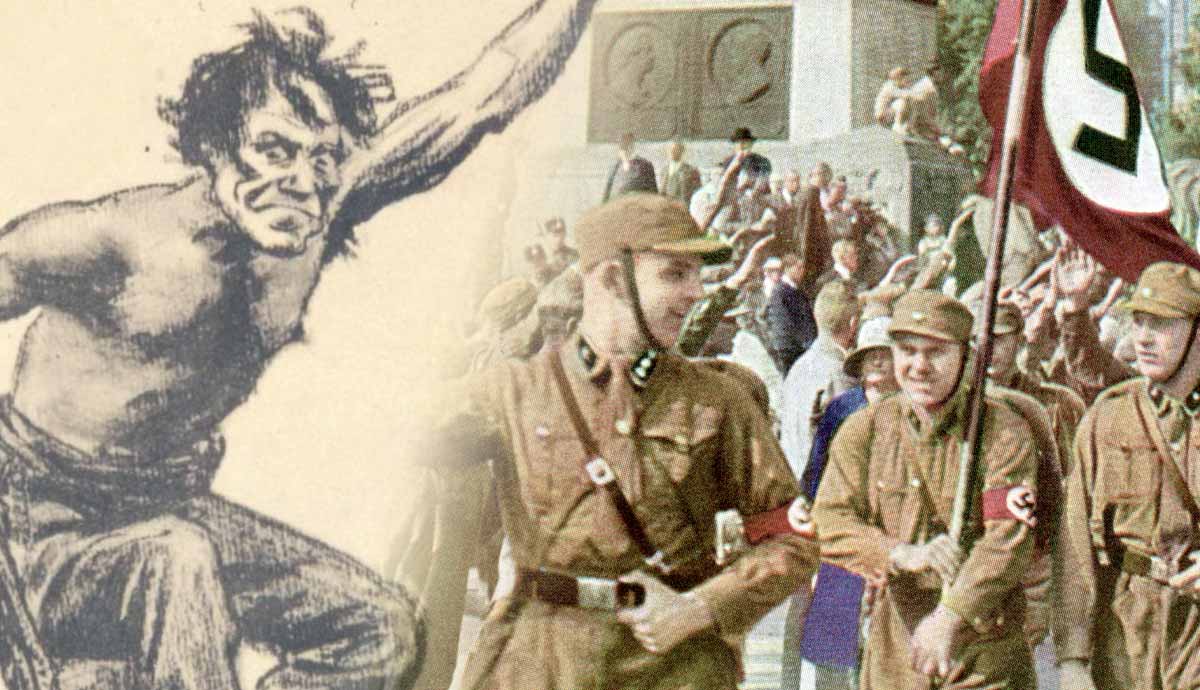
    On November 9, 1918, the Weimar Republic arose from the ashes of Germanys defeat in World War I. In the aftermath of the disastrous and unsuccessful war, the old imperial order was overthrown and replaced by a constitutional democracy. The right wing of this new democracy consisted of a combination of different elements: from conservative moderates to radical fascists and everything in between. However, towards the end of the 1920s extremists began to take control of the levers of political power, swept forward on a wave of popular support.The Political Right in Weimar GermanyThe Signing of the Treaty of Peace at Versailles, by Joseph Finnemore, 28 June 1919. Source: National Museum of AustraliaIn 1918, as Germanys military situation became increasingly untenable, thousands of soldiers began to return home from the front line. Then, a naval revolt sparked a series of revolts around the country. Civilians were tired of impoverished conditions and many were ready to join a revolution against those in power, who they blamed for their state of affairs.The Kaiser fled and center-left politicians from the Social Democratic Party managed to take control of events. They formed an emergency government, guided the writing of a new democratic constitution, and planned elections. In June 1919, the new German government signed the Treaty of Versailles in order to bring an end to hostilities. It imposed a heavy and humiliating burden of reparations on the defeated nation. The Left was forever associated with the signing of this much-maligned agreement.Those on the right of the political spectrum associated the Weimar Republic with the Left, the Treaty of Versailles, and a sense of betrayal. Not only was there resentment over the signing of the Treaty, but the Right also blamed the Left for the defeat that had preceded it. Adherents to the stab-in-the-back myth believed that defeat had not been because of military collapse, but rather due to betrayal by unpatriotic (socialist) elements at home.From the beginning then, the right wing of German politics disliked the new republic, with feelings ranging from distaste to vehement hatred. There were some on the Right who were willing to work for change within the new system, but there were many who would only be content if it was torn down.In the 1920s, the worsening economic situation and inflation contributed to the radicalization of Germanys political landscape. In 1920, for example, Wolfgang Kapp unsuccessfully tried to overthrow the Weimar Republic in response to the governments decision to demobilize some Freikorps, far-right paramilitary groups of former soldiers. In 1923, Adolf Hitler launched his failed attempt to seize power with the Beer Hall Putsch. Meanwhile, the Sturmabteilung (SA), the Nazi Partys military division, took to the streets to attack political opponents.The Deutschnationale Volkspartei (DNVP): Pragmatists vs FundamentalistsDNVP election poster, ca. 1919. Source: David Pollack Vintage PostersThe DNVP was the largest right-wing party in the Weimar Republic for two-thirds of its history. For most of that time, it was no monolith, but a party that represented a broad range of political views. Historian Hermann Beck has made a distinction between two factions within the party the pragmatists and the fundamentalists (Beck, 2008). The pragmatists attempted to tolerate internal differences and sought active participation in government. The fundamentalists were strongly opposed to any participation in government and focused on replacing democracy with authoritarian rule.These two groups often clashed. For example, in 1924 there was a vote in the Reichstag (parliament) on the Dawes Plan, relating to the payment of reparations to the victors of WWI. DNVP pragmatists horrified their fundamentalist colleagues, voting in favor of the plan and helping to pass the controversial legislation. From 1918-1928, the DNVP was a loose coalition containing both radical and conservative, extreme and moderate elements.Siegfried von Kardoffs speech on Constitution Day, August 11, 1927, was representative of the pragmatist viewpoint. He praised the German nation for how far it had come and its resilience against the punitive policies of the Treaty of Versailles; it had again become a factor of world politics. He went on to say that the Weimar constitution has given us the freest democracy in the world.There were radical elements within the DNVP who hoped to see the Weimar system overthrown and the constitution torn up. However, there were also sections of the party who were willing to collaborate in government. In Weimars Golden Years of 1924-1928, the moderate faction was in ascendancy. These more moderate voices sought to leverage the structures of democracy to fight for policies that were important to their voters, as well as their wealthy donors.The Radical Right Takeover: Hugenberg and the ADVMobile Magazine Kiosk on the Main Street in Berlin-Schneberg, 1928. Source: German History in Documents and ImagesOutside forces sought to capture the DNVP, transferring their radicalism to the party and pushing moderate voices out. In particular, an ultra-nationalist pressure group called the Pan-German League (ADV) was intent on radicalizing the party (Jackish, 2012). The League infiltrated local DNVP party structures, promoting Alfred Hugenberg to ensure his takeover of the party. Hugenberg was a media magnate, industrialist, and founding member of the ADV, who contributed perhaps as much as 30% of the DNVPs funding. As such, he was perfectly placed to take the party chairmanship from the moderate Count Kuno von Westarp.When the DNVP experienced electoral losses in 1928, the partys fundamentalists blamed the moderates and the compromises that they had made in collaboration with the Center. The time was ripe for the Pan-Germans to capture the DNVP and transfer their radicalism to the party.In Weimar Germany, news media was a flourishing and highly influential industry. Hugenberg dominated the right-wing media and even had his fingers in the pies of media catering to other parts of the political spectrum. In 1929, journalist Eric Schairer described him as one of the most powerful men not only in the German National Peoples Party but in Germany all together. Scheirer wrote that to control the media and conduct news politics at the level Hugenberg does it that means to rule over people. He had built a powerful structure, based on peoples taste for the mediocre, their lack of civic courage, their intellectual dullness, and their gullibility (Kaes, Jay, and Dimendberg eds. 1994).The tentacles of Hugenbergs vast media empire reached every DNVP voter and member, providing him with, in his own words a channel to the brains of the people (Ecksteins, 1975). With Hugenbergs ascension to the chairmanship of the DNVP in October 1928, a wave of radicalism flowed into the party.The Anti-Young Plan CampaignAnti-Young Plan Poster by the Reich Committee for a German Referendum, October 1929. Source: German History in Documents and ImagesThe Anti-Young Plan campaign and referendum of Autumn 1929 was Hugenbergs first major project as chairman of the DNVP. In 1924, the DNVP had been split down the middle by the vote on the Dawes Plan for the payment of reparations. Hugenberg was determined to ensure that the party stood in firm opposition to the revised plan. He formed a national front with the Nazi Party, who at this point were still marginal and lacked influence. Before Hugenbergs election to the party chairmanship, Hitler had been described by the then more moderate DNVP as a rabble-rouser to be opposed with all sharpness (Jones, 2020).Now, Hugenberg worked in close collaboration with Hitler to create the Reich Committee on the Referendum on the Young Plan. Under the influence of the ADV, the DNVP had dropped its partners in the governing center-right coalition to take up the mantle of national opposition.Alfred Hugenberg, 1933. Source: BnFThe referendum campaigns propaganda described the Young Plan as a plan for the enslavement of the German people. The Treaty of Versailles was the original sin that produced the supposed enslavement to the Allied powers that was perpetuated by the Young Plan. Hitler and Hugenbergs referendum called for the government to pass a Freedom Law renouncing the Treaty.The law included a paragraph demanding the imprisonment of MPs who had signed the Young Plan. This paragraph horrified DNVP moderates and cut any possibility of ties with the center-right. It also catalyzed the first exodus of moderate MPs from the DNVP. Though it failed to gain sufficient support, the referendum was emblematic of the radicalization of mainstream right-wing politics. A strong radical force was forming, while moderates were left marginalized, disorganized, and unable to fight back. A close ally of Hugenbergs summarized the ascendant radical factions response to the exodus of moderates from the party. He proclaimed: Thank God they are now on the outside (Jackish, 2012).Outflanked by The Nazi Party: The Fall of the DNVPSA Unit marching through Nuremberg, 1929. Source: German Federal ArchivesWith Hugenberg as chairman, the ADV was empowered to harass moderate conservatives within the DNVP, marginalizing them and pushing them out of the party. In April 1930, a DNVP politician wrote to the ADV, complaining about an article that they had published. The article compared Westarpthe leader of the DNVP moderate factionand his associates to Judas Iscariot. Around this time, moderate conservatives were seeking a rapprochement with the Center Party Chancellor Bruning.However, Hugenberg was committed to his role in the National Opposition with Hitler and the Nazi Party. He enforced strict party discipline over the issue, and led his party to its foolhardy alliance with Hitler (Meinecke, 1950). These tensions led to a second exodus of moderate representatives of the party. In July 1930, Westarp and 21 other MPs left, further weakening the DNVPs presence in the Reichstag (Jones, 2009).Photo of the Reichstag, 1930. Source: Wikimedia CommonsWith elections on September 14, the moderates had no time to regroup and present a force that could compete with the radicals. They had formed a new party, the Peoples Conservatives, on June 30, but they could make no headwayagainst the mighty influence exercised by Hugenberg through his press (Mendelssohn Bartholdy, 1930). The DNVPs share of the vote halved, dropping from around 14% to 7%, but this did not translate into success for the new party of moderates. Instead, the votes went to Hugenbergs supposed allies, who had outflanked the DNVP.The Nazi Party, which had won less than 3% of the vote in 1928, was now the second largest party in the Republic with over 18% of the vote and 107 deputies in the Reichstag. The process that had begun with Hugenberg and the Pan-Germans was completed by Hitler and the Nazi movement. Radicalism had been transferred from the extreme edge of right-wing politics to its center and had now become the prevailing current.BibliographyBeck, Hermann. The Fateful Alliance: German Conservatives and Nazis in 1933; The Machtergreifung in a New Light (Oxford, 2008), ch. 1.Jackish, Barry The Pan-German League and Radical nationalist Politics in Interwar Germany, 1918-39 (Surrey, 2012).Kaes, Anton; Jay, Martin; Dimendberg, Edward (eds.), The Weimar Republic Sourcebook (California 1994).Ecksteins, Modris, The limits of reason: the German Democratic press and the collapse of Weimar democracy, (Oxford, 1975).Jones, Larry The German Right, 1918-1930: Political Parties, Organized Interests and Patriotic Associations in the Struggle against Weimar Democracy, (Cambridge, 2020).Jones, Larry, German Conservatism at the Crossroads: Count Kuno von Westarp and the Struggle for Control of the DNVP, 192830, Contemporary European History (Cambridge, May 2009).Bartholdy, Albrecht Mendelssohn The Political Dilemma in Germany, Foreign Affairs, 8, (Jul. 1930).
    0 Reacties 0 aandelen 13 Views

  • WWW.DUALSHOCKERS.COM
    7 PS3 Co-Op Games That Reward Exploration
    While the peak of co-op releases may have come and gone, games that can be played with a friend or two are still in demand. Just see Lethal Company and those inspired by it as examples. It's not a dead format, but older generations were better known for their co-op experiences.
    0 Reacties 0 aandelen 12 Views
  • WWW.PCGAMESN.COM
    Palworld's official TCG hits 3.5 million pack sales worldwide, and it hasn't even launched yet
    Following the rip-roaring success of Palworld's 1.0 update, the official card game looks to be following in its footsteps with a reported 3.5 million plus booster packs purchased - before it's even launched. Described as a "two-player competitive card game," players will be able to send out different Pals that all have their own "unique [...]
    0 Reacties 0 aandelen 12 Views
  • WWW.PCGAMESN.COM
    Where to find Nightstar Sand in Palworld 1.0
    Everyone wants a lightsaber. Even people who say they don't secretly do. You meet an NPC fairly early on in Palworld that pulls out a Beam Sword and goes to town on some mercs, which, if you're like us, was the first indication that this item was attainable. To do that, though, and to build [...]
    0 Reacties 0 aandelen 12 Views
  • WWW.THEKITCHN.COM
    The Best Store-Bought Refried Beans Arent Canned
    Takes all of 90 seconds to prepare.READ MORE...
    0 Reacties 0 aandelen 14 Views
  • 0 Reacties 0 aandelen 14 Views
  • WWW.BGR.COM
    4 Disadvantages Of Wind Energy (And How Science Is Trying To Overcome Them)
    Wind energy is a promising source of clean power, but it's not perfect. Here are the biggest disadvantages and how science is trying to overcome them.
    0 Reacties 0 aandelen 12 Views
  • WWW.BGR.COM
    This Gadget Replaces Your Phone Screen With An E-Ink Display
    For those who want the novelty and comfort of an e-reader, but don't want to sacrifice the usability of their smartphone, the Link 2 serves as a bridge.
    0 Reacties 0 aandelen 12 Views
  • WWW.BGR.COM
    10 Alexa Commands You Should Know For Controlling Media Playback
    Alexa users are familiar with using the assistant to play music, but its media playback capabilities run much deeper. Here are the commands you should know.
    0 Reacties 0 aandelen 12 Views