0 Commentaires
0 Parts
19 Vue
Annuaire
Elevate your Sngine platform to new levels with plugins from YubNub Digital Media!
-
Connectez-vous pour aimer, partager et commenter!
-
The Vintage Southern Dessert Johnny Cash's Guests Always Looked Forward ToThe Vintage Southern Dessert Johnny Cash's Guests Always Looked Forward To...0 Commentaires 0 Parts 21 Vue
-
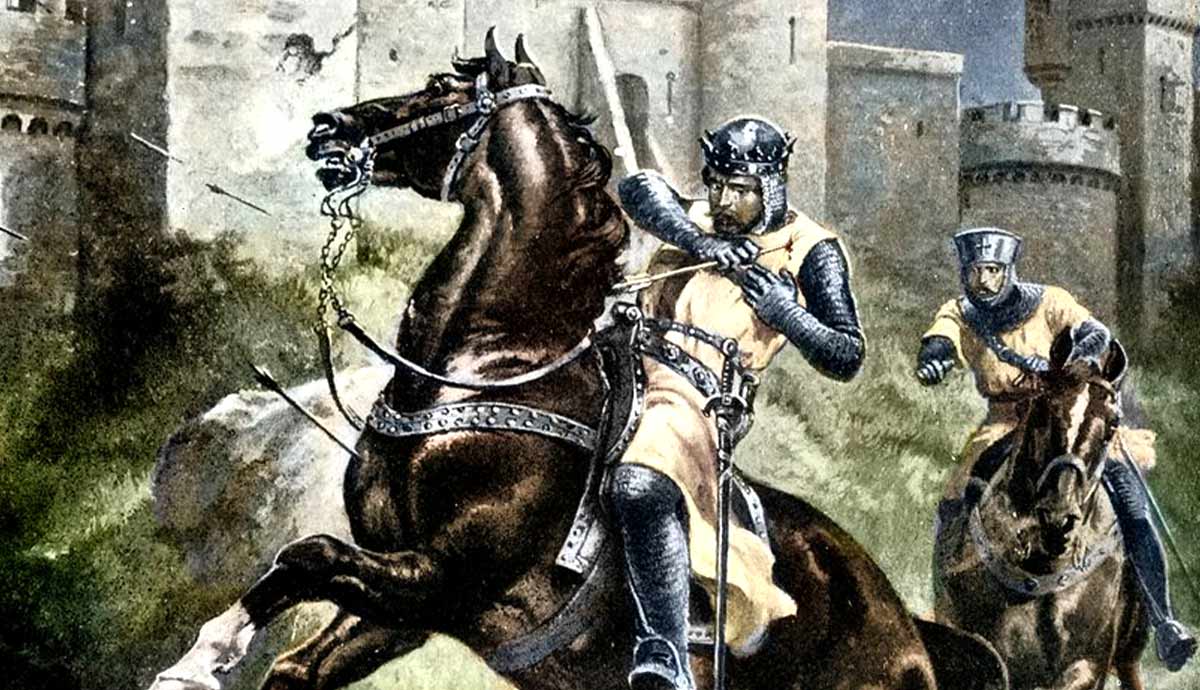
WWW.THECOLLECTOR.COMRichard the Lionhearts Final Siege at Chlus CastleFollowing his legendary exploits in the Holy Land during the Third Crusade, Richard the Lionheart spent more than a year in German captivity. After his release in 1194, he embarked on a war against King Philip II of France to reclaim territories that had been lost during his captivity. Although Richard had methodically retaken much of the lost territory, his death following the Chlus Castle enabled Philip to take most of Englands French possessions.Richard the Lionhearts Return From the LevantMap of the 3rd Crusade, Source: TheCollectorIn the 12th century, King Richard I of England was one of the most formidable warriors in the Christian world. Richard the Lionheart, as he is known in popular memory, led an army of Christians from all around Europe to the Levant in order to retake Jerusalem from Saladins Sultanate. Joining him were King Philip II of France and King Frederick I Barbarossa of the Holy Roman Empire. It became known as the Kings Crusade and almost succeeded in its goals.Richard gained credibility as a formidable battlefield leader when his army defeated the Muslims at the Siege of Acre and the Battle of Arsuf. Despite his battlefield prowess, he was unable to take Jerusalem as he lacked the forces and siege equipment necessary for such an undertaking. He was forced to make a deal with Saladin that allowed Christian pilgrims to enter the city but ensured that Jerusalem and its hinterland would remain in Muslim hands. This disappointed many people in Western Europe who hoped for the return of Jerusalem to Christian rule.On his way back to England in 1192, Richard was taken captive by Leopold of Austria after the latter accused Richard of arranging the death of Leopolds cousin, Conrad of Montferrat. Leopold sold Richard to Holy Roman Emperor Henry VI, who kept him in prison until February 1194 after receiving a large ransom payment from England. During Richards captivity, his brother John conspired with Philip II to rebel against him and sought to take over his territory in France and England.Political Context of Richard and Philips WarKing Philip II of France receiving an envoy, 1340s. Source: Medievalists.netPhilip II, also known as Philip Augustus, was envious of Richards control over large parts of France. This included parts of Brittany, Aquitaine, and Normandy. When John revolted, Philip agreed to help him in the hope that this would enable France to take control of much of French territory. However, Richards release led to his return to London and being crowned again. John, fearing the wrath of his brother, agreed to reconcile with Richard and refused to fight him.Philips army moved into Normandy and took control of several castles under English control. This threatened Richards position as the Duke of Normandy. He brought an army of English knights, archers, and light infantry with him to retake the castles lost to Philips army. Additionally, he ordered the construction of Chteau Gaillard, one of the most expensive castles constructed in the entire medieval period. Over time, he gathered support from prominent nobles in France and Flanders, enabling him to gain several victories, such as the Battle of Gisors, over Philips forces.In 1199, Richard faced a revolt in the region of Limousin from Viscount Aimar V of Limoges. To crush this revolt, he used brutal force akin to what his Crusaders did in the Levant. Much of this part of central France was completely razed. One of the castles Richard aimed to conquer was Chlus-Chabrol. The reasons for this varied, but some medieval chroniclers claimed that Richard heard a rumor about treasure being hidden in the castle.Start of the SiegeRichard I, the Lionheart, King of England, by Merry-Joseph Blondel, 1841. Source: Westminster AbbeyWhen Richard arrived with his army at the castle on March 26, 1199, they found that its defenses were weak. Just a few men loyal to Viscount Aimar V were defending the walls and they were no match for Richards battle-hardened warriors. The viscount himself was too far away to relieve the garrison and Philip Augustus signed a temporary peace agreement with Richard. In addition to the English knights and archers that accompanied Richard, some French and Flemish mercenaries took part in the siege.The siege ultimately lasted several days. Richards army had a lot of experience laying siege to fortified castles. They brought the necessary equipment to break down the walls and the front gate. Additionally, English archers had a reputation as some of the best in any medieval European army, especially when using longbows. Nonetheless, the 40 defenders within the castles walls put up a tough fight, firing crossbow bolts at the Anglo-Norman attackers. They prevented several attempts to get through the front gate.In medieval sieges, it was common for armies to attempt to break through the front gate with a battering ram after deluging the castle walls with rocks launched from trebuchets. If the attempt to break through did not succeed, the besieging army could wait until the garrison ran out of food or water. The risk in this case was that if another army came to relieve the castle, it could spell doom for the besieging force. This did not happen to Richards army, however.Death of the LionheartRichard being hit with a crossbow bolt during the siege. Lithograph by Harry Payne, 1920. Source: MeisterdruckeBy the third day of the siege, the Anglo-Norman army was close to breaking through the walls. Repeated attempts to break down the gate compromised the integrity of the garrison. As was customary, Richard rode in front of his men as they prepared to enter the castle, braving crossbow bolts fired at him.According to accounts of the battle, Pierre Basile, a boy in the garrison, fired several crossbow bolts at Richard, who dodged most of them. After a couple of tries, Basile managed to hit Richard in the neck with a crossbow bolt, seriously wounding him. He rode back to one of the tents where surgeons were helping wounded men. Some of the nobles accompanying his army immediately placed into a bed with several surgeons attending him. An attempt to remove the bolt failed and Richard struggled with septicaemia over the next several days.As the English overran the castle, Basile was captured and brought to the king, expecting to be executed. It is reported that he told the English that he lost two brothers during the siege and killing Richard was personal. Surprisingly, Richard, who had once ordered the massacre of Muslim prisoners during the Third Crusade, ordered the boy spared. Even so, some French mercenaries in Richards army flayed the boy after his capture. Within 12 days of being wounded, Richard died on April 6, 1199, in the presence of his mother, Eleanor of Aquitaine.Aftermath of the SiegeKing John signing the Magna Carta in the presence of several nobles. Print by Joseph Martin Kronheim, 1868. Source: Wikimedia CommonsUpon Richards death, he was buried at Fontevraud Abbey alongside his father King Henry II and was succeeded as king of England and ruler of the Angevin empire by his brother John. John was unpopular with much of the English nobility and he faced threats from different rivals. While John was recognized as king in England, much of Richards continental empireespecially Anjou and Normandyleaned toward supporting Arthur of Brittany, the teenage son of their late brother Geoffrey. This dynastic dispute plunged the Angevin holdings into instability.Philip II broke the temporary truce he had made with the English and quickly took advantage, invading Angevin territories and supporting Arthurs claim. Under Johns weak and inconsistent leadership, the English crown would ultimately lose most of its French possessions over the following decade. This helped set the stage for the start of the Hundred Years War in 1337.Richards death also had symbolic consequences. Though often absent from England during his reign, Richard had been admired for his martial prowess and leadership during the Crusades. His death marked the beginning of the decline of the Angevin Empire, and his brother Johns ineptitude and heavy-handed rule would spark rebellions, culminating in the sealing of the Magna Carta in 1215. However, the noble revolts against John were in part the result of anger at the crown for Richards expensive wars.The Legacy of Richards Death in Popular CultureChlus Castle following renovation in 2019. Source: Chteau Chlus-Chabrol via Wikimedia CommonsRichard the Lionheart has long occupied a legendary place in popular culture, celebrated as the ideal medieval warrior king. His exploits during the Third Crusade, particularly his battles against Saladin, captured the imagination of chroniclers and later writers, cementing his image as a valiant warrior and defender of Christendom. Over the centuries, this reputation has often overshadowed the more complex realities of his reign, including his long absences from England and his burdensome taxation to fund military campaigns.In literature, Richard is frequently portrayed as a noble hero. He appears in Sir Walter Scotts Ivanhoe as a gallant figure who returns in disguise to rescue his kingdom from the villainy of Prince John. This romantic depiction became a cornerstone of the Robin Hood legend, where Richard is the benevolent monarch who restores justice after his brothers misrule. Films and television shows have embraced this trope, such as the 2010 movie Robin Hood, which shows Richard leading the sack of Chlus.The Lionheart moniker itself has become synonymous with courage and leadership, invoked far beyond historical circles. Though historians now take a more nuanced view of his reign, acknowledging his administrative negligence and costly wars, Richards cultural legacy endures. He remains one of the most iconic figures of medieval Europe, symbolizing the enduring allure of chivalric valor, noble kingship, and the romantic ideal of the Crusader hero.0 Commentaires 0 Parts 13 Vue -
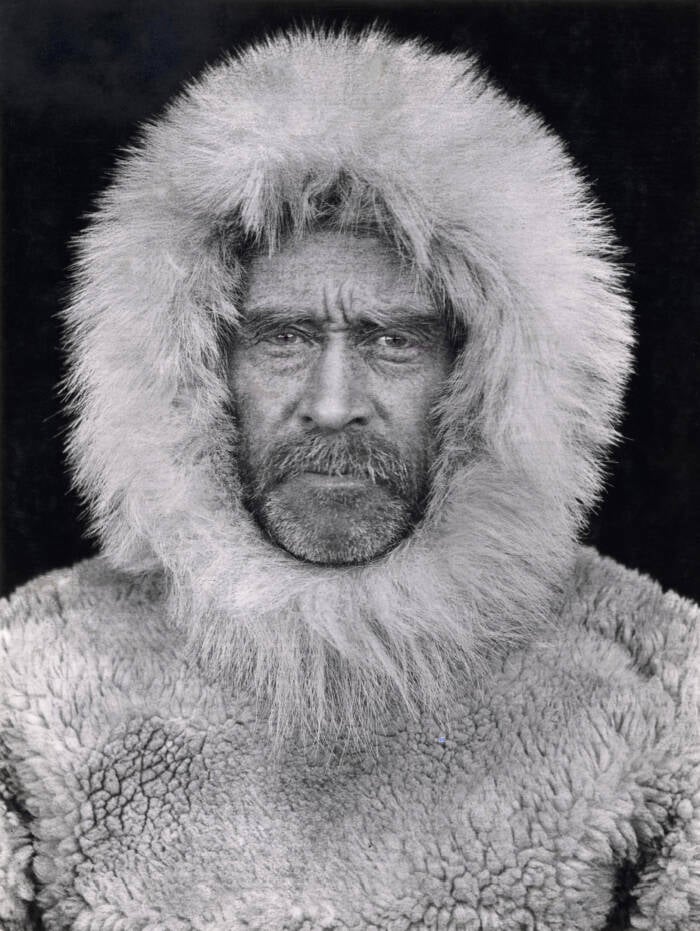
ALLTHATSINTERESTING.COMI Must Have Fame: Inside Robert Pearys Desperate Journey To Be The First Man To Reach The North PoleWikimedia CommonsExplorer Robert Peary vowed to reach the North Pole before anyone else at any cost. Peary Discovers the North Pole After Eight Trials in 23 Years, declared The New York Times on Sept. 7, 1909. Indeed, it initially seemed like American explorer Robert Peary was the first man to reach the top of the world. But it was soon learned that another paper, The New York Herald, had awarded the historic discovery to a different explorer just one week earlier. Peary refused to give up his claim to the award, and launched a campaign against the other adventurer to secure his title.From the start, the race to the North Pole drove Peary to extreme lengths. Peary was desperate to discover something new, and eager to make a name for himself. In fact, in one letter to his mother, he wrote, I must have fame.Did Robert Peary actually reach the North Pole? Did he at least believe that he did? Or did he intentionally mislead the world?Robert Pearys Polar ExpeditionsBorn on May 6, 1856, in Cresson, Pennsylvania, Robert Peary first made a name for himself as a U.S. Navy civil engineer. But by the time he reached his 30s, he had become obsessed with the Arctic, partly due to his naval assignments and reading stories about failed Arctic expeditions.Of course, he also desired fame and success.I dont want to live and die without accomplishing anything or without being known beyond a narrow circle of friends, Peary once wrote to his mother. U.S. National Oceanic and Atmospheric AdministrationRobert Peary took leave from the Navy for his expeditions.So Peary eventually took leave from the Navy to sail north. He explored Greenlands ice, and proved definitively that it was an island. And exploration was a family affair Peary brought his wife along on some expeditions, and she even ended up giving birth to a child while in Greenland.But Greenland was not the biggest prize in Pearys mind. He vowed to be the first man to successfully reach the North Pole.Yet every expedition seemed to fall short. On one, Peary broke his leg. On another, his feet froze and he ended up losing eight toes. Library of CongressRobert Pearys daughter Marie, born in the Arctic, became known as the Snowbaby.In 1906, Peary returned from the Arctic with shocking news. While he had not reached the North Pole, he said he had found a new continent. The explorer named the new land for one of his sponsors, a banker named George Crocker. Crocker Land floated in the Arctic ice, Peary claimed in a book called Nearest the Pole. But when explorers tried to confirm Pearys discovery, they only found ice. It took decades before the alleged find was finally disproved.The Push For The PoleBy 1909, Robert Peary was taking on yet another polar expedition. Surrounded by dozens of men and over 200 sled dogs carrying supplies, Peary eventually reached the 88th parallel. He left behind the larger support party and pushed for the Pole with a party of six men and 40 dogs. The voyage across sea ice was exhausting. On April 6, 1909, Pearys fellow adventurer, the pioneering Black explorer Matthew Henson, asked, We are now at the Pole, are we not? Peary answered, I do not suppose that we can swear that we are exactly at the Pole.National Archives and Records AdministrationA photo taken by Robert Peary, showing Matthew Henson and four Inuit men at a location purportedly believed to be the North Pole. Peary later used his sextant to take measurements, keeping the results to himself. He eventually buried a piece of the American flag in the ice and told his crew that they could go home they had apparently reached the Pole. On his journey home, still surrounded by ice, Peary learned that another American explorer Frederick Cook was claiming that he had reached the North Pole a year before him. Peary knew Cook well; he had traveled on some of Pearys previous expeditions and even helped set his broken leg. Wikimedia CommonsExplorer Frederick Cook claimed he reached the Pole a year before Robert Peary. As it turned out, Cook had left his records and instruments in the same Indigenous settlement that Pearys ship passed. Peary refused to carry any of Cooks trunks, forcing them to be left behind. Theyve never been recovered. How Robert Pearys North Pole Story Was VerifiedRobert Peary was desperate to secure his claim to the North Pole. After reaching the U.S., Peary and his supporters quickly launched a campaign to discredit Cook. Peary also convinced the National Geographic Society, which had helped fund his expedition, to back his version of events.As the public debated the rival claims, Peary turned to Congress for support.Metropolitan Museum of ArtAn image of Robert Pearys ship. Peary presented his diary to the Naval Affairs Subcommittee of the U.S. House of Representatives in 1911. A very clean kept book, declared one representative. How was it possible to handle this greasy food and without washing write in a diary daily and at the end of two months have that same diary show no finger marks or rough usage?Another representative concluded, We have your word for it your word and your proofs. To me, as a member of this committee, I accept your word. But your proofs I know nothing at all about.While Congress eventually declared Peary as the winner of the race to the North Pole, the record also noted deep-rooted doubts about Pearys claim. Arctic Stories UnraveledWhat about Crocker Land? Later expeditions found nothing where Robert Peary promised land. And even Pearys own notes from his travels mentioned nothing about Crocker Land. In his diary, Peary reportedly scrawled, No land visible, on the day he supposedly sighted Crocker Land. The new continent seemingly only appeared when Peary decided to publish a book to raise money for his next attempt at reaching the North Pole. Metropolitan Museum of ArtAn image of icebergs from one of Pearys expeditions. Crocker Land is a fabrication by Peary from the start, historian David Welky told National Geographic. It wouldnt have been Pearys only deception. Disturbingly, he was also known to have deceived six Inuit people into returning to America with him after one of his expeditions, only to have them be studied at a museum for the sake of anthropology an experience that would kill four of them after they became infected with a strain of influenza to which they had no resistance.The infamous tale about Crocker Land and Pearys treatment of Indigenous people begs the question about Pearys most famous claim. Did he really make it to the North Pole as he said he did?A re-examination of Pearys records in the 1980s by the National Geographic Society concluded that Peary did not have enough evidence to prove his claim. Due to navigational errors and other issues, his team may have actually fallen just 30 miles short of their goal.Winners And LosersIn the race for the North Pole, its difficult to say whether Robert Peary or Frederick Cook could ever be declared the winner. One reason why it was so hard to confirm who reached the North Pole first was that the Pole sits on a sheet of floating ice, in comparison to the South Pole, which sits securely on the landmass of Antarctica. While Roald Amundsen could easily plant his flag at the South Pole once he reached it, any flag planted at the North Pole was guaranteed to move with the ice. The lack of GPS and other modern navigational tools made the determination even more challenging.Yet in his lifetime, Peary was celebrated as the explorer who claimed the prize. Why did Peary win according to the world? Its possibly because he had stronger backers and a willingness to destroy Cooks reputation. U.S. National Archives and Records AdministrationThe Pole at last! Peary recorded in his diary on April 6, 1909.Its also worth noting that Cook was eventually convicted of mail fraud in connection with his oil business, which certainly didnt help matters. The polar controversy may have influenced his sentence, as the judge in his case declared, You have at last got to the point where you cant bunco anybody.But while Pearys story was once almost universally accepted, many experts view it with skepticism today. And even if Pearys expedition was somehow the first to make it to the North Pole, its possible that he wouldnt actually be the first man at the top of the world, as he was accompanied by Henson as well as Inuit guides.While Robert Peary went to extreme lengths to secure his reputation, one question remains unanswered: Did he truly believe he reached the North Pole or did he mislead the world to earn fame? Perhaps only Peary knew the truth.Next, learn about the death of Charles Francis Hall, the Arctic explorer who may have been poisoned by his own crew. Then, go inside the lost Franklin Expedition, the Arctic voyage that ended in cannibalism.The post I Must Have Fame: Inside Robert Pearys Desperate Journey To Be The First Man To Reach The North Pole appeared first on All That's Interesting.0 Commentaires 0 Parts 13 Vue -
This DJI Mini 3 Fly More Combo Drone films in 4K and it’s 20% off this weekendThis DJI Mini 3 Fly More Combo Drone films in 4K and it’s 20% off this weekend SAVE $155: As of Feb. 7, Amazon has DJI’s Mini Fly More Combo Drone on sale for $575, which is 20% off its list price of $719. $575 at Amazon...0 Commentaires 0 Parts 17 Vue
-
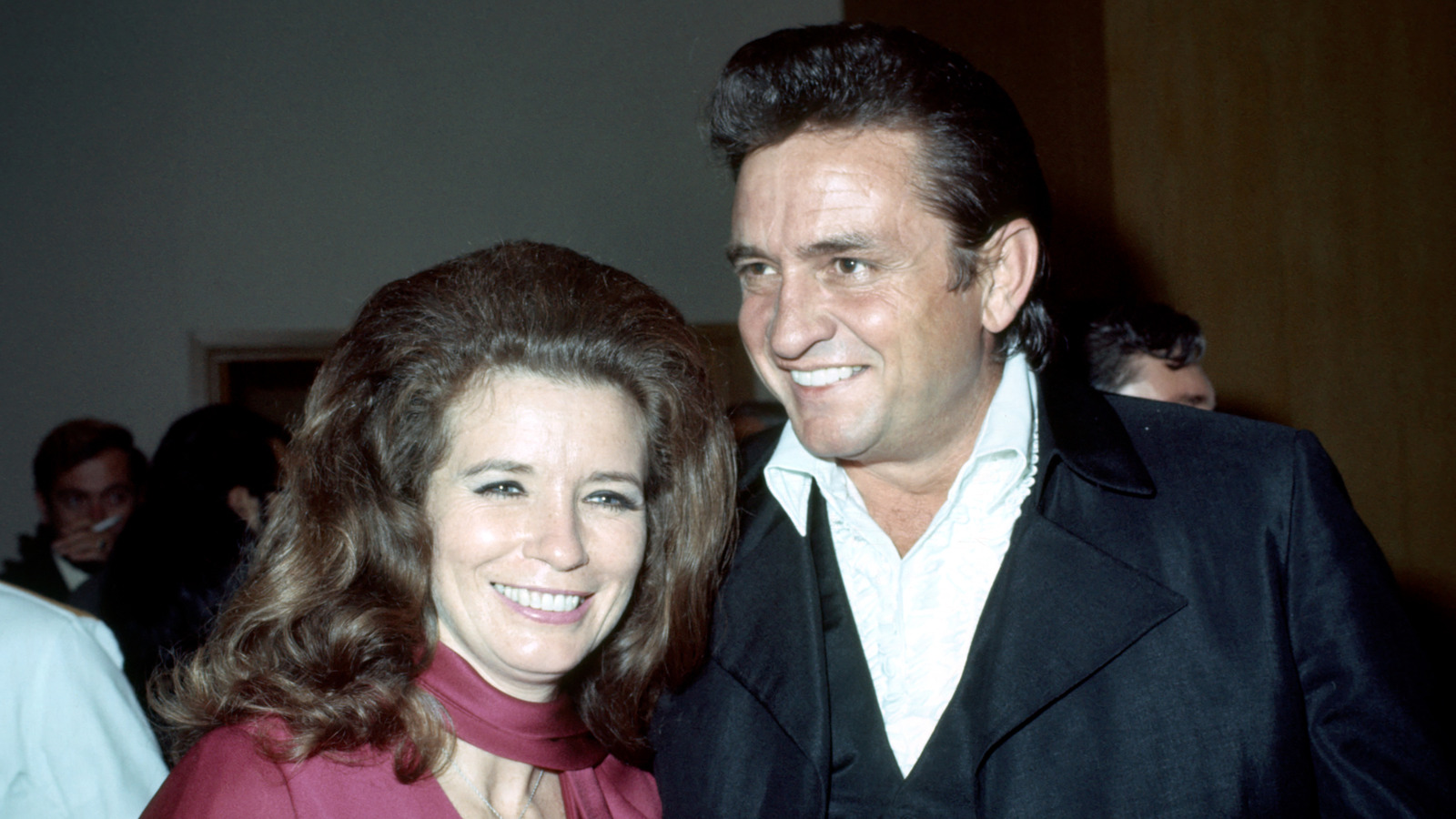
WWW.MASHED.COMThe Vintage Southern Dessert Johnny Cash's Guests Always Looked Forward ToJohnny Cash may have sung about falling into a burning ring of fire, but a dessert his wife prepared might have made him feel like he was floating on a cloud.0 Commentaires 0 Parts 14 Vue -
WWW.BGR.COMXiaomi Mijia Smart Audio Glasses Review: Not That Smart, But Still A Solid OptionXiaomi's Mijia Smart Audio Glasses don't quite live up to their name, but they're relatively stylish and can somewhat effectively replace your headphones.0 Commentaires 0 Parts 13 Vue -
WWW.BGR.COM5 Cool Amazon Gadgets That Cost Less Than $5 Actually Worth BuyingWhile Amazon is full of cheap gadgets, a large chunk of them are outright unusable and not worth buying. That said, here are some rare finds that actually work.0 Commentaires 0 Parts 13 Vue -
Rockers Pay Tribute to Late 3 Doors Down Singer Brad ArnoldRockers Pay Tribute to Late 3 Doors Down Singer Brad ArnoldThe music world is in mourning after the death of 3 Doors Down frontman Brad Arnold at the age of 47.The singer's death was confirmed in a statement on social media confirming that the musician had passed earlier today (Feb. 7). The news comes after Arnold was diagnosed with stage 4 clear cell renal cell carcinoma, a type of...0 Commentaires 0 Parts 18 Vue
-
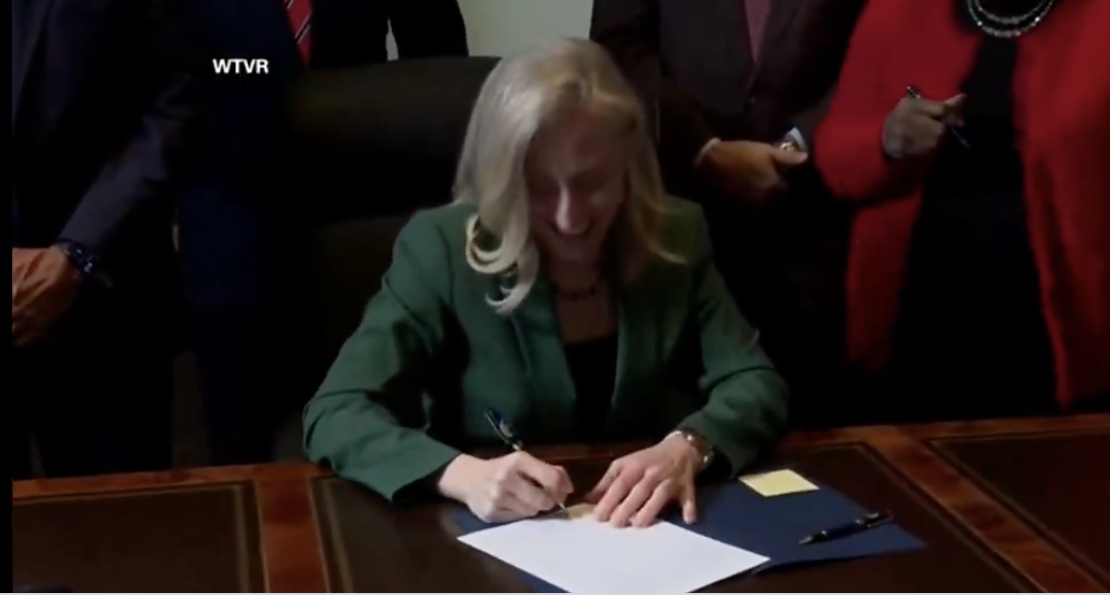
YUBNUB.NEWSVirginia Governor Authorizes Redistricting Referendum as Court Challenges Loom Over Mid-Decade Map ChangesA newly signed measure sends a congressional redistricting proposal to voters amid ongoing legal disputes over process and timing.By yourNEWS Media Newsroom Newly inaugurated Virginia Gov. Abigail Spanberger0 Commentaires 0 Parts 13 Vue