Malala Yousafzais Journey From Survivor to Global Advocate
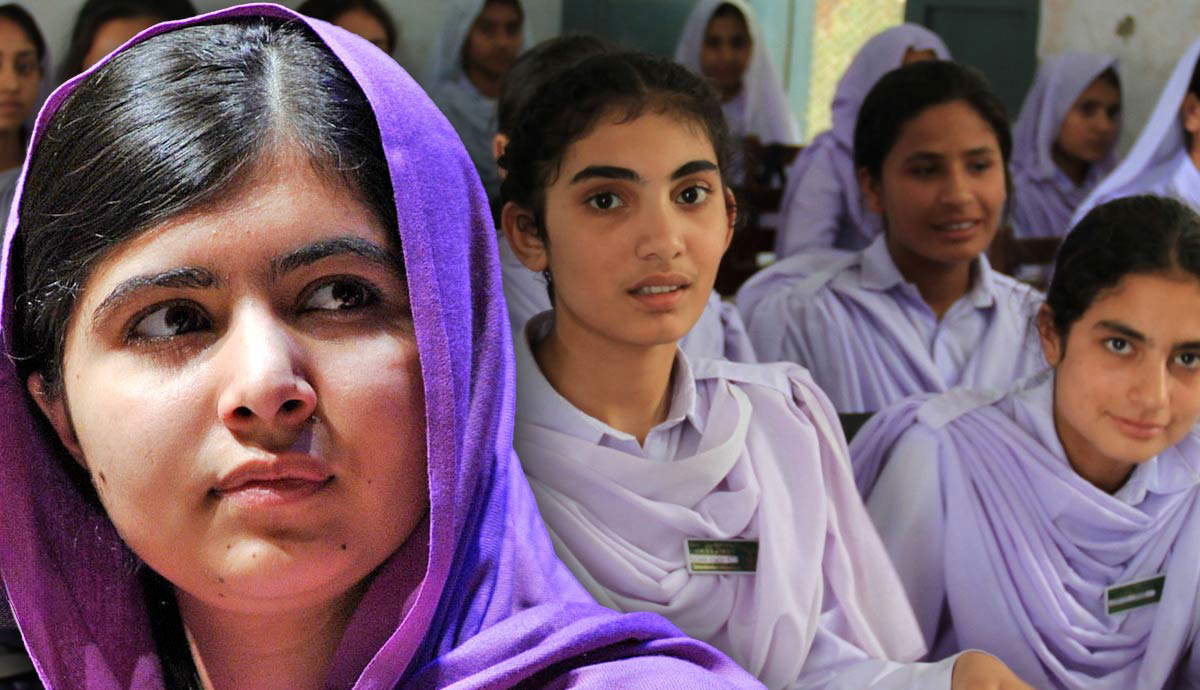
In 2012, 15-year-old Malala Yousafzai was shot for opposing the Taliban restrictions on womens education in her homeland, Pakistan. Malala had been a civil rights activist for years, anonymously publishing the fears and challenges she and her friends faced at school on her blog. Following the Taliban attack, which garnered worldwide attention, more than two million people signed the petition for womens right to education in Pakistan, resulting inPakistans first Right to Free and Compulsory Education Bill. For her efforts, in 2014, Malala Yousafzai became the youngest-ever Nobel Peace Prize laureate.Early Years & Life of Malala YousafzaiMalala Yousafzai and her father Ziauddin Yousafzai, by Rebecca Hendin. Source: BuzzfeedMalala Yousafzai was born on July 12, 1997, in Mingora, the largest city in Pakistans Swat Valley. Her name, Malala (grief-stricken), refers to the famous Afghan woman, poet, and warrior Malalai of Maiwand.Her father, Ziauddin Yousafzai, was a passionate poet and educational activist who ran a private school called Khushal Public School. Malala expressed an interest in education and literature from a very young age, as school had been a central part of her life. Educated primarily by her father, Malala became fluent in Pashto, Urdu, and English.Unlike other girls in Pakistan, Malala was allowed to stay up late at night to have conversations with her family members, especially with her father, about literature, politics, and existing socio-cultural challenges in their country. This late-night discussion inspired Malala to pursue politics as a future career path, even though she initially wanted to become a doctor.Malalas father played a pivotal role in inspiring her to fight for girls rights in Pakistan.In her own words, Welcoming a baby girl is not always cause for celebration in Pakistanbut my father, Ziauddin Yousafzai, was determined to give me every opportunity a boy would have.Early Activism & the Talibans Education BanA group of girls at a school in Pakistan, by Vicki Francis/Department for International Development, 2011. Source: Wikimedia Commons/DFID UK Department for International DevelopmentThe first public appearance of 10-year-old Malala Yousafzai was in September 2008. Accompanied by her father, Malala held a speech at the local press club, criticizing the existing environment in her region: How dare the Taliban take away my basic right to education? This challenging question was widely covered by newspapers and television channels throughout Pakistan.As part of her social activism, in 2009, Malala started writing an anonymous blog under the name of Gul Makai on the Urdu language site of the British Broadcasting Corporation (BBC). The blog was named Diary of a Pakistani Schoolgirl. She was 11 years old at this time. Malalas BBC blog gained international recognition, raising awareness about the struggles of girls and women in Pakistan.By this time, the First Battle of Swat (2007) between Pakistani and Taliban forces had already devastated Malalas residential area, resulting in the death of thousands and the consolidation of the Talibans power in the region. As schools were bombed, fewer students attended it. Eventually, on January 15, 2009, the Taliban issued an edict prohibiting girls from attending schools.Photograph of Malala at the 2023 Nelson Mandela Annual Lecture, by flowcomm, 2023. Source: Wikimedia CommonsIn her blog, Malala described her life in Swat Allay under Taliban rule, her fears, and her disappointment as she was forced to stay home. She often questioned the Talibans motivations and policies in Pakistan.She wrote:I had a terrible dream yesterday with military helicopters and the Taliban. I have had such dreams since the launch of the military operation in Swat. My mother made me breakfast and I went off to school. I was afraid going to school because the Taliban had issued an edict banning all girls from attending schools. Only 11 out of 27 pupils attended the class because the number decreased because of the Pakistani Talibans edict. My three friends have shifted to Peshawar, Lahore and Rawalpindi with their families after this edict.The situation in Pakistan quickly deteriorated due to increasing conflict between the Pakistani government and the Taliban. In May 2009, Malala was forced to leave her home for safety, becoming an internally displaced person.Return to Swat & Rising RecognitionMalala speaking with John Lewis, 2015. Source: Wikimedia CommonsIn July 2009, internally displaced persons in Pakistan, including Malala, were informed that it was safe to return to their residential areas. On their way home, Malala and her family, along with other activists, were invited to meet with United States President Barack Obamas special representative to Afghanistan and Pakistan, Richard Holbrooke. Malala utilized the opportunity and pleaded to Holbrooke: Respected ambassador, if you can help us in our education, please help us. If you cannot, then at least do not harm us.The same year, Malala was featured in documentary films about the Pakistan school ban to share her thoughts and experiences. The films were later posted on The New York Times website, gaining wider public recognition.Malala appeared more frequently on television, advocating for female education. She also became a member of several charity and civil rights organizations, such as the Khpal Kor Foundation, a non-governmental organization and partner of the United Nations Childrens Fund (UNICEF), assisting children affected by years of conflict in Swat, Pakistan.Even though the Taliban reopened schools in 2009 and allowed girls to attend lessons, Malala continued her civil activism and remained outspoken about the challenges and threats girls were facing to acquire education.In October 2011, South African activist and human rights leader Desmond Tutu nominated Malala for the International Childrens Peace Prize of the Dutch international childrens advocacy group, KidsRights Foundation, stating: Malala dared to stand up for herself and other girls and used national and international media to let the world know girls should also have the right to go to school.Malala became the first Pakistani girl to be nominated for the award. The same year, she won PakistansNational Youth Peace Prize. This led to her rising prominence and recognition, especially after the release of The New York Times documentary titled Class Dismissed: Malalas Story (2010).Why Was Malala Yousafzai Shot?Photo of Malala Yousufzais shawl at the Nobel Museum in Stockholm, photograph by Rhododendrites, 2019. Source: Wikimedia CommonsDue to the increasing prominence, Malalas and her fathers identity was revealed to Taliban militants. As the Taliban was extensively monitoring media coverage, by 2012, Malala had become one of their targets, receiving threatening letters and messages multiple times.On October 9, 2012, 15-year-old Malala Yousafzai was shot in the head by a Taliban gunman while riding her school bus, two of her classmates were critically injured as well.The same day, Taliban spokesman Ehsanullah Ehsan claimed responsibility, declaring that:She is a Western-minded girl. She always speaks against us. We will target anyone who speaks against the Taliban. We warned her several times to stop speaking against the Taliban and to stop supporting Western non-governmental organizations, and to come to the path of Islam.This attack propelled her into the global spotlight as a symbol of resilience and the fight for education rights. In Malalas own words, We realize the importance of our voices only when we are silenced.Malala survived, though she had to go through several surgeries at a Pakistani military hospital and received rehabilitation in the UK. She was discharged from the hospital in January 2013. Malala found the strength and courage to continue her fight. As one of her powerful quotes states: They thought that the bullets would silence us. But they failed. And out of that silence came thousands of voices.Malala resumed her education in England and graduated from the University of Oxford with a Bachelor of Arts in Philosophy, Politics and Economics (PPE).Global Activism & the Malala FundMalala Yousafzai at the Women of the World Festival, photograph by Southbank Centre, 2014. Source: Wikimedia CommonsOn July 12, 2013, Malala Yousafzai held a speech before the United Nations. The speech marked one of her most powerful moments, delivered on her 16th birthday after surviving the Taliban attack, leaving behind touching and inspiring quotes: One child, one teacher, one book, and one pen can change the world. Education is the only solution. Education first.The same year, Malala and her father co-founded the Malala Fund. The fund advocates for girls education in developing countries (Afghanistan, Brazil, Ethiopia, India, Nigeria, and Pakistan) by supporting local educators and advocates. Through acquiring, finding, and investing about $47 million in civil activism, the Malala Fund challenges policies that prevent young girls from receiving free, safe, and quality education.Aiming to establish worldwide support, in 2014, Malala visited Jordan and met with Syrian refugees, then traveled to Kenya to meet young female students, and finally to northern Nigeria. In Nigeria, she met with President Goodluck Jonathan and addressed the issue of the kidnapping of girls by terrorist groups of Boko Haram. Speaking with Malala prompted the president to meet with abducted girls family members, which, in turn, amplified international attention to the matter through the global advocacy campaign #BringBackOurGirls.Malala speaking with Sohaila, photograph by Amna Zuberi. Source: Malala FundIn 2013, Time Magazine named Malala Yousafzai one of the worlds most influential people, stating: People whose courage has been met by violence populate history.The same year, at the age of 17, Malala became the co-recipient of the 2014 Nobel Peace Prize with Kailash Satyarthi, a childrens rights activist from India, becoming the youngest Nobel Prize laureate. According to Malalas quote from her Nobel Lecture on December 10, 2014:This award is not just for me. It is for those forgotten children who want an education. It is for those frightened children who want peace. It is for those voiceless children who want change. I am here to stand up for their rights; to raise their voice . . . it is not time to pity them. It is time to take action so it becomes the last time that we see a child deprived of education. I have found that people describe me in many different ways. Some people call me the girl who was shot by the Taliban. And some, the girl who fought for her rights.Ongoing Advocacy & LegacyMalala Yousafzai visiting a government school in Borno, Nigeria. Source: The Malala FundMalala Yousafzai continues to be an active proponent of education as a fundamental civil right for all, especially vulnerable women in conflict-torn societies. Alongside the Malala Funds activities, in January 2025, Malala attended an international summit on girls education in Islamabad, Pakistan, organized by the Muslim World League and the Organization of Islamic Cooperation (OIC). She used the high-level meeting to urge the Muslim leaders to classify gender apartheid as a crime under international law.Through leveraging various platforms, Malala Yousafzai continues to advocate for education and womens rights, fighting to amplify the voices of marginalized communities worldwide. I tell my story not because it is unique, but because it is the story of many girls, she declared during her Nobel Peace Prize acceptance speech on December 10, 2014, in Oslo, Norway.To this day, Malala Yousafzai remains a symbol of non-violent and peaceful protest against violence and terror.








 English
 Arabic
 French
 Spanish
 Portuguese
 Deutsch
 Turkish
 Dutch
Dutch
 Italiano
 Russian
 Romaian
 Greek
Greek