• Ultimate Gym Game codes (July 2026)
    Ultimate Gym Game codes (July 2026) Use our Ultimate Gym Game codes to grab tons of free cash and creatine without spending your spare time picking up after fellow gym-goers who leave their coffees lying around. It's much more dignified to take these freebies, we think, so go ahead and have a field day! We're on the lookout for new Ultimate Gym Game codes regularly, so bookmark this page and...
    0 Comentários 0 Compartilhamentos 12 Visualizações
  • Complex Furnishings codes (July 2026)
    Complex Furnishings codes (July 2026) For those looking for a liminal experience, we recommend using these Complex Furnishings codes to line your pockets in the Backrooms-inspired game. You run a furniture store, but there's something… off about it. Using the freebies below, you can unlock new roles to make use of in the game. Will you lead, be a salesman, or something else? Here are all the...
    0 Comentários 0 Compartilhamentos 12 Visualizações
  • Popular Steam Deck model just became harder to repair
    Popular Steam Deck model just became harder to repair The original LCD Steam Deck is a great value, if you can still find one. If you need to repair it, though, you might run into some trouble.A Reddit post from earlier this week (via Tech PowerUp) showcased a customer support email from iFixIt, one of the most popular purveyors of...
    0 Comentários 0 Compartilhamentos 10 Visualizações
  • WWW.UNIVERSETODAY.COM
    What's It Like to Travel Near the Speed of Light? Part 1: The Broken View
    You can't ride alongside a beam of light, and the reason why opens a door onto the strangest parts of relativity. A tour of rest frames, why a photon has no point of view, and how your speed reshapes reality itself.
    0 Comentários 0 Compartilhamentos 9 Visualizações
  • WWW.UNIVERSETODAY.COM
    Spiral Arms and Bars are Galactic Fuel Pumps for Star Formation
    Astronomers thought that early galaxies were messy, clumpy, and turbulent from mergers. That means their gas was all stirred up. So what could explain the rapid star formation during the Cosmic Noon? New research shows that galaxies had well-ordered morphologies earlier than thought, and that their spiral arms and bars allowed gas to flow freely, forming more stars.
    0 Comentários 0 Compartilhamentos 9 Visualizações
  • WWW.IFLSCIENCE.COM
    Trump Administration Is Threatening To Unravel 50 Years Of The Endangered Species Act With Just One Word
    "This decision makes as little sense as a kid who covers their eyes and claims you cant see them."
    0 Comentários 0 Compartilhamentos 9 Visualizações
  • WWW.IFLSCIENCE.COM
    Monkeys Are Creeped Out By The "Uncanny Valley", Just Like We Are
    Non-human primates may possess the same social perception mechanisms as us.
    0 Comentários 0 Compartilhamentos 9 Visualizações
  • WWW.IFLSCIENCE.COM
    AI Solved A Math Problem That Had Stumped The World For 80 Years. Not Everyone Is Happy About That
    This really scratches at the very foundation of what mathematics as a human endeavor should be.
    0 Comentários 0 Compartilhamentos 9 Visualizações
  • WWW.THECOLLECTOR.COM
    How a Web of Spies Protected Elizabethan England
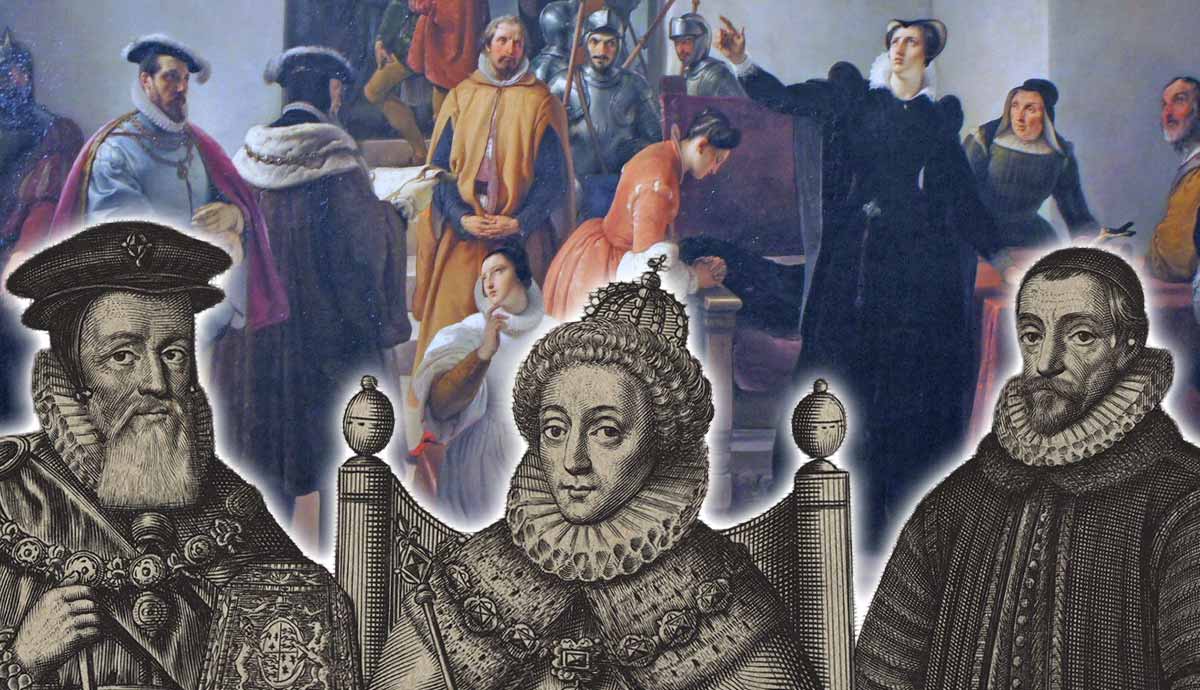
    Secrecy and politics go hand-in-hand, and thats not just a 20th-century phenomenon, with organizations such as MI5 and MI6 occasionally making headlines. Secrecy and politics have been intertwined long before that. One key example is the use of spies and whisperers in Elizabethan England. In this article, we will discuss who these people were, what became of them, and how they helped shape the very fate of the nation in the Elizabethan Era.The Origins of the Elizabethan Spy NetworkThe Darnley Portrait of Elizabeth I, c. 1575. Source: Wikimedia CommonsOne of the key features of the Elizabethan era was the spy network. It played a huge part in generating political interest around the Queen, as well as gathering evidence of any plots against Elizabeth I. The Elizabethan spy network was like a very early form of secret service.It would be the intricate work of men such as William Cecil and Francis Walsingham who dug out assassination attempts and plots to replace Elizabeth as Queen of England. It could even be argued that it was only due to the sheer power, influence, and hard work of those in the Elizabethan spy network that Elizabeth I died at an old (for the time) age, and not at the hands of an executioner or an assassin.Elizabeth inherited a tumultuous situation. In the space of about a decade, England had gone from a mildly Protestant-turned-Catholic-upon-his-deathbed king, Henry VIII, to his hardline Protestant son, Edward VI, and then to the staunchly Catholic Mary I.Elizabeths reign was one of the most famous of all the Tudors, and she came to the throne at a dangerous time for religion in England. As such, a strong spy network could not only dig out any plots against her but also keep her safe from religious fanatics.Key Members of the Elizabethan Spy NetworkWilliam Cecil, attributed to Marcus Gheeraerts the Younger, c. 1590. Source: National Portrait Gallery, LondonIn the early Elizabethan Era, the most important figure in the spy network was a man called William Cecil.Cecil was Elizabeths chief adviser, and he has even been described by some historians as indistinguishable from Elizabeth herself; he was that close to her. Cecil was one of the most important figures in Elizabeths reign, and without his unwavering support and dedication to the queen, it is highly likely that Elizabeth would have been assassinated.Cecils specialty lay in the gathering of intelligence, which he managed through an extensive network of spies, not just in England, but throughout Europe, too. Cecil later handed the reins over to the man who would become synonymous with the spy network of the Elizabethan Era: Francis Walsingham.He chose to do this when Mary, Queen of Scots (a Catholic cousin of Elizabeth I) moved to England, and thus became a cause for Catholics to rally around to potentially have a Catholic monarch on the throne once again.Mary Queen of Scots, by Francois Clouet, 1558-60. Source: Wikimedia CommonsFrancis Walsingham had initially trained as a lawyer, so he was a skilled and talented debater, as well as a very intelligent statesman. He was, perhaps more importantly, a staunch Protestant. In fact, he had actually gone to live abroad during the reign of Elizabeth Is older sister, the Catholic Queen Bloody Mary I of England.However, upon Elizabeth Is accession to the throne in 1558, Walsingham returned to England. By 1573, he had been promoted to secretary of state, where he began to play a serious role in the development of the Elizabethan spy network.While William Cecil and Francis Walsingham were the two primary members of the spy network, it is also worth briefly mentioning Robert Cecil, who was William Cecils son. Robert showed that the Protestant roots in the Cecil family ran deep, as did a love and devotion toward Elizabeth I.How Did the Elizabethan Spy Network Operate?Sir Francis Walsingham, by John de Critz, c. 1585. Source: National Portrait Gallery, LondonLong before the days of smartphones, double-encrypted computers, and the technologies on show in the James Bond movies, the Elizabethan spy network had its own unique and clever ways of operating to ensure the protection of the queen.While many spy networks try to keep themselves as secretive and quiet as possible, Elizabeths spies instead created an atmosphere of suspicion and tried to generate interest through their mysterious aura. In some ways, it could be suggested that they generated the same feeling that many people have towards Area 51 today.Spymasters and their associates would lead people to believe that there was an extensive network (which was not a lie) and that spies could be anywhere. A good 20th-century example of this was during the Second World War in the Allied countries, where posters bearing the phrase loose lips sink ships were distributed. This meant that you never knew who could be listening. In the Elizabethan Era, it couldve been a Protestant informer to the spy network, while during the Second World War, it couldve been an Axis undercover spy waiting to bait you into talking and giving away key information.This pervasive atmosphere of suspicion, while it meant that it could be more difficult for the spies to obtain information, also deterred plotters enough that some undoubtedly thought that all of the effort just was not worth the hassle.Recruitment to the Elizabethan Spy NetworkEngraving of William Cecil (left), Elizabeth I (center) and Francis Walsingham (right), by William Faithorne, 1655. Source: National Portrait Gallery, LondonGiven that it was such a secretive network, recruitment had to go right; nobody wanted to recruit the wrong person, because if sensitive information reached the wrong hands, it could lead to a loss of lives, and Elizabeth I would definitely have been in mortal danger.Recruitment was especially diverse for the time period, so those they were spying on never knew who might be a spy. Agents of the network came from a variety of backgrounds, and while they were mainly men, they were from various social ranks and industries. Wine merchants were a popular choice, as were some very specially chosen clergymen, who were disillusioned with the state of the Catholic Church in the Elizabethan era. On occasion, women were also chosen as they were typically the least suspected, and they worked deep undercover. Finally, it is believed that even playwright Christopher Marlowemay have been a spy.Technologies Employed by the Elizabethan Spy NetworkCecil presiding over the Court of Wards, c. 1560-90. Source: Wikimedia CommonsWhile the Elizabethan Era was almost 500 years ago, some of the technologies they employed were still used until very recently. For example, decoding letters were a key element in how the network and its enemies operated. Secretly coded letters between Catholics and those who were prepared to cause malice to the queen had to be decoded quickly and efficiently, as lives were at stake.In addition, invisible ink was also used as a method of communication between members of the network, in case any letters should fall into the wrong hands. Double agents were used to infiltrate the enemy side, a dangerous yet highly lucrative and rewarding role to undertake.Naturally, the Tudor favorite method of torture was also sometimes used to extract information and confessions, although it was often legally restricted. This was usually a last resort, and those who were tortured were seldom released afterwards.The Babington Plot (1586)Mary, Queen of Scots Proclaiming Her Innocence, by Francesco Hayez, 1832. Source: The LouvreThe Babington Plot of 1586 was unraveled by Walsinghams spies, using decoded letters hidden inside beer barrels. This plot was a Catholic attempt to place Mary, Queen of Scots, on the English throne instead of Elizabeth, so that England could once again be ruled by a Catholic monarch.The plot was named after its leader, Anthony Babington, who may have also gained the support of Philip II of Spain (a Catholic monarch) and the Duke of Guise in France, to restore Catholicism to the English throne. However, Walsinghams double agents (most notably Gilbert Gifford) uncovered communications between Babington and Mary, Queen of Scots.The plot was eventually exposed, which sealed Marys fate, and she was executed the following year. Babington was also executed, as were others involved in the plot. This led to further persecution against Catholics in England and served as a stark reminder of the power of the Elizabethan spy network.The Spanish Armada (1588)English fireships launched at the Spanish Armada, unknown artist, c. 1590. Source: Wikimedia CommonsAnother key event, which was exposed thanks to the work of the Elizabethan spy network, was the Spanish Armada. While the network could not prevent the launch of the Armada, they ensured that England was prepared, and as such, helped bring about the English naval victory, one of the most famous of all time.Walsingham was again key to uncovering this event, as his spies in Spain had kept close tabs on the Spanish court, and informed Walsingham when rumors of the Armada started to circulate.Intercepted messages were once again decoded, and watchmen were placed along the Atlantic coast in France and southern England. As such, Elizabeth knew the Armada was coming, and she was fully prepared for it when it did arrive.
    0 Comentários 0 Compartilhamentos 9 Visualizações
  • WWW.THECOLLECTOR.COM
    Why Was the Siege of Vienna Such a Significant Battle for Europe?
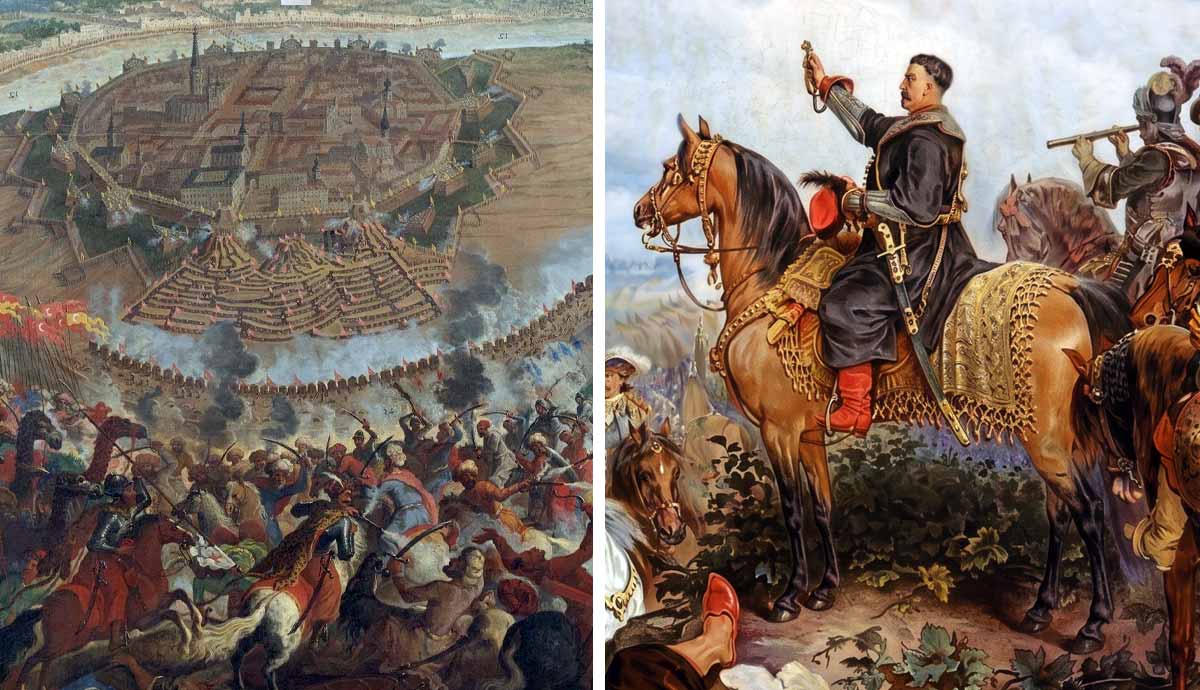
    Few battles have had such historic significance as the Siege of Vienna in 1529. While compiling a list of significant historic battles, sieges, and wars, it is likely that events such as those at Macedon, the Teutoburg Forest, Bannockburn, Poitiers, and Agincourt will all be mentioned, but the Siege of Vienna in 1529 is often sadly overlooked.In this article, we will explore how and why this siege was so significant, and why it marked the pinnacle of European warfare against the Ottoman Empire.Origins of the Siege of ViennaBattle of Vienna, 1683. Source: Wikimedia CommonsThe Siege of Vienna in 1529 was not a standalone battle or siege. Rather, it was a part of the Habsburg-Ottoman Wars in Hungary, which had started in 1526. These wars would eventually rage on in one form or another until 1568.In the early 16th century, the Habsburgs and the Ottoman Empire vied for control of border lands in southeast Europe, the Ottomans moving west from their base in modern-day Turkey, and the Habsburgs trying to control their territory in Central Europe.These military campaigns ultimately offered very few results in terms of territorial gains. The most important aspect of these wars from the European perspective was that everywhere west of Vienna remained culturally European (a part of Christendom in the 16th century) and still does to this day.For the Ottomans, the Siege of Vienna was a lost opportunity to further expand across the European continent, bringing Ottoman culture and the Islamic religion with them.The Ottoman PlanSuleiman the Magnificent, by Titian, c. 1530. Source: Wikimedia CommonsThe Ottoman Sultan, Suleiman the Magnificent, began planning for the Siege of Vienna in the spring of 1529. He gathered a large force in Ottoman Bulgaria, with the aim of taking control of all of Hungary at the new borders set by Ferdinand I, the Holy Roman Emperor.The size of Suleimans force has been debated by chroniclers and historians, with estimates ranging from 120,000 to well upwards of 300,000. Either way, Suleiman mustered a huge fighting force of well over 100,000 men.In his army, he also incorporated forces from Moldavia and Serbia to bolster his numbers, and the plan was formally launched on May 10, 1529.The March to ViennaStatue of Nicholas Salm. Source: Wikimedia CommonsHowever, things were not as smooth as Suleiman or any of his advisers had expected.The spring rains, which are a key characteristic of southeast Europe, and especially the Balkans, were extremely heavy that year, leading not only to delays in their progress, but huge logistical issues, too.For a start, the march from Bulgaria to Austria is hundreds of miles, and difficult enough even in pleasant conditions. Throw flooding into the mix, and it was a recipe for disaster.Water-borne diseases ran rampant throughout the caravan, and hundreds of men perished while still in the Balkans. In addition, the camels that Suleiman the Magnificent used for transport were unused to the terrain, and when the floods came, many camels also died.Another way to speed up the army involved ditching their heavy equipment. This meant that the majority of the Ottoman heavy artillery, such as cannons and siege weaponry, was abandoned.It was not until late September that the sultans forces reached the city walls of Vienna, months after they had initially planned the siege.The Preparations From the Viennese SideGerman mercenaries, by Daniel Hopfer and Erhard Schon, c. 15001530. Source: The Met, New YorkOnce word of the impending Ottoman attack reached the city, the whole community rallied. Defensive measures from peasants and farmers took place outside the city, while other European mercenaries traveled to Vienna to defend the city, including German pikemen and Spanish cavalrymen, sent by Charles V, the Holy Roman Emperor.The arrival of the Spanish seriously boosted morale, as these soldiers were known for their elite training and large successes on the battlefield. They built many pike walls around the city as a defensive measure, as well as pit traps for the advancing Ottoman army to fall into.A 70-year-old veteran named Nicholas, Count of Salm, was placed in charge of defensive operations of the city, and his name would go down in history as one of the finest military leaders ever.Salms first action was to protect the 300-year-old walls around St Stephens Cathedral (found in the center of the old town in Vienna today), where he made his headquarters.Because he knew a siege was coming, he made provisions for the city to withstand a lengthy siege and fortified the walls surrounding the city. Some were only just over six feet (1.8 meters) thick in places. He also blocked off the citys four main gates.Another significant contribution came from the last Serbian Despot, Pavle Baki, who provided 2,000 hussars to aid in Viennas defense.The SiegePanoramic view of the Siege of Vienna, by Nicholas Meldeman, c. 1530. Source: Wikimedia CommonsIt is important to remember that the Viennese only had around 17,000 to 21,000 men ready to defend not just the city, but Europe, against the mighty 100,000+ force of the Ottoman Empire.On paper, it was an easy Ottoman victory, and couldve been achieved in a day. However, the Ottoman success at the Fall of Constantinople in the previous century was not to be repeated.By the time the Ottoman forces arrived at the gates of Vienna, their numbers had been seriously depleted due to diseases spreading through the camp and numerous other causes, but they nevertheless still had a huge numerical advantage over the defenders.Around September 27, when the Ottomans settled into position, the Austrian defenders launched attacks against the Ottomans, who had begun to dig tunnels under the city walls to breach them. In one of these attacks, or sorties, Ibrahim Pasha (Suleiman the Magnificents first in command) was almost captured.The mounted Serbian hussars, which Pavle Baki had supplied, were the first troops to formally attack the Ottomans. It was these forces that detected several mines which had been intended to breach the walls, giving another minor victory to the Austrians.The Relief of Vienna, by Frans Geffels, 1683-94. Source: Wikimedia CommonsOn October 6, around 8,000 Austrians were dispatched to deal with the Ottomans in hand-to-hand combat, and while they succeeded initially, many perished on their way back into the city due to the cramped entryways, where they were picked off by the Ottoman forces.As if the conditions that Suleiman had already endured werent bad enough already, the heaviest rainfall was still yet to come. On October 11, the heavens opened, drenching the already cold, wet, and severely depleted Ottoman forces, soaking their equipment and drowning their morale as well.Sickness, casualties, and even desertions had begun to take their toll on the Ottoman forces, and the prospect of a victory was rapidly slipping away. The following day, on October 12, Suleiman convened an official war council to discuss the strategy of the attack. It was decided that they would have one final, all-or-nothing, full-blown attack, and it was to take place on October 14.This was a huge gamble, and Suleiman knew it. Despite extra rewards promised for his troops and many thousands still behind him, the attack was a complete failure.The defenders use of long pikes and arquebuses (a very early form of gun) was enough to repel the Ottomans, condemning them to defeat. The following day, on October 15, with winter approaching and supplies running low, Suleiman the Magnificent formally called a withdrawal to Constantinople, leaving the Austrians as victors at the Siege of Vienna in 1529.The Aftermath of the Siege of ViennaThe Turkish Siege of Vienna, by August Querfurt, 1750s. Source: Wikimedia CommonsThe Ottoman forces were pursued for three days by Austrian troops, who rescued any prisoners that the Ottomans had managed to capture, as well as capturing Ottoman prisoners to bring back to Vienna.Heavy snowfall, unusual for that time of year, severely impacted the Ottoman retreat, and they did not reach Constantinople until December 16. This was a huge morale blow for the Ottomans, but it is merely a footnote in the life and legacy of Suleiman the Magnificent. The fact that he endured one of the most humiliating defeats in European military history and still holds the sobriquet the Magnificent shows how successful he was as a leader throughout his career.The Legacy of the Siege of ViennaViennas main cathedral, photo by Oksana Pylypenko. Source: UnsplashThe Siege of Vienna in 1529 was one of the most important victories in Early Modern European history, and in fact, in European history in general.It was not just a victory of morale as far as Christendom and Christianity were concerned (many minds harked back to the First and Third Crusades, given that Christendom had defeated Islam), it was a huge strategic victory, too.It meant that Europe knew that the Ottomans would not, and could not, venture any further west than Vienna, making Vienna one of the most important cities on the continent. It also meant that the Habsburgs, who had previously ignored pleas to modernize Viennas defenses, had to up their game. They were then forced to help fortify the city, should the Ottomans attack once again.These modernized fortifications would prove essential as Vienna withstood a second Ottoman attack in 1683, so if it had not been for the victory in 1529, it is very likely that Vienna would have fallen, due to either being taken over or the Habsburgs not fortifying the city properly.King John III Sobieski blessing the Polish attack on the Turks in Vienna, 1683, 1871. Source: Wikimedia CommonsThis period in the early to mid-16th century in Europe was also a turbulent time as far as religion was concerned. Henry VIII in England was on the verge of breaking with Rome, while the Protestant Reformation was gathering momentum on the continent at the same time.Therefore, an indirect consequence of the Siege of Vienna was that it helped the Protestant Reformation, because the Habsburgs and the Holy Roman Empire, who had been so fixated on internal religious conflicts, were thereby forced to withdraw their troops from these conflicts and instead focus on reinforcing Vienna. Protestant forces throughout the continent took advantage.Overall, the success of the Siege of Vienna was down to sheer military tactical genius from the defenders, aided by the natural weather conditions. It could even be argued that this victory was the reason that Europe has remained a largely Christian continent for so long, and why Islam has rarely taken a strong foothold to this day.

    0 Comentários 0 Compartilhamentos 9 Visualizações