Science news this week: Time emerges inside a mini-universe, scientists thicken Arctic ice, and one of the oldest graves of a free Black person in the US found
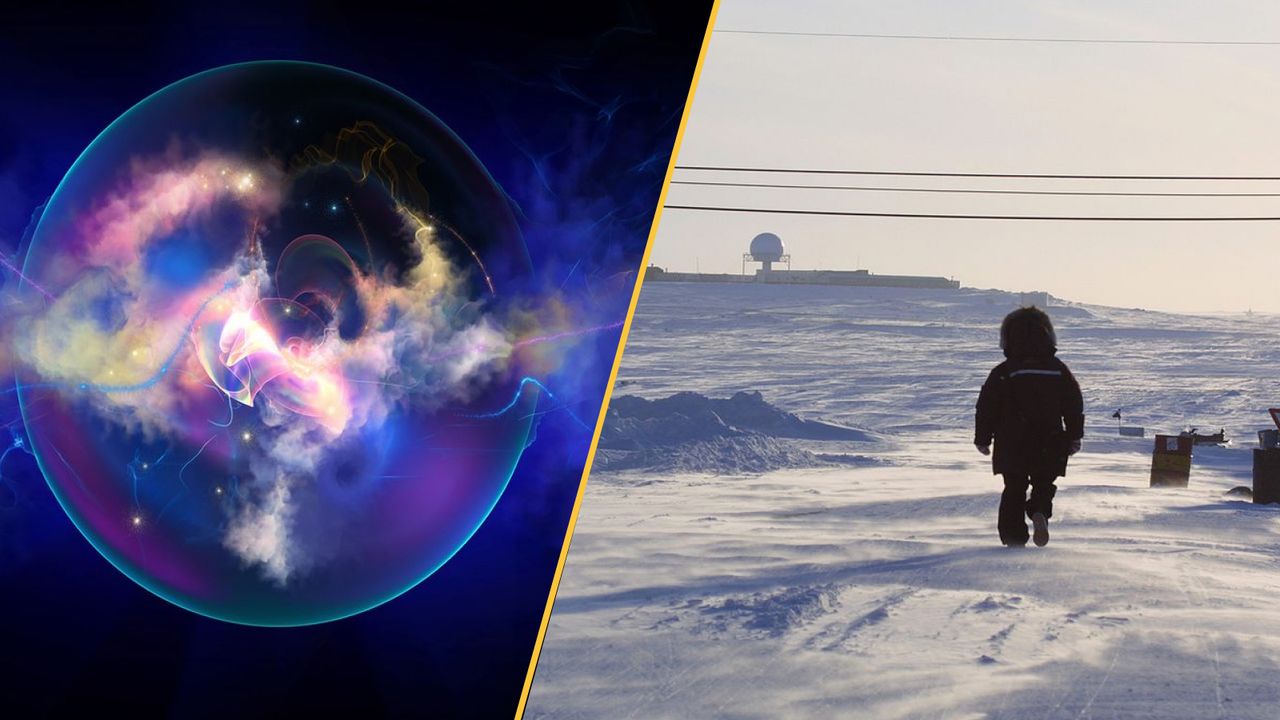
This week's science news was filled with big discoveries from the world of the small, led by a physicist's creation of a mini-universe, which was designed so we can watch time emerge from within an isolated quantum system.The experiment was performed using a Bose-Einstein condensate a strange state of matter that consists of thousands of atoms blended into a single quantum object at near absolute zero (minus 273.15 degrees Celsius, or minus 459.67 degrees Fahrenheit). The system showed time speeding up, slowing down and even stopping, depending on what the system was doing. Those weren't the only highbrow high jinks using a Bose-Einstein condensate we reported on this week. We also covered NASA's upgrade to its mini-fridge-sized laboratory on the International Space Station that will use the bizarre state of matter to probe the quantum world. Back on Earth, physicists also found that complex numbers aren't necessary for quantum mechanics to work and used quantum computers to create a rare material critical to nuclear fusion. And to stick with news from the small (and weird) things of the world, we also reported that scientists have created little diving suits to transform cockroaches into search-and-rescue cyborgs. Arctic ice thickening shows promiseFirst experiment to thicken Arctic ice with seawater shows promise but there's a big catchResearchers conducted the first real-life sea ice thickening experiments in Cambridge Bay, Nunavut. (Image credit: Arctic-Images/Getty Images)The Arctic is the world's fastest-warming region, where sea ice is rapidly disappearing at a rate of 12.2% per decade.The ice is crucial for maintaining stable sea levels and marine nutrient flows, and for reflecting solar radiation away from our planet, so its precipitous decline is deeply concerning. That's why one team of researchers turned to a surprisingly simple method to stem the ice loss: flooding ice sheets with seawater to thicken them.The results, despite some major caveats, showed a lot of promise.Discover more planet Earth newsExtreme heat waves are making our cities buckle. Investing in urban nature is no longer optional.Colorful 'painting-like' ripples cover an ancient seafloor structure in the Bahamas Earth from space'Uncharted territory': Record-high ocean temperatures confirmed for June as El Nio strengthens its gripLife's Little MysteriesDoes fast charging damage your battery more than regular charging?Some types of batteries charge faster than others. (Image credit: Tfilm via Getty Images)If you're as shamefully attached to your devices as I am, you may have wondered about the wildly differing times it can take for them to charge. So what's the science behind fast charging, and does it damage a device's battery more than regular charging does?If you enjoyed this, sign up for our Life's Little Mysteries newsletterOne of the oldest gravestones of a free Black person in the U.S. found'One of the oldest gravestones of a free Black person in America' discovered in BostonThe gravestone of "Boston," a formerly enslaved man who died in the 18th century in Boston, Massachusetts. (Image credit: Boston Parks and Recreation Department)It was found amid photos of headstones during a restoration project at Boston's Granary Burying Ground a gravestone with only one name, "Boston." That's how a team of conservationists chanced upon the tombstone of Sebastian, a formerly enslaved man who died free in 1729 and chose the city's name as his own. A search through the historical archives has produced a wealth of information about Boston's past, including his reputation as a hardworking handyman throughout the city, and his emancipation following the death of the man who held him in slavery."It's been there all along. We just had to go look and share the story," Michelle Wu, the mayor of Boston, said in a July 4 speech. Discover more archaeology news100,000 years ago, one of the earliest Homo sapiens outside Africa was stabbed in the face, analysis finds6,000-year-old broken ribs discovered in Syria may be one of the oldest known cases of child abuse in the worldNeanderthals and modern humans may have shared culture 59,000 years ago in Turkey, study findsAlso in science news this weekNew sodium metal battery design charges in just 4 minutes and retains its capacity for yearsDirty 'button' unearthed by metal detectorist turns out to be a rare 900-year-old coin from Norway's last Viking king, Magnus Barefoot'Astronomers have to revise estimates': The Milky Way may be larger, heavier and more lopsided than we realized2,500-year-old tomb of a 'warrior prince' with chariot and helmet discovered on Italy's Adriatic coastMalaria had nearly been eliminated around a giant dam in the Amazon but then it came roaring back. Experts just discovered why.Science interview'800 seconds for a sick visit': Some factors driving antibiotic resistance have nothing to do with biology, says medical sociologist Julia SzymczakDecisions around antibiotic prescribing aren't driven only by medical knowledge emotions also play a role, a medical sociologist explains. (Image credit: Angel Santana via Getty Images)Antibiotic resistance continues to pose a growing danger across the U.S., with more than 2.8 million antimicrobial-resistant infections occurring in the country each year. Last week, we brought you a report from Live Science health editor Nicoletta Lanese, who visited Japan to investigate how that country is curbing its overuse of antibiotics.Now, in the second part of a feature series into the fight against this "silent pandemic," Nicoletta interviewed medical sociologist Julia Szymczak to dig into the social and emotional drivers of antibiotic overprescription.Something for the weekendIf you're looking for things to keep you busy over the weekend, here's a selection from our best opinion pieces, interviews, diagnostic dilemmas and crosswords that we published this week.Superintelligent AI in space could explain the Fermi paradox [Opinion]'It's more than a hope; it's a guarantee': The Vera C. Rubin Observatory's 10-year movie of the universe is about to 'blow our minds,' chief scientist Tony Tyson says [Interview]Diagnostic dilemma: A woman heard voices for years but not because of psychosis [Diagnostic Dilemma]Live Science crossword puzzle #51: Largest rodent on Earth 4 down [Crossword]Science photo of the weekSecretive Chinese probe snaps first photo of Earth's mysterious 'quasi-moon' and it may pose a big problemChina's Tianwen-2 spacecraft captured this photo of the quasi-moon Kamo'oalewa (a.k.a. 2016 HO3) at a distance of around 12.5 miles (20 kilometers) from the near-Earth asteroid. (Image credit: CNSA)It doesn't look like much, but this blurry, gray image is the first-ever close-up photo of one of Earth's temporary "quasi-moons" a fast-spinning asteroid temporarily orbiting the sun in sync with our planet.Of equal intrigue is the spacecraft that took the image: a secretive Chinese probe that is likely gearing up to land on the space rock and snag a sample although an unexpected hiccup will make that more difficult.Follow Live Science on social mediaWant more science news? Follow our Live Science WhatsApp Channel for the latest discoveries as they happen. It's the best way to get our expert reporting on the go, but if you don't use WhatsApp we're also on Facebook, X (formerly Twitter), Flipboard, Instagram, TikTok, Bluesky and LinkedIn.













 English
 Arabic
 French
 Portuguese
 Deutsch
 Turkish
 Dutch
Dutch
 Italiano
 Russian
 Romaian
 Portuguese (Brazil)
 Greek
Greek