• YUBNUB.NEWS
    Platner Resigns From Maine Senate Race; Hormuz Shipping Stalls After US, Iran Fighting Resumes
    Graham Platner, the U.S. Democratic Senate candidate and self-described progressive from Maine, promised to formally withdraw from the race on Wednesday. It comes after mounting calls from within his
    0 Comentários 0 Compartilhamentos 8 Visualizações
  • YUBNUB.NEWS
    Mamdani Faces Fury Over Move Viewed As Anti-White And Antisemitic
    Mayor Zohran Mamdani caught a wave of outrage Wednesday after a city-backed map of New Yorks immigrant neighborhoods highlighted places such as Little Palestine while leaving out Little Italy, Irish
    0 Comentários 0 Compartilhamentos 8 Visualizações
  • The premium Sony WH-1000X The Collexion headphones get their first real discount at Target — save $50
    Best-ever price: Save $50 on the Sony WH-1000X The Collexion headphones at Target Save $50 on the fancy (and expensive AF) headset.  By ...
    0 Comentários 0 Compartilhamentos 8 Visualizações
  • WWW.LIVESCIENCE.COM
    New robotic heart mimics common, mysterious condition to help researchers study it
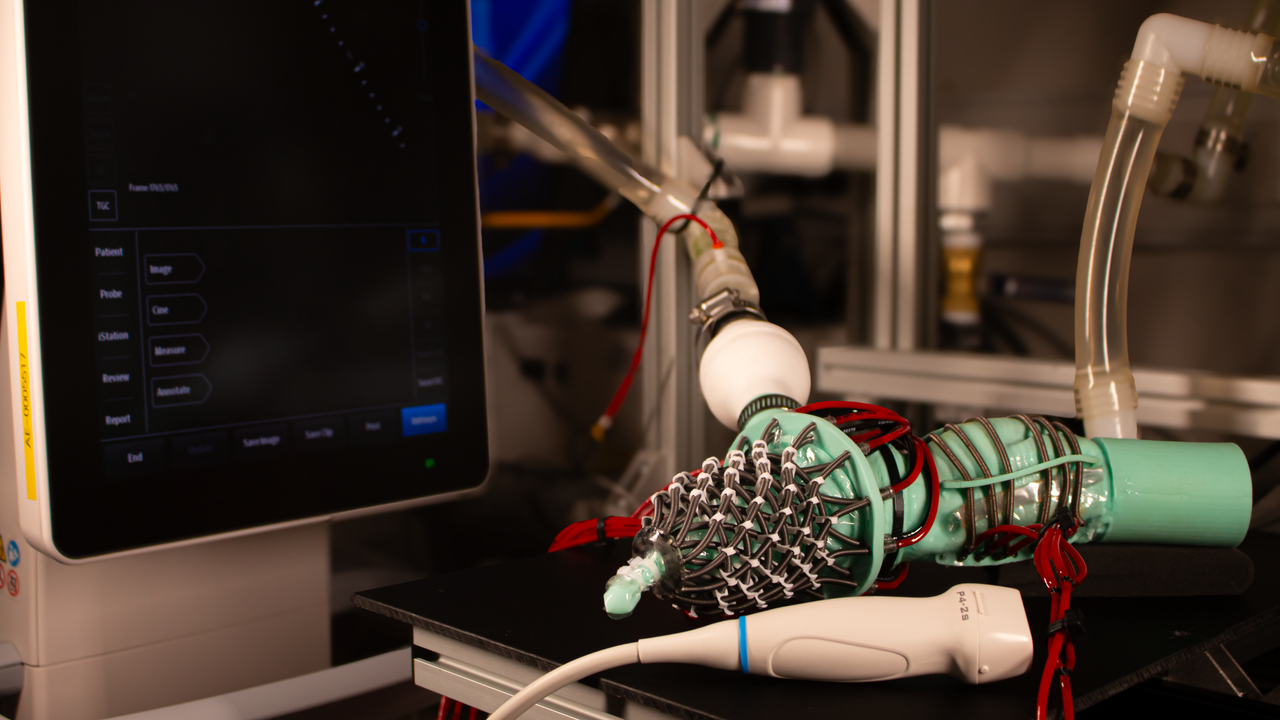
    Scientists have invented a soft robotic heart that could give them a new way to study a mysterious condition that accounts for roughly half of all heart failure cases. This form of heart failure, called heart failure with preserved ejection fraction (HFpEF), is a condition in which the heart pumps out a normal amount of blood but becomes too stiff to relax and refill properly between beats. Over 3 million Americans have the condition, but researchers still don't fully understand why it develops, making it difficult to design treatments that directly target the disease. The new device, described June 1 in the journal Nature Communications, is the first soft robotic heart model that can actively adjust how it responds to changes in pressure. It tightens or relaxes its artificial muscles, enabling researchers to control how stiff the heart becomes. This allows it to better mimic a diseased human heart.Current laboratory models of HFpEF have drawbacks. Traditional "mock circulation loops" use rigid pumps and tubing to recreate blood flow but don't physically resemble a beating heart. Lab animals capture more realistic biology but are expensive and don't perfectly mirror human disease, said study co-author Thanh Nho Do, a biomedical engineer and associate professor at the University of New South Wales in Australia."HFpEF has been notoriously difficult to study and treat," Nho Do told Live Science in an email. Earlier versions of the robotic heart could realistically recreate cardiac movement, but they followed present commands that didn't adapt to changing conditions. The new system attempts to solve that limitation by allowing the artificial muscle fibers to "feel" the pressure created by the fluid they are pumping and dynamically contract or relax against it. That feedback is critical for reproducing HFpEF, in which abnormal stiffness rather than weakened pumping lies at the core of the disease.The researchers built a silicone replica of the left side of the human heart and wrapped it in artificial muscle fibers made from rubber tubes reinforced with spring coils. The model continuously senses the pressure generated by the fluid flowing through it and adjusts the force of its artificial muscles in response. By changing how much the muscles resist being stretched as the heart fills, researchers can dial in different levels of stiffness.Instead of modeling a single snapshot of HFpEF, the researchers recreated several stages of the disease's progression. In early stages, patients' hearts start to show impaired relaxation between beats, while in more advanced forms, the heat is so stiff that it can't adequately fill with blood before the next contraction."If we can model its progression pathway, we might be able to use models like ours to develop medical devices that interrupt that trajectory, rather than just treating end-stage disease," Nho Do said. RELATED STORIESThese patients' hearts stopped a dozen times a day. An innovative procedure has transformed their lives.Men develop cardiovascular disease 7 years before women, study suggests. But why?Scientists developing new 'heart-on-a-chip'Current treatment for HFpEF focuses largely on managing symptoms and associated conditions, such as high blood pressure, obesity and diabetes. In recent years, drugs known as SGLT2 inhibitors have been shown to reduce the risk of hospitalization in many patients by reducing excess fluid in the body. But there are still few therapies that directly target the stiffening of the heart muscle.The researchers hope their new model might pave the way, but they emphasized that the work is an early proof of concept. Looking ahead, they hope to develop increasingly sophisticated robot heart models that can complement other data on HFpEF, including that from computer simulations, animal studies and clinical testing. "We hope the biggest impact will be in understanding HFpEF mechanisms and improving the way we develop cardiovascular devices," Nho Do said. Heart quiz: What do you know about the body's hardest-working muscle?
    0 Comentários 0 Compartilhamentos 7 Visualizações
  • WWW.LIVESCIENCE.COM
    'Explosive diarrhea' parasite infections confirmed in hundreds of people across US, with 1,251 in Michigan alone
    At least 20 people across 17 states have been hospitalized due to severe gastrointestinal illness as more than 1,000 cases of the parasitic infection cyclosporiasis have been reported across the country, the U.S. Centers for Disease Control and Prevention (CDC) reports.The CDC and the Food and Drug Administration (FDA) are investigating several clusters of the illness in Illinois, New York, Pennsylvania and Texas, according to CNN. However, the worst-hit state so far is Michigan, with 1,251 cases reported as of July 9, the Michigan Department of Health and Human Services (MDHHS) reported. According to the Associated Press (AP), this marks the biggest cyclosporiasis outbreak in the state's history.Cyclosporiasis is a gastrointestinal illness caused by the protozoan parasite Cyclospora cayetanensis, which can enter the body when someone consumes food or water contaminated with the parasite. It then infects the small intestines, invading epithelial cells that line the gut, causing inflammation and leading to watery and often "explosive" diarrhea, according to the CDC. Symptoms usually kick in around a week after infection and can last over a month without antibiotic treatment. While the illness can go away on its own, it is also common for symptoms to disappear for a bit and then return.Cyclosporiasis is not usually life-threatening, but it can cause severe illness and dehydration, particularly in young children, older adults and people with compromised immune systems. In rare cases, the condition may lead to complications like biliary disease, in which the flow of bile gets blocked and impacts the liver and digestive health, according to the MDHHS. As of July 1, there was no evidence of a single, multistate outbreak of cyclosporiasis, but the CDC is investigating several clusters. According to an email from the health agency, many of the clusters appear to be linked to Mexican-style restaurants, a chain of grocery stores and a catered event, CNN reported. The FDA is conducting trace-back investigations on white and green onions, cucumbers and cilantro, according to CNN. Meanwhile, the MDHHS warned that, while the source of the current outbreak is still uncertain, previous Cyclospora outbreaks have been linked to contaminated fresh produce, including raspberries, basil and bagged salad. RELATED STORIESScientists just created the most lifelike cell ever made in a lab here's what it could accomplishHeart issues tied to 'microdamage' in the brain might raise risk of memory loss, study hintsDiagnostic dilemma: Huge mass in woman's stomach was likely caused by Ozempic-style drug and dissolved with diet sodaCyclosporiasis cases tend to rise during the spring and summer, with May 1 to Aug. 31 considered "cyclosporiasis season," according to the CDC. However, there have been more cases than usual this year: Whereas Michigan typically reports 50 cases over a whole year, the state has seen over 1,000 cases in just a few weeks, the AP reported. Compared with outbreaks of E. coli and Salmonella, clusters of Cyclospora are much harder to trace back to their source. This is because the parasite can reproduce sexually, meaning its genetic material is mixed up with each generation, according to Charles River Laboratories. However, Dr. Natasha Bagdasarian, Michigan's chief medical executive, told the AP that "there is clearly a linked outbreak happening right now." To minimize your risk of becoming infected with Cyclospora, wash all fruits and vegetables thoroughly before eating them; cut away any bruised or damaged areas; and refrigerate cut, peeled or cooked produce as soon as possible, the Michigan Department of Agriculture and Rural Development recommends. If you are experiencing sudden gastrointestinal issues, health officials suggest you visit your local health care provider. This article is for informational purposes only and is not meant to offer medical advice.

    0 Comentários 0 Compartilhamentos 7 Visualizações
  • WWW.UNIVERSETODAY.COM
    Could Permanent Magnets Protect Astronauts from Solar Storms?
    Shielding astronauts from the killer radiation they face is a central challenge facing any designer of a deep-space crewed mission. Even relatively low levels of exposure for long periods of time can lead to everything from central nervous system damage to cancer. But current solutions, such as passive water shells or active superconducting magnets, have their own limitations. To get around those, a new paper, available in pre-print on arXiv by Valerio Parisi and a team of researchers from Italy and Germany, looks at the feasibility of using a permanent magnet (and its associated permanent magnetic field) to potentially block some of that deadly radiation without the costs of competing technologies.
    0 Comentários 0 Compartilhamentos 7 Visualizações
  • WWW.IFLSCIENCE.COM
    Even Mild COVID-19 Infections Can Cause Long-Term Eye Problems. But Diagnosis May Finally Be Possible
    Its yet another symptom where sufferers struggled to get doctors to take them seriously, but that could be about to change.
    0 Comentários 0 Compartilhamentos 7 Visualizações
  • WWW.IFLSCIENCE.COM
    Does This 400-Year-Old Renaissance Painting Show An Animal Behavior Only "Discovered" In 2025?
    Studying old paintings can give us a surprising glimpse of historic natural history.
    0 Comentários 0 Compartilhamentos 7 Visualizações
  • WWW.IFLSCIENCE.COM
    A Previously Rare Ebola Strain Is Spreading Fast: Why Wasnt The World Ready?
    Almost a third of the people confirmed infected have died, and rates are climbing fast.
    0 Comentários 0 Compartilhamentos 7 Visualizações
  • 0 Comentários 0 Compartilhamentos 7 Visualizações