• WWW.LIVESCIENCE.COM
    Psychedelic drug ayahuasca could treat PTSD, early studies hint. But exactly how it works isn't clear.
    Using methods such as brain scans and symptom tracking, scientists are beginning to study whether a complex psychedelic brew known as ayahuasca can help rewire the brain's response to trauma.
    0 Commentarios 0 Acciones 232 Views
  • WWW.IFLSCIENCE.COM
    "Snake Oil" Was Once A Real Cure, And It Probably Actually Worked
    You can thank the "Rattlesnake King" for its reputation today.
    0 Commentarios 0 Acciones 252 Views
  • 0 Commentarios 0 Acciones 247 Views
  • WWW.IFLSCIENCE.COM
    Can Trees "Predict" A Solar Eclipse? Sadly, Scientists Just Debunked The Idea
    When something sounds too good to be true well, you know the rest.
    0 Commentarios 0 Acciones 240 Views
  • 0 Commentarios 0 Acciones 247 Views
  • WWW.THECOLLECTOR.COM
    What Happened to the Accusers of the Salem Witch Trials When the Hysteria Ended?
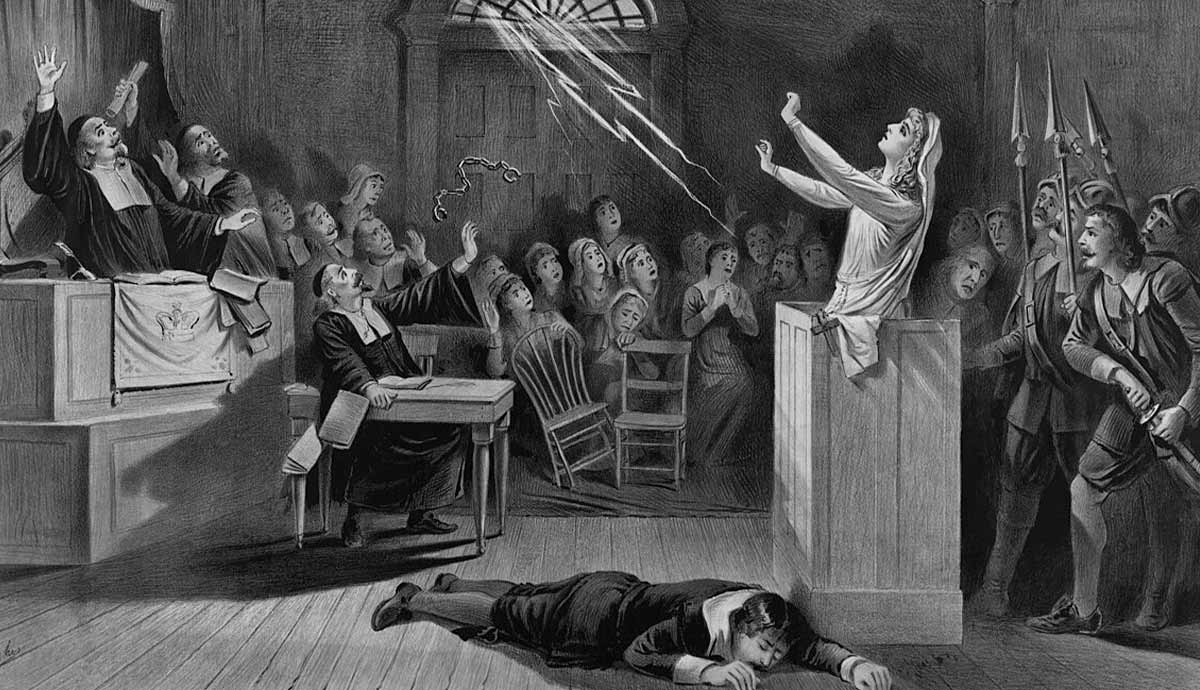
    In early 1692, in the village of Salem, Massachusetts, a group of young girls began exhibiting strange and disturbing behaviors, including convulsions, screaming, and fits. Unable to explain these symptoms medically, local ministers and villagers suspected witchcraft. Under pressure, the girls accused several women in the community of bewitching them. The accusations quickly spread, fueled by fear, religious fervor, and long-standing local tensions. The colonial justice system, lacking proper evidence standards, accepted spectral evidence such as visions and dreams as valid testimony. This led to a wave of hysteria, over 200 accusations, and the execution of 20 people before the trials ended in 1693. While the story of the Salem witch trials rightly focuses on the victims, who were the accusers, and what happened to them when the trials ended?Elizabeth Parris & Abigail WilliamsTituba, by John W. Ehninger in The Complete Poetical Works of Henry Wadsworth Longfellow, Boston, 1902. Source: Wikimedia CommonsThe first two girls to claim they were afflicted by witches were Elizabeth Parris and Abigail Williams, aged nine and eleven, respectively, in 1692. Elizabeth was the daughter of Samuel Parris, Salems pastor, who promoted devout anti-witchcraft ideology, while Abigail was his niece.The accusations began after Elizabeth Betty Parris and her cousin Abigail engaged in occult practices, including fortune-telling with a Venus Glass. These activities coincided with episodes of unexplained illness and erratic behavior, which local physician William Griggs failed to diagnose. The community believed the symptoms were a sign of witchcraft, and a neighbor, Mary Sibley, suggested that Tituba make a witchs cake to identify the culprits. When the cake failed, Tituba was accused by Elizabeth of being one of the Evil Hands afflicting her.Tituba and the Children, from A Popular History of the United States, 1878. Source: Wikimedia CommonsThe two girls implicated two other marginalized women, Sarah Osbourne and Sarah Good. Probably looking to escape punishment herself, Tituba confirmed the accusations against the other two women. While Tituba escaped death, Osbourne and Good were both later executed.After the trials, Elizabeth was sent away to live with family, and her afflictions ceased. She never recanted any of her accusations. In 1710, at the age of 27, Elizabeth married Benjamin Baron, a tradesman, and had four children before his death in 1754. Betty passed away on March 21, 1760, in Concord, Massachusetts, at the age of 77, having lived a rather comfortable life. Abigail Williams, on the other hand, disappeared from the historical record shortly after the trials. Her fate is completely unknown.Samuel ParrisMiniature portrait of Samuel Parris, seemingly before he became a reverend, c. 1673-1700. Source: Peabody Institute LibrarySamuel Parris, born in London to a modest and religiously nonconformist family, emigrated to Boston in the 1660s and briefly attended Harvard. Following his fathers death, he inherited a sugar plantation in Barbados, which he later abandoned after a hurricane in 1680. Returning to Boston, he married Elizabeth Eldridge and brought his enslaved servant, Tituba, with him.Dissatisfied with his financial prospects, Parris entered the ministry, becoming Salem Villages minister in 1689. His tenure was marked from the outset by community discord and financial disputes. In 1692, his daughter Elizabeth and niece Abigail accused Tituba of witchcraft, prompting Parris to beat a confession out of the elderly woman. This act would become the catalyst for the Salem Witch Trials.In a 1692 sermon, Reverend Samuel Parris likened the presence of evil in the church to the betrayal of Christ, inciting villagers to identify each other as witches, often individuals opposed to Parris and his allies, notably the Putnam family. After the hysteria died down, Parriss active role in the prosecutions led to formal charges from his parish in 1693. While he issued a public apology, he was subsequently vindicated by a church council.Following a legal dispute over land and unpaid salary, Parris resigned from Salem in 1696. He remarried to Dorothy Noyes in Sudbury, moved to Concord, and preached in various towns in Massachusetts until his death in 1720.Thomas PutnamLithograph representing a witch on trial in Salem by Joseph E. Baker, c. 1892. Source: Library of CongressThomas Putnam, born in 1652, was a prominent resident of Salem, the son of Lieutenant Thomas Putnam Sr. and Ann Holyoke. He married Ann Carr, with whom he had twelve children. Putnam served as a Sergeant in King Philips War and held the position of parish clerk. Nevertheless, he was largely excluded from family inheritances, which fostered resentment, particularly toward his half-brother Joseph, who married into the rival Porter family. Historians believe these familial and social tensions likely influenced Putnams zealous participation in the witchcraft accusations that engulfed Salem.Putnam was the first to pursue legal warrants against alleged witches. Thomas, his wife, and daughter collectively accused over 100 individuals, many of whom were affiliated with the rival Porter family. In 1699, Putnam died at age 46 from an unidentified illness, followed two weeks later by his wife, leaving their surviving children orphaned.Ann Putnam Jr.Private Putnam Cemetery, where Ann Putnam Jr. is buried in an unmarked grave. Source: Salem Witch MuseumAnn Putnam Jr was born in 1679 in Salem, the eldest daughter of Thomas and Ann Putnam. At just 12 years old, Ann joined a group of girls, including Elizabeth Parris and Abigail Williams, who claimed to be afflicted by witchcraft.Mercy Lewis, a fellow accuser, worked in the Putnam household as a servant, while another girl, Mary Walcott, was likely Ann Putnam Jr.s closest companion. These three became the first individuals outside the Parris household to claim affliction by witchcraft. In March 1692, Ann reported her symptoms and became one of the most prolific accusers, responsible for naming 62 individuals.House of Ann Putnam Jr in Danvers, c. 1891. Source: Wikimedia CommonsAnns life was turned upside down after her parents deaths in 1699. Ann, then unmarried, assumed responsibility for raising her nine surviving siblings. In 1706, under the guidance of Reverend Joseph Green (Samuel Parriss successor), Ann composed a public confession acknowledging her role in the Salem witch trials.Ann, now aged 27, was presented before a large congregation. Her statement expressed remorse for the wrongful accusations she had made in childhood, particularly against Rebecca Nurse, who had been executed. Yet, Ann did not take all the blame and attributed her actions to satanic deception. Her reputation somewhat recovered before her death in 1716.Mercy LewisIllustration of the execution of Reverend George Burroughs, from Our Greater Country: Being a Standard History of the United States from the Discovery of the American Continent to the Present Time, by Henry Davenport Northrop, 1901. Source: Wikimedia CommonsMercy Lewis had experienced profound trauma before the Witch Trials. As refugees of King Philips War, her family initially sought refuge in Casco Bay, New England, following a violent Native American attack. Among the survivors was Reverend George Burroughs, a former Salem minister. After briefly resettling in Salem, the Lewis family returned to Casco Bay, where a second attack in 1689 claimed the lives of Mercys parents, leaving her an orphan.Subsequent raids also killed Mercys extended family, including her grandparents. By age 14, she entered service in Burroughs household and, by 1691, had relocated to Salem. There, Mercy became a servant in Thomas Putnams home. While in service, Mercy Lewis formed close ties with Ann Putnam Jr. and Mary Walcott.In April 1692, Lewis claimed Satan appeared to her, first offering riches, then manifesting as Reverend George Burroughs, promising dominion if she pledged allegiance. Though no formal medical records exist, Lewis reportedly suffered seizures, including a violent episode on May 7, 1692, allegedly triggered by Burroughs when she refused to sign the Devils Book.Young women being accused of witchcraft, via HistoryIn addition to the accusation, Mercy also obstructed Mary Estys release and acquittal. Esty was a respected and devout member of the Salem community, unexpectedly accused of witchcraft in 1692. During her examination, afflicted girls mimicked her movements and claimed spectral assaults. Esty notably defended herself with dignity, denying any pact with Satan. Though briefly released from prison in May, Mercys renewed accusations led to her re-arrest. Her trial concluded with a conviction, and she was executed on September 9, 1692.Very little is known about Mercy after the trials. Initially, she moved to Boston to live with her aunt, where she gave birth to a son out of wedlock. Mercy married in 1701, but then disappears from the historical record.Mary WalcottCourt scene from the Salem Witch Trials with Mary Walcott as the central figure, from William A. Crafts Pioneers in the Settlement of America: From Florida in 1510 to California in 1849, 1876. Source: Wikimedia CommonsMary Walcott, born in Salem Village to Captain Jonathan Walcott and Mary Sibley, was 17 when the witchcraft hysteria began. Her familial connections placed her at the heart of the trials. Her aunt, Mary Sibley, initiated the infamous witch cake ritual by instructing Tituba and John Indian to feed a cake made with urine from afflicted girls to a dog, an act believed to reveal the identity of witches.Alongside Ann Putnam Jr. and Mercy Lewis, Mar Walcott claimed to suffer supernatural torments and named numerous individuals as witches. Her testimonies contributed directly to the prosecution and execution of several accused, including Mary Esty, Giles Corey, and Bridget Bishop.After the trials, Walcott married Isaac Farrar in 1696, with Reverend Parris officiating. She eventually relocated to Sutton, Massachusetts, where she lived out the remainder of her life. Her story highlights some of the dynamics at play in Salem. As someone of lower social standing, Mary aligned herself with the affluent Putnams and, despite the chaos, lived a long and stable life.Elizabeth HubbardExamination of a Witch, by T.H. Matteson, 1853. Source: Peabody Essex MuseumElizabeth Hubbard, also 17 when the trials began, was a maidservant of Dr. William Griggs and began experiencing episodes shortly after his examination of Abigail Williams and Betty Parris. Due to her age, Elizabeth was permitted to testify under oath, and her dramatic courtroom behavior, including frequent fits, lent credibility to her accusations. She filed 40 complaints and testified 32 times, contributing to the arrest of 17 individuals, 13 of whom were executed.Elizabeths life after the trials remains uncertain. Historians suggest she may have relocated to Gloucester, Massachusetts, married a man named John Bennett, and had four children. However, this identification is speculative, based on a marriage record for an Elizabeth Hibbert rather than Hubbard.Mary WarrenDrawing of the pressing of Giles Corey, from Witchcraft Illustrated, 1892. Source: Wikimedia CommonsMary Warren was both an accuser and accused. As a servant in the household of John and Elizabeth Proctor, Warren initially joined the circle of afflicted girls in early 1692, claiming to experience fits and spectral visitations. Her symptoms were met with skepticism by John Proctor, who threatened her with violence and insisted she return to work.However, Marys temporary withdrawal from the hysteria drew suspicion. After she suggested that the afflicted girls might be feigning their experiences, she was accused of witchcraft herself. On April 18, 1692, she was formally arrested. Under interrogation, Mary resumed her afflictions and confessed to witchcraft, implicating others, namely her employers, the Proctors. The confession under duress illustrates the intense psychological and social pressures faced by individuals caught in the trials. Her shifting allegiances underscore the volatile nature of the proceedings. She was released from prison in June 1692, but her life after the trials remains uncertain.

    0 Commentarios 0 Acciones 217 Views
  • WWW.THECOLLECTOR.COM
    The Ruthless Architect of the Spanish Inquisition and His Confusing Legacy
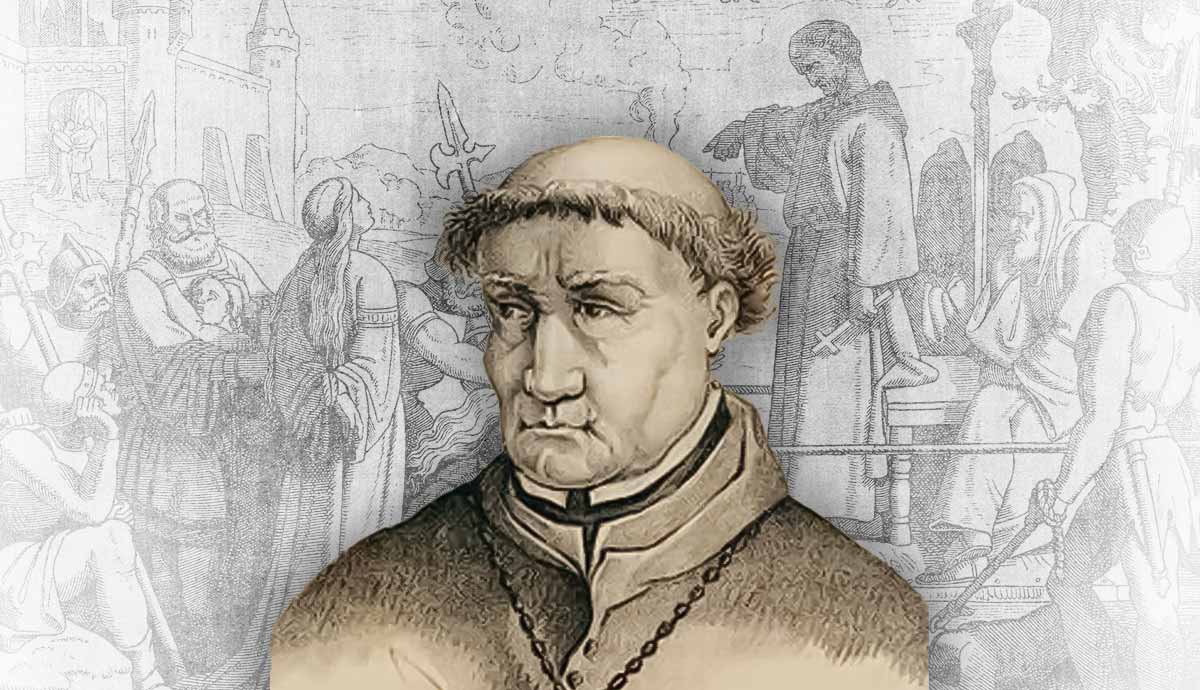
    At the end of the 15th century, Spain entered an era of brutal religious persecution, defined by the Spanish Inquisition. This organization is remembered as a symbol of terror, abducting, torturing, and executing all those deemed heretics. Against such a formidable institution, Muslims, Jewish people, and Catholics not born into the religion were targeted and suffered horrendous cruelty in the name of God and Catholic orthodoxy.Leading the Inquisition was Toms de Torquemada, a Dominican friar who would go down in history as a man of ruthless zealotry and fervent devotion whose name struck fear into the hearts of all those he opposed. The truth of Torquemada, however, is a bit more complex.The Early Life of Toms de TorquemadaLeft: Toms uncle, Juan de Torquemada. Right: Toms de Torquemada. Source: Biblioteca Nacional, Madrid/Wikimedia CommonsToms de Torquemada was born on October 14, 1420, although it is unclear exactly where. Accounts suggest Valladolid, the Kingdom of Castile, or the village of Torquemada. There has also been debate over Torquemadas lineage as to whether or not his uncle, Juan de Torquemada, was of converso descent, or in other words, descended from somebody who had converted to Catholicism from another religion. A study in 2020 showed no evidence of this. Conversos were a particular target of the Spanish Inquisition.A prominent member of Toms family, Juan was a well-known theologian and a cardinal, and like his uncle, Toms found himself attracted to a religious life. As a young boy, Toms entered the San Pablo Dominican monastery, where he led a life of dedication and became a profound supporter of orthodoxy. He was pious, austere, and earned a solid reputation in religious circles.Isabella of Castille. Source: Museo del PradoToms took his vows as a Dominican friar at the Convent of St. Paul in Valladolid, studied further, earning a doctorate in philosophy and divinity, and earned a reputation for extreme austerity. He never ate meat, and he never allowed linen (a luxurious textile at the time) to be used in his bedsheets. In fact, he shunned all forms of luxury and suffered a lifestyle of extreme asceticism. His reputation garnered considerable respect, and he was elevated to the post of Prior of the monastery of Santa Cruz in Segovia. In this capacity, he met with the young Princess Isabella I. They developed a good relationship, and Torquemada acted as Isabellas confessor.Gaining considerable trust from the princess, Torquemada became Isabellas most trusted advisor and convinced her to marry King Ferdinand of Aragon in 1469, which resulted in a de facto unification of Spain. Gaining the trust of the king, Torquemada acted as his confessor as well.The Path to the InquisitionPortrait of Pope Sixtus IV della Rovere by Pedro Berruguete. Early 16th century. Source: Cleveland Museum of Art/Wikimedia CommonsIn the latter half of the 15th century, Spain became a nation reborn. The Reconquista had consolidated Spain and driven out foreign occupiers, but it resulted in Spain having large populations that were not born into Catholicism. Aside from the Catholic inhabitants of Spain, there were large populations of conversos and moriscos, Jewish people and Muslims respectively, who had converted to Catholicism. Conversos also included marranos, who were specifically Jewish people who had converted to Christianity and who lived in Iberia.As co-monarchs, Ferdinand II and Isabella I ruled over Spain and desired a unified country, not just politically, but religiously. Through them, religious intolerance and persecution followed. As such, the Spanish Inquisition was established in 1478 with the authority of a papal bull, Exigit Sincer Devotionis, granted by Pope Sixtus IV. The Latin phrase translates as demands sincere devotion, and it justified the acts that were taken by virtue of extreme devotion and faith of those involved.Conversos and moriscos were prime targets as the Inquisition sought out false converts and those it suspected of being insincere in their Catholic beliefs, practicing other religions in secret. In later years, as the Protestant Reformation took shape, Protestants also became the victims of harsh interrogations and torture. The Inquisition began, although at this time, Torquemada had not been elected Grand Inquisitor yet.Grand Inquisitor TorquemadaTorquemada by Jean-Paul Laurens, 1886. Source: Paris MusesToms de Torquemada was one of the seven inquisitors appointed by the pope in 1481, and in 1483, he ascended to the position of Grand Inquisitor at the head of the Spanish Inquisition. In this powerful position, Torquemada set about transforming the Inquisition from a single tribunal in Seville into a vast network that spanned the kingdom.The struggle for power, however, was not straightforward. In the early years, the Inquisition was not a single unified body, but rather, a collection of independent inquisitions. There was also debate over ultimate control. Pope Sixtus IV accused the Inquisition of being motivated by wealth rather than religious fervor. King Ferdinand was outraged and denounced the accusation. However, the debate was resolved when Pope Innocent VII withdrew all papal inquisitors from Aragon and Catalonia. Torquemada took full control, being appointed as Grand Inquisitor of all of Spain in 1487.He instituted articles of faith on how investigations were to be conducted and instructions on the use of torture to extract confessions. While the Inquisition has come to be seen as particularly brutal, it is salient to note that the use of torture with regard to the treatment of accused heretics was nothing new and had been instituted before. There is, however, debate over how often torture was actually employed by the Inquisition.Nevertheless, Torquemada now stood at the head of a powerful and fanatical organization, willing to commit to violence to achieve its ends. In this, Torquemada was the architect of what was to follow.Torquemada, the ManFrancisco Rabal as the eponymous character in Torquemada (1989). Source IMDbTorquemada was driven by intense zeal and his dedication to the Catholic faith. The methods he employed gained him particular notoriety, as well as respect. Very little is actually known of him, and despite the modern depiction of him as a brutal sadist, there were many contemporaries who spoke well of him. The chronicler Sebastien de Olmedo referred to Torquemada as [t]he hammer of heretics, the light of Spain, the saviour of his country, the honour of his order.It can, however, be argued that Torquemada was the one rightfully responsible for the brutality that the Inquisition wrought, and his name can be justifiably cast in shadow. His actions led to the torture and deaths of thousands and contributed significantly to an atmosphere of fear and oppression in Spain as well as its territories during the era of Spanish colonialism.Another perspective on Torquemada was that he was an ascetic who shunned lavish lifestyles, in stark contrast to many other religious figures at the time who made no attempt to hide their wealth.The Inquisition A Defining Feature of TorquemadaAn auto-da-f and the burning of heretics by Henry Duff Linton. Source: Store Norske LeksikonTorquemada is known, above all things, as the architect and leader of the Spanish Inquisition, which is remembered for its brutal procedures against perceived heretics.For those who became victims, accusations could come from anywhere. Denunciations were often anonymous. The Spanish Inquisition acted in defiance of papal constraints on the use of torture, and if suspects failed to confess, they could be subjected to extreme physical duress. The prevalence of torture, however, is highly debated. Scholars have pointed out that the Spanish Inquisition did not use torture to the same extent as secular courts, and some cite a lack of evidence for torture and attribute much of the negative publicity to Protestant propaganda.Nevertheless, executions were public and took place as a ceremonial event called an Auto-da-F (Act of Faith). Over their heads, the condemned wore sackcloth with a single eyehole, and were burned at the stake in front of large crowds, often including royalty, while the Grand Inquisitor looked on.Of major note was the expulsion of Jewish people from Spain in 1492, heightening the air of intolerance in the kingdom. Torquemada played a pivotal part, convincing the monarchs that unbaptized Jewish people were a threat to Christians. The Alhambra Decree was issued, evicting Jewish people from Spain under threat of death. All those who aided them were also threatened with dire consequences, including the seizure of all property.While the existence of the Inquisitions cruelty cannot be denied, the extent of it and its existence in a broader context are topics of great debate. Similarly, Torquemadas legacy is one of confusing portrayals and perspectives that omit proper interrogation.A Confusing LegacyMovie poster for The Pit and the Pendulum (1991) with Lance Henriksen as Torquemada. Source: IMDbMuch of what is known about Torquemada comes from firsthand accounts and historical records of the time rather than any personal writings made by the Grand Inquisitor. There is a great divide between those who supported him and those who condemned him. In modern depictions, he is often painted with the brush of sadistic cruelty and exists as a two-dimensional character rather than a complex human being.As such, the truth about who Torquemada was is difficult to ascertain and is subject to supposition and common tropes. In The Pit and the Pendulum (1991one of many adaptations with this title), Torquemada is depicted as the sinister villain at war with heretics as much as with himself and his natural urges towards a particular woman. In Torquemada (1989), the titular character is equally tyrannical and macabre. Other depictions follow in the same vein, while in History of the World Part 1 (1981), Mel Brooks gives the character of Torquemada a more amusing (and musical) quality.In the real world, some of his legacy was quite clear. He died in his sleep in 1498, but left a powerful inquisition in his wake. His work left Spain far more unified than it was before, albeit also more intolerant. The Inquisition formally ended in the first half of the 19th century.Whether justifiable or not, the name of Torquemada, in the modern era, is associated with ruthless fanaticism and brutality. And in a world that is significantly more liberal than the one in which he lived, it seems unlikely that his name will be remembered for anything other than the perceived horror of the Spanish Inquisition.
    0 Commentarios 0 Acciones 213 Views
  • Deadlock release date estimate, latest news, trailers, and more
    Deadlock release date estimate, latest news, trailers, and more When is the Deadlock release date? What was once Valve's top-not-so-secret project has been out in the open for some time now, and there's a lot to talk about when it comes to Deadlock. So, what is Deadlock? Well, the hero shooter's been knocking around for a few years, but it's all been a bit hush hush. Now Deadlock has a...
    0 Commentarios 0 Acciones 3K Views
  • The founder of Minecraft-style sandbox Hytale warns Roblox creators to "pay attention" to its AI messaging
    The founder of Minecraft-style sandbox Hytale warns Roblox creators to "pay attention" to its AI messaging In the wake of new '4D' Roblox tools introducing more substantial generative-AI tools to its community through the Cube Foundation Model, Hytale boss Simon Collins-Laflamme cautions creators that they should pay close attention to messaging from the Roblox team. He claims that the...
    0 Commentarios 0 Acciones 3K Views
  • Crypto prices on Friday: Bitcoin, Ethereum and more tick upward
    Friday crypto prices: Bitcoin, Ethereum, and more tick upward Bitcoin and the rest of the crypto market took a shellacking on Thursday, with prices dropping to their lowest levels since before the boom that occurred after Donald Trump's election. The hit that Bitcoin and the biggest altcoins took was the worst since the crypto crash of...
    0 Commentarios 0 Acciones 3K Views