• YUBNUB.NEWS
    Major blow: Clinton-appointed judge nixes Trumps executive order regarding Postal Service
    A federal judge ruled Wednesday that the U.S. Postal Service cannot carry out President Donald Trumps mail-in ballot executive order. U.S District Judge Emmet Sullivan, an appointee of former President
    0 Comentários 0 Compartilhamentos 18 Visualizações
  • YUBNUB.NEWS
    Tesla Posts Record Second-Quarter Performance as European Demand Surges
    Teslas second-quarter deliveries came in far above expectations, driven by a sharp rebound in electric-vehicle demand in Europe.The company said Thursday that it delivered 480,126 vehicles during the
    0 Comentários 0 Compartilhamentos 18 Visualizações
  • YUBNUB.NEWS
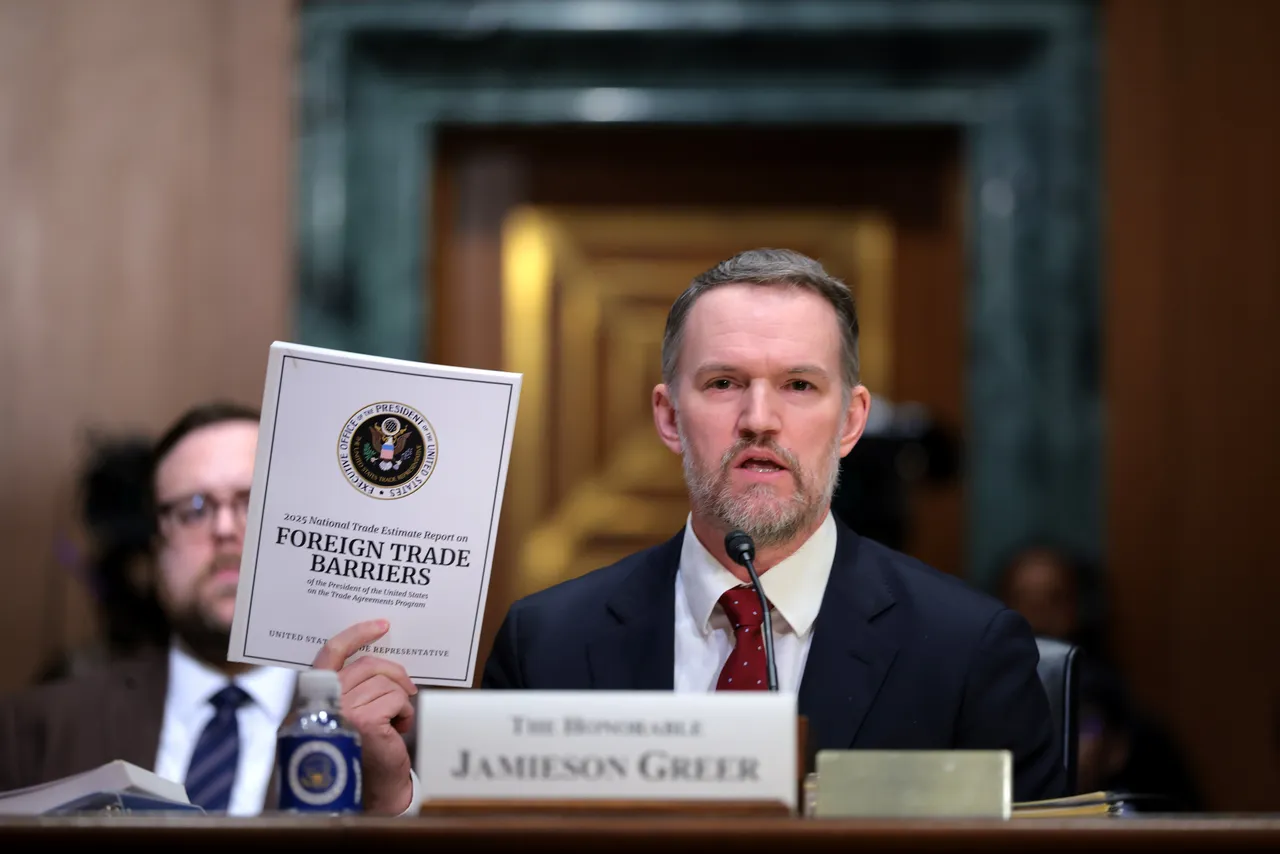
    Why The Trump Admin Shelved His Signature Trade Deal
    President Donald Trumps administration Wednesday decided not to renew his signature trade deal, saying there is more work to do. But while the administration continues to iron out wrinkles in
    0 Comentários 0 Compartilhamentos 18 Visualizações
  • YUBNUB.NEWS
    Trans Madman Planned Casino Massacre in Las Vegas, Huge Cache of Weapons Found
    A trans madman was arrested in Las Vegas Saturday on charges of making terroristic threats, assault with a deadly weapon, auto theft, gun theft and other offenses. The gunman, who identifies as Allison
    0 Comentários 0 Compartilhamentos 18 Visualizações
  • Rust's Common Ground update lets you set up clans, a shop, or kick back in your apartment
    Rust's Common Ground update lets you set up clans, a shop, or kick back in your apartment The July update for Rust, 'Common Ground' is finally here, bringing with it a set of patch notes and a huge amount of new features. Now, Facepunch is looking to its Monuments, adding two brand new ones: The Apartment Complex, which lets you rent rooms when getting started with a wipe, and Rentable Shops to...
    0 Comentários 0 Compartilhamentos 23 Visualizações
  • Gifts for the students gearing up for college
    Back-to-school gifts for college students Heading off to college is a big deal. For many, this is their first real taste of independence, a chance to figure out who they are away from mom and dad, and the entry point into a new phase of life. For as exciting as this all is, it can also be overwhelming. Back-to-school gifts for college students must expertly...
    0 Comentários 0 Compartilhamentos 29 Visualizações
  • WWW.LIVESCIENCE.COM
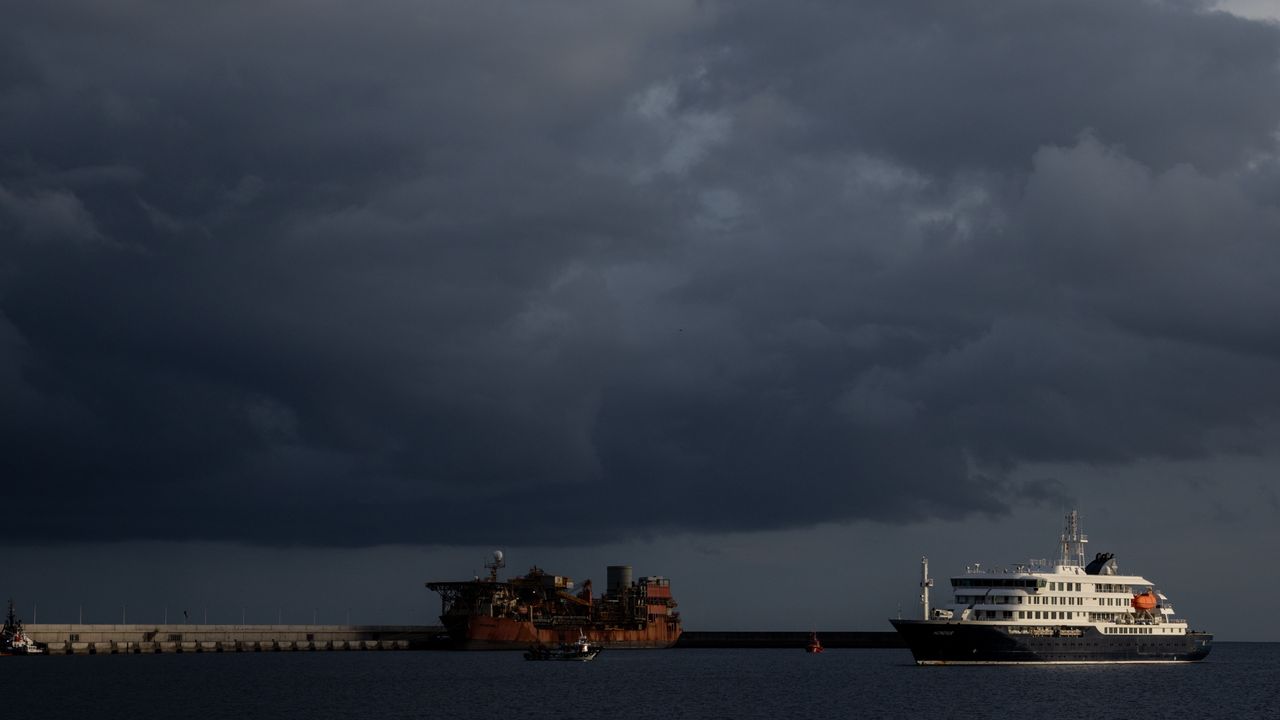
    The hantavirus outbreak is over, WHO declares
    The hantavirus outbreak that struck a cruise ship in April, killing three people and sparking fears of further spread, is over, the World Health Organization (WHO) has announced."Today, the final contact of a person exposed to hantavirus on the cruise ship MV Hondius completed their quarantine period, tested negative and returned home. No further cases have been reported since the 25th of May," Tedros Adhanom Ghebreyesus, the WHO's director-general, said in his opening remarks at a news conference Thursday (July 2). "We are therefore very pleased to say that WHO considers the outbreak of hantavirus over."The total number of cases linked to the outbreak was 13. All those affected were either passengers or crew on the ship.The outbreak began aboard the Dutch-flagged cruise ship MV Hondius after it departed southern Argentina on April 1. It involved the Andes virus, the only known hantavirus that can spread between people. Hantaviruses are rodent-borne viruses that are found in the Americas, Europe and Asia and spread to humans relatively rarely, usually via contact with the urine, droppings or saliva of infected rodents. The Andes virus, however, has sparked short chains of human-to-human transmission in the past. Before public health authorities were informed of the cases on MV Hondius, several dozen people disembarked the vessel on the island of St. Helena. To find them, authorities launched an international contact-tracing operation, tracking down more than 650 contacts in total who were then followed by health authorities in 33 countries and territories, according to the WHO.Additionally, health authorities coordinated the monitoring, care and transport of the remaining passengers and crew aboard MV Hondius.Of these contacts, those considered at the highest risk of infection were then quarantined and monitored for up to 42 days, because sometimes, hantavirus symptoms don't show up until weeks after exposure to the virus. Depending on their jurisdiction and degree of exposure, some contacts quarantined at home while others stayed in specialized facilities.The initial unchecked travel of some contacts, alongside the virus's long incubation period, prompted concern from the public that the cluster of cases could explode into an enormous outbreak, or even a global pandemic. Many infectious-disease experts emphasized that the Andes virus does not spread easily between people and that the containment effort was going well, so the risk of a large outbreak was low. Still, some experts raised concerns that the international travel of contacts could trigger pockets of the deadly disease, and some argued that the Andes virus does have "pandemic potential."Now, with the final contact having completed their quarantine period and no further cases reported, the WHO has declared the outbreak over. All of the contacts who were repatriated to the U.S. completed their quarantine period by June 21.Hantavirus outbreaks could become more likely as virus-carrying rodents expand their range, model finds'A disease anywhere can be a disease everywhere tomorrow morning': Public health expert on Ebola and the threat of future outbreaksEbola outbreak in Central Africa will be a nightmare to contain, experts warn"WHO will continue working with governments and partners to advance our understanding of this outbreak and of hantavirus more generally," Tedros said. "We are also coordinating a study involving 21 countries to understand how the disease develops, which will support the development of diagnostics, therapeutics and vaccines for future outbreaks." Besides rigorous contact tracing, the WHO credited the coordinated actions of national public health bodies as being vital to preventing the further spread of the disease. These measures included the response of the Spanish government, which created a safe zone on the island of Tenerife for the ship's remaining passengers to disembark before they were repatriated under quarantine. As the hantavirus outbreak concludes, there's an ongoing Ebola outbreak in the Democratic Republic of the Congo and an outbreak of the Marburg virus in Uganda. These and future outbreaks will require similarly robust international cooperation, the WHO emphasized."The outbreaks of hantavirus, Ebola and Marburg all show why there is no alternative to international cooperation in the face of international threats," Tedros said. "No country alone can fight."This article is for informational purposes only and is not meant to offer medical advice.
    0 Comentários 0 Compartilhamentos 18 Visualizações
  • WWW.THECOLLECTOR.COM
    How Were Japanese Marial Arts Invented (& Exported)?
    As the Meiji Restoration of 1868 saw industrialization and modernization sweep across Japan, many traditional ways of life were obliterated. The culture of the samurai was effectively destroyed, but their traditional non-armed fighting techniques, known as Jujutsu, would form the basis for many modern martial arts in Japan and beyond. Judo, Karate, Korean Taekwondo, and Brazilian Jiu-jitsu all share this common root.The Modernization of Japan and the Invention of Martial ArtsEmperor Meiji and his consort in the Plum Garden, by Kobayashi Kiyochika, 1887, note the Emperor is in Western-style military dress. Source: Wikimedia CommonsThe long 19th century (1776-1914) witnessed a tidal wave of national emulation and a stealthy Europeanization around the world. Against this backdrop, the Edo Period Japan (1603-1867) came to an end. In 1868, the Tokugawa Shogunate government was swept away by a coup dtat, the last Shogun was deposed, and a new Meiji Emperor was installed as the ruler of Imperial Japan.The Meiji Restoration was an era of change, with the rapid development of heavy industry and widespread administrative and political reforms. Many traditional ways of life, such as the martial way of the samurai,were effectively destroyed. While the samurai class gradually disappeared, their combat expertise found new avenues for expression. The samurai arts of fighting without weapons, collectively known as Jiujutsu, became recognized as valuable systems of physical training and were adapted for self-defense and recreational practice.Judo demonstration to the International Olympic Committee, 1935, Tokyo, Japan. Source: Wikimedia CommonsOn one hand, enterprising young Japanese men, intoxicated by modernity but enchanted by the lost culture of the samurai, sought to express Japanese culture through the invention of martial arts. On the other hand, as Japan was tasked with creating a combat-ready national army, its training was enhanced by Karate and Judo techniques.Karate and Judos international export led to the rise of other ancient martial arts such as Korean Taekwondo and Brazilian Jiu-Jitsu. These were also linked to the creation of a cultural identity, and while they may have drawn on traditional arts, they were recreated within a distinctly modern framework.Jigoro Kanos Scientific JudoJigoro Kano, Founder of Kodokan Judo. Source: Wikimedia CommonsJigoro Kano (1860-1938) was born in the last days of the Tokugawa Shogunate into a wealthy sake-brewing family of the (former samurai) shizoku class in modern-day Kobe, Japan. While he experienced strict discipline in his traditional samurai style at home, he also received a fine and varied education, preparing him to take advantage of the opportunities offered by the Meiji Restoration.Kano developed an interest in martial arts following severe bullying while at the prestigious Ikuei Gijuku school in Tokyo. The shame of failing to defend himself led to a keen interest in the jujutsu techniques of the samurai. While at Tokyo University, Kano trained with various jujutsu masters before ultimately blending elements of jujutsu, spiritual-physical philosophy, and Western science to create J-D (the gentle way).Jigoro Kano (left) and Kyuzo Mifune (right) practice Judo at the Kodokan, Tokyo. Source: Wikimedia CommonsThe Western scientific thinking Kano encountered at university left a strong impression on him. His Judo emphasized techniques based on a scientific, biomechanical understanding of the human body. He introduced a modern teaching syllabus and graded belt structure. He emphasized randoori (free sparing) as opposed to the traditional study of Kata (forms).Accordingly, the classical jujutsu principle of defeating strength through flexibility was transformed into a new technical and theoretical system based on maximum efficient use of energy. Above all, Kano aspired to make Judo an education for the body and the mind, as well as an aesthetic pursuit.Following the conclusion of his studies, Kano opened the Kodokan (place to teach the path) in Tokyo in 1882. He went on to become his countrys most important educator and a seminal figure in Japans modernization. Judo was the first Japanese martial art to gain widespread international recognition and the first to become an official Olympic sport in 1964.The Birth of KarateKarate training in front of Shuri Castle, Okinawa. Source: Wikimedia CommonsOkinawa, the Meiji modernizing unifying thrust left an indelible mark on Ank Itosu (1831-1915), an educated man of noble birth considered by most to be the father of modern Karate. During his early 20s, Itosu studied Okinawan martial arts under the instruction of master Bushi Matsumura (1809-1901), and the art of Tde (lit. Tang Dynasty Hand, a reference to Chinese martial arts). His training later extended to encompass other Okinawan styles, making him the first (known) master to have learned the arts later named Shuri-te, Naha-te, and Tomari-te.Itosu worked to fuse the various Okinawan combat styles into what would become known as Karate. He created the basic Katas (forms) called pinnans (the quiet way). He also nurtured a young student named Gichin Funakoshi (1868-1957), who would become a major contributor to the development of modern Karate.Masters of Karate, Tokyo, 1930s. Source: Wikimedia CommonsFunakoshi introduced Karate to mainland Japan through a demonstration of Kata and the philosophical and transcendental elements of Karate at the Kodokan in 1922, at the invitation of Jigoro Kano. Funakoshi modified Itosus teachings into his famous five maxims, transforming Karate-do from a martial combat into an art encompassing the values of respect, sincerity, and refinement of character. He further introduced the Twenty Principles of Karate-do (Shotokan Niju Kun), to augment the ethical dimension of Karate.In 1949, Funakoshi established the Japan Karate Association (JKA), bringing university clubs and schools under one umbrella, all aligned with his teachings. Today, the Shotokan style created by Funakoshi is the most widely practiced form of Japanese Karate.Taekwondo: From Japan to KoreaGeneral Choi Hong-Hi, principal founder of Taekwon-do. Source: Wikimedia CommonsWhile official histories of Taekwondo characterize it as an indigenous martial art directly born from the ancient Korean art of Taekkyon, Taekwondo is closely linked to Japanese Karate.The official origins of Taekwondo are linked to Choi Hong-Hi, a Korean War veteran, South Korean military General, and later defector to North Korea. Born in 1918 in Hwa Dae (now North Korea) during the dark period of Korean occupation by Japan (1910-1945), Choi made his way into the South Korean military and served as an officer during the Korean War (1950-1955). By his own account, he taught his fellow soldiers how to fight in a style that mixed Taekkyon with elements of Shotokan Karate that he had learned during his time living in Japan.Following the war, Choi is reputed to have continued refining and promoting his martial system, and in 1955, he officially named it Taekwon-do. Nevertheless, the martial techniques that gradually evolved into modern Taekwondo bear no real resemblance to Taekkyon.Painting of Taekkyon players, by Hyesan Yu Suk, 1846. Source: Wikimedia CommonsInstead, following the Korean War, Korean Karateka who had previously lived in Japan returned home to open their own training schools. Most proudly highlighted their lineage and used Korean translations of Karate (gongsu / dangsu) to describe their art. In contrast, Choi was almost alone in asserting a background to his teachings that was anything other than Japanese. Nevertheless, he is still considered the principal founder of the art that became an Olympic sport in 2000.From Judo in Brazil to Brazilian Jiu-JitsuJudo Journal: an article on Maeda and the origins of Gracie/Brazilian Jiu Jitsu. Source: Wikimedia CommonsIn the case of Taekwondo, the introduction of Japanese Karate to Korea was pivotal. A similar trajectory occurred when Mitsuyo Maeda, a Japanese student of Jigoro Kano, brought Judo to Brazil. But the tutelage of a prominent Brazilian family, the Gracies, and closely aligned with the fortunes of the proto-fascist Brazilian Integralist movement, the Judo that arrived in Brazil became Brazilian Jiu-Jitsu (BJJ).Around 1917, a young man named Carlos Gracie bore witness to a Judo demonstration by Maeda (under the name Count Koma) at Belms Theatro De Paz. Enthralled by the enigmatic Judokas prowess, Carlos is said to have promptly signed up to learn directly from Maeda, quickly becoming his most prized student.By 1925, Carlos took the step of founding the first Gracie School of Jiu-Jitsu in Rio de Janeiro. Yet, it was his younger brother Helio who would eventually become celebrated as the founder of Brazilian Jiu-Jitsu. According to Gracie legend, it was Helio who transformed and improved Jiu-Jitsu by introducing leverage to make it more efficient. Yet the intriguing question of precisely how Helio transformed Maedas Judo and how BJJ differs from the earlier form.The founder of Brazilian Jiu-Jitsu, Helio Gracie, 1952. Source: Wikimedia CommonsNevertheless, the Gracie family set off on a remarkable journey of their own. Helio and Carlos became famous for their open invitation Gracie Challenge matches to other martial artists to prove the supremacy of their Jiu-jitsu, greatly enhancing their reputation. They also helped inaugurate the founding myth of Brazilian Jiu-Jitsu: that through the mastery of force, leverage, and positioning, a smaller, physically weaker individual, Helio Gracie, could triumph over a larger, stronger adversary (a myth also taken from Judo).The impact of this notion turned out to be nothing short of revolutionary. At the inaugural event of the Ultimate Fighting Championship (UFC) in 1993 (a modern televised version of the Gracie Challenge), Helios son, Royce Gracie, proved beyond doubt that BJJ stood as the worlds most effective martial art. Today, BJJ is one of the fastest-growing combat sports in the world and remains the primary grappling art in Mixed Martial Arts (MMA) competitions. But much like Judo, Karate, and indeed, Taekwondo, Brazilian Jiu-Jitsu owes its roots to the late 19th-century modernization of Japan.

    0 Comentários 0 Compartilhamentos 18 Visualizações
  • WWW.THECOLLECTOR.COM
    Why the Republic of Texas Forced the Cherokee Out Forever
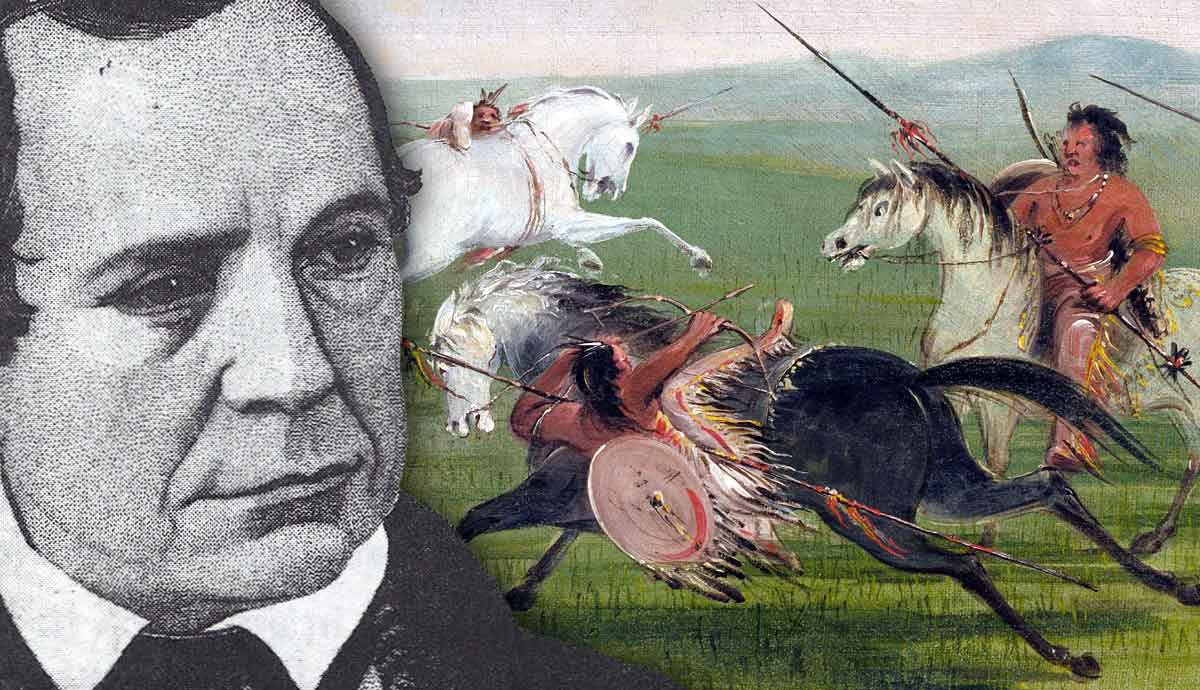
    Defeated exiles wandered into Texas, but could find no home there. Despite this, an indigenous Confederacy headed by the Cherokee Chief Diwali established itself in northeastern Texas as it gained independence from Mexico. Like their kinsmen in the United States, the leaders of the nascent Texan Republic did not take kindly to the Native Americans within their midst and would launch a brutal war of extermination to expel them.Texass Shifting Indian PolicyDaguerreotype of Sam Houston by Matthew Brady, c. 1848. Source: Library of CongressTexass first president was a Cherokee citizen who wanted no trouble between his new country and his adopted nation. Sam Houston spoke Cherokee and knew their customs well. He had both lived amongst them and fought at their side, and had married one of their own. Who better than him to negotiate with Diwali for his peoples neutrality during Texass struggle with Mexico, a neutrality faithfully maintained throughout the dire early months of 1836. It was something Sam Houston would not forget and through his first term as president of the Republic of Texas he forbade the more expansionist minded of his fellow Texians to harass their neighbors.But in the ascension of Mirabeau B. Lamar to the presidency in 1838 those tendencies were unleashed with a fury. Whereas Houston proclaimed the Texians only wanted Diwali and his people to live in peace, Lamar, born of Georgia slaveholders with a romantics penchant for poetry, abjectly refused to condone such coexistence within the confines of the Republic of Texas. It was the culmination of a 25-year struggle for tribal recognition in Texas.The Origins of an Indigenous ConfederacyChief Bowles, Chief of the Texas Cherokee by William A. Berry. Source: Oklahoma Historical SocietyBy 1820, the Indian peoples east of the Mississippi were beset. Expansion westward was the name of the American game, and through war and broken treaty they had left many indigenous peoples bereft of the lands of their ancestors. Many resisted and all were ultimately crushed. Those who sought to assimilate by adopting American ways of dress, government, and social graces, suffered a similar fate and were forced westward on what would become universally known as the Trail of Tears.But there were many such trails. Beyond the Sabine river Texas beckoned. Tens of thousands of acres of fertile country sparsely populated by a frontier community of hardy Tejanos, prone to the raids of Comanches and Apaches from the west, were opened to a select few colonists by the Mexican authorities. Amongst the would-be settlers was a man known to future Texians as Chief Bowles, but to his own people as Diwali.Born in the mid-18th century when the Cherokee could still claim to control a vast stretch of territory from the Ohio River to northern Georgia, Diwali had been a migrant for decades, carrying his people ever westward to avoid the encroachments of the Americans. In Texas he hoped to achieve what American empresarios achieved, and gain land recognition for his people from the Mexican government. But the Mexicans dithered, and Diwalis band began to morph into something bigger: an independent confederacy.Trail of Tears National Historic Trails. Source: US National Parks ServiceAfter uniting several Cherokee villages into a council with himself at its head, Diwali began to attract the refugees of a dozen other tribes throughout the 1820s and 1830s. These decades witnessed the height of tribal evictions, forcible removals of entire nations at the barrel end of American muskets dispatching tens of thousands of native peoples from the lands of their birth.In northeastern Texas elements of the Cherokee, Shawnee, Kickapoo, Delaware, Alabama, Quapaw, Choctaw, Coushatta, Caddo of the Neches, Biloxi, Ioni, Mataquo, and Tahocullake, banded together in a loose alliance based on mutual support under the wide authority of Diwali. Such was their growing presence that by the mid-1830s Mexican authorities were at last making overtures towards recognition when the Texas Revolution got in the way. A revolution that would forge a nation bent ultimately upon the ruin of Diwali.An Intolerant RepublicLamar letter of February 28, 1839, calling for volunteers to fight the Cherokee. Source: Texas State Library and Archives CommissionDiwalis confederacy was powerful enough to worry the Texians in the midst of their war with Mexico and prompted them to send Sam Houston to negotiate a treaty with Diwali at the dawn of 1836. The agreement recognized the confederacys existence and defined its territorial boundaries. But Houstons word was not good enough, for the Texian government rendered the treaty null and void after the threat of Mexico had passed.For the next two years Houston strove manfully to honor his agreements. In February 1836 he wrote to Diwali, All the good men [of Texas] wish you to have no troubleand live upon your lands in peace. (The Writings of Sam Houston 18131863: Volume I 18131836, pp. 355-356). But what of the bad men of Texas?The Texas that emerged from 1836 was vulnerable from both within and without. Its borders were ill defined and easily penetrated. From the west, Comanche and Apache raiders could strike as deep as the streets of Houston, and retire just as quickly. From the south, Mexico was desperate to reverse the humiliation of San Jacinto. Rumors of Mexican agents seeking to rouse rebellion amongst the Tejanos were rampant. With threats on two fronts, the presence of Diwalis people within Texas was not to be tolerated, and in 1839 that toleration came to an end.The Ruin of Diwali at the Battle of the NechesTejanos from Frank Leslies Illustrated Newspaper, January 15, 1859. Source: The Portal to Texas HistoryThe accommodative policy towards Diwali came to an end as Mirabeau B. Lamar assumed the presidency of Texas. He inherited a land rife with intrigue. The year 1838 had seen open conflict between Texian and Tejano communities near Nacogdoches as rifts began to develop amongst the Republics own citizenry. Operating under the belief that the Tejanos were secretly being incited to rebel by Mexican agents when a group of Nacogdochens went looking for a lost horse, they came upon a group of Tejanos armed and in league with warriors from Diwalis Confederacy.Houston, then still president, and present in the town at the time, forbade any confrontation, but he could not prevent the continued violation by Texian settlers of the frontiers demarcated in his treaty with Diwali. The following spring, Lamar unleashed Texian troops to deal with any Tejanos sympathetic to Mexico. This minor rebellion, known as the Cordova rebellion, was short lived, but documents discovered upon Mexican agents pointed to correspondence between the rebels and Diwali.This was all the excuse Lamar needed to declare war. At the end of May he issued an ultimatum to Diwali, declaring the people of Texas can recognize no alien political power within their borders (The Papers of Mirabeau B. Lamar. Volume II, p. 593). The fact the Cherokee had resided in Texas for 20 years mattered not. Initially willing to compensate Diwali for their lands, Lamar sang a different tune when his letter went unanswered.Mirabeau B. Lamar of Texas by J. B. Forrest, 1850. Source: San Jacinto Museum and BattlefieldBy July he had assembled over 500 volunteers to press the issue by force if necessary. On July 12, a meeting between the Texians and Diwali yielded no results other than confirmation of the imminent outbreak of hostilities. Diwalis tragic plight was remembered in Texian accounts as consisting of two impossible options. Should he seek to fight the Texians would kill him, but if he submitted his own warriors would slay him. At the age of 83, a wanderer without a home and the threat of violence before him, Diwali turned away from the council, his fate sealed.On July 15, the Texians under Brigadier General Thomas Jefferson Rusk, a hero of San Jacinto, advanced across the Neches River. Retreating before the oncoming Texians, the old warrior lured them along the riverbank until settling in a dry creek bed anchored upon its banks. The Texians faced an uphill fight but were assailed by their adversaries in a rush that was swept back in a blaze of gunfire. The running fight that followed carried on for miles, burning through most of the daylight. Diwali himself was resplendent upon a white horse in the very midst of the battle, a magnificent picture of barbaric manhood, one Texian remembered (Reagan, p. 32).Thomas Jefferson Rusk. Source: US Senate Historical OfficeThat night the Cherokee withdrew, and again the Texians took up the chase. Come dawn, Diwali was brought to bear once more near the headwaters of the Neches. Pinned by Texian fire whose intensity increased as the fighting progressed, Diwali remained in the saddle before a bullet tore through his thigh. As he dismounted, a second ball slammed into his back. The aged warrior was finally finished off by a bullet to the head at point-blank range as he rested against a tree.With his demise came the turning of the tide. Unable to withstand the Texian onslaught with their chieftain shot through before their very eyes and some 100 warriors already reddening the soil, the surviving Cherokee, Delaware, Shawnee and Kickapoo took to their heels. With them went the last hope of a Cherokee Texas. The Texians admitted to the low cost of five dead and three dozen wounded for their victory.The Legacy of the Cherokee WarMap of the Republic of Texas by Thomas G. Bradford, 1838. Source: The University of Texas at Arlington Libraries Special Collections, Gift of Virginia GarrettThe Battle of the Neches established a pattern that was to be maintained by the Lone Star Republic throughout its independent existence: Indian removal was the law of the land. This is not surprising given the climate of the 1830s when Jacksonian policies of removal swept thousands upon thousands of native peoples westward to what is now Oklahoma. As the Texas Republic was effectively a satellite of the United States, its civilian and military leadership naturally carried the same prejudices.This included the doctrine of manifest destiny. Texas may have been wrestled from the Mexicans by force but it was to be a republic for only a select few, and a republic which was hellbent upon expansion. Lured on by the rapidity of their victory over Diwali in the summer of 1839, Lamar would embroil Texas in ever more devastating Indian wars. But in pursuit of this policy he greatly misstepped.Unlike Diwalis rather sedentary confederacy, a numerically finite polity whose villages were easily assailed by the Texians, the Comanche were to be an altogether different story. They were far-reaching horsemen who could project their power into the very heart of Texas, indeed Mexico, if they felt like it. Lamar sought to curb that power by striking the head from the snake the year following his destruction of the Cherokee.Comanche feats of horsemanship by George Catlin, 1834-1835. Source: Smithsonian American Art MuseumThe resultant war saw one of the largest Comanche raids in history, one that carried itself all the way to the Gulf coast with the Texians able only to hit the withdrawing Comanche on their route homeward. The running fight that followed could hardly be called a Texian success and exposed the wider military weaknesses of a young republic overplaying its hand.Yet Lamar remained heedless of the consequences. Expeditions launched towards Santa Fe and the goading of Mexico upon the seas by the minuscule Texian navy would send Texas down a path of near bankruptcy and war. A war that Lamar neatly sidestepped when his term of office ended in 1841, and Sam Houston once again stepped forward to deal with its consequences.Texas may have won its independence from Mexico, but it was hardly a republic of liberty. The new Texan state reflected larger American societal trends especially as they related to American Indians.SourcesThe Writings of Sam Houston 18131863: Volume I 18131836, eds. Amerilia W. Williams and Eugene C. Barker. (Austin: University of Austin Press, 1938).The Papers of Mirabeau B. Lamar. Volume II, eds. Charles Adams Gulick Jr. and Katherine Elliot. (Austin: A.C. Baldwin and Sons, 1922).Reagan, John H. Memoirs, with special Reference to Secession and Civil War. (New York: The Neale Publishing Company, 1906).
    0 Comentários 0 Compartilhamentos 18 Visualizações
  • 0 Comentários 0 Compartilhamentos 21 Visualizações