0 Commentarios
0 Acciones
220 Views
Directorio
Elevate your Sngine platform to new levels with plugins from YubNub Digital Media!
-
Please log in to like, share and comment!
-
How A 1947 Drive‑in Became A Hollywood Icon And Celebrity HangoutHow A 1947 Drive‑in Became A Hollywood Icon And Celebrity Hangout...0 Commentarios 0 Acciones 3K Views
-
WWW.LIVESCIENCE.COMKanzi the bonobo could play pretend a trait thought unique to humansPast anecdotal observations have hinted that great apes play pretend. But now, experimental research shows that our closest living relatives can keep track of imaginary objects.0 Commentarios 0 Acciones 251 Views -
WWW.IFLSCIENCE.COMStunning Slime Molds, Captivating Corals, And Fantastic Frogs: The Close-up Photographer Of The Year Winners Are Here"This was the toughest competition yet."0 Commentarios 0 Acciones 251 Views -
WWW.IFLSCIENCE.COMCan Bonobos Play Pretend? Watch Kanzi's "Tea Parties" To see What They Reveal About Primate ImaginationAin't no party like a bonobo tea party.0 Commentarios 0 Acciones 248 Views -
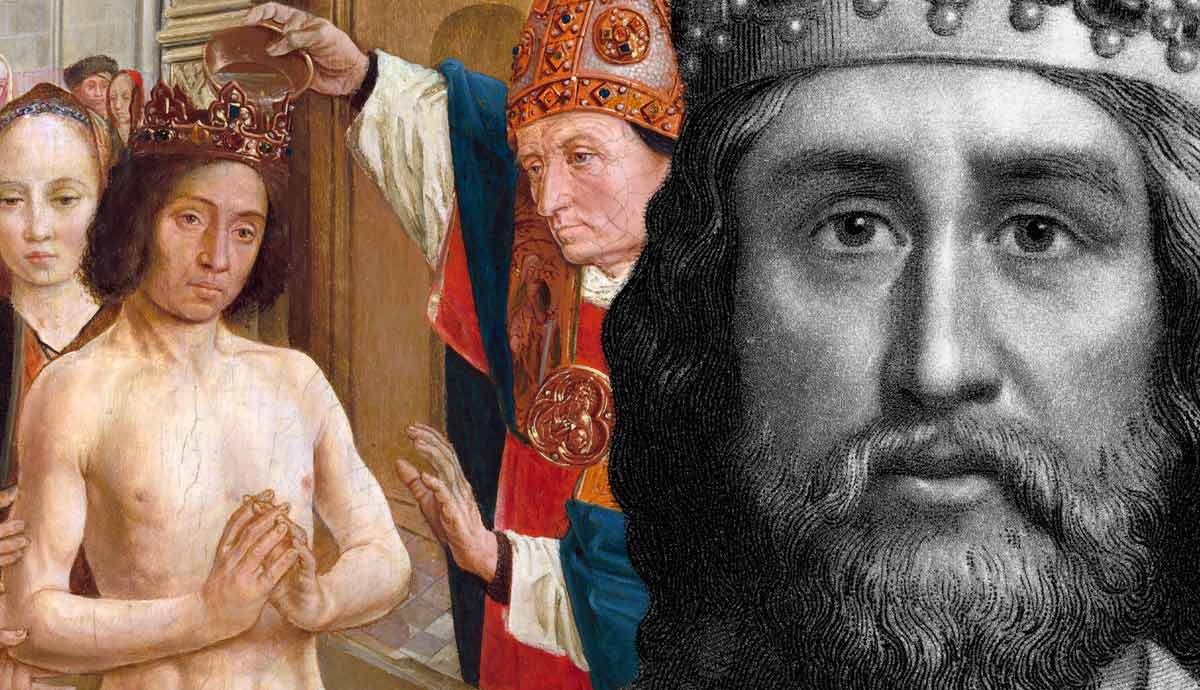
WWW.THECOLLECTOR.COMHow the Reforms of Charlemagne Birthed the Carolingian RenaissanceThe time between the fall of the Western Roman Empire in 476 CE and the Renaissance in the late 15th century CE is often categorized as a Dark Age. This highly misleading name reflects the perception that this was a period of cultural decay, stagnation, and malaise. This results from the confusion that fell on Europe following the fall of Rome, but it did not take almost a thousand years for European culture to recover. The legendary Frankish king Charlemagne spearheaded efforts to stabilize the political, economic, military, and cultural chaos after Romes collapse. This led to a period of cultural revolution between 750-900 CE known as the Carolingian Renaissance.The Franks Take RomePortrait of Emperor Charlemagne, by Johann Jakob Kirchner, c. 1820-1837. Source: British MuseumThe Roman Empire reached its height in the 2nd century CE, and then began a slow and painful decline. After near constant civil wars, economic crises, and barbarian invasions, the empire split between the Eastern half centered on Constantinople, which would continue to exist until the 15th century, and the Western half centered on Rome, which limped on as pieces were hacked off by invading Germanic tribes. In 476 CE, the final deathblow was struck when Odoacer, a Germanic chieftain, overthrew Romulus Augustulus, the last Western Roman Emperor. For all practical purposes, this act ended the Western Roman Empire and signaled the beginning of the Middle Ages. The Roman Empire, once the dominant power in Europe, was divided among migrating tribes such as the Goths, Vandals, and Saxons.One of these migrating tribes was the Franks. They first appear in the historical record in the 3rd century CE. As Rome crumbled, they carved out their own territory in Gaul, modern-day France and Belgium, displacing other barbarian groups who were also migrating for more land. While many of the Germanic tribes had converted to Arianism, a heretical branch of Christianity, the Franks were still pagan. The Catholic Church, now taking on the burden of administration left behind by the dying Romans, convinced Frankish king Clovis to convert to Christianity. With his conversion, the relationship between the Catholic Church and the Franks was secured.The Baptism of Clovis, by the Master of Saint Giles, c. 1500. Source: National Gallery of Art, WashingtonClovis was part of the Merovingian dynasty, which extended its territorial holdings to include most of what is now France and eastward past the Rhine into Germany. By the 8th century, the Merovingian dynasty was replaced by the Carolingian dynasty, including their most famous member, Charlemagne. Working with the Church, he began the seemingly insurmountable task of bringing order to Europe in the wake of Romes collapse. Even centuries after its fall, Europe had not recovered and was gripped by confusion and disunity. His efforts would kick off the Carolingian Renaissance, a rebirth of culture and political stability that dragged Europe out of the morass of Romes fall.Silver and SteelEnamel plate of the knight Roland, by Colin Nouailher, c. 1541. Source: Metropolitan Museum of ArtAs a Germanic Frankish king, Charlemagne was expected to be a warrior, leading his armies against the enemies of his realm. Fortunately, there was no shortage of these, and he spent a large portion of his reign in the field. His campaigns took Frankish armies across the Pyrenees into Spain to fight the Muslim Umayyad Caliphate, which was immortalized in the epic poem The Song of Roland. He also turned his attention south to northern Italy, where he fought the Lombards. His greatest rivals, however, were the Saxons in Germany. These pagans were a constant headache for Charlemagne, and his battles against them were brutal, with thousands dying over several decades.To build a military to fight these threats, Charlemagne relied on an early form of the feudal system that would later characterize the socio-economic and political situation in Europe during the Medieval era. In theory, all freemen were liable to be called up for military service and had to provide their own equipment at their own expense. To sustain these men, especially armored horsemen, a proto-version of knights, they would be given land grants that provided income and resources. Local areas were overseen by counts, a class of nobility that answered to the king and represented Charlemagnes authority. These lands helped fund the crown through a series of taxes, tolls, and other fees.Silver coin minted during Charlemagnes reign, c. 768-814. Source: British MuseumFor this system to make any kind of sense, there needed to be economic stability. During Romes decline, inflation and economic instability contributed to the empires fall. The wake of this collapse led to a convoluted system of coinage that was better at giving accountants headaches rather than fostering trade.Picking up where his father left off, Charlemagne standardized the coinage of the kingdom, basing it on silver. The coinage would be standardized into a duodecimal system. Meaning one twelfth in Latin, coins would be based on the denier, twelve of which would equal one sous. Twenty sous would equal one livre. This remained in place, more or less unchanged, until the French Revolution. Coins would be made to a standard size and weight at designated royal mints to ensure quality, prevent counterfeiting, and keep the precious metal content consistent. With the military and economic reforms, the Frankish kingdom was able to focus on other matters that brought about a Renaissance of culture and learning.Centers of LearningGospel Book, Carolingian, c. 825-850. Source: Metropolitan Museum of ArtOne area that Charlemagne was consistently concerned with was promoting literacy. After Romes fall, the literacy rate dropped. Literacy was kept alive through the monasteries, with monks copying as many ancient texts as possible to preserve their knowledge. Charlemagne knew the power of writing and encouraged the learning of written Latin. This was done to streamline administration and for liturgical purposes, enabling clerics and priests to read and understand the material they were preaching to their flocks. Schools were established and repaired, and more students were enrolled to learn.With more people able to read and write, administration was streamlined, and people living in distant parts of the ever-growing empire were able to communicate with one another more easily. Sending a letter is simpler than having a messenger memorize a message or speak face-to-face after traveling hundreds of miles. In addition to the schools, a Scriptorium was established, a center for the copying and writing of books.Gospel book showing scripta discontinua, Carolingian, c. 825-850. Source: Metropolitan Museum of ArtDuring Charlemagnes reign, there were many innovations to the written word that made reading easier. In ancient times, Latin would be written using a process called scripta continua. This meant that all the words would be written in a continuous stream. During the 7th or 8th centuries, Irish monks developed a system called scripta discontinua. This simply means that a space would be placed between each word. If you are reading this, you can understand how this simple innovation makes reading easier. This era also saw the use of the period, the comma, and the question mark, though they were a bit different than the punctuation marks used today. Still, these symbols added nuance to a manuscript that would otherwise be difficult to interpret.This educational reform was overseen by a group of scholars whom Charlemagne gave precedence within his court. These men came from around Europe, especially from Italy, Ireland, Spain, and England. The most prominent of these was an Anglo-Saxon cleric from Northumbria named Alcuin. This monk wrote works on the lives of saints, Biblical commentaries, and religious tracts, and was well versed in geometry, astronomy, rhetoric, and other subjects. With these intellectual powerhouses directly influencing the king, its no wonder that education within the Frankish kingdom became some of the best in Europe.Patron of the ArtsOne of a pair of Gold Earrings with garnets, Frankish, c. 8th century CE. Source: Metropolitan Museum of ArtWith the military situation under control, the economy stabilized, and ever-increasing literacy, the Franks were able to devote time to artistic pursuits. The new wealth and stability enabled Charlemagne, his nobles, and clergy to patronize artists, bringing sophistication and beauty. The Franks already had an artistic tradition. Like other Germanic tribes, they had a great fondness for metalwork, especially in silver and gold, and if possible, these would be encrusted in colorful gemstones. These would be used to embellish jewelry or weapons and given as gifts by the higher classes in society to their subordinates as a way to reinforce bonds of loyalty. This tradition continued under Charlemagne, but with a new twist.Because of Charlemagnes close association with the Catholic Church, religious items were adorned with fine metalwork and jewels. These included holy books, reliquaries to house relics, chalices, crosses, and other religious items. Carved ivory figurines and paintings depicting the human form were also a common expression of Carolingian artwork. Even the books themselves would be decorated, with the innovation of illuminated manuscripts, books whose pages were richly illustrated with vibrant colors and exquisite calligraphy. These items would be given as gifts by Charlemagne to monasteries that he patronized in a similar way as a jewel-encrusted sword would be given to one of his warriors.A Medieval French reliquary, from c. 1180-90. Source: Metropolitan Museum of ArtIn addition to art, architecture was also revived during this period. It borrowed heavily from the Byzantine Empire as well as the classical world. Churches and monasteries were made featuring columns and were round or octagonal in shape, with domed roofs supported by barrel vaults. One surviving example, the Palatine Chapel in Aachen, Germany, was the seat of Charlemagnes power and still contains his throne. It inspired other palace and church designs throughout Europe in the coming centuries.It All Falls ApartPlaque with Enthroned Virgin and Child, Carolingian, Elephant Ivory, c. 850-875. Source: Metropolitan Museum of ArtIn addition to these reforms, Charlemagne also centralized the government, standardized the legal system, and implemented other policies that helped to bring order to chaos. The stability created by his reign led to the Carolingian Renaissance, which saw a level of cultural advancement and sophistication that had not been seen since the glory days of the Roman Empire. Over the coming centuries, the innovations made under Charlemagnes reign would inspire art, architecture, and learning throughout Europe. His government reforms laid the groundwork for the feudal system, and variants of his economic policies would become the norm that others tried to emulate. Still, despite his efforts, this wasnt enough to save the Frankish kingdom.When Charlemagne died in 814, the kingdom was split between his sons, dividing the once mighty empire into separate, smaller nations. At the same time, there were a number of outside threats, such as the Saracens and the Vikings. The Norsemen fell on Europe, and the now rich monasteries were an easy target for their raids. It would take several centuries to finally end this threat, and it was a major blow to the advancements made during Charlemagnes time on the throne.0 Commentarios 0 Acciones 215 Views -
The Rust Naval update is just the start of an exciting year, as Facepunch promises to keep "evolving" with a new roadmapThe Rust Naval update is just the start of an exciting year, as Facepunch promises to keep "evolving" with a new roadmap As the Rust Naval update finally sails into port, you'd be forgiven for assuming developer Facepunch Studios was ready for a break. More than 12 years on from its initial early access launch, the biggest survival game on Steam still hasn't run out of ideas, and we've...0 Commentarios 0 Acciones 3K Views
-
Tesla driver’s chilling 911 call transcript: ‘It’s on fire. Help please.’Tesla driver's chilling 911 call: ‘It’s on fire. Help please.’ A new lawsuit has shed a terrifying light on a Tesla driver's death in October 2025.Bloomberg reported on the wrongful death lawsuit, which is centered around 20-year-old Samuel Tremblett, a driver who passed away after a collision involving a Tesla Model Y SUV in October...0 Commentarios 0 Acciones 3K Views
-
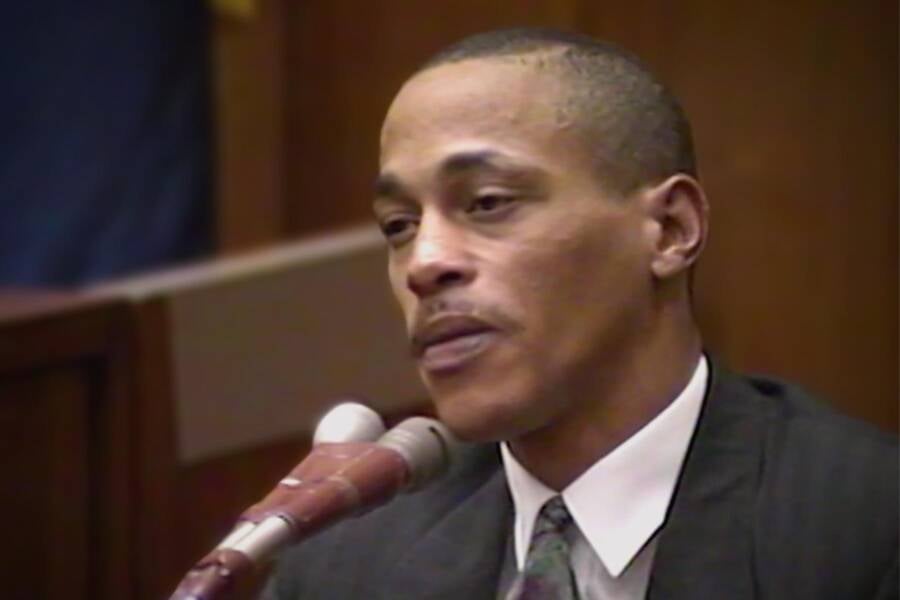
ALLTHATSINTERESTING.COMThe Tragic Story Of Tracy Edwards, The Only Man To Escape From Jeffrey Dahmers Deadly ClutchOn the night of July 22, 1991, a Milwaukee patrol car stopped when a handcuffed man flagged the vehicle down on the street in a panic. The man told the officers that his name was Tracy Edwards and someone had just tried to murder him.Edwards led police back to the apartment from which hed fled, and they were hit with a rancid smell when they entered. Upon further investigation, they found preserved human heads, mutilated body parts, and photographs of nude, butchered men.Tracy Edwards spent four hours in Jeffrey Dahmers apartment before he could escape, and the trauma stuck with him forever.The apartment belonged to Jeffrey Dahmer, one of historys most infamous serial killers, and Edwards had just toppled the first domino that would put him behind bars.But despite leading police to Dahmers apartment and later testifying against the killer in court Edwards life remained forever changed after the encounter. He was unable to return to the life hed once known, and he was later arrested multiple times for drug possession, theft, property damage, bail jumping and eventually murder.Recently, Edwards name was once again in the spotlight due to his portrayal in Netflixs Monster: The Jeffrey Dahmer Story, but his current whereabouts remain unknown.This is his story. The Night Tracy Edwards Met Jeffrey DahmerOne evening in the summer of 1991, Tracy Edwards was drinking with his friends at Grand Avenue Mall in Milwaukee when he was approached by a man named Jeffrey Dahmer. The two spent some time chatting and getting to know each other, then Dahmer suddenly propositioned Edwards, inviting him back to his apartment to watch The Exorcist, have a few beers, and perhaps pose for some nude photos in exchange for money.Enticed by the offer, Edwards followed Dahmer home. But almost immediately, Dahmers demeanor changed. Dahmer handcuffed Edwards, held him at knifepoint, and at one point even laid his head on Edwards chest and threatened to eat his heart. Curt Borgwardt/Sygma/Sygma via Getty ImagesJeffrey Dahmer murdered 17 men and boys between 1978 and 1991. He also raped some of his victims and cannibalized their bodies.For four hours, Tracy Edwards sat handcuffed in Dahmers apartment, pleading with the killer to spare him. Dahmer refused, but he had put handcuffs on only one of Edwards wrists, and this eventually enabled him to escape and make a break for it.Edwards fled Dahmers home, running down the streets of Milwaukee with the handcuff still dangling from his arm until he came upon a patrol car. Flagging it down, he explained to the officers that Dahmer had tried to murder him and led them back to Dahmers apartment.The officers, however, werent prepared for what they would discover.Inside Dahmers apartment, they found the dismembered body parts of 11 men littered throughout. There were boxes of body parts, torsos hidden away in a barrel of acid, and three human heads stored in the refrigerator.Tucked away in one drawer, they found photographs Dahmer had taken of his victims at varying stages of undress and mutilation.Jeffrey Dahmer was arrested, but the story he shared with Edwards was far from over.Edwards Testimony Helps Put The Milwaukee Cannibal Away And Brings Him Unwanted AttentionHe underestimated me, Edwards said of his escape from Dahmers house. God sent me there to take care of the situation.Following Dahmers arrest, Tracy Edwards was hailed as a hero the man who finally brought down the Milwaukee Monster. But as PEOPLE reported, Edwards newfound fame did anything but make his life easier.Tracy Edwards testifies in court in 1992He made an appearance at Dahmers 1992 trial, testifying against the killer and telling the court that the traumatic experience had ruined his life. He described his night in Dahmers apartment, and that testimony ultimately played a role in Dahmer receiving 15 consecutive life sentences. With his face in newspapers countrywide and the national attention surrounding Dahmers trial, Edwards essentially became a household name.Unfortunately, that recognition came at a cost. Police in Mississippi recognized Edwards face and connected him to the sexual assault of a 14-year-old girl in the state. They extradited Edwards in order to charge him with the crime.Edwards later returned to Milwaukee and sued the city police for $5 million for not following up on the numerous tips that had come in about Dahmer before July 1991 but the lawsuit was thrown out of court.EUGENE GARCIA/AFP via Getty ImagesIn 1994, only two years into his 957-year sentence, Jeffrey Dahmer was killed by fellow inmate Christopher Scarver.A later class action suit that awarded restitution to the family members of Jeffrey Dahmers victims also curiously left Tracy Edwards out. My guess is he wanted no part of it, Edwards lawyer Paul Ksicinski said. He didnt want anything to remind him of what had happened. It was just too much I mean, his life was completely destroyed.How One Night With Dahmer Ruined Tracy Edwards LifeFollowing Dahmers arrest, trial, and ultimately his death, Tracy Edwards string of bad luck continued. Upon returning to Milwaukee, he struggled to hold down a job or find a stable home, spending most of his time in and out of different homeless shelters.According to Ksicinski, to cope with the trauma, Edwards abused drugs and drank alcohol excessively. He had no home. He just drifted from place to place.Almost 20 years to the day after he escaped Jeffrey Dahmers apartment, Tracy Edwards was accused of pushing a man to his death off a bridge.Reports show that Edwards was homeless from 2002 on, and he racked up a litany of charges involving drug possession, bail jumping, and theft, among others. He lived on the unnoticed outskirts of society until one event in 2011 brought him back into the public eye.Tracy Edwards was arrested on July 26, 2011, after he was accused of helping someone throw another man off a Milwaukee bridge.Paul Ksicinski later said, however, We always took the position that he did not throw anyone over. This was, in fact, a friend of his. They were all homeless, and they were, unfortunately, abusing alcohol. He was trying to pull him back off the bridge. The people who had seen it didnt really have, in our viewpoint, the best ability to see what had happened.Milwaukee County Police DepartmentPaul Ksicinski last saw Tracy Edwards in 2015 after he spent more than a year behind bars. His current whereabouts are unknown.Ultimately, Edwards was charged with homicide, but he later pleaded guilty to the reduced charge of aiding a felon, landing him a sentence of a year and a half. He served his time, but he has since disappeared from public view.He called Dahmer the devil, Ksicinski said. He never sought any kind of psychological or psychiatric treatment for what happened to him. Instead, he chose to self-medicate with alcohol and drugs on the street Tracy didnt ask to be a victim of Dahmers People suffer incredibly traumatic events, and its different for every person in terms of how they handle it.Actor Shaun Brown, who portrays him in Netflixs Monster, later tweeted his support for Tracy Edwards, writing, I have so much love for Tracy Edwards Empathy and awareness can create heaven on Earth if we allow it.Ultimately, it would be unfair to call Edwards a near-victim of Dahmer. He wasnt among the 17 men and boys who Jeffrey Dahmer killed, but his life was forever altered, and ultimately ruined, because of Dahmer.Tracy Edwards is still a victim.After learning about how Tracy Edwards helped put Jeffrey Dahmer behind bars, learn about Dahmers father Lionel and mother Joyce. Then, read the story of Tyria Moore, who cooperated with police to put her murderous girlfriend behind bars.The post The Tragic Story Of Tracy Edwards, The Only Man To Escape From Jeffrey Dahmers Deadly Clutch appeared first on All That's Interesting.0 Commentarios 0 Acciones 216 Views -
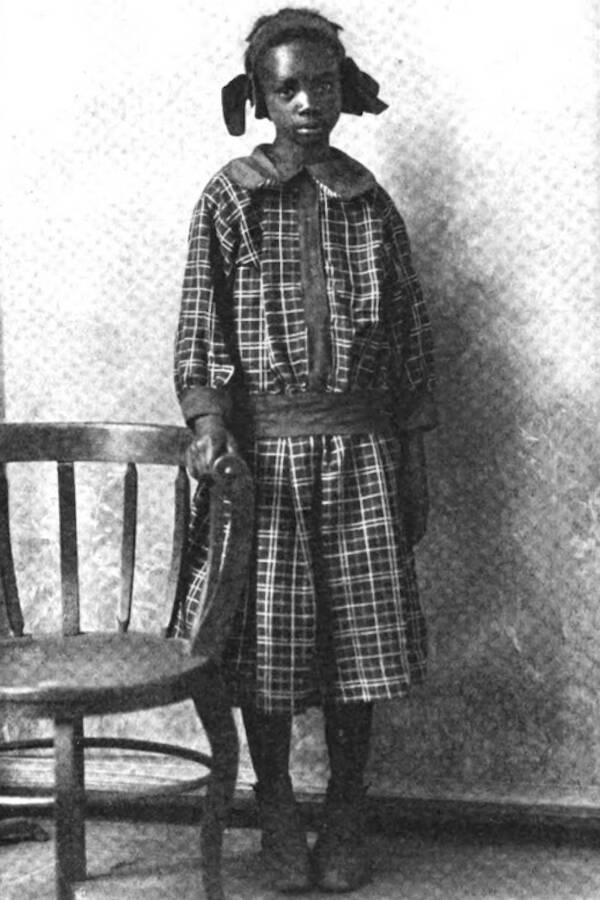
ALLTHATSINTERESTING.COMThe Unlikely Story Of Sarah Rector, The Oklahoma Teenager Who Became A Millionaire Oil BaronIn 1913, 11-year-old Sarah Rector became the richest Black girl in America. She had been born into poverty as a member of the Muscogee Nation in Oklahoma in 1902, and received, as did every member of the Nation, a plot of undesirable land in the territory when it was made a state in 1907.But unbeknownst to anyone else at the time, Sarahs land had a wealth of oil sitting just below the surface. Eventually, it netted her upwards of $8,000 per day in todays currency. And, perhaps most remarkably for the time, Sarah Rector was able to keep just about all of it.Wikimedia CommonsThrough sheer chance Sarah Rector became one of the richest children in America.By the time she moved to Kansas City in her late teens, Sarah Rectors net worth was estimated to be greater than $1 million over $28 million today spread between oil fields, 2,000 acres of farmland in Oklahoma, and investments in numerous businesses in Kansas City. Her story spread throughout the national news, with both Black and white papers dubbing her The Richest Negro Girl in the World. Sarah Rector Was Descended From Enslaved People In The Muscogee NationNational ArchivesA typical cabin for Creek Freedmen on Muscogee (Creek) Nation land in Oklahoma, similar to where Sarah Rector would have been born.Sarah Rector was born on March 3, 1902 in what is now Taft, Oklahoma. Back then, it was known as Twine, Indian Territory, since Oklahoma had not yet been incorporated as a state. The town belonged to the Muscogee (Creek) Nation, and was one of several all-Black towns set up specifically for descendants of Africans enslaved by the Nation prior to the Civil War.Mollie McQueen, Sarahs paternal great-great-grandmother, was enslaved by Creek Chief Opothleyahola in Alabama. When his people were forced west of the Mississippi by the U.S. government, the chief took his enslaved workers with him.When the Indian territory where Rector was born became Oklahoma in 1907, the federal government granted each member of the Creek Nation a land allotment, including descendants of people enslaved by the Nation like Sarah Rector.Like most other dealings the government had with Native Americans, it was not entirely honest. The land allotments were usually rocky and unsuitable for farming, while more arable lands were sold to white settlers. Sarahs land, totaling 160 acres, was valued at a mere $556.50, roughly $15,000 today.Moreover, Sarahs parents, Joseph and Rose, were also forced to pay a land tax of $30 per year on their daughters property. This was a burden that became so great that Joseph attempted to sell Sarahs land, but was blocked from doing so by state law, which forbade the sale of lands belonging to minors. Ironically, this government prohibition proved to be the familys greatest blessing.How Sarah Rector Struck It Rich In The Oil IndustryThe Wichita BeaconNewspaper articles about Sarah Rector spread throughout America and were filled with the overt racism of the era.Since he could not sell the land, Joseph Rector decided to lease it out to a Pittsburgh oil company. At the turn of the 20th century, the Indian Territory was the countrys biggest oil producer. After Oklahoma earned statehood in 1907, the new state continued to draw drillers to the area hoping to get lucky. Then, in the fall of 1913, an independent driller struck liquid gold on Sarah Rectors land, bringing the family royalties of $300 per day, about $8,000 today. Some estimates place Sarah Rectors net worth at the time at $1 million, or about $28 million today. One newspaper dubbed her the richest negro in the world.Under the laws of the time, black parents were not automatically given guardianship of their own children. They had to petition a court to obtain it or otherwise request a white guardian. Sarahs parents had selected a white guardian for her: Thomas Jefferson Porter. According to historian Tonya Bolden in her biography Searching for Sarah Rector: The Richest Black Girl in America, Jefferson had been the familys benefactor for years and long before there was any probability of them every having money. Although Joseph Rector had selected Porter as Sarahs guardian before oil was discovered on her land, newspapers soon picked up the story that the Rector family was still living in relative poverty while Sarahs white guardian was making a killing off her oil. Library of CongressW.E.B. Du Bois, who got involved with Sarah Rectors case when he heard rumors her money was being mismanaged.Soon, the NAACP and W.E.B. Du Bois himself got involved, hoping to verify this story and rectify any injustice done to Sarah. Du Bois is said to have written directly to the county judge who oversaw Rectors affairs for more information. But instead of hearing that Porter was taking advantage of Sarah in the manner described, Du Bois was reassured. Muscogee Judge Leahy wrote back and confirmed that Porter received less than two percent of Sarahs total income, that the Rectors lived in a new, fully-furnished five-room cottage, and that Sarah and her sister were set to attend a boarding school run by Booker T. Washington. Sarah Rector was fortunate in that her guardian did not take advantage of her wealth and that the local law protected her (many other black children wound up being scammed out of their wealth or far worse).The Muskogee Cimeter, a black Oklahoma newspaper declared, It takes an awful big man to give the Negro a square deal and Muskogees judge is such a man. At the time, Sarah Rectors net worth was estimated to be about $750,000 in oil revenue, and she was bringing in over $100,000 per year.Her Later Life And Marriage In Kansas CityRector Family PhotographSarah Rector moved to Kansas City in 1917, where she finished high school and stayed for the rest of her life.With all the attention surrounding her wealth, eventually Sarah Rector attracted the attention of another type of man: one who did not see black or white so much as green. The 12-year-old was soon receiving marriage proposals from suitors as far away as Germany. Of course, people never stopped trying to take advantage of Rectors fortune. When a change to Oklahoma law raised the legal age from 18 to 21, a local white man attempted to make himself the young millionaires legal guardian. The courts again sided with Rector, ruling that since she had managed her property with such astuteness that she needs no guardian. Sarah wound up marrying a former college football player she met in Kansas City. The couple enjoyed their position as local royalty, driving fancy cars and hosting Joe Louis, Duke Ellington, and Count Basie in their mansion. There, the Rectors eventually moved into a home that was a far cry from that weather-whipped two-room cabin in which Sarah began life. This home-place was a stately stone house. It became known as the Rector Mansion, Tonya Bolden said.Sarah Rector was not immune from the Great Depression, however, which cost her most of her fortune. She died on July 22, 1967, at age 65 and was buried in Taft.The Rector Mansion in Kansas City still stands though, and her descendants hope to buy it back from the city and turn it into a museum about her life.After learning about Sarah Rector, read about Mansa Musa, who may have been the richest person ever. Then check out the 10 richest people of all time.The post The Unlikely Story Of Sarah Rector, The Oklahoma Teenager Who Became A Millionaire Oil Baron appeared first on All That's Interesting.0 Commentarios 0 Acciones 226 Views