• Mesopotamia Time Period: A 10,000-Year Civilization Timeline
    Mesopotamia Time Period: A 10,000-Year Civilization Timeline Somewhere in the city of Uruk, around 3200 BC, a temple administrator pressed a sharpened reed into a palm-sized rectangle of wet clay and drew a small oval with lines radiating from it — the symbol for “head.” Beneath it he pressed a series of wedge-shaped marks recording a quantity of barley. It...
    0 Comments 0 Shares 71 Views
  • 9 Best Vietnam War Books Historians and Veterans Actually Recommend
    9 Best Vietnam War Books Historians and Veterans Actually Recommend Fifty years after the last American helicopters lifted off from Saigon, the shelves groaning with Vietnam War books can feel impossible to navigate — too many memoirs, too much myth, too little honest reckoning. These nine titles, drawn from Five Books’ Vietnam War recommendations by Karl...
    0 Comments 0 Shares 70 Views
  • Polymarket: Hackers stole users funds
    Hackers nabbed funds from Polymarket users While bets soar across online prediction markets, some Polymarket users may have seen their wallets thin — not because of losing predictions, but because hackers weaseled their way into their accounts. The prediction market platform announced the breach on Thursday (June 25) via X, explaining...
    0 Comments 0 Shares 83 Views
  • WWW.LIVESCIENCE.COM
    Ancient empires quiz: Can you match these lands to the historical powers that ruled them?
    Empires have shaped human history, often growing from a single city or cultural group into territories spanning continents.Some empires rose through conquest, and others grew through trade or shrewd alliances. Their borders, captured in maps described by historians or revealed by long-forgotten burials and artifacts, show just how far their influences once reached.Whether youre a casual history fan or a devoted scholar of the ancient to modern world, this quiz offers a chance to test your knowledge of bygone empires and the lands they once ruled. Remember to log in to put your name on the leaderboard; hints are available if you click the yellow button! More science quizzesAncient Egypt quiz: Test your smarts about pyramids, hieroglyphs and King TutRoman emperor quiz: Test your knowledge of the rulers of the ancient empireFirst Americans quiz: How much do you know about the first people to reach the Americas?
    0 Comments 0 Shares 40 Views
  • WWW.LIVESCIENCE.COM
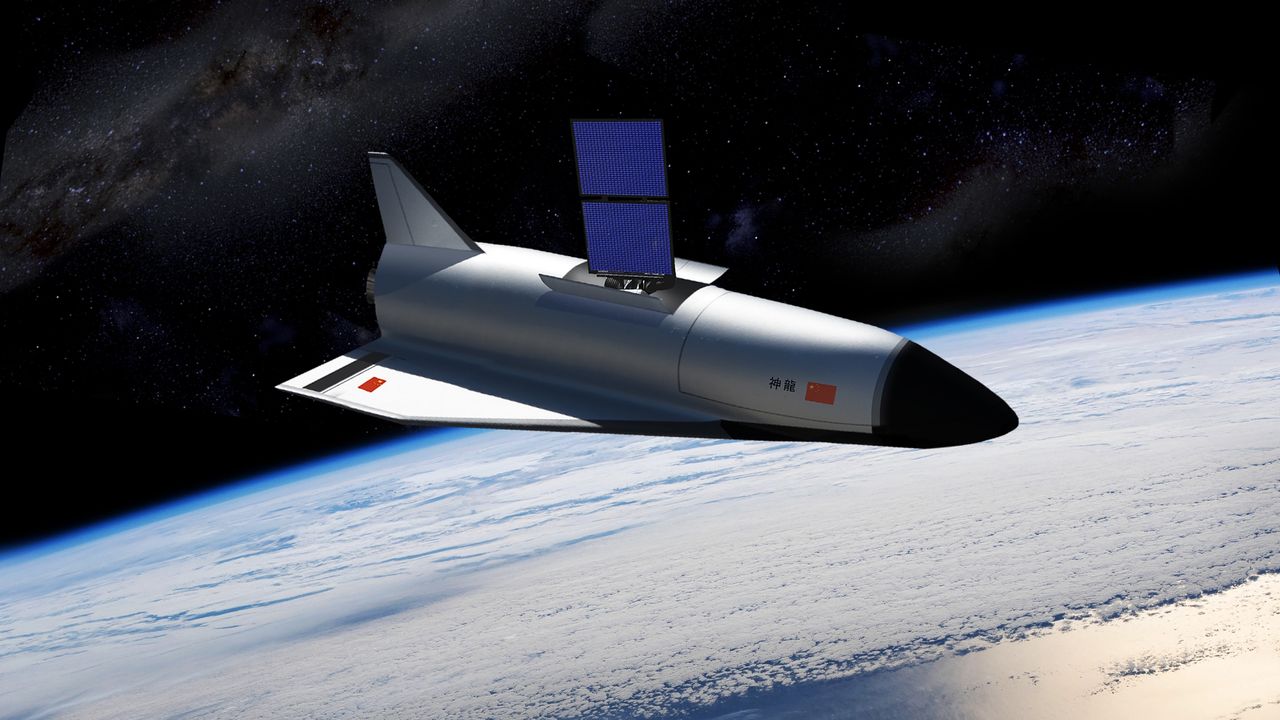
    China's top-secret 'dragon' space plane just released another unidentified object over Earth
    China's top-secret space plane just released another unknown object over Earth, raising concerns about exactly what the mysterious vehicle is up to. The clandestine spacecraft has now deployed at least nine payloads around our planet since 2022 and we don't know what any of them really are. The Shenlong, or "divine dragon," space plane is a reusable, robotic spacecraft that China has repeatedly launched into low Earth orbit (LEO) on board vertical rockets, before reentering the atmosphere for a horizontal runway landing similar to the iconic spacecraft from NASA's now-defunct Space Shuttle program. The space plane has never been photographed by otuisde nations, so we have no clear idea what it looks like or how large it is. Officials from China's space sector have yet to reveal any meaningful information about its design or purpose.Shenlong first launched into space on a two-day mission in September 2020, before completing an eight-month stint in LEO between August 2022 and May 2023, and a nine-month spaceflight between December 2023 and September 2024. It released its first payload shortly after the launch of its second mission and deployed seven more objects during its third mission, six of which were ejected simultaneously. The space plane's fourth and ongoing mission began on Feb. 7 when it launched atop a Long March 2F rocket that lifted off from China's Jiuquan Satellite Launch Center in the Gobi Desert, according to Live Science's sister site Space.com. And to date, there has been no news of its current activities.American space exploration company LeoLabs was the first to detect the new object after it was deployed by the Shenlong space plane. (Image credit: LeoLabs)But on June 22, the private space surveillance firm LeoLabs, which specializes in tracking spacecraft in LEO, detected "an unknown object in the vicinity [of the spaceplane]," according to a post on X. The mystery payload was initially picked up by one of the company's radars in New Zealand and did not match any other object in the company's catalog.Later on the same day, LeoLabs representatives added in an update to the post that, following additional observations from across the company's radar network, they had "independently cataloged this object and assessed with high confidence that it was released from the Chinese space plane."On June 23, Jonathan McDowell, an astronomer and satellite tracking expert at Durham University in the U.K. and previously with the Harvard & Smithsonian Center for Astrophysics, confirmed in another X post that the new object originated from Shenlong and was being tracked by the U.S. Space Force. McDowell also speculated that it could be a "cubesat" a small, often box-like satellite frequently deployed as a secondary payload alongside larger spacecraft. However, as with the previously released objects, it is unclear what its purpose might be.Shenlong likely shares some key design aspects with the U.S. Space Force's X-37B space plane. (Image credit: U.S. Space Force)Space News previously reported that Shenlong's primary goal might be to conduct rendezvous and proximity operations with other spacecraft and that its payloads may be targets for it to practise flyby maneuvers in orbit. RELATED STORIESA secretive Chinese probe has just arrived at one of Earth's 'quasi-moons' and will soon attempt a first-of-its-kind landingGiant 'white streak' appears over multiple US states as Chinese rocket dumps experimental fuel in spaceCharred piece of secretive Chinese rocket found still smoldering in the Australian outbackOthers have speculated that the mystery objects could be covert surveillance satellites or possess anti-satellite weaponry, according to Gizmodo. However, to date, there have been no reports of any spacecraft being sabotaged by the space plane or its payloads.Shenlong has now spent nearly 700 cumulative days in LEO. During that time, amateur photographers snapped some blurry shots of light reflecting off the mysterious space plane. The most intriguing image, captured in August 2024, revealed a bright appendage extending from the main spacecraft. This was most likely a solar array, experts speculated, which is unsurprising considering that most spacecraft are at least partially powered by sunlight. China is not the only country with a secretive space plane. The U.S. also has its own version, the X-37B, whose two operational models have collectively spent more than 4,200 days in LEO since 2010. However, American officials have been much more forthcoming in revealing information about their space plane's design, mission parameters and research goals.
    0 Comments 0 Shares 40 Views
  • WWW.LIVESCIENCE.COM
    AI companies don't want to be legally responsible for their chatbots. US courts should make them.
    Who is responsible for AI's output? Artificial intelligence (AI) companies like OpenAI maintain that they are not. In fact, their terms and conditions in 2023 stated that responsibility lies solely with the user. A German court disagrees. On June 9, a Munich court (subject to appeal) ruled that Google can be liable for false claims produced by its AI summaries, drawing a sharp line between ordinary search results and machine-generated assertions. In other words, AI companies must be held legally responsible for the output that is created by their systems and pushed to users. The court's logic was simple but profound: Search results point outward to sources, while AI summaries speak in Google's own voice. That distinction matters because it goes to the heart of what kind of speech deserves protection and what kind is subject to legal scrutiny. The U.S. should follow the German court's lead. In the absence of such provisions, the entire burden of discerning truth from falsehood falls on the reader. In the U.S., the First Amendment is intended to protect the right to speak, argue, persuade and offend. But freedom of speech is not free of caveats. It does not allow people to incite others to commit crimes, to threaten or to defame, for example. And if speech causes material harm, speakers can be held liable for those harms. When a company chooses to put a synthetic answer engine between users and the web, it is no longer merely hosting speech; it is producing an amalgamation of complex mathematical expressions that, outputted as text, resemble human speech. AI companies want this text to enjoy the same protections user-generated text has, while simultaneously dodging all the responsibility associated with being a speaker. The roots of this dilemma go back to the 1990s, when the advent of online forums and social media created a new problem. Unlike traditional publishers, forum hosts needed to provide a platform for their users' voices, without being liable for what their users were saying. This problem was addressed with Section 230 of the Communications Decency Act, enacted in 1996. Section 230 was a bipartisan amendment written to preserve the internet as a space where ordinary people could speak (or post) without the forum host becoming liable for every third-party post. That broad immunity reflected a democratic judgment: If the law made platforms responsible for all user content, many would censor aggressively or stop hosting speech altogether. This would limit free speech. Section 230 was meant to protect the ecosystem of human expression. In this sense, hosts of online spaces can be seen as providing a public square where speech occurs. Free speech is a human right it protects people as speakers and listeners in a democratic public sphere. The lawmakers who passed Section 230 three decades ago could not have foreseen a world populated by chatbot-generated text. As such text increasingly leads to real-world harms, lawsuits are proliferating and tech companies are deploying a number of often-contradictory legal strategies to avoid culpability. In some cases, they are arguing that AI-generated text is not speech, but rather simply a tool, and that companies are therefore protected as "carriers," not "publishers" by Section 230's protection of a public forum for free expression. But the companies deploy this argument only when it suits them. In other cases, they are increasingly reaching for free-speech language to defend AI-generated text because free-speech protections provide broad legal immunity. For example, in a Florida wrongful-death lawsuit against Open AI (maker of ChatGPT), a plaintiff has alleged that the companys chatbot pushed a 14-year-old to take his own life. OpenAI argued that the chatbot was protected by the First Amendment, though the judge dismissed that defense and allowed the case to proceed. Neither of these arguments is convincing. AI companies are not merely providers of a public forum, as the words produced by their AI summaries and chatbots are generated by the company's products. Similarly dubious is the claim that bots should be seen as equal participants in a public square. This is a category error. Free speech is a human right it protects people as speakers and listeners in a democratic public sphere. Bots do not vote, deliberate, dissent, worship or participate in civic life. They generate text, but they do not possess a moral and political standing. Bots have no skin in the game. What, then, justifies constitutional protection in the first place? Extending the strongest speech protections to machines would not defend liberty; it would confuse "botput" with free expression. It would, in actuality, extend the strongest free-speech protection to companies. But that requires a separate line of argumentation that ought to be agreed upon by society. Open AI, the maker of ChatGPT, argued the chatbot has First Amendment protections. (Image credit: Jaque Silva/NurPhoto via Getty Images)The Munich court's limited and nuanced way of governing "botput" provides a clear way forward.Given its history with Nazism, Germany does not enshrine free speech quite the way the U.S. does. But the German court's arguments still provide a useful template for a future U.S. ruling.The Munich court held that if a system simply points users to sources, it resembles traditional search and should continue to enjoy broad protection afforded to aggregators. If it synthesizes claims, imitates the tone of authority, and offers a single authoritative answer generated by an AI, it should carry corresponding duties of care that entail liability for the company. The need for such safeguards is only growing. AI-generated summaries can be copied instantly, scaled globally, and repeated across interfaces until a falsehood becomes regarded as "truth." That is not a hypothetical concern; it is already happening. Related storiesAI chatbots are turbocharging violence against women and girls: We urgently need to regulate themAI chatbots oversimplify scientific studies and gloss over critical details the newest models are especially guiltyAI for breakup texts? How 'sycophantic' chatbots are messing with our ability to handle difficult social situations.Moreover, it is important to remember that the original intention of Section 230 was to insulate platforms from liability for third-party posts, not their own text. This is not an anti-innovation argument. AI can be helpful, efficient and genuinely transformative. The law should encourage useful tools while insisting that the companies deploying them remain responsible for the foreseeable harms of their products. We need clearer rules that keep the internet free for people while preventing machines from laundering falsehood into authority. The German ruling points toward that future. The sooner U.S. law and policy follow, the better chance we have of preserving our shared reality and a healthy democracy. Opinion on Live Science gives you insight on the most important issues in science that affect you and the world around you today, written by experts and leading scientists in their field.
    0 Comments 0 Shares 40 Views
  • WWW.LIVESCIENCE.COM
    Scientists infected a 'vagina on a chip' with gonorrhea then cured it with a new antibiotic found by AI
    With the aid of AI, scientists have identified a potential new antibiotic to treat gonorrhea, a sexually transmitted bacterial infection that's increasingly resistant to drugs. The newfound antibiotic has shown promise in lab experiments involving a "vagina on a chip," researchers report in a new study."There's an urgent need to address antibiotic resistance in gonorrhea, and discovering new antibiotics is one of the key strategies," Dr. Jeffrey Klausner, a clinical professor at the University of Southern California who was not involved with the work, told Live Science. "It's exciting to see the application of AI in this area of public health."Every year, over half a million people in the United States catch gonorrhea, which causes symptoms such as pain and fluid discharge. In severe cases, untreated gonorrhea can lead to infertility. If it's acquired during pregnancy, the infection can pose risks of miscarriage and early birth, and if it's passed to babies, it can potentially cause sepsis or newborn blindness if left untreated.Gonorrhea bacteria, called Neisseria gonorrhoeae, often carry mutations that confer resistance to one or more antibiotics, limiting treatment options. The widely used antibiotic ceftriaxone remains the go-to drug, but resistance to this drug is soaring globally. For now, only 0.1% of cases in the U.S. are resistant, but rates are as high as 10% in some Chinese provinces and 27% in Hanoi, Vietnam.Scientists are searching for novel antibiotics to tackle resistant bugs. To pinpoint new drugs, they typically screen large libraries of compounds to find ones that kill the bacteria. However, these experiments are slow and don't keep up with the pace at which new resistant strains are emerging.So, in a study published June 17 in the journal Science Translational Medicine, researchers instead harnessed AI to expeditiously wade through a bevy of antibiotic candidates. They trained the AI models to spot potential antibiotics by studying patterns in the chemical properties of 1,755 clinically approved drugs that either do or don't treat drug-susceptible gonorrhea.Next, they ran their trained models on a different set of approximately 6 million compounds, finding 213 possible hits. They whittled down that list by process of elimination, first by excluding compounds that were too similar to existing drugs in modeling experiments. Those drugs might not have worked against drug-resistant superbugs. Next, through lab experiments, they removed compounds that weren't potent enough against gonorrhea or were too toxic to human cells.One of the most promising compounds that emerged was called MP20, which the researchers then put to the test.Scientists often use laboratory mice to study new drugs, but it's difficult to establish a gonorrhea infection in mice. That's because the bacteria are so adapted to humans, study co-author Dr. Melis Anahtar, a physician scientist at Massachusetts General Hospital, told Live Science. (She is listed as an co-inventor on a provisional patent for MP20.)It can be difficult to establish a gonorrhea infection in mice. (Image credit: dra_schwartz via Getty Images)Additionally, "there is a large push, especially in the U.S. administration, to move away from animals and to use more human-organ-mimicking systems" to test new drugs, she added. (Many scientists are developing such laboratory models of the human body for drug testing, but those models aren't necessarily ready to replace animal testing yet.)For this study, the researchers tested MP20 using a vagina-on-a-chip model. This small device contains a layer of cells that mimics the lining of the vagina and a layer of fibroblast cells, which are found deeper in the tissue. These layers are connected to a nutrient-filled flow channel that mimics the bloodstream.The researchers added gonorrhea bacteria to the chip's first layer, mimicking how the bug is sexually transmitted. Then, they administered MP20 through the flow channel, mimicking body-wide administration of the drug, to see if the antibiotic could cross through these different tissues and reach the bacteria."It could actually get through all those epithelial barriers and accumulate at a concentration that was sufficient to kill the gonorrhea," Anahtar said. MP20 worked just as well as the existing drug ceftriaxone; no bacteria were detected at all after treatment with either drug.Related storiesAntibiotic found hiding in plain sight could treat dangerous infections, early study findsMetal compounds identified as potential new antibiotics, thanks to robots doing 'click chemistry'AI could identify the next superbug-fighting drugMore experiments are needed before MP20 could potentially reach the clinic and help patients. "You need to demonstrate these chemical compounds are safe and are not going to have any human liver toxicity, kidney toxicity or severe side effects," Klausner said.He noted that an antibiotic's effectiveness depends on the anatomical site infected by the bug. So the researchers will need to assess how effectively their compounds, if delivered via the bloodstream, can reach the penis, rectum, throat and vagina to treat gonorrhea at any of those sites. Anahtar thinks AI models will prove pivotal in the quest for new drugs, especially now that chemists can prepare a wider array of compounds than ever before. "In 2012, I think there were a million compounds that you could just buy from commercial vendors, and now it's more than 70 billion," she said. She aims to grow and improve her models to test even more compounds at once.This article is for informational purposes only and is not meant to offer medical advice.

    0 Comments 0 Shares 39 Views
  • WWW.UNIVERSETODAY.COM
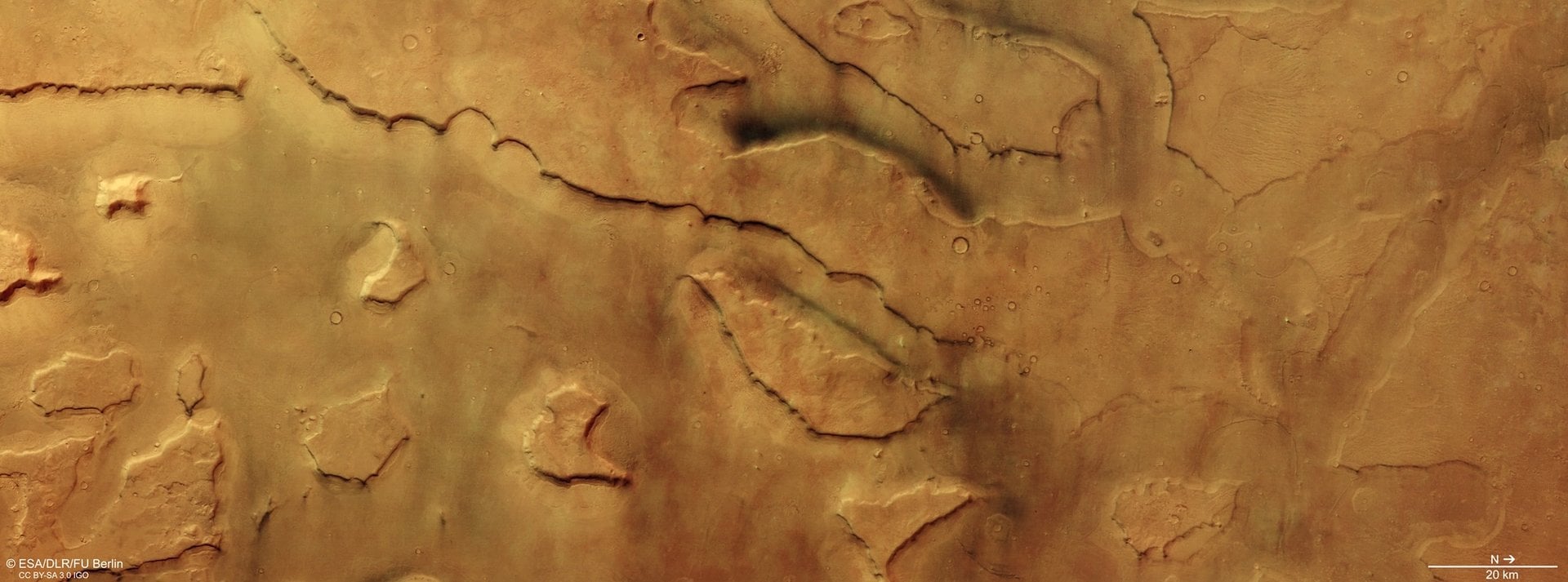
    Mars Express Captures Dozens of Dust Devils in Mars Valley
    The European Space Agencys Mars Express has captured part of Marss Mamers Valles: a fascinating valley system speckled with brief, tornado-like whirlwinds known as dust devils.
    0 Comments 0 Shares 39 Views
  • 0 Comments 0 Shares 40 Views
  • WWW.IFLSCIENCE.COM
    A Star Passed So Close To The Sun 2.5 Million Years Ago That It May Have Set Off A Comet Shower And It's Still Messing With Them
    The orbits of long-period comets suggest a star passed by our Sun and caused some havoc we're still seeing.
    0 Comments 0 Shares 39 Views