• WWW.LIVESCIENCE.COM
    Early Homo sapiens may have lived in rainforests, new clues suggest and it could overturn our understanding of human evolution
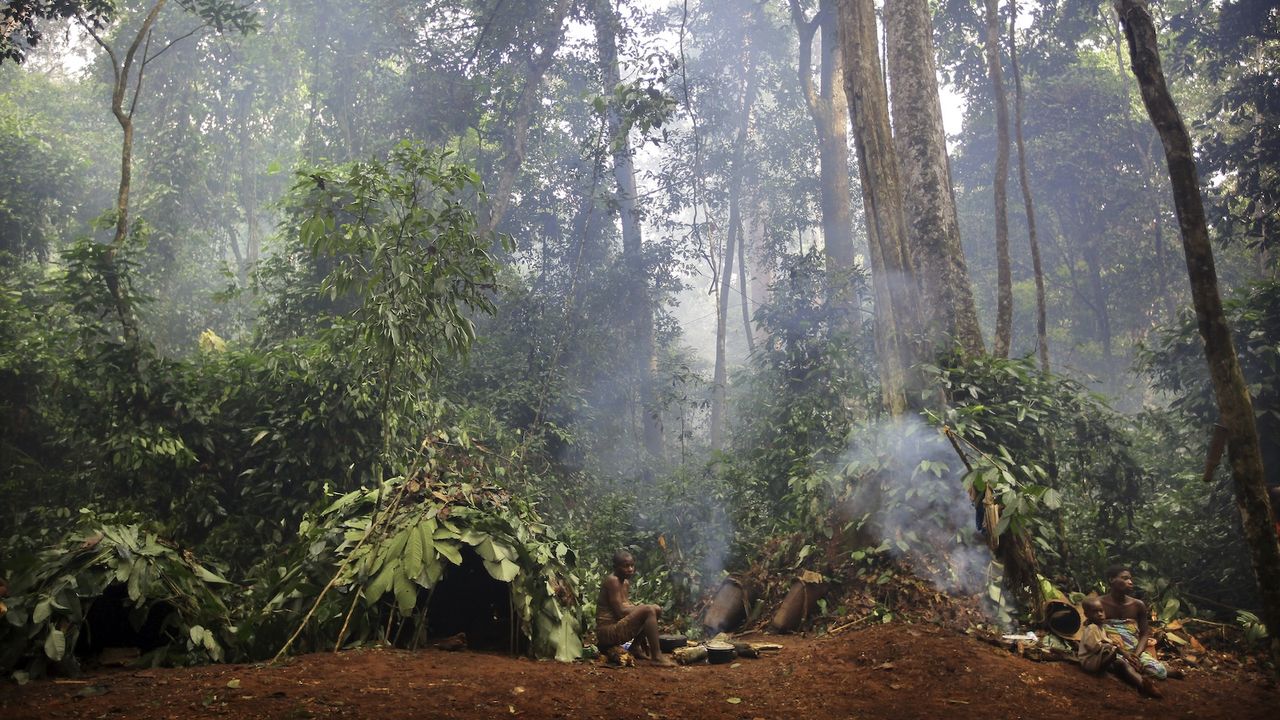
    Nearly 70,000 years ago, modern humans created stunning rock art in an unexpected place: the tropical Indonesian island of Sulawesi. The finding, announced in January, made headlines for being the oldest known rock art in the world. But the discovery's location also highlighted another surprising finding: that members of our species, Homo sapiens, were thriving in the tropics tens of thousands of years ago. Researchers have long thought that early humans didn't live in tropical rainforests, as these places haven't yielded human fossils and are teeming with dangerous life, including venomous animals, poisonous plants and parasites that would deter early populations. But that perspective has been changing over the past few decades. Sulawesi's ancient rock art is one of several clues that modern humans may have lived in tropical rainforests for hundreds of thousands of years. That would mean modern humans could have been living in these hot, wet regions since soon after the emergence of our species in Africa around 300,000 years ago. Understanding how, when and where modern humans inhabited rainforests and how that shaped our evolution "may give us an insight into something about what it means to be uniquely human," Patrick Roberts, an archaeologist and anthropologist at the Max Planck Institute of Geoanthropology and author of the book "Jungle: How Tropical Forests Shaped World History" (Penguin, 2022), told Live Science. From one origin story to manyConventional wisdom held that modern humans emerged from one parent population in an East African savanna and did not encounter rainforests until around 12,000 years ago, after agriculture emerged to support survival in these climes. The lack of H. sapiens fossils from Africa's tropics appeared to support this view. Then, in 2017, scientists identified the oldest modern-human fossils except they weren't in East Africa, but rather in Jebel Irhoud, Morocco. The following year, Eleanor Scerri, an archaeological scientist at the Max Planck Institute of Geoanthropology in Germany, and her colleagues reviewed archaeological evidence, including the Jebel Irhoud fossils, and integrated it with genetic data from present-day populations. The evidence pointed toward H. sapiens originating from many subdivided populations across Africa. These populations periodically met and exchanged genes and ideas, but they also spent long periods apart, adapting to different ecosystems and evolving diverse traits. In this new understanding, the earliest members of our species may have evolved not just in the grassy savanna but in tropical rainforests, too. "One of the implications of the model is, if it's not one place and it's many places, then maybe it's not one ecosystem," Scerri told Live Science. "Maybe it's many ecosystems."Tropical rainforests were long considered too challenging for early members of our species to have lived in. (Image credit: Richard McManus via Getty Images)Because rainforests come with their own set of environmental pressures, people who lived there may have evolved traits to handle those challenges. When different early human populations came together, tropical rainforest dwellers would have contributed different gene variants than populations from open savannas. The ability to adapt to a variety of environments, including rainforests, may have come in handy later, when H. sapiens spread out of Africa and into tropical Southeast Asia, including places like Sulawesi. But establishing what these traits were would first require evidence that humans lived in rainforests close to the dawn of our species. Rainforests are terrible for fossil huntersUnfortunately, the highly acidic soil in rainforests degrades organic material like bones. This makes evidence of ancient humans, such as fossils, or human activities, like bone arrows or potential woven fiber baskets, exceptionally rare in rainforests. Even in the few instances this evidence is found, the conditions make it hard to date and contextualize it. Archaeologists often date early human fossils by measuring radioactive isotopes (versions of elements), such as carbon-14, in distinct, undisturbed layers of sediments broken-down rocks and minerals that form via erosion and weathering. The more sediment layers there are, the longer the period of history that can be traced. But weather conditions in West and Central Africa's rainforests have left few long sediment sequences. The lack of long sediment sequences also significantly reduces the odds of finding fossils at all, said Antonio Rosas, a paleobiologist at the National Museum of Natural Sciences in Spain who has been searching unsuccessfully for such fossils in Equatorial Guinean rainforests since 2014. "To be honest, I think I gave up the possibility of finding fossils properly," Rosas said. Written in stoneAs a result, many researchers studying early H. sapiens evolution have focused on a material that does preserve: stone. In Africa, stone tools reveal humans were in coastal tropical forests in what is now Kenya roughly 78,000 years ago, the tropical rainforests of what is now Equatorial Guinea from around 45,000 years ago, and the rainforests of what is now the Democratic Republic of the Congo around 18,000 years ago. Then, in 2025, researchers revealed that stone tools previously found in a tropical rainforest in the Ivory Coast in the 1980s were 150,000 years old. Because the area was also a tropical rainforest 150,000 years ago, this is evidence that our species inhabited rainforests "much earlier than previously thought," study first author Eslem Ben Arous, a geochronologist and archaeologist at the National Research Center on Human Evolution in Spain, told Live Science in an email. Stone tools like this one, excavated in the Ivory Coast, reveal that humans were present at the rainforest site roughly 150,000 years ago. (Image credit: Jimbob Blinkhorn, MPG)The antiquity of these quartz tools which were a mix of flakes and heavy-duty picks and choppers show that early H. sapiens were capable of designing technology to survive in dense tropical forests. Dense forests weren't a barrier for early humans at that time, Ben Arous said. Direct evidenceAlthough stone tools show ancient people were venturing into forests for food or living there part time, they don't prove humans lived there year-round. To do that, researchers still need fossils.By analyzing the isotopes of elements found in human tooth enamel, researchers can reveal whether our distant relatives actually lived in rainforests. That's because closed, dense canopy rainforests have low levels of sunlight and high carbon dioxide, and the ratio of isotopes of elements in a person's teeth can reveal if they spent a lot of time in those conditions as a child. Currently, zinc isotopes in two 46,000- to 63,000-year-old human teeth found in Tam P Ling cave in Laos are the oldest evidence of humans eating foods mainly from a tropical rainforest. Similar evidence is currently lacking from African rainforests. But the ability to adapt to many different environments, including rainforests, and the capacity to develop highly specialized traits for such environments is "what's unique about our species," Roberts said. Identifying adaptationsEarly members of our species would have required certain adaptations to live in rainforests. So what were they? Without preserved DNA or fossils, anthropologists guess by looking at contemporary populations living in the tropics. Many modern-day rainforest inhabitants are small, because it may help them cool off more easily, reduce their caloric needs, and make it easier to move in dense rainforests. An analysis published in 2019 also found key differences in genes related to immunity and development in African rainforest hunter-gatherers compared with neighboring farmers. For example, the gene PITX1 which codes for proteins crucial for limb development is one of several genes that contributes to small stature and shows strong signs of positive selection in Gabonese hunger-gatherer populations.There is evidence in multiple rainforest dwelling populations, including in those Gabon hunter-gatherers, of selection against specific pathogens. Although early H. sapiens living in rainforests likely faced similar pressures, we don't have any evidence that similar adaptations evolved in these ancient members of our species. Ancient DNA may be the keyBut some scientists hope to someday find evidence of these adaptations in ancient DNA. DNA preservation was historically considered impossible in hot and humid environments, but that assumption "turns out to be only partially true," Mikls Blint, a functional environmental genomicist at the Senckenberg Biodiversity and Climate Research Centre in Germany, said in a statement. Researchers can find ancient DNA lurking in the environment by analyzing sediment cores from tropical lakes. (Image credit: Annett Junginger)Blint and his colleagues recently reviewed ancient environmental DNA (aeDNA) recovered from tropical environments. They found 113 studies reported aeDNA in tropical and subtropical habitats between 1998 and 2025, including 1 million-year-old aeDNA extracted from a lake in Indonesia. This DNA came mainly from nearby plants, not from ancient humans. But because people leave "millions of DNA traces" in their environment during their lifetime, human DNA should also be present and retrievable, Blint said in the statement. "Obtaining DNA data will be a truly fundamental breakthrough in tropical forest research," Ben Arous said. For example, these genetic remnants peppered throughout the environment could reveal how humans changed the ecosystem, how they moved and interbred, and which diseases and parasites ancient people faced. RELATED STORIESScientists claim 'Lucy' may not be our direct ancestor after all, stoking fierce debateThe 'hobbits' may have died out when drought forced them to compete with modern humans, new research suggestsStunning rock art site reveals that humans settled the Colombian Amazon 13,000 years agoThe new discoveries point to the need for more archaeological research in rainforest environments, Scerri said. Current efforts in Benin appear "really, really promising," Scerri said, and she and her team are also working on projects in Guinea, Ghana and Senegal, which are also yielding clues to ancient human habitation. "We're making some incredible finds," she said."There is enough evidence now to justify investigating areas that used to be well off the human origins map, considered to be very far from the main stage of human evolution," Scerri said. The question now is how much further back in time people were living in rainforests and using their resources. "We consider ourselves to really be scratching the surface," Scerri said. Human evolution quiz: What do you know about Homo sapiens?
    0 Commenti 0 condivisioni 0 Views

  • WWW.IFLSCIENCE.COM
    We Know Psychedelics Change Mental Health Symptoms, But Can They Also Change Who You Are As A Person?
    The message is no longer "turn on, tune in, drop out", but psychedelics can still reshape your identity.
    0 Commenti 0 condivisioni 0 Views
  • WWW.IFLSCIENCE.COM
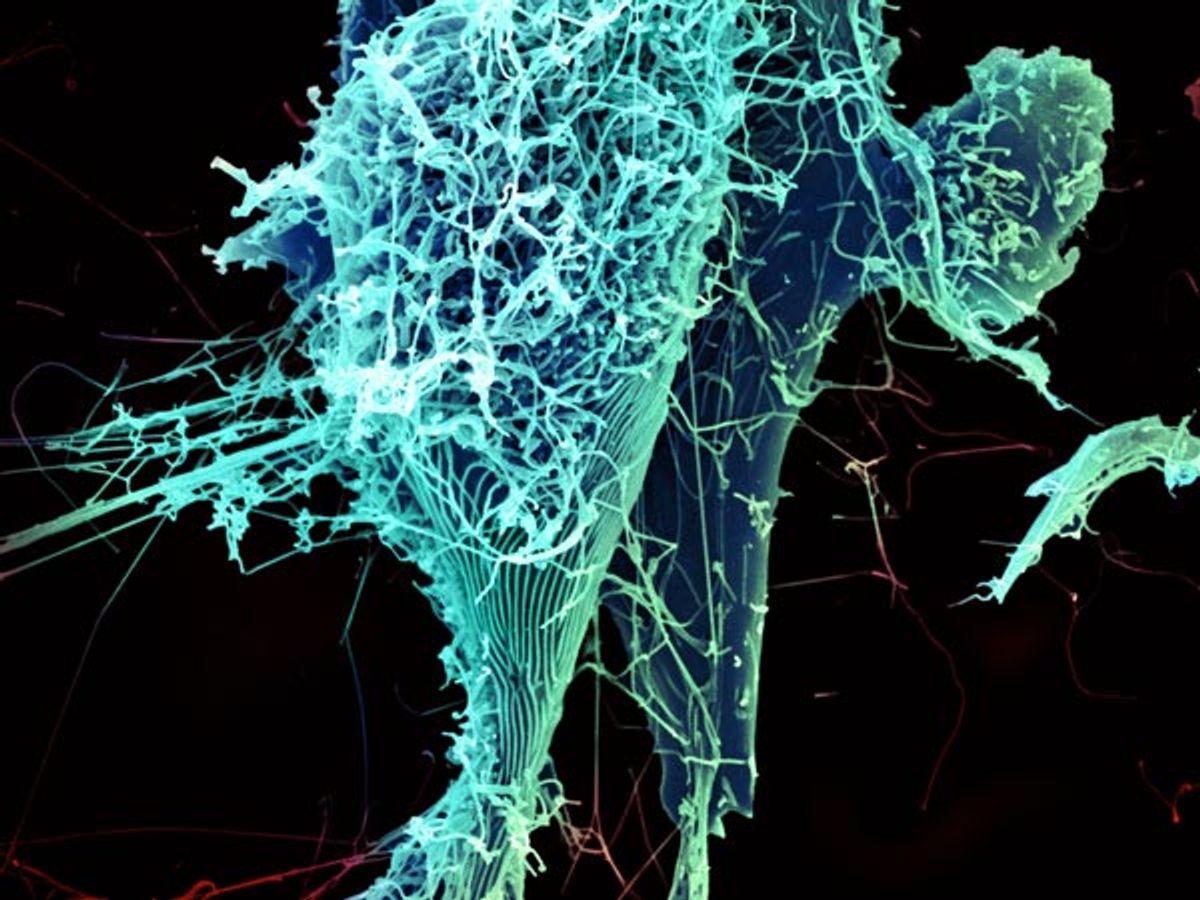
    Bundibugyo Ebola Outbreak Exceeds 1,000 Cases, With First Case Outside Africa And 70% Chance Of Spread To A New Country
    A French doctor returning from humanitarian work in the Democratic Republic of the Congo is being treated for Ebola in a specialist facility.
    0 Commenti 0 condivisioni 0 Views
  • 0 Commenti 0 condivisioni 0 Views

  • WWW.THECOLLECTOR.COM
    Why Did Brazil Join the Allies in WWII Despite Being a Dictatorship?
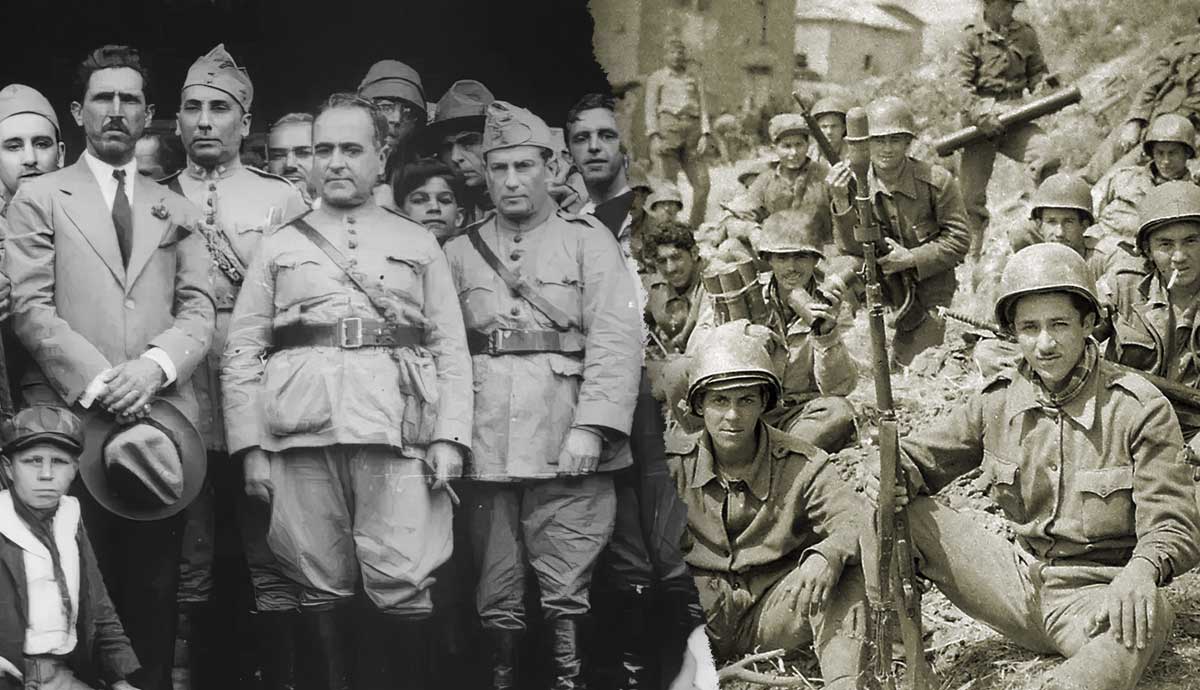
    When Brazil formally entered the Second World War in 1942, it was a very unexpected decision. President Getlio Vargas was an autocratic strongman with close ties to all the major Axis powers. Brazil seemingly had no real reason to enter the war and its territory was not violated by any Axis member state. Nonetheless, it would become the Latin American country with the strongest commitment to the Allies during the war by protecting Allied shipping in the South Atlantic. Its involvement shaped its politics for decades to come.Brazil Before WWIIGetlio Vargas and allies in Sao Paulo soon after the Revolution of 1930. Photograph by Claro Jansson, 1930. Source: Sao Paulo Legislative AssemblyDuring the 1930s, Brazil underwent some of the biggest political and social changes in that countrys history since its independence from Portugal in 1822. The country had faced major instability as a result of power struggles between military and civilian authorities. This was exacerbated by the onset of the Great Depression. Brazils government struggled to head off the shockwaves of the global economic downturn. The shock may have been even worse if Brazil had not burned off much of its coffee stocks. This led to political turmoil, giving Getlio Vargas a chance to take power into his own hands.When President Washington Lus Pereira de Sousa began cracking down on his opponents, Vargas launched a rebellion against him. Fearing that the country would collapse into chaos, the military overthrew Lus and temporarily ruled the country for several days. On October 30, this junta named Vargas the acting president, and he was formally sworn in in early November. He promised to end the chaos in the country and rejuvenate the Brazilian economy.For the rest of the 1930s, Brazil faced additional political instability from both communist and fascist movements. Vargas did not want his power to be infringed upon and declared a state of emergency. This led to him banning opposition parties, cracking down on dissidents, and creating a new constitution. His political project was known as the Estado Novo and existed until 1945. As Brazil faced major changes to its political institutions, WWII arrived on its doorstep.Axis Attacks on Brazilian Shipping, 1939-1942Brazilian merchantman Baependy before its sinking by a German submarine, 1941. Source: Ships NostalgiaWhen the war started in September 1939, Vargas vowed to remain neutral. He admired the political systems in Germany, Italy, and Japan and did not want to jeopardize the extensive trade Brazil had with each of those countries. At the same time, Brazil had a close relationship with the United States, and President Roosevelt hoped to preserve that relationship. This meant that Brazil faced a quandary: should it join the Axis alliance when its largest military partner was sympathetic to the Allies?Germany and Italy resolved that problem for Vargass government. In a repeat of the strategy pursued in WWI, Germany began a campaign of unrestricted submarine warfare to prevent supplies from reaching Britain via the Atlantic. This meant that Brazilian ships started to be targeted. The distance between Allied bases in West Africa and Brazil was a short one and its routes were patrolled by Allied aircraft and warships. The British government hoped to get Brazil to agree to patrol its waters and protect the Allied merchantmen that sailed there.By August 1942, Brazilian ships were repeatedly attacked by German and Italian submarines. Some 15 ships were sunk and many crewmen were killed or wounded by these attacks. Notwithstanding Germanys previously cordial relations with Brazil, the German U-Boat Command ordered any vessel entering Brazilian waters except from Argentina and Chile to be attacked. The attack on Pearl Harbor meant that the US was involved and other countries in Latin America were now being pressured to help the Allies. Vargas now realized that his countrys entry into the war was a matter of time.Brazils Entry Into the War and Initial DecisionsPresidents Roosevelt and Vargas photographed on board the USS Humboldt, 1943. Source: National Museum of the US NavyThe attacks by Axis submarines on Brazilian merchant shipping enraged Brazilians, who up to this point had been ambivalent about the war in general. There were riots targeting people of ethnic heritage of any Axis country, especially German-Brazilians. The military was enraged that Brazils sovereignty was being violated and insisted on a forceful response. The increased involvement of the US Navy and Coast Guard in anti-submarine warfare off the Brazilian coast meant that Brazil was involved in supplying Allied ships.Vargas was still reluctant to enter the war because of Brazils economy and his fear of civil unrest. However, when it became clear that the public wanted to enter the war, he decided to finally join the Allied war effort. On August 21, 1942, Brazil formally declared war against Germany and Italy. While it cut ties with Japan and arrested Japanese sympathizers, it never formally declared war against Tokyo. Brazil had already cut ties with the Axis powers during the Rio Conference after the Pearl Harbor attacks. Despite his initial reluctance and resignation attempts by some senior officials, Vargas was now all in for an Allied victory.The Allies were thrilled to have Brazils involvement in the war effort. The Brazilian Navy could now assist in patrolling Atlantic convoy routes. Additionally, Brazilian ground forces could join the fight in Europe. The United States provided a massive amount of military aid to ensure that Brazils military was prepared for battle. Additionally, Washington financed the creation of a steel mill at Volta Redonda.The Brazilian Navys Hunt for SubmarinesUS Navy officers review Brazilian PBY-5A seaplanes alongside Brazilian naval aviators. Source: National Air and Space Museum, Smithsonian InstitutionFollowing its entry into the war, Brazil became a big player in the Battle of the Atlantic. While Brazils navy was weak by WWII standards and its ships lacked much of the equipment they needed to hunt down and sink German and Italian submarines, Brazil worked closely with the American and British navies to form convoys with escort vessels and aircraft to protect Allied shipping in the Atlantic Ocean. In 1939, it had a mere 19 vessels that were seaworthy; this increased during the war as a result of American military aid. Brazils available surface ships were placed under the control of the US Navys 4th Fleet. The fleet was aggressive and repeatedly attacked German submarines, although it remains unclear if it successfully sank any.Brazils air force also performed yeoman service. American aid ensured that Brazilian pilots flew top-model aircraft with advanced detection systems. Working with American squadrons from several airfields along the coastline, they managed to drive off Axis attempts to get close to major ports. Twelve Axis submarines were sunk thanks to air attack. Due to an increase in submarine losses, Germany and Italy abandoned their attacks on shipping off the Brazilian coast in late 1943, apart from smaller attacks later on. Brazil successfully protected 3,167 ships in 614 convoys during the war.The Brazilian Expeditionary Force in ItalySoldiers from the Brazilian Expeditionary Force in Italy, 1944. Source: National Archives of BrazilPresident Vargas promised the Allies that the Brazilian military would join the fight in Europe. After Brazils entry into the war, the Brazilian Ministry of Defense created an expeditionary force. Preparations were slow, and the Brazilian public began to say that its more likely for a snake to smoke than for the BEF to go and fight.Instead of Vargass intention of fielding a corps of 100,000 men, the Brazilian Expeditionary Force ended up being a division of 25,000 men, made up of the 1st, 6th, and 11th Infantry Regiments, the 9th Engineer Battalion, and the 2nd Mechanized Regiment. The soldiers enjoyed the joke and subsequently wore shoulder badges featuring smoking snakes.After being supplied with American weapons and going through an American training regime, the Smoking Snakes went to Italy with the American 10th Mountain Division and arrived in July 1944 to join the US 5th Army.General Mascarenhas with General Eisenhower at the end of the war, 1945. Source: Wikimedia CommonsMajor General Joo Mascarenhas commanded the BEF upon its arrival in Naples. By this point, the Allies had advanced north of Rome after breaking the German lines. The redeployment of several Allied infantry divisions from Italy to support the invasion of France meant that the Brazilians were welcomed warmly. Despite initially struggling to acclimatize to the weather, Brazilian forces entered the fighting quickly. After seizing the towns of Camaiore and Monte Prano, the BEF moved into the Serchio Valley with other Allied divisions like the 10th Mountain. They held their positions there with a single regiment for several months against German counterattacks.As part of a major assault on the Germans Gothic Line in northern Italy, the BEF was ordered to assault Monte Castello, a major German position on the Allied left flank. The division was stretched thin and struggled to advance. In just over a day in December 1944, they lost 1,000 men attacking Castello. For the winter, they remained in place until they could advance again in better weather.The End of the War and Its Legacy in BrazilPresident Dilma Rousseff with Brazilian WWII Veterans, 2015. Source: Wikimedia CommonsIn the last spring of the war, the Allies managed to break through the Gothic Line. The BEF seized the Castello and marched northward to accept the surrender of German forces on the border with France. After intense fighting and heavy casualties, Brazilian forces could share in the spoils of victory, and Allied commanders were pleased with their performance. However, they did not participate in the postwar occupation and demobilized immediately after returning to Brazil.While the Brazilian public was happy with their successes, they did not receive much welcome from the state. The political instability that dominated society in the 1930s returned in 1945 when Vargas was overthrown in a coup. Veterans of the BEF did not receive adequate compensation or support from the state. They were not even allowed to march in public with their uniforms. Many became resentful and this played into the decision by the army to mount a coup in 1964, leading to Brazils infamous military regime. Only in recent years have their contributions been acknowledged.While Brazil was not considered one of the major powers of the war and its contribution to the Allied war effort has largely been forgotten, the Brazilian army, navy, and airforce played their part in aiding Allied convoys and supporting the war effort in Italy. Close to 2,000 Brazilian combatants and civilians died during the war. Of all the Latin American countries involved in the war, Brazil provided the greatest amount of support. It earned itself a place with the other victors of the war.
    0 Commenti 0 condivisioni 0 Views
  • WWW.THECOLLECTOR.COM
    Why Did the Mongol Invasions of Japan Fail in the 13th Century?
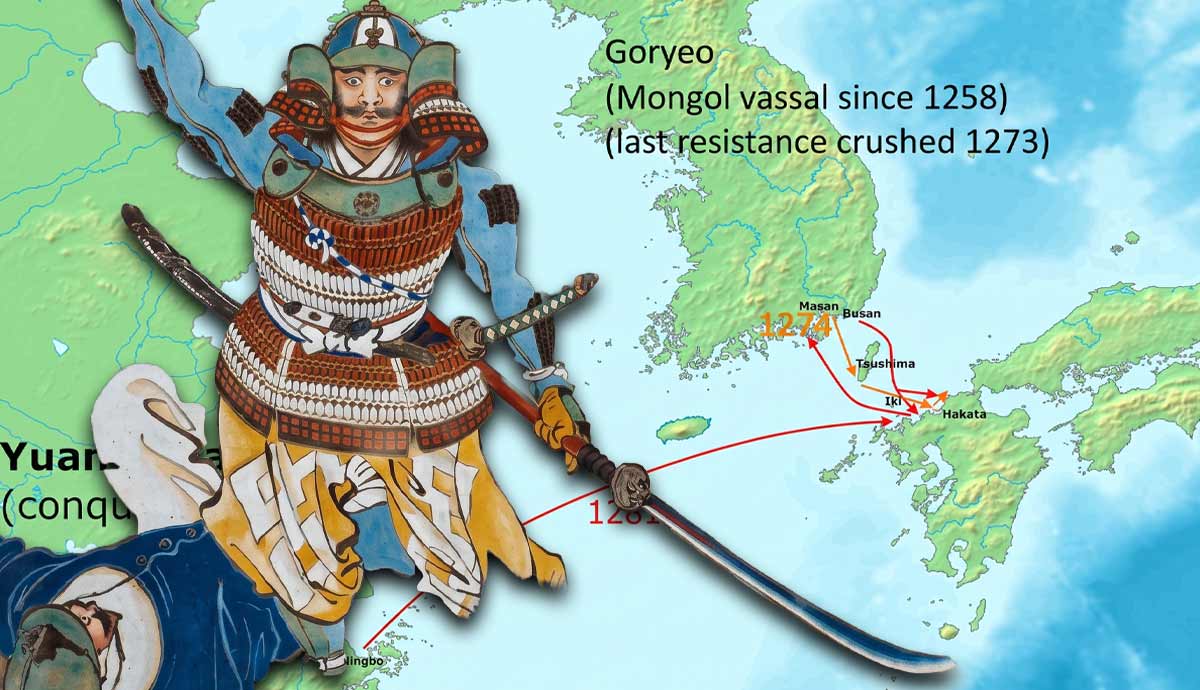
    The Mongol Empire was an unstoppable force in the 13th century, and by the late 1200s, nothing could stop its soldiers as they rampaged across Eurasia. China, Persia, and even Kievan Rus fell like dominoes. And then, suddenly, they crashed into the islands of Japan.In one of the greatest ironies in military history, Kublai Khans (the grandson of Genghis Khan) army was thwarted when it tried to seize the Japanese islands. For hundreds of years, Japanese history books told students that Japan was saved by the divine power of the gods, popularly referred to as Kamikaze or Divine Wind. They said that a typhoon wiped out the vastly superior Mongol navy. However, modern research and underwater digs near Takashima have finally debunked the divine wind theory, proving that Japan was actually saved by a mix of its own gritty defense, strategies, and a stroke of bad weather.The First Invasion Kublai Khan Invades JapanThe major tribes of the Mongolian plateau and nearby polities in the mid-12th century. Source: Wikimedia CommonsKublai Khan founded the Yuan Dynasty of China in 1271. Just before that, he set his sights on Japan, launching a campaign to conquer the island kingdom to secure his flank and snag some prime real estate for his empire. The khan sent emissaries to Japan in 1268 and again in 1269 to demand that Japan become a vassal state and pay tribute to the Mongol Empire. Both times, the envoys were completely ignored. War was now inevitable, and in November 1274, the Yuan Dynasty struck the Japanese outposts of Tsushima and Iki with about 900 ships carrying roughly 25,000 to 30,000 men in the opening clash of the Battle of Bunei.As was typical for later Mongol campaigns, Kublai Khan employed Chinese and Korean warriors alongside his Mongol and Jurchen troops. The Japanese were horrified as tight Mongol formations tore through their lines during this first massive clash. Unused to mass infantry armed with bows and spears, the Japanese samurai struggled against the Mongols tactics of swarming their enemies.A Change in FortunesMongol invasions of Japan in 1274 and 1281. Source: Wikimedia CommonsThe psychological warfare caused by the Mongol explosive tetsuhau bombs was also intense. Ceramic thunder-crash bombs stuffed with gunpowder were thrown into the Japanese ranks, causing havoc and physical trauma. When the Mongols hit the beach at Imazu on Kyushu, it looked like the end for Japan. That night, however, the vaunted Mongol army returned to their ships. Soon, a massive storm rolled in, causing damage to their ships. They were so damaged that the Yuan army retreated to mainland Asia.Japan didnt forget that close call, and by the time the second invasion arrived in 1281, the Kamakura Shogunate had a solid plan. They built a massive stone barrier along the coast of Hakata Bay known as the Genko Borui. This defensive bulwark stretched for over 20 kilometers (12 miles) and stood about two meters (6.5 feet) tall. The Japanese knew that they needed to prevent Mongol cavalry from maneuvering on the beaches, and the wall was specifically built to achieve this.The Second InvasionTwo Samurai with a dead Mongol at their feet. Votive image (ema) at the Komodahama Shrine at Sasuura on Tsushima. Source: Wikimedia CommonsThe Yuan Dynasty would not be so easily defeated. For the second attempt, Kublai Khan came back with a vengeance. Two armies would strike Japan. The Eastern Fleet would leave Korea with roughly 40,000 men, while the Southern Fleet would depart from southern China with a host of about 100,000. The numbers represented one of the largest amphibious invasion forces in pre-modern history. The two forces had different departure schedules, and the fleets were entirely separate.Expecting to steamroll the island kingdom as they had attempted in 1274, the Mongols were stunned to find their way blocked by the Genko Borui. Stuck on the shore, the Mongols couldnt even hunt for food or water without getting attacked. The Japanese military also used small, agile boats to harass the giant Mongol ships all night long.Recent dives near Takashima have revealed a major reason for the disaster: the ships were a rush job. Because Kublai Khan demanded that his invasion fleet be finished as soon as possible, many ships were recycled using flat-bottomed river boats. With their weak construction, the vessels stood no chance against the brutal waves of a major typhoon.The Typhoon of August 1281The Mongol fleet destroyed in a typhoon, ink and water on paper, by Kikuchi Ysai, 1847. Source: Wikimedia CommonsBy mid-August of 1281, things looked bleak for the invaders. The Yuan armada was struggling. Food and supplies were low, disease was rampant, and the Mongol forces were pinned on the beaches. Then, a massive typhoon struck, sinking a significant portion of the Mongol fleet. As such, Japans divine wind really did help save the day. But that victory came with a heavy price tag. The war left the Kamakura Shogunate bankrupt. The financial disaster eventually triggered the Shogunates collapse in 1333.
    0 Commenti 0 condivisioni 0 Views
  • 0 Commenti 0 condivisioni 0 Views
  • WWW.PCGAMESN.COM
    Dota 2's Dark Carnival has begun, with a huge story chapter and five automaton hero personas
    At last, weeks of speculation and mystery can finally be put to bed: the Dota 2 Dark Carnival has begun. Valve's latest big event is here, and as many were hoping (myself included), it's a full-scale story campaign in a similar format to 2024's Crownfall. This time, the tale opens with Legion Commander and Hoodwink trapped on board a clanking circus train, imprisoned by the dastardly Ringmaster.
    0 Commenti 0 condivisioni 0 Views
  • Dota 2's Dark Carnival has begun, with a huge story chapter and five automaton hero personas
    Dota 2's Dark Carnival has begun, with a huge story chapter and five automaton hero personas At last, weeks of speculation and mystery can finally be put to bed: the Dota 2 Dark Carnival has begun. Valve's latest big event is here, and as many were hoping (myself included), it's a full-scale story campaign in a similar format to 2024's Crownfall. This time, the tale opens with Legion Commander...
    0 Commenti 0 condivisioni 18 Views
  • 0 Commenti 0 condivisioni 0 Views