Water might secretly be a mix of 2 different liquids, scientists say
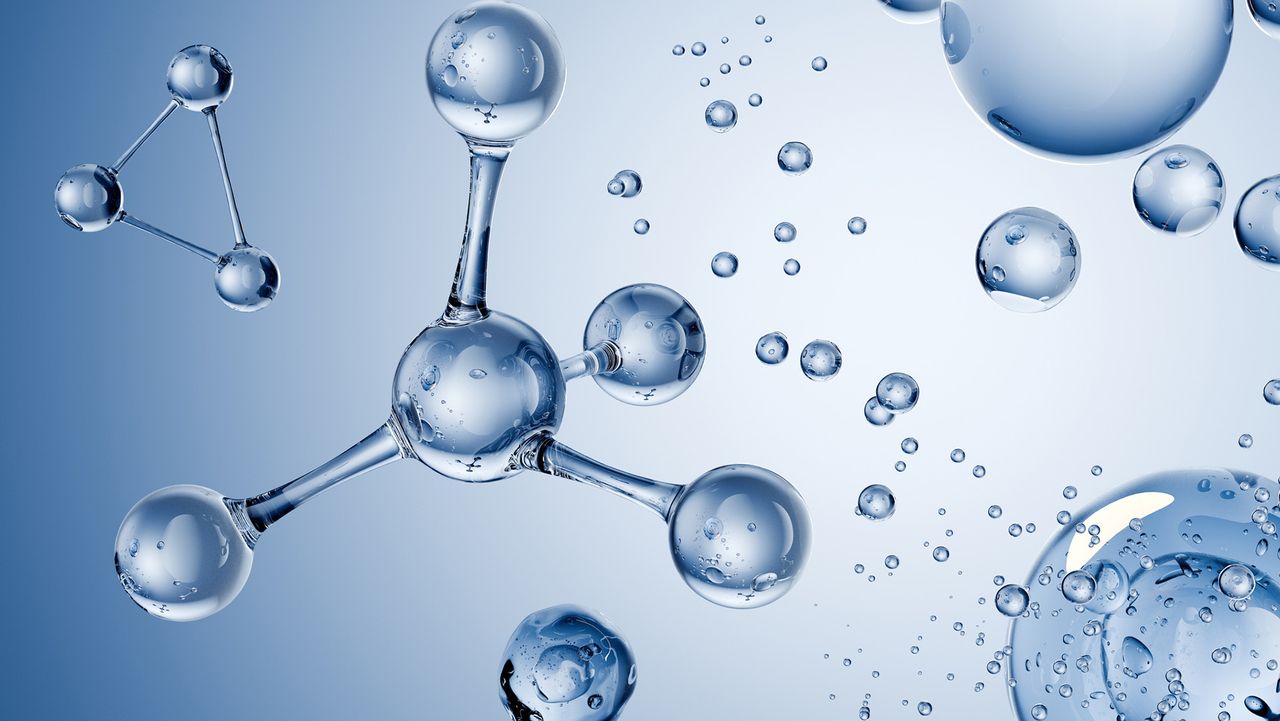
For years, scientists have suspected that, at the molecular level, water is two different liquids a denser one and a less-dense one that are constantly switching places. Catching real molecular evidence of this microscopic transformation has been hard. But now, with help from artificial intelligence, researchers say they've finally found it."It's hard to imagine here is just one water, right?" said Xiao Cheng Zeng, a physical chemist at the City University of Hong Kong and co-author of the new study, told Live Science while holding a water bottle in the air. That puzzle sent him digging through scientific literature, where he found the possible explanation: the two-state hypothesis. "That got my attention. We have literature to talk about it but no evidence." The findings, published June 4 in the journal Nature Physics, could not only prove this long-sought molecular change is real, but also help to explain dozens of water's weird behaviors. Most liquids become denser as they cool, but water behaves differently; it becomes denser until about 4 degrees Celsius, then starts to expand, which is why ice floats. Water also resists temperature changes better than similar liquids and has a viscosity that decreases under certain pressures. Scientists have documented various anomalies related to water and suspect they may be interconnected.The two-state model is an attempt to be that unifying explanation. A 30-year hunchZeng has been studying water since his postdoc days in the late 1990s, when he worked on liquid freezing. The two-state hypothesis itself came onto his radar later around 2006, when he first encountered it at scientific conferences. But for years, he set it aside as too difficult to tackle directly. That changed roughly around 2016, as researchers began reporting experimental evidence that supercooled water could split into distinct high-density and low-density forms.Around two and a half years ago, Zeng handed the problem to Liwen Li, a postdoctoral researcher in his lab. Rather than repeating the conventional approaches other groups had already struggled with, Li suggested the use of "unsupervised deep learning" AI trained to spot patterns in data without being told what to look for."So AI [is] forced to learn to use [its] knowledge to create, to explore," Zeng told Live Science. The team ran massive molecular dynamics simulations, using the GROMACS simulation package. They tracked how hundreds of thousands of water molecules moved and interacted and generated tens of millions of data points."Traditionally, you may need a lot of students to figure that out. ... With computers and AI, it took [Li] maybe a year and a half," Zeng said. Without AI, he estimated, the same analysis might have taken closer to a decade. AI was used to study the molecular composition of water. (Image credit: Vertigo3d via Getty Images)The AI came back with "reaction coordinates" a small number of variables, distilled out of all that molecular motion, that describe exactly how a water molecule's local arrangement shifts from the denser structure to the looser one and back. They plotted the system's behavior along those coordinates to see the shape of the conversion. That included the number and location of energy barriers, or saddle points, that molecules have to cross to make the switch.Two paths up the mountainThe team found that the path the two structures take to convert into each other changes depending on certain conditions. Most of the time, the switch happens along what the researchers call a "semi-loop" pathway, with a single energy barrier to cross.But near the boundary between high-density and low-density water the same kind of threshold where ice and liquid water coexist at 32 degrees Fahrenheit (zero degrees Celsius) the molecules can take a more roundabout "full-loop" path, with three separate barriers instead of one.Zeng compared it to hiking a mountain that's been sliced in half, with a gentle slope on one side and a sheer cliff on the other. Most hikers stick to the slope; that's the semi-loop. But near the boundary where the two halves meet, it's as if the mountain were becoming whole again, letting hikers circle the entire peak. That's the full loop.Zeng and his team are now building a more rigorous machine-learning model to confirm the result. They hope to eventually connect it to properties like density, viscosity and temperature. Related storiesScientists spot water molecules flipping before they split, and it could help them produce cheaper hydrogen fuel New electrochemical method splits water with electricity to produce hydrogen fuel and cuts energy costs in the process New water battery could last until the 24th century and it can be safely discarded in the environmentConfirming the structure in real water won't be simple. Zeng said it will likely require new and sensitive experimental techniques the kind developed by labs like Pacific Northwest National Laboratory, which previously found indirect spectroscopic evidence for water's two-state behavior. "Once we have this ... confirmed by experiment," he said, "this model can be used to [understand] how water interacts with nature." Since most biological and pharmaceutical processes happen in water, a better understanding of water's molecular structure could shed light on how dissolved salts, proteins, and drug molecules interact in solution. "These interactions are vital for injectable drugs and cell function," he noted, but applying this knowledge to practical uses is still a long way off.








 English
 Arabic
 French
 Spanish
 Portuguese
 Deutsch
 Dutch
Dutch
 Italiano
 Russian
 Romaian
 Portuguese (Brazil)
 Greek
Greek