How Nixon Became President with the October Surprise of 1968
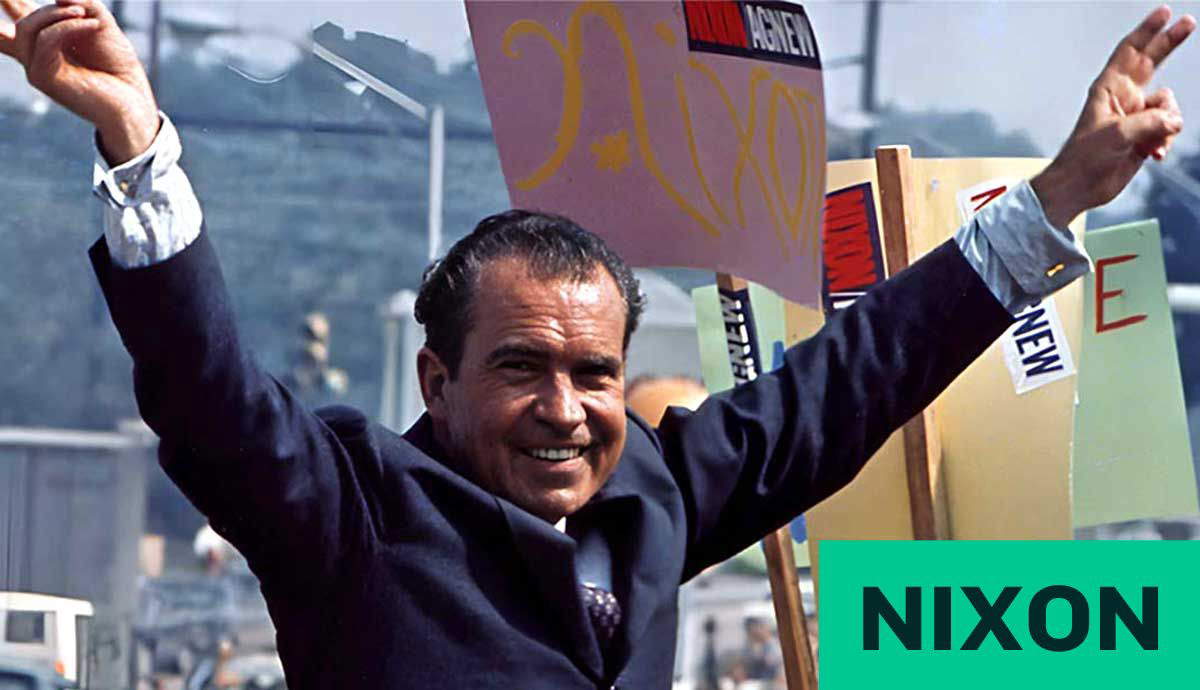
Between autumn 1964 and summer 1968, US President Lyndon B. Johnson had massively increased US military involvement in the ongoing Vietnam War. However, the Tet Offensive in January 1968 revealed that communist forces in Vietnam were still a potent threat, revealing that American reports of a victory being just around the corner were erroneous. Johnson decided not to run for re-election that year, and his Democratic Party was in turmoil. But, could a last-minute announcement regarding the Vietnam War bolster Johnsons party and keep a Democrat in the White House? Not if Republican challenger Richard Nixon could help it! 1968 began a tradition of October Surprises in presidential elections.Setting the Stage: The Vietnam WarAn image of a US Navy sailor involved in the Gulf of Tonkin Incident on August 4, 1964, wherein a US vessel was allegedly attacked by North Vietnam. Source: PBS Learning MediaThe US became involved in armed turmoil in Vietnam as far back as 1946 when France attempted to re-assert control over its former colonies in French Indochina. Although colonialism was a bad look in the aftermath of World War II, especially as Britain looked to give independence to India, the US feared the spread of communism in French Indochina. The First Indochina War resulted in a defeat for France, which exited the region in 1954 and left a divided state: communists controlled North Vietnam, and non-communists controlled South Vietnam.Fighting began again in 1956 after a planned referendum to reunite Vietnam under one government was called off. The US supported South Vietnam and, as in the recent Korean War, wanted to prevent the spread of communism. By the early 1960s, the US was sending thousands of military advisers to aid South Vietnam. In August 1964, however, the war was significantly escalated when the administration of President Lyndon B. Johnson (LBJ) declared that a US Navy ship had been attacked by North Vietnamese gunboats in the Gulf of Tonkin. Congress quickly passed the Gulf of Tonkin Resolution, giving Johnson unlimited war-making powers.Setting the Stage: Lyndon Johnsons 1964 LandslideA photograph of US Senator Lyndon Johnson at the 1960 Democratic National Convention, where he was named John F. Kennedys running mate. Source: LBJ Presidential LibraryLyndon Johnsons increased war-making power was further bolstered by his strong popularity. The former Senate Majority Leader, a Texas native, had been picked as fellow US Senator John F. Kennedys running mate in 1960, helping the Massachusetts legislator win in the South in the fall. When Kennedy was tragically assassinated in November 1963, Johnson became president. He won the support of Kennedys team by faithfully continuing his predecessors legacy on civil rights. Having served less than one year of Kennedys first term, LBJ planned to run for his own presidential term in 1964.Strong on civil rights and social welfare in 1964, with legislative reforms ranging from the Civil Rights Act to the War on Poverty to Medicare, Johnson was very popular with voters. Republicans chose staunchly conservative US Senator Barry Goldwater (R-AZ) as their presidential nominee, and he performed poorly at the ballot box. Goldwater was portrayed as an opponent of civil rights and an aggressive nationalist who might trigger a nuclear war with the Soviet Union. Some credit the Daisy Ad that accused Goldwater of warmongering tendencies with giving Johnson one of the biggest landslide election victories.January 1968: The Tet Offensive and Credibility GapA poster commemorating the fifty-first anniversary of the infamous Tet Offensive by communist forces in South Vietnam. Source: United States ArmyUpon winning re-election in 1964, Johnson began swiftly escalating US involvement in Vietnamwhich was ironic given his previous criticism of Republican rival Barry Goldwater as a supposed warmonger. Operations like Rolling Thunder in 1965 saw increased direct US operations against North Vietnam. In 1966 and 1967, growing numbers of US soldiers were involved in trying to find and eliminate communist Viet Cong guerrillas in South Vietnam. Although US technological advantages could overwhelm the Viet Cong (VC) and North Vietnamese Army (NVA) in open combat, guerrilla warfare meant the US often failed to strike solid blows against its enemies.US President Lyndon B. Johnson addressing the nation via television in 1968. Source: National Public Radio (NPR)Public support for the growing war in Vietnam began to wane during this period of escalation as American casualties mounted. The Johnson administration insisted that victory was near and promoted body counts as evidence that the communists were running out of soldiers. However, the Tet Offensive on January 30, 1968 revealed that the communists were far from beaten and could still strike at will. Although the US and South Vietnam successfully repelled the offensive, the attacks solidified many Americans new beliefs that the Vietnam War had devolved into a bloody stalemate. A credibility gap grew between the public and Johnsons administration, and faith in LBJ swiftly eroded.March 1968: McCarthy Wows and Johnson Drops OutA photo of US Senator Eugene McCarthy (D-MN), an anti-war challenger to incumbent Johnson in the 1968 Democratic primaries, after a strong showing in New Hampshire. Source: NPRDespite the shock of the Tet Offensive, LBJ planned to run for re-election again that fall. Having served less than a full year of Kennedys term, Johnson was eligible for a second full term of his own under the 22nd Amendment. However, the Democratic presidential primaries quickly revealed that Johnson had viable challengers within his own party. Anti-war US Senator Eugene McCarthy (D-MN) had announced his candidacy in November 1967, and the Tet Offensive increased the popularity of his message. McCarthy wanted to end US involvement in the war, and people were listening.In March 1968, McCarthy won a shocking 42 percent of the vote in the New Hampshire presidential primary. This showed that Johnson might actually not clinch the presidential nomination, which would be unprecedented in the modern era. US Senator Robert F. Kennedy (D-MA) announced his own candidacy for president, giving Johnson a second major rival. With two rivals and growing anti-war sentiment, Johnson publicly announced that he would not seek re-election. He put his support behind his vice president, Hubert Humphrey.August 1968: Democrats in Turmoil at ConventionYouth protesting continued US involvement in the Vietnam War during the 1968 Democratic National Convention (DNC) in Chicago in August 1968. Source: The Chicago 00 ProjectIn April 1968, civil rights leader Dr. Martin Luther King, Jr. was assassinated in Memphis, Tennessee. Two months later, presidential candidate Robert F. Kennedy was assassinated in California. Many Americans, particularly young people, reeled from these twin tragedies. Tensions rose during the summer as anti-war protests continued, and there was even a wave of international protests linked by anti-war and anti-racism sentiment. Young people were upset and felt that the government was uncaring and heavy-handed, even brutal.The Democratic National Convention (DNC) was held in Chicago in 1968, and anti-war protesters converged there in anticipation. Police and National Guard forces prepared for a showdown and were told to use force against protesters. On August 28, during the convention, police brawled with protesters, and the violence was televised worldwide. The DNC selected Hubert Humphrey as the partys presidential nomineedespite Humphrey not having run in any primaries! This further angered many anti-war Democrats and eventually led to both major parties committing to honoring the results of presidential primaries when naming nominees.General Election 1968: Nixon Picking Up SteamRichard M. Nixon, button pin for presidential campaign, 1968Humphrey now faced the Republican nominee, former Vice President Richard M. Nixon, in the general campaign. Nixon ran on a law and order campaign and criticized Democrats and liberals for destabilizing the country with protests and radicalism. He claimed to represent a silent majority of Americans who wanted order and stability. After years of protests and riots, both anti-war and race-related, many middle-class voters supported Nixons message. The DNC riots hurt Democrats appeal even further, and Nixon proudly proclaimed that Republicans knew how to run things in a peaceful, orderly fashion.However, Nixons initial support began to erode as autumn began. Despite efforts, he did not capture the youth vote, especially when his campaign began blaming them for radicalism. Many moderates did not like Nixons criticism of young people, either, swinging some support back to Humphrey. By the final months of the campaign, both Nixon and Humphrey began courting the same idea: ending the war in Vietnam. This idea was widely popular, and the strong third-party candidacy of George Wallace suffered when his running mate, a former Air Force general, suggested escalating the war with nuclear weapons.October 1968: Johnson and Peace TalksA photograph of US President Lyndon Johnson announcing a temporary cessation of American bombing of North Vietnam in October 1968. Source: New York Public RadioIf Johnsons administration could announce a major breakthrough in ending US involvement in Vietnam, it could be enough to swing the election to Humphrey (who informed Johnson in September that he would cease bombing North Vietnam if elected). This would help save LBJs strained legacy and make up for the humiliation of having to abandon his 1968 re-election hopes. Johnson approached peace talks with North Vietnam, which would be held in Paris, France. The Paris Peace Accords began in May 1968 with the first unofficial dialogue between North Vietnam and the alliance of South Vietnam and the United States.Pursuing peace was a complex and sensitive matter. The Johnson administration wanted to get out of the war but with honor. South Vietnam feared the exit of the United States, which would remove its world-class military protection. North Vietnam wanted a cessation of the damaging bombing missions of the United States but felt that it had the right to reunite Vietnam under one government. On October 30, only days before the 1968 elections, Johnson recorded an announcement to halt all bombing missions over North Vietnam as part of the peace negotiation process. The message was played the next day.Same Time: Nixon (Allegedly) Sinks Peace TalksA photograph of South Vietnamese President Nguyen Van Thieu (left) with US President Richard Nixon (right) in June 1969. Source: Richard Nixon Presidential Library and MuseumDespite Johnsons public message about halting the bombing missions, South Vietnamese leadership did not jump at the prospect of peace with North Vietnam. Johnson realized with frustration that both Hubert Humphrey, his current vice president, and Richard Nixon, the former vice president, had back-channel access to the peace process. And Nixon, opponent of Humphrey and the Johnson administration, was allegedly sabotaging the peace talks by offering South Vietnamese president Nguyen Van Thieu a better deal.Nixons alleged liaison was Anna Chennault, a Republican fundraiser who had been born in China and married World War II hero Claire Lee Chennault, a US Army Air Force general who led the Flying Tigers volunteer pilots. A well-connected widow, Chennault allegedly used South Vietnams ambassador in Washington, Bui Diem, to pass along Nixons offer. If Thieu botched the current peace talks under the Johnson administration, Nixon would later agree to more of Thieus demands in later talks. Sure enough, Thieu did not show up to the beginning of the Paris Peace Accords.November 5, 1968: Nixon Wins Big in Electoral CollegeFormer Republican vice president Richard Nixon, winner of the 1968 presidential election, on his way to inauguration on January 20, 1969. Source: National ArchivesJohnson supposedly learned about the whole thing on October 29, 1968. Although the president was enraged by Nixons alleged back-channel with Thieu, he did not go public. Revealing Nixons treasonous behavior might have forced a revelation as to how Johnson knew about itusing US government agencies to spy on American rivals and foreign allies. That news might have been as damaging to Johnson and the Democrats as it would have been to Nixon and the Republicans. Additionally, Nixon was prepared to deny allegations, meaning things were unlikely to be proven before election day.On November 5, 1968, Nixon defeated Humphrey by a slim margin in the popular vote but did very well in the Electoral College. The election was a painful defeat for many Democrats, who felt the Nixon election to be a repudiation of much of their work on civil rights and social welfare policies. With Nixon having only bested Humphrey by about 500,000 votes out of over 63,000,000 cast for the two of them, it is conceivable that a stronger showing by Thieu at the Paris Peace Accords might have swung the election to Humphrey. In January 1973, the Nixon administration finally ended US involvement in the Vietnam War.Aftermath: October Surprise StrategyA photograph of US President Jimmy Carter in 1980, whose ability to resolve the Iran Hostage Crisis was allegedly sabotaged by Republican rival Ronald Reagan, via PBSThe unveiling of dramatic and politically important information in late October, only a week or two before election day in early November, is today known as an October Surprise. Timing is important to maximize the informations impact on voters: releasing the news too early can cause initial feelings to fade by election day, and releasing the news too late can mean too few voters are affected before casting their ballots. The term became popularized in 1980 when, similar to 1968, a Republican challenger allegedly used diplomatic back-channels to sabotage a foreign policy goal of a Democratic incumbent. Specifically, Ronald Reagan allegedly convinced Iran to hold on to the American hostages until after the election, denying Jimmy Carter a much-needed popularity boost.1992 and 2000 saw some relatively minor October surprises, but 2016 saw both Democratic nominee Hillary Clinton and Republican nominee Donald Trump staggered by October revelations. Clintons private email server scandal returned to the forefront in October due to FBI director James Comeys letter to Congress about reopening the investigation, and Trumps infamous Access Hollywood tape was broadcast in the media. Both candidates were tarnished, though Trump narrowly won in a major upset on election daysome say because Comeys ill-timed letter cost Clinton support in swing states.







 English
 Arabic
 French
 Spanish
 Portuguese
 Deutsch
 Turkish
 Dutch
Dutch
 Italiano
 Romaian
 Portuguese (Brazil)
 Greek
Greek