
• WWW.THECOLLECTOR.COM
    When the US and Great Britain Nearly Went to War Over a Pig
    As the US expanded across the North American continent, new lands brought new territorial disputes. In 1859, an island off the coast of the Washington Territory became the source of global tensions between the US and Great Britain. A property dispute between two settlers brought soldiers from each country rushing to the island. Yet, despite high tensions, there was never any fighting. This strange conflict, in which the death of a single pig nearly plunged two nations into war, marks a unique bloodless chapter in the history of American expansionism.Border Ambiguity: Oregon Territory DisputeMap of the San Juan border dispute by Ameli Sanchos. The proposed US border is shown in blue, the British proposal in red, and the compromise line in purple. Source: Wikimedia CommonsFollowing the westward expansion of the United States and Great Britain, both nations disputed the ownership of the Oregon Territory. Americans were fueled by Manifest Destiny, or the belief that it was their God-given right to expand across the continent, and this mindset extended to what would later become the modern U.S. states of Oregon and Washington. The Hudsons Bay Company, a British trading company, was interested in controlling the Columbia River that flowed through central Washington and northern Oregon to support the lucrative fur trade. Both sides completely ignored the sovereignty and disregarded the territory of Pacific Northwest indigenous communities in the process.In 1846, the Oregon Treaty was signed to divide the disputed territory between the two nations along the 49th parallel from the Rocky Mountains to the West Coast. However, under the terms of the treaty, the border was left ambiguous in certain areas, such as the San Juan Islands off the coast of the modern state of Washington. This ambiguity led to confusion over which nation had rightful ownership over the islands. The treaty stated that the boundary line would continue through the middle of the channel which separates the continent from Vancouvers Island, but the exact location of that channel remained unclear. The British argued that the boundary extended through the Rosario Strait, while the Americans contended it was the Haro Strait.Belle Vue Sheep Farm, September 1859. Source: National Park ServiceTo strengthen their claim, the Hudsons Bay Company took action in 1845 by claiming the San Juan Islands. By 1851, they had established settlements on the islands, asserting British dominance in the region. Meanwhile, the Washington Territory, part of the United States, formally claimed the islands in 1853, which spurred increased British settlement in the area. In December of that same year, the Hudsons Bay Company further solidified its position by establishing the Belle Vue Sheep Farm on the islands, bringing with it a flock of 1,369 sheep.During this period, the U.S. Army built Fort Steilacoom near modern-day Tacoma, Washington in 1849. The fort served two purposes: protecting American settlers from British forces and preventing raids by indigenous tribes from the north. By 1854, both the U.S. Navy and Revenue Marines (which later became the Coast Guard) were patrolling Washingtons coastal waters, while the British Royal Navy did the same around Vancouver Island. Both American and British forces had several violent encounters with local tribes.The situation grew more complex when gold discoveries in the 1850s drew waves of American prospectors into British Columbia. The Fraser Canyon Gold Rush of 1858 brought an estimated 30,000 American miners north into British territory. This alarmed British authorities, who feared losing control of the region to American settlers. The sudden influx of American settlers and increasing military operations on both sides led to a tense situation that ultimately set the stage for the Pig War.From Property Dispute to International CrisisThe Cattle Point Peninsula and American Camp, tracing made in 1872. Source: National Park ServiceIn 1856, both nations formed a Boundary Commission to survey the channels, but commissioners were unable to agree, and the territory continued to be disputed. By the spring of 1859, 18 Americans had made claims on San Juan, leading to increasing local property disputes. The dispute reached a boiling point on June 15, 1859, when an American settler, Lyman Cutlar, shot a pig belonging to a British settler, Charles Griffin, after it crossed into his garden. Cutlar offered $10 to Griffin as compensation for the pig, but Griffin demanded $100, which Cutlar refused.British officials threatened arrest and sent military forces to the island to establish control. American settlers reached out to General William S. Harney, Commander of the US Armys Department of Oregon. Harney responded by sending Captain George E. Pickett with 64 soldiers to the island, which led to a standoff. Pickett landed on the island on July 27 and began constructing fortifications and an American camp. James Douglas, Governor of Vancouver Island, responded by sending additional warships under the command of Captain Geoffrey Hornby.Despite the growing military presence, the occupation remained largely peaceful. Both sides were reluctant to engage in fighting even under the severe threat of violence. While both countries appeared ready for war, neither side wanted to start one, leading to a prolonged argument over who owned the islands.Standoff and Joint OccupationCamp San Juan Island in 1874. Source: National Park ServiceBy August 1861, there were over 2,600 American and British soldiers on the island. Despite the growing military presence, both sides maintained good relations, engaging in social gatherings together, including Fourth of July and Queen Victoria Day celebrations. Perhaps the soldiers understood that war over such a trivial matter would be absurd, and the human element of the conflict helped maintain peace. Regardless, it appeared that all parties involved wished to avoid war.Concerned about the potential conflict, officials in Washington, D.C. sent General Winfield Scott, a veteran of the Mexican-American War, to deescalate the situation. Scott arrived on the island in October 1859 and proved to be an adept diplomat, negotiating with British officials to find a satisfactory, albeit temporary, compromise.Both sides agreed to a temporary joint occupation of the island, with each side limiting their military presence to just 100 soldiers. The American troops established a camp on the southern end of the island, and the British troops established a camp on the northern end. The physical separation and agreement to joint occupation potentially alleviated tension between the two garrisons. This agreement helped avoid a direct military conflict while both sides waited for the border to finally be decided.Portrait of Captain George Bazalgette, first commandant of the English camp. Source: National Park ServiceThe success of this agreement clearly demonstrated that neither side wished for war. For the U.S., the rift between northern and southern states was reaching its boiling point with Bleeding Kansas (1854-1859). As the Civil War seemed more and more likely, perhaps the U.S. wished to avoid dragging foreign powers into the conflict. For the British, the costly Crimean War (1853-1856) likely tempered ambitions and made officials more hesitant to engage in costly conflicts over trivial territory.Ultimately, the outbreak of the American Civil War caused the San Juan border dispute to become less of a concern, as it was not of immediate importance. During the Civil War, General Harney remained loyal to the Union, while Captain Pickett joined the Confederacy as a general, famously leading the disastrous Picketts Charge on July 3, 1863. During this time, the Trent Affair of 1861, in which Confederate officials were discovered aboard a British vessel, damaged U.S.-British relations. Another major point of tension was the British ships built for the Confederacy, which wreaked havoc on Union trade. Following the end of the Civil War, American politicians demanded reparations from Britain for British-built Confederate ships and the Fenian Raids in Canada. Finally, the San Juan boundary dispute came up again, and, this time, Americans pushed for a final decision.A German Kaiser Steps InPortrait of Kaiser Wilhelm I, c.1858. Source: Wikimedia CommonsIn 1871, the San Juan border issue was brought before Kaiser Wilhelm I of Germany for international arbitration. Wilhelm placed the boundary through the Haro Strait and awarded the islands to the United States. In response, British troops withdrew from the island, but Americans wouldnt withdraw until 1874.In the end, the only casualty of the Pig War was a single pig, but the incident highlighted the potential for major international conflicts over relatively minor disputes in a growing age of nationalism and imperialism. While there were no battles or casualties, the conflict still serves as a poignant illustration of ongoing US expansion and the colonization of North America.Peaceful ResolutionA picnic at English Camp, likely taken between 1869 and 1872. Source: National Park ServiceThe Pig War is most likely the strangest conflict in U.S. history, and it invites speculation about how different history might have been had the two nations gone to war, with a possible invasion of Canada. Occurring just two years before the start of the American Civil War, had it become a full-fledged military conflict, it may have delayed the outbreak of the Civil War or led the British to play a more active role in the conflict. Some historians suspect that George Pickett and William S. Harney intended to use the incident to unite the North and South against the British while staving off the impending civil conflict.Luckily, war was ultimately avoided due to rational military leadership on both sides and a hesitancy to engage in conflict. However, it did illustrate that despite internal issues, the United States was still keenly interested in expanding its territory.SourcesProsch, Charles. Reminiscences of Washington Territory: Scenes, Incidents and Reflections of the Pioneer Period on Puget Sound, 1904.Vouri, Mike. The Pig War: Standoff at Griffin Bay. Pullman, WA: Griffin Bay Bookstore, 1999.
    0 Comments 0 Shares 28 Views
  • WWW.THECOLLECTOR.COM
    Theodore Roosevelts Adventure in the Amazon
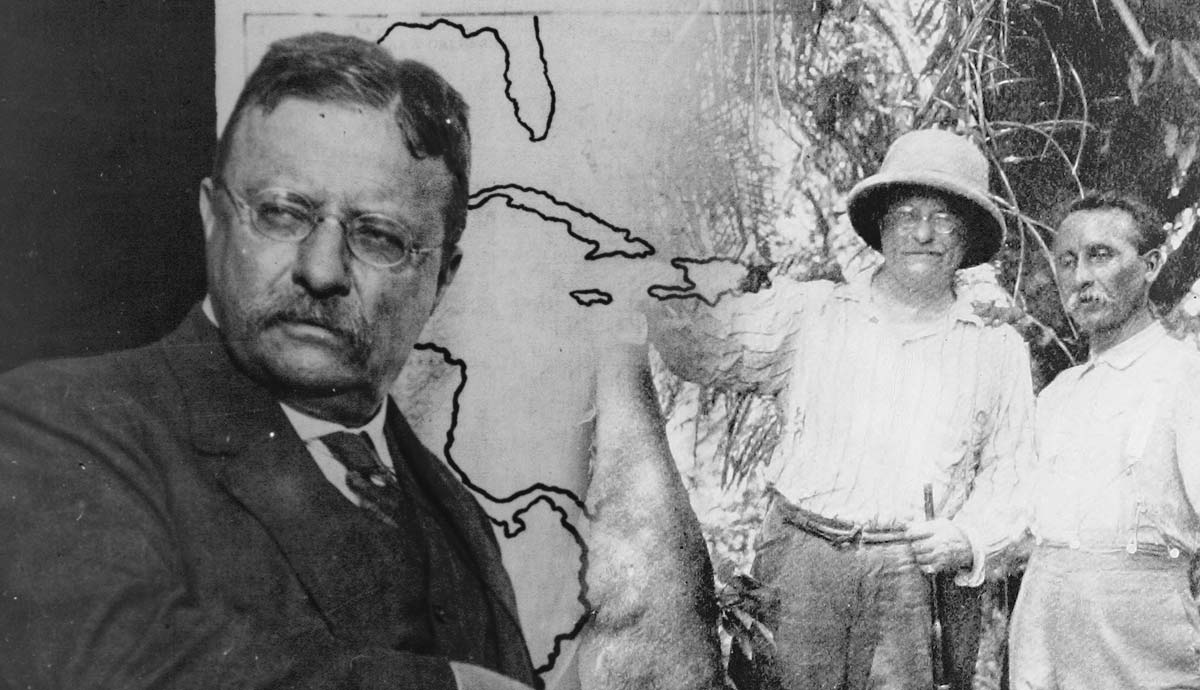
    Following his defeat in the 1912 presidential election, Theodore Roosevelt refused a leisurely retirement and sought a new challenge. Roosevelt seized the opportunity to join an expedition to explore the River of Doubt, an uncharted river in the Amazon rainforest, led by the renowned Brazilian explorer Cndido Rondon. The RooseveltRondon Scientific Expedition down the River of Doubt was a grueling and dangerous journey that nearly cost the former president his life. Nonetheless, the expedition was ultimately a triumph of exploration.Roosevelts Search for Adventure After DefeatTheodore Roosevelt during the 1912 presidential election, 1912, by New York World-Telegram. Source: Library of CongressIn the 1912 presidential election, Theodore Roosevelt attempted to regain the presidency as the candidate for the Progressive Party. Roosevelt ran a strong campaign and demonstrated his continued vitality and courage by delivering a speech after being shot in the chest during a failed assassination attempt.However, Roosevelt ended up splitting the vote with President Taft, who was seeking re-election as the candidate for the Republican Party. The result was that Democrat Woodrow Wilson was elected President in a landslide victory in the electoral college.Throughout his life, Roosevelt sought strenuous exercise and adventure following personal or political setbacks. For example, after Roosevelts first wife had died in 1884, he went west and embraced the hard life of a rancher in the Dakotas. Similarly, after Roosevelts term as President had expired in 1909, he immediately embarked on a year-long safari in Africa.It was therefore entirely consistent with Roosevelts past behavior that he leapt at an offer from the government of Brazil to join an expedition to explore the depths of the Brazilian rainforest.The RooseveltRondon Scientific ExpeditionTheodore Roosevelt and Cndido Rondon after a successful hunt on their expedition, 1914. Source: Wikimedia CommonsThe government of Brazil selected Colonel Cndido Rondon to lead their distinguished American guest on his journey. Rondon was a legendary explorer in Brazil and in many ways embodied Roosevelts philosophy of living a strenuous life.Rondon was a Brazilian army officer with Indigenous heritage. As a young officer, Rondon had participated in the coup that deposed Pedro II, the last Emperor of Brazil. Brazils new republican government appointed Rondon to build telegraph lines to Brazils remote western regions and neighboring countries.To complete this work, Rondon spent years living in Brazils Amazon rainforest and explored previously uncharted territory. Rondon also contacted various Indigenous groups, some of whom were hostile to his work. During this time, Rondon adopted the philosophy of die if necessary, but never kill. This philosophy would define his lifes work with Brazils Indigenous peoples.A map showing the location of the River of Doubt, now called Rio Roosevelt. Source: Wikimedia CommonsOn a previous expedition in western Brazil, Rondon had discovered the headwaters of an uncharted river, which he named the Rio da Dvida (River of Doubt). Rondon proposed to Roosevelt that their expedition chart this river. Rondon made it clear to Roosevelt that he would only consent to guide the famous American through the jungle if the expedition would serve a serious scientific purpose.Roosevelt was thrilled by the prospect of exploring unknown territory and agreed to journey down the River of Doubt. Roosevelts son, Kermit Roosevelt, joined his father on the journey. The RooseveltRondon Scientific Expedition was formed.Into the Jungle: Early StrugglesThe Roosevelt-Rondon Scientific Expedition portages its dugout canoes through the jungle, by Kermit Roosevelt, 1914. Source: Library of CongressThe Roosevelt-Rondon Scientific Expedition faced hardship as soon as it set out in December 1913 from the town of Cceres. To reach the headwaters of the River of Doubt required over two months of travel deep into the interior of Brazil. The journey was made in oppressive heat, and the travelers were plagued by swarms of insects.Many supplies had to be abandoned on the arduous journey to the river. The expedition had to reduce its size due to dwindling supplies; ultimately 22 men, including both Roosevelts, Rondon, a Brazilian army lieutenant, a doctor, an American naturalist, and 16 Brazilian porters started down the River of Doubt on February 27, 1914.The Roosevelt-Rondon Scientific Expedition used dugout canoes to travel the River of Doubt, by Kermit Roosevelt, 1914. Source: Library of CongressThe expedition was forced to abandon several Canadian canoes during the journey to the river. This decision would be a source of regret because the expedition was then forced to use dugout canoes for the journey down the River of Doubt. Dugout canoes had the advantage of being constructed from trees found in the jungle. However, they were also very heavy and difficult to maneuver on the river.The challenges of using the heavy dugout canoes were demonstrated just a few days into the descent of the River of Doubt when the expedition was required to spend March 3 to 5 portaging around impassable rapids. The work of carrying the canoes through the jungle was exhausting. The expedition members did not know that this was just the beginning of their struggles on the River of Doubt.The Expeditions Troubles Mount: Delay and a DrowningTheodore Roosevelt and Cndido Rondon in a camp during the expedition, by Kermit Roosevelt, 1914. Source: Library of CongressThe expeditions troubles mounted as it continued down the River of Doubt. Progress was excruciatingly slow. Frequent rapids were encountered. Each time, a difficult and lengthy portage through the steaming, insect-ridden jungle was required.The expedition was further slowed by the March 11 sinking of two canoes that had broken free from their moorings. The loss of the canoes necessitated spending until March 15 building new dugouts from nearby trees. The delay was problematic as the expedition was consuming its food supplies at an alarming rate given the slow progress.On March 15, the expedition suffered its first fatality when a canoe containing Kermit and two Brazilian porters became caught in the rapids and overturned. Kermit and one of the porters were swept downstream but eventually were able to reach shore. The other Brazilian porter, Antnio Simplcio da Silva, drowned. Sadly, he would not be the last fatality on the journey.The Cinta Larga Shadow the ExpeditionA photograph of Indigenous Brazilians taken before reaching the River of Doubt, by Kermit Roosevelt, 1913. Source: Library of CongressThe following day, March 16, the expedition had its first encounter with the Cinta Larga, an uncontacted Indigenous group. By this point, the expedition had consumed nearly a third of its food supplies, and it became essential to supplement their supplies by hunting.Rondon was looking for game with his dog, Lobo, several feet ahead when he suddenly heard Lobo yelp. When Rondon found Lobo, the dog was dead, shot by two poisonous arrows. The expedition quickly mounted a guard, fearing an attack, but none emerged. They left gifts for the Cinta Larga to let them know they were not angry about Lobo and that the expeditions intentions were peaceful. Throughout the remainder of the expedition, the Cinta Larga would shadow the explorers.Many decades later, after the Cinta Larga were formally contacted, their oral history revealed that they debated attacking and wiping out the expedition, but ultimately no action was taken. Roosevelt wrote that the expedition often heard the Cinta Larga and encountered abandoned villages and other signs of their presence but never saw them.Crisis in the Jungle: Disease and MurderThe many portages on the expedition exhausted the expedition, by Kermit Roosevelt, 1914. Source: Library of CongressFrom March 16 to April 3, the expedition made slow progress. The explorers continued to encounter rapids and lost more canoes. Non-essential supplies had to be abandoned, and food was increasingly scarce. The insects were ferocious and began eating the mens clothing.Roosevelt and Kermit were both suffering from fevers. Other members suffered from dysentery. Many of the Brazilian porters became unable to work due to swollen feet and other injuries incurred during the hard work of portaging the dugouts through the rough terrain. Only Rondon seemed immune to the effects of the jungle.Morale plummeted and tensions began to rise. On April 3, a porter named Julio was accused by a corporal of stealing food. Julio responded by shooting the corporal dead and running into the jungle armed with a carabine. Roosevelt and the other members of the expedition immediately armed themselves. They tried to apprehend the murderer, but he had vanished into the jungle. The expedition recovered Julios carabine in a bush, which reassured them he was no longer a threat.The expedition had no time to continue their search, so after burying the corporal, it resumed its journey. Julio would later be spotted on the riverbank begging to surrender, but the expedition could not stop. Rondon later sent two men back to look for Julio, but he was never found and is assumed to have perished in the jungle.Theodore Roosevelt Near DeathTheodore Roosevelt sitting in one of the expeditions dugout canoes, by Kermit Roosevelt, 1914. Source: Library of CongressA new crisis now developed on the expedition: Theodore Roosevelt was dying. On March 27, Roosevelt had plunged into the river to prevent two canoes from drifting away. During his efforts to save the canoes, Roosevelt had badly cut his leg on some rocks. Proper hygiene was impossible to maintain on the expedition, and after a few days, Roosevelts wound became badly infected.The former President became delirious and spent much of this period lying down in his canoe or being carried through the jungle on a litter during portages. It was clear to everyone that Roosevelt would die if he did not receive proper medical treatment. Unfortunately, no one knew how much longer it would take to reach settled territory.Roosevelt made a remarkable declaration to Kermit, stating that he was aware that he was slowing down the progress of the expedition and therefore endangering everyones lives. Roosevelt told Kermit to leave him behind in the jungle and save the rest of the expedition. Kermit promptly refused, telling Roosevelt that he was going to bring him home alive or dead, and it would be easier if he was alive.Roosevelt was not abandoned by the expedition, but his willingness to sacrifice himself is a testament to his courage.Salvation: The End of the River of DoubtThe surviving Brazilian porters at a monument marking the newly named Rio Roosevelt, by George Kruck Cherrie, 1914. Source: Wikimedia CommonsRoosevelt was not the only member feeling the effects of disease. Many of the Brazilian porters were now too sick to work and the expedition was still making slow progress through the never-ending rapids on the River of Doubt. The effects of disease and fatigue were magnified by the expedition being on half-rations to conserve supplies. The first two weeks of April were a time of crisis and plummeting morale for the Roosevelt-Rondon Scientific Expedition.On April 15, the expedition finally had a stroke of good luck when it encountered rubber tappers, Brazilians who lived on the frontier and earned a living harvesting rubber trees. The rubber tappers were able to provide supplies to the exhausted explorers.On April 26, the canoes reached the Aripuan River. A relief party from the Brazilian government had already established a camp and was flying the flags of Brazil and the United States to greet the expedition. A ceremony was held where the River of Doubt was officially renamed Rio Roosevelt.The expedition was finally safe, and Roosevelt was taken for urgent medical treatment.A Costly TriumphTheodore Roosevelt points to the area of the Amazon explored by the Roosevelt-Rondon Scientific Expedition, 1914. Source: Library of CongressRoosevelt returned to the United States a hero. He quickly published a book about his adventure, Through the Brazilian Wilderness, which was an instant best seller. Roosevelt then embarked on a lecture tour to explain his findings and rebut skepticism that he had really explored an uncharted river in the interior of Brazil.Roosevelt and Rondon developed a mutual respect during the expedition. Through the Brazilian Wilderness was partly dedicated to Rondon, who Roosevelt described as an intrepid explorer. When they parted, Rondon promised to visit Roosevelt, and told him he would come to the US when Roosevelt was next inaugurated President of the United States.Roosevelt would never again be President. His health never recovered from his adventure on the River of Doubt and he was plagued by the effects of tropical diseases for the rest of his life. Roosevelt died on January 6, 1919, less than five years after the end of the expedition.The Roosevelt-Rondon Scientific Expedition was a triumph of exploration, but it permanently damaged Roosevelts health and almost certainly shortened his life.
    0 Comments 0 Shares 28 Views
  • WWW.THECOLLECTOR.COM
    Why Did Japan Abolish the Samurai Class During the Meiji Restoration?
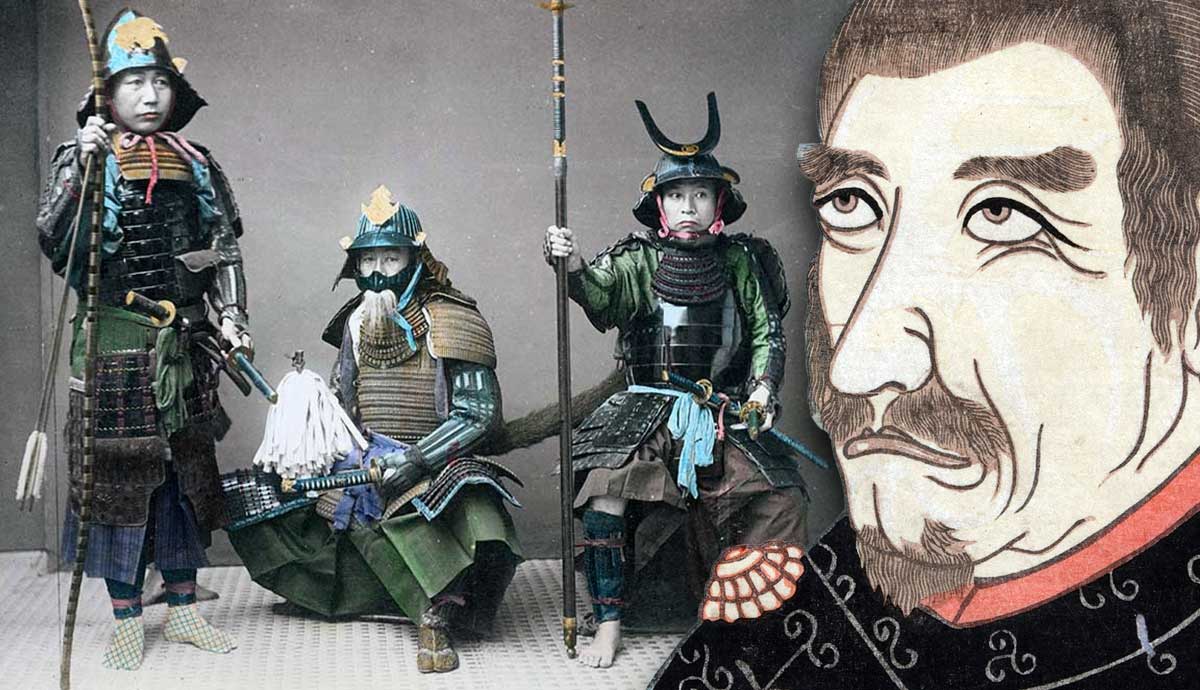
    TheSamurai ruled over Japan for nearly 700 years. The warrior caste touched every facet of Japanese life, including politics, economics, and moral philosophy. But almost in an instant, their legacy was diminished. By the late 1870s, Japan had changed from a feudal state to an industrialized world power, and the samurai caste was completely abolished by the Meiji government.So why did Japan abolish the Samurai class during the Meiji Restoration?A Period of Peace Made the Samurai Less ImportantA colorized photograph from 1860 of three samurai equipped with a variety of armor and weapons. Source: Wikimedia CommonsIt is important to note that samurai were never able to govern Japan without internal friction during the Edo Period (1603 to 1868), and this cemented their position in society due to the need for quasi-military groups. But for over two centuries, Japan enjoyed an era of internal stability under the Tokugawa Shogunate.The peace was beneficial for the developing nation, but for the samurai whose collective social identity was rooted in combat, that stability resulted in generations of fixed incomes and redundant roles. By the mid-1600s, the samurai had transitioned from being active battlefield commanders to bureaucratic administrators. However, a significant portion of the estimated 2 million people in the samurai class lived in poverty and received a fixed compensation in rice from their provincial lords.The Need for Better Military and Governance SystemsUS Navy Commodore Matthew Perry in his dress uniform, 1853. Source: Wikimedia Commons.Total chaos erupted across Japan in July of 1853 when Commodore Matthew Perry arrived at Uraga Harbor with coal-burning black ships. Equipped with massive steam engines and carrying technologically superior Paixhans guns, the presence of the fleet made Japans wooden coastal fortifications appear completely obsolete. The Shogunate felt immense pressure and attempted to pacify the American envoys. Japan was soon compelled to engage in international trade with America under the explicit threat of bombardment from Perrys naval forces.Japanese-style woodblock print of Commodore Matthew Perry, ca. 1854. Source: National Portrait Gallery / Wikimedia CommonsUpon the realization that the Japanese military had no practical ability to repel these foreign intruders, local populations revolted and demanded that Japan respect the traditional political philosophy of Sonno Joi, which meant Revere the Emperor Expel the Barbarian. Samurai from Satsuma and Choshu southern provinces soon joined to topple the Shogunate and what remained of it in 1868.They installed the 15-year-old Emperor Meiji as the head of state. All of this was executed under the justification of resisting the West, but as soon as they gained control, the samurai architects of the new Meiji government recognized that to expel the intruders, they would have to adopt Western technology and a better military system.The State Was Unable to Sustain the DaimyoA map of the territories of the Sengoku daimyo around the first year of the Genki era (1570 AD).The Western powers soon threatened to take military action if the new administration did not begin respecting global treaties and settling its financial obligations. The complication was that Japans central treasury was nearly empty. During the previous era, Japan functioned under the han system. The han were autonomous feudal domains, each possessing its own hereditary lords or daimyo. The daimyo, who were the highest-ranking members of the samurai class, were tasked with extracting taxes from the residents living in their han, but were not obligated to contribute a centralized tax to the Imperial Government. In 1871, the new Meiji administration passed the Abolition of the Han System decree.Essentially, the daimyo were divested of all administrative authority, but that still left Japan with a staggering national debt, as they were now merely salaried government officials who did not contribute meaningfully to the growth of the economy. By the early 1870s, samurai compensation accounted for nearly 50 percent of the total national tax revenue. Because the model was unsustainable, the government decided to stop funding the thousands of former combatants who lacked modern vocational skills. This left many samurai disenfranchised.Japan Needed Modern Soldiers and Not Traditional Sword-Carrying WarriorsAn 1868 photograph of Japanese Tokugawa Bakufu troops being trained by the French Military Mission to Japan.The new rulers also realized that if Japan wanted to compete with Western empires, a total reorganization of the state and a military that utilized firearms instead of traditional weapons was needed. And so on January 10, 1873, the administration passed the Conscription Law, which mandated that all healthy males, regardless of their social status, serve three years of compulsory active duty in the armed forces. Instantly, the Japanese warrior class monopoly was dissolved.In 1876, the administration finally delivered the samurai a finishing blow with the Haitrei Edict, which made the public carrying of swords illegal. The change was significant as a samurai blade was considered sacred to those who carried it. This triggered several armed insurrections across Japan, primarily centered in the home province of Satsuma.The crushing of these insurrections marked the end of the samurai as a viable political and cultural entity.
    0 Comments 0 Shares 28 Views
  • ALLTHATSINTERESTING.COM
    Vesna Vulovi, The Flight Attendant Who Survived A Fall Of 33,000 Feet
    Public DomainVesna Vulovi survived falling more than 30,000 feet in 1972.On the evening of January 26, 1972, Bruno Honke heard screaming coming from just outside of his village in Czechoslovakia. As he went to investigate, he came across a grisly sight: the wreckage of an airplane, torn apart by an explosion. And amid the wreckage, a woman, Vesna Vulovi.Though it seemed impossible that anyone could have survived such a crash, Vulovi had. She was badly injured, but she had survived a fall from more than 30,000 feet. In fact, she would walk again in just 10 months.This is the incredible story of Vesna Vulovi, the Serbian flight attendant who was recognized by the Guinness Book of World Records for surviving the highest fall without a parachute after the downing of JAT Flight 367.How Vesna Vulovi Started Working As A Flight AttendantBorn on Jan. 3, 1950, Vesna Vulovi became a flight attendant while in her 20s. According to her obituary in The New York Times, Vulovi made the decision after seeing a friend wearing a Yugoslav Airlines uniform. Allured by the idea of travelling around Europe, Vulovi thought, Why shouldnt I be an air hostess? and soon started working for Yugoslav Airlines.But she was almost rejected. As Vulovi told Green Light magazine in 2002, she had unusually low blood pressure. Before her medical exam, she drank several coffees, which helped her pass.YouTubeVesna Vulovi had been a flight attendant for less than a year when disaster struck one of her flights in 1972.Then, after working as a flight attendant for eight months, Vulovi received a summons to work JAT Flight 367, which was flying from Stockholm to Belgrade, with stops in Copenhagen and Zagreb, at the end of January 1972. As she told Green Light, she instantly realized that the summons was a mistake the airline had meant to contact a different Vesna. A little mistake, however, meant that I had my first trip to Denmark, she recalled to the magazine. I was very happy.But the assignment would change Vesna Vulovis life. The Destruction Of JAT Flight 367Vesna Vulovis trip to Denmark wasnt as fun as she had hoped. She remembered the crew being unusually downtrodden and, looking back Vulovi wondered if they had some innate sense that they would die.At 3:15 p.m., JAT Flight 367 took off from Copenhagen Airport. Just 46 minutes later, disaster struck.As the plane flew over the Czech village of Srbska Kamenice, an explosion tore through the baggage compartment. The aircraft broke apart midair and plummeted 33,330 feet to the Earth. Of the 28 passengers and crew onboard, just one person survived Vesna Vulovi. She was rescued from the smoldering wreckage of the doomed flight by Bruno Honke, a local villager who had been a medic during World War II. Honke was able to keep Vulovi alive until help arrived but it was no easy task. Vulovi was badly injured, with two broken legs, three broken vertebrae, a fractured pelvis, broken ribs, and a fractured skull. Bureau of Aircraft Accident ArchivesThe wreckage of JAT Flight 367.She was alive, but in bad shape. Vulovi fell into a coma and was temporarily paralyzed from the waist down. Whats more, she had no memory of the plane crash at all. Her recollection of the flight itself was Nothing.I have amnesia from one hour before the accident until one month afterward, she told Green Light. The first thing I can remember is seeing my parents in the hospital. I was talking to them and asking them why they were with me in Slovenia. I thought I was in Slovenia as I had just visited Ljubljana before going to Copenhagen.How Vesna Vulovi Survived Falling More Than 30,000 FeetDespite her injuries, Vesna Vulovi soon woke up from her coma. The first thing she asked for was a cigarette. Then, just ten months after the plane crash, she was able to walk again. According to The New York Times, Vulovi credited her recovery to Serbian stubbornness and her childhood diet of chocolate, spanish, and fish oil. But how did Vulovi survive the plane crash in the first place?Investigators believe that several lucky factors lined up to save Vulovis life. For one, she was in the rear of fuselage, which broke apart from the rest of the aircraft and landed in the thick snow. For another, she was pinned by a food cart as the plane broke apart, which protected her from being sucked out of the plane as the cabin depressurized. Public DomainVesna Vulovi in the hospital. Not only did she survive the plane crash, but she recovered remarkably quickly from her injuries.And Vulovis low blood pressure which almost kept her from being a flight attendant in the first place may have also played a role in saving her life. Its possible that it kept her heart from exploding on impact.I was broken, and the doctors put me back together again, Vulovi told The New York Times.Incredibly, Vulovi didnt develop a fear of flying after the accident. She had no memory of the plane crash and thus had no reason to fear airplanes. In fact, Vulovi wanted to return to work as a flight attendant, but she was given a desk job instead. She continued to fly outside of work, where people often recognized her and always want[ed] to sit next to me on the plane.As for the explosion that brought down JAT Flight 367? Czech authorities determined that it had been caused by a bomb hidden in a suitcase, likely planted by the Croatian ultra-nationalist terrorist group Ustae. However, this is disputed. In 2009, investigative reporters concluded that the plane had accidentally been shot down by the Czechoslovak Air Force.Vulovi, meanwhile, went on to live a normal life. She married, divorced, and died in 2016 at the age of 66. The plane crash had made her a celebrity the Guinness Book of World Records recognized her as the person who had survived the highest fall without a parachute but it also brought survivors guilt. Vulovi turned to religion, and developed a sense of positivity about life.[The crash] also made me an optimist, she remarked before she died, because if you can survive what I survived, you can survive anything.After learning about Vesna Vulovi and her record-breaking fall from the sky, check out Juliane Koepcke, who survived an extreme fall and then an 11-day trek through the jungle. Then, read about Charles Joughin, the baker on the Titanic who survived the frigid waters that night through interesting means.The post Vesna Vulovi, The Flight Attendant Who Survived A Fall Of 33,000 Feet appeared first on All That's Interesting.
    0 Comments 0 Shares 28 Views
  • ALLTHATSINTERESTING.COM
    7 Real-Life Sea Animals That Look Like H.P. Lovecraft Creations
    Earths oceans are a collection of vast and varied ecosystems that remain largely a mystery to this day. Indeed, according to the National Oceanic and Atmospheric Administration, only about five percent of the worlds seas have been explored. And yet, humankind has nevertheless uncovered a staggering array of sea animals that are as bizarre as they are beautiful.Matt Cardy/Getty ImagesScary ocean animals like this ferocious-looking monkfish both awe and horrify deep-sea anglers.Take the scary ocean animal known as the sea anglerfish, for example. This deep-sea creature is known for the odd luminescent lure attached to its face that helps it to capture prey in the most isolated depths of the sea. Then, theres the less menacing though equally odd sea cucumber, a vegetative and vulnerable-looking creature that is nonetheless considered to be among the most complex organisms in the sea.From the terrifying to the surreal, these are some of the most bizarre sea animals in the world.The Shapeless Sea Animal Known As The BlobfishClick here to view slideshowThe blobfish has commonly been crowned as the "world's ugliest fish," which is actually an impressive feat given just how many weird and scary ocean animals exist in the sea.More gelatinous than grandma's pudding, the jiggly blobfish, or Psychrolutes microporos, has successfully captivated the internet for its shapeless form. But underwater, the blobfish doesn't actually look like an amorphous pink puddle.In its natural habitat on the seafloor, the blobfish looks like any other fish with dark grey-ish coloring and texturized skin. So how does this weird ocean animal go from a normal-looking underwater to pink Jell-O on land?Well, it has to do with the blobfish's biological makeup. Typically found off the coast of Australia, these fish live at extreme depths of 9,000 feet, where the pressure is 120 times higher than it is at the surface. Land mammals, like humans, are incapable of surviving in such a pressurized environment, which is why researchers must explore the deep sea in the safety of submarine vessels. Similarly, as a sea animal that is accustomed to a highly-pressurized habitat, the blobfish cannot physically withstand our low-pressure environment outside the water. "Unlike most other fish, the ones that live in these depths don't have gas-filled cavities like swim bladders that would collapse under the extreme pressure," explained Henry Reich, a science communicator and host of the online science show Minute Earth. "In fact, super-deep water fish often have minimal skeletons and jelly-like flesh, because the only way to combat the extreme pressure of deep water is to have water as your structural support."When it is taken out of the highly-pressurized habitat that essentially holds its body's shape together, the blobfish's lack of skeleton and muscle combined with its jelly-like skin collapses, turning it into the gooey creature of internet fame. While the blobfish's lack of physical integrity translates to a total catastrophe above water, it is the perfect biological feature for it to survive its environment. For example, when it comes to eating, the blobfish simply opens its mouth and floats about, noshing on any sea critters that enter its path. This allows the blobfish to preserve energy, an important ability in such an extreme environment. Sadly, the blobfish is a common bycatch victim of fishing trawlers, and it's suspected that its bizarre appearance has contributed to a general ambivalence toward its wellbeing. Luckily, the weird ocean animal isn't endangered. The Deep-Sea Hatchetfish, The Weird Ocean Animal That Glows In The DarkClick here to view slideshowGiven the extreme depths to which scientists must go to find the tiny yet frightful hatchetfish, little is known about them. The bizarre sea creatures derive their name from their razor-thin bodies, which resemble the blade of a hatchet.These fish can typically be found nearly 200 feet below the surface of the Pacific Ocean, Indian Ocean, and the Atlantic Ocean. There are roughly 40 known species of hatchetfish that exist in the ocean with sizes ranging between less than two inches to five inches long. Among the more well-known deep-sea hatchetfish species are the half-naked hatchetfish (Argyropelecus hemigymnus), the silver hatchetfish (Argyropelecus aculeatus), and the false oblique hatchetfish (Sternoptyx pseudodiaphana). As tiny deep-sea inhabitants, hatchetfish mainly prey on equally little crustaceans and plankton.Besides its super thin body, deep-sea hatchetfish are easily distinguishable due to their beady eyes and luminescent exterior. Hatchetfish possess bioluminescent properties, which they can regulate depending on the conditions of their environment.This ability is known as "counter-illumination." The light is emitted through a row of luminescent organs on the fish called photophores. These special organs allow this scary sea animal to emit a glow from their bellies that matches the color of the light around it, essentially rendering it invisible.According to researchers, this form of camouflage works in both the deep sea and brighter waters near the surface. It's a skill that comes in handy when evading predators lurking in the depths of the ocean or when while swimming near the surface in search of food.Even more remarkable, however, is the fact that each species of hatchetfish has its own distinct pattern of bioluminescent lighting.The post 7 Real-Life Sea Animals That Look Like H.P. Lovecraft Creations appeared first on All That's Interesting.
    0 Comments 0 Shares 28 Views
  • WWW.DUALSHOCKERS.COM
    Valor Mortis Has Been Delayed but You Can Play the Demo While You Wait
    The developers of the upcoming supernatural soulslike, Valor Mortis, have just announced the game's release date has been delayed. On the bright side, there's a demo you can play in the meantime.
    0 Comments 0 Shares 29 Views
  • WWW.PCGAMESN.COM
    Grab a copy of Pacific Drive with our free Steam key giveaway
    You know, if you're going to be lost in a supernatural wilderness, being hunted from all angles by God knows what, you might as well travel in style. And if you can't do that, then a Radius Motors 1983 Station Wagon will just have to do. We've teamed up with Kepler Interactive to give you a chance at winning a copy of its supernatural survival game, Pacific Drive, so you too can fall in love with the boxy automobile the same way we did.
    0 Comments 0 Shares 29 Views
  • 0 Comments 0 Shares 28 Views
  • WWW.BGR.COM
    8 Gadgets That Bring Analog Charm To Your Workspace
    The analog age may be (mostly) long gone, but it definitely had its unique charms, and these modern-day gadgets can help you recapture some of it.
    0 Comments 0 Shares 27 Views
  • TECHCRUNCH.COM
    Metas Edits app is getting an AI assistant and a desktop version
    By integrating an AI assistant directly into Edits, Meta is aiming to keep creators engaged on Instagram as it continues to compete with TikTok and YouTube for creators' attention.
    0 Comments 0 Shares 27 Views