0 التعليقات
0 المشاركات
215 مشاهدة
الدليل
Elevate your Sngine platform to new levels with plugins from YubNub Digital Media!
-
الرجاء تسجيل الدخول , للأعجاب والمشاركة والتعليق على هذا!
-
Act quickly: The 15-inch LG Gram Book is under $550 at Best BuyBest laptop deal: Save $150 on the 15-inch LG Gram Book SAVE $150: The 15-inch LG Gram Book (8GB, 512GB SSD) is on sale at Best Buy for $549.99, down from the normal price of $699.99. That's a 23% discount. $549.99 at Best Buy...0 التعليقات 0 المشاركات 184 مشاهدة
-
WWW.LIVESCIENCE.COMGet the legendary Celestron NexStar 8SE telescope at its lowest price of the year in this early Amazon Prime Day dealOur telescope expert chose the Celestron NexStar 8SE as our best overall telescope, and now, with $200 off, it makes this versatile telescope excellent value for money ahead of Prime Day.0 التعليقات 0 المشاركات 21 مشاهدة -
WWW.UNIVERSETODAY.COMExoplanetary Weather Watchers Find Strong Evidence of Magnetic FieldsAstronomers studying wind speeds on distant exoplanets have discovered weather systems driven by magnetic fields, rather than the largely hydrodynamic weather patterns observed on Earth. This discovery is among the best evidence yet for the existence of magnetic fields on exoplanets.0 التعليقات 0 المشاركات 21 مشاهدة -
WWW.IFLSCIENCE.COMMasturbation Among Birds Is Widespread, Natural, And Should Not Be Punished, Say ResearchersMasturbation is generally considered a harmful response to the stresses of captivity for our feathered friends, but a new paper finds it's actually the norm.0 التعليقات 0 المشاركات 21 مشاهدة -
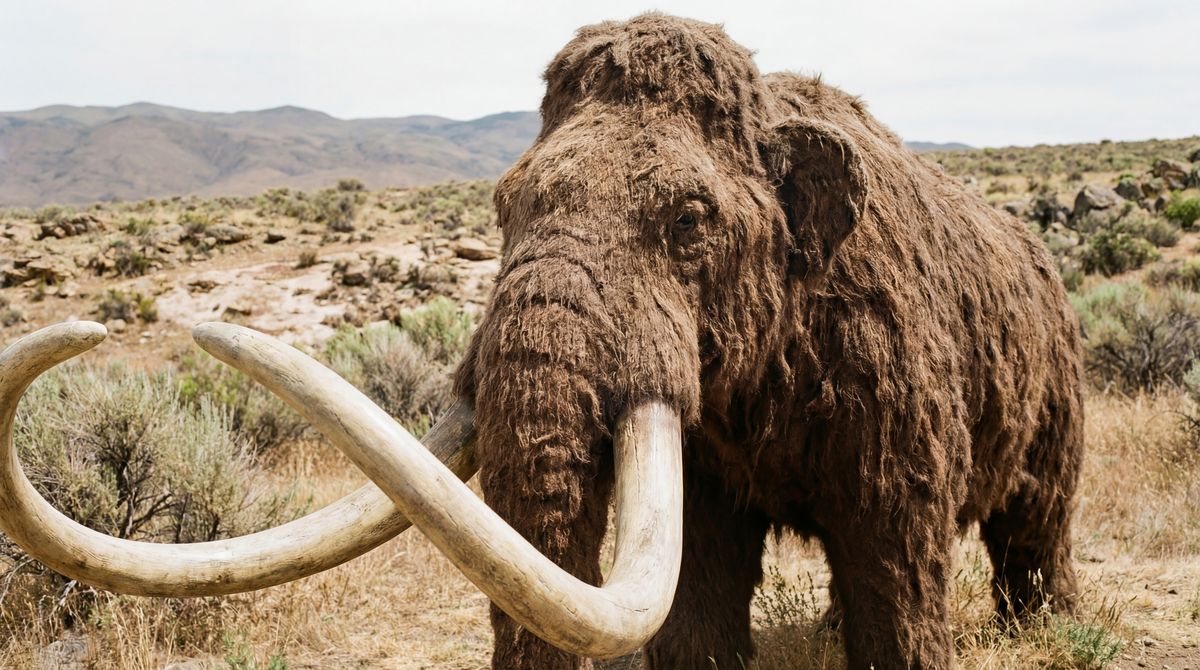
WWW.IFLSCIENCE.COMA Cold Case From The Ice Age: Someone Butchered This Mammoth 26,000 Years Ago In A Place That Was Too Cold For Humans To LiveWith no murder weapon or other signs of human presence, the identity of the mammoth's butchers remains a mystery.0 التعليقات 0 المشاركات 21 مشاهدة -
WWW.IFLSCIENCE.COMLargest Ever Map Of Magnetic Fields Between Stars And Galaxies Released 5 Times Bigger Than All Previous Maps CombinedThe new map, a product of the unusually named SPICE-RACS survey, could help answer questions that were previously thought impossible to resolve.0 التعليقات 0 المشاركات 21 مشاهدة -
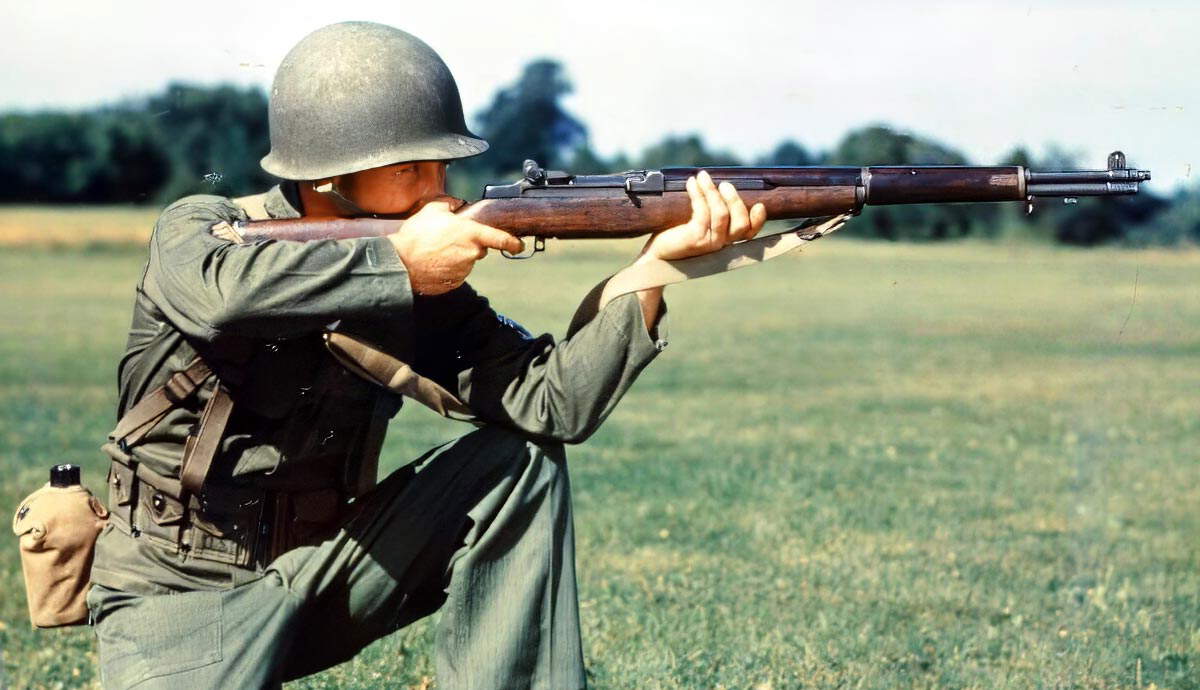
WWW.THECOLLECTOR.COM6 American Infantry Rifles That Defined US Firepower in the World WarsAmerican forces in the two world wars often relied on heavy firepower to force their way through enemy lines. Yet, their rifles were just as crucial to their survival. Going from slow, bolt-action rifles like the Springfield or the Lee-Enfield to the M1 Garand or M1 Carbine, American riflemen became more effective as they gained access to better rifles in battle.1. M1903 SpringfieldAn M1903 Springfield mounted in an exhibit. Source: Fernwood ArmoryAfter the Spanish-American War ended, a US Army investigative panel urged the government to start issuing soldiers with a more advanced rifle than the Springfield 1892 KragJrgensen. By 1903, Springfield Armory came up with the first bolt-action rifle that would become standard issue for the US military until 1936. It was modeled after the German K98 Mauser and the Springfield KragJrgensen rifles.The M1903 Springfield rifle used a .30 caliber round with a lot of penetrating power. Each rifle could fit a clip of 5 rounds at a time. It had to be redesigned in 1905 because Springfield developed a bayonet specifically for use on the M1903. Owing to Americas sizable rifle production capacity, tens of thousands of M1903s were available within two years. The rifle would be adapted to fit scopes for use as a sniper rifle. All the major branches of the U.S. military started to use the rifle by the time World War I broke out.In 1916, the US Army under General John J. Pershing entered Mexico in force to hunt down the warlord Pancho Villa. The American soldiers carried M1903s as their main weapon, and it quickly received a positive reception. In WWI, Springfield made some upgrades to the rifle by changing the bullet that was used. Even after its replacement in 1936, it was still used extensively, either as a sniper rifle or as an honor guard weapon. From 1903 to 1949, over three million units of the M1903 were produced at Springfields armory, either for use by the US military, for sale to other countries, or for public use as a hunting rifle.2. M1917 EnfieldAmerican soldiers training with M1917 rifles before being deployed overseas, 1917. Source: The Armory LifeTo complement the M1903, Remington and Winchester began producing the M1917 rifle, also known as the American Enfield. During the war, Britain was in desperate need of more rifles for its troops. London hoped that American companies could produce a rifle similar to the Small Magazine Lee-Enfield (SMLE) in use by British forces. Remington and Winchester agreed, hoping to turn a profit and get the attention of the US military.The M1917 could use both the .303 caliber round used by the SMLE or the .30 caliber Springfield. It proved to be so popular that it actually became the main rifle of choice for much of the US Army in Europe in 1918. Like the M1903, it fit five-round clips, although it could fire a little faster. Its range, over 550 yards, was similar to the M1903, however, it was not modified for use by sniper units. Remington and Winchester also invented a specific blade for use as a bayonet on the M1917. Both companies had many factories to produce the M1917, meaning that it rivaled the M1903 in quantity produced.By 1918, many American soldiers decided to use the M1917 because of its handiness and ability to fire rapidly. The famed Sergeant Alvin York used one during his well-known charge towards German positions in the Meuse-Argonne forest. However, it was put aside in favor of the M1903 after the war finished, with only a couple of mortar battalions retaining them. Between 1917 to 1919, around 2,200,000 were produced, a major feat by Winchester and Remington.3. M1918 Browning Automatic RifleA BAR in use by a marine on Iwo Jima, 1945. Source: Warfare History NetworkThe Browning Automatic Rifle (BAR), designed by John Moses Browning in 1917, was developed in response to the trench warfare stalemate of World War I. Modeled after the Lewis Gun, the BAR was chambered in .30 caliber Springfield and featured a 20-round detachable box magazine. It could fire in both semi-automatic and fully automatic modes, with a rate of fire of up to 650 rounds per minute. The weapon was quickly adopted by the US Army and first saw combat in the closing months of World War I, becoming the first automatic rifle used by the American military in its history.During the interwar years, the BAR underwent modifications, resulting in the M1918A2 variant employed extensively during World War II and the Korean War. It became a core component of US infantry squads, valued for its portability and firepower. However, its relatively low magazine capacity and heavy weight limited its long-term effectiveness. Many American GIs and Marines used it as a fire-suppression weapon but did not mount it to a bipod like they did with light machine guns.The BAR saw service again during the early stages of the Vietnam War, though it was gradually phased out over time. Over its 55-year period of use, 350,000 were produced by Browning. It was extensively used by American forces during both world wars and by other friendly nations such as the South Korean Army.4. M1941 Johnson RifleDutch soldiers in Indonesia carrying an assortment of arms including M1941 rifles, 1945. Source: Dutch National ArchivesBy the 1930s, American arms manufacturers were being asked by the military to produce semi-automatic rifles that could replace the bolt action rifles then in use. The aim was to provide American forces with a weapon that had a higher rate of firepower. American Marine officer and lawyer Melville Johnson wanted to create a weapon that rivaled the M1 Garand going into production and created a rifle with a ten-round rotary magazine that fit two five-round clips at a time. The rifle was relatively short and fit a .30 caliber round similar to prior American rifles.However, the M1941 Johnson had a reputation for low reliability and was not in favor among American infantry. Its short barrel and complex design meant that it was inaccurate and could fall apart easily when stripped down. As a result, the Johnson never gained the fame of the Garand and was not mass-produced. Some Marine units used it in the Pacific War but it did not see much combat except for some early battles in the Pacific.The US government hoped to sell some of the Johnson rifles it had to partner forces of the United States. For instance, the Dutch garrison in Indonesia equipped some of its infantry units with them. Chile placed an order for thousands of them in 1940 in case of a war with Bolivia. However, the failure of Johnson Manufacturing to turn a profit meant that the company filed for bankruptcy, stopping any rifle production. A mere 20,000 were produced before the company shut down.5. M1 GarandAmerican GI training with an M1 Garand, 1952. Source: US National ArchivesWhen Canadian-American rifle designer John Garand first created the T1E2 rifle, later the M1, he became one of the most influential arms inventors in American history. The M1 became the first semi-automatic rifle to be produced for the American military en masse. Thanks to its versatility and rate of fire, it became a very popular weapon among American servicemen during and after the Second World War. Over five million M1s were produced by Springfield, Winchester, and other companies from 1934 to 1957. Its features were so well-regarded that Soviet weapons designer Mikhail Kalashnikov based the AK-47 on the internal design of the M1.The M1 fired a .30 caliber round in clips of eight. Once a rifle expended all of its ammunition, the clip popped out automatically and made a ping sound. Its barrel was designed to fit several different types of bayonets and even could fit a grenade launcher. Some models produced included scopes to enable their use as a sniper rifle. Because they did not require too many spare parts, they were prized for their reliability. Most riflemen in each squad carried an M1, allowing American forces to lay down a very rapid rate of fire.John Garand sold the patent rights of the M1 in 1936, meaning that he never made a dime from the sale of this weapon. In 1965, the M14 took its place as the main American battle rifle, although it remained in use for decades later as a ceremonial weapon. Its widespread use by American servicemen made it one of the most well-known rifles of any army in the Second World War.6. M1 CarbineM1 Carbine in use by a US Marine in Iwo Jima, 1945. Source: US National ArchivesThe M1 Carbine was developed just before the United States entered World War II to address a key need: providing rear-echelon and support troops with a weapon more powerful than a pistol but lighter than the M1 Garand. The US Army Ordinance Board wanted to equip its riflemen with a weapon of this description that ensured a high rate of fire. Adopted in 1941, the carbine used a .30 caliber cartridge and fed from a 15-round detachable magazine. It was semi-automatic and a light weapon, making it ideal for paratrooper, tanker, and marine units operating in close quarters.Though it was never intended as a frontline combat rifle, the M1 Carbine was quickly adopted in virtually every theater of the war. Its light recoil and easy usability made it especially appealing for troops with limited infantry experience. By wars end, over six million M1 Carbines had been produced by contractors including Inland, Winchester, and IBM, making it the most mass-produced US firearm of World War II.The M1 Carbine proved highly effective in the Pacific, where close-quarters jungle fighting was common. Specialized variants were created, such as the M1A1 with a folding stock for airborne units and the M3, equipped with an infrared scope for night fighting. Despite some concerns about its stopping power, the M1 Carbine earned a strong reputation for reliability and versatility. It remains one of the most iconic small arms of World War II and a symbol of the US militarys adaptability during the conflict.0 التعليقات 0 المشاركات 21 مشاهدة -
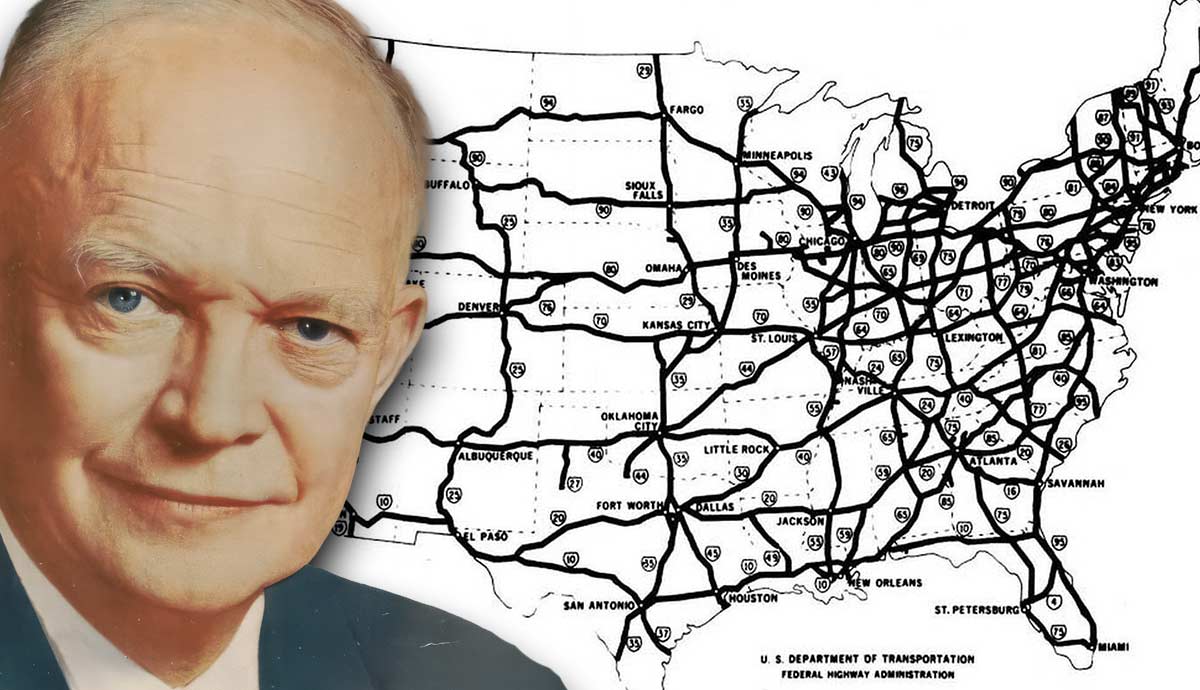
WWW.THECOLLECTOR.COMThe Life of Dwight D. Eisenhower from WWII Commander to US PresidentDwight D. Eisenhower is one of the most illustrious figures of the 20th century. While largely remembered for his role in leading the successful Allied invasion of Normandy on D-Day, Eisenhowers contributions to the United States extend well beyond his military career. Among many notable post-war achievements, President Ike oversaw the advancement of the Civil Rights Movement, end of the Korean War, and the creation of the National Aeronautics and Space Administration (NASA), cementing his legacy in modern American history for decades to come.Early Life and Military CareerEisenhower walking in uniform, 1945. Source: Smithsonian InstitutionWhile destined for military and political greatness, Dwight D. Eisenhowers early life was marked by humble beginnings. Born on October 14, 1890, in Texas, the future president was the third of seven children in a modest family from rural Kansas. During his childhood, Eisenhower exhibited a strong work ethic as a student-athlete, gaining acceptance to one of the countrys most prestigious educational institutions: the United States Military Academy at West Point. There, Eisenhower was just one steward of military excellence among many. His graduating class, the class of 1915, would eventually become known as the class the stars fell on due to the 59 generals of the group including Omar Bradley, James Van Fleet, and Joseph T. McNarney.Eisenhowers rise to the Supreme Commander of Allied Expeditionary Forces in Europe, however, was not easy. Although he hoped for a combat role overseas during World War I just two years after receiving his commission, Eisenhower stayed stateside to train tank crews headed to Europe. In the two decades leading up to World War II, Eisenhower demonstrated his abilities as a capable leader under some of the most influential American military leaders of the 20th century including John J. Pershing and Douglas MacArthur. After several command, staff, and training positions, including service in the Philippines and Panama Canal Zone, Eisenhowers 25 years of experience thoroughly prepared him for the significant challenges that lay ahead in the Second World War.World War II LeadershipEisenhower war bonds propaganda poster, 1944. Source: Smithsonian InstitutionAs the Pearl Harbor attacks led the United States to join the Allied Powers in World War II, Eisenhower served in the War Plans Division in Washington DC. This unique role allowed Eisenhower to demonstrate his organizational skills and directly shape overseas military responses alongside General George C. Marshall, then-Army Chief of Staff. By June 1942, Eisenhower was selected as commander of the European Theater of Operations. Just five months later, Eisenhower was additionally appointed commander of Allied Expeditionary Forces of the North African Theater of Operations.Eisenhowers new responsibilities enabled him to oversee important Allied missions in North Africa, particularly Operation Torch, the first significant offensive against Axis Powers. While the invasion of North Africa proved ultimately successful, Eisenhowers troops endured initial defeat at the Battle of Kasserine Pass. Undeterred, Eisenhower rapidly adjusted by increasing coordination with Britain and leaning on the tactical expertise of General George S. Patton, strategic adjustments that led to the German surrender of Tunisia in May 1943.Now a battle-hardened general, Eisenhower was given the immense responsibility of planning Operation Overlord, the amphibious landing of Allied troops on the Normandy beaches, by President Roosevelt. A challenging feat, efficiently organizing the invasion of Normandy required months of careful logistical groundwork, operational coordination between several Allied armies, and efforts to conceal the intended landing targets. Come D-Day, however, Eisenhowers direction of 160,000 troops across five beaches proved successful, leading to the liberation of Western Europe and eventual victory over the Axis Powers by May 1945.Presidential Campaign and ElectionEisenhower presidential campaign poster, 1952. Source: Smithsonian InstitutionEisenhowers military fame enabled his rise to the American presidency, but immediately following World War II, the commander continued his military service. As a five-star general, Eisenhower was installed as the United States Armys Chief of Staff before acting as the first Supreme Commander of the newly established North Atlantic Treaty Organization. Outside of the military, Eisenhower served as the president of Columbia University until he took office as the nations 34th president and commander-in-chief.Due to his irreplaceable role in securing Allied victory during World War II, both the Democratic and Republican parties invited Eisenhower to run for president. Aligning more with conservative visions of national security, especially considering the rise of global communism, Eisenhower ran on the Republican ticket as a moderate candidate in the 1952 election.While the former commander had no political experience, the public was quick to endorse Eisenhower. His campaign creatively coined the slogan I like Ike, one of the most memorable mottos of modern American political history, to capture Eisenhowers widespread appeal and effective leadership. Combined with an extensive television advertising campaign, one of the first in presidential history, Eisenhower chose the up-and-coming Richard Nixon of California as his running mate. The pair won a landslide victory against Democrat Adlai Stevenson II in the November election. Although the country was determined to enjoy a peaceful rebound from the Second World War, Eisenhower faced a number of domestic and international challenges during his presidency.Domestic Policies and AchievementsCeremony flyer for 50th anniversary of racial integration in Little Rock Central High School, 2007. Source: Smithsonian InstitutionThe political climate of the 1950s demanded Eisenhowers attention to deep-running domestic issues. The Civil Rights Movement gained momentum in the postwar era, partly due to the courageous service of African American troops overseas. Eisenhowers civil rights legacy is controversial, but he took tangible steps towards ending racial segregation. In addition to signing the Civil Rights Act of 1957 to protect universal voting rights, Ike federalized National Guard troops and mobilized active-duty units to Little Rock, Arkansas, to mandate the desegregation of Central High School in 1957, protecting the Little Rock Nine and marking a key step forward in racial progress following the landmark Brown v. Board of Education Supreme Court ruling in 1954.Map of the Eisenhower Interstate Highway System. Source: US Department of Transportation, Federal Highway AdministrationEconomically, Eisenhower focused on preserving balanced spending and reducing government waste. One of his most significant accomplishments, however, was the creation of Americas Interstate Highway System via the Federal-Aid Highway Act of 1956. Improving transnational infrastructure drastically improved internal transportation and trade within the United States.Other Eisenhower policies reached millions of Americans. He expanded social security benefits to traditionally overlooked populations including self-employed workers and farmers. Academically, Eisenhower increased spending on science, mathematics, technology, and language programs in schools. While this initiative was a part of a deliberate, long-term plan to counter Soviet competition during the Cold War, these measures enabled the United States to become a world-leading educational power in the 1950s and beyond.Foreign Policy and the Cold WarModel rocket of Sputnik, the first satellite in space, late-1950s to early 1960s. Source: Smithsonian InstitutionShortly after taking office, Eisenhower negotiated a successful armistice to end the Korean War, creating the demilitarized zone between North and South Korea that still exists today. Eisenhower took a number of foreign policy initiatives during the early Cold War to counter Soviet influence. For example, the Soviet Unions 1957 launch of Sputnik led the President to develop American capabilities by creating NASA and passing the National Defense Education Act. Three years later, tensions escalated to new heights. The 1960 U-2 spy plane incident riled the two superpowers after the American surveillance aircraft was shot down over Soviet airspace, interrupting plans for a summit meeting between Eisenhower and Soviet leader Nikita Khrushchev.As a former NATO supreme commander, Eisenhowers foreign policy involved the creation of other multilateral defense agreements including the Southeast Asia Treaty Organization (SEATO) and the Baghdad Pact. Simultaneous to the Cold War, Eisenhowers Atoms for Peace agenda aimed to reduce the threat of nuclear conflict by supporting programs to research civilian applications of nuclear power.While outwardly unifying, it is worth noting that behind the scenes, Eisenhower empowered covert intelligence agencies to protect national security and interests despite risks to other nations. The Central Intelligence Agencys involvement in toppling Iranian and Guatemalan leaders during the 1950s, for instance, adds a controversial element to his otherwise positive legacy.Legacy and ImpactEisenhowers military uniform. Source: Smithsonian InstitutionToday, Eisenhowers legacy is largely positive. As one of the United States most influential leaders of the 20th century, Eisenhower played a significant role in the US military and political stage, and also had a major impact on American society as a whole.Militarily, Eisenhower stands alongside the most significant Allied generals of World War II including Douglas MacArthur, Bernard Montgomery, and George S. Patton. His leadership helped the Allies overcome significant operational and strategic challenges presented by the Axis Powers. Victory in North Africa and Europe, particularly during the climatic D-Day offensive, enabled ultimate Allied victory in the conflict. A Nimitz-class aircraft carrier, the USS Dwight D. Eisenhower, continues the former presidents legacy.After the war, Eisenhowers policies as president brought social progress to marginalized populations, disrupted existential threats presented by the Soviet Union and communism, helped galvanize NATOs early activities, and championed new technological and infrastructure development.As with most historical figures, Eisenhowers legacy is not without controversy. Critics highlight his overly cautious approach to the Civil Rights Movement, his authorization of clandestine espionage operations, and the unintended escalation of the nuclear arms race. While these criticisms are justified, Eisenhowers contributions to World War II and the United States solidify his place as a hero of modern American history.0 التعليقات 0 المشاركات 21 مشاهدة -
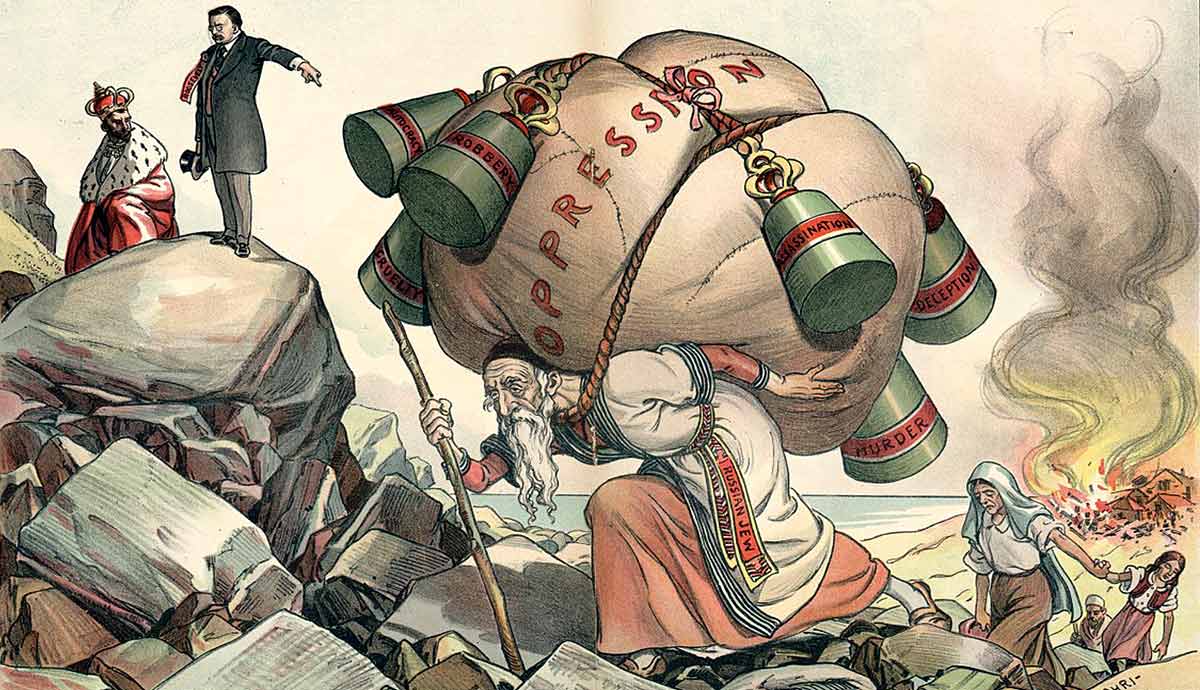
WWW.THECOLLECTOR.COMThe 1903 Kishinev Pogrom That Weakened the Russian Empire and Its Dark LegacyThe Kishinev Pogrom epitomized the worst of the Russian Empires excesses: an act of mass violence against a minority ethnic group that was blamed for Russias ills. It was hardly the first act of violence against Jews, nor would it be the last. However, it proved to be a pivotal event for Europes Jews. Instead of living quietly in the countryside, many Jewish people in the Russian Empire became committed revolutionaries and formed self-defense groups. Its legacy continues to resonate today.The Jews of Bessarabia and KishinevEthnographic Map of Bessarabia by US Army Captain John Kaba, 1919. Source: Library of CongressIn the 15th century, some Polish monks mentioned in writing that they witnessed a rabbinical court operating in the town of Akkerman (Bilhorod-Dnistrovskyi in present-day Ukraine). Apart from some Jewish names mentioned on official documents before, this marked the first written reference to a large Jewish presence in the region of Bessarabia. Lying in territory now comprising Moldova and parts of Romania and Ukraine, Bessarabia was originally part of the Principality of Moldova and the Ottoman Empire when it was annexed by Russia in 1812 during the Napoleonic Wars. It remained part of the Russian Empire until 1918.By 1812, some 20,000 Jews were estimated to live in Bessarabia. During Ottoman and Moldavian rule, they had been granted some autonomy. Most lived in small villages or the countryside. Yiddish was the primary language; Russian started to appear later in the 19th century. Russia included Bessarabia in the Pale of Settlement, the western provinces of the Russian Empire where most Jews were confined to. Bessarabias favorable climate made the region suitable for farming and wine production. Many Jews from the rest of the Russian Empire migrated there.By the late 19th century, the tsarist regime passed laws demanding that Jews leave their farms so Christians did not face agricultural competition. This led to a movement of Jews to urban centers such as Kishinev (now Chisinau, the capital of Moldova). Jews became disproportionately involved in business, especially once these communities became better educated. Young men were also subject to mandatory military service. Their social advances led to trouble from other communities worried about economic competition.Antisemitism in the Russian EmpireRussian Minister of Internal Affairs Vyacheslav von Plehve, who failed to stop the Kishinev Pogrom, 1902. Source: Wikimedia CommonsAntisemitism was rife in the Russian Empire, and many Russian rulers of the Romanov dynasty were personally antisemitic. In response to the rise of nationalism and the spread of radical revolutionary ideologies across Europe during the 19th century, the Russian government feared revolts by the masses and pursued a divide-and-conquer approach that kept minority groups and lower classes fighting each other. Russias elites claimed that Jews posed a fifth column that needed to be expelled or forcibly assimilated.By the early 20th century, Russias antisemitism was a lethal combination of medieval tropes mixed with modernized forms of bigotry. The Russian Orthodox Church played a leading role in the spiritual and social lives of most Russians. Church doctrine that Jews had been responsible for killing Jesus and murdered Christian children for their blood. Other religious institutions in the empire echoed these sentiments. Some tsarist ministers claimed that Jews were a revolutionary force. The tsars secret police forged the notorious Protocols of the Elders of Zion which claimed that Jews were intent on world domination. As the Jewish population increased with high birth rates, these fears became more widespread.By 1903, Tsar Nicholas II was in charge of the empire. He was assisted by a cabinet of ministers who mostly reflected his reactionary worldview. One of these men was the interior minister Vyacheslav von Plehve. Plehve ordered the Okhrana, the secret police, to target anyone suspected of revolutionary sympathies. He also refused to stop violent attacks on Jews. This bode ill for the Jews of Kishinev, who had already suffered attacks during the first wave of pogroms in the 1880s.Trouble During Easter 1903Illustration in honor of the martyrs of the Kishinev Pogrom by Ephraim Moses Lilien. Source: Wikimedia CommonsIn the days leading up to Easter in Kishinev, tensions ran high between the Jewish and Christian populations of the city. Christian church leaders had been claiming in their sermons that Jews had killed Jesus and that they were planning acts of violence during the Holy Days. Some Christians told Jewish merchants that they would not need to buy goods from them during Easter because they could steal it from them in the coming days. Orthodox clergymen had a lot of influence in the city because of their stature and the support of the local authorities. Many Jews were on edge and the police did not seem to be taking the threat of mob violence seriously.Additionally, the local newspaper Bessarabets published an incendiary report bound to make things worse. A young Ukrainian boy had been found murdered in a neighboring town and a young woman took her life as a patient in a hospital in the Jewish district of Kishinev. Bessarabets claimed that local Jews were responsible for both deaths. While subsequent investigations found that neither death could be attributed to Jewish people, the reporting enraged locals who were already radicalized into fearing and hating Jews.Kishinevs Jewish community either lived amongst each other or in majority-Christian parts of the city. Moisei Slutskii, the director of the local Jewish hospital, had gone with other Jewish leaders to convince the city leadership and Christian leaders to dampen tensions. The mayor promised nothing would happen and Church leaders refused to stop the sermons. When the pogrom started, Slutskii and others were caught off guard.The Attacks and Its EffectsShmul Benderskiys destroyed home in Kishinev, 1903. Source: CentropaMobs of people began attacking Jewish businesses and homes in the morning of April 19, 1903. Many local Christian congregants had been in church and gathered in public spaces. They took advantage of the polices apathy and plundered liquor from local stores. Despite warnings to go home after Passover services, some Jews stayed in public streets to go shopping at some of the citys markets. They were amongst the first people attacked by the pogromists.The attacks on local businesses were small in scale but caused major damage in the citys New Market district. By 4:00-5:00pm, the rioters grew in number and began attacking residential neighborhoods with a large Jewish presence. They broke into homes and stole property from the Jewish residents. Anyone who resisted was beaten or killed. There were rapes recorded too, especially in homes where no men were present to help protect the female residents. The violence did not abate overnight; looting and marauding continued and even encouraged others to join the pogrom. Some women were seen taking high-quality coats from Jewish businesses in New Market.By the end of the pogrom, some two-thirds of the city had been affected. The rioters had killed 49 Jews; 38 of them were men and 11 were women. Some young children were listed as having been killed too. Some 2,000 Jewish people were left homeless and hundreds of businesses were destroyed. The pogromists succeeded in creating a strong sense of insecurity for Jews in Kishinev.Aftermath of the PogromAmerican cartoon poster of US President Theodore Roosevelt condemning the pogrom and the Tsars oppression of Jews, 1903. Source: Library of CongressFor many years it was assumed that the Russian state had promoted the pogrom. There was a letter apparently written by the Russian Interior Minister von Plehve that claimed Moscow officially supported the rioters. However, this letter turned out to be a forgery. The reality was slightly different: the Russian government did not support the riots but did not want to be seen as too sympathetic to the Jews. Nonetheless, the Tsars government was held responsible for allowing the pogrom to take place. The army and police turned a blind eye and failed to maintain law and order.Right after the pogrom occurred, the Jewish Historical Commission in Odesa sent an investigator to find out what exactly had happened and report on it. This man was Hayim Nahman Bialik, a Jewish poet and ardent Zionist. Bialik gathered eyewitness testimony and wrote a report, claiming that the local Jews were beaten and killed without much resistance. He also wrote a poem called In the City of Slaughter that would come to be one of the most famous literary works by a Jewish author.In the United States, the pogrom inspired a surge in criticism of Russias treatment of Jews. While President Theodore Roosevelt hoped to maintain amicable ties with the Russian government, he also promised the American Jewish community that he would denounce the pogrom and offer support to its victims. This internationalized the issue of antisemitism in Russia and set a precedent of the United States becoming a promoter of Jewish civil rights around the world.The Legacy of the Kishinev PogromHayim Nahman Bialik, author of In the City of Slaughter and later national poet of Israel, 1923. Source: National Photo Collection of IsraelThe Kishinev Pogrom was a turning point for Ashkenazi Jews in the Pale of Settlement. It was not the first time Jews had been mercilessly attacked by their neighbors. However, the reporting on the event was widespread and the perception that the victims had been helplessly cut down struck a chord. Even though there was evidence that Jewish families in Kishinev fought back, the prevailing narrative was that Jews needed to defend themselves and could not be so weak in the future.In the emerging Jewish settlement in Palestine, the Jewish community feared mob violence from the Arabs similar to what transpired in Kishinev. This led to the local Jewish Agency forming a militia called the Haganah: defense in Hebrew. The Haganah and other Jewish militias in Palestine would be armed to defend the community whenever there were clashes with the Arab community. Throughout the rest of the Russian Empire, Jewish communities organized into political and civic organizations to defend themselves in the face of pogroms. Groups like the General Labor Bund and Poale Zion formed armed bands to resist pogroms.In the United States, the Kishinev Pogrom reminded people of the systemic racial violence against African Americans and Native peoples. The US government was accused of hypocrisy for condemning antisemitism while it was unwilling to prevent mob violence against minorities at home. American Jewish philanthropists wanted to fight back against the tide of bigotry and formed the Anti-Defamation League and National Association for the Advancement of Colored People. The Kishinev Pogrom became a symbol of mob violence and inspired a willingness to fight back. In Russia, the pogroms, combined with World War I and the Russo-Japanese War, contributed to the collapse of the tsarist regime. Kishinevs days of violence cast a pall over the city that continues to the present day.0 التعليقات 0 المشاركات 21 مشاهدة