• WWW.THECOLLECTOR.COM
    The 1905 Revolution That Almost Overthrew the Tsar
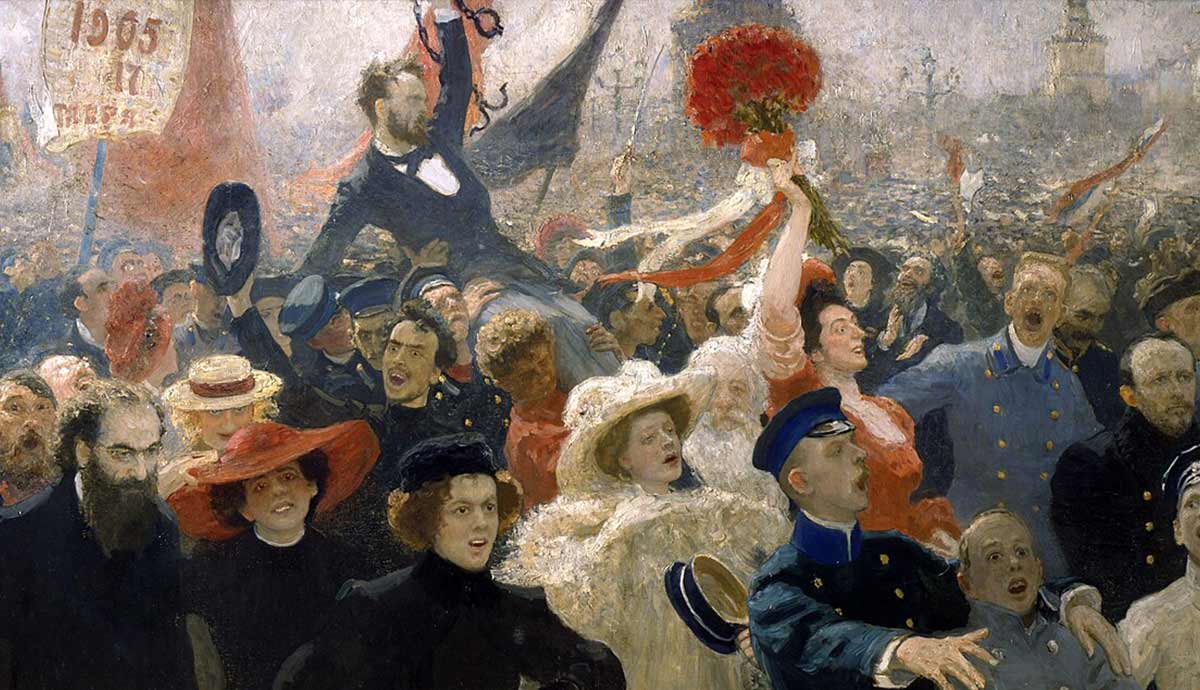
    During the turn of the 20th century, the Russian Empire witnessed rapid industrialization and urbanization that in turn raised political consciousness among workers and peasants in the empire. These political tensions combined with the desire for greater autonomy among non-Russian communities in the empire and led to the outbreak of the 1905 Revolution. With the bulk of its armed forces engaged in the Russo-Japanese War, the tsarist government appeared to be on the verge of collapse and was compelled to offer political concessions to end the revolution.The Romanovs at the Beginning of the 20th CenturyPhotograph of Tsar Nicholas II and his family, 1913. Source: Library of CongressThe Romanov dynasty had ruled Russia since 1613. The Romanovs emulated other European monarchies by centralizing power and pursuing territorial expansion to the Pacific coast. At the same time, Russia struggled to modernize at the same rate as its European rivals. Russias powerful landed aristocracy ensured that serfdom was not abolished until the 1860s, while national minorities in the western parts of the empire frequently sought independence from Russian rule. With radical political ideas spreading across Europe in the 19th century, a violent upheaval seemed all but inevitable.Following the assassination of the reformist Tsar Alexander II in 1881, his successors Tsar Alexander III and Nicholas II reverted to reactionary policies to preserve the regime. The secret police known as the Okhrana targeted enemies of the state and sent them into internal exile in Siberia. The landlords retained much of their power over the peasantry, who were taxed heavily and often lacked the means of independent subsistence. Russia also increased its military spending to ensure that it could fight the Ottomans or any other European power at any time.A decade before the 1905 Revolution, Nicholas II succeeded his father Alexander III and retained his fathers policies. Peasants still struggled to pay off redemption dues for their land and aristocratic landlords continued to dominate Russian society. Alexander III and Nicholas IIs efforts to develop Russian industry resulted in poor conditions for factory workers in cities, encouraging the creation of labor unions to demand better working conditions.The Rise of Revolutionary Socialism and Different National MovementsGeorgii Plekhanov, one of the leaders of the Russian Marxist movement and a participant in the 1905 Revolution, 1920. Source: JacobinThe Romanovs faced a diverse set of revolutionary movements that grew more powerful at the turn of the century. Inspired by the 1848 uprisings across Europe, revolutionary movements throughout the empire began taking on the authorities in the late 1800s. The Peoples Will, an insurgency based in major cities, assassinated Tsar Alexander II. The years before 1905 witnessed the formation of various political organizations that either sought to place constitutional limits on the tsars power or to overthrow the monarchy and establish a socialist state.The most powerful revolutionary movements at the time included the Socialist Revolutionaries, who were popular in the countryside and favored a form of agrarian socialism, and the Russian Social Democratic Labour Party, a Marxist organization which saw the working class as the vanguard of socialist revolution. However, after 1903, the RSDLP split between the moderate Menshevik faction, led by Julius Martov, and hardline Bolsheviks, led by Vladimir Lenin. Efforts to re-establish unity between the two factions were largely unsuccessful.Additionally, nationalist movements developed throughout the empire. Ukraine, Poland, the Baltics, and other colonies of Russia witnessed a rise in nationalism that coincided with the revolutionary movement in Russia. Polish nationalists wanted to avenge the defeat of the 1863 uprising. Jewish communities in the Pale of Settlement came to embrace revolutionary ideas in response to widespread antisemitism and political violence under the Romanovs. While many left-wing revolutionaries such as Julius Martov and Leon Trotsky were Jewish, this created the trope that the Bolsheviks were a Jewish movement.Bloody SundayDrawing of Russian troops firing on protesting workers on Bloody Sunday in St. Petersburg, 1905. Source: The Moscow TimesWhen many Russian peasants in the countryside moved to cities they hoped to gain more work opportunities. However, many struggled to find jobs, became homeless, or were condemned to work in miserable conditions. Strikes were commonplace and were often brutally suppressed by Russian state authorities. This, however, did not lead to a reduction in strikes or work stoppages.Father Georgy Gapon, a Ukrainian Orthodox priest living in St. Petersburg, was a major organizer of the strikes. He led an organization called the Assembly of the Russian Factory and Mill Workers of the City of St. Petersburg. Ironically, Gapon received some backing from parts of the Russian government who hoped to control the union movement from the inside. On Sunday January 22, 1905, he led a procession of workers in St. Petersburg to the Winter Palace with a petition addressed to the tsar. It demanded an end to the Russo-Japanese War, universal suffrage for all, and increased labor protections. Ironically, the demands were opposed by many of the revolutionary factions who hoped for more radical change.When the marchers reached the Narva Gate, they found that soldiers of the city garrison and the Imperial Guards had been mobilized to stop the march. In a series of clashes, hundreds of marchers were killed by gunfire or trampled by horses. Gapon subsequently left the country. Opponents of the Tsar, even those opposed to the march, were angered and radical calls for violent action increased. Even Tsar Nicholas himself, who was away from St. Petersburg, was appalled by the death toll. The events of Bloody Sunday unleashed a torrent of revolutionary activity that lasted throughout the year.Strikes and MutiniesThe Battleship Panteleimon (formerly Potemkin) at sea, 1906. Source: Wikimedia CommonsThe killing of so many peaceful marchers kicked off a series of rebellions and demonstrations all across the Russian Empire. Polish socialists instigated a series of strikes in major Polish cities; nearly 94% of Polish workers participated in these actions over the course of the year. In Riga, Latvia, nearly 130 workers were shot after striking. Many people striking in the fringes of Russia demanded, in addition to labor rights, that there would be a halt to Russification policies that suppressed non-Russian culture.The divide-and-rule policies in Russia led to major ethnic clashes throughout the Empire too. In the Caucasus, Armenians and Tatars killed each other in a series of massacres that presaged the Armenian Genocide in WWI. Jews came under attack from both opponents and supporters of the tsar, leading to the deaths of nearly 3,000 of them in pogroms. The bloodiest one in Odesa in October 1905 caused nearly 800 deaths. Polish leftists and rightists fought each other, even as they demanded independence from Russia. Amidst the chaos, revolutionary movements struggled to bring together the opponents of the Tsar. The St. Petersburg Soviet chaired by Leon Trotsky, the first of its kind, was ridden by infighting between the Mensheviks and Bolsheviks.The military was affected too. Army units either fighting in Manchuria or on garrison duty staged mutinies as a result of battlefield losses and poor treatment by officers. The navy was ridden with mutinies, of which the battleship Potemkin in Odesa being the best known. The scale of the strikes and mutinies was immense; by October it was estimated that millions of Tsar Nicholas subjects were engaging in revolutionary activity.End of the RevolutionDemonstration welcoming the October Manifesto by Ilya Repin, 1907. Source: Wikimedia Commons (Russian Museum, St. Petersburg)The government fought back ferociously against the revolution. Loyal military units unaffected by mutinies were brought in to crush any resistance. Large portions of the empire were subject to emergency rule, in which the Okhrana and police could arrest anyone. The naval mutinies in Kronstadt, Odesa, Vladivostok, and Sevastopol were broken with the deaths of 2,000 sailors. The tsar also relied on a militia called the Union of Russian People, more commonly referred to as the Black Hundreds. This organization was responsible for many of the pogroms that took place during this period.At the same time, Nicholas hoped to offer the strikers some reform to bring back order. He created the Shidlovsky Commission to investigate the causes of the strikes. However, this commission was dissolved before it could start work. Additionally, he published the Bulygin Rescript and October Manifesto, promising more rights and elections in an attempt to weaken the revolutionary movement. Amnesties for people arrested in the revolution were issued and Russias prison population declined.The Tsars concessions divided the opposition. Some liberals were pleased, especially with the promise of creating the Duma, and called for a halt in the protests. The radicals, however, wanted to destroy the tsarist regime entirely. More violent uprisings took place before the years end. Lenin helped instigate the largest uprising in Moscow in December. After it was defeated, the revolution effectively came to an end, though disturbances in the countryside continued into 1906 and 1907. After the Treaty of Portsmouth that ended the Russo-Japanese War, the tsar had more manpower at his disposal to pacify the countryside. The 1905 Revolution claimed the lives of some 1,500 tsarist loyalists and 15,000 revolutionaries.The Russian Constitution 1906 and the Aftermath of the RevolutionA meeting of the Third Duma, 1911. Source: National Library of Russia via Wikimedia CommonsOnce it became clear that the tsar would need to make concessions, he announced the creation of a bicameral parliament. An elected representative body known as the Duma served as the lower house, while the existing State Council took on the functions of the upper house, with some of its members elected and others appointed directly by the tsar. However, the Fundamental Law of 1906 reiterated the tsarist ideology that the empire was one and indivisible. Furthermore, the tsar retained the right to veto any legislation passed by the Duma.The First Duma was convened in April 1906 and dominated by the Constitutional Democratic (Kadet) Party. Although they did not seek to overthrow the tsar, the Kadets demanded more radical reforms than the tsar was willing to offer, and he dissolved the First Duma in 73 days. Elections were held for a Second Duma in 1907, but this proved even more radical and was soon dissolved.Pyotr Stolypin by Ilya Repin, 1910. Source: Wikimedia Commons (Radishchev Art Museum, Saratov)The failure of the Second Duma prompted Nicholas prime minister Pyotr Stolypin to propose changes to the electoral franchise that resulted in the more conservative Third Duma, which proved more effective at legislating. While Stolypin brutally crushed any remaining peasant disturbances, he also instituted reforms to improve the livelihoods of peasants and urban workers. His policies created a new class of peasant landowners called kulaks, whom he hoped would be a bastion of support for the tsarist regime in the countryside. He also sought to relieve pressure in European Russia by encouraging the economic development of Siberia. Stolypins reforms were not enough for the revolutionaries and in 1911 Stolypin was assassinated by Dmitrii Bogrov, a Ukrainian Jewish Anarchist who hated the Empire.The continued repression by the tsar inspired terrorist attacks by Socialist Revolutionaries and Bolsheviks. Between 1906 to 1909, revolutionary factions killed nearly 8,000 people. Anti-Russian nationalist movements continued to develop in the Empire and sought external support. For instance, Jzef Pisudski created a Polish underground movement that received help from Germany and the Austrian Empire. In 1913, Tsar Nicholas II celebrated the 300th anniversary of Romanov rule in Russia. The widespread demonstrations of support for the tsarist regime on this occasion belied the revolutionary tensions under the surface. While the 1905 Revolution had failed to topple the tsar, Leon Trotsky later described it as the dress rehearsal for the end of Romanov rule in 1917.
    0 Commentarii 0 Distribuiri 18 Views
  • WWW.THECOLLECTOR.COM
    How the Dutch Humiliated England in the Raid on the Medway
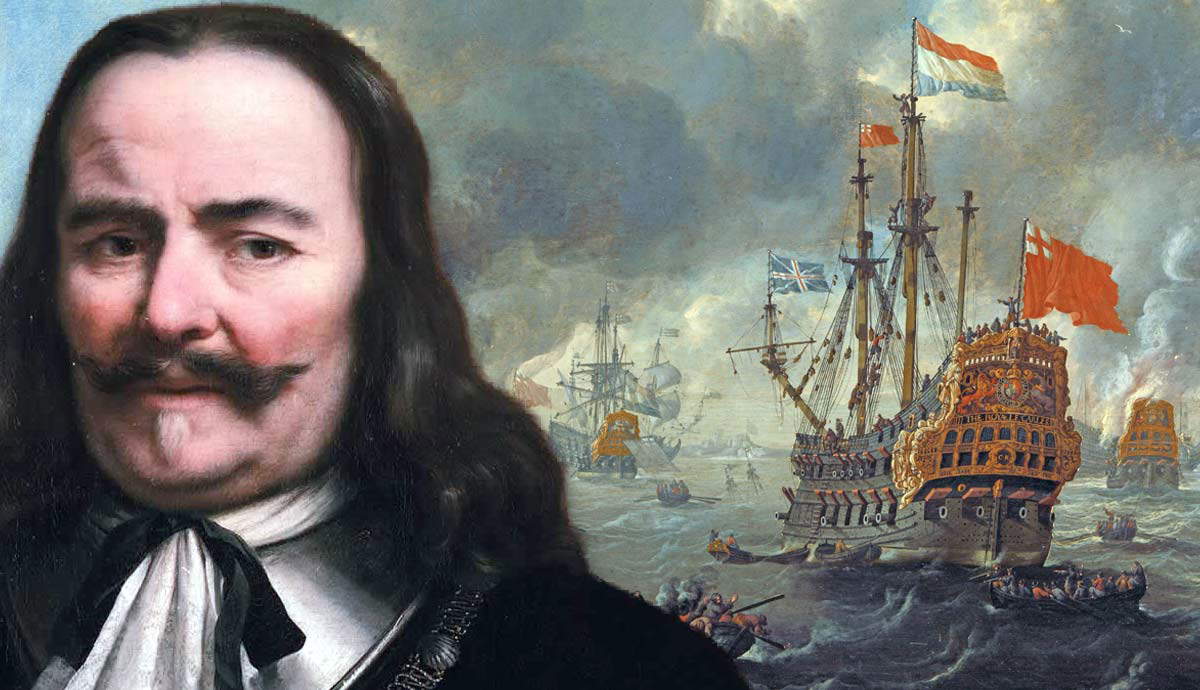
    When the Dutch fleet destroyed 13 English warships anchored on the Medway in Kent, they inflicted one of the worst defeats in English naval history. The victory demonstrated the prowess of the 17th century Dutch navy and ensured the Second Anglo-Dutch War ended on favorable terms for the Dutch.The Second Anglo-Dutch WarMap of naval actions during the 2nd Anglo-Dutch War, 2013. Source: Wikimedia CommonsThe Second Anglo-Dutch War was a continuation of the 17th century Anglo-Dutch rivalry over trade routes and overseas possessions. It did not start with one battle. Instead, the English began raiding Dutch outposts in the Americas and Africa. When the Dutch retaliated, King Charles II formally declared war with the intention of weakening Dutch control over its maritime trade routes. The Dutch Grand Pensionary, Johan de Witt, began mobilizing his forces to stop English attacks on Dutch merchantmen and try to recapture the lost colonies.In 1665 and 1666, the English and Dutch engaged in a series of ruthless naval engagements that saw both fleets suffer heavy losses. Both navies had considerable experience after years of battling the Spanish or French. They also relied on privateers to attack each others shipping. At one point, the English managed to push the Dutch fleet out of the Channel entirely and raided the Vlie estuary, destroying 140 Dutch merchantmen. This gave the English a temporary upper hand, but the Dutch were not out of the fight.In 1665, London was hit with a massive plague that devastated the Crowns finances.The following year witnessed the Great Fire of London. By early 1667, the English government could no longer afford to pay its sailors or maintain its fleet. Charles II made the fateful decision to lay up his heavy warships at Chatham, relying on small flying fleets and ongoing peace negotiations at Breda. This returned the advantage to the Dutch, who began planning to strike at what remained of the English fleet at anchor.Michiel de Ruyter and George MonckPortrait of Michiel de Ruyter by Ferdinand Bol, 1676; Portrait of George Monck, 1665. Source: National Maritime Museum, GreenwichThe Dutch hero of the war was Admiral Michiel de Ruyter. A sailor since he was eleven years old, he was a veteran of the First Anglo-Dutch War. For years, he protected Dutch merchantmen from the Spanish, pirates, and English privateers. In 1664, he took several ships on orders from the Dutch Republic and retook several outposts on the West African coast before returning to the Netherlands. Upon his return in 1665, De Ruyter accepted supreme command of the Dutch fleet and was named Lieutenant-Admiral of Holland after his predecessor was killed during the Battle of Lowestoft.In June 1666, de Ruyter achieved a hard-fought, major victory over the English fleet in one of the longest naval battles in history. Although the English were not destroyed, it was a significant victory for the Dutch. It established his reputation as one of the best naval commanders in the 17th century. Around the Netherlands, he was known as Bestevar, or Grandfather. When the Dutch Admiralty began planning to destroy what remained of the English fleet at anchor, de Ruyter intended to lead the attack personally.General-at-Sea George Monck commanded English naval forces in the Medway. A veteran soldier of the English Civil War, he was celebrated as the architect of the Restoration and a trusted leader during national crises. After commanding English ships at sea for many years, he was recalled from the fleet by the King to help manage the chaos following the Great Fire of London, a task he performed with efficiency.Opposing ForcesA model of de Ruyters flagship, the De Zeven Provincin, 1665. Source: Wikimedia CommonsBy 1667, the two countries were in negotiations to end the war. However, discussions had deadlocked because Charles II feared that an unfavorable deal would weaken his position at home. Johan de Witt became irritated and he hoped that another major naval victory would strengthen his hand at the negotiating table. He ordered Admiral de Ruyter to take as much of the Dutch fleet to sea as possible, without telling other senior members of the Dutch Admiralty what the plan was. De Ruyter was to take his ships into the mouth of the Thames and destroy what remained of the English fleet at anchor.To accomplish this task, he had at his disposal a formidable fleet of 62 large warships, 15 smaller vessels, and 12 fireships. 17,500 men manned these vessels. In addition to the ships crews, a large contingent of Dutch marines was on hand to assault fortifications and board enemy vessels. The Dutch were the first nation to create an independent marine corps for this purpose. Admiral de Ruyter sailed aboard the 80-gun De Zeven Provincin and he was assisted by Admiral Willem Joseph van Ghent and the politician Cornelis de Witt, who supervised the fleet at the behest of his brother Johan.The English were poorly prepared for this attack. General-at-sea Monck had seen most of his ships laid up because the government could not afford to maintain them. A few guard vessels were anchored near the main dockyards at Chatham, but they were ill-prepared for the onslaught. There were fortifications on the banks of the Medway and the Thames, these were also poorly manned and lacked gunpowder and munitions for an extended fight.The Dutch ApproachMap of the Dutch approach to the Medway, 2008. Source: Wikimedia CommonsEngland received warnings from its spy network in continental Europe that the Dutch fleet was preparing to sail towards the English coast. However, the English authorities disregarded these warnings and there was no attempt to re-equip the English fleet on the Medway. The Dutch maintained good operational security; most ship captains were only made aware of their target while at sea. De Ruyter was supported by several English defectors, who knew the river well.Upon reaching the mouth of the Thames, De Ruyter left his heaviest ships as a covering force and blockade. A specialized flying squadron of smaller, more maneuverable ships under Willem Joseph van Ghent was designated for the actual inland raid. Ashore, the English were caught completely unaware. Charles believed that peace was imminent and the treasury could not pay soldiers and sailors enough to man their posts full-time. By the time messages from lookouts regarding the arrival of the Dutch fleet arrived in London, it was too late to save what remained of Englands navy.Before entering the Medway, the Dutch bombarded the fort at Sheerness on the Isle of Sheppey. The English garrison, underpaid and demoralized, deserted the post, allowing the Dutch to land marines and seize the site on June 10. The Dutch maintained discipline and refrained from looting or burning homes when they landed detachments on the banks of the Medway. As they got closer to the Chatham dockyards, de Ruyters ships faced no meaningful resistance from the English.The BattleBurning of the English Fleet at Chatham, 20 June 1667 by Peter van de Velde, c. 1670. Source: Rijksmuseum, AmsterdamOn June 22, Dutch forces completed their approach to the dockyards at Chatham. The centerpiece of the English defense was a massive iron chain stretched across the river at Gillingham. Despite English efforts to block the channel by sinking their own merchant ships, the Dutch attacked with determination. Several fireships broke the chain and Dutch vessels surged through the gap. A number of English guardships were destroyed almost immediately and the Dutch fleet began targeting HMS Royal Charles. Resistance proved to be insufficient to stop de Ruyters ships.The next day, de Ruyter continued his advance upstream and found that the English had at last begun preparing defenses. Upnor Castles batteries began firing on the Dutch while other shore batteries tried to turn the Dutch back. However, most English ships were still undermanned, meaning that they could not meaningfully resist the Dutch. Admiral Monck ordered the Royal James, Royal Oak, and Loyal London to be scuttled in shallow water. Before this could happen, Dutch crews managed to light the ships on fire, permanently destroying them. De Ruyter then managed to pull his fleet back before they became trapped in the river.The losses were heavily lopsided in favor of the Dutch. The English losses were as follows: two ships captured, 13 ships destroyed in combat, 30 ships scuttled by their own crews, and 500 men killed or wounded. The Dutch expended 8 fireships and lost between 50-100 men. Despite Admiral Moncks best efforts, the English defenses were very weak because the Crown could not pay most of its sailors. The only meaningful resistance came from English batteries on shore.Aftermath and Legacy of the RaidThe Stern of HMS Royal Charles. Source: Rijksmuseum, AmsterdamAfter the battle, the Dutch kept their ships at the mouth of the Thames, exacerbating the English financial struggle. The difficulties that England faced caused a mass exodus from London and left Charles II on the brink of bankruptcy. As a result, the English agreed to sign terms that generally favored the Dutch. The Treaty of Breda ensured that the Dutch dominated several Atlantic trade routes. It also solidified Dutch naval dominance in northern Europe for many years. Charles IIs financial problems persisted, and in 1672 he was obliged to suspend debt repayments in the Stop of the Exchequer.The defeat at the Medway was one of the most devastating defeats in British military history. The destruction of the fleet at Chatham had the same psychological effect on the English people as the Japanese assault on the Russian fleet at Port Arthur in 1904. For the Netherlands, the battle was a stunning victory and validated their confidence in Admiral de Ruyters abilities. The Dutch use of marines to support their raid was a major step in the evolution of amphibious operations.The captured stern piece (transom) of the English flagship HMS Royal Charles remains on display at the Rijksmuseum in Amsterdam to this day, serving as a lasting physical symbol of the victory. In 2016, a Dutch movie about de Ruyter was released and became a hit with Dutch audiences. Additionally, reenactments of the battle have been staged with both English and Dutch actors. In the UK, the battle has mostly been forgotten, except by military historians and British naval officers hoping to draw lessons from Charles IIs lack of preparedness. The humiliation was quickly forgotten as the Royal Navy gained control of the seas in the 18th century.
    0 Commentarii 0 Distribuiri 18 Views
  • 0 Commentarii 0 Distribuiri 17 Views
  • WWW.PCGAMESN.COM
    Rome has fallen and the gods are missing. Lead the rebuilding effort in new survival game Romestead
    Rome has crumbled, the dead rise at night, and the gods have fallen silent. I've been waiting quite some time for Romestead to hit early access, and it's finally here. This gorgeous co-op survival game leans into the fantastical, tasking you with rebuilding civilization after the fall of Ancient Rome. Officially supporting up to eight players at once, but with the freedom to invite more, it most closely resembles the likes of Necesse (if you're not familiar with that, imagine the exploration and action of Terraria infused into a perspective that feels like Stardew Valley). It's out now in early access, with a discount to celebrate the launch.
    0 Commentarii 0 Distribuiri 19 Views
  • WWW.PCGAMESN.COM
    Race Your Lucky Block codes (May 2026)
    Gaining speed and beating the Judge is a piece of cake with our Race Your Lucky Block codes. Redeem these codes to grab extra brainrots, place them on your plot, and simply watch the cash roll in. Use all that free money to train your lucky block with the best weights out there, and you'll be on the podium in no time. While you're lifting weights and taking down other racers, we'll be here finding new Race Your Lucky Block codes. Bookmark this page and check back next time you need a cash injection.
    0 Commentarii 0 Distribuiri 19 Views
  • WWW.PCGAMESN.COM
    Survive the Backrooms codes May 2026
    Keeping yourself alive in a creepy, yellow maze is daunting, but you can increase your chances of survival with some Survive the Backrooms codes. You need to find your friends who are also in the Backrooms and last 99 days if you want to make it out alive. One of our favorite things about the game is the classes, which you can use to increase your odds of defeating the monsters you come across, along with the assortment of tools and weapons that you can find.
    0 Commentarii 0 Distribuiri 23 Views
  • WWW.PCGAMESN.COM
    New TFT patch brings some much-needed consistency to Arbiter and Psionic
    Teamfight Tactics patch 17.4 is upon us, and Riot looks to be rebalancing conditionality. While the one-cost reroll menace was finally defeated in 17.3, I feel like the playstyle itself has been overcorrected. We do have a decent spread of higher-cost boards now, but highly-conditional boards continue to dominate - Serpent Stargazer Xayah, Dark Star emblem vertical, and Yi with the correct Psionic item all come to mind. If you don't hit a narrow RNG chute, you're suddenly in a four-way battle to hit the only real default board: Corki-Riven. In the patch 17.4 rundown, Live Balance Lead Tim 'Truexy' Jiang has some thoughts on this, and I'm inclined to agree.
    0 Commentarii 0 Distribuiri 24 Views
  • WWW.PCGAMESN.COM
    The Witcher 3 system requirements
    The Witcher 3 system requirements are very achievable, even for older or budget gaming PCs and laptops. However, both its next-gen update and its upcoming 10th anniversary DLC - called Songs of the Past - have seen the game's system requirements rise since the game initially released. Some of these changes include hard drives no longer being supported and Windows 11 being required, so you may need to upgrade if you want to jump in and experience the new DLC for one of the greatest games ever made. These changes also include updates to the minimum graphics card requirements, although most gamers won't suddenly need to upgrade to the best graphics card around - they're still very modest options. However, this is an area you'll want to consider upgrading even further if you want to experience the ray tracing and other upgrades available in the latest version of The Witcher 3: Wild Hunt. On which, if you need a hand getting the best out of this game on your rig, be sure to check out our guide to the best Witcher 3 settings on PC.
    0 Commentarii 0 Distribuiri 24 Views
  • WWW.MASHED.COM
    The Story Behind Chelsea Handler's 'Bad' Date With Bobby Flay
    Bobby Flay may mince vegetables, but Chelsea Handler doesn't mince words. The comedian got candid about her brief romantic encounter with the Food Network alum.
    0 Commentarii 0 Distribuiri 17 Views
  • 0 Commentarii 0 Distribuiri 17 Views