• YUBNUB.NEWS
    Democrats Oppose Smithsonians American Womens History Museum For The Wokest Reason Imaginable
    When it comes to monuments that divide Americans into groups, one might expect modern-day leftists would be all in favor. But for Democrats, particularly women in the party, a small common-sense detail
    0 Commentaires 0 Parts 21 Vue
  • YUBNUB.NEWS
    EPIC Thread Compares Principled Libertarian Thomas Massie to Conspiracy-Obsessed Populist Thomas Massie
    This is another one of those threads that we can cover without having to say a whole lot because the thread speaks volumes for itself.All we'll say is Massie's supporters didn't leave him ... Advertisement
    0 Commentaires 0 Parts 21 Vue
  • WWW.LIVESCIENCE.COM
    It's illegal to repair most of our devices. There's a surprising reason for that.
    If your phone breaks, it's impossible to fix it yourself. The reason for that lies with a set of laws that emerged decades ago.
    0 Commentaires 0 Parts 21 Vue
  • 0 Commentaires 0 Parts 21 Vue
  • 0 Commentaires 0 Parts 20 Vue
  • 0 Commentaires 0 Parts 21 Vue
  • WWW.IFLSCIENCE.COM
    Now That Starship V3 Has Launched, This Is What Needs To Happen To Return Humans To The Moon
    The latest version of Starship got to orbit (with a few hiccups) the road ahead remains long.
    0 Commentaires 0 Parts 21 Vue
  • WWW.THECOLLECTOR.COM
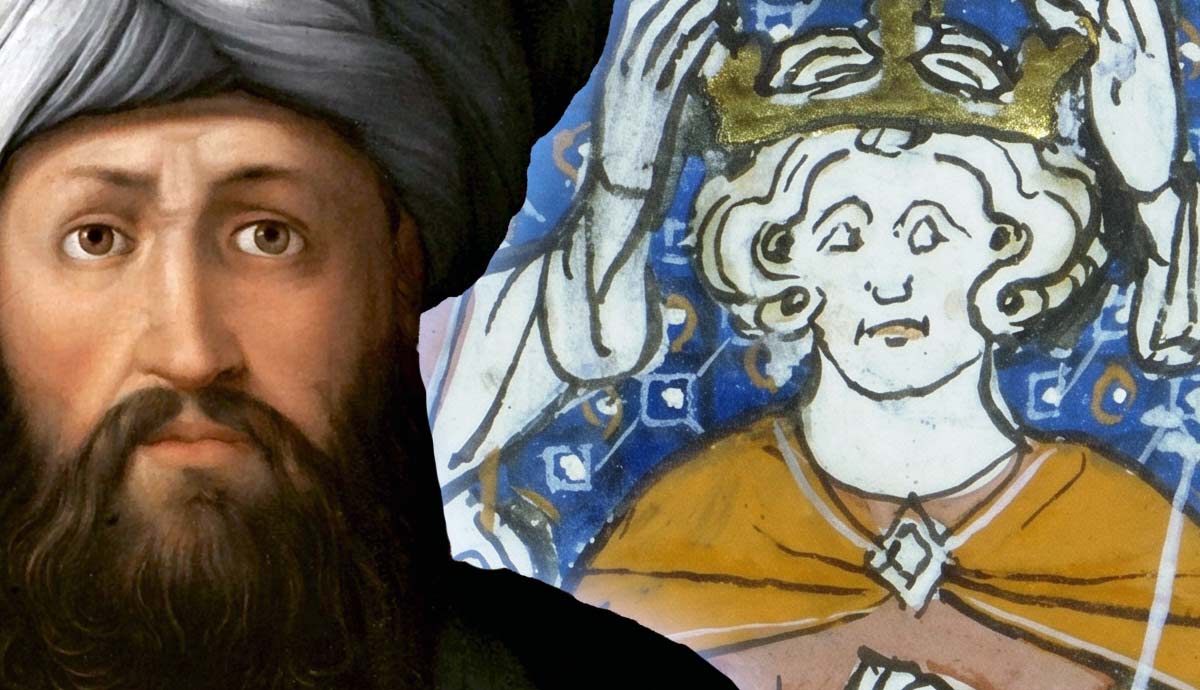
    The Rivalry Between Saladin and the Leper King Baldwin IV Defined the Crusades
    According to Arabic sources, Saladin sent a letter of condolence to Baldwin IV after the death of his father, King Amalric, in 1174. The letter appears to have been an attempt to establish peaceful relations with his new Frankish rival. Its tone was friendly, expressing hope that Baldwin might regard him as a friend, as Amalric had done.This cordial exchange contrasts sharply with the fierce rivalry that later defined Saladin vs Baldwin IV and reveals the diplomatic courtesy between Christian and Muslim rulers alongside their ongoing conflict.The Rise of SaladinSaladin, by Cristofano dellAltissimo, 16th century. Source: Wikimedia CommonsSaladin was born into a prominent Kurdish family around 1138. His birth name was Yusuf (Joseph), a figure who features prominently in both the Bible and the Quran as the son of Jacob, sent by God to save Egypt. The connection to Joseph was no doubt emphasized by Saladins supporters once he found himself in Egypt as the nephew of Shirkuh, a mercenary in the service of Nur al-Din.Saladin was appointed vizier of Egypt in 1169 and immediately began consolidating his position. This task was made much easier following the death of his lord, Nur al-Din, in 1171. Saladin had ambitions in Syria and entered Damascus in 1174, taking the city from his Muslim foes. He defeated his rivals at the Battle of the Horns of Hama in 1175 and was proclaimed the first sultan of both Egypt and Syria.These acquisitions were merely stepping stones, bringing Saladin closer to his ultimate goal. His grand ambition was to unite the Muslims in Syria under his rule and deliver a fatal blow to the Crusader States. It was this ambition that would bring Saladin and Baldwin IV into direct and dramatic confrontation.The Accession of Baldwin IVThe Coronation of Baldwin IV, King of Jerusalem, author unknown, 14th century. Source: National Library of FranceBaldwin IV descended from the Frankish knights of the First Crusade who seized Jerusalem in 1099 and established the Crusader States. He assumed the kingship of Jerusalem in 1174 following the death of his father, King Amalric. Amalric was a celebrated military commander who, like Saladin, had ambitions in Egypt.Baldwins accession coincided with the rise of Saladin, and a strong leader and competent commander was required to meet this dangerous threat.Unfortunately, Baldwin was a mere boy, just 13 years of age, when he became king. Moreover, shortly after his coronation, it was discovered that he was suffering from leprosy. Impeded by both his youth and his illness, a succession of regents ruled in Baldwins stead. Nevertheless, once he came of age in 1176 at the age of 15, Baldwin took full control of his government and relinquished authority only when his illness became too severe.Saladin undoubtedly rejoiced at the prospect of facing a minor and ailing king. However, Baldwin would prove to be a surprisingly formidable opponent. The stage was set for Saladin vs Baldwin IV, a contest that would test both rulers repeatedly over the next decade.The Battle of MontgisardA 19th Century Depiction of Baldwin IV at the Battle of Montgisard, by Charles-Philippe Larivire, 1842-1844. Source: Wikimedia CommonsAside from a few skirmishes, Baldwin was first truly tested against Saladin in 1177 at the Battle of Montgisard. Taking advantage of Jerusalems vulnerability after its troops had been sent north by Baldwin to support the forces of Philip of Flanders, Saladin launched an invasion of the kingdom. Knowing that Jerusalem was largely undefended, Saladin marched towards Ascalon, where Baldwin intercepted him with a small force.The 16-year-old Baldwin was about to face his toughest challenge to date. Severely outnumbered, Baldwin decided not to engage immediately and remained within the walls of Ascalon. An emboldened Saladin failed to take proper precautions, believing Baldwin would not dare leave the fortress, and divided his troops into raiding parties. These detachments devastated the surrounding countryside.A furious Baldwin met Saladin at Montgisard and, despite being heavily outnumbered by as much as three to one, ordered his army to charge. The result was catastrophic for Saladin. The sultan narrowly avoided being killed and escaped on a camel, forced to watch as his men were slaughtered.In this first significant engagement, Saladin learned much about his opponent. Despite his crippling illness, Baldwin was courageous, resolute, and a worthy descendant of his heroic forefathers.The Aftermath of MontgisardDetail of a miniature of the coronation of Baldwin IV, 13th Century. Source: British LibraryFollowing Baldwins victory at Montgisard, the relationship between the two rulers was dominated by conflict. In April 1179, Baldwins constable, Humphrey of Toron, was killed by Saladins forces while Baldwin was leading a raid into Banyas. Then, in June 1179, Baldwin suffered a crushing defeat at Marj Ayun as he attempted to halt Saladins attacks on Christian territory east of Sidon.These were minor engagements in the broader struggle, and the shifting fortunes of battle had little lasting impact on the regions geography. They were, however, opportunities for each leader to test his opponent on the battlefield and inflict significant damage upon his enemys retinue.The Construction of Chastelet CastleJacobs Ford Battlefield on the Jordan River. Photograph by Mark A. Wilson, May 26, 2009. Source: Wikimedia CommonsBaldwin intended to fortify his borders lest Saladin launch another attack. He ordered the construction of a castle called Chastelet overlooking Jacobs Ford, which lay on the border between Christian and Muslim territories. Jacobs Ford was strategically significant and used by both Christians and Muslims, as it sat on the main road between Acre and Damascus.Saladin considered the castle an infringement upon Muslim territory and ultimately disrespectful. This was not how one ruler ought to treat another. Saladin wanted to avoid a confrontation and attempted diplomacy, treating Baldwin courteously as a fellow ruler. Saladin initially offered Baldwin 60,000 dinars, later increasing the offer to 100,000 dinars to demolish the castle. Baldwin refused. Saladin responded by raiding the surrounding area, and in August 1179, he launched an assault on the castle itself. After five days, Saladin breached the defenses and tore them down. More than 700 soldiers and laborers were taken prisoner, and many more were killed during the Siege of Jacobs Ford.Baldwin was in Tiberias at the time of the attack. By the time he reached the castle with reinforcements, he was too late. His ambitious project lay in smoldering ruins.A Truce is MadeA Coin of Saladin. Source: American Numismatic SocietyPersistent warfare was costly and time-consuming for both sides. It was often deemed preferable to live in harmony alongside ones enemies than to live in perpetual warfare. As much as Baldwin and Saladin fought, they also both understood the value of peace. In 1180, a two-year truce was agreed between the two rulers. For Saladin, the truce enabled him to devote his attention to campaigns in northern Syria. Baldwin, however, needed the treaty more urgently. His health had begun to deteriorate significantly, and he needed to address the pressing matter of succession.Baldwin married his sister, Sibylla, to a Poitevin knight, Guy of Lusignan, hoping that he would serve as Baldwins successor and military commander when the king became too ill to exercise his powers.Baldwins decision to marry his sister to Guy was unpopular in certain circles at court and caused division within the kingdom. A significant party of nobles refused to follow Guy. Ultimately, Baldwin proved unable to relinquish effective control to Guy. As a result, the Leper King continued to rule despite his increasingly severe physical limitations.The Truce is BrokenAnointing of Baldwin IV, 14th Century. Source: National Library of FranceThe treaty between Baldwin and Saladin was broken in less than two years. Although the two rulers demonstrated a mutual respect to such an extent that peace between the pair was relatively easy to establish, others did not. In November 1181 Reynald of Chtillon attacked a Muslim caravan traveling between Egypt and Syria that passed near his lands. Reynald seized their goods and imprisoned the travelers. A furious Baldwin, attempting to restore the terms of the truce, ordered his vassal to return the stolen booty and release the prisoners. Reynald refused.Saladin himself, however, had little appetite for lasting peace with the Christians and did not intend to honor the treaty fully. In the spring of 1182, a Christian ship ran aground in Egypt, whereupon Saladin imprisoned its 1,600 passengers and seized their goods. Baldwin attempted to secure their release but to no avail, as Saladin wished to resume hostilities with his Frankish neighbors.The Battle of Le ForbeletKing Baldwin IV of Jerusalem with his Army, Author Unknown, 1295.Source: National Library of FranceBy 1182, Baldwins suffering had greatly increased. He was now blind, and his hands and feet had begun to deteriorate. Ulcers covered his body, and the dressing of these wounds often aggravated infection and pain. Riding had become nearly impossible, and for this reason, the king was frequently carried in a litter. Nevertheless, he did not relent. Whatever his condition, Baldwin continued to appear at the head of his army, leading from the front.In July 1182, Saladin felt confident enough to attack the Kingdom of Jerusalem directly. He gathered an immense force and marched into the kingdom. His troops laid siege to the castle of Bethsan in Galilee. Baldwin marched to relieve the siege with his own host but found himself severely outnumbered.In the blistering summer heat, the two forces clashed at Le Forbelet on July 15, 1182. Baldwins men stood firm, determined to follow their leper king wherever he led them.On that day, more men died from sunstroke and heat exhaustion than by the sword. The battle was sweltering and brutal, but ultimately Baldwin emerged victorious.Once again, the Leper King demonstrated to Saladin that superior numbers did not necessarily guarantee victory. As at Montgisard, Baldwins abilities as a military leader matched the strength of Saladins host.Baldwin Succumbs to LeprosyBedridden King Baldwin IV of Jerusalem passes his crown to his young nephew Baldwin V, author unknown, 13th century. Source: National Library of FranceBy this stage, Saladins rivalry with Baldwin IV had become more than a military contest; it was a test of endurance and leadership. Baldwins final years were marked by excruciating pain. His inability to devolve power to his brother-in-law, Guy of Lusignan, meant that Baldwin continued to shoulder these burdens himself.In late November 1183, Saladin besieged the fortress of Kerak. The bombardment was intense and required a personal response from the ailing king. Carried in a litter drawn by two horses, Baldwin made his way towards Kerak.Saladin had drawn many of his forces from Egypt and feared for the security of his realm. He therefore abandoned the siege of Kerak on December 4, avoiding an open pitched battle with Baldwin, and returned to Egypt. Baldwin entered Kerak in triumph in what would be his last major success against Saladin.Baldwins condition continued to deteriorate, and the king finally succumbed to his illness in May 1185. Although the rivalry between Baldwin and Saladin ended in 1185, Saladin continued to challenge Baldwins successors. He captured Jerusalem in 1187 following the disastrous Christian defeat at the Battle of Hattin.The two men were, in many ways, evenly matched in military skill and political leadership. However, Baldwins illness earned him the respect and admiration of both friend and foe, and his determination in the defense of Jerusalem distinguished him as one of the most remarkable rulers of his age. Saladin himself would enjoy a reputation among Christians as a paragon of chivalric virtue. Time and again, Baldwins resolve compelled Saladin to treat him as a serious and capable opponent. After Montgisard, neither ruler underestimated the other. Their conflict demonstrates that even during a religious war, admiration and respect could exist between enemies bound by an aristocratic code of honor.

    0 Commentaires 0 Parts 22 Vue
  • WWW.THECOLLECTOR.COM
    How Did a Failed Bank Raid in Minnesota End the James-Younger Gang?
    In the wild, violent decade of the 1870s, the James-Younger Gang stood out amongst Wild West outlaws. These hardened men differed from the rest with their Confederate bushwhacker experience from the American Civil War. Postwar, they settled in war-torn Missouri. But they returned to the outlaw life, committing a series of bank robberies between 1867 and the mid 1870s across several states. The two sets of brothers expanded their range (Iowa), robbing trains or stagecoaches.Before the Fateful RaidPortrait of Jesse James. Source: Wikimedia CommonsAs ex-guerrillas, Frank and Jesse James, along with the Younger brothers (Cole, Jim, Bob), relied on discipline, wartime experience, and mobility. Their robberies reflected their skillset: fast, coordinated, and violent. Their numerous escapes made the gang look uncatchable.The gang made headlines in the 1873 high-profile Rock Island train robbery in Iowa. The members left a press release during the 1874 Gads Hill train robbery. By 1876, whether good or bad, the gangs reputation was established.A Disaster UnfoldsFirst National Bank, Northfield,1876. From Robber and hero; the story of the raid on the First National Bank of Northfield, Minnesota, by the James-Younger band of robbers, in 1876 by George Huntington. Source: Project GutenbergFor the Northfield Bank Raid, the James-Younger Gang used proven tactics. Five men remained mounted in the street controlling the approaches, watching for lawmen, and providing coverage. These were Jesse James, Jim and Cole Younger, Clell Miller, and Bill Chadwell. Frank James, Bob Younger, and Charlie Pitts entered the First National Bank. But here their signature methods failed with fatal results.From the get-go, things went awry. Outside, a suspicious J.S. Allen approached, but Clell Miller grabbed him. Breaking free, Allen shouted the famous Get your guns, boys! Theyre robbing the bank! warning residents of the raid. The outlaws opened fire seconds later, galloping around to discourage bystanders.Inside the bank, Joseph Lee Heywood stalled, stating that the vault was time-locked. The outlaws believed Heyward, just as residents reacted. They grabbed their guns and ran to the scene; storekeepers handed out weapons to arm others. All found spots to fire at the bandits.A Ferocious Defense, Deadly DecimationEngraving of the 1876 bank robbery. Source: Northfield History Center (LOC)At Northfield, the gang members encountered something new: unintimidated, aggressive residents running towards gunfire. Within moments of the alarm, the townspeople reacted. From Bill Heywoods bluff to the townspeoples shooting, events spiraled out of the James-Younger Gangs control. From rooftops, store fronts, and alleys, Northfield residents fired at the exposed robbers. Several townspeople, such as Henry Wheeler and Anselm Manning, were Civil War veterans unfazed by gunfire. A gun battle like this had never occurred in Minnesota frontier history.The crisscrossing slugfest claimed victims rapidly. In only minutes, Clell Miller and Bill Chadwell died, shot by Wheeler and Manning, respectively. A shocked Cole called out to his comrades inside, urging them to hurry. Frank repeated his order again. Heywood still refused. Frustrated, the bandits fled with little money. As they left, Frank James spun, fired, and killed Heywood with a headshot. The gang next fled Northfield under fire.ManhuntSlain James-Younger Gang members. Source: Picryl (University of Connecticut)Shattered, the outlaws fled Northfield but not easily. All three Younger brothers had suffered multiple gunshot wounds, which slowed their flight. Aware theyd be hunted men soon, the James brothers established a fast pace, which the injured Youngers and Charlie Pitts tried to match. They waited until the others caught up and rode together. Soon, the James brothers knew staying with their injured comrades meant capture. Within a day, they split, with the James brothers heading southwest into the deep forest. The others kept moving west, albeit painfully, marking the outlaw gangs downfall.Behind them, like angry hornets, the Minnesota manhunt gathered steam. Within minutes, riders galloped, and telegraph lines buzzed across the state. Before nightfall, armed posses flooded the countryside. For two weeks, they scoured the state, knowing they pursued injured bandits.In the end, the James brothers escaped, utilizing their bushwhacking skills. The cornered Younger brothers surrendered to a posse, which fatally shot Charlie Pitts.The Raids Legacy and Changed PerceptionsIllustration of Robert Ford Shooting Jesse James. Source: Wikimedia CommonsIn American history, the Northfield raid stood out. This crushing of the James-Younger Gang created several lasting effects. First, this fed into a general decline in large, multistate gangs. Law enforcement communicated better, possessed better firearms, and reduced the frontier. Tackling towns became too risky. Gangs took to operating in smaller, more elusive groups. Robbing banks became difficult. In response, gangs attacked trains in isolated areas.For the James-Younger Gang, defeat came at Northfield. Despite the gangs experience and tactics, the residents didnt flinch. The Bank held their livelihoods, which they refused to part with.
    0 Commentaires 0 Parts 22 Vue
  • WWW.THECOLLECTOR.COM
    Why the Kingdom of Jerusalem Fell Apart the Moment Baldwin IV Died
    Baldwin IV, known as the Leper King of Jerusalem, ruled his fragile kingdom with unexpected strength for over a decade. Afflicted by leprosy from a young age, he nevertheless held together a realm threatened externally by Saladin and internally by factional rivalries. His authority, resilience, and political control kept powerful nobles in check and invasion at bay. Yet when Baldwin died in 1185 aged just 24, the delicate balance he had maintained collapsed, exposing deep divisions that would soon cost Jerusalem its survival.The Death of Baldwin IVBedridden King Baldwin IV of Jerusalem passes his crown to his young nephew Baldwin V, Author Unknown, 13th Century. Source: National Library of FranceCrippled by leprosy since his teens, Baldwin IV had been a surprisingly effective king. His illness elicited compassion from his subjects, and their loyalty to their sick king was a key factor in the success of his kingship.In 1185, Baldwin finally succumbed to his illness and died. He was buried close to his father in the Church of the Holy Sepulchre.Within two years of Baldwins death, the kingdom he had striven so hard to defend had fallen into the hands of his longstanding Muslim rival, Saladin.Events leading up to the Leper Kings death help explain why, after his passing, the kingdom fell, and the city was lost to Christendom forever.Baldwin IV and Guy of LusignanGuy of Lusignan with his wife, Sybilla, Author Unknown, 1295. Source: National Library of FranceBaldwin IV, the Leper King who defied a death sentence, was diagnosed shortly after his coronation in 1174. It was understood that he would not father any children to succeed him. His elder sister, Sybilla, and his younger half-sister, Isabella, were therefore central to the succession.Sybilla married William of Montferrat in 1177, and by him she bore a son named Baldwin. Montferrat died shortly before the childs birth, and Sybilla later married a second husband, Guy of Lusignan.By 1183, Baldwin became too ill to rule and needed a regent to govern alongside him. Guy, as his brother-in-law and the husband of the heiress to the kingdom, was the natural choice. Guy proved to be a poor military commander whom the nobles refused to follow, and Baldwin removed him from his post within weeks of his appointment.Guys unpopularity meant that the prospect of him succeeding to his brother-in-laws throne was deeply contentious. Most vocal amongst those in opposition to Guy was Raymond III of Tripoli, a cousin of Baldwin IV and a man who served as his regent on several occasions.To ensure Guy would not succeed him and thus tear the kingdom apart, Baldwin attempted to have Guys marriage to Sybilla annulled. But Guys disobedience, along with Sybillas refusal to leave the husband she loved, thwarted Baldwins plans.King Baldwin V, the Kings NephewThe Coronation of King Baldwin V, author unknown, 13th-14th century. Source: National Library of FranceWith Guy out of the picture, the desperately ill Baldwin IV had to reconsider his succession. Agnes of Courtenay, Baldwins mother, was a strong influence over her son. She suggested that Baldwin appoint his nephew, Sybillas son, as his successor.Acting on his mothers advice, Baldwin addressed the matter by having his nephew crowned as his co-ruler. It also denied Guy the throne and was welcomed by the nobility. In November 1183, the coronation was celebrated in Jerusalem, and both kings appeared in their crowns.Baldwin V would rule alongside a regent, Raymond III of Tripoli, who would once again relieve the burden of kingship from Baldwin IV until his death. Although Baldwin IV knew that it was not ideal for his young nephew to rule as sole king, he hoped that Raymonds competence and experience would allow the kingdom to survive until Baldwin V came of age.Although Baldwin IVs plans did come to fruition, they would not last long. Baldwin V died in August 1186, a mere 17 months after his uncle.Guy Becomes KingGuy of Lusignan, by Franois-douard Picot, c. 1845.Upon the boys death, the throne passed to his mother, Sybilla. The nobles, however, still opposed Guy. They agreed to crown her only on the condition that she divorce him. Sybilla agreed, but only if she could choose her next husband to rule alongside her.With the divorce agreed, Sybilla celebrated her coronation in September 1186. When asked whom she chose to rule alongside her, she remarried Guy and had him crowned alongside her.A disgruntled Raymond left Jerusalem. He failed to garner enough support to mount a concerted effort to challenge Sybilla and Guys rule, since most of the nobles reluctantly agreed to work with Guy. Undoubtedly, they wanted to avoid civil war, but it was difficult to remove an anointed and crowned king.Guy began his reign in the same way Baldwin IVs had begun, with the looming threat of Saladin. But in 1186, Saladin was in a much stronger position and had serious designs on Jerusalem. Having acquired the crown, Guy was about to face his greatest and most challenging test.The Muslims Unify Under SaladinSaladin, by Cristofano dellAltissimo, 16th century. Source: Wikimedia CommonsSaladin, the first sultan of both Egypt and Syria, had spent much of Baldwin IVs reign establishing and consolidating his position. He waged war not only against Baldwin IV but also against fellow Muslims in Syria. Saladin made significant conquests at the expense of his Muslim rivals, including the prominent cities of Damascus and Aleppo.Saladin had the added advantage of being able to call upon reinforcements from Egypt for his Syrian campaigns. Egypt was immensely wealthy and the envy of the Christians.Saladin claimed he had been sent by God and that his victories against the Crusaders and fellow Muslims were evidence of divine approval. He began uniting the Muslims in Syria under his leadership with the intention of removing the Franks from Jerusalem and the remaining Crusader States, including Antioch and Tripoli. He convinced his co-religionists that he could expel the Franks from Syria once and for all.When the Crusaders embarked on the First Crusade (10961099), they faced a divided Islam. By 1187, Saladin had created a sense of unity among the Muslims in Syria and could now move against the new king of Jerusalem, unpopular among his own people and ruling over a divided kingdom.The Road to HattinMiniature of the Battle of Cresson, by Jean Colombe, c. 1474. Source: National Library of FranceIn early 1187, Reynald of Chtillon gave Saladin a perfect pretext for invading the Kingdom of Jerusalem. Reynald attacked a Muslim pilgrim caravan, breaking a fragile peace that had been established with Saladin.Saladin sought revenge and vowed to kill Reynald for this insult. He entered the kingdom and sent raiding parties to ravage the lands around Frankish-held Acre. Gerard de Ridefort, Grand Master of the Knights Templar, went out with a small force to meet the invaders. The Battle of Cresson took place in May 1187 and saw the Templar force decimated by a numerically superior Muslim army. Only Gerard and a handful of knights survived.In response, King Guy assembled the Frankish forces at the Springs of Sepphoris, demoralized by this recent disaster. The Muslim army then turned towards Tiberias to besiege the castle there, commanded by Eschiva, the wife of Raymond of Tripoli. Guy called an assembly and decided to march to relieve her, beginning the 26-kilometer march to Tiberias. Unbeknownst to Guy, the Crusader army had fallen into Saladins trap.The Battle of Hattin, July 4, 1187The Battle of Hattin, illustration in Matthew Paris Chronica Maiora, 13th Century. Source: Corpus Christi College, CambridgeThe march from the Springs of Sepphoris removed Guys army from an abundant water supply. Their march in the blistering summer sun was arduous and dry. As they made their way on July 3, it became clear they would not reach Tiberias by nightfall. The most important necessity for an army is water, and they had none.It was decided to detour towards the Springs of Kafr Hattin, camp overnight, and march to Tiberias the following day. However, Saladin thwarted their plans. The Muslims blocked the route to the water source, and Guys dehydrated army was forced to camp near the village of Meskenah. Desperate for water, their Muslim foes taunted the Franks, pouring water onto the ground before their eyes and lighting fires to intensify their thirst.On the morning of July 4, 1187, Guy drew up his battle lines. Pelted by arrows and smoke from burning fires, the Franks were weakened by thirst.Raymond of Tripoli, no friend of Guy, led an unsuccessful charge early in the battle. Rather than returning to reform his lines, Raymond fled and headed for Tripoli.Guys troops were massacred at the Battle of Hattin, and the king himself was captured. Had he been able to garner greater support from the nobles, including Raymond of Tripoli, the outcome may have been different. But Guys unpopularity meant he was unable to fully unify the nobles under his leadership.The Fall of Jerusalem 1187Saladin the Victorious, by Gustave Dor, 19th Century.Source: Wikimedia CommonsWith most of its army destroyed at Hattin, the kingdom was defended by a small garrison. Saladin marched to Jerusalem and laid siege to the city. On October 2, 1187, he secured its surrender.Balian of Ibelin led the defense and agreed to surrender the city only if Saladin allowed the inhabitants to ransom themselves. He threatened to destroy Islamic holy sites and kill Muslim hostages should the sultan refuse. The pragmatic sultan accepted Balians conditions.Only around 18,000 Christian inhabitants were able to pay their ransom, many thanks to financial contributions from Balian and the Church. Approximately 15,000 Christians were taken into slavery.Saladin was able to take advantage first of a minor king and then of an unpopular king on Jerusalems throne. Guy had called for reinforcements before Hattin, but these failed to materialize. His unpopularity and inability to secure the nobles cooperation ultimately cost him his throne.Baldwin IVs death did not simply remove a king; it removed the authority that had held a fragile kingdom together. Under his rule, rival factions were restrained, and Saladins advances checked. Without him, the unity fractured. Guy of Lusignan proved unable to command the loyalty of the nobles or unite them under his leadership, while Saladin had forged a powerful and unified Muslim force in Syria. When Jerusalem fell in 1187, it was the result not only of external strength but of internal division and failed leadership.
    0 Commentaires 0 Parts 21 Vue