• WWW.THECOLLECTOR.COM
    How the Cold War Superpowers Tried to Reduce the Threat of Nuclear Annihilation
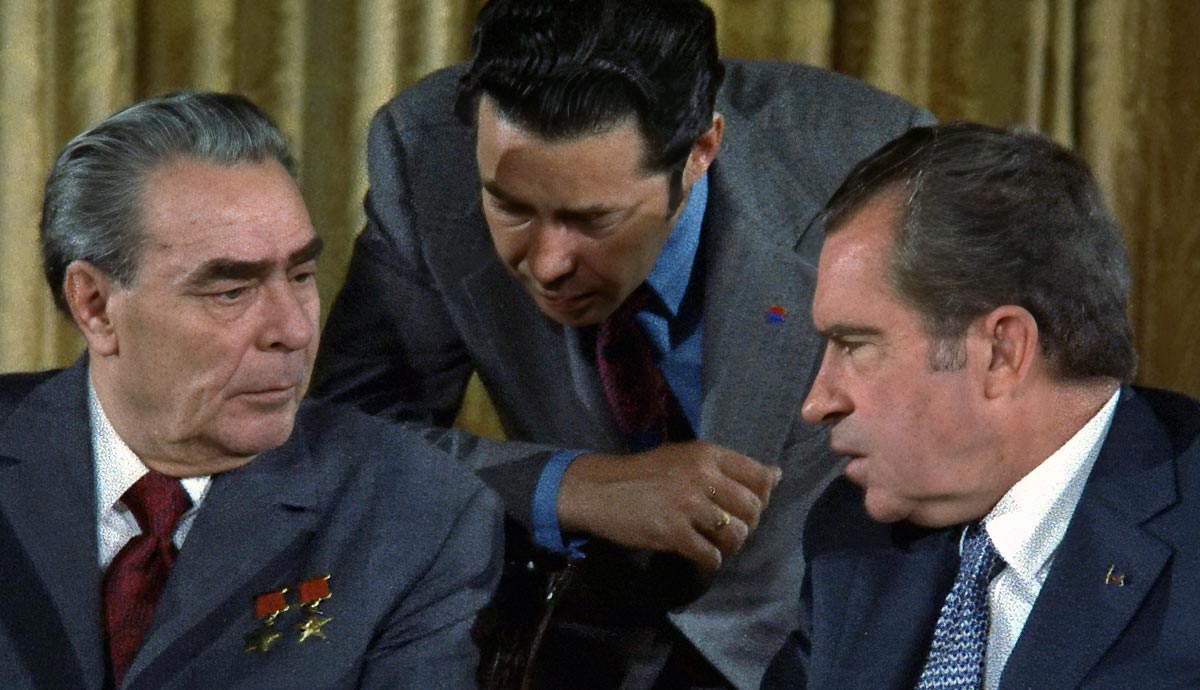
    From 1969 to 1979, US and Soviet negotiators worked on a set of comprehensive arms limitation treaties to regulate the nuclear arms race and reduce the threat of nuclear conflict. Two treaties were signed, but only one came into force. The negotiations, called the Strategic Arms Limitation Talks, were part of the process of dtente and helped to facilitate nuclear disarmament after the end of the Cold War.US and Soviet Nuclear Arsenals in the Late 1960sA UGM-27 Polaris Submarine-Launched Ballistic Missile during a test, 1967. Source: US Naval InstituteOnce the Soviet Union tested an atomic bomb in 1949 in the Kazakh SSR, it was inevitable that the Soviets and Americans were going to be engaged in a nuclear arms race. The fear that a major war could break out meant that both countries wanted to gain an advantage in their stock of nuclear weapons. They also experimented with different types of nuclear weapons: long-range, medium-range, fusion or fission, land, air, or sea-launched, etc. Even after the agreement reached between the Kennedy and Khrushchev governments in 1962 to deescalate the Cuban Missile Crisis, the spectre of armageddon remained.The United States nuclear arsenal was at its peak during the late 1960s, and in 1969 the United States had 27,552 nuclear weapons of all types in its arsenal. From 1960 to 1966, the US launched a fleet of 41 nuclear-powered ballistic missile submarines each armed with 16 nuclear missiles. Despite the losses in the Vietnam War, the United States Air Force could field over 100 B-52 bombers carrying nuclear payloads. On land, the United States had launch sites all over the country that could target critical population centers in the USSR.The Soviets were estimated to have 10,538 nuclear weapons in 1969. It is not clear exactly how many they had because they were intentionally quiet about the size of their nuclear arsenal. Like the US, they maintained a triad of air, land, and sea-launched weapons. In 1961, they tested the largest nuclear weapon in history, Tsar Bomba, in the Arctic Ocean. Moscow had plans to ramp up its arsenal.Buildup to the TalksPresident Lyndon Baines Johnson and Soviet Premier Alexei Kosygin during the Glassboro Summit, 1967. Source: LBJ Museum & LibraryAs the Vietnam War raged and the Israelis defeated the Soviet-backed Arab states in the Six-Day War in 1967, Washington was growing very concerned about developments in Soviet nuclear capabilities. Because the US had a head start on testing and producing nuclear weapons, Washingtons arsenal was larger than Moscows, even when not counting the nuclear weapons possessed by Americas allies. Moscow wanted to close the gap and was preparing a program to rapidly increase their arsenal. The Soviets especially wanted to even the odds regarding stockpiles of Intercontinental Ballistic Missiles (ICBMs).In January 1967, LBJ announced that the Soviets were building an air defense system that could shoot down American ICBMs near Moscow. This could give the USSR an advantage if they wanted to strike the US first. When LBJ met with Soviet Premier Alexei Kosygin in Glassboro, New Jersey, in June 1967, they talked about how to reduce nuclear tensions in light of the Six-Day War and Americas continued air raids over North Vietnam. They reached no major agreements, but kept a channel open between the two and promised to continue talking.In 1968, several UN member states including the US and the USSR signed the Nuclear Nonproliferation Treaty, or NPT. The signatories stipulated that the nuclear powers would not ship nuclear weapons material to non-nuclear states, and the non-nuclear signatories would not try to gain access to them. However, the treaty did not denuclearize any state and many UN members did not sign. When Richard Nixon was elected president in 1968, he faced the same issue LBJ had; how to avert the resumption of the nuclear arms race that had paused after 1963.The First Meetings of SALT IContemporary picture of the Smolna Building in Helsinki where the first SALT negotiations were held, 2021. Source: Finnish GovernmentPresident Nixon decided to continue his predecessors efforts to reach an agreement with the Soviets. The Sino-Soviet split helped give the United States leverage to use, while the Kremlin also believed that they could use Americas struggles in Vietnam as leverage. On November 17, 1969, US delegate Gerard Smith met with Soviet Deputy Foreign Minister Vladimir Semyonov at the Smolna Building in Helsinki, Finland. The Finns, officially neutral in the Cold War, offered to mediate the first round of the Strategic Arms Limitation Talks. There was hope that some kind of agreement could be reached.The US governments main goal was to convince the Soviets of two things: their overwhelming superiority in nuclear capabilities and their unwillingness to pursue a first-strike policy. The Soviets in turn wanted the Americans to know about the development of MIRV capabilities: missiles that could launch dozens of nuclear armed submunitions. They were hostile to any suggestions of foreign inspection of nuclear launch sites because they worried about espionage threats. Both parties tried to argue that their Anti-Ballistic Missile systems were not designed to give them a first-strike advantage.The talks continued in a relatively respectful manner, however, not much progress was made initially. Both parties dug in their heels, fearing that concessions would lead to a lopsided deal. The next round of talks was scheduled in Vienna, where the Austrians hoped to mediate a successful round of talks. This set the stage for two years of talks on reducing the number of ICBMs and Anti-Ballistic Missile systems that either side possessed.SALT I Signed Between Nixon and BrezhnevRichard Nixon and Leonid Brezhnev with a Soviet interpreter at the Washington Summit, 1973. Source: US National ArchivesFrom 1970 to 1972, members of Nixons and Leonid Brezhnevs teams hashed out details for a comprehensive treaty targeting ICBM and ABM production. Familiar sticking points remained: whether there would be reciprocity in the negotiations, foreign inspections, and other issues. There was no discussion about reducing the launch vehicles for nuclear weapons. Additionally, the Soviets did not consider nuclear weapons aimed at countries in Europe or Asia to be strategic nuclear arms, but the United States did and did not want to jeopardize its commitments to its European NATO allies.On May 20, 1971, the White House announced that a breakthrough had been reached. Nixon aimed to sign an agreement limiting the production and deployment of ABM systems. The Soviets were also interested in this. After two and a half years of negotiations, Nixon flew with members of his staff to Moscow and signed the first SALT Treaty. This treaty had two main components: the Anti-Ballistic Missile Treaty and the Interim Agreement on Strategic Offensive Arms.The Interim Agreement paused additional ICBM deployment and production for a period of five years pending an additional SALT treaty. The ABM Treaty was more durable and was intended to be permanent. It did not ban the use of ABM systems, but it did limit both parties to deploy two fixed, ground-based defense sites of 100 missile interceptors each. One site could protect the national capital, while the second could be used to guard an ICBM field. By signing this, both countries gave hope for additional nuclear talks.SALT II NegotiationsJimmy Carter and Leonid Brezhnev, 1979. Source: TASSThe success behind the SALT I talks inspired American and Soviet negotiators to continue working toward another agreement. President Gerald Fords administration pursued talks about reducing ICBM deployments in line with the terms of the Interim Agreement from SALT I. However, he was unable to conclude an agreement due to internal opposition from hawkish Republicans opposed to dtente and the election of Jimmy Carter in 1976. Carters administration hoped to enshrine the Interim Agreement into a permanent treaty.Talks continued in Vienna even as dtente started to break down. The United States was no longer worried about the Vietnam War after the withdrawal of US troops in 1973 and the fall of Saigon in 1975. However, it was worried about a possible Soviet arms buildup in Europe and hoped to deflect criticism from the hawks in the Republican Party who opposed dtente. Following the signing of the Vladivostok Accords between the Ford and Brezhnev governments, which banned the construction of new ICBM launch sites, the Carter administration pushed for a comprehensive deal reducing ICBM quantities in both countries.On June 18, 1979, the US and Soviet governments announced that they had reached an agreement. The SALT II Treaty established parity between the two nations in terms of nuclear weapons delivery systems. It also limited the number of MIRV missiles used by both countries. However, it did not address other elements of the American or Soviet arsenals. Carter and Brezhnev met in Vienna and signed the deal in spite of opposition from hardliners in both countries. It was believed that SALT III would address long-range nuclear bombers in the future.Collapse of Both AgreementsSoviet soldiers fighting in Afghanistan, 1980. Source: The New York TimesCarters successes were undermined by the increasing willingness of the Soviets to use force to resolve their problems. In 1979, Soviet forces invaded Afghanistan to prop up its communist government. The United States was infuriated and fruitlessly demanded the Soviets halt their military operation. Hawks, especially the new Republican neocons, felt vindicated in their belief that only force could stop the Soviets. They helped Ronald Reagan get elected and pushed for a hardline approach towards the Soviets.The Senate refused to ratify the SALT II Treaty because many senators felt that the agreement was in favor of the Soviets. Senator Henry Jackson was especially opposed to SALT II. A conservative Democrat, he demanded that the US push for a more aggressive approach towards Moscow. At the same time, the Supreme Soviet in Moscow never ratified the treaty either. This collapsed any nuclear arms talks until Mikhail Gorbachev came to power in 1985.The START treaties signed between the US and Russian governments in the 1990s and 2000s built on the earlier progress from detente. However, nonproliferation efforts collapsed again under the weight of increasing tensions between Washington and Moscow. Washington withdrew from the ABM Treaty in 2001 and the Intermediate-Range Nuclear Forces Treaty in 2019. Russias invasion of Ukraine extinguished any efforts to restart nuclear talks, similar to the Afghanistan invasion in 1979. While anti-nuclear treaties helped to reduce US-Soviet tensions during the latter stages of the Cold War, they did not prove durable once neither Moscow nor Washington wanted to keep to the terms.
    0 Kommentare 0 Geteilt 24 Ansichten
  • WWW.THECOLLECTOR.COM
    8 Mysterious Closed Cities of the Soviet Union
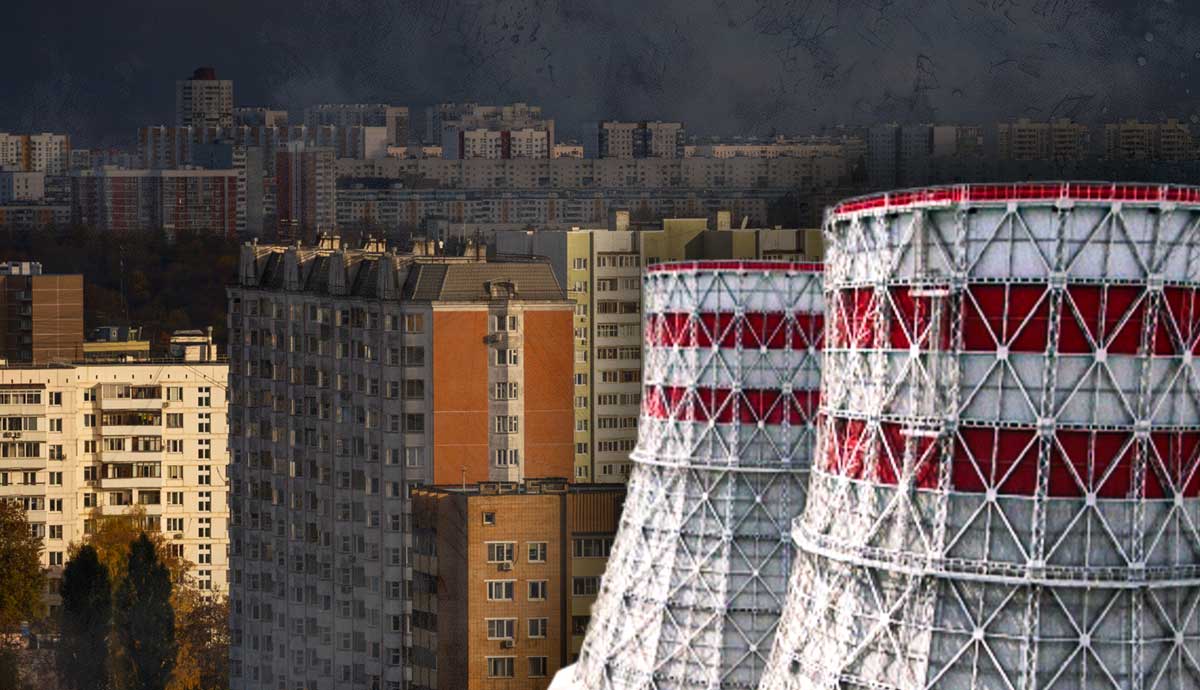
    Amidst the secretive atmosphere of the Cold War, the Soviet Union closed off entire cities to the outside world. These settlements were hidden from maps and road signs and were largely inaccessible to outsiders. Closed cities in the USSR were home to centers of military, scientific, or industrial activity that were often tied to the Soviet nuclear weapons program. While many of these closed cities have been opened to the outside world, their history and purpose remain shrouded in mystery.1. Arzamas-16 (Present-day Sarov)A cathedral in central Arzamas. Source: Bestalex/Wikimedia CommonsArzamas-16, known today as the city of Sarov, was the Soviet Unions primary nuclear weapons research center. As such, it was the USSRs equivalent to Los Alamos in the United States. First established in 1946, the city played a critical role during the development of the Soviet Unions first nuclear bomb, which was successfully built in 1949. Arzamas-16 is located in the Nizhny Novgorod Oblast and was completely sealed off from the outside world. To make sure that no outsiders got a glimpse of what was taking place inside the city, it was surrounded by barbed wire and heavily guarded by soldiers.The legion of scientists and engineers who lived and worked in Arzamas-16 enjoyed a quality of life that was considerably better than those in the rest of the USSR. Despite its isolation, the city boasted modern comforts, frequent cultural events, and higher wages, which made it an attractive destination for anyone lucky enough to be granted access to live there.After the collapse of the Soviet Union, Arzamas-16 was renamed Sarov by Boris Yeltsin in 1995. Today, the town of Sarov remains a closed city and is under the control of Russias state nuclear corporation, Rosatom. All visitors to the town require special permission, and their movements are closely monitored.2. Krasnoyarsk-26 (Present-day Zheleznogorsk)A checkpoint at the entrance to Zheleznogorsk. Source: MaxBioHazard/Wikimedia CommonsKrasnoyarsk-26, today known as Zheleznogorsk, was a closed city in the Soviet Union established in 1950 for the production of weapons-grade plutonium. Located in a remote Siberian forest region of Yenisei, the underground facilities of the city were kept hidden from aerial surveillance and potential enemy attacks. Built to produce the materials necessary to create the Soviet Unions nuclear arsenal, the city was built around the Mining and Chemical Combine, which housed a number of nuclear reactors and reprocessing plants that were buried underground. For decades, these facilities produced the plutonium necessary to fuel the Cold War arms race.While those living and working in Krasnoyarsk-26 were closely monitored, they enjoyed a quality of life that differed greatly from that of their Soviet comrades. While some towns in the USSR struggled to supply even the most basic goods to their residents, the shops and leisure facilities of Krasnoyarsk-26 were kept fully stocked. After the collapse of the Soviet Union, Krasnoyarsk-26 became Zheleznogorsk, a town that specialized in the treatment and storage of nuclear waste. However, it still remains a closed city, and no unauthorized access is allowed.3. Molotovsk (Present-day Severodvinsk)Government administration building in central Severodvinsk. Source: Ludvig14/Wikimedia CommonsMolotovsk, known today as Severodvinsk, was a closed city that played an important role in the Soviet Navy. Established in 1938, Molotovsk was primarily home to the various construction facilities that built and maintained the fleet of Soviet nuclear submarines. As a result, the city became one of the most important hubs for the Soviet Navy and played a key role in the development of the USSRs strategic submarine fleet during the Cold War arms race.The shipyard at Molotovsk was the largest in the Soviet Union and was responsible for building nearly all of the USSRs nuclear-powered submarines. Because of its sensitive facilities, the city was heavily guarded by the Red Army and kept off-limits to outsiders. Today, the city of Molotovsk, now known as Severodvinsk, remains largely closed to unauthorized individuals as it continues to play a vital role in the production and maintenance of the Russian Federations nuclear submarine fleet.4. Chelyabinsk-40 (Present-day Ozyorsk)Present-day Ozyorsk. Source: Sergey Nemanov/Wikimedia CommonsChelyabinsk-40, known today as Ozyorsk, was one of the most notorious closed cities of the Soviet Union due to its role in the production of weapons-grade plutonium and its proximity to the Mayak Production Zone. Founded in 1945, the town of Ozyorsk was vital in the development of the Soviet Unions first nuclear weapon. Notably, the town was also the site of one of the worlds worst nuclear incidents, the Kyshtym disaster of 1957.The Kyshtym disaster took place in 1957 when a large blast rocked a nuclear waste storage area near the Mayak nuclear facility and released huge amounts of radioactive material into the surrounding area. While there remain conflicting reports surrounding the nature of the incident, the Soviet government has publicly admitted that the explosion was caused by a failure in the cooling system at a nearby open-air nuclear waste storage area. This resulted in a chemical explosion that was equal in size to several tons of conventional explosives. The fire was so severe that it produced a column of radioactive debris that spread high into the atmosphere and distributed radioactive fallout across an area of thousands of square kilometers. To cover up the incident, the Soviet government designated the most contaminated areas as a new nature reserve. Today, the area is known as the Eastern Ural Radioactive Trace region.After the initial explosion, the immediate contamination affected local infrastructure, residential areas, agriculture, and all buildings in the nearby city of Ozyorsk. Notably, workers who were dispatched to the Mayak facility to put out the blaze unknowingly brought back radioactive material in their clothing and spread fallout across the entire city as they returned home.5. NorilskA residential building in Norilsk. Source: Piton221/Wikimedia CommonsNorilsk, originally established as a Gulag labor camp during Stalins Great Purge, is a unique Soviet closed city in that it was primarily an industrial hub and not related to the Soviet nuclear weapons program. During the Soviet Unions rush to rebuild after World War II, the vast mineral resources located in and around Norilsk made it a strategically important city.Even after Stalins death, Norilsk remained largely closed off to the rest of the Soviet Union due to its industrial significance and strategic location. While the residents of Norilsk enjoyed modern amenities, the environmental impact of the decades of mineral mining has led to Norilsk becoming one of the most heavily polluted places on Earth. Today, Norilsk is no longer a closed city but access to the town is still highly restricted, and non-Russian residents are largely prohibited from entering.6. Zvezdny GorodokCosmonaut Training Center in Star City. Source: Errabee/Wikimedia CommonsZvezdny Gorodok, also known as Star City, is a unique closed city that served as the heart of the Soviet space program. Star City was established in the Moscow region in the 1960s as a base to train, house, and observe the cosmonauts and engineers who made the Soviet space program possible. Notably, Star City was the training ground that Yuri Gagarin used to prepare for his historic flight into space. Today, the Gagarin Cosmonaut Training Center remains one of the worlds most prestigious cosmonaut/astronaut training facilities.During the height of the Cold War, the city was shrouded in secrecy, and its exact location was kept secret from the rest of the USSR. Today, Zvezdny Gorodok is no longer a closed city and even hosted contingents of NASA astronauts as they trained to fly on board a Russian Soyuz capsule to the International Space Station.7. PripyatPripyat today. Source: Matti Paavonen/Wikimedia CommonsPripyat is perhaps one of the most tragic closed cities in the history of the USSR. Originally established in 1970 to house the engineers and workers of the nearby Chernobyl Nuclear Power Plant, the city had a growing population of almost 50,000 people until April 26, 1986. On that day, reactor number 4 at the Chernobyl Nuclear Power Plant exploded during testing of the reactors safety mechanisms.The explosion released huge quantities of radioactive material into the atmosphere that contaminated large areas of the Soviet Union. The contamination released by the explosion of reactor number 4 and the ensuing blaze was equivalent to approximately one hundred Hiroshima bombs. In response, the Soviet Union established an exclusion zone around the power plant, and Pripyat was permanently evacuated. Today Pripyat is a pseudo tourist attraction and an impromptu nature reserve, with the crumbling concrete tower blocks providing a permanent reminder about the dangers of radiation.8. Chelyabinsk-70 (Present-day Troitsk)A power plant in Chelyabinsk. Source: OblasovaEA/Wikimedia CommonsChelyabinsk-70, known today as Troitsk, was a secret Soviet city established in the late 1940s as a part of the Soviet Unions race to build a nuclear weapon. Located in the remote Siberian region of Chelyabinsk, the city served as a center for the design and manufacture of nuclear weapons in parallel to the closed city of Arzamas-16. The city attracted some of the Soviet Unions most brilliant scientific minds.The residents of the closed city worked in absolute secrecy on advanced nuclear technologies such as the hydrogen bomb. However, similar to many other closed cities, their tightly controlled environment afforded them higher living standards, modern housing, prestigious schools, and leisure facilities. Since the collapse of the Soviet Union, the city has been known as Troitsk. The area remains closed to the outside world and continues to play a role in research and development.
    0 Kommentare 0 Geteilt 18 Ansichten
  • ALLTHATSINTERESTING.COM
    17-Year-Old Jackie Mitchell Struck Out Lou Gehrig And Babe Ruth On Seven Pitches. Did It Really Happen?
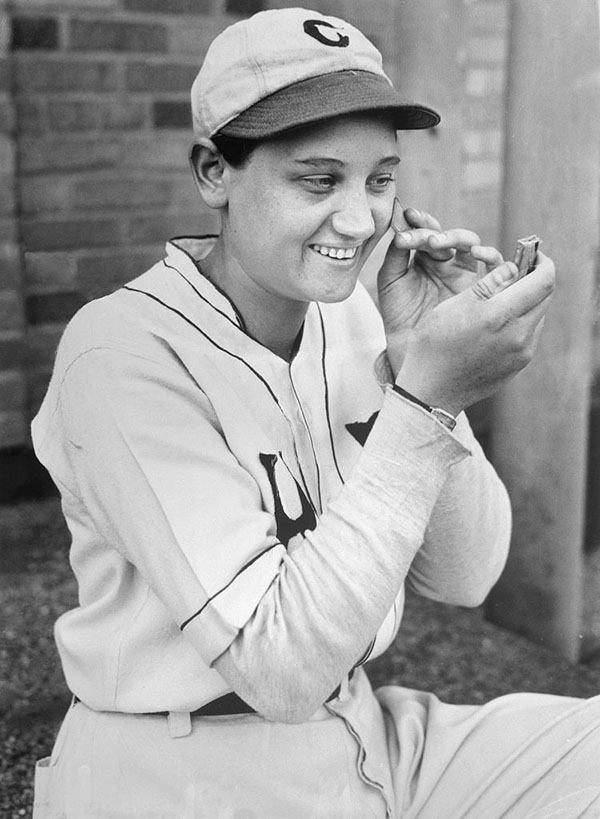
    Bettmann/Contributor via Getty ImagesJackie Mitchell, taken on July 14, 1933.During an exhibition game on April 2, 1931, Babe Ruth struck out in four pitches. This wasnt all that unusual even the Great Bambino whiffed sometimes. But this strikeout was particularly noteworthy because the pitcher who struck out Ruth was a 17-year-old girl named Jackie Mitchell.Not only that, but Mitchell then struck out Lou Gehrig as well.Though the New York Yankees won the game against her team, the Chattanooga Lookouts, newspapers focused on a different aspect. As The New York Times reported, Ruth and Gehrig Struck Out by Girl Pitcher.But did Jackie Mitchell really strike out the sluggers or was it staged?Who Was Jackie Mitchell?Born on Aug. 29, 1913, Virne Beatrice Jackie Mitchell had an ordinary childhood in Memphis, Tennessee. Encouraged by her father, an optician, Mitchell gravitated toward sports. She played baseball, basketball, and tennis, and enjoyed swimming. She also spent time with her neighbor, Dodgers pitcher and National League MVP Charles Arthur Dazzy Vance.Library of CongressJackie Mitchell learned how to throw her signature drop ball from her neighbor, a National League MVP.According to the Society for American Baseball Research, Vance taught Mitchell how to pitch. He showed her how to throw a drop ball, known a sinker, and this deceptive pitch soon became Mitchells signature throw.When she was a teenager, her family moved to Chattanooga. And it was here that Joel Engel, the new owner of the minor league team the Chattanooga Lookouts, first saw Mitchell pitching. Engel had just set up two exhibition games between the Lookouts and the New York Yankees (who were passing by after spring training) and he enlisted Mitchell to pitch in one of them. This made Jackie Mitchell the second woman in American history to sign with a professional baseball team. And as the Lookouts prepared to face the Yankees in April 1931, speculation about Mitchell reached a fever pitch. As Smithsonian Magazine reported, one newspaper, describing Mitchell as pretty, quipped: The curves wont be all on the ball. Another paper declared that the 17-year-old pitcher had a swell change of pace and swings a mean lipstick.Yankees star Babe Ruth was even asked about Mitchell ahead of the exhibition match and he responded by saying that he didnt believe women should be allowed in professional baseball games. Public DomainYankees legend Babe Ruth in 1919.I dont know whats going to happen if they begin to let women in baseball, he told The New York Times the day of the match. Of course, they will never make good. Why? Because they are too delicate. It would kill them to play ball every day I dont know what things are coming to. Jackie Mitchell Versus The YankeesMark Rucker/Transcendental Graphics, Getty ImagesBabe Ruth, second from left, and Lou Gehrig, far left, watch Jackie Mitchell demonstrate her fast ball at Chattanooga, Tennessee during a spring training stop.On April 2, 1931, Jackie Mitchell walked to the mound before a crowd of 4,000 fans. The Lookouts starting pitcher had given up two hits, so Mitchell had been called in to face the Yankees third batter: Babe Ruth.While most girls would have been so excited that they would have thrown the ball in the stands, Jackie was four degrees cooler than the proverbial cucumber, reported the Chattanooga Daily Times. Ruth tipped his hat to Mitchell, who began winding her arm as if she were turning a coffee grinder, according to a journalist who witnessed the exchange. Then Mitchell threw. The first pitch was a ball. But Ruth swung hard and missed the second pitch and then the third. With a 1-2 count, Mitchell threw a strike and the Great Bambino struck out, tossing away his bat, and registering disgust with his shoulder and chin, according to contemporaneous reporting by The New York Times.Chattanooga Regional History MuseumGirl pitcher Jackie Mitchell faced the Yankees lineup and came away with two big strike outs. Though shed struck out Ruth, Mitchell still had to face Lou Gehrig. But she made quick work of this Yankees legend as well, striking him out in just three pitches. Mitchell was then pulled out of the game, and her team ultimately lost to the Yankees 14-4. But few remembered the score most were stunned by the news that Babe Ruth and Lou Gehrig had been struck out by a 17-year-old girl.Or had they?A Publicity Stunt Or A True Double Strikeout?In the years since Jackie Mitchell struck out Babe Ruth and Lou Gehrig, some have claimed that her performance was nothing more than a publicity stunt arranged by her boss, Engel. Indeed, Engel was no stranger to stunts. Once, he traded a shortstop for a turkey (which he then cooked and served). Another time, he raffled off a house to a fan. And he had signed Jackie Mitchell just days after arranging the exhibition games against the Yankees. Engels surely knew that the girl pitcher would fill the stands. And he may have even meant for Jackie Mitchell to be part of an April Fools joke, since the Lookouts exhibition game against the Yankees had originally been scheduled for April 1, before cold weather delayed it until April 2. The New York TimesThe New York Times reported that Babe Ruth was furious at the called strike. But did Engel stage the strikeouts? Babe Ruth certainly reacted as if Mitchell struck him out. And neither he nor Gehrig ever suggested that Mitchells pitching had been a publicity stunt. And what about Mitchell? At 17 years old, she had seemingly struck out two of baseballs most dominant hitters. But just days later, the baseball commissioner purportedly voided Mitchells contract. Girl pitchers were no longer welcome, and Mitchell, who briefly continued to play in exhibition games, ultimately went to work in her fathers optometry office. Indeed, girls would not even be allowed to join Little League until 1970 and no female player has ever reached the major leagues. But Jackie Mitchell seemingly proved that women could compete at the highest levels of baseball. Even decades later, she defended her record, denying that her performance had been a publicity stunt. Why, hell, [Ruth and Gehrig] were trying, damn right, Mitchell declared in 1987, shortly before she died at the age of 74. Hell, better hitters than them couldnt hit me. Why should theyve been any different?After reading about Jackie Mitchell, the 17-year-old who purportedly struck out Babe Ruth and Lou Gehrig, discover the sad story of Babe Ruths death at the age of just 53. Or, learn about Arnold Rothstein, the drug kingpin who fixed the 1919 World Series.The post 17-Year-Old Jackie Mitchell Struck Out Lou Gehrig And Babe Ruth On Seven Pitches. Did It Really Happen? appeared first on All That's Interesting.
    0 Kommentare 0 Geteilt 19 Ansichten
  • WWW.DUALSHOCKERS.COM
    10 Best Mods For Resident Evil Requiem Every PC Player Needs To Try
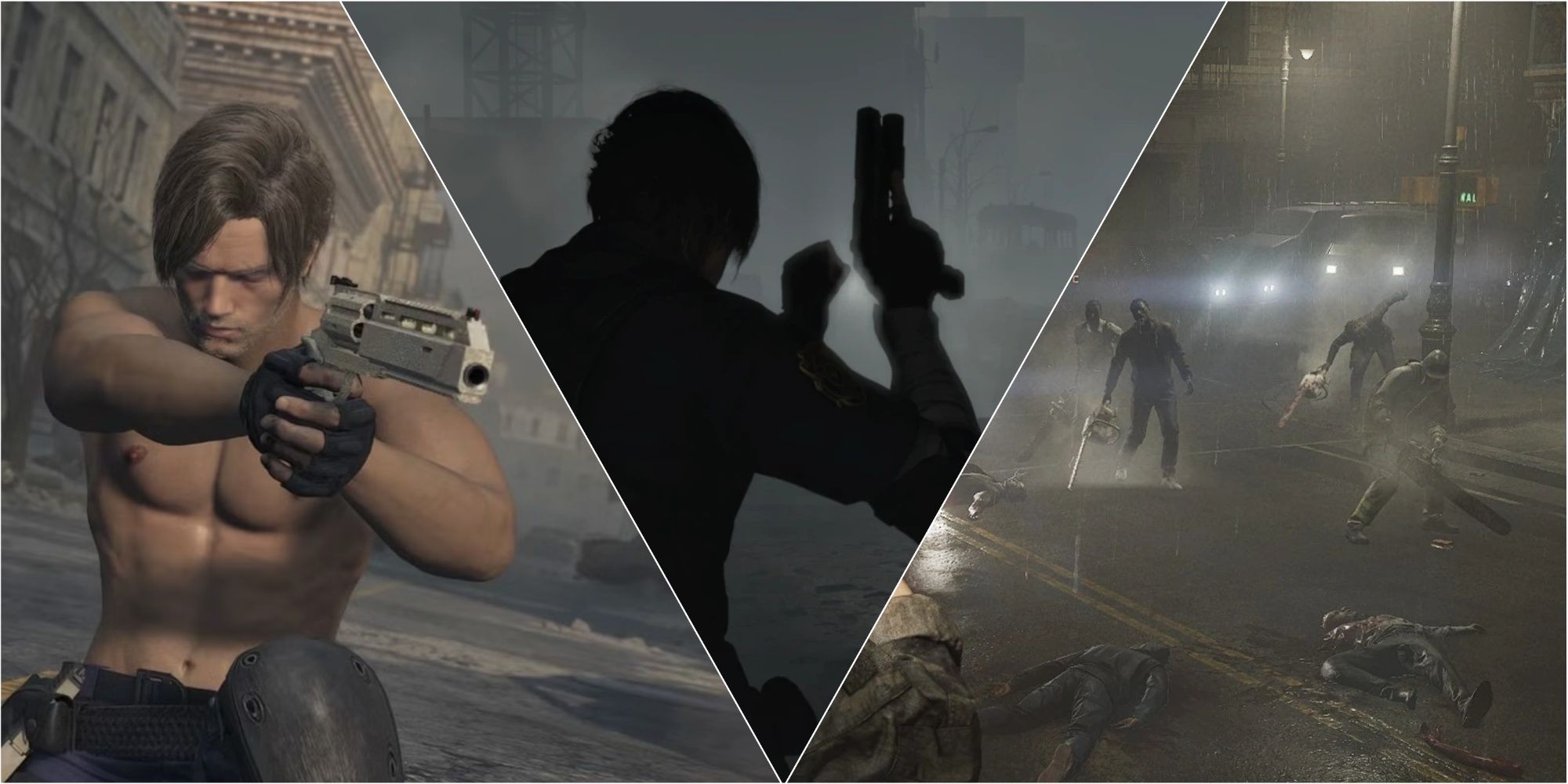
    Its already been a few months since Resident Evil Requiem launched, earning widespread praise from both critics and the community. Naturally, many players are still exploring the dark, desolate corridors of Raccoon City alongside Leon Kennedy and Grace Ashcroft, who share the protagonist spotlight in Capcom's latest title.
    0 Kommentare 0 Geteilt 14 Ansichten
  • WWW.PCGAMESN.COM
    Destiny 2 was never going to last forever, but that's what made it special
    Destiny 2 comes to an end on Tuesday June 9, with the launch of the Moment of Triumph update. Bungie promises that the FPS will remain live and playable for the foreseeable future, with changes planned "to ensure that Destiny 2 is a welcoming place for players to return to." That overhaul will be its final 'content update,' however, and the decision once again calls into question the very nature of the live-service format, and the inherent inevitability of loss that it perpetuates. Rather than get locked into the negatives, however, I want to take a moment to embrace what Destiny and its sequel get so right.
    0 Kommentare 0 Geteilt 14 Ansichten
  • 0 Kommentare 0 Geteilt 14 Ansichten
  • WWW.BGR.COM
    5 Of The Best Small Phones You Can Buy In 2026
    While small phones are slowly becoming a rarity, there are still a few options on the market that are relatively compact. Here are some of the best ones.
    0 Kommentare 0 Geteilt 14 Ansichten
  • TECHCRUNCH.COM
    Trump Mobile confirms it exposed customers personal data, including phone numbers and home addresses
    President Trumps branded cell phone maker and cell provider said the exposure was linked to a third-party platform, and was evaluating whether it needs to notify customers.
    0 Kommentare 0 Geteilt 15 Ansichten
  • TECHCRUNCH.COM
    Meta quietly launches a new Reddit-like app called Forum
    The company describes the app as a "dedicated space built for deeper discussions, real answers and communities you care about."
    0 Kommentare 0 Geteilt 14 Ansichten
  • TECHCRUNCH.COM
    Smart ring maker Oura files to go public
    The Finnish company said in September that it has sold 5.5 million smart rings to date.
    0 Kommentare 0 Geteilt 13 Ansichten