7 Facts About Medgar Evers, the Civil Rights Activist Who Gave His Life for Equality
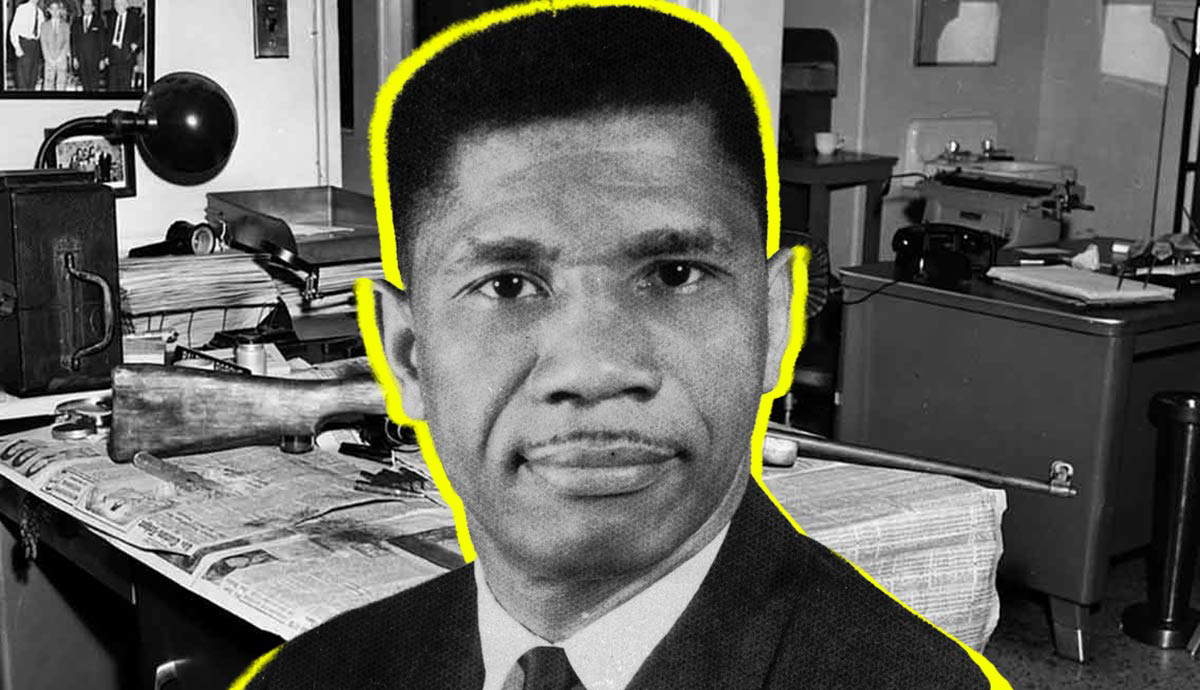
Medgar Evers was one of the most important figures in the Civil Rights Era. After returning home from WWII, he was upset to find that despite the fact that he had fought for his country, he was still considered a second-class citizen. This led him to fight for equality during the Civil Rights Movement. Despite being assassinated in 1963 by a member of the KKK, his efforts in the fight for equality live on.1. He Was an Army Veteran and Fought in WWIIMedgar Evers in uniform, 1943-5. Source: TIMEMedgar Evers was born the third of four children to James and Jessie Evers in Decatur, Mississippi, on July 2, 1925. Evers grew up in a time and place where African Americans were viewed as second-class citizens. The Mississippi of Everss time separated Black and white citizens in all public places. There were white and Black bathrooms, water fountains, grocery stores, and even movie theaters. While these separate conditions were supposed to be equal to one another, that was never the case.Despite not being able to enjoy the same level of life as white Mississippians, Evers enlisted in the United States Army at the age of 17 in 1943 during WWII. He served in the 657th Port Company, a segregated unit, and was involved in several important battles, including the D-Day landings on Normandy Beach. Evers was discharged in 1946, having earned three medals for his service.While in the service, Evers grew discouraged by the fact that he was fighting for a peoples freedom half a world away from his own while those closest to him were treated so poorly.2. He Was Rejected From Law School Based on His RaceMedgar Evers, 1963. Source: Wikimedia CommonsEvers returned home from the war energized to begin the fight for racial equality. In Everss view, the best way to accomplish that task was to gain a formal education. Using the GI Bill, Evers attended the all Black Alcorn Agricultural and Mechanical school, graduating in 1954 with a bachelors degree. After the Brown v. Board of Education Supreme Court ruling in 1954, which mandated that segregation in public schools was illegal, Evers decided to attend law school.A resident of Mississippi, Evers applied to the University of Mississippi School of Law in 1955. At the time, there were no law schools in Mississippi for African Americans that Evers could attend. His application was a test case for the NAACP. The organization fought for Civil Rights by using the Federal Judicial system.Everss application became a test case for the NAACP to see if the historically segregated university would obey the ruling by the Supreme Court. Shortly after his application was submitted, Evers was rejected solely based on having identified as Black on the universitys official documents. Several years later, Evers would play a key role in the integration of the same university by James Meredith.3. He Was the First Field Secretary for the NAACP in MississippiLeaders of the NAACP, Henry L. Moon, Roy Wilkins, Herbert Hill, Thurgood Marshall, 1956. Source: Library of CongressDespite never earning his law degree, on November 24, 1954, Medgar Evers was elected the first field secretary of the NAACP in Mississippi and served in that capacity until his assassination in 1963. While the NAACP primarily advocated for Civil Rights via lawsuits, Evers could not defend clients in a court of law. His role meant he was the head of the organization in that state.As Field Secretary, Evers spent his days traveling around the state organizing peaceful protests, economic and political boycotts, sit-ins, and voter registration drives. These efforts, along with James Merediths integration of the University of Mississippi, were a crucial step in the NAACPs mission of bringing attention to the struggles of African Americans in the state. Evers worked tirelessly for racial equality during his time as field secretary, earning the nickname the Man in Mississippi from other Civil Rights organizers.4. He Investigated the Murder of Emmett TillEmmett Till, murder trial commemorative plaque, photo by Jimmy Emerson. Source: FlickrIn 1955, Emmett Till, a 14-year-old boy from Chicago, was found in the Tallahatchie River. Whether or not Till was a victim of a crime or just a tragic accident was not in question, given the state in which Till was discovered.As the head of the NAACP in the state where Till was found, Medgar Evers began investigating the murder. His discoveries led to two men, JW Milam and Roy Bryant, being charged with Tills murder. Their motive was that Till had whistled at the wife of Roy Bryant, Caroline.Bryant and Milam were found not guilty by an all-white jury in 1955. A year later, Milam and Bryant confessed in an interview that they had done what they were charged with doing. In the final years of her life, Caroline Bryant confessed that Till had never made any advances towards her and the claim was all a fabrication. This investigation, orchestrated by Evers along with his other work during the Civil Rights Movement, made him a target of the White Citizens Council in Mississippi. He was constantly under threat of violence. Just before his murder, members of the KKK threw a Molotov cocktail through the front window of his home.5. He Was Assassinated in His DrivewayGrave of Medgar Evers. Source: Library of CongressIn the early morning hours of June 12, 1963, Medgar Evers was returning home from an NAACP meeting. As he emerged from his car, a shot rang out from across the street of the Evers home. Evers was found by his wife, Myrlie, shortly after and was rushed to the local hospital in Jackson, Mississippi. He was initially denied attention at the hospital as it did not allow Black people to seek treatment. After explaining who the man was, hospital staff agreed to treat Medgar, but it was too late. Evers died less than an hour later. He was only 37 years old.Everss funeral was held on June 18, 1963. His service was attended by hundreds and covered by many national news media outlets. Among those in attendance were other influential figures of the Civil Rights Era, such as Ralph Abernathy and Martin Luther King.Just seventeen days after her husband was assassinated, Myrlie Evers wrote a piece for Life magazine detailing that tragic day and celebrating her husbands life. In the article, one can read about the increasing hostility toward Evers in the weeks leading up to his murder and the fear Myrlie felt every time her husband left the safety of their home.Myrlie, now 91 years old, remarried in 1976. Despite her young age at the time of her first partners death and her subsequent new marriage, she fought for over three decades to bring Medgars killer to justice.6. His Murderer Was Not Convicted Until 1994Rifle that killed Medgar Evers, 1963. Source: Mississippi ArchivesOn June 21, 1963, a member of the White Citizens Council, Byron De La Beckwith, was arrested for the murder of Medgar Evers. Created in 1954 in response to the Brown v. Board of Education Supreme Court ruling and headed by a white Judge from Mississippi, the White Citizens Council investigated prominent Civil Rights organizers such as Evers. The Council grew in size over the next few years, becoming more violent. As organizers made headway towards Civil Rights, the Council began increasing their attacks on Black businesses, homes, and places of worship. The tension came to a boiling point in 1963 when Evers was killed in front of his home.All white juries in February and April of 1964 did not convict De La Beckwith of murder. In 1994, new evidence emerged from Jerry Mitchell, an investigative journalist with the Jackson, Mississippi-based newspaper The Clarion Ledger. While the physical evidence was essentially the same as at the original trials, the new evidence consisted of several eyewitness testimonies from citizens who either overheard or were told directly by De La Beckwith that he murdered Medgar Evers. One of these occurrences was at a KKK rally. This evidence allowed the state to put De La Beckwith back on trial. On February 5, 1994, De La Beckwith was found guilty of murdering Medgar Evers by a jury consisting of eight African Americans and four white citizens of Mississippi. De La Beckwith was sentenced to life in prison over 30 years after taking the life of the Civil Rights leader.7. His Home is Now a Part of the National Park ServiceMedgar Evers House, Jackson, Mississippi. Source: National Parks ServiceAfter her husbands death, Myrlie Evers moved to California. Myrlie continued the work of her late husband, dedicating her life to Civil Rights. In the years since, she has authored several books and served as chairwoman of the NAACP from 1995-1998. She continued to own the home in Mississippi until 1993, when she donated it to Tougaloo College, a local HBCU. In 2020, it was purchased from Tougaloo by the National Park Service and designated as a National Monument on December 12, 2020. It opened up for tours shortly after.









 English
 Arabic
 French
 Spanish
 Portuguese
 Deutsch
 Turkish
 Dutch
Dutch
 Italiano
 Russian
 Romaian
 Portuguese (Brazil)