
• WWW.THECOLLECTOR.COM
    7 Key Facts About James Meredith, the Civil Rights Hero
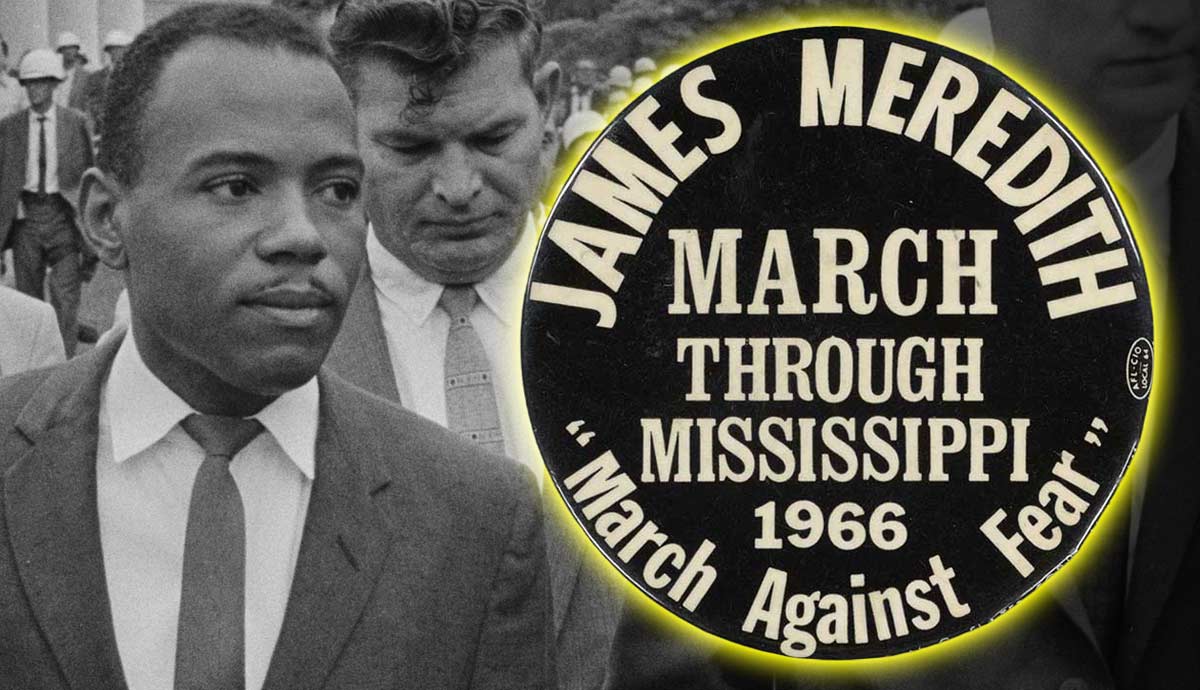
    James Meredith played a crucial role in the Civil Rights Movement. An Air Force veteran, Meredith was determined after the war to challenge segregation in the American South. Under protection from the United States Marshal service, and by order of President John F. Kennedy, Meredith became the first African American to attend a white University in the South when he integrated into the University of Mississippi in 1962.1. James Meredith Grew Up On a FarmJames Meredith in the Winter Library, 2010. Source: Wikimedia CommonsJames Meredith was born in Kosciusko, Mississippi, on June 25, 1933, as the ninth of 13 children to Moses and Roxie Meredith. While many African Americans in Mississippi were unable to own property during the era prior to the Civil Rights Movement, Meredith was lucky enough to be raised on his familys 84-acre farm.Moses Meredith was financially able to own property and even be registered to vote. Because of this, Meredith was sheltered from many of the difficulties of being African American in the South during the era of segregation.2. He First Experienced Racism at 15Segregated train station in Durham, NC, 1940. Source: Wikimedia CommonsWhile his home life was calm, compared to other African Americans in Mississippi, James Meredith first experienced racism at the age of 15. Meredith had traveled north to visit family in Detroit. During his return, once the train entered Memphis, Meredith and his brother were forced to move to the back of the bus.Meredith said in 1962, The train wasnt segregated when we left Detroit, but when we got to Memphis the conductor told my brother and me we had to go to another car. I cried all the way home from Memphis, and in a way I havent cried ever since. This experience stirred something in Meredith that led him to challenge the de facto segregation laws in the American South later in life.3. He is an Air Force VeteranJames Meredith, March Against Fear Badge, 1966. Source: New York Public LibraryAfter graduating from high school, James Meredith enlisted in the United States Air Force in 1951 and reenlisted in 1954, remaining until 1960. Meredith served as a typist and was stationed overseas in Japan for three years of his nine-year term. While in the Air Force, he experienced discrimination and racism.The armed forces were no longer segregated; however, white airmen often moved out of the dorms where Meredith was living because he was Black. While he experienced racism while in the military, Meredith did not understand why, if the military could be integrated, society needed to remain segregated and how he had more freedom as a member of the Air Force than he did as a citizen in his hometown.4. He Was Rejected Twice by the University of MississippiUniversity of Mississippi, Lyceum, library. Source: Wikimedia CommonsAfter retiring from the Air Force, James Meredith attended the all Black Jackson State College in Mississippi from 1960-1961. Meredith always wanted to attend the University of Mississippi, the states flagship public institution of higher education. In 1961, Meredith attempted to challenge the segregation of the University of Mississippi by applying for admission. He used the Supreme Court case Brown v. Board of Education from 1954 as his justification for admission.Brown v. Board of Education set the precedent that public schools in the United States could not be segregated based on race. While this was meant to apply to elementary and secondary public education, Meredith felt he could use the case to challenge the University to state plainly that they were denying him admission solely based on his race.In February of 1962, Meredith was sent a telegram denying his admission because he identified on his application form that he was Black. Steadfast, Meredith applied again, leaving the race identification section blank. For a second time, Meredith was denied admission to the university; however, this time, there was no justification from the admissions office as to why he was denied.5. His Integration Led to ViolenceJames Meredith being escorted to class by Federal Marshals, 1962. Source: Library of CongressAfter his admission rejections, James Meredith sought out legal counsel from the NAACP. Created to fight Civil Rights violations through the United States Judicial system, the NAACP and their field secretary in Mississippi, Medgar Evers, took on his case. Making its way through the system, Merediths case eventually reached the Supreme Court, which ruled in his favor.Despite the Supreme Court ruling, the Governor of Mississippi, Ross Barnett, refused to let Meredith attend the University. Attorney General Robert F. Kennedy did not allow Barnett to disobey a federal order. Kennedy ordered United States Marshals to escort Meredith onto campus on September 30, 1962. The day was strategically selected. The University of Mississippis football team had a game scheduled the previous day. Most of the student body would be a few hours away at Mississippi Veterans Memorial Stadium in Jackson, Mississippi, having cheered on their team against the Kentucky Wildcats the day previous.US Army at Ole Miss, 1962. Source: PicrylThat day, as students began slowly returning to campus, word got out that Federal Marshals were attempting to integrate the university. After a few hours, an angry mob began to form outside Merediths dormitory. From September 30th to October 2nd, Federal Marshals, National Guardsman, and US Army soldiers fought off the violent mob in what became known as The Battle of Ole Miss, Ole Miss being the nickname for the school.All kinds of weapons were used by the rioters, including homemade explosive devices and Molotov Cocktails. President John F. Kennedy addressed the nation on the night of September 30, urging Mississippians and all Americans to support Merediths right to an education. Behind closed doors, negotiations occurred over the next several days between Ross Barnett and Robert F. Kennedy, urging the governor to speak out against the rioters.When the Battle of Ole Miss ended, over 120 people were injured, and two civilians were killed. This violence and the tension that came from it led to the military occupying the city for ten months after the conflict. Today, bullet holes remain above the doorframe of the Lyceum, the oldest building on the campus, a reminder to all who visit about the battle for equality and the physical repercussions.6. He Did Not Stop Advocating for Civil Rights After CollegeA wounded James Meredith survives an assassination attempt, 1966. Source: Wikimedia CommonsJames Meredith did not stop advocating for Civil Rights after he gained admission to the University of Mississippi. Prior to his admission, he participated in sit-ins at various lunch counters in the Jackson, Mississippi area with the Student Non-Violent Coordinating Committee (SNCC). Sit-ins were meant to challenge segregation in a non-violent way.Orchestrators would walk into an all-white diner and take their seat at the counter. Employees would order them to move as they were not allowed in that location. Members of the SNCC would not respond, often keeping a neutral look on their faces. As these sit-ins progressed, white citizens would often make their way in from the streets and would yell and scream at the organizers. Often, white citizens would pour condiments over their heads and into their eyes in an attempt to provoke violence or convince them to give up. These sit-ins were covered by various news sources and brought to attention the mistreatment of African Americans in the South.Logo, SNCC, 1961. Source: Wikimedia CommonsIn 1966, three years after graduating, Meredith began his March Against Fear campaign. He planned to walk over 200 miles from Memphis, Tennessee, to Jackson, Mississippi, to protest violence and a lack of voting rights for African Americans in the South. On June 6, 1966, just two days into his trek a mere 20 miles from his starting point, Meredith was shot on Highway 51 just south of Hernando, Mississippi by Aubrey James Norvell.Meredith was praised by non-violent activists, such as Martin Luther King Jr., for not carrying a weapon on his march. Meredith, however, viewed the decision to not carry a gun as foolhardy and admitted that if he could do it differently, he would have some form of protection.Initially, Meredith did not gain much attention for his planned march. After the attempted assassination, Merediths March Against Fear garnered support from various people, including influential Civil Rights leaders like Martin Luther King Jr.On June 22, 1966, members of Merediths march crossed the end point in Jackson, Mississippi. The march Meredith had begun earlier that month ended with nearly 15,000 people marching the 200-mile-long journey.7. His Granddaughter Graduated From the Same UniversityMonument to James Meredith, University of Mississippi, photo by Adam James. Source: FlickrToday, James Meredith can often be found attending sporting events at the University of Mississippi. His name is mentioned in every university classroom, and statues of his likeness can be found in various locations.While he was once met with violence and intimidation, he is now greeted as the universitys best alumni. The Merediths have become a legacy at the University. James Merediths granddaughter, Jasmine, graduated from the University of Mississippi with a masters degree in 2022, 60 years after her grandfather integrated the University.
    0 Commentarios 0 Acciones 13 Views
  • ALLTHATSINTERESTING.COM
    Archaeologists In Russia Just Unearthed An Exceptionally Long Medieval Sword Once Wielded By An Unusually Large Warrior
    Astrakhan Museum-ReserveThe medieval sabre found in Astrakhan, Russia.The Eagles Nest burial ground in Astrakhan, Russia, has yet again proven to be one of the regions most astounding archaeological sites. During excavations there last year, archaeologists uncovered dozens of medieval Muslim graves, one of which contained an unusually large and incredibly well-preserved sabre from the 13th century.The sabre is so long that archaeologists suspect that it had to be custom made for a warrior who was unusually tall. But its far from the only unusual thing that archaeologists found during recent excavations at the Eagles Nest.The Exceptionally Long Medieval Sabre Found In AstrakhanAccording to a statement from the Astrakhan Museum-Reserve, the medieval sabre was discovered during excavations at the Eagles Nest settlement-cum-burial site in the Krasnoyarsk District that took place last year. During this excavation, archaeologists uncovered 50 Muslim burials as well as two additional graves with unusual attributes.One grave No. 53 contained the sabre.Within this oval-shaped grave, which dates to the mid-13th century, archaeologists found a body facing east, covered in a dark coating that they believe could be the remnants of leather armor and a helmet. Alongside the body, they found a flat arrowhead, two square arrowheads, and the sabre, tucked inside a wooden sheath.Astrakhan Museum-ReserveThe hilt of the medieval sabre found at the Eagles Nest burial site.The [sabre] was removed by archaeologists from the excavation site as a block, including the soil; it weighed [33 pounds], restorer Mikhail Golovachev explained of the preservation process, which took four months.He continued: This is a unique case of preservation. The fact that the iron blade was kept in a wooden scabbard played a significant role in its preservation. The wood was preserved with iron oxides.Once it had been restored, archaeologists realized that it was an unusual artifact. The sabre was long more than three and a half feet long, at a time when most sabres were just over two feet. For this reason, archaeologists believe that it wasnt mass-produced but likely made for someone in particular.Astrakhan Museum-ReserveThe arrowheads found at the Astrakhan burial site.In our case, I think it was a custom order for a specific person, who would have been about [six feet, five inches tall], as they would have needed a long reach to draw the blade from its scabbard, Golovachev explained.Strangely, however, the person buried alongside the sabre was not this height. They stood only about five feet, nine inches tall.But thats hardly the only mystery that archaeologists uncovered during their excavations at the Eagles Nest.Unusual And Violent Burials At The Eagles Nest In AstrakhanThe other unusual burial at the Eagles Nest was grave No. 52, an earlier burial that was discovered about seven inches above grave No. 53 (which included the sabre). Here, archaeologists found hints of a man whod died an especially violent death.He was lying on his stomach, and it was clear his hands had been bound even before he was pushed into the grave: the arm bones protruded from beneath the left side of his ribs, with his hands positioned very close to each other, said Tatyana Grechkina, chief researcher at the Nasledie Scientific and Production Institution. The front of his skull was facing upward, meaning his neck had clearly been broken, after which he was likely thrown into the grave. His legs were apparently also bound at the ankles.However, archaeologists also found the leg bones of a horse buried nearby, alongside a harness. According to Grechkina, this contradicts the idea that this was an execution, but its unclear why the man would have been buried in such a position.Its also unclear how these burials fit into the areas larger historical context at this time. The late 1200s were a turbulent time in whats now southern Russia, as the Mongol Empire began to break apart while the children and grandchildren of Genghis Khan not to mention other regional rulers repeatedly battled each other for control of certain areas in the wake of his death.Astrakhan Museum-ReserveIn addition to the sabre and arrowheads, archaeologists also found a stirrup, a belt buckle, and a fragment from a knife.Indeed, the burials found at the Eagles Nest especially grave No. 52 and grave No. 53 have offered more questions than answers. Who wielded the sabre? Why was the bound man buried in such a position? Answers are elusive, but the artifacts will be processed and soon put on display, after which more answers may emerge.After reading about the unusually long medieval sabre that was found in Russia, look through this stunning collection of armor through the ages. Then, discover the story of the Shotel Sword, the double-edged curved blade traditionally wielded in Ethiopia.The post Archaeologists In Russia Just Unearthed An Exceptionally Long Medieval Sword Once Wielded By An Unusually Large Warrior appeared first on All That's Interesting.
    0 Commentarios 0 Acciones 13 Views
  • ALLTHATSINTERESTING.COM
    Woman Visits The Queen Mary, The Worlds Most Haunted Ship. Then She Realizes She Has Submechanophobia
    Carla/UnsplashThe RMS Queen Mary was renowned for its style and speed.Silent, monumental, and permanently moored in Long Beach, California, the storied British ship the RMS Queen Mary now operates as a hotel and museum. But before it was docked for good, it was recognized not only for its style and glamour but also for its service.A TikTok posted by Mish (@mishmentos) highlights the dignity and power of the ship once nicknamed the Grey Ghost. In a video viewed over 1.2 million times, Mish tours the vessel and walks toward a giant propeller resting under the clear, blue-green water, unmoving but still mighty. Then, text floats across the screen: the moment you realize you have submechanophobia.What Is Submechanophobia?Per DoveMed, submechanophobia is a specific phobia that involves an excessive, irrational, and persistent fear of submerged man-made objects, such as sunken ships, airplanes, and underwater machinery. @mishmentos/TikTokThe propeller of the RMS Queen Mary.Sometimes, this phobia can develop in people who have had traumatic experiences in the water, such as surviving a shipwreck or becoming tangled in submerged debris. But it may be that Mishs phobia was amplified by more than the sight of the submerged propeller. Perhaps it is the history attached to the powerful object.The extraordinary service of the Queen Mary was also the time of its greatest tragedies. A passenger ship of the Cunard Line, it was in service from 1936 to 1967. And when Britain needed ships for World War II, it served its country. In its career, it reportedly made 1,001 transatlantic crossings. Known for its speed and elegance, it held the Blue Riband for the fastest average speed while crossing the Atlantic in 1936 and 1937 and then again from 1938 to 1952. The ocean liner quickly became a favorite mode of transportation for the famous and wealthy. Passengers included Greta Garbo, Frank Sinatra, Winston Churchill (who signed the D-Day declaration on board), and the Duke and Duchess of Windsor, who were later accused of being Nazi collaborators.After World War II started, the Art Deco ocean liner was converted into what was perhaps the most stylish troop transport ship in the world. With a top speed of 32.5 knots, the ship was faster than many German U-boat torpedoes. So, in 1939, it was painted gray, earning the moniker Grey Ghost, and refitted as a transport ship. Public DomainThe RMS Queen Mary in New York Harbor carrying U.S. troops back from Europe in June 1945.It then proceeded to do its part fighting Axis powers: The ship was capable of transporting 15,000 soldiers at a time. And on one trip in 1943, it set a record for carrying 16,683 people. But in 1942, a devastating accident permanently marked the Queen Mary.The Tragedy Of The Queen MaryOn Oct. 2, 1942, the Queen Mary was sailing near the north coast of Ireland when it collided with the escort ship the HMS Curacoa. Because the Queen Mary was 20 times larger than the cruiser, it sliced right through the Curacoa. Crew member Ernest Watson apparently only had time to say, Shes going to ram us! About 340 crew members of the smaller vessel were killed, though the number varies across sources.The Queen Mary did not rescue the crew. The ship was given instructions not to stop for anything. Instead, the men who didnt drown floated in the Atlantic for two hours until British rescue ships arrived. After the war, the ocean liner returned to its glittering life. But the war had changed the ship forever: The Queen Mary was purportedly haunted.Is The Queen Mary Really The Worlds Most Haunted Ship?The ship is now often described as the most haunted ship in the world. Allegedly, there are several very well-known ghosts: a woman who dances in the first-class lounge; the spirit of John Pedder, who was crushed by a watertight door; and the entire crew of the Curacoa. Visitors have said that near the bow, theyve heard noises that remind them of screams and the sounds of metal crushing. Then, theres stateroom B340, a room believed to be so haunted that it was closed for 30 years. But in 2018, it was reopened to the public, and at least one person has since allegedly had a brush with the paranormal.Agumisael/Wikimedia CommonsThe Queen Mary is said to be one of the worlds most haunted ships.Redditor u/MaximumAadvark2208 said that their experience led them to think it wasnt just creaky pipes in the room. In the dead of night, around 3 a.m., the faucet turned on, and then there was banging from inside the walls and a huge drop in ambient temperature. Finally, the guest said the handle on the door rattled, but upon checking the hall, no one was there. Stories about B340 abound, including a legend about a man who allegedly brutally murdered two women. He was locked in his stateroom until the ship got to port. Then, upon docking, the man was found ripped apart, his entrails and limbs spread all over the room. However, there are no verified accounts of a double homicide or a subsequent dismemberment. Though the Queen Mary is no longer a warship, one user recalls her strong reaction to the vessel, commenting under Mishs video, I used to CRY when we would visit the Queen Mary.Other commenters are sympathetic to creator Mishs submechanophobia. Thats why seeing Titanic underwater images disturbs me greatly, admitted another. A third pinpointed exactly what she finds so wrong: What I dont like about this specifically is how perfectly still the water is, it makes me uncomfortable. @mishmementos I am unwell #submechanophobia #queenmary Spooky, quiet, scary atmosphere piano songs Skittlegirl Sound All Thats Interesting reached out to Mish via email and TikTok direct message. Well update this if she gets back to us.After reading about the RMS Queen Mary, go inside the frightening stories of 15 ghost ships. Then, look through 55 colorized photos of the Titanic.The post Woman Visits The <em>Queen Mary</em>, The Worlds Most Haunted Ship. Then She Realizes She Has Submechanophobia appeared first on All That's Interesting.
    0 Commentarios 0 Acciones 13 Views
  • WWW.DUALSHOCKERS.COM
    7 Surprising Pokmon Evolutions in FireRed & LeafGreen
    There's an iconic line from Forrest Gump: Life is like a box of chocolates. You never know what you're gonna get.
    0 Commentarios 0 Acciones 13 Views
  • WWW.DUALSHOCKERS.COM
    Great Xbox 360 Strategy Games that are Fun from the Start
    For most of gaming history, strategy games were primarily limited to PC platforms, largely due to controller and processor limitations. But this changed during the sixth and seventh console generations.
    0 Commentarios 0 Acciones 13 Views
  • WWW.MASHED.COM
    This Chain's Towering Onion Rings Earn Rave Reviews From Customers
    Have you ever wanted to pile your onion rings on top of each other to form a tall column of crispy goodness? This restaurant chain serves them that way.
    0 Commentarios 0 Acciones 13 Views

  • WWW.BGR.COM
    This '80s Icon Is Still The Best Selling Computer Of All Time
    Personal computers started to become a normal household item by the 1980s, with companies like Apple, Atari, IBM, and others fighting for the top spot.
    0 Commentarios 0 Acciones 13 Views

  • WWW.BGR.COM
    Sony TVs: Here's Who Makes Them And Where They're Built
    The manufacturing of Sony Bravia TVs has changed several times over the years, and it is likely to change even more after the brand's acquisition by TCL.
    0 Commentarios 0 Acciones 13 Views

  • AFRICABUSINESSNEWS.CO.KE
    Kenya Emerging as Africas Pay-TV Innovation Hub
    Advertisement Kenya Emerging as Africas Pay-TV Innovation HubBy Nzola MirandaAfricas pay-TV industry is undergoing a major transformation as changing consumer behaviour, digital adoption, and economic pressures reshape how audiences consume content.While attending the inaugural StreamTV Europe 2026 in Lisbon, industry leaders explored how media companies can respond to increasing content fragmentation, shifting viewing habits, and rising demand for convenience.A key takeaway from the discussions was the growing role of telecommunications companies as super-aggregators helping consumers access multiple services seamlessly while reducing piracy and improving user experience.However, according to MultiChoice Kenya CEO Nzola Miranda, Kenya is already emerging as one of the continents leading markets shaping the future of African pay-TV.Kenya Leading Digital Media InnovationMiranda noted that Kenyas strong digital infrastructure, youthful population, and high mobile penetration have created an ideal environment for rapid media innovation.Today, mobile penetration in Kenya exceeds 130 percent while more than 96 percent of adults actively use mobile money services. Additionally, broadband access continues to expand across the country.As a result, Kenyan consumers increasingly expect seamless digital experiences that allow them to move between live television, streaming platforms, and mobile-first content with ease.More than 60 percent of internet users in Kenya now consume video content on mobile phones, highlighting the countrys shift toward multi-device entertainment consumption.According to Miranda, this creates faster innovation cycles and immediate audience feedback for operators testing new products and viewing models.Kenya Emerging as Africas Pay-TV Innovation HubShift Toward Personalized ViewingThe industry is also moving away from traditional one-size-fits-all broadcasting toward more personalized and on-demand viewing experiences.At StreamTV Europe, executives emphasized the importance of discoverability, metadata, and audience analytics in helping consumers find relevant content faster.Kenya reflects this transition strongly. Consumers actively engage through viewing patterns, social interactions, and subscription behaviour, creating valuable real-time data for media companies.Consequently, operators can continuously refine pricing models, content recommendations, and customer experiences using data-driven insights.Miranda noted that personalization is no longer optional within the industry.Platforms that deliver the right content to the right audience at the right moment will define the next phase of growth, he said.Young Audiences Driving TransformationKenyas youthful population is also accelerating the transformation of the media sector.With more than 70 percent of the population below the age of 35, audiences increasingly prefer authentic African storytelling delivered across digital and social-first platforms.Industry players are therefore expanding direct-to-consumer ecosystems and creator-led content models to meet evolving audience expectations.Miranda observed that Kenyan consumers now expect locally relevant stories delivered with global production standards.In many ways, he argued, Kenya offers a preview of the future African media consumer.Regulation Supporting GrowthMeanwhile, Kenyas regulatory environment continues to support innovation across the ICT and media sectors.The proposed 2026 Copyright and Related Rights Bill aims to strengthen intellectual property protection, improve enforcement against digital piracy, and support content creators.Additionally, the International Telecommunication Union recently ranked Kenya among Africas leading countries in ICT regulation, further boosting investor confidence within the digital economy.According to Miranda, the impact of pay-TV extends beyond entertainment into the broader creative economy.Africas film and audiovisual sector already contributes an estimated US$5 billion annually to GDP. Consequently, continued investment in local content and innovative distribution models could unlock significant economic opportunities across the continent.Ultimately, Miranda said the future of African pay-TV will belong to markets that innovate quickly, understand consumer needs, and balance affordability with trust and convenience.Increasingly, he noted, what succeeds in Kenya could shape the future of television across Africa.The post Kenya Emerging as Africas Pay-TV Innovation Hub appeared first on Africa Business News.
    0 Commentarios 0 Acciones 13 Views

  • The Genius Way To Give Pasta Salad A Crunchier Texture
    The Genius Way To Give Pasta Salad A Crunchier Texture...
    0 Commentarios 0 Acciones 18 Views