• YUBNUB.NEWS
    Thousands Rally in Washington Calling for a Democratic Iran and End to Executions
    By Amr GoharWashington DC Thousands of Iranians and supporters of the Iranian opposition gathered in Washington, D.C. 16 for the Free Iran Rally, calling for the overthrow of Irans clerical
    0 Комментарии 0 Поделились 16 Просмотры
  • YUBNUB.NEWS
    Maduro Ally Alex Saab Deported to United States to Face Criminal Proceedings
    By Ginika IgbokeAlex Saab, a Colombian businessman and longtime ally of former Venezuelan leader Nicols Maduro, was deported to the United States on Saturday, according to Venezuelas Administrative
    0 Комментарии 0 Поделились 16 Просмотры
  • YUBNUB.NEWS
    Taiwanese Rep Asserts Island Nations Stance On Independence From Communist China, Denies Creating All This Trouble
    Taiwans representative to the United States said Sunday his country only seeks to ensure the Communist Peoples Republic of China does not swallow the island nation. President Donald Trump
    0 Комментарии 0 Поделились 16 Просмотры
  • YUBNUB.NEWS
    In Case You Missed It, We've Been Taking Down Some Really Bad Guys Lately
    Donald Trump's plan to clean up the Western Hemisphere is going pretty well.If you need proof of that, just take a look at the list of bad guys we've rounded up and who are now in U.S. custody as
    0 Комментарии 0 Поделились 16 Просмотры
  • YUBNUB.NEWS
    New CBS News Poll Shows Continued Loss Of Faith In Economy By Americans
    American voters have become more pessimistic about the economy since the start of the conflict with Iran, according to a CBS News poll released Sunday.More than three out of four respondents said they
    0 Комментарии 0 Поделились 16 Просмотры
  • WWW.THECOLLECTOR.COM
    How the USSR Tried to Get Rid of Faith and Religion (But Failed)
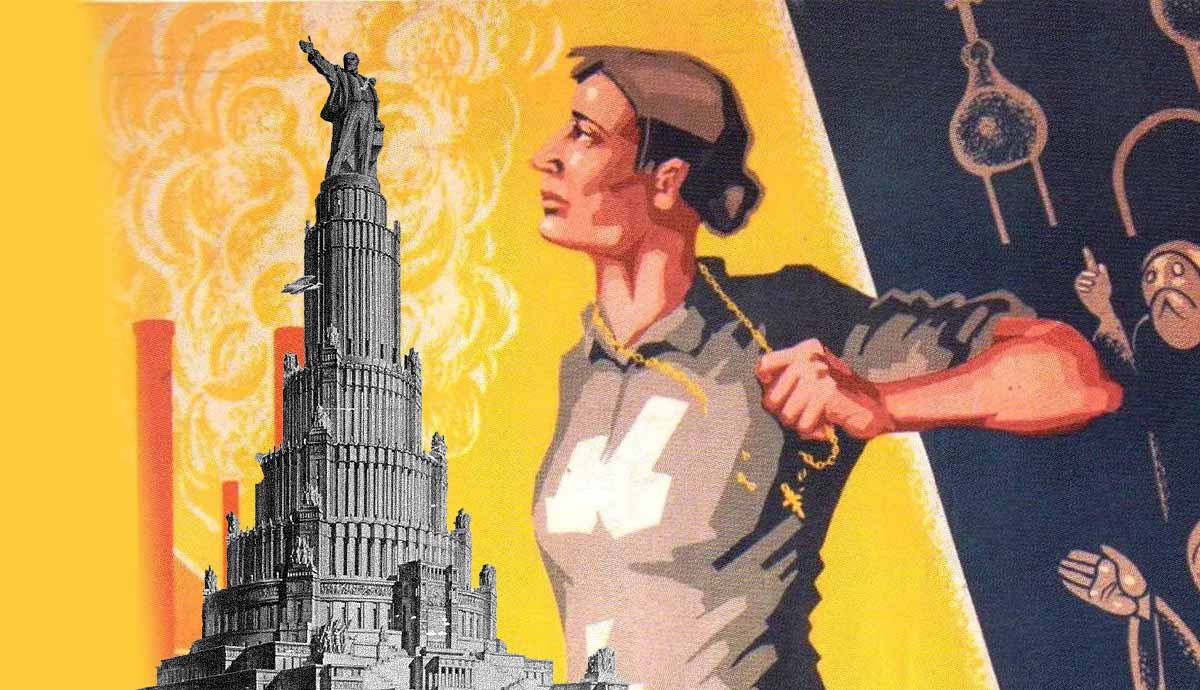
    From its earliest days, the Soviet state made its attitude towards religion and faith clear. Denounced as prejudice, activities of churches of any denomination were ceased or strictly limited. In the dark 1930s, thousands of people were executed on charges related to their religious beliefs. However, faith persisted, and the Orthodox Christian church managed to maintain its traditions and even gain new followers during these troubled decades.The USSRs Beginning: Churches After the RevolutionRussian peasant women on their way to pilgrimage, 1904. Source: Lenta.ruBy the beginning of the 20th century, Orthodox Christianity was an integral part of the Russian Empires life and culture, closely connected to monarchy and governmental institutions. Above all, the official bodies of the church served as yet another branch of power that strengthened the monarchys position and offered it resources. Still, some churches and priests opposed some of the governmental decisions and even formed isolated cults and movements with political ambitions, but they rarely avoided prosecution. The clergy was a closed community with almost non-existent chances for those not related or otherwise affiliated with incumbent bishops and priests.During the Russian Civil War, the majority of clergymen supported the anti-communist White Movement, which received its name in opposition to the Bolsheviks signature red. After the White Movements defeat, many prominent clergymen fled to Europe, establishing the Russian Orthodox Church Abroad.Soviet poster Tsar, Priest, and Moneybag Working Peoples Burden, 1919. Source: ArthiveThe clergymen who decided to stay in Russia expected radical changes and reforms from the new government that actively announced itself as secular. One of the first documents signed by the Bolshevik government led by Vladimir Lenin in 1917 abolished all ethnic and religious privileges of limitations. Publicly, the new officials called for the elimination of all religious prejudice. Newspapers published caricatures of priests, framing them as lazy and corrupt enemies of the working class, preying on their weaknesses and exploiting their labor.By the 1920s, the government began the nationalization of all church property and confiscation of works of art and religious artifacts. Some of these objects were moved to museums (paradoxically, the move saved many Medieval artworks from destruction in humid and tightly-packed churches), and others fell into the private hands of governmental officials. Partially, this measure was a provocation aimed at identifying the most active and dangerous actors of the religious scene who would lead an expected insurrection. As a result, around two thousand clergymen and practicing Christians were executed.Soviet Ukrainian anti-religious poster Woman! Break the Shackles of Religion, Build Socialism! Source: ArthiveAmong the early Soviet Christians, the attitude towards the new authority varied. Some decided to comply and collaborate with the officials, following all orders to avoid bloodshed. Others were more radical. Among more conservative branches of Orthodox Christianity, the clergy directly identified the Soviets with the Antichrist, who would come before the Last Judgment disguised as the Savior of all. In 1926, a group of rural conservative priests announced that the upcoming All-Soviet census was a sign of the upcoming Apocalypse. As a result, dozens of people committed suicide, either burying or burning themselves alive.The 1930s: The Darkest DecadeDemolition of the Cathedral of Christ the Savior, 1931. Source: Russia BeyondThe 1930s in Soviet Russia were known as the time of great terror, violence, and persecution. The paranoid government led by Joseph Stalin ruthlessly punished even those of their own ranks fighting for power. The church did not manage to stay out of it. In 1929, the Central Executive Committee adopted a law banning all religion-related activities except for church service. Education, social work, child care, and other functions were left to governmentally approved secular bodies. From around one thousand churches of all denominations that existed in pre-revolutionary Moscow, only forty remained functional.If, during the 1920s, the Orthodox Christian clergymen were the main targets of repressions, a decade later, the focus shifted to practicing believers, including Muslims, Jews, Catholics, Protestants, Buddhists, and others. According to historians evaluations, around 300,000 people were arrested during the Great Purge, with about a third of them executed. Still, the exact number of those persecuted for religious reasons is almost impossible to pinpoint since many of them were formally arrested on other charges.However, faith persisted among those who needed it. Despite oppression and threats, monks from shut-down monasteries organized underground convents disguised as shared houses for workers with no families. According to the 1937 Census, almost 50% of Soviet citizens still identified as Orthodox Christians, even if they were not actively practicing.Communism as the New ReligionPalace of the Soviets project, designed by Boris Iofan. Source: ArchVestnikBy forcefully tearing the religious component from the daily practices and worldviews of their citizens, the Soviet government left a gaping hole that needed to be filled. The new ideology became a perfect substitute: with the same enthusiasm, earlier reserved for religious rituals, citizens were expected to participate in regime-related activities. In 1931, the famous Cathedral of Christ the Savior in Moscow was demolished using dynamite. The cathedral was relatively new; it was consecrated only in 1883, but it nonetheless became an important symbol of monarchy and faith, which were interconnected.The cleared plot of land within walking distance from the Kremlin was meant to become a place for the new kind of templethe monumental Palace of the Soviets. The Palace project, designed by Ukrainian-Jewish architect Boris Iofan, was a tall ziggurat-like structure of columns with a hundred-meter statue of Vladimir Lenin on top. It was meant to house mass demonstrations celebrating the USSR and regular sessions of the Supreme Sovietthe highest organ of state authority. The ambitious and borderline absurd project was never realized due to Nazi Germany invading the Soviet Union in 1941. In 1960, Nikita Khrushchev ordered the construction of a public swimming pool using the Palaces abandoned foundation. In 1995, however, the pool was demolished, and the new Cathedral of Christ the Savior was constructed instead.Crowds at Joseph Stalins funeral, 1958. Source: Lenta.ruPersonality cults of leaders replaced the cult of Jesus and Christian saints. The mythologized figure of Joseph Stalin as the father of the nation, successful in every deed and competent in any sphere of human knowledge, became a sacred symbol. Despite hundreds of thousands killed during the 1930s repressions, Stalins funeral in 1953 had around two million attendees, with hundreds (or, according to some evaluations, thousands) of people dying in a crowd clash.Orthodox Church During World War IIEaster service in wartime Moscow, April 5th, 1942. Source: El TolstyhHowever, the Soviet state never resorted to a complete and radical elimination of all remnants of religious life. After the Nazi Germany opened the Eastern Front in June 1941, the government decided to do the contraryrevive the countrys religious life under the officials strict guidance. In April 1942, Moscow authorities lifted a curfew for one night to let the locals attend Easter service. Given the circumstances, the Soviet officials decided to once again make the church their instrument, this time to maintain the spirits of those who had to fight.In 1943, right before the Tehran conference, focused on the issue of opening the second front among others, Stalin appointed the Russian Orthodox Church patriarch and several bishops to various parts of the Soviet Union. While some believe that this was a sign of Stalins change of heart towards faith, historians insist it was a political move aimed at showing Churchill and Roosevelt that the Soviet state could be tolerant and ready for compromise. As for the clergy, many of them volunteered for service during the war, mostly working as doctors and nurses. On the territories occupied by Nazi forces, they communicated with partisan forces, sheltering them or supplying information.USSR After the War: Scientific AtheismPropaganda posters featuring Yuri Gagarin, 1960s. Left: Theres No God Out There! Right: We Checked the Sky from Inside and Out; No Gods or Angels Were Found. Source: DzenDespite the evident change of tone in the relationship between the church and the state, after Stalins death in 1958, Soviet clergymen and followers were prosecuted once again, although less violently. This time, the main restrictive measures concerned the churches funds and the amount of paid taxes. The 1960s and 1970s were decades of emphasized atheism, not in the least provoked by the rapid advancements in secular social welfare, science, and space exploration. One of the most popular propaganda posters of the time featured the image of Yuri Gagarin happily reporting that he hadnt seen any God while in space.Still, despite propaganda and oppressive measures, the new generation of Soviet people started to attend churches. Although executions and prison sentences became extraordinary, citizens still risked their jobs or social status by attending services or baptizing their children. These norms remained in place until the Soviet Unions ultimate collapse in 1991 when churches of all confessions gradually restored their rights and privileges.

    0 Комментарии 0 Поделились 16 Просмотры
  • WWW.DUALSHOCKERS.COM
    How to Craft the Feedback Resonator in Subnautica 2
    Throughout your Subnautica 2 adventure, youre going to be using various tools for all sorts of jobs, be it scanning fish, mining ores, or even blasting apart evil virus plants!
    0 Комментарии 0 Поделились 20 Просмотры
  • WWW.MASHED.COM
    Does Brown Sugar Expire? Here's What To Know
    Let's face it: Most of us don't use brown sugar on the daily. So it's fair to wonder if it ever goes bad. We've got the details on when it's safe vs. a no-go.
    0 Комментарии 0 Поделились 16 Просмотры
  • WWW.BGR.COM
    5 Common Mistakes People Make When Buying A New Tablet
    When in the market for a new tablet, buyers make plenty of easily avoidable mistakes. Here are the most common ones to avoid when choosing your next tablet.
    0 Комментарии 0 Поделились 16 Просмотры
  • ALLTHATSINTERESTING.COM
    The Sad Story Of The Radium Girls, 1920s Factory Workers Poisoned By Radioactive Paint
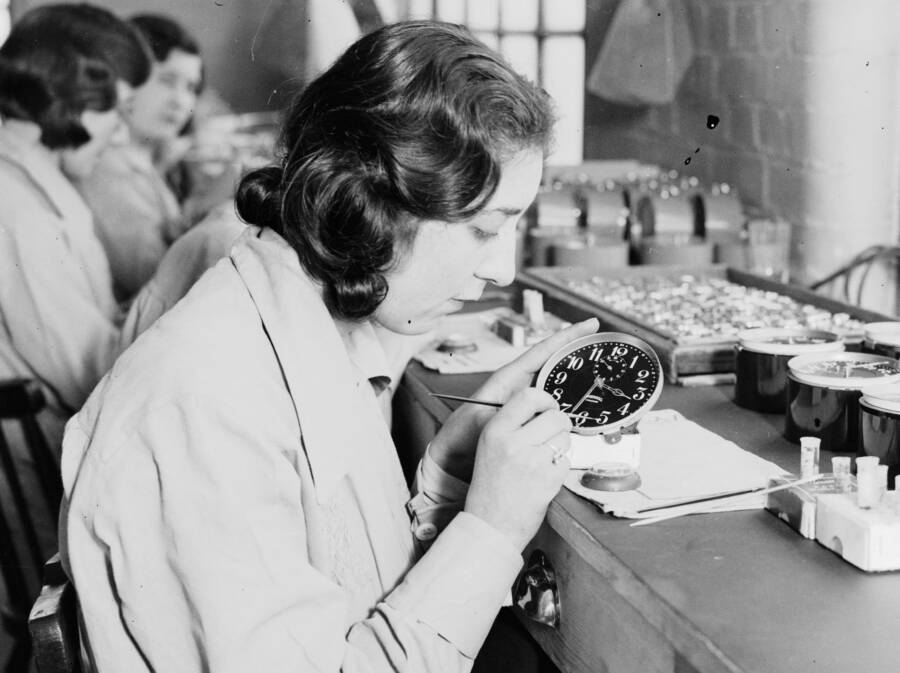
    During World War I, scores of American women on the homefront joined the workforce for the first time. Those who landed a job painting objects like clock dials with glow-in-the-dark radium counted themselves especially lucky, as the pay was fantastic and the work was light. But many of these so-called Radium Girls met a terrible fate.Working in factories in New Jersey, Illinois, Connecticut, and elsewhere, Radium Girls earned roughly three times as much as they would at other jobs, since glow-in-the-dark instruments could be used by the military during the war.Wikimedia CommonsRadium Girls painting alarm clock faces in January 1932.They used paint enhanced with radium, an element which had been discovered in 1898. It was heralded as a cure-all miracle drug, as well as a substance that could make things glow in the dark, and the factory workers habitually got radium on their hands, hair, and clothing.The Radium Girls were assured that the paint was safe to handle. Indeed, they were even encouraged to lick their paintbrushes to give them a sharp tip as they worked on items like watch dials. But radium was highly radioactive. And before long, the Radium Girls started getting sick.This is the sad story of the Radium Girls, from the terrible side effects they suffered, to how they changed workplace safety regulations forever.The New Technology That Paved The Way For Radium GirlsThe story of the Radium Girls begins with radium itself, which was identified by Pierre and Marie Curie in 1898 and successfully isolated a few years later. The couple knew it was dangerous they both suffered burns from handling radium and felt frequently exhausted from radiation sickness. But as the Nobel Foundation notes, they also found that radium could destroy sick cells, which made it a promising cure for illnesses like cancer.Getty ImagesPierre and Marie Curie in 1905.Indeed, radium was soon seen as an invention that could cure anything and everything. It was suggested as a remedy for ailments ranging from blindness and hysteria to acne and the common cold. Before long, this miracle drug was also put in tonic water, chocolate, toothpaste, and cosmetics. Radium even found its way to bread and beer. Whats more, radium could make objects glow in the dark. Companies began selling nightlights, clocks, and watches made with radium-paint, which would stay visible all night long. It seemed like a scientific miracle.But radium was dangerous. It was radioactive, and sustained contact with it could be fatal. Wikimedia CommonsAn ad for radium water.Sadly, this became all too clear when Radium Girls were hired to paint military instruments with glow-in-the-dark radium paint. The Dangerous Work Of The Radium GirlsAfter the United States entered World War I in 1917, patriotic women flocked to the nations factories to do their part for the war effort. Many took jobs with the United States Radium Corporation and set to work painting objects with radium-based paint. The women were assured that radium was not dangerous even though men who worked in the companys lab routinely wore lead aprons while working with radium. Indeed, the Radium Girls were given no protection of any kind. They were even encouraged to lick their brushes to get a fine point detail work. And so, day after day during the war and for many years after the Radium Girls painted watches and dials, licking their paint brushes without any fear. Wikimedia CommonsEmployees of the United States Radium Corporation known as Radium Girls paint numbers on the faces of wristwatches using radioactive paint.Radium dust from the paint got all over their clothes, skin, and hair, but many of the workers liked its sparkle and glow. Some Radium Girls even took to wearing their finest dresses to work on Fridays so they would glow while dancing on the weekends. These so-called ghost girls even applied radium to their teeth to give their kiss a pop.At first, the Radium Girls seemed to have the ideal job. It was fun, easy, and well-paid, and many of the workers recruited family and friends to join them. By the 1920s, there were roughly 300 Radium Girls in the country.But then they started to get sick.The Horrific Health Consequences Of Working With RadiumWikimedia CommonsThe effects of working with radium.In January of 1922, a Radium Girl named Mollie Maggia got a toothache.She went to the dentist, who pulled a tooth. Then another. To the alarm of her dentist, Maggias wounds didnt heal. Instead, they seeped blood and pus. The dentist ultimately decided Maggia needed surgery to remove a fast-growing abscess hed found on her left jaw, but during the operation, he found that her jawbone didnt look right it was ashy and gray. He gently prodded it with his finger. To his shock and horror, the whole bone crumbled under his fingertip.Maggias left jawbone had more or less disintegrated. That summer, the rest of her jaw was removed. And then, just a few months before her 25th birthday, Mollie Maggia died. She had developed tumors which cut into her jugular vein and flooded her throat with blood, choking her to death. Maggia had died from repeated exposure to radium, but her cause of death was erroneously listed as syphilis, which discredited her story. But Maggia was far from the only Radium Girl to fall sick. As the National Library of Medicine reports, they developed toothaches, mouth sores, painful gums and jaws, and achy hips and feet. They felt exhausted, lost teeth, and struggled to eat without pain. Some developed cancerous tumors and died. And soon, the Radium Girls took action. How The Radium Girls Fought Back And Left Behind A Powerful LegacyYouTubeAs they got sick and died, Radium Girls ultimately took action by suing their former employer.By the early 1920s, the public stance on radium had begun to change. One of the original founders of the United States Radium Company, Dr. George Willis, had gotten sick himself. Though he had once assured the Radium Girls that radium was safe, Willis had developed cancer. In 1923 he wrote, The reputation for harmlessness enjoyed by radium may, after all, depend on the fact that, so far, not very many persons have been exposed to large amounts of radium by daily handling over long periods There is good reason to fear that neglect of precautions may result in serious injury to the radium workers themselves.Around the same time, the United States Radium Corporation quietly ordered a study which found that radium was unsafe. Though the company tried to bury the studys findings, they couldnt keep it quiet for long. Indeed, it was clear to the Radium Girls that something was wrong. If they werent sick, they knew someone who was. And so, in 1927, five surviving Radium Girls led by Grace Fryer sued their former employer. Their stories spread, and outrage on their behalf skyrocketed: The Radium Girls were young women, many of them young mothers, who were sick and dying. Ultimately, the company agreed to settle, and the dangers of radium became more well known. But for many of the Radium Girls it was too late. Suffering from radiation poisoning, many died agonizing deaths in their 20s or 30s. They developed blood cancer, leukemia, and amenia; some had to get amputations or blood transfusions; one woman was bedridden for 50 years. But their story changed the United States forever. The shameful experience of the Radium Girls led to better workplace protections, and influenced the creation of the U.S. Occupational Safety and Health Administration. Though no one saved the Radium Girls, the actions they took against their employer have helped ensure a safer workplace for everyone.After reading about the Radium Girls, discover the agonizing story of Hisashi Ouchi, the radioactive man kept alive for 83 days against his will. Or, go inside the harrowing story of the Chernobyl nuclear disaster.The post The Sad Story Of The Radium Girls, 1920s Factory Workers Poisoned By Radioactive Paint appeared first on All That's Interesting.
    0 Комментарии 0 Поделились 16 Просмотры