0 Commentaires
0 Parts
148 Vue
Annuaire
Elevate your Sngine platform to new levels with plugins from YubNub Digital Media!
-
Connectez-vous pour aimer, partager et commenter!
-
Brawl RNG codes May 2026Brawl RNG codes May 2026 In a not-so-surprising twist for the platform that puts creative power into the hands of its players, you're going to want these new Brawl RNG codes if you're to stay ahead in this Bloxified version of an iconic app. Brawl RNG is "a fast, clean idle clicker packing RNG drops, upgrades, rebirths, and battle simulations." Assuming the clean part refers to its UI...0 Commentaires 0 Parts 168 Vue
-
0 Commentaires 0 Parts 65 Vue
-
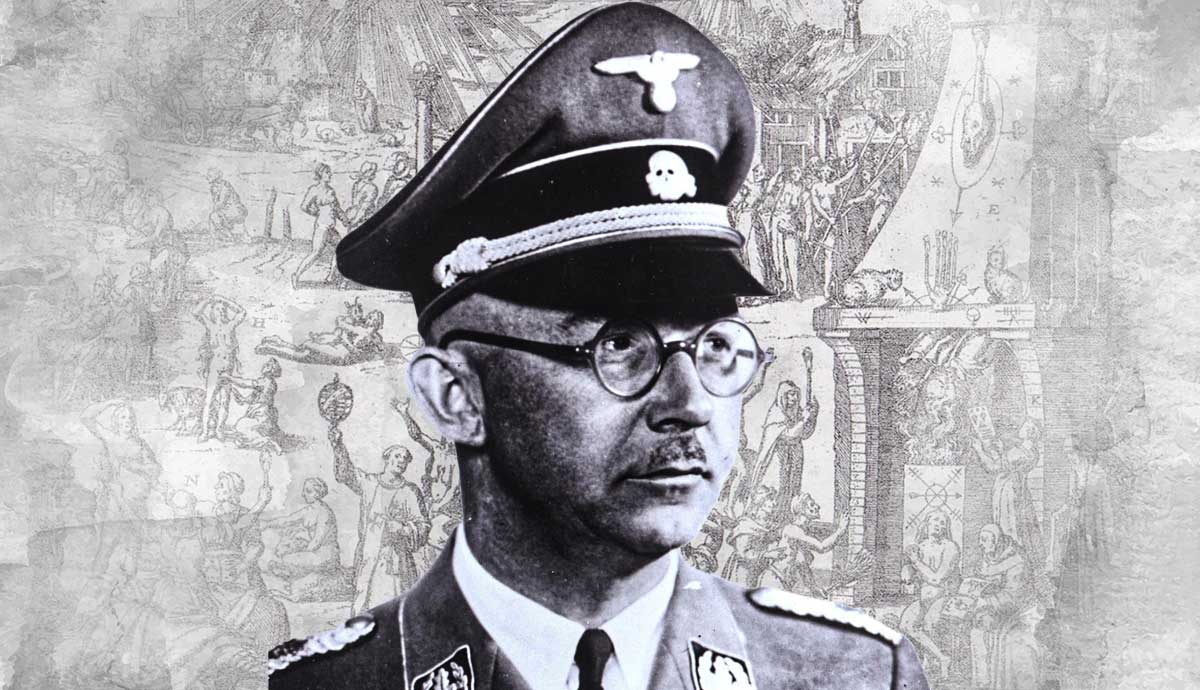
WWW.THECOLLECTOR.COMHow Himmler Turned Witch Hunts Into Nazi Racial PropagandaIn 1945, as the Red Army advanced into the Third Reichs territories, a Polish librarian discovered more than 30,000 documents recording trials of German witches in a castle in Schlesiersee (present-day Sawa) that the retreating Germans had abandoned. The documents belonged to the so-called Hexenkartothek, an archive compiled by the Hexen-Sonderauftrag (Witch-Special Mission), a group founded by Heinrich Himmler to document the persecution of German witches during the Middle Ages and Renaissance period. Deeply enmeshed in Nazi ideology, the Hexenkartothek aimed to prove the regimes racial and vlkish theories.The Hexenkartothek: Himmler, Witchcraft, and OccultismPhoto of Heinrich Himmler, c. 1938. Source: Lebendiges Museum Online/Deutsches Historisches Museum/Bundeasarchiv, KoblenzIn a 1944 speech, Heinrich Himmler, the head of the SS, declared that the witch hunts had claimed hundreds of thousands of mothers and women of German blood through barbarous persecution and execution methods. By that time, the Hexen-Sonderauftrag had been amassing documents regarding witch trials in the territories of the Reich (and beyond) for almost 10 years. Himmler believed the witch archive would prove his theory of a mass murder the Catholic Church had perpetrated against the Germanic religion and culture.Himmlers interest in witches and witch trials predates the establishment of the Nazi regime and is rooted in his relationship with religion. The son of a Roman Catholic schoolmaster, the SS leader was a devout Catholic during his youth when he tried to combine his racist and vlkish views with his faith. In 1923, for example, he described Christianity as an outstanding protest of Aryanism against Judaism, of good against evil. However, Himmler eventually rejected his previous belief, advocating instead for the return to a native Germanic religion.We must settle accounts with this Christianity, this greatest of plagues that could have happened to us in our history, which has weakened us in every conflict, declared Himmler in a speech held in 1942 at the funeral of Reinhard Heydrich, the head of the Sicherheitsdienst (SD). Everything that we do must be justifiable vis-a-vis the clan, our ancestors, urged the SS leader. Drawing on the theory of Germanic continuity and the idea of blood and soil, Himmler believed the key to (re)asserting an authentic Germanness lay in the revival of old pagan practices and rituals.The SS-Totenkopf ring, worn by all SS members, 1933. Occultist Karl Maria Wiligut heavily influenced the rings design. Source: Wikimedia CommonsWitchcraft and witches were essential elements in Himmlers plan to establish a strong sense of nationhood in the population of the Third Reich. Indeed, witches were seen as the embodiment of Germanic values Judeo-Christianism had tried (and failed) to eradicate. Driven by his growing fascination with paganism, esoterism, and the occult, in the 1930s, Himmler had contacted archivist Arnold Ruge and paid him to compile a report on witch hunts. Ruges research confirmed Himmlers view of witch trials as an attempt by the Church to prevent the organic development of more energetic cultures.After the establishment of the Nazi regime, Himmler founded various divisions to research his outlandish racial theories. The Ahnenerbe (Ancestral Heritage), for example, was tasked with finding scientific proof of the Aryans superiority. The SS leader was often assisted in his efforts by Karl Maria Wiligut, an occultist Himmler met in the occult circles flourishing in post-World War I Germany. After 1933, Himmler turned his penchant for paganism and occultism into tools of Nazi propaganda.Paganism & Occultism in the Nazi RegimeLetterhead of the Thule Society in Munich. The societys emblem featured a swastika, a sword, and a wreath of oak leaves. Source: Stadtarchiv MnchenThe link between Nazism and occultism is still a much-debated question. While some scholars believe occult theories and the supernatural heavily informed Nazi ideology and Weltanschauung (world view), others caution against portraying the Nazi leaders as enthusiast occultists.In the years of the Weimar Republic, some future Nazi high-ranking officials did embrace theories circulating among occult societies. Rudolf Hess and Alfred Rosenberg, for example, were involved with the Thule Society, an elusive group preaching racial purity and following pagan practices. On the other hand, Adolf Hitler and other leading Nazis showed skepticism toward some of the more outlandish theories promoted by occult organizations.There is no denying, however, that the Nazi ideology drew on narratives and myths belonging to fringe science, paganism, occultism, and folklore. Indeed, theories regarding the existence of an Indo-European Aryan race and the continuity between old Germanic rituals and modern folklore were extremely useful as propaganda tools to support the Nazi regimes geopolitics and ethnic cleansing. At the same time, figures and tropes from Nordic mythology and Roman-era pagan beliefs became a means to promote the idea of racial purity.Postcard picturing the signing of the Reichskonkordat in Rome, (from left to right: Franz von Papen, Secretary of Extraordinary Ecclesiastical Affairs Giuseppe Pizzardo, Cardinal Secretary of State Eugenio Pacelli, Alfredo Ottaviani, and Rudolf Buttmann), 1933. Source: Lebendiges Museum Online/Deutsches Historisches Museum/Bundesarchiv, KoblenzIn the 1930s, when the Nazi regime launched an anti-Catholic press campaign, the idea of a spiritual regeneration of the German nation through the return to a pure Germanic religion, popular among several neo-pagan groups, became a trope in the regimes battle against a political Catholicism.At the beginning of 1933, as the so-called Gleichschaltung (Nazification) of German society began, the regime sought to bring the Christian churches under its control. In July, the Reichskonkordat with the Vatican led to the de-facto subjugation of the Catholic Church. However, some more radical members of the Nazi Party, including Himmler, called for an immediate de-Christianization of the Reich. Among Himmlers efforts to promote the return to a pagan past was the creation of the special division tasked with conducting archival research on witch hunts.The Hexenkartothek: Researching Witch TrialsThe Reich Security Main Office in Prinz-Albrecht-Strae 8, Berlin, 1933. Source: Lebendiges Museum Online/Deutsches Historisches Museum/Bundeasarchiv, KoblenzThe researchers of the Hexen-Sonderauftrag (Witch-Special Mission), or HSonderauftrag, began working in 1935 as part of the Sicherheitdienst. The first report was filed on September 11, 1935. In 1939, the group had its own department in Amt II of the Reich Security Main Office. Finally, in 1941, the HSonderauftrag was relocated to the Ideological Research and Evaluation office (Amt VII) led by Franz Alfred Six.Until 1944, the SS researchers collected and studied archival documents and literature regarding the persecution of witches in the territories of the expanding Third Reich and abroad. Some file cards of the Hexenkatothek contain information on witch trials from locations as far as Mexico and India.The documentation center Topography of Terror in Berlin was built where the Reich Security Main Office was once located, photograph by Josef Streichholz, 2022. Source: Wikimedia CommonsSupervised by Dr. Wilhelm Spengler and Dr. Rudolf Levin, the HSonderauftrag comprised philologists, historians, theologians, and jurists. A librarian was responsible for the organization of the Hexenkartothek. For nine years, the witch researchers scoured about 260 archives and libraries for evidence of the Catholic Churchs alleged systematic persecution of witches. In total, the researchers compiled 33,000 file cards organized into folders by region.The 1604 Act against Witchcraft. Source: The National Archives, Richmond (UK)Like all pseudo-scientific units created during the Nazi regime, the HSonderauftrag conducted its research on the basis of a series of precise ideological underpinnings. In particular, the main purpose of the witch researches was the study of a specific enemy of the Reich: the Catholic Church. Eager to find any possible evidence of the alleged culture war waged by the clergy against the Germanic way of life, the members of the HSonderauftrag often made no distinction between primary, secondary, and tertiary sources. In several file cards regarding witch trials in England, a text about witchcraft in Renaissance drama is the only cited source. At some point, the groups researchers even believed that a certain Margareth Himbler, a woman burnt as a witch in a town in Bade-Wttenberg in 1629, was a direct ancestor of Himmler himself.The Hexenkartothek & Nazi IdeologyPamphlet depicting the persecution of witches in the German town of Trier, 1594. Source: Wikimedia Commons/R. Decker. Hexen. 2004, (56)In a 1944 letter to Frank Six, Dr. Levin listed a series of future propagandist projects involving the Hexenkartothek, including essays, brochures, radio programs, and films, with the aim of educating the German public about the mass persecution of witches during the Middle Age and Renaissance. In the previous years, the Nazi regime had already employed references to witches and witchcraft in its propaganda campaign.In 1934, Joseph Goebbels renamed May 1 (present-day May Day, or International Workers Day) National bank holiday of the German Volk, declaring: On May 1 Ancient Germania celebrated Walpurgis Night, the beginning of the twelve consecrated nights of the summer solstice. The Minister of Propaganda then complained that all the old customs were changed by the church and branded as magic, witch-craze etc., thus transforming nature symbolism into Oriental demonic spook. In the same year, the Ministry of Propaganda organized a German Dance Festival in Berlin, which featured a Hexentanz (Witch Dance). But what role did witches play within the ideological structures of the Nazi regime?Witness testimony from the trial against Katharina Kepler, mother of the astronomer Johannes Kepler, 1621. Source: Wikimedia Commons/Landesarchiv Baden-Wrttemberg, StuttgartHimmler and Alfred Rosenberg viewed witches as the embodiment of a magical Germanic past characterized by racial purity and an authentic form of spirituality. In this sense, Himmler and Rosenberg claimed the later persecution of witches had marked a crucial step in the formation of a German national (and racial) identity. Indeed, according to this narrative, in the Middle Ages and Renaissance, a Jewish-Catholic plot had targeted witchcraft exactly because witches were living reminders of an ancestral Germanic culture. Only insofar as he is free, the Teuton can be creative, and centers of European culture could emerge only in areas devoid of the witch craze, wrote Rosenberg in his 1930 The Myth of the Twentieth Century.The Nazi leaders view of witches and witchcraft was heavily influenced by a series of works that had widely circulated among right-wing circles after World War I. In particular, German racialists were fascinated by Jules Michelets portrayal of witches as vestiges of an untainted primeval world in his 1862 La sorcire (The Witch). The Grimm brothers Deutsche Mythologie (German Mythology), written in the backdrop of the Napoleonic Wars, was also a fundamental reading for German nationalists angered by the countrys defeat in the First World War and the terms of the 1919 Versailles Treaty.The Legacy of the HexenkartothekThe building of the Polish National Archives in Poznan, photograph by Ysbail, 2012. Source: Wikimedia CommonsAfter World War II, as news of the Holocaust began to emerge, scholars believed the Nazis had compiled the Hexenkartothek to study torture methods of the past, with some even speculating the witch persecution had partially inspired the Nazi regimes horrific crimes. Only later did the ideological and propagandist project behind the creation of the archive become clear.Today, the Hexenkartothek is kept in the Polish National Archive in Pozna. While the documents of the collection have little value as sources for future research on witch trials, the Hexenkartothek is a useful object of study for those who wish to explore the ideological underpinning of the Nazi regime.0 Commentaires 0 Parts 65 Vue -
WWW.THECOLLECTOR.COMWhy England and the Netherlands Fought Four Wars for Global TradeThe Netherlands gained independence in 1648 after the lengthy Eighty Years War against Spain. Although Britain provided military support to their fellow Protestants across the North Sea during their struggle for independence, Anglo-Dutch relations quickly soured in the 17th century. Between the 1650s and the 1780s, the two maritime powers fought a series of four wars largely motivated by commercial and colonial considerations.The Collapse of the Anglo-Dutch AllianceThe Spanish Armada under attack in the English Channel, 1601. Source: Warfare History NetworkOn August 10, 1585, English and Dutch diplomats signed the Treaty of Nonsuch. Through this agreement, England entered into a formal alliance with the Dutch revolutionaries seeking to overthrow Spanish Habsburg rule. Queen Elizabeth I of England feared that Spain would use the Dutch coast as a staging ground for an invasion of England. Both the English and Dutch were Protestant countries and hoped to keep the French and Spanish at bay.This alliance worked well for both the English court and the Dutch States General. Both countries navies worked together to stop the Spanish Armada from landing on the English coast in 1588. English and Dutch privateers ravaged the Spanish Empires maritime trade routes and raided Spanish colonial outposts in the Americas and Asia. Thousands of English troops joined the Dutch States Army on the ground to fight Spanish forces. Their joint efforts weakened the Spanish, setting the stage for Dutch independence.However, this alliance faced serious challenges as the war ground on. In 1604, King James I of England announced that he planned to sign a separate peace with the Spanish to relieve his weakening economy. While the Dutch did secure some additional English aid after this, the States General considered this to be a betrayal. When the Dutch gained full independence in 1648, the English saw the newly independent country as a leading competitor in the race to establish overseas colonies.The Failed Attempt at a UnionOliver Cromwell by Samuel Cooper, 1656. Source: Wikimedia CommonsIn 1651, Englands Lord Protector Oliver Cromwell made an offer to the Dutch government (led by Grand Pensionary Adriaan Pauw and his council of Regents) that both countries unite. Cromwell figured that a Protestant superstate in Northern Europe could counterbalance the Catholic powers to the south. He also believed that the Dutch owed England for its military support during the war of independence against Spain.The Dutch were insulted by this proposal. Cromwells government had overthrown and executed King Charles I, a man who was popular in the Netherlands. Additionally, most Dutch people saw the proposal as a British plot to take control of the Dutch shipping lanes and overseas colonies. Members of the English negotiating team were attacked in the streets by angry mobs.Meanwhile, Cromwell hoped to resume hostilities with Spain and seize as much overseas territory as possible. Having just ended a war that lasted close to a century, the Dutch were in no mood to immediately restart hostilities with their former overlords. Ties deteriorated very quickly from here on out.Causes of the First War (16521654)A painting of an unidentified naval action during the first war, 1654. Source: National Maritime Museum, Greenwich, LondonLater that year, the Rump Parliament in London passed a very contentious law known as the Navigation Act of 1651. It effectively required all imports into England to be carried by English ships or ships from the country of origin. Because the Dutch acted as the primary maritime power in Europe, this act directly targeted their economy. Many Dutch politicians believed, not unreasonably, that this law was directed towards them. Attempts to get the law repealed failed.English privateers began seizing Dutch merchant ships under the pretext that they were carrying contraband or violating the new trade laws. Between October 1651 and July 1652, the English captured over 100 Dutch vessels. To make matters worse, the English invoked a claim that the Channel belonged to them, meaning that any foreign ships sailing had to salute English warships or privateers prowling those waters. The Dutch struggled to respond to the ship seizures because their navy had been scaled down heavily after the end of the Eighty Years War.On May 29, 1652, Dutch Admiral Maarten Tromp sailed a fleet of forty ships into the Straits of Dover. An English fleet intercepted his ships. When he refused to salute the flagship of Robert Blake, the English opened fire. For the next five hours, both fleets exchanged fire in an inconclusive exchange until they both broke off contact. Last-minute overtures for peace failed and England declared war on June 10, 1652. For the next two years, the former allies engaged each other in a brutal series of battles fought predominantly at sea.Causes of the Second War (16651667)A map of battles of the Second Anglo-Dutch War. Source: Wikimedia CommonsA string of English victories forced the Dutch to negotiate the Treaty of Westminster in 1654. However, the tensions between the two countries did not abate. In 1660, Cromwells Commonwealth collapsed, leading to the return of the Stuart monarchy. King Charles II was vehemently opposed to allowing Dutch trading monopolies to develop overseas and he insisted that the English enforce mercantile laws on the seas. In the Netherlands, Grand Pensionary Johan de Witt reorganized and reformed the Dutch military and prepared for the resumption of hostilities against England.In 1663, the English began attacking Dutch outposts on the African coast, especially ports used for the slave trade. The Dutch military was not prepared to defend these posts. Emboldened, the English sent a flotilla of four ships to seize the Dutch colony of New Netherland in North America without a shot being fired. The Dutch ordered Admiral Michiel de Ruyter to respond by retaking the conquered posts in Africa. He did so and followed up by wreaking havoc on English ships in American waters. English ships escalated by attacking more Dutch vessels in the English Channel. All of this took place without a declaration of war.Throughout this period of undeclared warfare, diplomatic efforts failed to bring about peace. The English ambassador to The Hague, Sir George Downing, dismissed Dutch fighting capabilities and took an aggressive stance. The Dutch, for their part, authorized their captains to fire on English warships in self-defense. With hostilities ongoing globally for months, the English Parliament granted the King the necessary funds for a full war effort. England formally declared war on the Dutch Republic on March 4, 1665. The war ended favorably for the Dutch after the successful Raid on the Medway in 1667.Causes of the Third War (16721674)Henry Bennet, the 1st Earl of Arlington, who negotiated the Treaty of Dover, 1650. Source: Wikimedia CommonsIn 1670, King Charles II faced a quandary as Parliament was refusing to grant him additional money. He instead made a secret agreement with King Louis XIV of France to join the French in destroying the Dutch Republic once and for all in return for an annual sum of 230,000. Several of Charless advisors knew that a war with the Dutch would be unpopular, so they sought to fabricate a casus belli to legitimize their actions. In 1671, they got the royal yacht Merlin to sail through a Dutch flotilla in the Channel. While the Dutch ships saluted, they did not fire a cannon leeward, generally a sign of recognition of a warship. The English claimed that this was an act of hostility and sought to use it to gin up outrage at home.Because Parliament refused to fund a war alongside Catholic France, Charles faced a massive deficit. In January 1672, he suspended repayment of all government debts, an act known as the Stop of the Exchequer, which raised 1.3 million but ruined many London merchants. Additionally, he ordered a fleet of warships and privateers to attack a Dutch merchant convoy sailing from Smyrna in Anatolia. Similar to the start of the second war, the English attacked Dutch ships with the intention of gaining prize money to fill the states coffers. However, the attack on the convoy failed, meaning that the English missed out on a chance to gain more wealth for the impending war.Nonetheless, Charles insisted that England declare war in accordance with his secret plan with the French. For two years, England sought to destroy the Dutch fleet while France launched an offensive against the Netherlands on land. However, the Dutch were able to hold off both enemies, leading to another Treaty of Westminster in 1674.Causes of the Fourth War (17801784)The British capture of St. Eustatius from the Dutch, 1781. Source: Wikimedia CommonsOver a century of peace passed between the Netherlands and Great Britain before the fourth Anglo-Dutch War. This time, the catalyst was the American Revolution. The Dutch colony of Sint Eustatius in the Caribbean was a vital hub for weapons and supplies heading from Europe to the rebellious colonies. In 1776, St. Eustatius even became the first foreign territory to officially salute the flag of the United States.When France entered the war on the American side in 1778, the British demanded Dutch Stadtholder William V to enter into an alliance against France. While the 1674 Treaty of Westminster required the signatories to come to the others defence if attacked, the Dutch refused to declare war against the French or American rebels in order to preserve its trading relations with all parties.Instead, the Dutch joined the League of Armed Neutrality, a coalition led by Russia to protect neutral vessels from being boarded by the British. Britain viewed this as a hostile act because it would have allowed the Dutch to carry naval stores (timber, tar, and rope) to France under the protection of a neutral alliance.In September 1780, the British found another reason to fight the Dutch. When they captured the American envoy Henry Laurens at sea, they found he was carrying a document claiming a secret agreement between Amsterdam and the revolutionaries. Although this was an unsigned document of no importance, it convinced the British that the Dutch were violating their neutrality.By December 1780, the Dutch declared war against the British to preempt British naval attacks on Dutch merchantmen. Although the British captured St. Eustatius in 1781, it was subsequently recaptured by the French. The island regularly changed hands during the Revolutionary and Napoleonic Wars and did not return to Dutch control until 1816.0 Commentaires 0 Parts 68 Vue -
-
WWW.DUALSHOCKERS.COMDirective 8020 Review: Dark Pictures Season Two Gets Off to a Solid StartSupermassive Games, known for creating narrative-driven experiences, has released many notable titles over the years. Some of its most popular titles include Until Dawn, The Quarry, and House of Ashes, all of which provide some of the best horror stories within the medium. However, the developer doesnt always succeed, and a good chunk of its games are mediocre at best.0 Commentaires 0 Parts 68 Vue -
WWW.DUALSHOCKERS.COMNintendo Is Changing Store Name To Something WorseNintendo has announced that it's changing the name of one of its digital services to something far less original, taking a further step away from the era when the company had memorable titles for its products.0 Commentaires 0 Parts 65 Vue -
WWW.PCGAMESN.COMWheelie District codes May 2026Want to mimic the boy racers risking it all for a sick wheelie in the road without ending up in the back of a police cruiser? Stick to these Wheelie District codes, kid. This is a Roblox game "where the streets reward skill and the bikelife never stops." Despite the emphasis on two-wheeled motor vehicles, though, fancy cars are up for grabs, too. Whatever you choose to ride, the aim is simple: drive dangerously, build up your multiplier, and "turn skill into money." The masters learn how to strike a delicate balance between throttle and timing, but bailing is arguably more entertaining than a four-second catwalk.0 Commentaires 0 Parts 64 Vue -
WWW.PCGAMESN.COMBrawl RNG codes May 2026In a not-so-surprising twist for the platform that puts creative power into the hands of its players, you're going to want these new Brawl RNG codes if you're to stay ahead in this Bloxified version of an iconic app. Brawl RNG is "a fast, clean idle clicker packing RNG drops, upgrades, rebirths, and battle simulations." Assuming the clean part refers to its UI and not its assumed lack of curse words, this one could have legs. Given Supercell's recent tweets, maybe ChillyTea Studios really does need to hammer home its game's lack of bare feet in the first sentence.0 Commentaires 0 Parts 69 Vue