• ALLTHATSINTERESTING.COM
    Inside Unit 731, Japans Disturbing Human Experiments Program During World War II
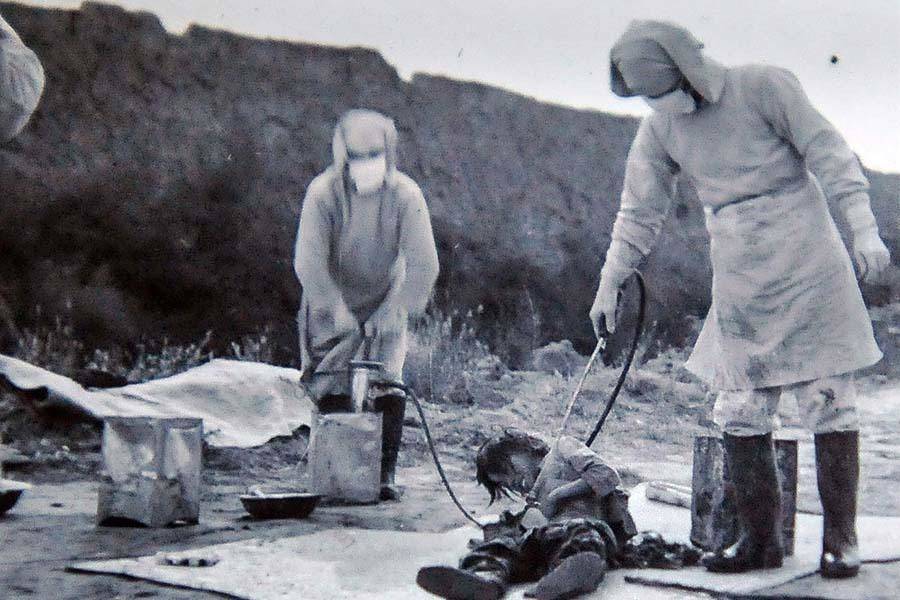
    World War II devastated the lives of more than 100 million people around the world. And out of all the areas in which World War II was fought, none were active as long as what would come to be known as the Pacific Theater. In fact, Japan started the war by attacking Manchuria in 1931, and it inarguably waged war with China by invading in 1937. The disturbances and upheavals that these invasions caused shook China to its very foundations, triggered a civil war and a famine that probably killed more people than currently live in Canada and Australia combined, and lasted until the countrys Soviet liberation in 1945.Xinhua via Getty ImagesUnit 731 personnel conduct a bacteriological trial upon a test subject in Nongan County of northeast Chinas Jilin Province in November 1940.And out of all the atrocities that Imperial Japan unleashed upon the Chinese people during this brutal occupation, probably none were as gratuitously hateful as the operations of Unit 731, the Japanese Empires biological warfare unit that somehow plumbed new depths in what was already a genocidal war. Despite innocent beginnings as a research and public health agency, Unit 731 eventually grew into an assembly line for weaponized diseases that, if fully deployed, could have killed everyone on Earth several times over. All this progress was, of course, built on the limitless suffering of human captives, who were held as test subjects and walking disease incubators until Unit 731 was shut down at the end of the war.But before Unit 731 was broken up in 1945, it committed some of the most torturous human experiments in recorded history.Unit 731 Experiments: Frostbite TestingXinhua via Getty ImagesThe frostbitten hands of a Chinese person who was taken outside in winter by Unit 731 personnel for an experiment on how best to treat frostbite. Date unspecified.Yoshimura Hisato, a physiologist assigned to Unit 731, took a special interest in hypothermia.As part of Marutas study in limb injuries, Hisato routinely submerged captives limbs in a tub of water filled with ice and had them held until the arm or leg had frozen solid and a coat of ice had formed over the skin. According to one eyewitness account, the limbs made a sound like a plank of wood when struck with a cane.Hisato then tried different methods for rapid rewarming of the frozen appendage. Sometimes he did this by dousing the limb with hot water, sometimes by holding it close to an open fire, and other times by leaving the subject untreated overnight to see how long it took for the persons own blood to thaw it out.Vivisection Of Conscious CaptivesXinhua via Getty ImagesA Unit 731 doctor operates on a patient that is part of a bacteriological experiment. Date unspecified.Unit 731 started out as a research unit, investigating the effects of disease and injury on the fighting ability of an armed force. One element of the unit, called Maruta, took this research a little further than the usual bounds of medical ethics by observing injuries and the course of disease on living patients. At first, these patients were volunteers from the ranks of the army, but as the experiments reached the limits of what could be non-invasively observed, and as the supply of volunteers dried up, the unit turned to the study of Chinese POWs and civilian captives. And as the concept of consent went out the window, so did the restraint of the researchers. It was around this time that Unit 731 began referring to confined research subjects as logs, or Maruta in Japanese.Study methods in these experiments were barbaric. Vivisection, for example, is the practice of mutilating human bodies, without anesthesia, to study the operations of living systems. Thousands of men and women, mostly Chinese communist captives as well as children and elderly farmers, were infected with diseases such as cholera and the plague, then had their organs removed for examination before they died in order to study the effects of the disease without the decomposition that occurs after death. Subjects had limbs amputated and reattached to the other side of the body, while others had their limbs crushed or frozen, or had the circulation cut off to observe the progress of gangrene. Finally, when a prisoners body was all used up, they would typically be shot or killed by lethal injection, though some may have been buried alive. None of the Chinese, Mongolian, Korean, or Russian captives assigned to Unit 731 survived their confinement.Unit 731s Horrifying Weapons TestsAssociated Press/LIFE via Wikimedia CommonsA Japanese soldier uses a Chinese mans body for bayonet practice near Tianjin, China. September 1937.The effectiveness of various weapons was of obvious interest to the Japanese Army. To determine effectiveness, Unit 731 herded captives together on a firing range and blasted them from varying ranges by multiple Japanese weapons, such as the Nambu 8mm pistol, bolt-action rifles, machine guns, and grenades. Wound patterns and penetration depths were then compared on the bodies of the dead and dying inmates. Bayonets, swords, and knives were also studied in this way, though the victims were usually bound for these tests. Flamethrowers were also tested, on both covered and exposed skin. In addition, gas chambers were set up at unit facilities and test subjects exposed to nerve gas and blister agents. Heavy objects were dropped onto bound victims to study crush injuries, subjects were locked up and deprived of food and water to learn how long humans could survive without them, and victims were allowed to drink only sea water, or were given injections of mismatched human or animal blood to study transfusions and the clotting process. Meanwhile, prolonged X-ray exposure sterilized and killed thousands of research participants, as well as inflicting horrible burns when the emitting plates were miscalibrated or held too close to the subjects nipples, genitals, or faces. And to study the effects of high G-forces on pilots and falling paratroopers, Unit 731 personnel loaded human beings into large centrifuges and spun them at higher and higher speeds until they lost consciousness and/or died, which usually happened around 10 to 15 Gs, though young children showed a lower tolerance for acceleration forces.Syphilis Experiments On Unit 731 CaptivesWikimedia CommonsGeneral Shiro Ishii, the commander of Unit 731.Venereal disease has been the bane of organized militaries since ancient Egypt, and so it stands to reason that the Japanese military would take an interest in the symptoms and treatment of syphilis. To learn what they needed to know, doctors assigned to Unit 731 infected victims with the disease and withheld treatment to observe the uninterrupted course of the illness. A contemporary treatment, a primitive chemotherapy agent called Salvarsan, was sometimes administered over a period of months to observe the side effects, however. To ensure effective transmission of the disease, syphilitic male victims were ordered to rape both female and male fellow captives, who would then be monitored to observe the onset of the disease. If the first exposure failed to establish infection, more rapes would be arranged until it did.Rape And Forced PregnancyWikimedia CommonsUnit 731s Harbin facility.Beyond just the syphilis experiments, rape became a common feature of Unit 731s experiments. For example, female captives of childbearing age were sometimes forcibly impregnated so that weapon and trauma experiments could be done on them. After being infected with various diseases, exposed to chemical weapons, or suffering crush injuries, bullet wounds, and shrapnel injuries, the pregnant subjects were opened up and the effects on the fetuses studied. The idea seems to have been to translate the teams findings into civilian medicine, but if Unit 731s researchers ever published these results, the papers seem not to have survived the war years.Germ Warfare On Chinese CiviliansXinhua via Getty ImagesUnit 731 researchers conduct bacteriological experiments with captive child subjects in Nongan County of northeast Chinas Jilin Province. November 1940. The totality of Unit 731s research was in support of their larger mission, which by 1939 was to develop horrific weapons of mass destruction for use against the Chinese population, and presumably American and Soviet forces, if the time ever came. To this end, Unit 731 cycled through tens of thousands of captives at several facilities across Manchuria, which had been occupied by imperial forces for years. Inmates of these facilities were infected with several of the most lethal pathogens known to science, such as Yersinia pestis, which causes bubonic and pneumonic plague, and typhus, which the Japanese hoped would spread from person to person after being deployed and depopulate disputed areas. To breed the most lethal strains possible, doctors monitored patients for rapid onset of symptoms and quick progression. Victims who pulled through were shot, but those who got sickest fastest were bled to death on a mortuary table, and their blood was used to transfect other captives, the sickest of whom would themselves be bled to transfer the most virulent strain to yet another generation. One member of Unit 731 later recalled that very sick and unresisting captives would be laid out on the slab so a line could be inserted into their carotid artery.When most of the blood had been siphoned off and the heart was too weak to pump anymore, an officer in leather boots climbed onto the table and jumped on the victims chest with enough force to crush the ribcage, whereupon another dollop of blood would spurt into the container. When the plague bacillus had been bred to what was felt to be a sufficiently lethal caliber, the last generation of victims to be infected were exposed to huge numbers of fleas, Y. pestis preferred vector of contagion. The fleas were then packed in dust and sealed inside clay bomb casings.Xinhua via Getty ImagesJapanese personnel in protective suits carry a stretcher through Yiwu, China during Unit 731s germ warfare tests. June 1942.On October 4, 1940, Japanese bombers deployed these casings, each loaded with 30,000 fleas that had each sucked blood from a dying prisoner, over the Chinese village of Quzhou. Witnesses to the raid recall a fine reddish dust settling on surfaces all over town, followed by a rash of painful flea bites that afflicted nearly everyone. From contemporary accounts, it is known that more than 2,000 civilians died of plague following this attack, and that another 1,000 or so died in nearby Yiwu after the plague was carried there by sick railway workers. Other attacks, using anthrax, killed approximately 6,000 more people in the area.A few years later, as the war was nearing its end, Japan likewise planned to bomb America with plague-ridden fleas, but never got the chance. In August 1945, after Hiroshima and Nagasaki had both been bombed, the Soviet Army had invaded Manchuria and utterly annihilated the Japanese Army, and the emperor read his infamous surrender declaration over the radio, Unit 731 was officially disbanded. Its records were mostly burned, destroying any useful information the team had managed to generate in 13 years of research. Researchers mostly slipped back into civilian life in occupied Japan as if nothing had ever happened, many of them becoming prominent members of university faculty. To this day, Japan has not apologized for, and China has not forgiven, the countless atrocities Japanese forces visited upon China between 1931 and 1945 during the Second Sino-Japanese War and beyond. As the last witnesses to this history grow old and die, its possible that the matter will never be addressed again.After this look at Unit 731, read up on some more of the worst war crimes ever committed as well as other Japanese war crimes from the World War II era. Then, have a look at four of the most evil science experiments ever performed and find out whether or not any of the highly disturbing Nazi research actually contributed anything to medical science.The post Inside Unit 731, Japans Disturbing Human Experiments Program During World War II appeared first on All That's Interesting.
    0 Σχόλια 0 Μοιράστηκε 22 Views
  • ALLTHATSINTERESTING.COM
    The Twisted Story Of Shiro Ishii, The Josef Mengele Of World War 2 Japan
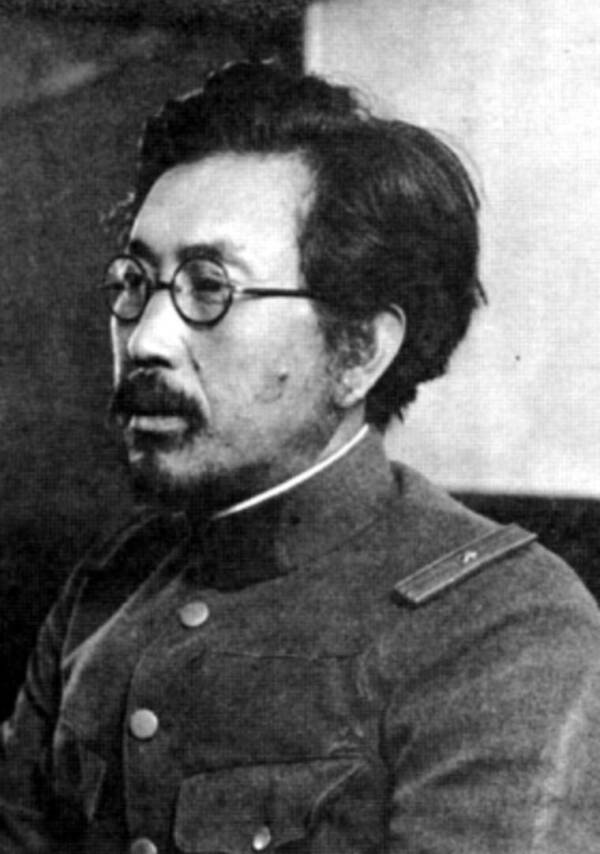
    A few years after World War I, the Geneva Protocol prohibited the use of chemical and biological weapons during wartime in 1925. But that didnt stop a Japanese army medical officer named Shiro Ishii.A graduate of Kyoto Imperial University and a member of the Army Medical Corps, Ishii was reading about the recent bans when he got an idea: If biological weapons were so dangerous that they were off-limits, then they had to be the best kind.Wikimedia CommonsShiro Ishii is often compared to the infamous Nazi doctor Josef Mengele, but he arguably had even more power over his human experiments and did far more monstrous scientific research.From that point on, Ishii dedicated his life to the deadliest kinds of science. His germ warfare and inhumane experiments aimed to place the Empire of Japan on a pedestal above the world. This is the story of General Shiro Ishii, Japans answer to Josef Mengele and the evil genius behind Unit 731.A Dangerous YouthBorn on June 25, 1892 in Shibayama, Japan, Shiro Ishii was the fourth son of a wealthy landowner and sake maker. Rumored to have a photographic memory, Ishii excelled in school to the point that he was labeled a potential genius. Ishiis daughter Harumi would later muse that her fathers intelligence might have led him to be a successful politician if he had chosen to go down that path. But Ishii chose to join the military at an early age, showing boundless love for Japan and its emperor all along the way.Wikimedia CommonsFrom an early age, Shiro Ishii was believed to be a genius.An atypical recruit, Ishii did well in the military. Standing six feet tall well above the height of the average Japanese man he boasted a commanding appearance early on. He was known for his spotlessly clean uniforms, his meticulously groomed facial hair, and his deep, powerful voice.During his service, Ishii discovered his real passion science. Specifically interested in military medicine, he worked tirelessly toward the goal of becoming a doctor in the Imperial Japanese Army.In 1916, Ishii was admitted to the Medical Department of Kyoto Imperial University. In addition to learning both the best medical practices of the time and proper laboratory procedures, he also developed some strange habits. He was known for keeping bacteria in petri dishes as pets. And he also had a reputation for sabotaging other students. Ishii would work in the lab at night after the other students had already cleaned up and use their equipment. He would purposely leave the equipment dirty so the professors would discipline other students, which led them to resent Ishii.But while the students knew what Ishii had done, he was apparently never punished for his actions. And if the professors somehow knew what he was doing, it almost seemed as if they were rewarding him for it.Its perhaps a sign of his growing ego that shortly after reading about biological weapons in 1927, he decided that he would become the best in the world at making them. Shiro Ishiis Immodest ProposalWikimedia CommonsSpecial Naval landing forces of the Imperial Japanese Navy prepare to advance during the Battle of Shanghai in August 1937 with gas masks firmly in place.Shortly after reading the initial journal article that inspired him, Shiro Ishii began to push for a military arm in Japan that focused on biological weapons. He even directly pleaded with top commanders.To truly grasp the scale of his confidence, consider this: Not only was he a lower-ranking officer suggesting military strategy, but he was also proposing the direct violation of relatively new international laws of war.At the crux of Ishiis argument was the fact that Japan had signed the Geneva agreements, but had not ratified them. Since Japans stance on the Geneva agreements was technically still in limbo, there was perhaps some wiggle room that would allow for them to develop bioweapons. But whether Ishiis commanders lacked his vision or nebulous grasp of ethics, they were skeptical of his proposal at first. Never one to take no for an answer, Ishii asked for and ultimately received permission to take a two-year research tour of the world to see what other countries were doing in terms of biological warfare in 1928. Whether this signaled legitimate interest on the part of the Japanese military or simply an effort to keep Ishii happy is unclear. But either way, after his visits to various facilities across Europe and the United States, Ishii returned to Japan with his findings and a revised plan.A Receptive AudienceWikimedia CommonsThe Japanese soldiers bombed Chongqing, China from 1938 to 1943.Despite the Geneva Protocol, other countries were still researching biological warfare. But, out of either ethical concerns or fear of discovery, no one had yet made it a priority. So in the years preceding World War II, Japanese troops began to consider investing their resources in this controversial weaponry with the goal that their battle techniques would surpass all other countries on Earth.By the time Ishii returned to Japan in 1930, a few things had changed. Not only was his country on track to wage war against China, nationalism in Japan burned brighter. The old country slogan of a wealthy country, a strong army was echoing louder than it had in decades. Ishiis reputation had also grown. He was appointed professor of immunology at the Tokyo Army Medical School and given the rank of major. He also found a powerful supporter in Colonel Chikahiko Koizumi, who was then a scientist at the Tokyo Army Medical College. Wikimedia CommonsJapanese army surgeon Chikahiko Koizumi. After World War II, he came under suspicion for being a war criminal, but he committed suicide before he could be properly investigated.A veteran of World War I, Koizumi oversaw research into chemical warfare beginning in 1918. But around this time, he almost died in a lab accident after being exposed to a chlorine gas cloud without a gas mask. After his full recovery, he continued his research but his superiors placed a low priority on his work at the time.So its no surprise that Koizumi saw himself reflected in Shiro Ishii. At the very least, Koizumi saw someone similar enough to him who shared his vision for Japan. As Koizumis star continued to rise first to Dean of the Tokyo Army Medical College, then to Army Surgeon General, then to Japans Minister of Health he made sure that Ishii moved up along with him. For Ishiis part, he certainly enjoyed the praise and promotions, but nothing seems to have been more important to him than his own self-aggrandizement.Ishiis public work consisted of researching microbiology, pathology, and vaccine research. But as all those in the know understood, this was only a small part of his actual mission.Unlike his student years, Ishii was rather popular as a professor. The same personal charisma and magnetism that had won over his teachers and commanders also worked on his students. Ishii often spent his nights out drinking and visiting geisha houses. But even while inebriated, Ishii was more likely to go back to his studies than to go to bed.This behavior is telling on two counts: It shows the kind of obsessive man Ishii was, and it explains how he was able to persuade others to help him with his deranged experiments after he began working in China.A Secret, Sinister FacilityXinhua via Getty ImagesUnit 731 personnel conduct a bacteriological trial upon a test subject in Nongan County of northeast Chinas Jilin Province. November 1940.Following the invasion of Manchuria in 1931 and the establishment of the puppet client state Manchukuo shortly thereafter, Japan utilized the regions resources to fuel its industrialization efforts. Like the attitudes of Americans during the Manifest Destiny period of expansion, many Japanese soldiers saw the people living in the area as obstacles. But to Shiro Ishii, these residents were all potential test subjects. According to Ishiis theories, his biological research would require different types of facilities. For instance, he established a biological weapons facility in Harbin, China, but quickly realized that he wouldnt be able to freely conduct involuntary human research in that city.So he simply began to put together another secret facility that was about 100 kilometers south of Harbin. The 300-home village of Beiyinhe was razed to the ground to make way for the site, and local Chinese laborers were drafted to construct the buildings.Here, Shiro Ishii developed some of his barbaric techniques, foreshadowing what would come in the notorious Unit 731.Wikimedia CommonsUnit 731s Harbin facility was built on Manchurian land conquered by Japan.The sparse records from the Beiyinhe facility offer a sketch of Ishiis work there. With up to 1,000 prisoners crammed into the facility, the test subjects were a mixed group of underground anti-Japanese workers, guerrilla bands who harassed the Japanese, and innocent people who unfortunately got caught in a roundup of suspicious persons.A common early experiment was drawing blood from prisoners every three to five days until they were too weak to go on, and then killing them with poison when they were no longer considered valuable to research. Most of these subjects were killed within a month after their arrival, but the number of total victims in the facility remains unknown.In 1934, a prisoner rebellion broke out as the soldiers celebrated the Mid-Autumn Festival. Taking advantage of the guards drunkenness and the relatively lax security, some 16 prisoners were able to successfully escape. This is the main reason why we know what we do about that facility.Despite the extreme risk to the security and secrecy of the operation, its possible that experiments continued at that site as late as 1936, before it was officially shut down in 1937.Ishii, for his part, did not seem to mind the closure. He was already getting started with another facility that would be far more sinister.The Josef Mengele Of JapanXinhua via Getty ImagesUnit 731 researchers conduct bacteriological experiments on captive child subjects in Nongan County of northeast Chinas Jilin Province. November 1940.Shiro Ishii is often compared to Josef Mengele, the German doctor known as the Angel of Death, who conducted sinister experiments in Nazi-occupied Poland. The infamous Auschwitz-Birkenau concentration camp was a complex that killed its prisoners as part of its design. While many victims were executed in gas chambers, others were reserved for Mengele and his twisted medical experiments.As an SS officer and member of the Nazi elite, Mengele had the authority to determine the fitness of prisoners, recruit imprisoned medical professionals as assistants, and force inmates into becoming his test subjects.But unlike Ishii, Mengele was more limited in his power over the camp and in the effectiveness of his research. Auschwitz had been built to produce rubber and oil, and Mengele used the environment to conduct pseudoscience. His work fell under the guise of genetics, but it was often little more than pointless and cruel acts of sadism.In many ways, Ishii had more control over his human subjects. His research was also more scientific and monstrous. Just about all the horrors that occurred in the facilities had been thought up by Ishii with the intention of turning human beings into data. Expanding and building upon his earlier efforts, Ishii designed Unit 731 to be a self-sufficient facility, with a prison for his human subjects, an arsenal for making germ bombs, an airfield with its own air force, and a crematorium to dispose of human remains.In another part of the facility were the dormitories for Japanese residents, which included a bar, library, athletic fields, and even a brothel. But nothing at the complex could compare to Ishiis house in Harbin, where he lived with his wife and children. A mansion left over from the period of Russian control over Manchuria, it was a grand structure that was remembered fondly by Ishiis daughter Harumi. She even likened it to the home in the classic film Gone With The Wind.Shiro Ishii And The Experiments At Unit 731Xinhua via Getty ImagesThe frostbitten hands of a Chinese person who was taken outside in winter by Unit 731 personnel for an experiment on how to best treat frostbite. Date unspecified.If you know the name Unit 731, then you probably have some idea of the horrors that unfolded at Shiro Ishiis facility believed to have been set up around 1935 in Pingfang. Despite decades of cover-up, stories of the cruel experiments that took place there have spread like wildfire in the age of the internet. However, for all the discussion of freezing limbs, vivisections, and high-pressure chambers, the horror that tends be ignored is Ishiis inhumane reasoning behind these tests. As an army doctor, one of Ishiis primary goals was the development of battlefield treatment techniques that he could use on Japanese troops after learning just how much the human body could handle. For example, in the bleeding experiments, he learned how much blood the average person could lose without dying. But at Unit 731, these experiments kicked into high gear. Some experiments involved simulating real-world conditions. For example, some prisoners were placed in pressure chambers until their eyes popped out so that they could demonstrate how much pressure the human body could withstand. And some prisoners were injected with seawater to see if it could work as a replacement for a saline solution.The most horrifying example touted around the internet the frostbite experiment was actually pioneered by Yoshimura Hisato, a physiologist assigned to Unit 731. But even this test had a practical battlefield application. Unit 731 researchers were able to prove that the best treatment for frostbite was not rubbing the limb the traditional method up until that point but instead immersion in water a bit warmer than 100 degrees Fahrenheit (but never hotter than 122 degrees Fahrenheit). But the way they came to this conclusion was horrific.Unit 731 researchers would lead prisoners outside in freezing weather and leave them with exposed arms that were periodically drenched with water until a guard decided that frostbite had set in.Testimony from a Japanese officer revealed that this was determined after the frozen arms, when struck with a short stick, emitted a sound resembling that which a board gives when it is struck.When the limb was struck, this sound would apparently let the researchers know that it was sufficiently frozen. The frostbite-affected limb was then amputated and taken to the lab for study. More often than not, the researchers would then move on to the prisoners other limbs.When prisoners were reduced to heads and torsos, they were then handed over for plague and pathogen experiments. Brutal as it was, this process bore fruit for Japanese researchers. They developed an effective frostbite treatment several years ahead of other researchers.As with Mengele, Ishii and the other Unit 731 doctors wanted a wide sample of subjects to study. According to official accounts, the youngest victim of a temperature-changing experiment was a three-month-old baby.The Brutality Of Japanese Weapons TestingXinhua via Getty ImagesA Unit 731 doctor operates on a patient that is part of a bacteriological experiment. Date unspecified.Weapons testing at Unit 731 took several distinct forms. As with medical research, there were defensive tests of new equipment, such as gas masks.Researchers would force their prisoners to test out the effectiveness of certain gas masks in order to find the best kind among the pack. Although unconfirmed, it is believed that similar testing led to an early version of the biohazard protection suit.In terms of offensive weapons tests, these tended to fall under two different categories. The first was the deliberate infection of prisoners to study disease effects and to select suitable candidates for weaponization. In order to better understand the impacts of each disease, researchers did not provide prisoners with treatment and instead dissected or vivisected them so that they could study the impact of the diseases on the internal organs. Sometimes, they were still alive while they were being cut open.In a 1995 interview, one anonymous former medical assistant in a Japanese Army unit in China revealed what it was like to cut open a 30-year-old man and dissect him alive without any anesthetic.The fellow knew that it was over for him, and so he didnt struggle when they led him into the room and tied him down, he said. But when I picked up the scalpel, thats when he began screaming.He continued, I cut him open from the chest to the stomach, and he screamed terribly, and his face was all twisted in agony. He made this unimaginable sound, he was screaming so horribly. But then finally he stopped. This was all in a days work for the surgeons, but it really left an impression on me because it was my first time.The second type of offensive weapons testing involved the actual field testing of various systems that dispersed diseases. These were used against prisoners within the camp and against civilians outside of it.Ishii was diverse in his exploration of disease dispersal methods. Inside the camp, prisoners infected with syphilis would be forced to have sex with other prisoners who werent infected. This would help Ishii observe the onset of the disease. Outside the camp, Ishii gave other prisoners dumplings that were injected with typhoid and then released them so they could spread the disease. He also passed out chocolates filled with anthrax bacteria to local children. Since many of these people were starving, they often didnt question why they were receiving this food and unfortunately assumed it was just an act of kindness.Sometimes, Ishiis men would use air raids to drop innocuous items like wheat and rice balls and strips of colored paper above nearby cities. It was later discovered that these items were infected with deadly diseases.But as horrific as these Japanese war crimes were, it was Ishiis bombs that truly placed him at the top of all other biological weapons researchers.A Gift To MankindXinhua via Getty ImagesJapanese personnel in protective suits carry a stretcher through Yiwu, China during Unit 731s germ warfare tests. June 1942.Shiro Ishiis plague bombs carried an unusual payload. Instead of the usual metal containers, they would use containers made of ceramic or clay so that they would be less explosive. That way, they would be able to properly release plague-infected fleas on countless people.Unable to improve off of the traditional means of spreading the Black Death, Ishii decided to skip the rat middleman. When his bombs exploded, the surviving fleas would quickly escape, seeking out hosts to feed on and spread the disease. And thats exactly what happened in China during World War II. Japan dropped these bombs on both combatants and innocent civilians in multiple towns and villages. But Ishiis master plan, Operation Cherry Blossoms at Night, intended to use these weapons against the United States.If this plan succeeded, about 20 of the 500 new troops who arrived in Harbin wouldve been taken toward southern California in a submarine. They wouldve then manned an onboard plane and flown it to San Diego. And plague bombs wouldve then been dropped there in September 1945. Thousands of disease-riddled fleas wouldve been deployed, as the troops took their own lives by crashing somewhere onto American soil.However, Americas atomic bombings happened before this plan came to fruition. And the war ended before the operation was even fully mapped out. But ironically enough, it was Americas interest in Ishiis research that ultimately saved his life.In August 1945, shortly after the atomic bombings of Hiroshima and Nagasaki, the order came to destroy all evidence of the activities at Unit 731. Shiro Ishii sent his family ahead by railroad, remaining behind until his infamous facilities were destroyed. The exact number of people killed by Unit 731 and its related programs remains unknown, but estimates usually range from about 200,000 to 300,000 (including the biological warfare operations). As for deaths due to human experimentation, that estimate typically ranges around 3,000. By the end of the war, any remaining prisoners were speedily killed off.Although Ishii was also ordered to destroy all documentation, he carried some of his lab notes out of the facility with him before going into hiding in Tokyo. Then, the American occupation authorities paid him a visit. Throughout the war, vague reports from China about unusual outbreaks and plague bombs had not been taken very seriously until the Soviets took Manchuria from the Japanese. By that point, the Soviets knew enough to have a vested interest in finding and securing General Ishii to interview him about his infamous research.For better or for worse, the Americans got to him first. According to Ishiis daughter Harumi, the American officers used her as a transcriber as they interrogated her father about his work. At first, he played coy, pretending not to know what they were talking about. But after he secured immunity, protection from the Soviets, and 250,000 yen as payment, he began to talk.All told, he revealed 80 percent of his data to the United States by the time of his death. Apparently, he took the other 20 percent to his grave.A Deal With The DevilWikimedia CommonsUnit 731 bombs on display at a museum on the site of where the Harbin bioweapon facility used to be.In order to protect Shiro Ishii and maintain a monopoly on his research, the United States kept its word. The crimes of Unit 731 and other similar organizations were suppressed, and at one point they were even labeled Soviet Propaganda by American authorities.And yet, a top secret cable from Tokyo to Washington in 1947 revealed:Experiments on humans were described by three Japanese and confirmed tacitly by Ishii. Ishii states that if guaranteed immunity from war crimes in documentary form for himself, superiors, and subordinates, he can describe program in detail.To put it plainly, American authorities were eager to learn the results of experiments that they werent willing to perform themselves. Thats why they granted him immunity.Although some of the research from Ishii was valuable, American authorities didnt learn nearly as much as they thought they would. And yet they kept their end of the bargain. Shiro Ishii lived out the rest of his days in peace until he died of throat cancer at the age of 67.Years after the agreement, North Korea made a startling allegation that the United States had dropped plague bombs on them during the Korean War. And so a group of scientists from France, Italy, Sweden, the Soviet Union, and Brazil led by a British embryologist toured the affected areas to collect samples and issue a verdict in the 1950s.Wikimedia CommonsA page from the International Scientific Commission for the Facts Concerning Bacterial Warfare in China and Korea. Allegations that America used biological warfare during the Korean War remain controversial to this day.Their conclusion was that germ warfare had indeed been used as North Korea claimed. Officially, this is also Soviet Propaganda, according to the United States. Or is it?With a clear answer still missing, we are left with uncomfortable questions. Consider the following: In 1951, a now-declassified document showed that the U.S. Joint Chiefs of Staff issued orders to begin large scale field tests to determine the effectiveness of specific BW [bacteriological warfare] agents under operational conditions. And in 1954, Operation Big Itch dropped flea bombs at the Dugway Proving Ground in Utah.With that in mind, what is more likely? Are these actions coincidental to the Chinese and Soviets using part of the truth that they knew in an attempt to embarrass the Americans? Or, did someone secretly give the order to bring Shiro Ishii and his men out of retirement?In any case, one thing is clear. Shiro Ishii never faced justice and died a free man in 1959 all thanks to the United States.After reading about Shiro Ishii, the unhinged mind behind Unit 731, learn the full story of Operation Cherry Blossoms at Night. For a glimpse of what the operation could have looked like, check out the mysterious Battle of Los Angeles that may have been started by a Japanese balloon bomb.The post The Twisted Story Of Shiro Ishii, The Josef Mengele Of World War 2 Japan appeared first on All That's Interesting.
    0 Σχόλια 0 Μοιράστηκε 23 Views
  • WWW.DUALSHOCKERS.COM
    Incredible Games Turning 10 This Summer: A Look Back at Some of 2016's Best
    The summer months used to be a slow time on the video game calendar. As the weather warmed up, people were content to enjoy the great outdoors rather than spending their summers inside.
    0 Σχόλια 0 Μοιράστηκε 22 Views
  • WWW.MASHED.COM
    The Oven Temperature That's Key For Tasty Prime Rib
    For maximum juiciness, flavor, and edge-to-edge pinkness on this top-notch cut of meat, you need to have your oven set to this exact temperature.
    0 Σχόλια 0 Μοιράστηκε 24 Views
  • WWW.BGR.COM
    Why The Wires On Landline Phones Were Coiled Instead Of Straight
    It's been a long time since landline phones with coiled wires were a household staple, but these distinctively designed cables were made this way for a reason.
    0 Σχόλια 0 Μοιράστηκε 24 Views
  • WWW.BGR.COM
    4 Files To Never Store On A Hard Drive
    Despite SSDs being the primary form of data storage these days, there are still good reasons to continue using HDDs; just be careful what you store on them.
    0 Σχόλια 0 Μοιράστηκε 23 Views
  • YUBNUB.NEWS
    Hantavirus Patient Zero Identified as Ornithologist Who Visited Rat-Infested Landfill Before Outbreak
    Patient zero in the deadly cruise ship hantavirus outbreak has just been identified. Up until now, we knew that the first people to die from the rare virus on the fated MV Hondius ship were an elderly
    0 Σχόλια 0 Μοιράστηκε 23 Views
  • YUBNUB.NEWS
    Mehdi Hasan: AOCs Superpower in 2028 Is Convincing Republicans Shes Dumb and Extreme
    As our own Grateful Calvin reported earlier on Saturday, David Axelrod interviewed Rep. Alexandria Ocasio-Cortez at the University of Chicago on Friday night, where she made the outrageous claim that
    0 Σχόλια 0 Μοιράστηκε 24 Views
  • YUBNUB.NEWS
    WHO Says Hantavirus Risk Is Low as Passengers Prepare to Leave Ship
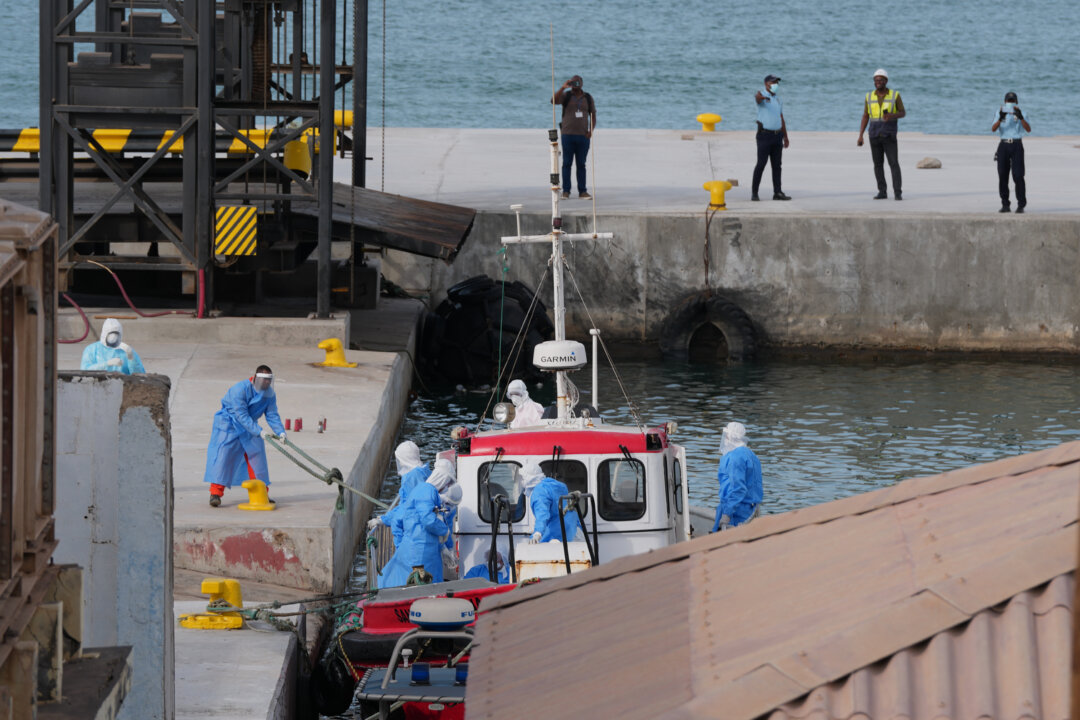
    Health workers in protective gear evacuate patients from the MV Hondius cruise ship at a port in Praia, Cape Verde, on May 6, 2026. Misper Apawu/AP PhotoThe World Health Organization (WHO) said on May
    0 Σχόλια 0 Μοιράστηκε 24 Views
  • YUBNUB.NEWS
    Nuclear Debt Bomb: U.S. Debt Reaches Red Zone 100% of GDP
    MCCAIG/iStock/Getty Images Plus For decades, there would be much talk among politicians about United States budget deficits (and the national debt). Yet this faded sometime after 2010, at the latest,
    0 Σχόλια 0 Μοιράστηκε 24 Views