• This 512GB Dell 15 laptop delivers steady performance for just $307
    This 512GB Dell 15 laptop delivers steady performance for just $307 TL;DR: A well-specced Dell 15 laptop for $306.99 — fast SSD, solid performance, and ready for everyday use. You don’t need to spend big to get a laptop that keeps up. If you are in the market for a new machine that doesn’t cost a small fortune, this near-mint Dell 15...
    0 Yorumlar 0 hisse senetleri 78 Views
  • WWW.THECOLLECTOR.COM
    The Story Behind the First Soviet Atomic Bomb
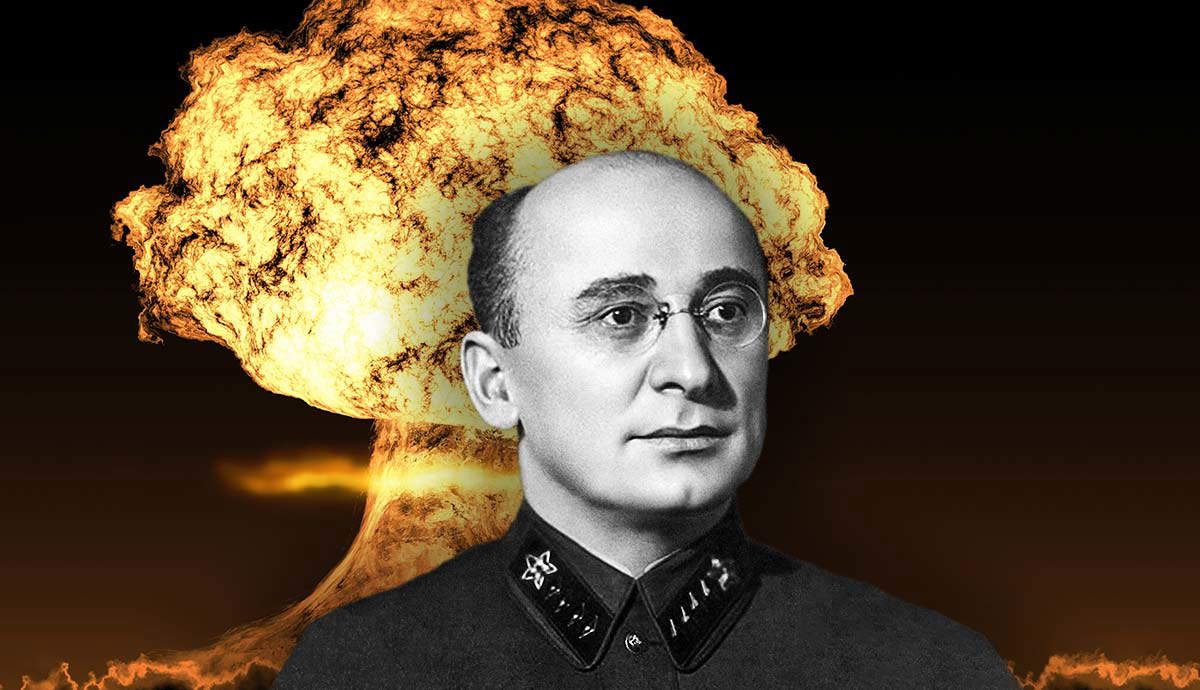
    The atomic bomb remains one of the most consequential military inventions of the 20th century, shaping the trajectory of global politics and military strategy for a generation. The development of the bomb in the United States during World War II was carried out under the secretive Manhattan Project. However, the Soviet Unions own project, which successfully tested a nuclear device on August 29, 1949, remains an equally compelling part of history. This is the story of how the Soviet atomic bomb was built and the political shockwave it left behind.The Origins of the Soviet Atomic Bomb ProjectThe nuclear physicists Otto Hahn and Lise Meitner, 1912. Source: Wikimedia CommonsWhile the theoretical framework behind such a device had existed in nuclear physics since the early 1920s, the Soviet atomic program began in earnest during the early 1940s. The Soviet scientists Igor Tamm, Lev Landau, and Yakov Frenkel had all made significant contributions to the field of nuclear physics, but their work lacked the focused government support necessary to build an atomic weapon. This soon changed in 1938 when German physicists Otto Hahn and Fritz Strassman discovered nuclear fission, while Lise Meitner and Otto Frisch calculated the destructive power such a force could wield. The global scientific community came to the realization that a massive release of energy could result from the splitting of an atom, and the race to build a weapon to harness this power began in earnest.The USSR became aware of the potential military applications of a nuclear fission bomb after reports that Western scientists were working on a device were intercepted by intelligence sources and were fed back to the Kremlin. In 1940, the Soviet physicist Georgy Flyorov authored a paper in collaboration with Konstantin Petrzhak that detailed how the spontaneous fission of a uranium atom could occur. Flyorov then went on to write a secret communique to Soviet leader Joseph Stalin, urging the USSR to prioritize the creation of a nuclear weapon above all other scientific endeavors. During this time, the Western scientific community had become suddenly reticent to discuss the topic, an early indication that the United States and Britain were already developing an atomic weapon in secret.World War II Breaks OutSoviet citizens in Moscow listening to a speech by Vyacheslav Molotov about the German invasion of the Soviet Union, 1941. Source: Wikimedia CommonsDuring World War II, the Soviet Union faced an unprecedented fight for its very existence, a struggle that diverted considerable resources away from nuclear research. The German invasion of the USSR in 1941, known as Operation Barbarossa, placed a huge strain on the Soviet industrial complex and forced the Kremlin to prioritize the production of conventional weaponry. However, Stalin upheld the strategic importance of nuclear weapons research, and in 1942, he ordered the creation of a special committee to oversee the creation of an atomic bomb. The special committee was led by Igor Kurchatov and became a parallel to the Manhattan Project in the United States.Despite renewed focus, the progress towards the construction of an atomic bomb was slow. The Soviet Union lacked access to high-grade uranium ore, modern laboratory facilities, and experienced personnel on the scale of the Manhattan Project. Worsening these key difficulties was the very real threat of German occupation. A number of critical research facilities had to be relocated eastward as German forces threatened to take Moscow and Leningrad. In the end, the logistical and material constraints of the war effort severely delayed the Soviet atomic bomb project and allowed the United States and its allies to forge ahead without any serious competition.How Espionage Helped the Soviet Atomic Bomb ProjectThe Trinity nuclear test device is installed, 1945. Source: Wikimedia CommonsOne of the most important factors that helped to contribute to the Soviet atomic bomb project was the role of espionage. While the Soviet scientists assigned to the project were highly capable, their progress was aided significantly by intelligence that was gathered from the Manhattan Project. Soviet intelligence agents from the NKVD obtained highly detailed information about the design and methods of the first atomic bomb. Key figures in the espionage network who provided critical intelligence to their Soviet handlers included Klaus Fuchs, Theodore Hall, and David Greenglass.Fuchs was a German-born physicist who worked at Los Alamos and supplied the Soviet Union with blueprints of the implosion mechanism that was used in Americas plutonium bomb. Hall, another key physicist of the Manhattan Project, passed on vital information regarding the bombs design and uranium enrichment process. Greenglass, who worked as a machinist at Los Alamos, also contributed details about the construction of the bombs casing and inner workings. While each of these individuals had their own reasons for sharing classified information with the Soviets, they shared a belief that the United States alone should not be allowed to possess a weapon as powerful as the atomic bomb and that sharing the knowledge of its construction would restore the balance of power among nations.The intelligence obtained from the Manhattan Project provided the Soviet Union with a technological roadmap that allowed Igor Kurchatov and his team to bypass years of trial and error and begin building a prototype bomb. However, the Soviets did not merely copy the United States. Instead, they incorporated their own theories and knowledge to create a weapon that was completely unique.The End of World War II and Stalins DeterminationThe head of the NKVD and the Soviet Nuclear weapons project Lavrentiy Beria, 1945. Source: Wikimedia CommonsWhile the end of World War II brought relief to the Soviet Union, it also heightened Joseph Stalins urgency to complete the Soviet atomic bomb project. The American bombing of Hiroshima and Nagasaki in August 1945 and Japans subsequent surrender not only underscored the destructive power of such a weapon but also showed the immense strategic power they possessed. Stalin viewed Americas atomic monopoly as a direct threat to Soviet security and global influence. Moreover, the refusal of the US to share nuclear technology through the Baruch Plan further convinced Stalin that the Soviet Union must build its own arsenal to compete in the coming Cold War.In the years following the end of the war, Stalin diverted all of the Soviet Unions scientific and military resources into the creation of an atomic bomb. The program was overseen by Lavrentiy Beria, the head of the NKVD, who created a culture of secrecy and discipline within the Soviet atomic bomb project. Under Berias leadership, failure was not tolerated, and even senior scientists could face imprisonment or execution if they did not meet strict deadlines.Key Scientific BreakthroughsThe Hanford nuclear processing site where the United States sourced much of its nuclear material. Source: United States Department of EnergyUnder the strict orders of Lavrentiy Beria, Igor Kurchatov assembled a team of brilliant nuclear scientists from across the Soviet Union. This team worked around the clock to overcome the myriad technical and material obstacles that stood in the way of creating an atomic bomb. However, the primary challenge facing the Soviet Union was not expertise but sourcing raw materials. The USSR lacked sufficient access to rich uranium deposits, unlike the United States, which had been allowed access to rich deposits in Canada and the Congo. To address this problem, Soviet engineers developed innovative methods for enriching uranium and plutonium by building vast nuclear reactors and enrichment facilities.Operation First LightningA mockup of the RDS-1. Source: Sergey Rodovnichenko/Wikimedia CommonsOn August 29, 1949, the Soviet Union successfully conducted its first nuclear test at the Semipalatinsk Test Site in Kazakhstan. The device was code-named First Lightning or RDS-1, a plutonium implosion bomb that was similar in design to the Manhattan Projects Fat Man device. The test was observed by a group of top Soviet officials, scientists, and military personnel. Once detonated, the RDS-1 bomb produced an explosion equivalent to approximately 22 kilotons of TNT, comparable to the bombs dropped by the United States on Hiroshima and Nagasaki.Once the USSR announced to the world that it had successfully built and detonated a nuclear bomb, it produced a seismic shift in global geopolitics. It broke Americas monopoly on nuclear weapons and fundamentally altered the shifting dynamics of the nascent Cold War. The United States, which had assumed it had at least a decade until the Soviets built a nuclear bomb, was forced to confront the new reality of a nuclear-armed USSR.The Soviet Nuclear LegacySoviet scientists at the Kurchatov Institute continued to research the peaceful applications of Nuclear Energy, 1974. Source: Wikimedia CommonsThe Soviet nuclear program was not simply a technical achievement but also a testament to the resilience and ingenuity of Soviet scientists. Key figures such as Igor Kurchatov and Andrei Sakharov emerged as legendary founders of Soviet science, with Sakharov later using his status to become a vocal advocate for arms control and human rights. Moreover, the program also laid the groundwork for a nationwide network of nuclear facilities that helped the Soviet Union not only build a vast stockpile of nuclear weapons but also introduced civilian applications such as nuclear power to the growing USSR.However, the Soviet nuclear program also left behind a legacy that is marked by ethical and environmental controversies. The secrecy and panic surrounding the race to build a Soviet nuclear bomb led to profound environmental contamination and extreme health risks in regions such as Semipalatinsk. Moreover, because the Soviet Union relied on prison labor to mine nuclear materials and handle waste products, a huge number of individuals were exposed to high levels of radiation on an almost constant basis.
    0 Yorumlar 0 hisse senetleri 9 Views
  • WWW.THECOLLECTOR.COM
    How Patrick Henry Used Classical Rhetoric to Ignite the American Revolution
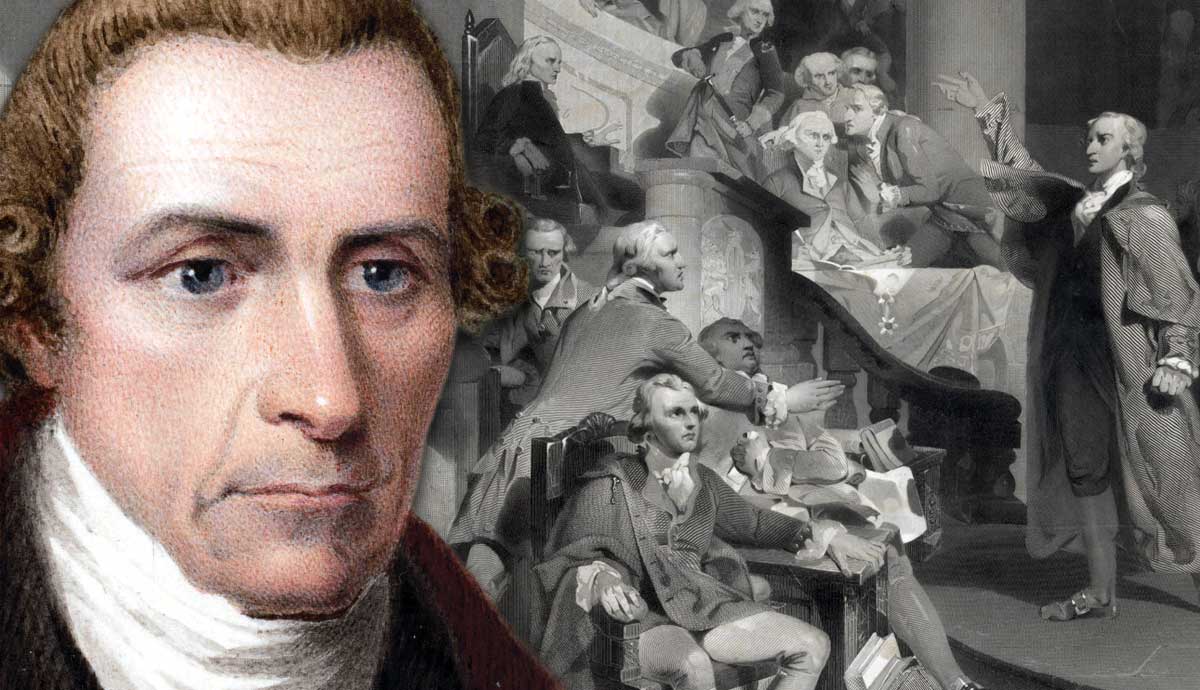
    Patrick Henry etched his name in history with his masterful skills as an orator. He took the thoughts of the people and transformed them into action, earning himself comparisons to the likes of Homer. As a lawyer turned politician, Henry gained the trust of the people by leading the Hanover County militia and eventually becoming the first elected colonial governor of Virginia.A Passionate RevolutionarySt. Johns Church, Richmond, Virginia by Sarah Haven Foster, 19th Century. Source: Portsmouth Public Library, New HampshireThe candlelit halls of St. Johns Church in Richmond, Virginia were abuzz with debates from the Second Virginia Convention. The day was March 23, 1775, and the prospect of the American Colonies seeking independence from the Crown was preposterous to some and inevitable to others. A 38-year-old statesman and lawyer by the name of Patrick Henry fell firmly in camp with the latter. To him, a violent clash with the British was inevitable, and his passion bubbled over as he addressed the convention with conviction. Henrys ability to capture an audience fanned the flames of rebellion, as he was able to put into words the thoughts so many held but could not articulate. His rhetoric transformed ideologies into action.As a rising political figure from Hanover County, Henry understood the positions of rural colonists. His addresses kept his audience captive and on the edge of their seats while he perfectly encapsulated the views of many Virginians. He utilized his skills as an orator to plead with the convention to raise the militias and prepare for a war that was already at their doorstep. His address ended with a phrase that became a rallying cry for the Revolution as he cried out, I know not what course others may take; but as for me, give me liberty or give me death!Give me liberty, or give me death! By Currier & Ives., 1876. Source: Library of CongressIn the years leading to the American Revolution, Virginia was in a unique position compared to the other colonies. The Virginia militias bore the brunt of the colonial war effort during the French and Indian War and Virginians were enraged by how the British authorities in London responded after the French surrender.The Royal Proclamation of 1763 prevented settlers from crossing an imaginary line separating the colonies from the Western Frontier, while new taxes were imposed upon the colonies for the defence of the newly acquired lands. These measures taken by Parliament planted the seeds of rebellion in the minds of many Virginians, none more than that of Patrick Henry.While many leaders in the American colonies initially sought to reconcile their differences with the Crown and Parliament, Henry believed war was inevitable. His skills as an orator rival those with classical training as he was able to weave complex political ideas into words that could be not only felt but related to by all who heard him. His words and passion echoed that of ordinary Virginia colonists whom he represented in the colonial assembly.A Revolutionary Legal CasePatrick Henry Arguing Parsons Cause at Hanover Courthouse by George Cooke, 19th century. Source: Virginia Museum of History & CultureBorn on May 29, 1736, in rural Hanover County, Henry had a modest upbringing. His father John Henry was a well-educated Scottish born man while his mother, Sarah Winston Syme, was a native Virginian with strong religious roots. Henry was homeschooled by his parents, which enabled him to relate to the interests of the common people while articulating them eloquently.Prior to becoming a lawyer and a politician. Henry led multiple failed business ventures including a storefront and a farm. The struggles that Henry faced on a daily basis gave him a perspective that was not shared by most Virginia politicians. This enabled Henry to gain the support of the masses, thereby launching his path as a revolutionary leader.Henry remained a relatively unknown lawyer until 1763, when the Parsons Cause case came across his desk. Prior to the Two-Penny Act in 1758, tobacco served as a form of currency in the colony. However, due to fluctuating crop prices, Virginia Legislators passed the Two Pennys Act which required taxes and salaries to be paid in hard currency. Following complaints from local clergy, King George III annulled this new law in what some viewed as an overreach of royal powers. In 1763, the Parsons Cause case came as a result of a lawsuit filed by Reverend James Maury, who sought repayment in tobacco.This case was Henrys breakout moment. He represented the side of colonial rights, questioning the authority of the Crown to veto legislation enacted by the colonial assembly. Not only were his skills as an orator on full display, but it highlighted his willingness to challenge royal authority and positioned him as a staunch advocate for colonial rights. Henry secured his reputation when the Hanover County jury sided with him.Caesar had his BrutusPatrick Henry before the Virginia House of Burgesses May 30, 1765, by Peter Frederick Rothermel, 1852. Source: Library of CongressOnly two short years after Henry won the Parsons Cause case, he was elected to the Virginia House of Burgesses in Louisa County. On May 20, 1765, Henry made the journey to the colonial capital of Williamsburg, Virginia, where he was sworn in as a state legislator. Ten days later, Henry made a speech to the House that impressed Thomas Jefferson so much that the future president compared his eloquence to Homer.The freshly sworn-in legislator was then thrust into a heated debate over the Stamp Act and whether Parliament had the right to levy taxes from the colonies. Rising to the occasion, Henry delivered a passionate speech in which he said, Caesar had his Brutus, Charles the First, his Cromwell, and George the Third. He was immediately interrupted by cries of treason coming from John Randolph, the Speaker of the House. Henrys stance on British tyranny, however, was made clear, it would not be tolerated.In the decade between his election to the House of Burgesses and his iconic Give me liberty speech in 1775, Henry became the voice of the revolution. His ability to relate to colonists helped spark revolutionary sentiments across the colony. While Virginias leadership continued to hope for reconciliation with England, Henry persisted in his call to overthrow British colonial rule.In 1774, at the First Continental Congress, Henry represented Virginia and was among those who most strongly pushed for resistance over reconciliation. His abilities as an orator were once again on display as he attempted to create a sense of unity among the colonies. It was there that he famously delivered his line, I am not a Virginian, but an American. This concept was new to the delegates whose primary loyalty was to their colony, but Henry understood that any attempt to defeat the mighty British military would require a unified effort from the Thirteen Colonies.Gunpowder IncidentBattle of Lexington, By Elkanah Tisdale, 1790s. Source: Library of CongressOn April 20, 1775, less than a month after Henry delivered his Give me liberty speech at the Second Virginia Convention, his rhetoric turned to action when the royal governor, Lord Dunmore, issued orders to remove the gunpowder from the Williamsburg Magazine. Since the Williamsburg Magazine stored the bulk of the gunpowder of the colonial militia, this was viewed as an attempt to disarm the increasingly rebellious colonists.Patrick Henry did not take kindly to Dunmores order. He immediately assembled and took command of an independent militia unit composed of angry colonists from all across Virginia. While most of Henrys men came from his home county of Hanover, they marched on Williamsburg with every expectation of armed conflict with the royal forces.However, the uproar over Lord Dunmores seizure of the munitions dissipated when the governor claimed that he was seeking to prevent a slave uprising. At the time, news of the conflict at Lexington and Concord had not yet reached Henry. Without knowing that British forces had already opened fire on colonists in New England, Henry pivoted his approach from violence to negotiation as he brokered a deal for financial compensation for the powder that was removed. Lord Dunmore agreed to pay for the powder and Henrys militia forces disbanded before any violence broke out.From Revolutionary to RevolutionFlight of Lord Dunmore by Ogden, 1907. Source: Library of CongressThe peaceful resolution of the Gunpowder Incident was short-lived, as the conflict Henry had claimed was inevitable was officially on their doorstep. News of the shot heard around the world finally reached Virginia, and a joint colonial response came in the form of the Second Continental Congress, which authorized the formation of the Continental Army.With the seeds of rebellion in a full bloom, Lord Dunmore abandoned the Governors Mansion in Williamsburg and attempted to maintain control from the safety of a British warship in the York River. In November 1775, Lord Dunmore issued the Dunmore Proclamation which granted freedom to any enslaved person who joined the British forces. This was one of Dumores final attempts to cling to power and he eventually fled the colony altogether in 1776.With the American Revolutionary War in full swing and a vacancy in the Governors mansion, The Virginia General Assembly chose Patrick Henry as the first elected governor of the state of Virginia. His ability to inspire the masses with his words and willingness to act on those words made him an obvious choice to many of his colleagues. In his capacity as governor, Henry also served as commander-in-chief of the Virginia militia with responsibility for the organization and mobilization of Virginias forces.LegacyPatrick Henry by James Barton Longacre, 1835. Source: The National Portrait GalleryComing from humble origins, Patrick Henry could relate to the average colonist in ways many other colonial leaders could not. He rose to prominence as a young lawyer and firmly cemented himself on the side of independence. For over a decade, Henry led the radicals in the Virginia House of Burgesses when most of his colleagues in the chamber continued to hope for reconciliation. His rhetorical skills ensured that even his political opponents hung on his every breath when he stood to speak.After the seeds of rebellion were planted in the resistance to the Stamp Act, Patrick Henry used his ability as a classical orator to foster an environment for those seeds to take root. From the fields of Hanover County to a desk in the Governors Mansion, Henry etched his name in the history books as one of the most influential advocates for American independence. His passion and dedication to the cause of liberty demonstrated that revolutions were not only fought with muskets and bayonets but could be ignited by forceful rhetoric in the debating chamber.

    0 Yorumlar 0 hisse senetleri 9 Views
  • ALLTHATSINTERESTING.COM
    Why Was St. Christopher Depicted With The Head Of A Dog In Hundreds Of Historical Paintings?
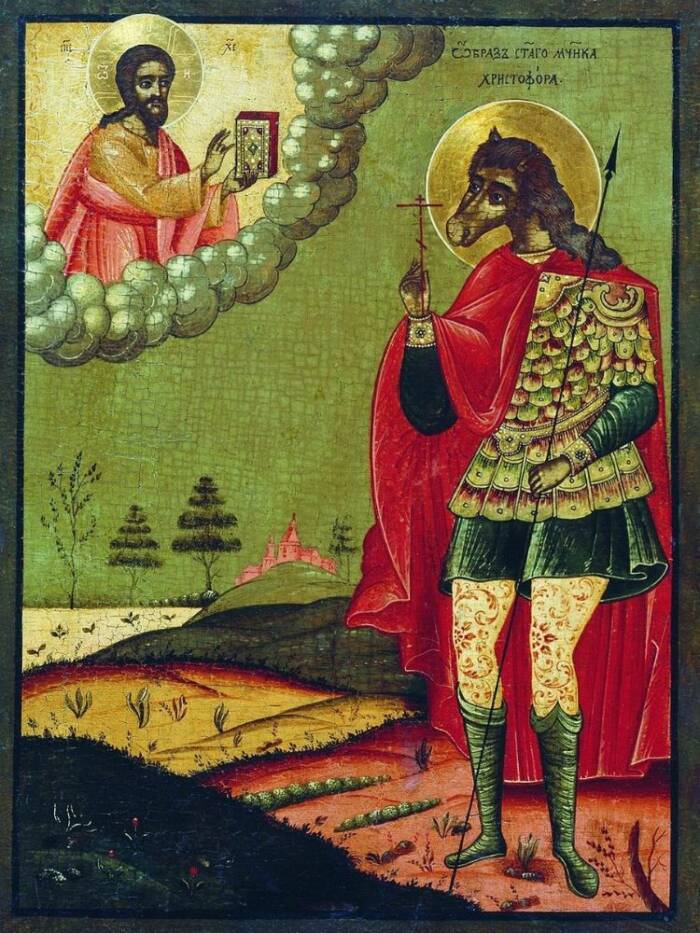
    Public DomainAn 18th-century Russian painting depicting St. Christopher with the head of a dog.If youve spent any time in an Orthodox church or down an art history rabbit hole, you may have seen an odd-looking saint, robed and haloed with the head of a dog. Thats St. Christopher, the patron of travelers.TikTok creator @thedoctorregenerated recently went viral for pushing back on the popular explanation that St. Christopher ended up with a canine head because a medieval scribe confused the Latin word Cananeus (Canaanite) with canineus (dog-man). That theory, @thedoctorregenerated argued, is too neat. If a single copying error could turn a saint into a dog head, why do similar dog-headed figures (referred to as cynocephali) appear across cultures with no connection to each other, from ancient Greece to Egypt to Peru?The Ancient Worlds Obsession With CynocephaliCynocephali, which translates literally to dog-heads in Greek, werent obscure figures. Writers from Pliny the Elder to Marco Polo filled the edges of their maps with societies of dog-headed folk. Ancient Greek historians described them as living at the far reaches of the known world, and they were even said to bark.etcu Mircea Rare/Wikimedia CommonsAn 1806 fresco in a church in Romania featuring a dog-headed St. Christopher carry Christ across the river.By the time Christianity was spreading across Europe, cynocephali were already a deeply established part of how people conceptualized those who were different from them, who lived at the very edge of civilization, beyond the boundaries of the known world.It also created the question: If dog-headed people existed, did they have human souls? If so, did that mean Christians had a duty to try to convert them?The Legend Behind St. ChristopherAccording to legend, Christopher was a warrior cynocephalus, a dog-headed man from Canaan who was taken from the far end of the world, converted to Christianity, and was martyred by a Roman emperor.His journey with Christianity began when a white-robed intermediary appeared to him and breathed into his mouth, granting him the power of speech, according to JSTOR Daily. With his conversion came a new name: Christopher, meaning Christ-carrier. In the western version of the story, he becomes a giant who helps people cross a river, one day carrying a child who grows heavier and heavier until Christopher realizes his passenger is Christ himself.Public DomainSaint Christopher Carrying the Christ Child, Hieronymus Bosch (circa 1500).In the Orthodox tradition, this dog-headed warrior saint persisted in iconography for centuries, even as the Western Catholic Church eventually settled on a more conventional image of a large, bearded man wading through water. The dog-headed figure was formally banned in Russia in the 18th century, but it never disappeared entirely. In parts of Eastern Christianity, it survives to this day.The mistranslation explanation misses all that context. In medieval Christian thought, the cynocephali represented the ultimate outsider, someone living at the absolute margins of humanity, beyond language, beyond civilization, beyond the reach of the gospel. The dog head was a statement that even the most monstrous, foreign being could be transformed by faith.Other Animal-Headed Figures In Religious HistoryThe idea of a holy figure with an animal head wasnt strange to most of the ancient world. Egypt alone was packed with them. New York Public Library/UnsplashMany Egyptian deities are depicted with animal heads, such as the falcon-headed Horus.Egyptians transferred the qualities they observed in animals directly into their gods. Anubis, the jackal-headed god of the underworld, presided over mummification and the dead. Sekhmet, with the head of a lioness, was the goddess of war. Horus, a falcon-headed god, represented the sky and divine kingship. Hindu iconography gives us Ganesha, the elephant-headed god of beginnings and patron of intellectuals and scribes who remains one of the most widely worshipped deities on Earth today. Greek mythology produced the bull-headed Minotaur, the half-horse centaur, and Pan, who is half-man and half-goat. These deities add to a long tradition that links animals and religious figures and to the complexity of St. Christophers story. @thedoctorregenerated Why was Saint Christopher depicted as a Cynocephali? #questioneverything #hiddenhistory #history #cynocephaly #historytok Beethoven Moonlight Sonata-High Sound Quality Amemiya After reading about St. Christopher and the ancient legend of the cynocephali, go inside the stories of seven Christian martyrs. Then, discover 33 of the most fascinating mythological creatures from around the world and the ancient fears they embodied.The post Why Was St. Christopher Depicted With The Head Of A Dog In Hundreds Of Historical Paintings? appeared first on All That's Interesting.
    0 Yorumlar 0 hisse senetleri 9 Views
  • WWW.MASHED.COM
    Turn Your Filet-O-Fish Into A Big Mac With One Simple Swap For 10x The Flavor
    Combine social media content and fast food drive-thrus, and what do you get? A lot of customized orders, like this McDonald's Filet-O-Fish and Big Mac mashup.
    0 Yorumlar 0 hisse senetleri 11 Views
  • 0 Yorumlar 0 hisse senetleri 11 Views
  • TECHCRUNCH.COM
    A 20-minute pitch wins Indian startup Pronto backing from Lachy Groom
    The investment comes as Pronto scales to 26,000 daily bookings and the market heads toward a potential $18 billion size.
    0 Yorumlar 0 hisse senetleri 13 Views
  • YUBNUB.NEWS
    Democrat Virginia Governor Abigail Spanberger Responds to FBI Raid on Office of Ally State Senate Pro Tem L. Louise Lucas (VIDEO)
    Democrat Virginia Governor Abigail Spanberger on Wednesday afternoon responded to the FBI raid on her friend and ally L Louise Lucas. The FBI on Wednesday raided the office of Virginias Democrat Senate
    0 Yorumlar 0 hisse senetleri 7 Views
  • YUBNUB.NEWS
    The Man Behind Californias Infamous Reedley Biolab Just Got Bad News From a Jury
    The years-long saga surrounding the infamous illegal biolab discovered in Reedley, California, took another major turn Wednesday, as a federal jury convicted Jia Bei Zhu the CCP-linked Chinese national
    0 Yorumlar 0 hisse senetleri 7 Views
  • YUBNUB.NEWS
    MO Primary Explodes: Stigall PAC Torches Nathan Willetts Radical Woke Agenda in Brutal New Ad
    A pro-Chris Stigall Super PAC has launched a hard-hitting new TV ad questioning the conservative bona fides of Kansas City Councilman Nathan Willett in Missouris 6th Congressional District Republican
    0 Yorumlar 0 hisse senetleri 7 Views