0 Reacties
0 aandelen
14 Views
Bedrijvengids
Elevate your Sngine platform to new levels with plugins from YubNub Digital Media!
-
Please log in to like, share and comment!
-
YUBNUB.NEWSTwo-Thirds of People Do Not Want UK Assied Suicide Bill Brought BackNew polling from More in Common has revealed that fewer than one in three (29%) of the general public think that a new assisted suicide bill should be introduced as soon as possible in the same form as0 Reacties 0 aandelen 14 Views -
WWW.LIVESCIENCE.COMThe night sky could get three times brighter as new satellites launch all but ruining the Vera C. Rubin Observatory's survey of the universeExtremely bright satellites and megaconstellations could make the night sky up to three times brighter than it is now, a new study warns. This would seriously hinder astronomical imaging devices, like the enormous camera at the Vera C. Rubin Observatory.0 Reacties 0 aandelen 17 Views -
WWW.LIVESCIENCE.COMThe brain's memory center doesn't start as a blank slate, study suggestsEarly in life, neural networks in the brain's memory center are highly connected, and they are only later refined into precise systems, a mouse study finds.0 Reacties 0 aandelen 17 Views -
WWW.IFLSCIENCE.COMWatch A Fish Swim Backwards In Rare Footage Offering A Glimpse Into Life 260 Meters Down On The Arctic SeafloorA passive camera and red lights were used to minimize disturbance to the setup and to avoid attracting the bigger ocean creatures.0 Reacties 0 aandelen 17 Views -
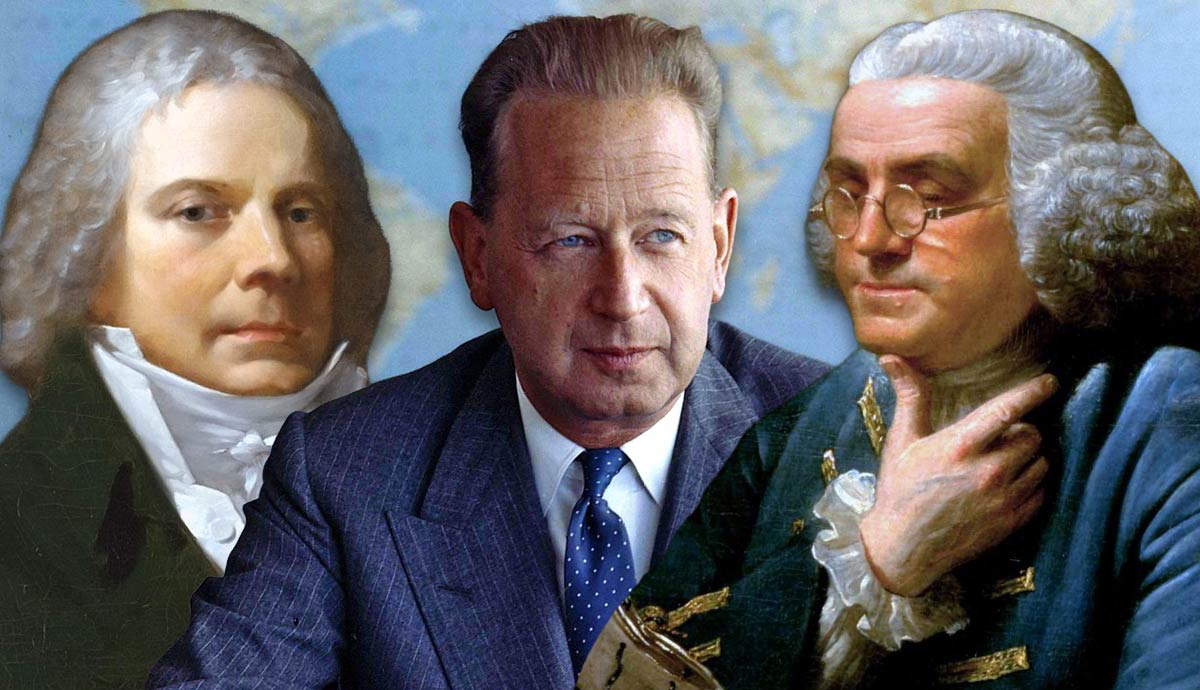
WWW.THECOLLECTOR.COM10 Most Skilled Diplomats in History Ranked by AchievementGenerals who win wars and battles do not necessarily win the peace. After the parades and awards ceremonies, it is up to diplomats to negotiate a lasting and advantageous peace. Diplomacy is the art of letting someone else have your way, and in the high-stakes theater of international relations, these ten individuals were the undisputed masters of the craft. This is a ranking of some of historys greatest diplomats based on the magnitude and endurance of their achievements.DiplomatKey Achievements and LegacyKlemens von MetternichArchitect of the Concert of Europe and a pioneer of the theory of realpolitik.Charles-Maurice de TalleyrandSecured generous peace terms for France at the Congress of Vienna and negotiated Belgian independence.Benjamin FranklinMobilized French support for the American Revolution and obtained recognition of independence with ample territorial boundaries.Cardinal de RichelieuTransformed the Thirty Years War into a struggle to check Habsburg dominance and established French hegemony.Dag HammarskjldPioneered UN peacekeeping and successfully brokered an end to the Suez Crisis.Henry KissingerEncouraged Dtente with the USSR, normalized relations with China, and brokered a ceasefire after the Yom Kippur War.Zhou EnlaiNegotiated an end to the French Indochina War and ended Chinas isolation by improving ties with the U.S..Alexandra KollontaiThe first accredited female ambassador; she secured recognition for the USSR and ended the Finnish Winter War.Richard HolbrookeArranged the Dayton Accords to end the Bosnian War and served as a mediator for Kosovo.Lester PearsonA major proponent of UNEF to resolve the Suez Crisis and a critical contributor to the NATO charter.1. Klemens von MetternichA depiction of Metternichs 1813 meeting with Napoleon in Dresden, 1879. Source: Wikimedia CommonsIt is hard to think of a more well-known European diplomat than Klemens von Metternich. He was the architect of the Concert of Europe, the geopolitical order that governed Europe for much of the 19th century. This order, which came out of Napoleons defeat and the Congress of Vienna, was in some respects a precursor of the European Union. Metternich, by helping create this system, established himself as one of the most powerful men in the world at the time.From 1809 to 1814, he served as the foreign minister for the Austrian Empire. Later on, he became the Chancellor and a major figure in post-Napoleonic Europe. Although he gained influence by advocating a policy of accommodation with Napoleon, Metternich was one of the primary architects of his defeat.As an aristocrat from a German princely family, Metternich was disgusted by the French Revolution and considered the liberal and nationalist movements of the early 19th century as a continuation of the revolutionary impulses that tore up the fabric of Europe and spilled much blood.Metternich believed that maintaining a balance of power would preserve European peace. However, he was forced to leave Vienna during the Revolution of 1848 as he watched the system he helped build come under attack. Nevertheless, scores of future diplomats (including some listed below) came to see him as a role model and idolized his theory of realpolitik.2. Charles-Maurice de TalleyrandA portrait of Talleyrand by Pierre-Paul Prudhon, 1817. Source: Metropolitan Museum of Art, New YorkMetternich had a rival for the title of Europes most influential diplomat at the time: Charles-Maurice de Talleyrand. He was the ultimate political survivor, serving as Frances chief diplomat across seven different regimes, including the French Revolution, the Napoleonic Empire, and the Bourbon Restoration. While he initially welcomed the rise of Napoleon, he came to believe that the Bonapartes were destroying France and plotted his downfall.When the victorious powers of the Sixth Coalition began negotiating the future of post-revolutionary France at the Congress of Vienna, Talleyrand took advantage of the divisions within the Coalition to secure peace terms that were fairly generous to France. For instance, France kept almost all of its pre-1792 borders intact, although the return of Napoleon during the Hundred Days in 1815 ensured that France faced more punitive measures.While serving the Bourbon monarchy, he negotiated the independence of Belgium in 1830, a deal that ensured France had a friendly buffer bordering the Netherlands. He later served as Ambassador to Britain and helped to transform the relationship between France and Britain from rivalry to cooperation.While Talleyrand was criticized for corruption and his ability to switch sides repeatedly, Talleyrand himself argued that he remained true to his constitutional liberal principles and many diplomats were impressed by his adaptability. His efforts after Waterloo were crucial to Frances survival as a European power.3. Benjamin FranklinFranklin sits with his books and papers and a bust of Isaac Newton. Painting by David Martin, 1767. White House Historical Association.Without the support of France, the American Revolution would never have succeeded. That support largely came about through the tireless efforts of Benjamin Franklin. A prominent scientist and writer, Franklin had signed all four key documents of the Revolution.In 1776, he was dispatched by the Continental Congress to Paris to get French assistance. Through relentless diplomacy and marketing the American cause like a salesman, he was able to secure a treaty between the Americans and the French, ensuring that the revolutionaries had a chance. Frances formal entry into the war in early 1778 obliged the British authorities to prioritize protecting its interests in Europe.By the 1780s, the British were ready to sue for peace and Franklin headed the negotiating team for the Americans. Not only was he able to achieve recognition of American independence, he obtained territorial boundaries that gave the 13 colonies ample room for expansion. Franklin amazed everyone he came into contact with: other Americans, French servants of King Louis XVI, and his British opponents. American diplomacy owed its origins to his relentless work in mobilizing support for the revolution and he earned the sobriquet The First American.4. Cardinal de RichelieuA portrait of the Cardinal in his later years. Painting by Philippe de Champaigne, 1642. Source: Museum of Fine Arts of StrasbourgBefore Talleyrand, the architect of French diplomacy was a stern-faced cardinal from Paris. Cardinal de Richelieu, born Armand-Jean du Plessis, was the Chief Minister to King Louis XIII from 1624 to 1642. He was a firm believer in the power of the French state to break its enemies, whether domestic or foreign. At the same time, he could be a pragmatist, aligning France with Protestant kingdoms at times to weaken the Habsburg kingdoms of Spain and Austria.While serving as minister, he transformed the Thirty Years War into a geopolitical struggle to check Habsburg dominance. Initially, he advocated for France to stay out of the war, sending subsidies to allies like Gustavus Adolphus of Sweden. When Sweden began facing difficulties, France entered the war at Richelieus urging, marching to seize crucial terrain in Spanish-controlled Italy.Despite early setbacks and domestic unrest over high taxes, his persistent pressure exhausted the Habsburgs. French victory over Spain at the battle of Rocroi in 1643 signaled the rise of France as the hegemonic power in Europe during the reign of Louis XIV, although the war did not end until 1659. Richelieu became synonymous with power and conservative nationalism, presaging the type of diplomacy and force used by the likes of Talleyrand and Metternich.5. Dag HammarskjldA photo of Secretary-General Hammerskjld before his last flight to the Congo. Source: History.comIn recent years, the United Nations has earned an unfortunate reputation as slow, inefficient, and unable to contend with the proliferation of crises around the world. Back in the 1950s, the organization had a similar reputation. However, its Secretary-General from 1953 to 1961, Dag Hammerskjld, proved to be remarkably effective in getting the UN involved in extensive peacemaking efforts. A Swedish economist and delegate for the Marshall Plan, Hammerskjld pioneered the concept of UN peacekeeping, in which contingents of UN member militaries ensured that the terms of peace treaties were enforced.A talented, forceful diplomat, he oversaw the creation of UNEF to broker an end to the Suez Crisis. After the Korean War ended, he personally secured the release of several American prisoners of war from China. His most successful action as UNSG was the creation of ONUC, the UN peacekeeping force that helped stop a separatist revolt in the Democratic Republic of the Congo. Tragically, he did not see the end of the crisis because his plane crashed (or was shot down) in 1961 while he was flying to Rhodesia. The UN benefited greatly from his talent for diplomacy and willingness to enforce peace.6. Henry KissingerHenry Kissinger meeting with Le Duc Tho, 1972. Source: History NetHenry Kissinger, often considered the American equivalent of Cardinal de Richelieu and Metternich, was both the US National Security Advisor and Secretary of State for the Nixon and Ford administrations. Kissinger was a German Jewish refugee to the United States who returned to Germany during WWII as an American GI. Subsequently, he became a professor at Harvard University, an author of a book on Americas nuclear doctrine, and a consultant for both major political parties.Kissinger saw America as an arbiter of power and rejected any form of idealism, making him unpopular in liberal circles. He helped encourage a period of de-escalation with the Soviet Union known as Dtente, and was also instrumental in laying the ground for normalizing Sino-American relations. In 1973, he was awarded the Nobel Peace Prize for his negotiations with North Vietnamese negotiator Le Duc Tho (notwithstanding that the war did not end with his negotiations).However, his greatest foreign policy success, which defined his approach to peacemaking, was brokering a ceasefire between Israel and the Arab alliance following the Yom Kippur War. By flying back and forth between Jerusalem and the Arab capitals, he was able to get a disengagement of forces before the war could expand and possibly involve the USSR. This negotiation and his visit to China were the accomplishments that came to define his legacy as a diplomat.7. Zhou EnlaiZhou Enlai meeting with Kim Il-Sung in 1961. Source: Wikimedia CommonsChinas internal chaos after the Communist victory in the Civil War was devastating for its people and could have led to the states complete collapse. However, China managed to project a public face that averted much of the criticism it could have received from the international community. This was largely due to the efforts of Zhou Enlai, who served as Chinas premier from 1949 until 1976 and concurrently as foreign minister between 1949 and 1958.Although a committed Communist revolutionary, Zhou was a consummate diplomat known for being respectful and polite even to Chinas greatest adversaries. He helped negotiate an end to the French Indochina War by convincing the Vietnamese communists to support the partition of the country. Additionally, he was a major player behind the 1955 Bandung Conference, which created the Non-Aligned Movement of nations.In the 1970s, Zhou realized that China faced significant challenges. Its ties with the USSR were being strained and it still faced hostility from the US and India. Angering three major powers all at once was not a suitable position. Therefore, Zhou worked privately with Henry Kissinger and President Nixon to improve the relationship between the US and China. This led to a transformation of Chinas role in the world and ended its isolation. He continues to be considered one of Chinas greatest diplomats and experts on international affairs.8. Alexandra KollontaiAn early photo of Ambassador Alexandra Kollontai. Source: Russia Beyond the HeadlinesWhile many women have played influential roles at court and in government of centuries of human history, it was only in 1922 that the first woman became an accredited ambassador. Alexandra Kollontai was born in St. Petersburg, Russia, in 1872 and became a member of the Russian Social Democratic Labor Party before becoming a Bolshevik aligned with Lenin.Kollantai had a difficult time in her first job as the Peoples Commissar of Social Welfare of the Russian SFSR. In 1924, she was assigned to her first foreign posting as minister plenipotentiary to Norway. After that, she was posted to Mexico, Sweden, and Norway again. From 1930 to 1945, she served as the ambassador to Sweden and played a major role in the Nordic region during WWII.Kollantais main accomplishments were securing recognition of the USSR from Norway in the 1920s and ending the Finnish Winter War in 1940. She was twice nominated for the Nobel Peace Prize, although she never received it. She earned praise from diplomats around the world for her willingness to work pragmatically and help the Allies win World War II.9. Richard HolbrookeRichard Holbrookes official State Department photo as US Special Representative, 2010. Source: US State DepartmentEven though he never served as Secretary of State, Richard Holbrooke was probably one of Americas most famous diplomats due to his fifty-year career in government. Born into a Jewish immigrant family to New York, Holbrooke entered the foreign service when President Kennedy encouraged Americans to join the government in 1962. He started out working on East Asia matters, helping evacuate refugees (known as the boat people) to the United States. After a hiatus on Wall Street, he returned to the State Department as US ambassador to Germany and then Assistant Secretary of State for European and Eurasian Affairs until 1996.In this capacity, he arranged for the signing of the Dayton Accords, which ended the Bosnia war and continues to serve as the basis of Bosnias constitutional framework to this day. After leaving the government again, he agreed to continue mediating negotiations between Serbia and the Kosovo rebels at the end of the Clinton administration. His name became synonymous with Balkan peace treaties and it earned him a reputation as one of Americas most capable diplomats. After a brief stint as the US ambassador to the UN, his final role as a public servant was as Special Representative for Afghanistan and Pakistan during the Obama administration.10. Lester PearsonPortrait of Lester Pearson by Duncan Cameron, 1957. Source: Library and Archives of CanadaThe last diplomat on this list is one who is not that well-known, notwithstanding his accomplishments. Lester Pearson served as both Foreign Minister and Prime Minister of Canada in the mid-20th century. He is regarded as Canadas most effective diplomat for his work in helping build multilateral institutions and arranging for a ceasefire between the Anglo-French-Israeli coalition and Egypt following the Suez Crisis in 1956. Pearson worked closely with Secretary-General Hammerskjld and was a major proponent of the creation of UNEF to enforce the ceasefire, which earned him a Nobel Prize.Prior to the Suez Crisis, he played a critical role in the establishment of NATOs charter in 1949. His idea that countries in the alliance should work together beyond the military realm became Article II in the Charter (also known as the Canada Article). As President of the UN General Assembly, he helped negotiate the Armistice to end the Korean War. After his premiership ended in 1969, he led a World Bank commission that produced Partners in Development, a landmark report that established the target for wealthy nations to provide 0.7% of their GNP in foreign aid. His accomplishments remain the gold standard for Canadian diplomacy to this day.The Impact of DiplomacyCongress of Vienna by Jean-Baptiste Isabey, 1819. Source: Deutsches Historisches MuseumEach of these diplomats varied in their attitudes towards negotiations and their ideals. Some, like Kollontai and Zhou, were revolutionaries seeking to incorporate Marxism into diplomatic practice. Others, including Kissinger and Richelieu, believed that their role was to balance power around the world and shed any notions of idealism in policymaking. What every one of these people had in common was the belief in the importance of promoting their national interests in negotiations and the use of both hard and soft power to accomplish their objectives.Diplomats are often the most public face of a country and it is they who are often the most well-remembered. In the 1970s, Henry Kissinger was considered one of the most powerful men in the world, almost as powerful as his boss, President Nixon. He balanced that image of power with a talent for good public relations and a friendly demeanor with the press. Similarly, Talleyrand sought to show that he was willing to represent France regardless of who was in power. These diplomats balanced a willingness to use power with a measure of gregariousness and flair to promote their public persona. That is what made them icons of power and diplomacy.0 Reacties 0 aandelen 16 Views -
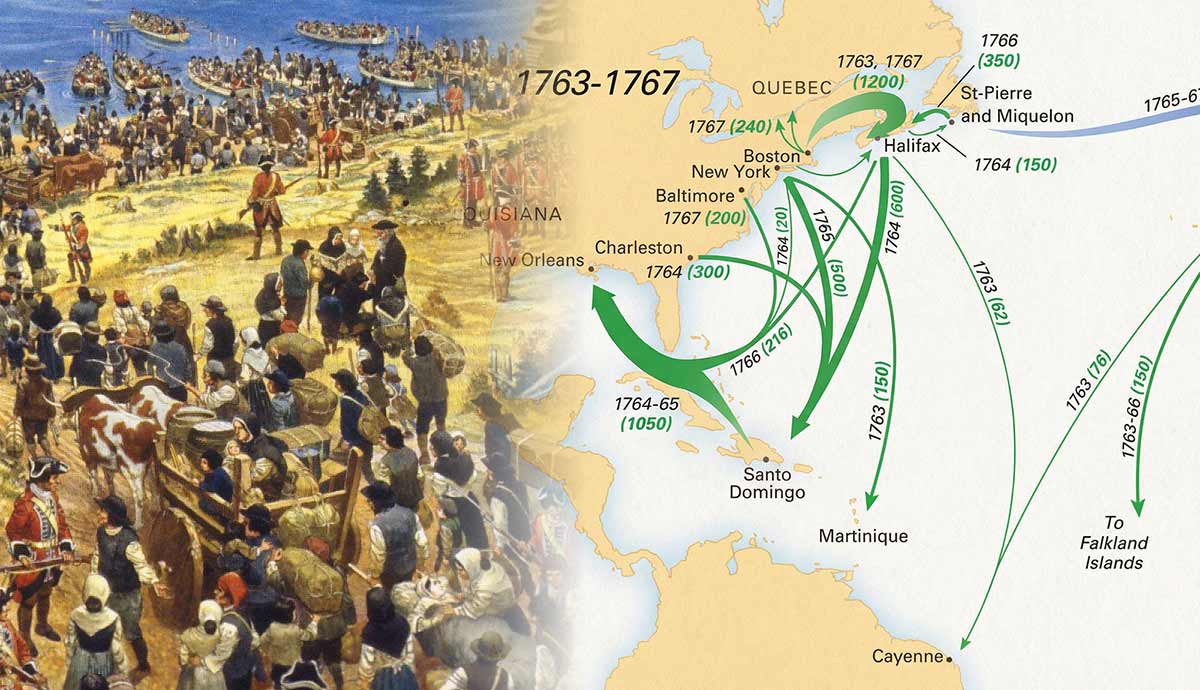
WWW.THECOLLECTOR.COMThe Acadian Expulsion of 1755 and the Deportation That Changed North AmericaDuring the French and Indian War, the Acadian people of the northeastern Canadian provinces suffered a brutal mass displacement due to their support of the French war effort. It became one of the most infamous events of colonial Canadian history.Who Were the Acadians Before 1755?A painting of Acadians working on a farm in Nova Scotia. Source: Landscape of Grand PrIn 1604, the first French settlement in Canada was founded on le Sainte-Croix. The settlement was soon moved to Port Royal and became a center for French colonialism in the region. Many settlers from the western regions of France arrived in the area in a quest to improve their livelihoods.By the mid-17th century, the settlers had developed an identity separate from other French colonies like Quebec. They were known for their independent-mindedness, egalitarian social structure, and close relations with the indigenous Mikmaq people, which often included intermarriage. From then on, they became known as the Acadians.In 1713, the British gained control of Nova Scotia (Acadia) from the French in the Treaty of Utrecht that ended the War of the Spanish Succession. The Acadians were unwilling to become British subjects, and many refused to sign any oaths of allegiance to the British Crown.In 1730, leaders of the Acadian community convinced the British government to allow them neutrality. This led to a period known as the Acadian Golden Age. Their property and religious rights were protected and thousands more Frenchmen arrived to bolster their numbers. However, trouble brewed on the horizon for the Acadians as the British sought to consolidate their hold on North America.British Suspicions of the Acadians in 1755British General Charles Lawrence, the governor of Nova Scotia at the outbreak of hostilities and an opponent of the Acadians, 1761. Source: Canadian Museum of Immigration at Pier 21While the British authorities in London initially agreed to leave the Acadians alone, some colonial officials became more paranoid about the Acadian demands for neutrality. The local militia was restricted to citizens who signed an oath of allegiance to the British, which exempted most Acadians. In 1749, the British founded the new settlement of Halifax as a center for British immigrants to the Maritimes. The Acadians were afraid that they would soon be outnumbered by the British in their home region.An additional point of friction was the close relations between the Mikmaq and Acadian communities. After several Mikmaq attacks on English settlements in the region, Governor Edward Cornwallis placed bounties on Mikmaq scalps. Many Acadians feared that the English would implement a similar policy towards them. Some Acadians even joined the Mikmaq to fight the British and covertly received arms from French garrisons in Cape Breton and Louisbourg.In 1750, Father Jean-Louis Le Loutre led an exodus of Acadian families to French-controlled territories and announced a period of resistance. While most Acadians did not participate in fighting against the British, a perception formed amongst the British authorities that the Acadians were preparing for a general insurrection.Fort Beausjour and the Oath CrisisAn aerial photo of Fort Beausjour, 2020. The Chronicle Herald, Nova ScotiaIn May 1754, British and American colonial troops clashed with French forces and their Indigenous allies in Pennsylvania. This small skirmish paved the way for a global conflict that led to the deaths of over a million people and the destruction of French Canada. For the Acadians, it was a disaster.Before 1755, the British and French had built fortifications across from each other on the Chignecto isthmus. As part of a multi-pronged assault against French garrisons in North America, the British launched an assault on Forts Beausjour and Gaspereau in June 1755. British forces, consisting of British regulars and colonial settler militiamen, managed to seize both forts in a few weeks. Among the French garrison of Beausjour, they found 270 Acadian militiamen.This revelation infuriated the British colonial authorities. For men such as Governor General Charles Lawrence and Massachusetts Governor William Shirley, the presence of Acadians amongst the French garrisons was proof that the Acadians of Nova Scotia were violating their promised neutrality.Lawrence summoned several Acadian notables to Halifax later that month and insisted that the entire Acadian community take an unqualified oath of allegiance. This meant that they had to agree to fight against France. On July 28, the Acadian delegation collectively refused to sign the oath, insisting that they were French Neutrals. Subsequently, Governor Lawrence and the Nova Scotia Council formally authorized the forced removal of every Acadian who did not sign an oath of allegiance.How the Deportations UnfoldedThe Expulsion of the Acadians by Lewis Parker, 1980s. Source: Upper Canada HistoryIn August and September, British troops began summoning Acadian men and boys ostensibly for negotiations. As these meetings took place, British officers informed them that their lands were now forfeit and the Acadians would have to leave British-controlled territory. While the men were held prisoner, they were joined by their families, whose homes were burned by the British.Over the course of the war, hundreds of homes and farmsteads were torched by the British and American militiamen. This was done for two main reasons: to encourage the Acadians to agree to deportation and to deprive any of the remaining Acadian refugees of shelter and food.Throughout the fall, the British forced around 6,0007,000 Acadians to leave Nova Scotia by the British. Ships took them to a variety of locations: the Thirteen Colonies, mainland France, Louisiana, and other locations. The deportations were not finished that year, however.In 1758, British/American forces captured the port of Louisbourg and took control of le Saint-Jean (Prince Edward Island) and le Royale (Cape Breton). Here, they found thousands more Acadians. Around 3,500 more Acadians were deported on ships directly to France, and several hundred perished during the crossing.Until the end of the war in 1763, the British conducted operations into the wilderness in the Maritimes to clear out any remaining Acadians. By 1764, 11,500 Acadians out of the prewar population of 14,100 had been deported from the Maritimes. Nearly 5,000 died of disease, shipwreck, or in battle.Acadian Resistance to the DeportationsAn illustration of Acadian militia leader Joseph Godin by Knight479, 2022. Source: Wikimedia CommonsThe British faced stiff resistance from Acadian militiamen who refused to be deported. After the fall of Fort Beausjour, Joseph Broussard dit Beausoleil, an Acadian who was in the garrison, escaped to the woods and led a party of Acadian partisans to fight the British. His men were supported by French troops in Louisbourg and Mikmaq natives, who provided them with munitions and supplies. They even constructed a small flotilla in the Bay of Fundy to combat British naval activity in the area. Broussards men continued fighting until 1761, when the British finally starved his band into surrendering. He went into exile in Louisiana.In the Miramichi, Restigouche, and Saint John River valleys, Acadian refugees organized resistance activity against the British. Others joined the French regular army and navy garrisons in Canada. Major Joseph Godin, an Acadian officer of the French regular army, led one of the largest Acadian militia units, staging ambushes against British/American patrols in the Saint John River Valley. He was captured and his family massacred, but he refused to declare allegiance to the British Crown. Subsequently, he was sent to several different prisons around the British Empire before being allowed to return to France.The British continued brutally cracking down on any Acadians hiding in the woods. Roberts Rangers, a British army light infantry unit recruited from the Thirteen Colonies, proved to be the most ruthless in hunting down the Acadians. They often burned any French or Mikmaq villages they found to deprive the Acadians of shelter. Despite the bravery of the Acadian guerrillas, they were unable to stop the deportations or the end of French rule in Canada.Acadians After the Wars EndMap showing the deportation of Acadians. Source: University of MaineBy the conclusion of the Treaty of Paris of 1763, the Acadian presence in the Maritimes was almost eradicated. Some remained in hiding in the woods or lived with other Frenchmen in Quebec or Montreal. However, the remainder were sent elsewhere around the world, including places such as mainland France, Louisiana, or the British colonies on the Eastern Seaboard or the Caribbean.In 1764, the British government allowed small numbers of Acadians to return to Nova Scotia or the other Maritime provinces on the grounds that they swear allegiance to the British Crown. A number of them agreed to do so, only to find that new settlers had taken their homes and fields. Nonetheless, the Acadian returnees made a painstaking effort to rebuild their lives.Other Acadians migrated to other parts of the world. For instance, a few thousand returned to France to live there full-time. In 1785, the Spanish government agreed to allow 1,600 Acadians to move to Louisiana, where there was already a Francophone community. Over time, the community became known as the Cajun community and became a major part of society in Louisiana.To this day, there are close ties between Acadians living in Canada and the Cajun community in Louisiana. The Acadians were able to rebuild their society in Canada and independent Canada granted them full rights and equality. In 2003, Queen Elizabeth II formally acknowledged the misfortunes suffered by the Acadian people in her capacity as Canadas head of state. Other native tribes in Canada also commemorate the deportations due to their longstanding ties with the Acadians. Their deportation was one of the most infamous atrocities of the Seven Years War.0 Reacties 0 aandelen 16 Views -
ALLTHATSINTERESTING.COMWhat Is The Motherboard Earth Theory?@filspixel TikTok/vipman4 Adobe StockTikToker @filspixel details the Motherboard Earth theory, which posits that our planet is a giant computer.As artificial intelligence creeps into more and more aspects of our lives, some are looking at ancient structures and wondering if weve done all this before. Theres a new theory that has the internet talking, and it involves rethinking the purpose of both ancient structures and the Earth itself. Its called the Motherboard Earth theory.A common question when looking at ancient structures is, simply put, why? Why were they made to look that way and why were they made in the first place?While its easy to figure out the purpose behind some ancient buildings, others continue to baffle archaeologists. For example, was this Roman structure from the 2nd century C.E. a religious site or simply the beachside villa of an aristocrat? And what was the true purpose of Stonehenge?Some say the Motherboard Earth theory could offer some answers.The Motherboard Earth Theory: Are We Living On A Big Computer?Naturally, questions like those above can easily attract conspiracy theorists.TikTok user Filip Zieba, for instance, recently explained the Motherboard Earth theory in a video with more than 899,000 views. The theory posits that our planet is, in a sense, a giant computer.We are living on a giant motherboard, and ancient structures were built as circuit boards to harness the Earths natural energy to power civilization, Zieba summarizes.Evidence for this claim, Zieba says, includes the large variety of ways in which human creations resemble electrical components, or the ways in which our technology interacts with the natural forces and characteristics of our planet itself.For his first example, Zieba shows a picture of a Schumann resonator. This is a device that generates or interacts with low-frequency electromagnetic waves around 7.83 Hz, often called the heartbeat of the Earth.Although this was first measured in the early 1960s, Zieba notes that a resonator used to produce or interact with this signal shares the exact same shape as the floor of the Chartres Cathedral in France, which was completed in the 13th century.Further evidence for this theory, he says, comes from ancient structures, which often resemble modern components on printed circuit boards (PCBs).Some adherents to this belief, Zieba continues, say that these structures could be signs of ancient development of superhuman or alien technology. Alternatively, it could be evidence of a past version of humanity that mastered artificial intelligence, became enslaved to it and then was wiped out alongside the AI in some catastrophic event. The structures themselves would have served as components for this AI.To conclude, Zieba states that this is mostly just an interesting internet rabbit hole, even if some individual details are compelling.How The Chartres Cathedral Factors Into The Motherboard Earth TheoryAs with any theory involving aliens or super-intelligence, there are a few key points that make the whole theory suspect.For example, in his video, Zieba shows a Schumann resonator circuit board and claims that it identically and mysteriously matches the floor pattern at the Chartres Cathedral.Mick Haupt/UnsplashThe Chartres Cathedral was designed to represent a pilgrimage.However, this is actually an intentional Easter egg. If one looks closely at the circuit boards that he features in his video, they are all labeled as having a Chartres pattern, referencing the cathedral.Its not a requirement that the resonator bear this shape, only a choice of the creator. There are plenty of other Schumann resonance emitters on the market that instead use a simple spiral.But why does the Chartres Cathedral floor look like that in the first place? According to the cathedrals website, it is intended to represent a pilgrimage. While walking the path, guests can meditate on their own existence and, for Christians, how the trials and tribulations of their lives led them to Christ. This is a pretty far cry from being a component in a battery or circuit board.Are Ancient Buildings Similar To PCBs?When looking at ancient structures, its easy to see the similarities to PCBs, as the TikToker points out in his video.This is simply a coincidence. One way to disprove this theory is by noting the selection bias. For example, there are countless ancient cities that look nothing like circuit boards and plenty of modern cities that do appear circuit-like, despite not being built with any influence from aliens or artificial intelligence.The city of Erbil in Iraqi Kurdistan, for example, has been continuously populated for more than 7,000 years. From above, the city looks nothing like a circuit board, with an oblong circular shape divided into uneven fractions.In contrast, Chinas Xiongan New Area, which only broke ground in 2017, has many of the hard angles and straight lines associated with PCBs.To be clear, architects for the latter project have not claimed that they are attempting to build an alien battery. Instead, this and the other PCB-like cities are simply examples of pareidolia, which is when our pattern-loving brains find familiar shapes in unfamiliar objects for example, seeing a face in the clouds or seeing a circuit board in a city built generations before humans harnessed electricity.Further complicating matters is that the PCB wasnt even invented until the early 1900s. Many early PCBs looked nothing like ancient cities, with significantly more curved lines and rough edges than the angular structures of ancient temples and fortresses.The Meaning Behind Shapes And Numbers Used In Ancient ArchitectureThis isnt to say that there were no ancient structures with deeper meanings or purposes.For example, the Maya city of Chichn Itz is thought to have been founded as early as 400 C.E. While none of its structures were designed to act as a circuit board or battery, there was certainly careful thought put into their construction.Alexiz Mora/UnsplashThe Maya likely intentionally incorporated calendar and seasonal knowledge into the architecture of Chichn Itz.For example, the number of stairs on the Temple of Kukulcan added up to 365 the number of days in the Maya calendar. Not only that, but the design of the temple gave the illusion that, over the course of the day, the shadow of the serpent deity Kukulcan was slithering down the stairs. @filspixel Day 743 of Ok I usually like your theories but you lost me with this one coded (this one might be real though idk) #interesting #theory #motherboard #pyramids #mindblown Disclaimer: Just a speculative theory, entertainment purposes only, satire, fictional story, etc. original sound Filip Zieba All Thats Interesting reached out to Zieba via email.There have also been countless religious monuments built throughout history with specific shapes signifying a connection to a higher power: not electrical, but spiritual. In other words, the mystery may not actually be whether ancient people were secretly building computers but instead, how and why they were building things that are so impressive without them.The post What Is The Motherboard Earth Theory? appeared first on All That's Interesting.0 Reacties 0 aandelen 16 Views -
ALLTHATSINTERESTING.COMThe Real Story Of Mormon Underwear, The Sacred Temple Garments Worn Day And Night By Members Of The LDS ChurchAll religions have symbols, relics, rites, and garments that are sacred to their followers. But one religious garment often gets more attention for better and for worse than others: the holy Mormon underwear of the Church of Latter-Day Saints.Wikimedia CommonsMormon garments as seen on a male and female model.But what is Mormon underwear? How does someone start wearing it, and how often do they put it on? Are there differences between the underwear of men and women?Though the idea of Mormon garments has elicited both curiosity and mockery, many Mormons say that its no big deal. They compare it to other religious items like the Jewish yarmulke or a nuns habit.This is everything you need to know about Mormon temple clothes, including why you shouldnt call it magic underwear.What Is Mormon Underwear?Mormon underwear, officially called a temple garment or a garment of the holy priesthood, is worn by adult Church members after their temple endowment, a ritual that usually coincides with the beginning of missionary service or marriage.After participating in this ceremony, adults are expected to wear the underwear at all times (with exceptions, such as during sports). Generally made of white material, Mormon temple clothes look something like a T-shirt and shorts, but theyre adorned with sacred Mormon symbols.The Church of Jesus Christ of Latter-day SaintsAn example of male temple garments.In the original garments, these symbols were cut into the cloth, but today theyre embroidered or screen-printed on. The marks consist of a V shape on the left breast that is known as the mark of the compass and reminds wearers of an undeviating course leading to eternal life; an L shape on the right breast representing the justice and fairness of God; a line on the navel representing strength; and a mark on the knee symbolizing every knee shall bow and every tongue confess that Jesus is the Christ.Unlike a regular T-shirt, these undergarments cant be found at Gap. Mormons must buy them at Church-owned stores or on the official LDS website. However, Mormons serving in the military are permitted to use regulation T-shirts as garments and send them to the Church to have the holy symbols added.This garment, worn day and night, serves three important purposes, explains the LDS Church website. It is a reminder of the sacred covenants made with the Lord in His holy house, a protective covering for the body, and a symbol of the modesty of dress and living that should characterize the lives of all the humble followers of Christ.The color white, the Church explains, is a symbol of purity. And the underwear itself is largely the same for everyone men and women, the rich and the poor offering commonality and equality among believers.The Church of Jesus Christ of Latter-day SaintsAn example of female temple garments.Since members arent supposed to flaunt their underwear in public they arent even supposed to hang them up outside to dry and the garments also encourage conservative dress. Men and women must wear clothes that cover their shoulders and upper legs to conceal the white underwear beneath.So, how did Mormon underwear become such a sacred tradition in the LDS community in the first place?The History Of The Temple GarmentAccording to the Church of Latter-Day Saints, the tradition of Mormon temple clothes stretches back to the Biblical beginning. They point out that Genesis says, Unto Adam also and to his wife did the Lord God make coats of skins, and clothed them.But the tradition of wearing temple garments is more recent. LDS Church founder Joseph Smith instituted it in the 1840s, shortly after Mormonism began.Because the original design was revealed from Heaven, it didnt change for a long time. The very first Mormon underwear consisted of a one-piece garment that extended from the neck to the wrists and ankles. It had a collar and an open crotch, and it was knotted together.Wikimedia CommonsAn illustration of Mormon underwear as it appeared in 1879.The Lord has given unto us garments of the holy priesthood And yet there are those of us who mutilate them, in order that we may follow the foolish, vain and (permit me to say) indecent practices of the world, Joseph F. Smith, the founders nephew, thundered in response to pressure to modify the temple garments.He added: They should hold these things that God has given unto them sacred, unchanged and unaltered from the very pattern in which God gave them. Let us have the moral courage to stand against the opinions of fashion, and especially where fashion compels us to break a covenant and so commit a grievous sin.Yet Mormon underwear did change after Smiths death in 1918. Starting in the 1920s, a number of adjustments were made to the traditional temple garments, including shortening the sleeves and pants. The collars and the knots were removed, as well. Today, Mormon temple clothes are a pillar of faith for many people. But in our social media age, the tradition has also undergone new concerns, questions, and ridicule.A Sacred Tradition In The 21st CenturyToday, Mormon underwear holds a curious place in American society. Because its so secret and kept unseen many people are curious about the tradition. When Mormon politician Mitt Romney ran for president in 2012, for example, a photo that appeared to show his temple garment under his shirt spread like wildfire. Commenters online retweeted the photo, asked questions, and mocked the candidate. People even called it Mormon magic underwear, a term that especially rankles Church officials. Sipa USA / Alamy Stock PhotoThe faint trace of Mitt Romneys undershirt sparked questions about Mormon underwear in 2012.These words are not only inaccurate but also offensive to members of The Church of Jesus Christ of Latter-day Saints, the Church said in 2014.Though Mormons are taught that the undergarments are the Armor of God and many myths exist about temple garments saving people from things like car crashes the Church insists that theres no such thing as Mormon magic underwear, saying, Theres nothing magical or mystical about them. Church members ask for the same degree of respect and sensitivity that would be afforded to any other faith by people of goodwill, the Church said, requesting that people stop using the pejorative framing of Mormon magic underwear when referring to their sacred temple garments. That said, some Mormons, especially women, think that there needs to be more public discourse about temple garments. My vagina has to breathe, Church member Sasha Piton wrote to the Churchs 96-year-old president, Russell M. Nelson, in 2021, according to The New York Times.She suggested designing new Mormon underwear that was a buttery soft, seamless, thick waistband thats not cutting into my spleen, breathable fabric.Another woman told The New York Times, People are scared to be brutally honest, to say: This isnt working for me. It isnt bringing me closer to Christ, its giving me U.T.I.s.' She noted that the garments are a constant topic of conversation in private Facebook groups for Mormon women. The fight to modernize Mormon undergarments continues, but it has brought a previously private matter into a very public spotlight.After this look at the Mormon underwear known as the temple garment, read up on the often dark history of Mormonism. Then, discover the story of Olive Oatman, the Mormon girl whose family was slaughtered in Arizona, leaving her to be raised by the Mohave.The post The Real Story Of Mormon Underwear, The Sacred Temple Garments Worn Day And Night By Members Of The LDS Church appeared first on All That's Interesting.0 Reacties 0 aandelen 16 Views -
ALLTHATSINTERESTING.COMThe Chilling Crimes Of Stephen McDaniel, The Murderer Who Gave Himself Away During An Interview On Live TVIn the early hours of June 26, 2011, Stephen McDaniel broke into the apartment of his neighbor and fellow Mercer University law school graduate Lauren Giddings, then murdered her and dismembered her body. On June 29th, Giddings family and friends reported her missing. When local news media in Macon, Georgia heard about her disappearance, they sent a camera crew to her apartment complex. There, on June 30th, reporters from the television station WGXA conducted an interview with McDaniel.Macon County Police DepartmentStephen McDaniel was stunned when he learned that the body of his victim Lauren Giddings had been found.During the interview, McDaniel posed as a concerned neighbor. He described Giddings as nice as can be and very personable. But shortly into the interview, McDaniels behavior took a dramatic turn. After he learned from the reporter that a body had been found, his worry turned to utter panic. Body? he said, visibly anxious. I think I need to sit down.Though some may have initially thought that McDaniels reaction was merely the shock of losing a friend, police named him as a person of interest in the investigation just one day later. And it was later revealed that McDaniel was indeed the one who had killed Giddings and butchered her body.Given the nature of the crime, the brutality of it, and how little contact McDaniel had with Giddings prior to the murder, many believe that had he not been caught, he would have gone on to kill even more women.Inside The Twisted Mind Of Stephen McDanielStephen McDaniel was born on September 9, 1985, and grew up near Atlanta, Georgia. His early life was unremarkable, but, as a young man, he was academically inclined enough to graduate from Mercer Universitys law school. His future victim, Lauren Giddings, was another graduate.By 2011, both 25-year-old McDaniel and 27-year-old Giddings lived in the same apartment complex, a short distance from the schools campus. At the time, Giddings was preparing to take the bar exam and then start a promising career as a defense attorney. But tragically, while Giddings had been preparing for the bar, McDaniel had been preparing for her murder. At first glance, McDaniel didnt seem like he had it in him to commit such a heinous crime. As the Macon Telegraph reported, it didnt even seem like he was staying in town for much longer. The lease on his apartment was up in two weeks, and he reportedly planned on moving back in with his parents. But as police would later discover, McDaniel had been posting on the internet about his hatred of women and his desire to torture them. Oddly enough, he was also something of a survivalist, stockpiling food and energy drinks in his apartment. And as he told police during an interrogation, he often wore the same pair of underwear for more than one day at a time. Lauren Giddings, the 27-year-old victim of Stephen McDaniel.McDaniel didnt have much luck when it came to women. He was on eHarmony, but he didnt land many dates. He was also a self-professed virgin, claiming that he was saving himself for marriage and yet he had condoms in his apartment, a fact that would later prove to be very important in the investigation of Lauren Giddings murder.That said, McDaniel caught the attention of the authorities shortly after the investigation began. Shortly after Giddings dismembered torso was found in a trash can near her apartment complex on the morning of June 30th, McDaniel and Giddings other neighbors had been taken to the police station to give statements about the young womans disappearance. At the time, none of them knew that her remains had been found.Each neighbor agreed to have their apartment searched except McDaniel.Its the lawyer in me, he said. Im just always protective of my space. He eventually allowed one detective to walk through his unit, but only if McDaniel was there at the same time. Given the damning evidence that police would later find in his apartment, its not surprising that he would want to keep them out. After all, he had Giddings underwear in there and a stolen master key that he had used to break into her apartment.Because of McDaniels secretive behavior, police kept an eye on him. But he wasnt going anywhere. Throughout the day, he hung around the apartment complex as authorities searched through the other units. It was around this time that he gave his infamous interview with the local news station. Stephen McDaniels Infamous Television InterviewAs Stephen McDaniel stood by while police searched the apartment complex for clues, a local television news station called WGXA sent a crew to the building to report on the story. When they spotted McDaniel standing around, they asked if he would give an interview and he agreed.At first, McDaniel seemed like any other concerned local who was worried about his missing neighbor. We dont know where she is, he told the reporter behind the camera. The only thing we can think of is that maybe she went out running and someone snatched her. One of her friends had a key, we went inside and tried to see anything that was amiss. She had a door jam that was sitting right by it, so there was no sign that anyone broke in.But by the time McDaniel learned from the reporter that a body had been discovered in a nearby trash can, his demeanor completely changed. Visibly panicked, he was silent for a moment before telling the reporter that he needed to sit down. It was later revealed that only Giddings torso had been found, and the other parts of her body had been discarded elsewhere.The television interview of Stephen McDaniel, shortly before he was arrested for the murder of Lauren Giddings.As McDaniel failed to maintain his composure, police learned more about their person of interest and the disturbing details of his personal life. Authorities would eventually uncover evidence from McDaniels laptop that showed hed been gathering information on Giddings and her whereabouts leading up to her death. There was also a series of videos that indicated hed been stalking Giddings, looking into her apartment unit through a window. The case took a turn for the worse for McDaniel when the computer evidence started coming out, and it just kept coming, McDaniels attorney, Frank Hogue, later explained to CBS News. They were continuing to find more and more evidence related to his computer and camera.TwitterStephen McDaniel was originally arrested for burglary but eventually confessed to the murder of Lauren Giddings.The fact that McDaniel had posted on a number of internet blogs and forums about his general hatred of women and his desire to hurt them only strengthened the case for his involvement in the horrific murder. But even before police had collected this information, they felt certain theyd found their man based on their initial conversations with him. So, on the same day they discovered Giddings body, they brought McDaniel into the police station for another round of questioning less than 12 hours later.How One Slip-Up Put Him Behind BarsWhen Stephen McDaniel was brought into the police station again on the night of June 30, 2011, his demeanor was eerily still. He was also tight-lipped, only answering a few questions, most often responding, I dont know. Even when detectives were out of the room, McDaniel sat perfectly still. The interview stretched on into the early hours of July 1st, and McDaniel still had nothing to say. Detective David Patterson grilled McDaniel for hours, asking about Lauren Giddings location, asserting that he knew McDaniel knew what had happened. He also acknowledged McDaniels shift in demeanor from how willing hed been to talk earlier in the day on June 30th.Why are you shutting down? Patterson asked. I dont know, McDaniel replied. Stephen McDaniels interrogation with Macon police.Eventually, Detective David Patterson left the interrogation room and Detective Scott Chapman entered. After another series of questions and no real answers, Chapman attempted to appeal to McDaniels humanity. We want to give you the opportunity to tell it, he said. So you dont look like a monster at the end I know you feel bad about it.Though the gravity of the situation was clearly weighing on McDaniel, he still refused to share any meaningful information with Chapman. It was only when Detective Carl Fletcher entered the room that McDaniel slipped up.Though Stephen McDaniel pleaded guilty to killing Lauren Giddings in 2014, he later tried to appeal his conviction.McDaniel didnt admit to murdering Giddings that night. But he did admit to an unrelated crime. At one point during the interrogation, Fletcher mentioned condoms that had been found in McDaniels apartment. Since McDaniel was supposedly a virgin who was saving himself for marriage, why did he have condoms? And where did he get them?As McDaniel put it, he had previously entered a few of his classmates apartments while they were out and taken condoms from them. In other words, he confessed to burglarizing his classmates residences. Because of this, he was arrested on burglary charges as police gathered all the evidence they needed to prove his involvement in Lauren Giddings murder.In 2014, McDaniel pleaded guilty to murdering Giddings. He admitted to breaking into her apartment using a stolen master key, strangling her to death, and dismembering her body with a hacksaw in the bathtub. After his guilty plea, he was sentenced to life in prison for the grisly crime.Since then, Stephen McDaniel has attempted to appeal his conviction on numerous occasions, making allegations about ineffective counsel and the theft of defense trial preparations by the state.So far, he has failed with all of his appeals. And though he will be eligible for parole in 2041, legal experts strongly believe that he will spend the rest of his life behind bars.Now that youve read about Stephen McDaniel, learn the horrifying story of Rodney Alcala, the serial killer who won The Dating Game in the middle of his murder spree. Then, read about the twisted crimes of Edmund Kemper.The post The Chilling Crimes Of Stephen McDaniel, The Murderer Who Gave Himself Away During An Interview On Live TV appeared first on All That's Interesting.0 Reacties 0 aandelen 16 Views