0 Kommentare
0 Geteilt
6 Ansichten
Verzeichnis
Elevate your Sngine platform to new levels with plugins from YubNub Digital Media!
-
Bitte loggen Sie sich ein, um liken, teilen und zu kommentieren!
-
WWW.IFLSCIENCE.COMDinosaurs May Have Been Sneakily Existing For 10 Million Years With No Clear FossilsWith so many of them having been ambush predators, perhaps we should have expected they could hide themselves from us like this.0 Kommentare 0 Geteilt 6 Ansichten -
WWW.IFLSCIENCE.COMThe Curiosity Rover Got Stuck In Atacama Rock On Mars. NASA Fixed The Problem From 334 Million Kilometers AwayAfter extensive wheel damage was found earlier this year, the Curiosity rover has a new problem, getting itself stuck to a rock.0 Kommentare 0 Geteilt 6 Ansichten -
Upgrade your living room with the 55-inch Samsung M80H Mini LED TV for its lowest price yetBest TV deal: Get the 55-inch Samsung M80H Mini LED TV for its lowest price yet SAVE $100: As of May 6, get the 55-inch Samsung M80H Mini LED TV for $597.99 at Amazon, down from its usual price of $697.99. That's a discount of 14% and the lowest price we've seen. $597.99...0 Kommentare 0 Geteilt 9 Ansichten
-
This 32-inch Asus 4K OLED gaming monitor is under $1,000Asus 32-inch gaming monitor deal: $100 off at Amazon It has a dual-mode feature that lets you switch between 4K at 240Hz and FHD at 480Hz. By ...0 Kommentare 0 Geteilt 8 Ansichten
-
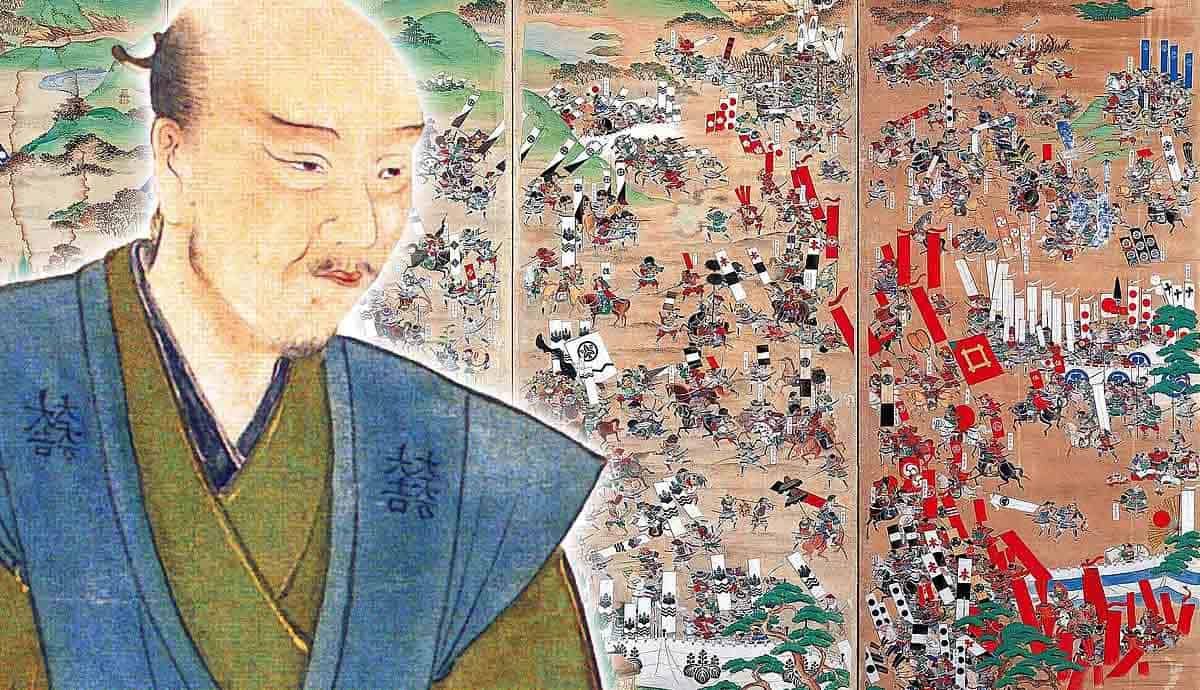
WWW.THECOLLECTOR.COMThe Tragedy of Ishida Mitsunari, the Man Who Almost Became Japans ShogunTokugawa Ieyasus victory at the Battle of Sekigahara in 1600 secured his future and led to his appointment as shogun in 1603, inaugurating the Tokugawa shogunate that ruled Japan until 1868. But all those accomplishments could have gone to his chief rival, Ishida Mitsunari, with history remembering the Edo Period (16031868) as the Ishida shogunate. It is impossible to overstate how different that Japan might have been had Mitsunari emerged victorious at Sekigahara. But we can get an idea of this counterfactual hypothesis by first understanding Ishida Mitsunari himself.The Three Cups of Tea That Shaped a NationPortrait of Toyotomi Hideyoshi, Kano Mitsunobu, 1598. Source: Wikimedia CommonsIshida Mitsunari was born in Omi Province (modern-day Shiga) in 1559 or 1560. He spent his formative years being educated at a Buddhist temple (possibly Kannon-ji), with the solemn, contemplative environment profoundly shaping his temperament. The temple upbringing cultivated discipline, attentiveness, and a seriousness of spirit that later distinguished Mitsunari from his more warlike contemporaries.The defining episode of his youthwhich is almost definitely apocryphal but great men of history deserve their legendswas his encounter with Toyotomi Hideyoshi, the future second great unifier of Japan, then serving Oda Nobunaga and going by the name Hashiba Hideyoshi. While apprenticed at Kannon-ji, Mitsunari served Hideyoshi three cups of tea, each adjusted precisely to the lords changing needs.According to lore, Hideyoshi was so thoroughly impressed by this perception and attention to detail that he immediately took Ishida Mitsunari into his service. True or not, the story encapsulates Mitsunaris essence as a man who did not forge his destiny through brute strength but rather careful thought and prudent preparation. Mitsunari believed in order, authority, and loyalty to institutions. His zeal for taming chaos, sharpened by his monastic youth, made him a formidable foe to his greatest rival: Tokugawa Ieyasu.The Bureaucrat Who Challenged WarlordsPortrait of Ishida Mitsunari, Unknown Author, 17th century. Source: Wikimedia CommonsIshida Mitsunaris rise to power followed a path radically different from the heroes and villains of the Warring States period when regional warlords vied for supremacy. While his contemporaries distinguished themselves through blood-soaked warfare, Mitsunari identified his keen mind as his greatest weapon, which he wholly devoted to serving Toyotomi Hideyoshi. Though he did see military service during the Battle of Shizugatake of 1583 and the siege of Oshi Castle in 1590, his primary role in these campaigns was not active combat, but rather offering tactical advice, coordinating supply lines, and organizing reconnaissance missions. Military logistics might not be glamorous, but it is often an essential ingredient for victory.Toyotomi Hideyoshi understood this. As Japan moved closer towards unification, logistical mastery became as important to him as martial skill, and Mitsunari proved an indispensable and trusted general, especially after Toyotomi became the most powerful man in Japan following the death of Oda Nobunaga. During his service, Mitsunari administered cities for Toyotomi and organized provisions for large-scale campaigns like his masters conquest of Kyushu. With each year, Hideyoshi (a famously paranoid and distrustful person) treasured the allegiance of Ishida Mitsunari more and more.With time, Mitsunari found himself at the heart of the Toyotomi government, acting as the regimes chief executive, issuing orders in Hideyoshis name and enforcing central authority across the realm.Hokokubyo, the Mausoleum of Toyotomi Hideyoshi, by Nagoya Taro, 2015. Source: Wikimedia CommonsHowever, while his administrative responsibilities made Ishida Mitsunari incredibly influential, it also fueled resentment towards him. Warrior samurai clans in Toyotomis service hated being supervised by a man whose authority came not from how many heads he had taken in battle but from bureaucratic competence.Mitsunaris uncompromising insistence on following orders and on his authority derived through service to his master, the Taiko, ruler of the realm, exacerbated these tensions. Then, in 1598, one of the most important moments in Ishida Mitsunaris life happened: Toyotomi Hideyoshi died.Clash of the TitansPortrait of Tokugawa Ieyasu, Kano Tanyu, 17th century. Source: Wikimedia CommonsThe rivalry between Ishida Mitsunari and the more militaristic parts of the Toyotomi camp came to the fore after Hideyoshis death. Hideyoshi left behind a fragile political structure centered on his young heir Hideyori, overseen by a group of elders and commissioners including Tokugawa Ieyasu.Within this framework, both Mitsunari and Ieyasu had equal chances to lay claim to Hideyoshis legacy, though through radically different paths. Ieyasu commanded military power supported by his battlefield achievements. Mitsunari, however, represented legitimacy itself: he was the guardian of Hideyoshis heir, executor of Hideyoshis testament, and the man who embodied the continuity of Toyotomi rule.Ishida Mitsunari accused Ieyasu of undermining the Toyotomi legacy and seeking to become a military dictator. His concerns were justified, as Ieyasu started maneuvering towards taking control of Japan pretty much the minute that Hideyoshi died.Portrait of Toyotomi Hideyori, Unknown Author, 1914 (copy of the original). Source: Wikimedia CommonsIeyasu countered by depicting Mitsunari as an unscrupulous schemer using Hideyori to seize power for himself. This characterization caught on quickly with the warrior elites and also was not without merit. The truth is that, as the underdog of history who lost to Ieyasu, Mitsunaris image has been somewhat laundered by history. His dedication to Hideyoshi is undeniable and there is little proof that he was anything but a steadfast loyalist, but who can say for sure what was in his heart after Hideyoshis death? Maybe there was a tiny glint of ambition in his eye?Whatever his actual motives, Mitsunaris position gave him the stronger moral claim to rule, at least until Hideyori came of age. That is why, when war came, Ieyasu was a rebel and Mitsunari a dutifully appointed statesman trying to maintain the established order. If he had won, we probably would have known him as shogun Ishida Mitsunari, possibly serving the regent Hideyori. Alas for Mitsunari, there was the Battle of Sekigahara.Just a Few Hours Away From a ShogunateFolding screen depicting the Battle of Sekigahara. Source: The Town of Sekigahara Archive of History and Cultural AnthropologyThe road to the Sekigahara began in 1599 when Mitsunari narrowly survived an attack by his enemies. From that moment on, armed conflict between him and Ieyasu was inevitable. Warlords loyal to Toyotomi Hideyori rallied around Mitsunari, forming the Western Army. Ieyasus supporters became the Eastern Army. Both sides framed the conflict as an unavoidable moral necessity.Mitsunari moved decisively. He took hostages (though some chose death over becoming his pawns), issued proclamations branding Ieyasu a rebel, and coordinated movements of large contingents of warriors with that unmistakable Ishida Mitsunari flair for logistics. By October 1600, the armies converged at Sekigahara in modern-day Gifu. Mitsunari established his headquarters on high ground and enjoyed a numerical advantage. He was not planning to fight personally but did lay out a complex encirclement strategy and trusted his generals to execute it.His battle plans were perfect on paper, but their execution failed due to betrayal. Early on in the battle, the Western Army held firm but suddenly key contingents defected or refused to engage. This was partly due to personal dislike of Ishida and partly because of behind-the-scenes scheming by Ieyasu. It turned out that Ishidas rival was not just about brute strength. He was also capable of great cunning. After the turncoat armies started attacking Mitsunaris allies, the Western line collapsed, together with any real prospects of Ishida Mitsunari ever becoming shogun.Grave site of Ishida Mitsunari, Oku-no-in, Mt. Koya, by nobu3withfoxy, 2021. Source: Wikimedia CommonsMitsunari fled the battle but was captured days later. When brought before Ieyasu, he accepted death calmly, declaring that his defeat was the will of the heavens. Mitsunari was then publicly executed. At Sekigahara, Japan had almost chosen political legitimacy forged in the fires of the Warring States period, which tried to mend a shattered country and promised to bring order to chaos. Instead, military force had won.The Real Ishida MitsunariTakehiro Hira as Ishido on the FX series Shogun. Source: YouTubeThe Tokugawa shogunate did not rule through violence. Other than the siege of Osaka Castle to kill Hideyori, the Tokugawa shogunate seemed to prefer the rule of law and bureaucracy. Perhaps the government of Ieyasus descendants was not so different from a hypothetical Ishida shogunate, even if the latter may have formally shared power with the young regent Hideyori. Unfortunately, we will never know for certain how that arrangement would have looked or if it would have worked.In cases like these, all we can do is try to get an accurate picture of a man who almost changed Japanese history. Most of the world knows of Ishida Mitsunari through the FX streaming series Shogun, where his stand-in Ishido is the shows resident, ninja-dispatching villain.The historical Ishida was more complex than that. He was a skilled administrator, political leader, and a legitimate contender for supreme power. He stood for law, continuity, and institutional rule in an age of war and anarchy when every warlord had to fend for himself, and where alliances were quickly made and broken. He was not a villain trying to take something that was not his. His was the road not taken.0 Kommentare 0 Geteilt 6 Ansichten -
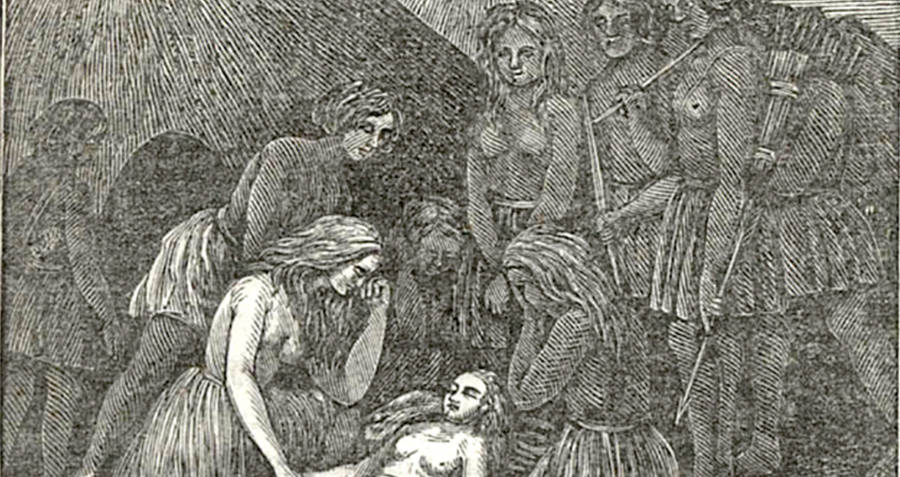
ALLTHATSINTERESTING.COMOlive Oatman, The Mormon Girl Who Was Raised By The MohaveBorn on September 7, 1837, Olive Ann Oatman was one of seven siblings. Her parents Royce and Mary Ann Oatman were Mormon and raised all of their children in the Church of Jesus Christ of Latter-day Saints.In 1850 when Olive was just 13 years old, Royce and Mary Ann joined a wagon train, led by James C. Brewster of the Church of Jesus Christ of Latter-Day Saints. He had broken from the followers of Brigham Young in Utah and was leading a new set of followers to California, where he believed the true gathering place of the Mormon religion was intended to be.When the group reached New Mexico, it split into two with half of the train going north through Santa Fe, and the other half going south through Tucson.The Oatmans were in the second half, who ventured south toward Tucson. The group reached Maricopa Wells, a series of watering holes that acted as a rest stop for wagon trains at the time. The locals warned the train that the road ahead was unforgiving and that the Native Americans who lived on it could be hostile, and most of the group resolved to stay.The Oatmans however, were determined to meet up with Brewster and the rest of the original group, and soldiered on.Their determination to travel alone would be their downfall.Four days into their solo trek, the Oatmans encountered a group of Native Americans. Thought to be members of the Western Yavapai tribe, the group tried bargaining with the Oatmans for tobacco and food.When the Oatmans rejected them, the Native Americans slaughtered Royce, Mary Ann, and four of the children with clubs and axes.Wikimedia Commons Mary Oatman, center, and her sister Olive surrounded by Mohave tribesmen.Olive and her sister Mary were taken captive by the Yavapai and led to a village some 60 to 100 miles away. Once there, the girls were treated as slaves used to forage for food and carry firewood. They were often beaten and mistreated if they did not comply.After a year with the Yavapai, the girls accompanied them to an inter-village trade, where they were sold to the Mohave tribe for two horses.The Mohave were much more prosperous than the Yavapai and, luckily for the girls, also more compassionate. Olive and Mary were taken in by the tribes leader and treated as their own by him and his wife. They were also given plots of land to farm and traditional Mohave clothes to wear.Wikimedia CommonsOlive OatmanMost strikingly, the girls were also tattooed on their chins and arms, a tribal custom reserved for members of the tribe. The Mohave believed that anyone without the tattoo would not be able to enter the land of the dead or be recognized as Mohaves by their ancestors.Then, between 1855 and 1856, a drought hit the land, leaving the Mohave tribe with limited food and water. Mary died from starvation, leaving Olive alone with the Mohave.After her sisters death, Olive grew accustomed to life with the Mohave. Over time she acclimated to their society and even began following their customs, taking on a clan name of Oach.Olive became so acclimated, in fact, that when white railroad surveyors entered the Mohave lands to trade and socialize with the tribe, she hid from them.For the next few years, Olive Oatman lived as a Mohave tribeswoman until her peaceful seclusion was disturbed.Wikimedia CommonsA drawing of the Mohave tribesmen on the banks of the Colorado River.When Olive was 19 years old, a Yuma messenger arrived at the Mohave village with a message from Fort Yuma, a military fort on the border of the Colorado River. The white military men there had heard there was a white girl living with the Mohaves and demanded that she either be returned or the Mohave present a valid explanation for her living with them.Initially, the Mohaves hid Olive, ignoring the request from the fort, and even went so far as to deny that Olive was white when asked by outsiders.Eventually, fearing the white men would destroy them, the Mohaves decided that Olive could leave, escorting her to Fort Yuma. The officers there took her in and dressed her in western clothing as her Mohave clothing, consisting of a skirt and nothing above the waist, was deemed inappropriate.After her arrival at the fort and her reintroduction to white society, Olive learned that her brother Lorenzo had survived the attack that had killed her family, and had been looking for her and her sister.When she was 28 years old, she met and married a cattle rancher named John B. Fairchild. The pair moved to Sherman, Texas, where they adopted a baby girl named Mamie. The family lived in Sherman until Olives death on March 21, 1903, at the age of 65 of a heart attack.Though Olive Oatman survived her time with the Mohave, her ordeal remains shrouded in mystery.After re-entering society, Olive wrote a memoir that detailed her experiences. Some of the things she said didnt line up at first with what she had told the officers at the fort, such as her tattoo. Olive claimed that she was tattooed as a slave, but the tattoos she was given were religious symbols, meant to usher the soul into the afterlife after death, not symbols for slavery.There were also discrepancies in how she described the treatment by the Mohave people. When she was first released, she claimed she was held captive against her will, however, in her later life she recalled fondly the chief and his wife that took her in.She also went to meet with a Mohave leader, Irataba, in New York City years after her capture and discussed in Mohave the good times they had in the village.Today, Olive Oatman is remembered by the city of Oatman, Arizona, which was named in her honor.Enjoy this article on Olive Oatman? Check out these photos of stunning Native American masks. Then, read about the story of Ishi, the last Native American.The post Olive Oatman, The Mormon Girl Who Was Raised By The Mohave appeared first on All That's Interesting.0 Kommentare 0 Geteilt 6 Ansichten -
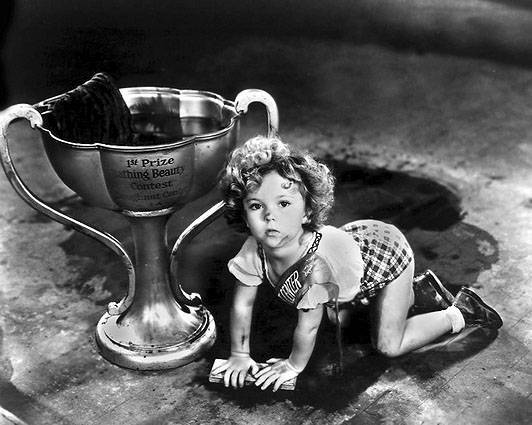
ALLTHATSINTERESTING.COMOn The Creepy Set Of Shirley Temples First Role As A Toddler Prostitute In The Baby BurlesksThe familiar cherubic face of the one and only Shirley Temple has captivated the hearts and imaginations of Americans for well over 80 years. With her trademark curly hair and natural charisma that earned her specifically tailored roles, Temple was, and perhaps still is, the quintessential child star.Yet Shirley Temples Hollywood origins are perhaps seedier than many would ever know, particularly when held up to a modern standard. Temple herself would later refer to this first gig as a cynical exploitation of our childish innocence, but even she may also have to concede that without it, she may never have become a superstar.This is the strange and unseemly story of Shirley Temples earliest role in the Baby Burlesks.Pre-Code Hollywood: The Wild West Era Of Filmhttps://www.youtube.com/watch?v=ZsCQ0t-3t1IIn 1932, at the age of three, Shirley Temple signed a contract with Educational Pictures, a film distribution company founded in 1916 known primarily for brief comedies. As film was still in its infancy as both an artistic medium and a business, rights, and protections for actors and specifically child actors had not yet been created. This was also during a time in Hollywood known as the Pre-Code Era. The Hays Code, so-named for the 1934 president of the Motion Picture Producers and Distributors of America (MPPDA) William H. Hays, established a set of censorship guidelines for movie production based deeply in a conservative Catholic temperament. Before this code, however, Hollywood writers and producers had the freedom to film basically whatever they wanted. Enter the Baby Burlesks a series of comedic shorts that featured a cast of toddlers performing satires of major Hollywood films and current events. Though the film appears to be a seemingly innocuous concept upon first discovery, the Baby Burlesks were anything but.https://www.youtube.com/watch?v=26bN23UXgPkInside The Baby BurlesksThe eight short films saw toddler stars dressed in hyper-sexualized adult clothing. Beneath that, they donned oversized diapers clasped with a safety pin. The costuming alone in these films are enough to raise eyebrows. When viewed through the lens of a modern movie-goer, it seems nearly impossible to glean where the comedy in these shorts actually is. However, in an era where audiences were still easily pleased by the novelty of film, the Baby Burlesks likely seemed charming.In the short Polly Tix in Washington, a four-year-old Shirley Temple is seen playing what is insinuated as a prostitute. Sent to entertain a senator (played by a fellow child-actor), Temple can be seen wearing a small bra while filing her nails in a manner meant to mimic the actions of a self-assured and perhaps world-weary mistress lounging in her boudoir.Temple later enters the office of the senator draped in pearls, sashaying into the room with her hands resting firmly on her hips in a disturbing display of mock adult sexuality. Temple then wraps her arms around the senators neck and plants two clumsy kisses on his lips. Of course, the sexual implications are lost on the children who appear in the film, children who were simply following the direction of the adults controlling them, namely, the films director and he who discovered Shirley Temple, Charles Lamont. https://www.youtube.com/watch?v=ud6KnDpyEH8Lamont also directed another one of the total eight burlesques, entitled War Babies, which served as a spoof of the World War I era silent film, What Price Glory?. The short once again featured Shirley Temple in the role of a prostitute, this time vying for the affections of army men, played of course by 3 5-year-old boys. Within the first minute of the film, Temple is seen in a purposely loose-fitting top that slips and falls down revealing her shoulders as she performs a caricature of a seductive dance. She later trades kisses for lollipops, is repeatedly called baby, refers to an army man as mon cher Capitan, and even refers to herself as expensive. The humor of the piece is once again intended to be derived from watching toddler-aged children unknowingly copy the behavior of fully grown adults, but it was perhaps also all to the detriment of the children themselves whose innocence was taken advantage of.Unfortunately, the overtly sexual overtones that Shirley Temple and her fellow child-stars were forced to mimic over the course of Baby Burlesk wasnt even the worst of it. Without regulations regarding on-set safety for actors, directors were able to employ various means of cruel and unusual punishment to maintain order on set during filming.YouTubeA toddler Shirley Temple in the Baby Burlesk short, Kid In Hollywood.Cruel Working Conditions OnsetAccording to historian and author John Kassan, the conditions on the set of Baby Burlesk were less than glamorous and frankly, disturbing, particularly because due to the treatment of the films young and vulnerable cast.To threaten and punish uncooperative child actors, the director, Charles Lamont, kept a soundproof black box, six feet on each side, containing a block of ice. An offending child was locked within this dark, cramped interior and either stood uncomfortably in the cold, humid air or had to sit on the ice. Those who told their parents about this torture were threatened with further punishment.Naturally, Shirley Temple attempted to alert her mother of these frightening circumstances, only to be met with dismissal and an accusation that she had fabricated the entire tale.In addition to this literal icebox of torture, John Kassan adds that:In a Tarzan film spoof, Kid in Africa, for example, he [Lamont] concealed a tripwire to fell the savages played by African American children. In filming another scene, a terrified ostrich pulling Shirley and another child in a surrey careened wildly about the set before crashing into a wall.Besides the fact that hiding a tripwire to stun children is unethical in and of itself, the film Kin in Africa hinged on wholly racist themes, for instance, a group of white good guys were directed to shoot a group of savages portrayed by black children with arrows.Temple later recalled Lamont saying that This isnt playtime, kids, its work.The Baby Burlesks In RetrospectIndeed, each of the Baby Burlesk actors were forced to perform undue amounts of physical and emotional labor, and perhaps none more so than Shirley Temple herself, whose wide-eyed innocence served as the ultimate foil to the hyper-sexualized roles of older women she was guided into performing by the adults who surrounded her. IMDbOn set of the short War Babies, Lamont balances Temple on one knee.With the goal of lining pockets by turning a profit on the backs of children who had no way of advocating for themselves, Charles Lamont and his fellow co-conspirators at Educational Pictures helped to set a frightening precedent for the ways in which performers were treated in film for many years at least, until, the invention of the Hays Code.It has never been and likely will never be easy to be a child-star. The financial and emotional baggage that the most vulnerable performers are expected to carry in the industry has unfortunately wrought a number of broken souls as those young stars age. From Lindsay Lohan to the incomparable Judy Garland, the pitfalls of a life in Hollywood at a tender age appear almost unavoidable. Luckily, an exploitative production like Baby Burlesks can be considered one less threat to the wellbeing of the young stars of today. After this disturbing look at the Baby Burlesk, refresh your palette with these wholesome images of stars when they were young. Then, flip through this gallery of the glamorous side of vintage Hollywood.The post On The Creepy Set Of Shirley Temples First Role As A Toddler Prostitute In The <em>Baby Burlesks</em> appeared first on All That's Interesting.0 Kommentare 0 Geteilt 6 Ansichten -
-