How the Acadian Expulsion Shaped Louisianas Cajun Culture
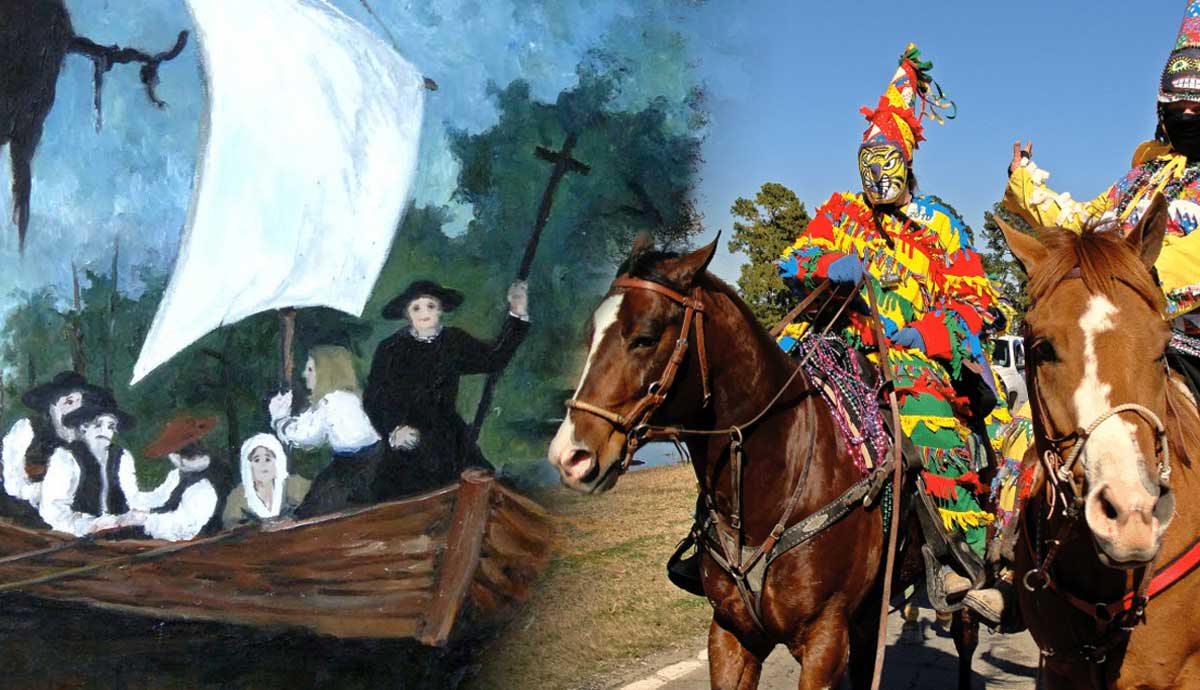
In 1785, the Spanish government allowed 1,600 Acadians who had been forced to leave their homes in Nova Scotia to settle in Louisiana, then under Spanish rule. Over the years, these refugees combined with existing settlers to create the unique Cajun culture which continues to flourish in Louisiana.Le Grand DrangementThe destruction of the Acadian Village at Grand-Pr by Claude Picard. Source: Parks CanadaBy the year 1755, French settlers had been living in the region of Acadia (today the Maritime Provinces) for nearly 150 years. The Acadians were proud Frenchmen who built strong ties with other French communities in Canada and the local indigenous confederation called the Abenaki. When Nova Scotia was ceded to Britain under the Treaty of Utrecht of 1713, most of the Acadians stayed put but refused to swear allegiance to the British Crown.By the time the French and Indian War began, the British authorities came to believe that the entire Acadian community was secretly supporting the French authorities in Quebec. The discovery of 270 Acadian militiamen in the garrison of Fort Beausjour seemingly validated this argument. As a result, the British authorities announced that they planned to expel any Acadians who did not swear allegiance to the Crown. This led to almost the entire Acadian community of Nova Scotia being expelled and sent to the Thirteen Colonies.In subsequent years, the British and their American colonial proxies waged additional campaigns to destroy the Acadian presence in the Maritimes. Several thousand more were shipped directly to France after the fall of the fort of Louisbourg. Despite attempted resistance by Acadian community leaders, the British succeeded in removing most Acadians from the region. By the Treaty of Paris of 1763, 11,500 of the 14,100 Acadians living in Acadia had been deported. A small number returned after pledging allegiance to the British Crown, but most were long gone.The First Acadians in LouisianaPart of a mural displaying the arrival of Joseph Broussards party in Louisiana. Source: Louisiana Historic and Cultural VistasFurther south at the mouth of the Mississippi River, the French colony of Louisiana was going through a period of political limbo at the end of the Seven Years War. Founded by France in 1699, the colony included settlements such as New Orleans and Baton Rouge. Under the terms of the Treaty of Fontainebleau of 1762, France agreed to cede Louisiana to Spain to facilitate an end to the Seven Years War. The Spanish government was very slow in taking control of the colony, meaning that most French administrators remained in place for many years.In 1764, a small group of 21 Acadian refugees who were living in Georgia moved to St James Parish in Louisiana. They were the first recorded Acadians who moved to Louisiana. The following year, 200 more came after being expelled to Haiti by the British. They were led by Joseph Broussard, an Acadian militia leader who had battled the British in the Bay of Fundy during the war. Jean Antoine Bernard Dauterive, a local French landowner, gave each family five cows and one bull to get them started on their farms.On April 8, 1765, acting French Governor Charles Philippe Aubry appointed Joseph Broussard as a Militia Captain and commander of the Acadians in the Attakapas District. Subsequently, the group traveled by boat through the bayous to settle along Bayou Teche, near present-day Loreauville and St. Martinville. They established several small communities, sometimes referred to as Le Camp de Beausoleil. However, the settlement suffered an epidemic that killed several dozen people, including Broussard himself. After his death, he acquired legendary status among the Acadians in Louisiana.The Great Migration of 1785A painting of Acadian migrants arriving in Louisiana, 1985. Source: St Charles Parish, Louisiana Virtual History MuseumAfter the initial trickle of Acadian refugees to Louisiana, the next major influx of immigrants came in 1785. Many of the Acadians who were forced to go to France after the fall of Louisbourg suffered from poverty and the shame of being expelled from their homes. Several of these families had relatives still in the Americas and hoped to unite with them as soon as possible. The French government struggled to integrate them and needed help trying to find the refugees a place to go.Enter King Charles III of Spain. In 1785, he hoped to increase Louisianas population of Catholics to act as a barrier against the British and the newly independent United States of America. France was happy to be relieved of the burden of helping these families and agreed to send them to Louisiana. Between May and October, 1,600 Acadians travelled to Louisiana aboard seven ships chartered by the Spanish government. The Spanish authorities provided significant aid to the new arrivals to ensure they successfully cultivated the frontier.The 1785 arrivals primarily settled along Bayou Lafourche and the Mississippi River near Baton Rouge. Each family was given a plot of land and some farm animals to help get them ready. Their arrival meant that there were 3,000 Acadians in Louisiana by 1788, a number that would increase rapidly due to a high birth rate. Much of the local administration welcomed them, believing that they could provide for the colony and they saw the influx of more Catholics as a benefit. Smaller groups of Acadians continued to arrive, including some among the French refugees fleeing the Haitian Revolution. However, this wave of migrants was the last Acadian migration to Louisiana.From Acadians to CajunsA photo of a Cajun Mardi Gras celebration. Source: World AtlasUpon arriving in Louisiana, the Acadians established communities in two distinct areas, each characterized by its unique environment and landscape. Those living in the southwest prairies became cattle ranchers and rice farmers. The settlers who went to the wetlands became hunters, trappers, and fishermen. Both groups interacted heavily with other communities living around the colony.At the beginning of the 19th century, the United States of America purchased Louisiana and Anglophone settlers began arriving in large numbers. They often referred to any Frenchmen living there as Cadiens. Over time, this morphed into Cajuns, a term often seen as derogatory by the Acadian community. One of the main reasons that the Acadian community developed a distinct culture from the burgeoning Anglophone community was to retain as much of their identity as possible and avoid being totally assimilated into the culture promoted by politicians in the southern United States.While keeping as much of the original Acadian French dialect alive as possible, the Cajuns incorporated other cultural aspects into their way of life. For instance, they adopted corn-based thickeners like fil powder (ground sassafras) and wailing singing styles from Indigenous tribes. Black and Creole communities gave the Cajuns okra and deep-frying techniques for their cooking. German immigrants brought the accordion and Spanish immigrants brought the guitar. These influences helped develop the unique Cajun identity seen today.Attacks on Cajun Culture in the 19th and 20th CenturiesCajuns dancing at a fais do-do near Crowley, Louisiana. Events like this have been an important way to resist forced Americanization, 1938. Source: The Activist History ReviewFor much of the 19th century, the Louisiana government left the Cajuns alone. They were considered loyal southerners and few officials were interested in suppressing their culture. However, this started to change at the end of the 19th century. More people poured into Louisiana for work opportunities and the state government faced pressure to assimilate everyone into an Anglo-Saxon culture. This meant that the Cajuns needed to start changing their ways and become proper Americans.In 1921, the state government created a new Constitution that proved devastating for Cajuns. Schools were made monolingual and any student speaking French could be punished physically or expelled. While many Cajuns continued to speak French at home, it became much harder and public displays of Cajun culture were frowned upon. Many Cajuns, fearing that they would be relegated to the same social status as Black or Native people, began confirming to the WASP elites demands.This trend continued after World War II. Many Cajuns served overseas and returned to their families after serving in a mixed ethnic environment. They did not pass down their French language skills to their children, leading to further erosion of their cultural identity.In the 1960s, however, Cajun activists were inspired by the Civil Rights Movement and began promoting their culture by publicly embracing forgotten Cajun cultural practices and speaking French again. The state reversed course, establishing the Council for the Development of French in Louisiana. The United States Supreme Court ruled in 1980 that the Cajun people were a protected minority group under the Civil Rights Act.The Contemporary Relationship Between Acadians and CajunsPeople at the Acadian World Congress on Prince Edward Island in Canada, 2019. Source: Wikimedia CommonsAs early as the 1920s, historians began establishing the links between Cajun and Acadian communities. The tale of the Acadian Expulsion had been suppressed in Britain, Canada, and the US. By the time the Cajuns began rehabilitating their culture, they sought to make connections with Acadian activists in Canada, France, and elsewhere. In the 1970s, activists formed the Action cadienne, the first attempt to create a pan-Acadian organization.In 1994, Andr Boudreau formed the Acadian World Congress to unite communities in Canada, France, Louisiana, and beyond. The Congress first met in New Brunswick and rotates meeting locations every five years. During these conferences, parades are held and people sing or play traditional Acadian/Cajun music. For families that were divided by the deportations and the chaos of the Seven Years War, it offers a sense of redemption.Cajun culture still faces challenges. Young people are less likely to speak French due to their exposure to traditional Anglo culture in college. Additionally, Cajun communities have been aging alongside other white populations in Louisiana. Nonetheless, there have been efforts to ensure that Cajun culture remains strong in Louisiana and the French government has agreed to finance some French language schools. The impact that the Cajun community has had on Louisiana will remain strong for the near future.












 English
 Arabic
 French
 Portuguese
 Deutsch
 Turkish
 Dutch
Dutch
 Italiano
 Russian
 Romaian
 Portuguese (Brazil)
 Greek
Greek