



WWW.THECOLLECTOR.COM
How the French Built Fort Caroline and Took Control of Florida in 1564
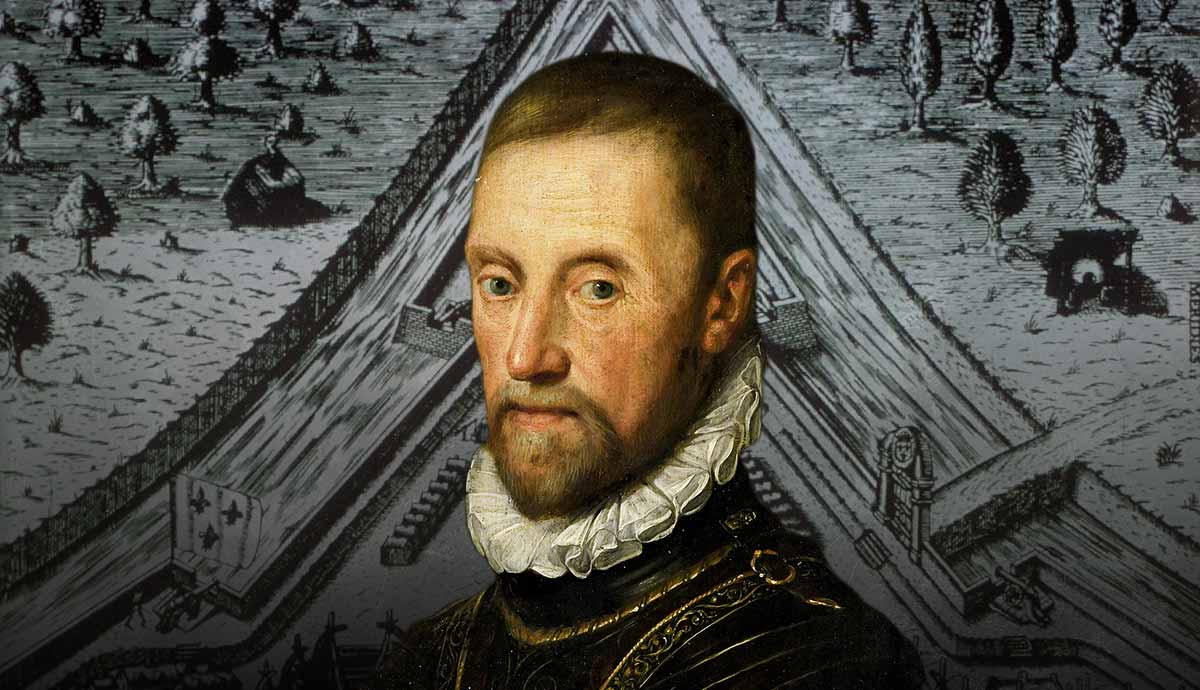
France was on the verge of civil war, torn between Catholic and Protestant (Huguenot) factions in the early 1560s. Admiral Gaspard de Coligny devised a plan to establish a colony aimed at unifying a polarized France and gaining a foothold in the lucrative New World. Coligny eyed the southeastern coast of North America, particularly present-day Florida, as an ideal spot to gain a foothold in the lucrative transatlantic trade. Soon, a Spanish invasion led to the destruction of French Florida.The Origins of French Florida and Fort CarolinePortrait of Gaspard de Coligny (1517-1572) by an artist in the workshop of Jan van Ravesteyn, ca. 1609-1633. Source: Wikimedia Commons/Rijksmuseum, AmsterdamFrench Florida was primarily the brainchild of Admiral Coligny, who sought to rival the Spanish in establishing an empire in the Americas. Spain dominated the Americas in the early 1560s and benefited from the wealth of gold and silver extracted from the mines of Mexico and Peru. However, Spain had little control over present-day Florida, despite a series of expeditions dating back to 1513.Spanish wealth from the Americas, coupled with the lack of a permanent Spanish presence in Florida, provided pirates with opportunities to seize treasure bound for Madrid. One of the most successful pirates or corsairs raiding Spanish treasure ships was Jean Ribault, a Frenchman.In 1562, Ribault led the first French expedition to Florida, discovering the River of May (St. Johns River). This expedition founded a short-lived settlement (Charlesfort) at present-day Parris Island, South Carolina.Ribaults exploits and knowledge of the Americas and Spanish trade routes impressed Admiral Coligny in France. According to historian Susan-Mary Grant, Ribaults 1563 book The Whole and True Discovereye of Terra Florida hailed the wealth and opportunities available in the New World (2012, 20).Ribault was also like Coligny, a French Protestant (Huguenot). Coligny, in the early 1560s, was a favorite advisor of Catherine de Medici, the Queen Regent of France.At the very least, Coligny argued that a French settlement in Florida could serve as a refuge for Huguenots during an era of intense religious tension in predominantly Catholic France.Ren de Laudonnire and the Rise of Fort CarolineDiagram of Fort Caroline based on an engraving by Jacques Le Moyne. Source: Wikimedia CommonsBelieving Ribaults claims of fabulous wealth, Coligny was convinced of Floridas potential as a springboard for a prosperous French empire in the New World. Despite an ongoing civil war over religious tensions, Coligny sponsored a new French expedition to Florida in 1564.More than four decades before the founding of Quebec City, approximately 300 French soldiers and colonists, led by Ren Goulaine de Laudonnire, built Fort Caroline. As historian Michael Gannon explains, the French colonists named the area La Caroline in honor of the teenage French monarch, Charles IX of the Valois dynasty (2003, 7).The fort, also named for the French king, was located near the mouth of the St. Johns River and present-day Jacksonville, Florida. However, the La Caroline area was the preserve of the Timucuan-speaking Mocama. The Mocama helped Laudonnire build Fort Caroline in the summer of 1564.The French were encouraged by the gold and silver worn by the Mocama that the area could hold mines like those exploited by the Spanish in the Americas. Laudonnire also believed the Mocama would help feed the French settlers.French Florida was born at Fort Caroline.Daily Life at Fort CarolineCharles de la Roncire and Julien Cain, Ren de Laudonnire et le cacique floridien Satouriova, from the exhibition, Four Centuries of French Colonialism, 1931. Source: Wikimedia Commons/Bibliothque nationale de France, ParisHowever, relations with the Mocama soon deteriorated, which put French Floridas future in jeopardy. For starters, the French did not appreciate the fact that, as in French society in the 1560s, the Timucuan-speaking peoples of the region were embroiled in a complex web of political conflicts.Rather than supporting the Mocama, the French frequently made and broke agreements with various Timucuan-speaking nations in the hope of acquiring gold and silver. Only later would the French learn that there were no mines, but that the gold and silver in Florida came from Spanish shipwrecks.Moreover, Laudonnire and the French leadership failed to adequately plan the development of a permanent settlement. Not only were the French ignorant of local political realities, but they also knew little about the land itself.Daily life for the forts inhabitants was thus perilous.According to historian Daniel Vitkus, Fort Caroline was doomed to fail for many reasons beyond the threat of a Spanish attack. The settlement suffered from poor leadership, internal divisions, inadequate supplies from Europe, poor relations with the Mocama, and bad luck in terms of the frequency of hurricanes (2017, 6).Disease, hunger, and frustration with Laudonnires leadership fractured relations among the forts inhabitants. In December 1564, 66 French soldiers mutinied and launched raids against the Spanish in Cuba. Spanish authorities in Havana were now on high alert.The beleaguered French settlement at Fort Caroline was now in the crosshairs of the periods most powerful empire, Spain.Why Spain Saw French Florida as a ThreatPortrait of Pedro Menndez de Avils, reproduced in the Historia de la Marina Real Espaola, 1854. Source: Wikimedia Commons/Biblioteca Rector Machado y Nez, University of Sevilla, SpainThe riches from the Americas, measured in part through the shipment of gold and silver from Spanish colonies to Madrid, were as much of a warning to the French as an incentive to pursue Colignys vision. Indeed, King Philip II in Madrid would challenge any foreign intervention that threatened access to such treasure with the full weight of the worlds mightiest empire of the day.The Spanish were enraged by the presence of French Fort Caroline in lands claimed for Spain. Above all, the Spanish could not allow a foreign base situated along the strategic sea lanes between the Americas and Europe.Moreover, the fact that most of the French colonists were Protestants in the era of religious wars added further fuel to Catholic Spains desire to drive the French out of Florida. As historian Jeremy Black explains, King Philip II was thus a supporter of the Catholic Guise faction in France, the main rival of the Huguenots (2014, 32).Admiral Pedro Menndez de Avils was tasked with driving the French out of Fort Caroline and establishing a permanent Spanish settlement in Florida.On September 8, 1565, historian David Weber notes that Menndez presided over a ceremony marking the founding of St. Augustine, Florida (1992, 60). However, Menndez was not content with building a Spanish settlement in Florida. He now moved to crush the French and Protestant presence.The Fall of Fort CarolinePortrait of Jean Ribault by Calvin Bryant, 2021. Source: Wikimedia CommonsA French relief force was also on the way to relieve Fort Caroline in the summer of 1565. Jean Ribault had been appointed the settlements new governor. Ribault arrived at Fort Caroline with reinforcements and supplies shortly before Menndez.He split French forces and led the majority in a plan to ambush the Spanish. However, a hurricane scattered Ribaults ships as the French pursued Menndez.According to historian David Weber, the Spanish force of 500 troops under Menndez received aid from the Timucuan-speaking Saturiba in locating the French at Fort Caroline (1992, 61). With most French troops gone, Fort Carolines defenders were outnumbered and unaware of the Spanish advance.On the morning of September 20, 1565, Menndez struck with sudden ferocity and massacred most of the forts inhabitants. Laudonnire was among those who managed to escape and eventually return to France.Spanish forces then turned to defeat the remaining French under Ribault. Menndez soon captured Ribault and some of the surviving French forces. At a place called Matanzas (slaughter), the Spanish massacred most of the French, including Ribault.Historian David Weber explains that publicly, Menndez claimed he executed over 150 French prisoners for piracy. However, he privately wrote that he had them killed because they were heretics (1992, 62-63).The Spanish renamed Fort Caroline San Mateo. Although a French force destroyed San Mateo in 1568, France never regained a permanent foothold in Florida.The Legacy of Fort Caroline and Frances Lost American ColonyPhotograph of the moat of the reconstructed Fort Caroline National Memorial, Florida. Source: Wikimedia CommonsAfter defeating the French, Menndez remained in Florida as governor, ruling from the newly founded settlement of St. Augustine. St. Augustine has the distinction of being the oldest permanent European settlement in the United States. As historian Michael Gannon points out, only in 2055 will St. Augustine be part of the United States for longer than the city was under Spanish rule (2003, 4).Four centuries after its founding, a reconstructed Fort Caroline was designated a National Memorial in 1964.Frances lost American colony at Fort Caroline led to the establishment of a permanent European presence in Florida. However, Florida would remain under Spanish control, not French, for much of the next few centuries.ReferencesBlack, J. (2014). Fighting for America: The Struggle for Mastery in North America, 1519-1871. Indiana University Press.Gannon, M. (2003). Florida: A Short History. University Press of Florida. Second Edition.Grant, S-M. (2012). A Concise History of the United States of America. Cambridge University Press.Vitkus, D. (2017). People of bad disposition: The Failed French Colony at Fort Caroline as a Site of Local Conflict within a Transimperial System. Journal of Transnational American Studies, 8(1). DOI 10.5070/T881036607.Weber, D. J. (1992). The Spanish Frontier in North America. Yale University Press.
0 Comments
0 Shares
139 Views








 Arabic
 French
 Spanish
 Portuguese
 Deutsch
 Turkish
 Dutch
Dutch
 Italiano
 Russian
 Romaian
 Portuguese (Brazil)
 Greek
Greek