• New ransomware wipes every file larger than 128 KB
    New ransomware wipes every file larger than 128 KB A newly identified ransomware strain is accidentally destroying the very files it's supposed to hold for ransom. And for the victims who end up paying, they're getting nothing back.Cybersecurity firm Check Point Research published findings Tuesday detailing the dangers of VECT 2.0, a...
    0 Commentaires 0 Parts 10 Vue
  • iOS 27 could finally bring AI photo-editing to your iPhone
    iOS 27 could bring AI photo-editing to your iPhone Apple iPhones have never been more popular, even as the company plays catch-up in certain respects.  By ...
    0 Commentaires 0 Parts 10 Vue
  • The Antigravity A1-360 drone is on sale at Amazon for over $300 off
    Best drone deal: Take 20% off the Antigravity A1-360 drone SAVE $320: The Antigravity A1-360 drone is on sale at Amazon for $1,279, down from the normal price of $1,599. That's a 20% discount and the lowest we've seen at Amazon. $1,279 at Amazon...
    0 Commentaires 0 Parts 23 Vue
  • General Motors adds Google Gemini to 4 million vehicles. Is your car on the list?
    General Motors adds Google Gemini to 4 million vehicles If you have an ongoing relationship with Google Gemini that usually gets suspended when you enter a car, those days are over.General Motors announced this week that, in the near future, an update will roll out to more than four million GMC, Chevrolet, Buick, and Cadillac vehicles,...
    0 Commentaires 0 Parts 8 Vue
  • Prep for any power emergency with 50% off the DJI Power 1000
    Best portable power station deal: Save 50% on the DJI Power 1000 SAVE $350: As of April 29, get the DJI Power 1000 portable power station for $350, down from its usual price of $699. That's a discount of 50%. $349 at Amazon...
    0 Commentaires 0 Parts 8 Vue
  • 0 Commentaires 0 Parts 7 Vue
  • WWW.IFLSCIENCE.COM
    The Botes Void Is The Largest In The Known Universe, Stretching Over 330 Million Light-Years Across
    If our galaxy was in the middle of the Botes void, we wouldnt have known there were other galaxies until the 1960s.
    0 Commentaires 0 Parts 7 Vue
  • WWW.IFLSCIENCE.COM
    People Are Confused About Why Earths Rotation Doesnt Speed Up Flights
    If this were actually possible, flight times would be the least of your worries.
    0 Commentaires 0 Parts 7 Vue
  • WWW.THECOLLECTOR.COM
    How the Dutch Forged a Maritime Empire While Fighting for Independence
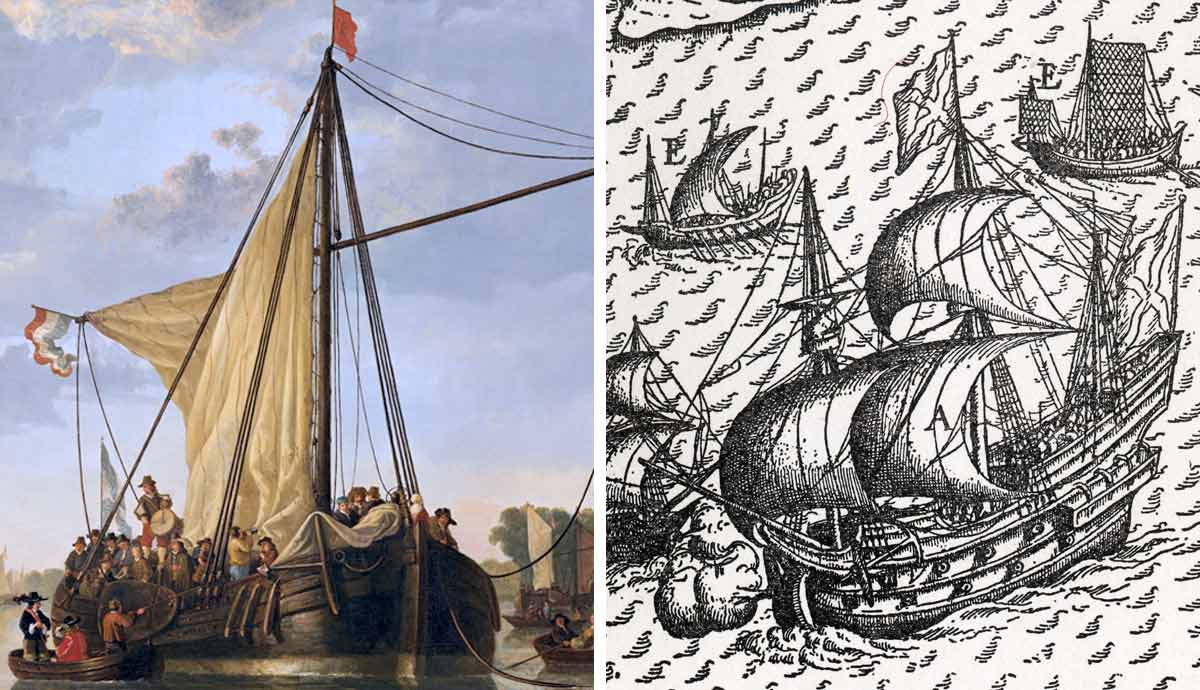
    One of the main Dutch strategies in their quest for independence from the Spanish Empire involved the creation of a naval force to seize Spanish convoys and protect the Dutch coastline. This contributed to the Dutch willingness to engage in empire-building later on.The Causes of the Eighty Years WarA painting of a Spanish attack on a Flemish village by Peter Snayers, 17th century. Source: Friedenstein Castle, GothaWhen the Spanish government began restricting the rights of Dutch people to practice Christianity outside the bounds of the Catholic Church, they sparked a backlash that led to one of Europes longest independence struggles. The Dutch War of Independence, otherwise known as the Eighty Years War, began in 1566 after Dutch Calvinists attacked Spanish and Catholic targets in the Low Countries. When the Duke of Alba arrived in the Netherlands and initiated a brutal crackdown that killed thousands, local rebels began forming militias to fight the Spanish.At the beginning of the war, the Spanish had one of the most experienced militaries in Europe, thanks to the Reconquista, the Habsburg-Valois War, and other conflicts. Its garrison in the Netherlands was very formidable and the Duke of Alba brought reinforcements with him. By contrast, the Dutch forces were citizen militias with little formal organization. The command and control of this force was very decentralized and many of the leaders of the rebellion had been forced into exile by the Spanish.Nonetheless, the rebels eagerly began attacking Spanish garrisons. Prince William the Silent and his brother, Louis of Nassau, led an attack on Heiligerlee, defeating the Spanish. However, the subsequent Battle of Jemmingen exposed the critical weakness of the Dutch rebels. William and his allies realized that they needed a new strategy to fight the Spanish.The Sea Beggars and the Establishment of the Dutch NavyNaval battle between Dutch Sea Beggars and Spanish warships at Haarlemmermeer. Painting by Hendrick Cornelisz Vroom, 1629. Source: Rijksmuseum, AmsterdamThe main reason that the Spanish were able to keep such a large garrison of troops in the Netherlands was their dominance of the sea off the Dutch coast. At the same time, the Habsburg Empire was overstretched in trying to protect all of its overseas possessions. Therein lay a vulnerability: if the Dutch could build armed vessels and attack Spanish shipping, Spains ability to supply its forces in the Netherlands would become very difficult.William came to see this very quickly and began to issue letters of marque to Dutch ship captains authorizing them to seize Spanish ships without being accused of piracy. Initially, 18 ships were issued these letters and equipped in the French port of La Rochelle, a Huguenot (French Protestant) stronghold. These armed privateers became known as Watergeuzen, or Sea Beggars. By the end of 1869, 84 Dutch ships had been granted letters of marque.Following diplomatic pressure from Spain, in 1572 Queen Elizabeth I of England denied the Dutch ships sanctuary in English ports. Needing a base to operate from, William de la Marck (Lord of Lumey) took a fleet and seized the ports of Brielle and Vlissingen. These attacks galvanized the Dutch rebels and gave the privateers two ports to operate from against Spanish shipping.How the Conflict Created Dutch Maritime PowerA wooden model of a Dutch fluyt, 2014. Source: Model Ship WorldThe successes of the Sea Beggars inspired the leaders of the Dutch revolt to expand both their naval forces and their merchant marine. The Dutch had two different objectives by doing this: they wanted to expand the reach of their naval power and encourage profitable maritime trade to finance their revolt. To do this required serious changes to how the Dutch approached sea power.The Dutch merchant marine expanded its fleet significantly throughout the war despite Spanish attacks on Dutch ports. This was in large part due to the rebels success in retaining some of their ports and their innovative use of shipbuilding technology such as the wind-powered sawmill. Additionally, the Dutch were able to recruit more manpower from across Europe because many common laborers aspired to go to sea and make a fortune. In 1595, shipbuilders in the town of Hoorn developed the fluyt, one of the most advanced hull designs of its generation.When King Philip of Spain sent the Armada to Englands shores in 1588, the Dutch assisted Lord Howard of Effingham and Sir Francis Drake in fighting off the invasion. The Dutch fleet, led by Justinus van Nassau, blockaded their own ports to prevent the Armada from linking up with the Duke of Albas army that was planning to invade England and dethrone Queen Elizabeth. This victory emboldened the Dutch to develop an organized fleet known as the Dutch States Navy.Dutch Naval Expansion Into Asia and the AtlanticBattle in the Bay of Matanzas off the Cuban coast, 1909. Source: Wikimedia CommonsWith the increase in the size of the Dutch fleet after 1588 and the increased range of Dutch naval and civilian ships, the war now extended into Spanish colonial possessions in the Americas and Asia, which also included the colonies of the Portuguese empire between 1580 and 1640. In 1621, the Dutch West India Company, one of two major corporations set up by the Dutch government to expand its maritime power, began sending armed merchantmen to the Caribbean to target galleons bringing back riches from the Americas to Spain. These attacks not only weakened the Spanish; they also filled the Dutch coffers with prize money.The Spanish navy, being overstretched and weakened by the loss of warships to the English and poor weather, could not properly protect its galleons. The Dutch, working with English warships and privateers, seized convoy after convoy, with the most successful attack being Admiral Piet Heins capture of a silver convoy in the port of Havana, Cuba. Similarly, the Dutch East India Company commissioned privateers to work with the Dutch and English navies to seize Spanish ships leaving port in the Philippines and Goa.In 1639, the Dutch gained permanent naval supremacy when a fleet led by Admiral Maarten Tromp destroyed a Spanish force hiding in English waters. Around 40 Spanish ships were lost, a devastating toll that ensured Dutch control over the English Channel. From then on, the Dutch States Navy and its privateers had a permanent advantage against Spain, enabling it to create and maintain an overseas empire.The VOC and the GWCFlag of the Dutch West India Company, or GWC, 1621. Source: Wikimedia CommonsAs part of their efforts to expand their naval and maritime power, the Dutch Republic set up two companies that became the cornerstones of the Dutch Empire. In 1602, the States General (the Dutch governing body) decided to establish a trade conglomerate of already existing companies to try to take control of the Spanish/Portuguese spice trade in Asian waters. This company was known as the Dutch East India Company (VOC) and it was initially granted a charter with a 21-year monopoly on all Dutch trade east of the Cape of Good Hope and west of the Strait of Magellan.In 1621, the States General did the same thing with the Dutch maritime companies in the Caribbean once the Twelve-Year Truce with the Spanish collapsed. Like the VOC, the Dutch West India Company (GWC) was governed by a board of commissioners. It aimed to establish colonies in the Americas and weaken the Spanish and Portuguese trade routes in the Caribbean waterways. Admiral Heins seizure of the Spanish silver convoy off the Cuban coast was only one of several successful actions by Dutch ships in the Caribbean.Both companies became an integral part of the Dutch war effort. Thanks to their financial successes, they enabled the Dutch to borrow at lower interest rates than Spain, giving them a sustained financial advantage throughout the long war. They also established overseas colonies, giving them the ability to strike at different points in the Spanish Empire. Over time, these companies became the faces of the Dutch Empire and the Dutch slave trade.The Beginning of the Dutch Golden AgeDutch vessels in the Maas preparing to go to sea, 1650. Source: National Gallery of Art, Washington DCThanks to the efforts of the Dutch army and navy, as well as the exhaustion of the Habsburgs, Dutch independence was formally recognized with the Treaty of Mnster in 1648. The Dutch government, hoping to cut spending on military equipment, began disarming and selling off many of its warships. Additionally, the navys command and control remained in the hands of the separate provincial admiralties set up during the war. Privateers were no longer needed, and the Dutch fleet changed its mission to escorting merchantmen to evade pirate attacks and bring settlers to its overseas colonies.The growth of the Dutch merchant fleet and the increasing power of both trade conglomerates contributed to what would become known as the Dutch Golden Age. The influx of goods from the Americas and Asia turned Dutch ports such as Rotterdam and Amsterdam into financial powerhouses. Only when the Dutch began fighting their erstwhile English allies in the 18th century did they need to return to a wartime posture at sea.The Eighty Years War revealed two major components of Dutch power that helped create its empire. First was the shrewd financial policy implemented by Dutch bankers and the States General (including Sephardic Jewish refugees involved in commerce). Second was the ability to mass construct warships and create a thriving merchant marine. The Dutch were able to decisively weaken the Spanish fleet and its monopoly on trade routes in the Caribbean and Asia by attacking and destroying convoys headed back to Iberia. Owing to the efforts of its ship captains, the Dutch became one of the strongest naval powers in Europe for the next several centuries.
    0 Commentaires 0 Parts 7 Vue
  • WWW.THECOLLECTOR.COM
    How Technicolor Revolutionized American Cinema
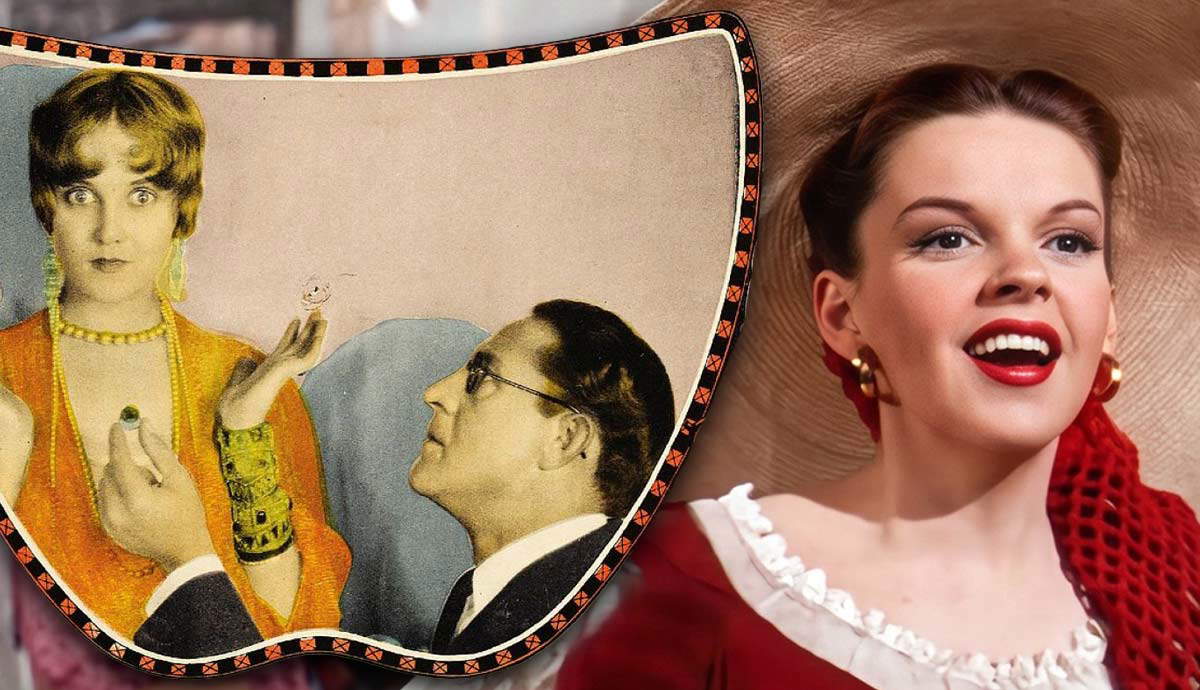
    Color in film was once science fiction. For decades, only black and white film was available to filmmakers. In the 1930s, Technicolor brought life to film with an array of color. Suddenly, audiences could taste the candy pink dresses in musicals, feel the crimson fields of battle, and sense the richness of a setting like never before. It turned cinema into a visual spectacle and redefined the movie-going experience.The Birth of TechnicolorDr. Herbert T. Kalmus, president of Technicolor Corporation, May 20, 1936. Source: UCLA Library Digital CollectionsIn the early days of movies color was available, but it was of poor quality and required the painstaking task of hand-painting each individual frame of a film. This method faded quickly as it was uneven and dull. Engineer Herbert Kalmus and scientist Daniel Comstock teamed up in 1915 to add color to film. They developed a system that could record color automatically, and in 1916, they founded Technicolor.The earliest version used two color filters, red and green, captured on alternating frames. When projected rapidly, the two colors blended in the theater and created a basic, natural sense of color. It was groundbreaking, but still not good enough. Bright scenes were washed out, and some colors did not translate as well as others. Filmmakers saw the potential, however, and showed interest in the technology. In the late 1920s, Technicolor developed a three-strip system. This new system recorded red, green, and blue separately, using an in-camera prism to split light onto three reels of film at once. When placed together, they produced vivid, stable images. The development of this faster and brighter method of adding color to films led to the golden age of Hollywood.The Wizard of Oz and Gone with the WindClark Gable and Vivien Leigh in a scene from Gone With The Wind, 1939. Source: Wikimedia CommonsThe Wizard of Oz and Gone with the Wind, both released in 1939, mark the beginning of Technicolors reign in Hollywood. The two films utilized color in different ways, demonstrating the wide range of Technicolors usage. The Wizard of Oz used color to signal a shift in worlds. Kansas was filmed in dull sepia tones; when Dorothy opened the door into Oz, viewers were welcomed into a world of vivid color. That scene alone became a defining moment in cinematic history and is often remembered as the first color film, even though it was not.Gone with the Wind used color in a different way. Its scenes of Southern landscapes at sunset, the burning of Atlanta, and the dramatic costumes worn by Scarlett OHara were used as emotional tools. Much like a soundtrack, certain colors invoke certain feelings. Red can suggest fear or love, blue signifies sadness, and green is fresh or lively. The color became part of the story. It gave characters and scenes emotional weight that were often lacking in black-and-white film.Color: Creating a New Visual LanguageRichard Burton (left) talking with director Vincent Minnelli (center) on the set of the motion picture The Sandpiper in San Dimas, California, 1964. Source: UCLA Library Digital CollectionsTechnicolor allowed filmmakers to experiment with new techniques and styles while also forcing them to adapt. Directors, cinematographers, and costume designers had to consider how colors would translate onto screen. Red lipstick, yellow brick roads, and emerald cities could all be used in place of dialogue to tell the story. Still, while the technology was advanced, it brought with it several challenges. Early Technicolor cameras were bulky, and lighting needed to be intense to capture the hues correctly, necessitating indoor studios that were commonly well over 100 degrees. The cameras were loud, compromising dialogue recording until soundproofing boxes were created.While these early forms of Technicolor presented challenges, requiring adaptation, the effort paid off. Scenes looked like moving art. Color created a mood in a way words couldnt. A blue-tinted room could signal sadness, red could show danger or passion, and gold could hint at wealth and greed. These visual cues deepened viewers immersion and emotional connection without a single line of dialogue. Directors like Vincente Minnelli and Michael Powell became masters of Technicolor storytelling. Their films used contrast, saturation, and color coordination in ways that still influence filmmakers today. Technicolor created a nonverbal language that became central to American film.The Studio System TransformedA still of Judy Garland from the trailer for The Pirate, 1948. Source: Wikimedia CommonsHollywood was not quick to move on from earlier forms of color film, as Technicolor was expensive. The Technicolor cameras were rented from the Technicolor Corporation and required special crews. The lighting rigs were massive and hot. But ticket sales made it clear: audiences wanted color in film. By the 1940s, Technicolor was used in nearly every major motion picture. MGM, Warner Bros., and 20th Century Fox invested heavily into new films featuring Technicolor. Much like the transition from silent films to talkies, color made stars like Judy Garland, Gene Kelly, and Elizabeth Taylor into icons.Ultimately, best of all for the studios was that color films sold tickets. Audiences packed theaters all across the country, even during the worst years of the Great Depression. Technicolor films looked like nothing anyone had seen before, and people were willing to splurge to have that experience.Behind the Scenes: Technicolors GatekeepersMr. Herbert T. Kalmus with Mrs. Natalie Kalmus, circa 1930. Mrs. Kalmus was the color director for all Technicolor films made between 1934 and 1956. Source: UCLA Library Digital CollectionsStarted as an experiment, Technicolor became a giant company with impressive control over the film industry. If a director wanted to use Technicolor, he had to rent the equipment and employees from the company. These color consultants had authority over costume choices, set designs, and lighting setups. Additionally, they ensured every aspect met Technicolors standards. The goal was consistency, but it also gave Technicolor enormous creative control.One of the most famous of these consultants was Natalie Kalmus, wife of co-founder Herbert Kalmus. Though she wasnt an engineer, she had a sharp eye and strong opinions. Directors often clashed with her, accusing her of being too controlling. Kalmus has over 400 film credits to her name, showcasing her major behind-the-scenes influence during the golden age of Hollywood.Color and Cultural MemoryLobby card from the American comedy film Gentlemen Prefer Blondes, 1928, showcasing the early forms of Technicolors abilities. Source: Wikimedia CommonsTechnicolor changed the historical memory of films. Iconic elements like Dorothys ruby slippers, the orange satin of Gentlemen Prefer Blondes, or the green curtain dress from Gone with the Wind became part of pop culture because of their color. Technicolors saturation created a kind of hyper-reality. The world looked more vivid than true life, more dramatic than real. It made nostalgia feel bigger. When people look back on classic Hollywood, they remember the colors and emotions associated with these films, in addition to their stories.Even decades later, colorized memories shaped how Americans thought about eras they never lived through. The 1950s felt more vibrant because of musicals and Technicolor comedies. The Old West looked more golden thanks to John Fords westerns. Technicolor helped create historical memories of eras that never actually existed.The Fall of TechnicolorUS theatrical release poster for Rebel Without A Cause starring James Dean. Released in 1955 by Warner Bros. Studio, it featured WarnerColor film strips. Source: Wikimedia CommonsBy the 1950s and 60s, Technicolor was slowly pushed aside by cheaper, easier color processes like Eastmancolor and Warnercolor. These new methods didnt require the massive three-strip system and allowed directors to have full control over the creative process, with no need for specialized, third-party crews. Studios could further cut costs and speed up production. Technicolors era ended not because people stopped loving color, but because the industry favored efficiency and affordability.Still, the shift came with a tradeoff. Eastmancolor prints faded over time, while Technicolor remained stable and bold. Many of the great films from the 1960s have since been restored using original Technicolor prints because theyve held up better than anything that followed.Though its dominance faded, its influence remained. Filmmakers who grew up on Technicolor films brought its lessons into the modern era. Directors like Martin Scorsese, Steven Spielberg, and Wes Anderson have all drawn from its palette. Digital color grading today in many films mimics the deep saturation and warm tones of classic Technicolor.Legacy: More Than Just ColorKillers of the Flower Moon press conference at the 2023 Cannes Film Festival. Source: Wikimedia CommonsTechnicolor reshaped how American films were made, how they were remembered, and how audiences felt them. It made stories bigger, bolder, and more emotional. It turned costume choices into cultural moments and backdrops into characters of their own. Even today, when filmmakers want to evoke a certain emotion, they often return to a Technicolor look. Recent movies such as Killer of the Flower Moon (2023) and Barbie (2023) both drew inspiration from these Technicolor films of the past.

    0 Commentaires 0 Parts 7 Vue