0 Комментарии
0 Поделились
4 Просмотры
Каталог
Elevate your Sngine platform to new levels with plugins from YubNub Digital Media!
-
Войдите, чтобы отмечать, делиться и комментировать!
-
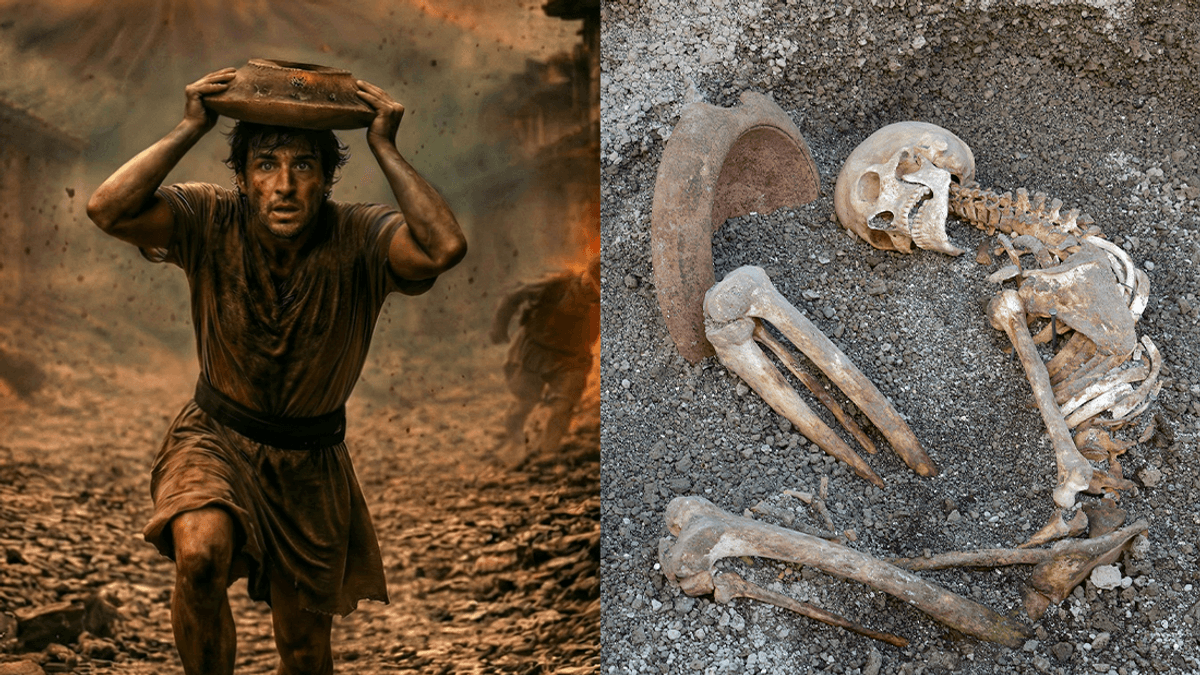
WWW.IFLSCIENCE.COMAI Recreates Horrific Final Moments Of Pompeii Victim Who Tried To Escape Disaster Using A Terracotta "Shield"If the scalding pyroclastic flows didnt get them, the fiery hailstones did.0 Комментарии 0 Поделились 4 Просмотры -
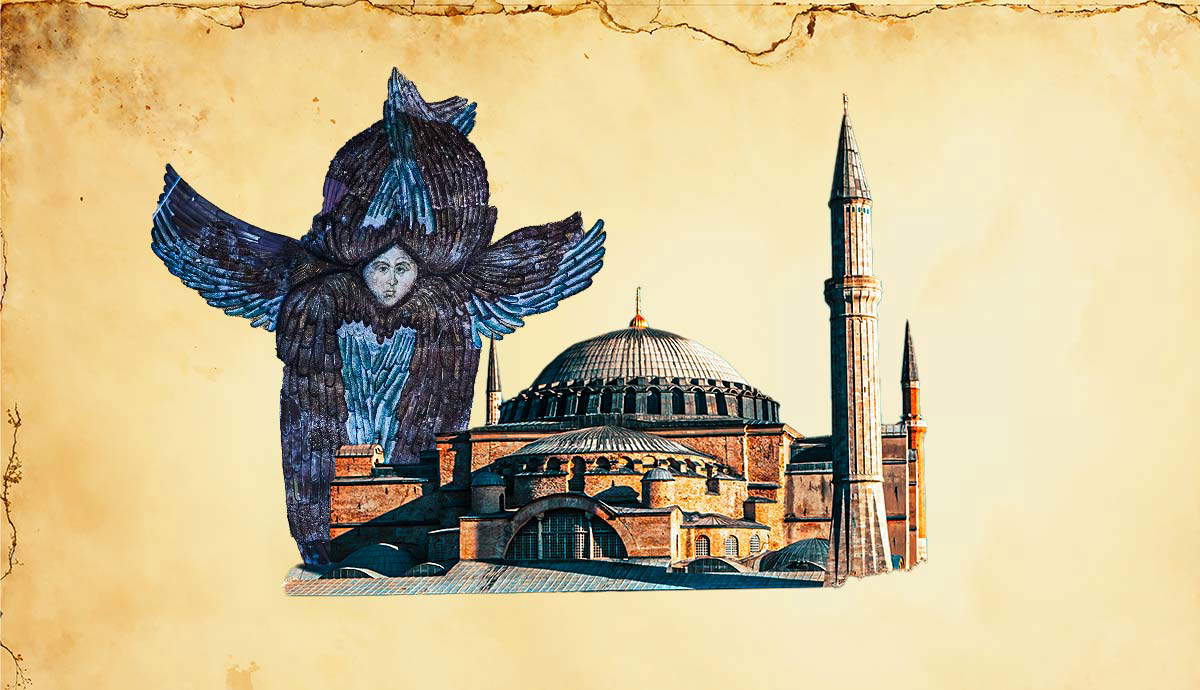
WWW.THECOLLECTOR.COMThe Mysterious Angels of the Hagia Sophia and Their RediscoveryBuried under centuries of plaster remain the seraphim mosaics of the Hagia Sophia. Over 700 years old, these mystifying angels have witnessed the buildings transformation from the glittering heart of Byzantium to a dominating symbol of Ottoman conquest and Islamic power. Embedded within these golden mosaics, the seraphims haunting eyes and massive six wings shine under the central dome, sanctifying the space as an iteration of Gods throne. Despite their erasure under Ottoman rule, the seraphim are once again gazing upon visitors of the Hagia Sophia.The Mythology of the SeraphimMosaic seraphim, Mont Saint-Odile Abbey in Alsace, France. Source Wikimedia CommonsThe seraphim derives from the Hebrew word rf. Meaning to burn, the seraphim are often translated as the burning ones, associated with the divine fire of God. Christianity ranks the seraphim as the highest order within the angelic hierarchy. Their existence is dedicated to their devotion to God, serving as the main and ultimate protectors of his throne.Only two texts in the Judeo-Christian bible detail their unique composition and eerie features, differing from the humanlike depictions of the archangels and saints more common in Christian iconography.In the Book of Isaiah, the Prophet Isaiah recounted seeing, the Lord,high and exalted,seated on a throne [] Above him were seraphim,each with six wings: With two wings they covered their faces, with two they covered their feet,and with two they were flying.And they were calling to one another: Holy, holy, holy is theLordAlmighty;the whole earthis full of his glory (Isaiah 6:1-4).The seraphim are also mentioned by St. John in the Book of Revelation. Also seeing a vision of Heaven, John contends witnessing, In the center, around the throne, were four living creatures, and they were covered with eyes, in front and in back [] Each of the four living creatures had six wings and was covered with eyes all around, even under its wings. Day and night, they never stop saying: Holy, holy, holy is the Lord God Almighty (Revelation 4 5-9).The Hagia Sophia, photo by Raimond Klavins. Source: UnsplashFollowing these biblical descriptions, the seraphim in early Christian art are depicted as massive celestial creatures with human-like faces and bulging eyes surrounded by three massive pairs of wings. Their wings are often outlined in red to represent the divine fire, and the flurry of their wings is in constant motion to praise and worship God.Four seraphim were commonly placed or etched into the highest points of early Christian churches to replicate the scene of Heaven from Revelation, designating the space below as one of the most holy, devout, and protected spaces for worshipers.The Seraphim in Byzantine ArtCeiling of the left chapel in Cathedral (Monreale), Mosaic of Christ Pantocrator. Created during the twelfth century, four seraphim mosaics encircle an image of Christ. Source: Wikimedia CommonsFollowing the final separation of the Western Roman and Byzantine Empire in 395 AD, Byzantine religious art developed its distinctive iconography and mosaic creations. While Western Roman mosaics depicted scenes of everyday life or mythology for floor and wall decoration, Byzantine mosaics became renowned for their gilded recreations of heavenly scenes and creatures on the ceilings and domes of their churches. Instead of using natural stones, Byzantine artisans used glass tesserae painted silver or gold, angling them so that the slightest amount of sunlight would make the tiles glow.Once Orthodox Christianity became institutionalized as the official state religion from the 4th century onwards, Byzantine religious architecture became standardized, domed churches with golden mosaic ceilings inspiring artists throughout from Cairo and Ravenna to Bulgaria and Russia.Once debates on Byzantine iconoclasm concluded in the 9th century, Byzantine artists began adding mosaics of Christ, the Virgin Mary, Old Testament monsters, biblical stories, and the hierarchy of angels. Religious icons and symbols glowed in Byzantine churches; the silver and gold tiles used as backgrounds and outlines emphasized the holiness and divinity of angelic creatures and religious figures.Interior of the Hagia Sophia. On the pendentives under the central dome are the wings and one exposed face of the seraphim. Source: Wikimedia CommonsEvoking their two biblical descriptions, the seraphim were depicted as a floating face with penetrating eyes surrounded by three pairs of wings. Four seraphim were often placed around or under mosaic depictions of Jesus, who was placed in the center of the highest dome or ceiling.Re-creating the scene from the Book of Revelation, these mosaic seraphim signified that the altar space, usually below the central dome, was a mirror of Gods throne, marking it the most sacred, protected, and blessed area of the church.Seraphim mosaics became a common artistic feature of Byzantine design until the fall of their empire in the 15th century. From then onwards, Western European depictions of saints and angels in more humanlike forms became the standardized depictions of heavenly entities.The Seraphim in the Hagia SophiaCentral dome of the Hagia Sophia, surrounded by four seraphim angels. Only the mosaic seraph face on the top left has been revealed under layers of plaster and metal since 2009. Source: Wikimedia CommonsOne of the most famous seraphim mosaics in Byzantine religious iconography is under the central dome within the Hagia Sophia. Completed in 537 AD in Constantinople, the Hagia Sophia remains one of the grandest architectural feats and displays of Byzantine design, its artistic influence witnessed across empires, religions, and continents. Ordered by Emperor Justinian I and designed by Anthemius of Tralles and Isidore of Miletus, the Hagia Sophia served as the largest domed church for almost 1,000 years. Centuries of earthquakes, sieges, and religious debates evolved the golden mosaics over time.Archaeologists contend that the seraphim mosaics were added to the Hagia Sophia during a rebuilding period from 1346-1354, after an earthquake collapsed the churchs eastern arch and part of the central dome. During these repairs, the four seraphim were added to each pendentive under the Christ Pantocrator mosaic in the center of the main dome. Each seraph stood at 20 feet tall, their faces measuring four feet wide, and their wings outlined in different shades of blue and green tile.In total, researchers believe that 16 seraphim and cherub angels may have been added to the Hagia Sophia throughout the Byzantine period, four to the nave pendentives and twelve to the golden vaults in the Southern Gallery. The seraphim were only able to guard the inner sanctum of the Hagia Sophia for just a century until their role was lost under the plaster and dust of the Ottoman Empire.The Seraphim Under Ottoman RuleInterior of Hagia Sophia, photograph taken by Pascal Sebah, 1870. Source: Getty Museum CollectionFollowing the fall of Constantinople and the defeat of the Byzantine Empire by Mehmed II in 1453, most Christian iconography within the Hagia Sophia was concealed. Mehmed II immediately commissioned building projects to convert the Hagia Sophia into a functioning mosque, adding structures like a prayer niche and minarets. However, Mehmed II set a precedent by not eradicating the Byzantine mosaics within the complex. Instead, he placed the Ottoman Empire as the rightful inheritors of the Roman legacy, adopting the Hagia Sophia as proof of the lineage they are now part of. Thus, the mosaics were concealed, covered with curtains, or painted over with whitewash.The glittering saints and angels disappeared, replaced with the etched names of Allah, the Prophet Muhammad, and the first caliphs. In 1609, during Sultan Ahmed Is restoration projects, the seraphim were covered with more white-wash. Additional layers of plaster and metal buried the seraphim faces under painted stars.The seraphim faces remained hidden until 1847, when they were rediscovered during a massive restoration project commissioned by Sultan Abdulmejid I. The Swiss-Italian brothers Gaspard and Giuseppe Fossati led the reconstruction, finding many Byzantine mosaics hidden under paint and plaster. Shocked by their discoveries, the Fossati brothers made sketches of the Christian icons before covering them up again with new plaster and paint. By this point, many historians speculate that the seraphim mosaics on the western pendentives had been destroyed or damaged as the wings were repainted by the Fossati brothers during the restoration project.For the next 160 years, the only modern evidence of the seraphim faces were these sketches. It was not until parts of the seraphim mosaics were discovered in 1989, and one face was fully uncovered in 2009, that the seraphim once again peered down upon the Hagia Sophia.The Seraphim TodayRe-discovered mosaic of a seraph face under the central dome in the Hagia Sophia, May 2022. Source: Wikimedia CommonsFollowing the secular reforms of the new Turkish Republic led by Mustafa Kemal Atatrk after the fall of the Ottoman Empire in 1922, the Hagia Sophia was designated as a state museum and ceased operating as a mosque by 1935. Shortly after, new restoration initiatives began to uncover, identify, and restore the Byzantine mosaics. These projects, involving international organizations like the Byzantine Institute of America, recovered centuries of hidden mosaics, earning the Hagia Sophia the status of a UNESCO World Heritage Site in 1985. In 1989, restoration work began uncovering mosaic tiles under the painted seraphim wings on the pendentives.It was not until scaffolding on the eastern arch was taken down in 2009 that the true extent of the seraphim was uncovered. Noticing mosaic tesserae under layers of loose plaster, further investigation and the removal of seven layers of plaster, paint, and whitewash revealed one of the seraphim faces for the first time in 160 years.In 2020, the Turkish government converted the Hagia Sophia back into a mosque, raising the question of whether the seraphim should once again be covered to adhere to Islamic custom.Regardless of their fate, these mosaics are evidence of Hagia Sophias mosaic-like past, gilded by the art, influence, and faith of multiple empires that changed the course of history under the haunting watch of the seraphim.0 Комментарии 0 Поделились 5 Просмотры -
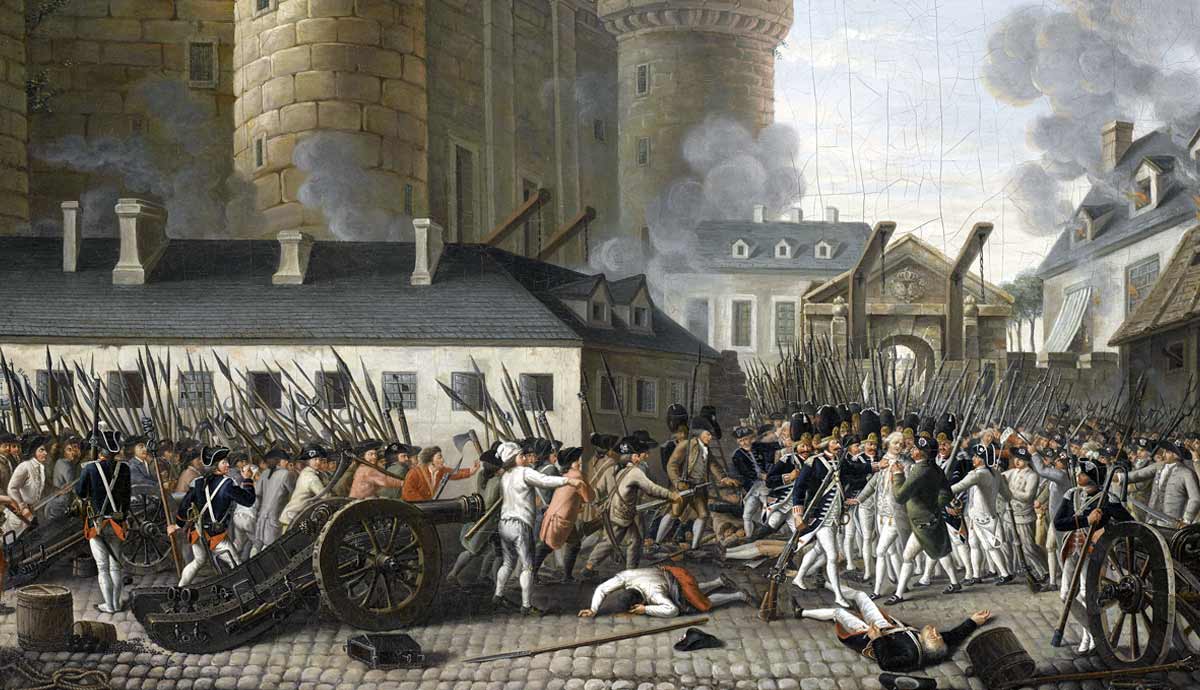
WWW.THECOLLECTOR.COMWhy Britain Risked Everything to Stop Napoleons EmpireThe Storming of the Bastille, 14 July 1789.Few conflicts in history have cost one country as much as the Napoleonic wars cost Britain. The fighting spanned from 1803 to 1815, with a major break for peace from 1802 to 1803. The total cost of the war came to about 1.65 billion, equivalent to 190 billion in todays currency adjusted for inflation. Most of that money was covered by government borrowing. The rest came largely from taxes, including a new income tax introduced in 1799. Yet the real question of why Britain kept paying this price year after year is one that historians still debate today.Tensions Rose Following the Killing of King Louis XVIThe Emperor Napoleon in His Study at the Tuileries, 1812.Britain largely chose to stay out of European affairs after the French Revolution broke out in 1789, but the situation soon spun out of control, compelling London to get involved. Complications began in late 1792 when French troops moved into Belgian territory. This put pressure on Dutch trade routes and on British maritime commerce along the River Scheldt. France soon declared war on both Britain and the Netherlands on 1 February 1793. At the time, the killing of King Louis XVI on 21 January 1793 had already drawn a line between the nations, as it made the new government appear more hostile and illegitimate. On one side stood the conservative royalist United Kingdom and its allies and on the other, the radical Republican France. Hostilities increased further when Napoleon came to power.The Invasion Threat and the Breaking of the Treaty of AmiensDavid Emperor Napoleon Study TuileriesA brief period of peace from 1802 to 1803 ended when Britain declared war on France on 18 May, 1803, bringing the Treaty of Amiens to a close. Britain had refused to evacuate Malta as required by the treaty, a main sticking point. Bonaparte on his part, also violated other provisions by making himself President of the Italian Republic (formerly the Cisalpine Republic) in early 1802 and by failing to fully withdraw French troops from the Batavian Republic (Holland) as stipulated. The threat of a French landing on British shores hung over the country for much of the period between 1793 and 1805. By then Britain had forged major alliances on the continent to keep France busy.The Beginning of Economic WarsPage of the Treaty of Amiens with the eight seals and the eight signatures of the signatories.With no way across the Channel, Napoleon tried a different strategy. On 21 November, 1806, he issued the Berlin Decree, setting up the Continental System which banned all trade with Britain across French-controlled Europe. The territories included French-occupied areas and vassals such as Spain, and later Prussia after its defeat, parts of Northern Germany, and other large areas of Europe. On 17 December, 1807, the Milan Decree extended this to any neutral ship that had stopped at a British port. The plan was to flood British factories with unsold goods and drain gold from the British treasury until the government was forced to ask for peace. The plan did not work. British merchants found ways around the rules. With naval power on their side, they were well-placed to keep smuggling goods into Europe.The Spanish RebellionLieutenant Colonel Arthur Wellesley, aged 26, in the 33rd Regiment, by John Hoppner, 1795. Source: Wikimedia CommonsBecause Portugal refused to stop trading with Britain, the French army marched through Spain and took Lisbon in November 1807. Napoleon even went a step further and removed the Spanish royal family from the throne, putting his brother Joseph on it as King of Spain in 1808. The Spanish people strongly opposed this, and soon, a nationwide uprising followed. Spain quickly became a serious problem for Napoleon. At the Battle of Bailn that occurred in July 1808, the Spanish army trapped and forced the surrender of about 17,000 French troops in what was the first major surrender of a Napoleonic army on a European battlefield. By then, Spain had already asked Britain for help, and in August 1808 Lieutenant-General Arthur Wellesley landed with 15,000 troops at Mondego Bay in Portugal. He and his men fought across Portugal and Spain for nearly six years before finally pushing the French armies back and helping defeat them on French soil.The Removal of Napoleon from the ThroneNapolon Bonaparte Abdicated in Fontainebleau, by Paul Delaroche, 1845. Source: Wikimedia CommonsIn April 1814 Napoleon abdicated the throne and was sent to the island of Elba. He returned to France in March 1815 and raised a new army, but was defeated at the Battle of Waterloo on 18 June 1815 by a British-led coalition under Wellington and the Prussian force under Field Marshal Gebhard Leberecht von Blcher. The battle ended over two decades of near-constant war, after which the winning countries once again restored the French monarchy, placing King Louis XVIII on the throne.0 Комментарии 0 Поделились 5 Просмотры -
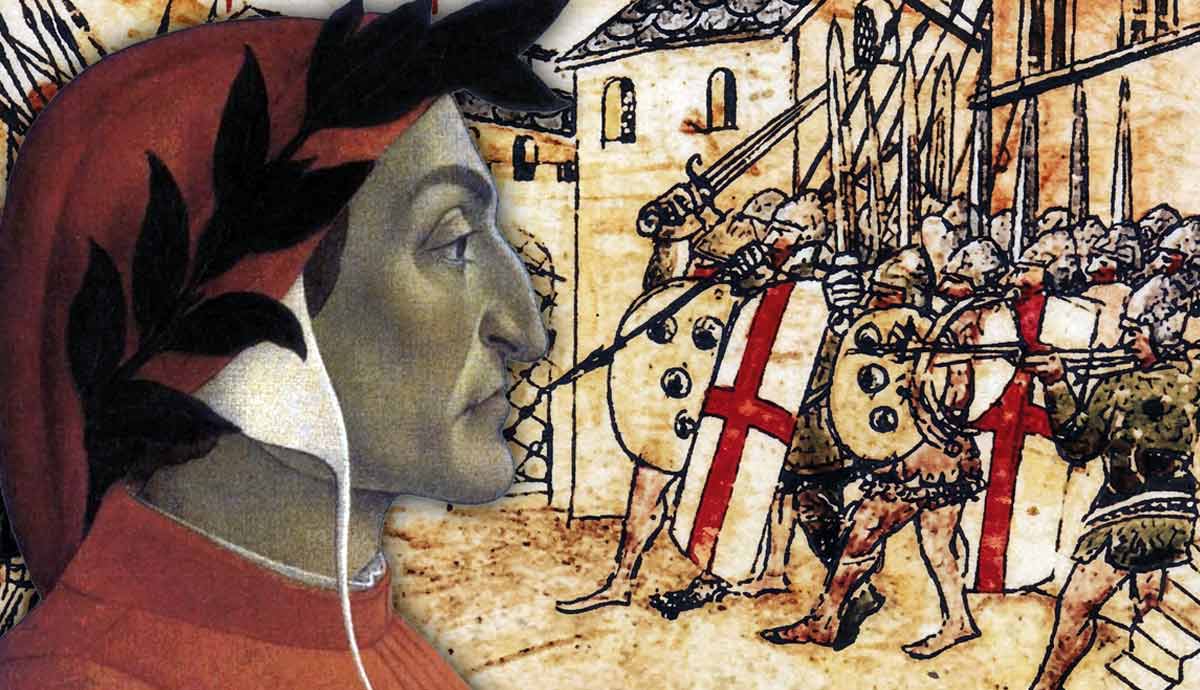
WWW.THECOLLECTOR.COMThe Guelphs vs. Ghibellines Feud That Turned Italian Cities Into BattlefieldsIn the 13th century, a fierce rivalry began to dominate the Italian political scene, already plagued by an endemic state of unrest. Within the communes of northern and central Italy, the internal disputes among the urban elite led to the emergence of two opposing factions: the pro-papal Guelphs and the pro-empire Ghibellines. The feud, intertwined with the communes struggle for independence, would tear the Italian peninsula apart well into the 14th century, leading to exile, violence, and bloodshed. Lets look into how the rivalry between Guelphs and Ghibellines originated and evolved.Who Were the Guelphs & Ghibellines?Drawing for a memorial of the Hohenstaufen dynasty, published in the magazine ber Land und Meer, 1817. Source: Wikimedia CommonsThe exact etymology of the Italian terms Guelfi and Ghibellini is not clear. However, scholars generally trace the origins of the two parties names to the rivalry between the German dynasties of the Welf and Hohenstaufen.After Emperor Henry Vs death in 1125, the Welf, dukes of Bavaria, vied for the throne of the Holy Roman Empire against the Hohenstaufen, dukes of Swabia. It is generally believed that the term Ghibelline derived from the Hohenstaufens castle of Waiblingen. In particular, it has been suggested that the names Guelphs and Ghibellines originated as battle cries (Hie Welf! Hie Waiblingen!) during the strife between the Hohenstaufen Emperor Conrad III and Welf VI of Bavaria. The theory, however, is dubious.When the names Guelfi and Ghibellini began to circulate in the Italian peninsula in the 13th century, they acquired a new significance. The term Guelphs identified the party siding with the papacy during its struggle against the Hohenstaufen Emperor Frederick Barbarossa, who sought to reassert imperial authority over the Italian territories.His claims alarmed the popes, who viewed Barbarossas Italian policy as a challenge to their own influence and independence. In the ensuing strife, the papacy allied itself with the Lombard communes, equally displeased by the emperors intention to restore imperial rights in Italy. In 1176, the Lombard League, led by Pope Alexander III, defeated Barbarossas forces at the Battle of Legnano. The struggle between the two powers, however, continued with Emperor Frederick IIs ascension to the imperial throne.Setting the Stage: The Papacy, the Empire, & the Italian CommunesFrederick I, Holy Roman Emperor as Crusader, image from Robert the Monks Historia Hierosolymitana, ca. 1188, photograph by Ronald Preuss. Source: Wikimedia Commons/Vatican Library, Vatican CityThe Hohenstaufens emperors attempts to restore imperial control over Italy split the Italian political scene into two factions: those who sided with the empire (the pars imperii, later known as Ghibelline), hoping to legitimize their authority, and those who saw the support for the papacy as a means to safeguard their autonomy.In the 11th and 12th centuries, as the Kingdom of Italy began to disintegrate, a new form of government emerged in northern and central Italy: the comuni (communes). In the absence of a centralizing authority, the communes, some of the first nonmonarchical governments in medieval Europe, quickly became a key part of the new political order.Indeed, boosted by a wave of economic and trade growth, the towns in north and central Italy turned into autonomous city-states, asserting their right to establish forms of self-government. As the communal institutions began to expand their control over the countryside, extending beyond the cities walls, they also pursued their own political and diplomatic agendas, de facto acquiring (and claiming) higher degrees of independence from the empire and the papacy.Over time, the division sparked by the Hohenstaufen emperors Italian policy evolved, with the already existing rivalry within the communes and between the city-states providing breeding ground for factionalism.From FlorenceFarinata degli Uberti, fresco by Andrea del Castagno, c. 1455. Source: Wikimedia Commons/Villa Carducci, FlorenceAs the death of Frederick II (1250) left a power vacuum in Italy, a bitter feud between Guelphs and Ghibellines pitted local factions and towns against each other. In his Divine Comedy, Dante described the Italian peninsula as an inn of sorrows and a ship without a helmsman in harsh seas. Indeed, in the political order that emerged after the decline of the Hohenstaufen dynasty, the papacy saw an opportunity to fill the void, beginning to exercise imperial prerogatives and securing the influence of the Papal States in the political scene. The popes oscillating policies, however, led to chronic instability across the peninsula.The early stages of the Guelph-Ghibelline feud that split the Italian peninsula in the 13th and 14th centuries began in Florence, where the political antagonism turned more brutal and deadly than in any other town. Chronicler Giovanni Villani dates the first violent clash between local families in 1117, emphasizing the role of the influential Uberti family in the dispute. At the time, however, the terms Guelphs and Ghibellines were not yet used to identify the feuding factions.The earliest mention of a Guelph presence in Florence would emerge only in 1248, when a letter sent to Frederick II referred to a Guelph party in the city. In the previous years, Cardinal Ottaviano degli Ubaldini, the pontifical legate to Florence, had urged a group of local families (later known as Guelphs) to oppose Frederick IIs imperial vicar. On February 2, 1248, however, a coalition led by Manente Farinata degli Uberti seized control, expelling the Guelph families from the city and destroying their properties. The Guelphs would return in 1250, forcing the Ghibellines into exile. To ItalyA page from La sconfitta di Montaperti (The Defeat of Montaperti), by Niccolo di Giovanni Ventura, 1442-1443. Source: Biblioteca Digitale SienaIn 1251, Farinatas group signed a secret pact with the Tuscan towns of Siena, Pistoia, and Pisa, identifying themselves as the Ghibelline party of Florence. The pact is the earliest extant document to mention the term Pars Ghibellinorum. By 1260, the feud between Guelphs and Ghibellines had spread to the rest of the peninsula, spread by groups of Florentine exiles. Meanwhile, the papacy, supported by Charles of Anjou (the brother of King Louis IX of France), strongly opposed the claims of Manfred, Frederick IIs natural son.The two factions clashed at the Battle of Montaperti on September 4, 1260, where the pro-Manfred Ghibelline forces, led by Siena, defeated the Guelph Florentine army. The battle was one of the bloodiest events in the Guelph-Ghibelline rivalry. In Inferno 10, Dante referred to Montaperti as the carnage, the great bloodshed that stained the waters of the Arbia [a stream near Siena] red. In the aftermath of the battle, the Florentine Guelphs were once again forced into exile.Miniature depicting the Battle of Benevento, from the manuscript Grandes Chronique de France, 1375-1380. Source: GallicaSix years later, however, the Guelph forces, supported by the papacy and Charles of Anjou, scored a pivotal victory against the Ghibellines and Manfreds army at Benevento. The battle marked the end of the Ghibelline influence in Florence (and Italy). In the following years, the Guelphs launched a violent persecution against their political rivals. Some deceased members of the Uberti family, for example, were posthumously condemned, their remains exhumed and destroyed. The Guelph victory, however, did not end the factionalism, and toward the end of the 13th century, more conflict erupted within the Guelph party.Guelphs, Ghibellines, and National IdentityPortrait of Dante Alighieri, by Sandro Botticelli, c. 1495. Source: Wikimedia Commons/Bibliothque et fondation Martin Bodmer, Cologny, SwitzerlandBy the mid-13th century, the Guelphs and Ghibellines who clashed at Montaperti had little in common with the original pro-papacy and pro-empire factions. Indeed, what began as local disputes within the communes changed character over time, leading to the emergence of organized political parties that resorted to mass political exile to define themselves.The political warfare inevitably created political disunity throughout the Italian peninsula. At the same time, however, the birth of the Guelphs and Ghibellines partially recomposed the extreme factionalism within the communes, contributing to the formation of larger regional states. In the 19th century, during the Risorgimento, the patriots fighting for Italian unification and independence saw the exile experienced by many (including Dante) during the 13th and 14th centuries as a mirror of their own diaspora, creating a new paradigm of nationhood.0 Комментарии 0 Поделились 5 Просмотры -
Is It Okay for Christians to Watch Rated R Movies?Is It Okay for Christians to Watch Rated R Movies? When it comes to movies, I think a Christian ought to first check out what is going to be in this film. There are many websites that can tell you and show you the kinds of things you will encounter in a film. There are some things that will cause me to immediately say I cannot see this movie and no Christian should see this movie....0 Комментарии 0 Поделились 22 Просмотры
-
What Is Sanctification? The True Bible MeaningWhat Is Sanctification? The True Bible Meaning Sanctification is a theological term for basically Christian living, it's called progressive sanctification. But if you step back and look at how the Bible uses the term, it's a little different actually. The New Testament, when it talks about sanctification, it just means being set apart. And that happens when a person becomes a...0 Комментарии 0 Поделились 5 Просмотры
-
Denuvo dealt major blow as crackers claim all non-VR games with the anti-tamper have been bypassedDenuvo dealt major blow as crackers claim all non-VR games with the anti-tamper have been bypassed The war on videogame piracy may, for now, be a losing one, especially for Denuvo DRM maker Irdeto. According to a popular cracking forum, every non-VR game using what has become the industry's go-to anti-tamper software has successfully had its protective layer circumvented. Sensing the...0 Комментарии 0 Поделились 7 Просмотры
-
Old School Runescape Leagues' regional restrictions have only fueled my love for VarlamoreOld School Runescape Leagues' regional restrictions have only fueled my love for Varlamore Old School Runescape is absolutely massive nowadays, with Gielinor having gradually been expanded by an entire continent and, most recently, with the Sailing update, to the sea. There's never been more content to clear, or regions to revel in. But, with the limited-time Leagues mode, the world has...0 Комментарии 0 Поделились 6 Просмотры
-
An OpenAI phone with agents instead of apps joins the hardware rumor millRumor has it OpenAI is building an agentic AI smartphone OpenAI is apparently not content with just running the most talked-about AI chatbot on the planet. The company now wants to be in your pocket, too.Prominent Apple analyst Ming-Chi Kuo published findings this weekend revealing that OpenAI is developing a smartphone built around AI...0 Комментарии 0 Поделились 6 Просмотры