The Turbulent History of Havana From Colonialism to Communism
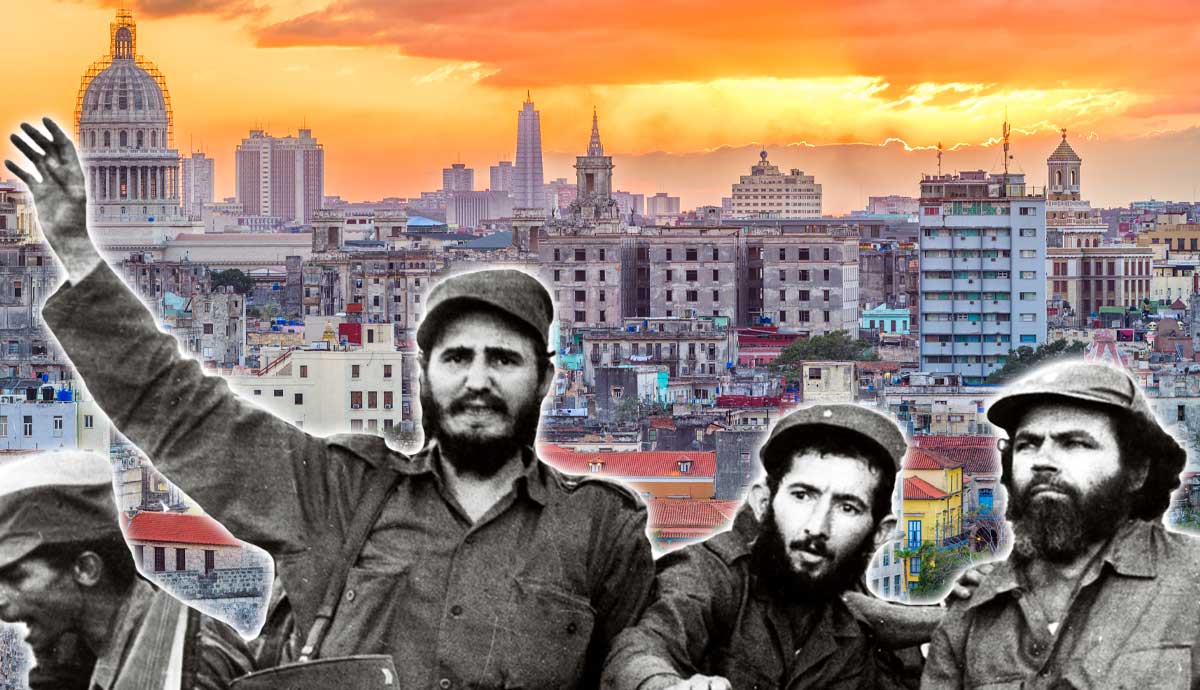
Havana has occupied the minds of Spaniards, North Americans, and South Americans since its founding in 1519. From its days as a thriving hub of trading activity for the Spanish empire to being a Communist outpost in the Western hemisphere, Havana has been one of the most influential cities in the history of Latin America.The Birth of the CityDiego Velzquez de Cuellar, the Spanish explorer who founded Havana, 1728. Source: John Carter Brown Library, Providence, Rhode islandOnly two decades after Christopher Columbus first made landfall in the Caribbean, Spanish sailors from the island of Hispaniola arrived on Cuban soil and encountered the Tano people. The territory was attractive to the Spanish and other Spanish sailors began arriving on the islands coast. In 1514, Diego Velzquez de Cuellar founded a colony called San Cristbal de la Habana. However, the initial location was poorly suited and it was soon relocated to the deepwater harbor known as Puerto Carenas.The harbor location was perfect for the Spanish as they continued to develop their colonial presence in the region. It was near the entrance to the Gulf of Mexico and ships leaving the harbor could make it to the Gulf Stream quickly, enabling them to travel home to Spain. As the port was gradually developed, more Spanish settlers arrived, leading to an expansion of the settlement. While Cuba itself lacked the riches the Spanish desired, Havana became a critical node in Spains overseas gold and silver trade.In 1553, the Governors residence was moved from Santiago de Cuba to Havana, and in 1607 the Spanish government officially recognized the city as the capital of the colony. Due to pirate attacks and the threat of raids by the native population, Havana was fortified with a series of formidable city walls, many of which remain around the city today. Several Spanish warships were permanently stationed in the harbor to protect convoys as they headed overseas to Iberia.Havana in the 1600s-1700sDutch Privateer Piet Hein attacking a Spanish silver convoy off the coast of Havana, 1909. Source: Wikimedia CommonsIn 1634, the Spanish Court signed a decree designating Havana to be Key to the New World and Rampart of the West Indies. This meant that the city was officially designated the main import/export hub for goods and people going in and out of the Spanish colonies in the Caribbean and New Spain. The port city was already a target for raiders. During the Dutch War of Independence, Dutch admiral Piet Hein took a fleet with him to attack a Spanish silver convoy leaving Havana in 1628.The citys population increased rapidly as a result of immigration, especially from the Canary Islands. An abundance of raw materials made building homes and infrastructure much easier. Additionally, the Catholic Churchs influence on the island was very strong. Religious landmarks such as the convent of St Augustin, El Morro Castle, the chapel of the Humilladero, the fountain of Dorotea de la Luna in La Chorrera, the church of the Holy Angel, the hospital de San Lazaro, the monastery of Santa Teresa, and the convent of San Felipe Neri were completed in this era.When Spain got involved in the Seven Years War, the harbor was a prime target for British forces, which hoped to undermine Spains colonial economy. In 1762, a powerful British force seized Havana from the Spanish and commenced an occupation that lasted until the signing of the Treaty of Paris in 1763. Upon regaining control of the city, the Spanish built the strongest fortifications in the Americas around the city walls. Its expanded shipyard was responsible for building the Santsima Trinidad, one of the largest naval vessels of the time, which saw action during the Battle of Trafalgar.Sugar and Slavery in HavanaA print of the Almendares River Bridge in Havana, constructed by slaves, 1839. Source: Cambridge University PressThe story of slavery in Havana began in a similar manner to the rest of the Americas. Initially, the Spanish attempted to employ Tano people as slaves to help develop the citys fortifications and infrastructure. However, the local population often fled inland or became ill very quickly, meaning that the Spanish could not get enough of them to work in Havana. Instead, Spanish ships began bringing West Africans over as slaves in the 1500s. Their arrival proved to be the start of a very long period of African forced labor in Cuba.The plantation economy that came to define Cubas economy did not fully develop until the 1770s. Prior to this, slaves in Havana worked in the port or helped build homes and other infrastructure throughout the city. As the citys population grew, so did the number of slaves. A census taken in 1774 found that 44,333 slaves lived throughout the island, with a sizable portion in Havana. The numbers would increase rapidly once Spain formally opened up Havana to the slave trade in 1789, with 300,000 Africans being imported from overseas between 1790 and 1820.Without the mineral wealth of other Spanish colonies in the Americas, Havanas main export was sugar. Initially, sugar farming took place in the fields immediately outside the city. Over time, the entire island would become dominated by sugar plantations. Havanas port, one of the largest in the Caribbean, proved vital in getting sugar in and out of the colony. Following Haitian independence from France, Cuba became the dominant sugar-producing location in the Western Hemisphere.Havana in the 19th CenturyA map of Havana dated from 1851. Source: latinamericanstudies.orgHavanas status as a critical port for Spain meant that the city gained an enormous amount of revenue. This enabled the city to become a fully fledged metropolis and it earned the nickname Paris of the Antilles. Spain so valued its control over Cuba and favoured its development so that the island did not join the Latin American Wars of Independence at the beginning of the 19th century. The government in Madrid did everything it could to maintain control of Cuba, even building a railway in and out of the city in 1837.During the 19th century, Cuba began to attract the attention of the expansionist United States. American southerners were particularly attracted; many even fled there after the Civil War ended. Meanwhile, other immigrant communities began to establish themselves throughout the city. For instance, over 150,000 Chinese laborers arrived in Havana to support the colonial economy. More Spaniards continued to emigrate to Cuba seeking opportunities that were lacking in Iberia. These waves of immigration led to the development of ethnic barrios, or neighborhoods, that reinforced the citys multiculturalism, but also contributed to growing ethnic tensions.Wreckage of the USS Maine after the explosion on board, 1898. Source: history.comAt this time, Cubas nationalist movement began to develop and plotted to overthrow Spanish rule. Most of the insurgent activity took place far away from the capital, but there was a nationalist underground during the Ten Years War and the Cuban Independence War. The famed revolutionary Jos Mart was born in Havana and spent much of his early life there, although the Spanish ended up forcing him to flee. In January 1898, the Spanish government began considering giving Cuba more autonomy. Loyalist supporters of Spanish rule began rioting, leading to major unrest in the capital.During the civil war, the USS Maine arrived in Havana harbor to protect American civilians and property. A boiler explosion rocked the ship, killing hundreds of its crew. Believing that the ship was sunk by a Spanish mine, the United States declared war against Spain and announced that it would support the Cuban fight for independence. Between April and August 1898, the US defeated the Spanish and forced them to grant Cuba independence. A new Cuban government was to be set up in Havana after a period of American occupation.Havana in Independent Cubas Early YearsA photo of Havanas Central Square, 1928. Source: Time MagazineFrom 1898 to 1902, Cuba remained under American military rule under the terms of the peace treaty. This regime was very controversial and its record of governance in Havana was mixed. Believing that the Cuban rebels were not fit to rule the island, the US Army forcibly disbanded most of their units and prevented rebel commanders from taking up municipal positions in the city. While the United States did refurbish much of Havanas infrastructure and helped eradicate yellow fever, the occupation administration also created a culture of corruption with the new Cuban political class and American businesses as well.President Toms Estrada Palma assumed power in Havana in 1902 after the end of the military occupation. The new Cuban government established itself in Havanas old Spanish colonial administrative buildings, with the former Captain Generals palace becoming the Presidents office. Despite lingering resentments towards the US over its meddling in Cuban affairs, their work in redeveloping Havana ensured that the city retained its reputation as a major commercial and cultural center. Major multinational businesses set up offices in Havana and a class of Cuban moneymakers established themselves in the citys leafy neighborhoods and suburbs, such as Miramar and Siboney.However, trouble loomed on the horizon. Corruption was rampant in Cuban politics, aided by the presence of prolific American mobsters on the island. The US repeatedly intervened in the islands politics, sending troops into Havana regularly in the 1920s. President Palma faced a revolution in 1906 which led to another American occupation. Strongman Gerardo Machado ruled the island with an iron fist from 1925 until he was ousted in a military coup in 1933. Even when Cuba had a democratic government from 1940 to 1952, political instability played out on the streets and Havana was convulsed with mob violence, strikes, and massive inequalities. It was a recipe for disaster.Havana and the RevolutionFidel Castro and other Cuban revolutionaries enter Havana, 1959. Source: History TodayIn 1952, the commanding officer of the Cuban Revolutionary Army, Fulgencio Batista, took power in a coup and scrapped the Constitution of 1940. Batista, who had previously governed the country as an elected leader, became a caudillo and ruled the country with an iron fist. His government offered tax incentives to attract additional foreign investment and continued beautifying Havana. At the same time, his intelligence services (the Bureau for the Repression of Communist Activities and the Military Intelligence Service) hunted down anyone who opposed his rule. American mafiosi controlled several major businesses and casinos and workers strikes were brutally crushed.In 1956, a lawyer who opposed the coup in 1952 named Fidel Castro led an assault on the Moncada Barracks in Santiago, sparking the Cuban Revolution. Most of the fighting took place in the Sierra Maestra mountains, where the army engaged in pitched battles with the guerillas. However, other rebel groups decided to strike at Batistas power base directly. In 1957, the Revolutionary Directorate, a group of mainly college students, attacked the Presidential Palace. The attack failed and many of the student leaders were hunted down by the police and security services.Despite these efforts, Batista failed to put down the insurrection and, by December 1958, he saw the writing on the wall. As Castros forces advanced, wealthy backers of Batista began fleeing in fear of the revolution. Batista himself left for the Dominican Republic in early 1959. Chaos briefly engulfed the streets of the city until members of the Revolutionary Directorate took control of institutions throughout the city. When Castros men arrived, they began setting up a new government, which brought major changes to the city. From then on, Havana served as a Communist outpost on Americas doorstep.Havana as the Bastion of Latin American SocialismA man repairing his car in Havana, 1986. Source: Foreign AffairsMost of the middle and upper classes fled in the wake of the Communist Revolution, abandoning their property. Fidel Castro promptly began nationalizing businesses and seizing the assets of Batistas former supporters. While his government did take drastic action to reduce the citys rampant inequality, Havanas loss of revenue caused the city to suffer from serious decay and a dangerous decrease in its population.Havana became the center of revolutionary activity in the Americas. Many leftist guerillas such as Che Guevara traveled there to get advice from Castro and his colleagues about how to overthrow their existing governments. Communist officials moved into homes vacated by former Batista loyalists and Castro relocated his seat of government to a building renamed the Palace of the Revolution. Throughout the Cold War, Soviet aid ensured that the economy stayed above the water, but the collapse of the USSR proved catastrophic and Havana was convulsed with riots, leading to another population exodus.While much of Havanas old infrastructure remains intact due to government support, the city is no longer the Paris of the Antilles. American sanctions and government mismanagement have devastated the Cuban economy and Havana is no exception. The city routinely faces demonstrations against the regime and the standard of living has decreased drastically. The present city is a far cry from its heritage as one of the main hubs of international trade.






 English
 Arabic
 French
 Spanish
 Portuguese
 Turkish
 Dutch
Dutch
 Italiano
 Russian
 Romaian
 Portuguese (Brazil)
 Greek
Greek