• WWW.THECOLLECTOR.COM
    How Hannibals Siege of Saguntum Sparked the Second Punic War
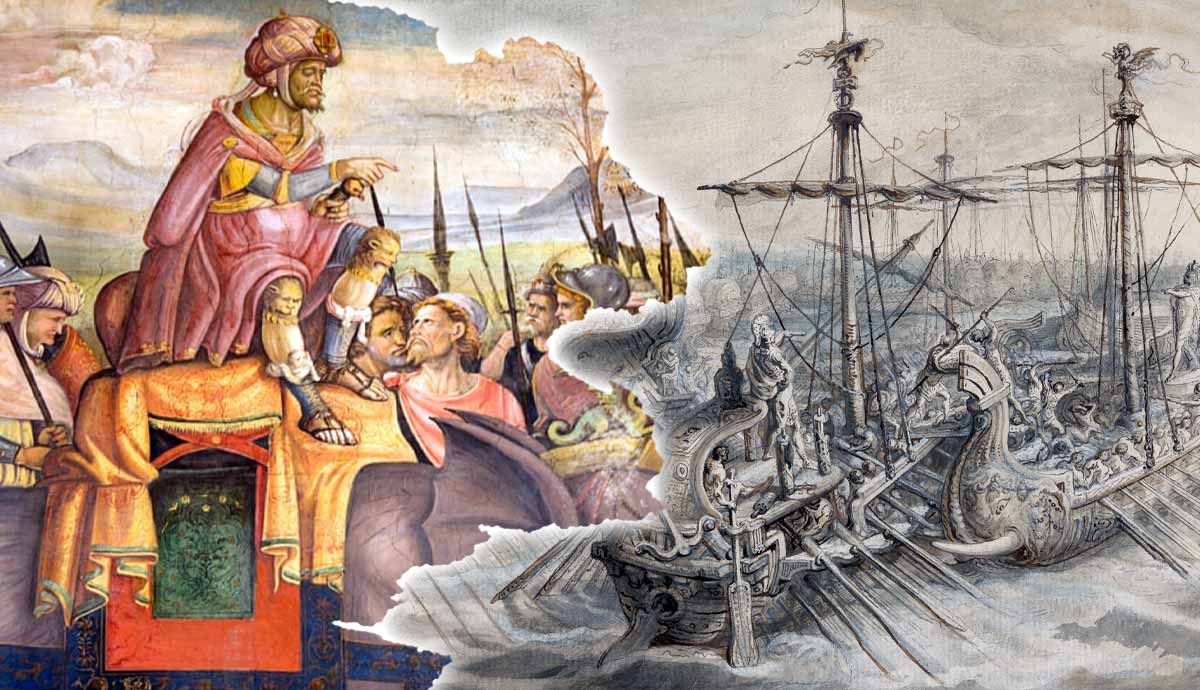
    Eight months of siege annihilated the garrison of Saguntum in present-day Spain. This brutal siege opened the door for the Carthaginians to march across the Pyrenees with the intention of crossing the Alps into Italy. While not well known today, it set in motion a dramatic sequence of events that threatened the survival of the Roman Republic.The Road to War: Rome, Carthage, and the Iberian QuestionA drawing of the Battle of Cape Ecnomus in the First Punic War, 1763. Dickinson College CommentariesAfter Carthages defeat in the First Punic War, the once-powerful maritime republic lost its empire in Sicily and much of its prestige. To rebuild its wealth and influence, the Carthaginian general Hamilcar Barca turned to the Iberian peninsula, where rich mineral resources and manpower offered a new base for expansion. His son-in-law, Hasdrubal the Fair, continued this policy, founding the city of Carthago Nova (present-day Cartagena) and forging alliances with local tribes.At this time, the Romans were expanding their own sphere of influence in the western Mediterranean. Concerned by Carthaginian activity in Iberia, Rome signed the Ebro Treaty in 226 BC. This established the Ebro River as the northern limit of Carthaginian control. However, the agreement left some ambiguity. For instance, the city of Saguntum, situated south of the Ebro but allied with Rome, found itself cut off from Rome.The tension between legal boundaries and political realities created fertile ground for conflict. Carthage viewed Saguntums Roman alliance as a violation of the treatys terms, while Rome saw any interference as an act of aggression. The stage was set for confrontation, one that would reignite the rivalry between the Mediterraneans two great powers. When Hamilcars son Hannibal turned his attention to Saguntum, war was not far away.Hannibal in IberiaStatue of Hannibal Barca in the Louvre Museum in Paris, 2016. Source: World HistoryWhen Hannibal Barca assumed command of Carthaginian forces in Iberia in 221 BC, he inherited a very volatile political landscape. Still in his twenties, Hannibal had already proven himself in battle and enjoyed strong loyalty from his troops, many of whom had served under his father and his brother-in-law. His appointment was approved by the Carthaginian army in Spain and later confirmed by the Carthaginian Senate. At the time, different factions in the Senate debated the wisdom of continued expansion abroad.Under Hannibals leadership, Carthages Iberian territory expanded rapidly. Through a combination of military skill, diplomacy, and intimidation, he secured alliances with local tribes, extended control inland, and reinforced Carthago Nova as the regional capital. This consolidation alarmed both Rome and its Iberian allies, as Carthaginian territory extended ever closer to the Ebro River.At the heart of this tension stood Saguntum, a prosperous coastal city with strong economic ties to Rome. Though technically south of the Ebro and within Carthages sphere, Saguntums alignment with Roman interests was a direct challenge to Hannibals authority. The city refused to submit to Carthaginian rule and instead appealed to Rome for protection.To Hannibal, Saguntums defiance represented Roman interference into Carthaginian affairs. His decision to confront the city was both strategic and ideological. He wanted to secure his rear in Iberia and to strike a blow at the treaty system Rome used to contain Carthage. This heralded a major confrontation.The SiegeRoman ruins in Saguntum, 2016. Source: World HistoryIn 219 BC, Hannibal marched south from Carthago Nova and laid siege to Saguntum, The citys location, perched on a defensible hill near the Mediterranean coast, made it a strategic stronghold. For Hannibal, capturing Saguntum would secure his rear in Iberia and send a clear message to Rome: Carthage would no longer tolerate interference south of the Ebro.According to the Roman historian Livy, the siege lasted roughly eight months. Hannibals forces used siege towers, battering rams, and mining operations to breach the citys formidable walls. The Saguntines, though heavily outnumbered, resisted fiercely, relying on their strong fortifications and Roman promises of aid. However, their appeals to the Roman Senate faced diplomatic delays, as Rome was preoccupied with conflicts elsewhere and uncertain whether to risk another conflict with Carthage.Inside the city, famine and exhaustion took a devastating toll. When Saguntums defenses finally collapsed, the outcome was catastrophic. The inhabitants were slaughtered or enslaved and the city itself was plundered and burned. Some of the accounts written by Roman chroniclers describe acts of collective suicide by citizens unwilling to surrender.Hannibals victory at Saguntum was militarily decisive but caused serious political problems. While it eliminated a potential Roman foothold in Iberia, the siege also gave Rome the moral justification it needed to declare war. After the city fell to the Carthaginians, the Roman political elite demanded a military response.The Roman Ultimatum to CarthageStatue of Quintus Fabius Maximus Cunctator, by J.B. Hagenauer, 1777. Source: Schnbrunn Palace, ViennaThe destruction of Saguntum sent shockwaves through the Mediterranean world. News of the citys fall reached Rome later that year, provoking outrage in the Senate. The Romans viewed the attack as a blatant violation of the Ebro Treaty, which they interpreted as protecting their ally south of the river. To Hannibal, however, the siege had been entirely justified. Saguntum, he argued, lay within Carthages sphere of influence and had provoked hostilities by executing pro-Carthaginian leaders.Rome initially sought a diplomatic solution. A group of envoys was dispatched to Carthage early in 218 BC to demand Hannibals surrender and reparations for Saguntums destruction. Within the Carthaginian Senate, debate raged between two factions. On one hand, the hawkish faction supported Hannibals expansion in Spain. On the other hand, the moderate aristocrats favored an accommodation with Rome. The moderates argued that another war would be disastrous so soon after the First Punic War, while Hannibals supporters insisted that Rome, not Carthage, had violated the treaty.The Roman envoys, led by Quintus Fabius Maximus, delivered their final ultimatum to the Carthaginian council. When asked to choose between peace and war, Fabius apparently declared that he carried both in the folds of his toga and invited the Carthaginians to choose. The Carthaginians were defiant and they chose war. This exchange formally ended the fragile peace that had lasted for nearly two decades and the fighting was set to commence.From Saguntum to the AlpsAnnibale in Italia, by Jacopo Ripanda (attr.), c. 16th century. Source: Capitoline Museum, RomeFollowing Carthages rejection of Romes ultimatum, both powers prepared for renewed conflict. In spring 218, Rome formally declared war on Carthage. The Romans assumed that the main fighting would take place in Iberia or North Africa, where Carthaginian power was concentrated. They dispatched one army under Publius Cornelius Scipio to Spain and another under Tiberius Sempronius Longus to Sicily and Africa, expecting to attack Carthaginian possessions swiftly.Hannibal, however, did not act as the Romans expected. Rather than waiting to be attacked, he launched one of the most audacious military campaigns in ancient history. Leaving his brother Hasdrubal to hold Iberia, Hannibal marched north with an estimated 90,000 infantry, 12,000 cavalry, and several dozen war elephants. He planned to carry the war into the Italian peninsula, using speed and alliances with Romes enemies to destabilize the Roman Republic.Before setting out, Hannibal secured his rear by consolidating control over Iberian tribes and ensuring the loyalty of local garrisons. This was a direct outcome of his victory at Saguntum. That siege had not only removed a Roman ally from the map but also freed Carthages hands for the fight with the Romans. By the fall, Hannibal had crossed the Pyrenees and the Rhone River, heading toward the Alps for his fateful campaign against Rome. The fall of Saguntum enabled Hannibal to undertake one of the most famous military campaigns in history.The Legacy of the SiegeEngraving of Hannibals army crossing the Alps in The Illustrated History of the World for the English People, 1881-1884. Source: Wikimedia CommonsThe siege of Saguntum left a lasting mark on both Roman and Carthaginian memory. For Rome, the city became a symbol of innocence and victimhood and was used to rally support for the war against Hannibal. Livy echoed contemporary chronicles in portraying the Saguntines as brave and loyal, suffering a cruel fate at the hands of a vicious Carthaginian army. Their destruction was framed as a moral justification for Romes intervention and a warning of what would happen if Carthage remained untamed.From the Carthaginian perspective, Hannibals actions were a matter of strategy and principle. He argued that Saguntum had provoked hostilities and needed to be subdued because of its ties to Rome. While he may not have wanted to annihilate the whole city, he did seek a decisive victory to ensure Carthaginian dominance over Iberia and to threaten Romes western flank.The siege also influenced later historical and military thought. Polybius, writing a century later in the second century BC, emphasized the legal and diplomatic ambiguities surrounding Saguntum. For Hannibal, the citys fall was both a practical victory and a moral precedent, signaling that Carthage would defend its interests by force when necessary. Ultimately, the siege of Saguntum serves as a case study of how localized conflicts can spark larger wars. Its destruction not only triggered the Second Punic War but also became a touchstone in discussions of justice, responsibility, and the causes of conflict.
    0 Kommentare 0 Geteilt 6 Ansichten
  • WWW.THECOLLECTOR.COM
    How Irelands Sheela-na-Gigs Went from Medieval Church Warnings to Feminist Icons
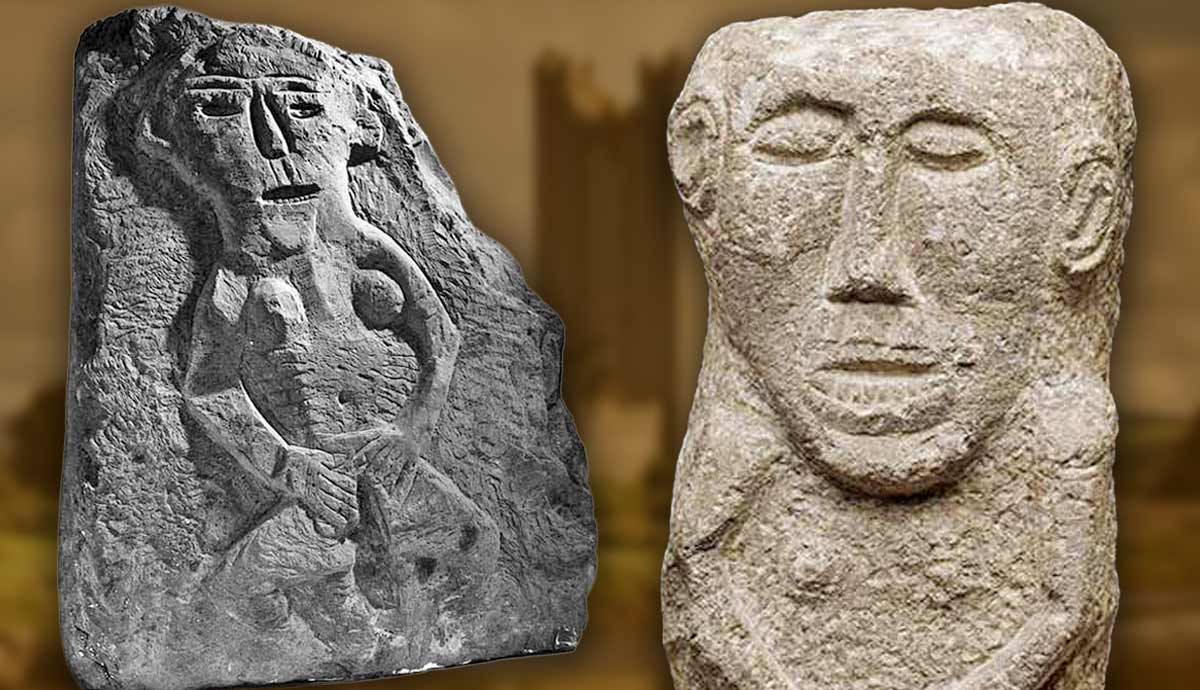
    Sheela-na-gigs are stone carvings found in churches across Western Europe, most of which exist in Ireland. They depict women exposing their genitalia, mainly dating to the 11th to 14th centuries when Christianity was the predominant religion in Western Europe. This makes Sheela-na-gigs a bit of a mystery, but the carvings have been recognized as rare examples of positive depictions of womens sexuality in Medieval art.Where Can Sheela-na-gigs Be Found?Sheela-na-gig by Unknown Artist, 12th Century. Source: The British Museum, LondonMany Sheela-na-gigs can be found in museums in Ireland, England, and Scotland, but many also exist in their ancient locationson town walls, built into churches, in piles of stone at ruins, or laid in fields. Due to this, many of the examples of Sheela-na-gigs are slowly disintegrating.Sheela-na-gigs are shrouded in mystery and even their name is uncertain. The term Sheela-na-gig has Irish origins, but the meaning is unknown. The old hag of the Breasts is offered as a possible translation by Irish archaeologist and historian Eamonn Kelly. Other names have also been given to Sheela-na-gigs over the years, such as Hag of the Castle or Devil Stone. Feminist researcher Barbara Walker suggests that gig in Sheela-na-gig was related to jigs or gigues, which were orgiastic dances in the pre-Christian era. Opinions on the etymology of the name vary by region and family.Folk EtymologySheela-na-gig by Unknown Artist, Dark Ages. Source: Peoples Collection WalesThe Sheela-na-gigs origin story varies just as much as its folk etymology. There is an Irish story of Queen Medb. The Queen goes to battle, only to find she is outnumbered on the battlefield. In response, she raised her skirts to the enemy army and displayed her vulva, as a Sheela-na-gig does, and the enemies were so confused by the gesture that they turned around and went home to their mothers.There were many stories to go with the Sheela-na-gigs. While some historians believe that Sheela-na-gigs were used to warn churchgoers against the lustful sins of sexual pleasure, others believe that Sheela-na-gigs were the product of a resurgence of an ancient Greek belief that a female exposing her vaginal area to a demon would scare it away, and therefore were a symbol for warding off evil.Sheela-Na-Gig by Nancy Spero, 1991. Source: MoMAIt seems likely that Sheela-na-gigs have pre-Christian, pagan origins that got carried into early Christianity as it swept across the continent. There are historical accounts of Irish farmers guarding the Sheela-na-gigs with their lives when priests threatened to have them removed from the church walls. Many were removed, but the efforts of those farmers who saw value in the past allow us to revel in the mystery of Sheela-na-gigs today. These carvings also serve as a testament to womens involvement in culture and art throughout the ages when their voices and sexuality were usually stifled. Today, the effort of saving the Sheela-na-gigs has shifted somewhat to fit modern problems, such as misinformation and unconscious biases based on the historical treatment of women.ProjectSheelaSheela-na-gig by Unknown Artist, 12th Century. Source: KnowthIn 2021, there was an online group project called ProjectSheela, in which Irish feminists reclaimed the Sheela-na-gigs to create solidarity amongst women by placing artistic renditions of the carvings in areas of Dublin that held significance in terms of womens history. The Sheela-na-gigs that were placed around the city were created with clay, covered in gold luster with glazed vulvas.An anonymous ceramicist involved with the project stated, Some scholars thought the Sheela was an image of evil, or the embodiment of sin, but we see the sexuality of the Sheela as positive and empowering. A notable location for one of their Sheela-na-gigs was the last of the Magdalene Laundries which closed in 1996. Magdalene Laundries were institutions created by the Irish government and the Catholic Church for unmarried mothers. At these institutions, the mothers and their young children would be horrendously abused and even killed. Mass graves for neglected babies associated with the Magdalene Laundries were only recently discovered ProjectSheela commemorates the pain those women and children went through with their work by using a symbol of female empowerment associated with sexuality.Sheela-na-gigs and Feminist ArtSheela-na-gig by Unknown Artist, 476-1492. Source: Art UKSheela-na-gigs have become a powerful symbol in art once again, this time helping create awareness for a movement as women voice their opinions against patriarchal structures across the world and take control of their bodies and sexualities in leaps of progress like never before. A 20th-century feminist artist, Nancy Spero, was interested in the comparison between mythological women and realistic women.Spero created a print of a Sheela-na-gig in her series of goddesses using bold complementary colors that give the Sheela-na-gig an experience and personality of her own. This way the Sheela-na-gig isnt presented as an object that exists simply for the male gaze to which nearly all women and their bodies are often subjected, especially in art. The Sheela-na-gig, possibly once a symbol of fertility before it became a warning against lust, has now taken on a new meaning in the 20th and 21st centuries as feminist artists reclaim the symbolism of the Sheela-na-gig to combat oppressive ideas about women.References:Bedworth, Candy. The Intriguing Tale of the Shocking Sheela-na-gig and its Art References. DailyArt, 2023.Graf, Stefanie. Nancy Spero: 7 Essential Works. TheCollector, 2023.Rhoades, Georgia. Decoding the Sheela-na-gig. Feminist Formations, 2010.Sheela-na-gig at Balgeeth, Ardcath. Knowth by Boyne Valley Tours, accessed 2023.Stevens, Jenny. Big Vagina Energy: The Return of the Sheela-na-gig. The Guardian, 2021.
    0 Kommentare 0 Geteilt 6 Ansichten
  • WWW.THECOLLECTOR.COM
    Inside the Malleus Maleficarum the Book That Fueled Witch Hunts
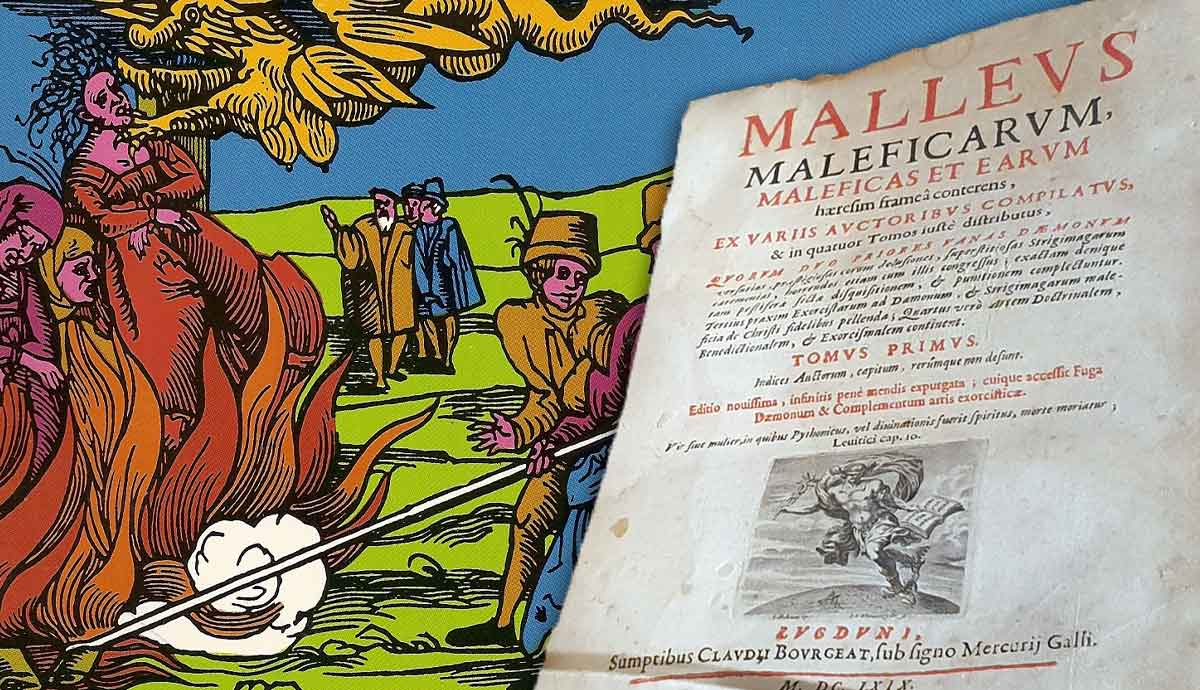
    From the mid-15th to the mid-18th centuries, Europe was in the grip of a fanatical obsession with rooting out perceived witches and heretics. During this time, the hunts intensified. Anyone accused of sorcery or any practices involving diabolical arts could be sentenced and executed on short notice, as inquisitors, government officials, ordinary people, and even friends and neighbors eyed others with deep suspicion.At the heart of this dynamic was the Malleus Maleficarum, The Hammer of the Witches, a book that justified the craze. And at the heart of the book was its author, Heinrich Kramer, who also went by his Latinized name Henricus Institoris, a misogynistic madman with a dangerously popular following.Malleus Maleficarum: A Foundation for MadnessA portrait of Pope Innocent VIII printed in the Malleus Maleficarum. Source: Wikimedia CommonsAs a Dominican inquisitor and right-hand man of the Archbishop of Salzburg, Heinrich Kramer wielded considerable influence. In 1484, Pope Innocent VIII issued a papal bull, Summis desiderantes, which gave Kramer and his fellow inquisitor Jacob Sprenger jurisdiction to prosecute witch hunts in Upper Germany. Kramer, however, was not given a warm welcome there. Although his sermons drew crowds, there were those who acquired a distaste for his zealous methods and his firebrand preaching.Specifically, his arrival was met with disgust by a woman named Helena Scheuberin, who spat at him in the street. She encouraged people not to attend Kramers sermons and disrupted one sermon, claiming that Kramer was in league with the Devil. Thus, she made an enemy of the inquisitor, who subsequently leveled charges of witchcraft against her, along with six others. Seeing this scandal, and the zealous conjecture spouted by Kramer, Bishop of Brixen, Georg Golser ordered the inquisitor to leave the diocese. Kramer relented and returned to Cologne. In response, Kramer wrote the Malleus Maleficarum as a treatise to give himself and others like him the authority to persecute witches.Kramer published his work in 1486 and added authority to it in later editions, citing Jacob Sprenger as a co-author and using the papal bull as a preface (a role for which it was not intended). With the recent invention of the printing press, Kramers work spread quickly and found fertile ground in Europe.Defeating Diabolism: The Doctrine of the Malleus MaleficarumThe Witch Hunt by Henry Ossawa Tanner, ca. 1882 to 1888. Source: Wikimedia CommonsThou shalt not suffer a witch to live.From Exodus 22:18, this was the premise around which Kramers entire doctrine was written. He divided his book into three parts, with each covering a key aspect of dealing with witches.The first part explains that witchcraft is real, drawing on biblical and classical texts, as well as established church doctrine. The section further explains that not only is witchcraft heresy, but not believing in witches is heresy as well!Other statements include the idea that witches make pacts with the Devil in order to gain magic powers, and that witches cause harm around them through their magic.The second part of the book is a collection of stories detailing the activities of witches. In this, it acts as a field guide. It describes their diabolical pacts, the sexual encounters with incubi and succubi, and the supernatural abilities that witches have, such as metamorphosis and transvection (flying through the air). Kramer claimed they bewitched fertility, destroyed crops, killed babies, summoned demons, and created curses and hexes.The third section details the legal procedure for obtaining confessions and putting the accused on trial. This process includes methods of torture, which became the standard practice for dealing with supposed witches. Lying to the accused was also acceptable and justifiable because of the perceived danger that witches posed to society.A Weapon Against WomenBurning witches. Source: Wikimedia CommonsOf note is the misogyny contained within the Malleus Maleficarum. The resultant dynamic saw significantly more women being prosecuted than men. Indeed, Kramer wrote that women were far more susceptible to being deceived by the Devil.Kramer was quite scathing of women, with many passages of his book citing such in no uncertain terms. He clearly stated that since women are feebler both in mind and body, it is not surprising that they should come more under the spell of witchcraft.Kramer further accused women of being like children intellectually (by quoting Roman dramatist Terence), with weak memories, and prone to acts of impulse. He even claimed they were more carnal than men, describing their lust as insatiable. His astonishing logic is that women were made from a rib (which is bent), as opposed to men being made from straight dust, and therefore women are made with a defect, and always deceive. He added, after this claim, that the word femina comes from fe (faith) and minus (less), a fact which suggests women are weaker in preserving faith. As a result, women in society, Kramer argues, are unable to govern themselves.Of particular importance to Kramer was the subject of midwives, whom he accused of causing miscarriages, procuring abortions, and offering newborn children to devils or even devouring them upon birth. As such, midwives represent the nadir of witches and witchcraft, and receive significant attention within the pages of the Malleus Maleficarum.According to historian Robin Briggs, from 1450 to 1750, there were an estimated 100,000 witch trials resulting in 40,000 to 50,000 executions, and it is estimated that between 75% and 80% of them were women.The Law of the Malleus MaleficarumAn old copy of the Malleus Maleficarum. Source: Wikimedia CommonsSuch was the authority the book achieved that it was seen not just as a guide, but as a legal text for the implementation of activities against witches. It was perceived as justifying methods of torture and execution and was used by secular and church authorities for initiating and conducting trials, as well as torturing the accused and procuring confessions and testimonies from witnesses.There was a low bar for evidence, and suspicion and bad reputations were admitted in court as half-proofs to substantiate other claims. This much is stated as an acceptable procedure in the book. If multiple sources could be ascertained, even in the form of suspicion from the suspects enemies, this counted as strong suspicion. Various proofs could be compounded, and torture could be used to convert semi-proofs into a full proof confession. Once accused, it was extremely difficult, and in most cases, simply impossible, to prove ones innocence. Ultimately, speculation was enough for a trial and an execution in an era that can be described as Europes harshest period regarding capital punishment.A rack used to torture victims. Source: Wikimedia CommonsIf execution wasnt the final outcome, the torture was enough to leave the victims highly traumatized. While not going into any depth about specific torture devices, Kramer endorses the methods used at the time and suggests their frequent use. This would have included contraptions such as the strappado (used for hoisting victims), thumb screws, and the rack, which were all common.Unrepentant heretics, or those who had repented before and found to have relapsed, were generally convicted and sentenced to death. To preserve its non-involvement in killing, the Church and its inquisitors handed the duty over to secular courts, which would carry out the punishment. Secular courts that failed to do so were subject to excommunication and being labeled heretics.The Decline of the MadnessEngraving of Johannes Weyer. Source: Wikimedia CommonsFor centuries, the Malleus Maleficarum was a staple of legal recourse against accused witches. It was reprinted dozens of times and was widespread throughout the continent. As a result of this book, tens of thousands, mostly women, were killed, and untold suffering was inflicted upon the populations of Europe, especially in places like Germany and Switzerland.It was, however, also subject to widespread criticism in its own time, especially for the brutality it endorsed and caused. After its first printing, it was condemned by theologians at the Faculty of Cologne for being inconsistent with Catholic doctrine in demonology.When the witch hunts were in full swing, the book drew the disapproval of a physician and pioneer in psychopathology, Dutchman Johann Weyer, who published De Praestigiis Daemonum (On the Illusions of Demons) in 1563. While he did not deny the existence of witchcraft, he argued that those who were thought to be witches were, in fact, suffering from mental disorders. His groundbreaking work was pivotal in ending witchcraft trials in the Netherlands, and the country slowly abandoned the practice of witch hunts, trials, and executions; a progressive dynamic at the time.A statue of Friedrich Spee in Paderborn, Germany. Source: Wikimedia CommonsAnother critic was Friedrich Spee von Langenfeld, a Jesuit priest who witnessed first-hand the horror wrought on the accused. He comforted many of those who were charged with witchcraft and accompanied over 300 people to their executions. He published his work Cautio Criminalis in 1631, and although it received criticism from peers in theological circles, it helped move society towards a path of justice and human rights. He published the work anonymously, but his authorship was suspected. He argued that through the methods of the Malleus Maleficarum, no one could escape accusation, and as such, the treatise was completely unreasonable.In the 17th and 18th centuries, societies in Europe were influenced by Enlightenment philosophy, and an age of reason was born. Armed with new ideologies on the rights of human beings, society shifted away from the hysteria of hunting witches. To this, the judicial systems started demanding more concrete evidence, casting aspersions on confessions gained while victims were under duress.A marker in Peeblesshire in Scotland, commemorating those killed by the Witchcraft Act. Source: Wikimedia CommonsThe Malleus Maleficarum exists as a lesson on how easily populations can be swayed by populist nonsense calling for the mistreatment of the other. It was one of the most destructive works in history, especially from a feminist perspective, and it drove a continent into fear and hysteria as it chased supernatural illusions. Ultimately, it was defeated by rational thought and the vision of human rights. By the 19th century, the reign of this terrible book had come to an end.
    0 Kommentare 0 Geteilt 6 Ansichten
  • 0 Kommentare 0 Geteilt 6 Ansichten
  • 0 Kommentare 0 Geteilt 6 Ansichten
  • WWW.DUALSHOCKERS.COM
    10 PS4 Games That Looks Best With PS5 Pro Enhancements
    Both the PlayStation 5 and its latter Pro model have proven why their cutting-edge technology is a breakthrough for next-gen games and their developers. Don't worry, this isn't me glazing the console; you can freely make fun of the no first-party games debate on it.
    0 Kommentare 0 Geteilt 6 Ansichten
  • WWW.BGR.COM
    Your Google Pixel 10 Just Got A Major Security Upgrade Every Android Phone Should Copy
    Google just rolled out a major modem security upgrade on the Pixel 10. Here's what changed, why it matters, and why other Android makers should pay attention.
    0 Kommentare 0 Geteilt 6 Ansichten

  • TECHCRUNCH.COM
    Robloxs AI assistant gets new agentic tools to plan, build, and test games
    The new new tools are designed to help creators throughout the entire development process.
    0 Kommentare 0 Geteilt 6 Ansichten

  • 0 Kommentare 0 Geteilt 6 Ansichten

  • WWW.CATSTER.COM
    Catsters Weekly Photo Contest Winners: My Favorite Toy (April 16, 2026)
    In this articleWinnerRunner-Up3rd PlaceEnter Your CatView 3More +Less -Welcome to our Catster Weekly Photo Contest, where every Thursday we pick the best three photos from our readers, based on that weeks topic.This weeks topic wasMy Favorite Toy, and we received some amazing photos from you. And although every cat is gorgeous, we had to pick our winners. Congratulations, and thanks to everyone who submitted their cats to our photo contest!Next weeks topic is: Best Happy Face. Do you want to have a chance to get your cat featured on Catster, our Facebook and Instagram?Send us your photos!Name:FredIG:@CaspercaspurrcatFun Fact:This photo says it all toy hog.Name:BellaFun Fact:Bella is 6 years old and the sweetest girl ever. She plays hard, as you can see in the photo.Name:TuxFun Fact:Tuxs favorite toy is his stuffed toy Catzilla! He loves to carry it throughout the house in his mouth, roll around the floor or simply lay next to him on the floor. The are buddies!Name:PeanutIG:@JazzcatjtFun Fact:This is Peanut, I adopted her after she had three kittens on my fr t porch. I brought them all in. After the kittens were old enough each found wonderful forever homes. I had Peanut spade and made her an indoor cat. She and my 12 year old cat, Lola Bean get along pretty well. The orange carrot under her one paw is her very favorite, but she just had to have Lola Beans favorite toy as well.Enter Your CatWant to see your cat featured as our weekly winner? The next weeks topic is:Best Happy Face Submit Your CatWe are looking forward to seeing your best photos!This article is a part of our Weekly Photo Contest View our previous weeks winners here: April 9, 2026 Best Easter Photo Click here to view our full list of past winners Did you know our newsletter features the latest photo contest winners? Sign up below and get the contest sent straight to your inbox
    0 Kommentare 0 Geteilt 6 Ansichten