


WWW.THECOLLECTOR.COM
Inside the Malleus Maleficarum the Book That Fueled Witch Hunts
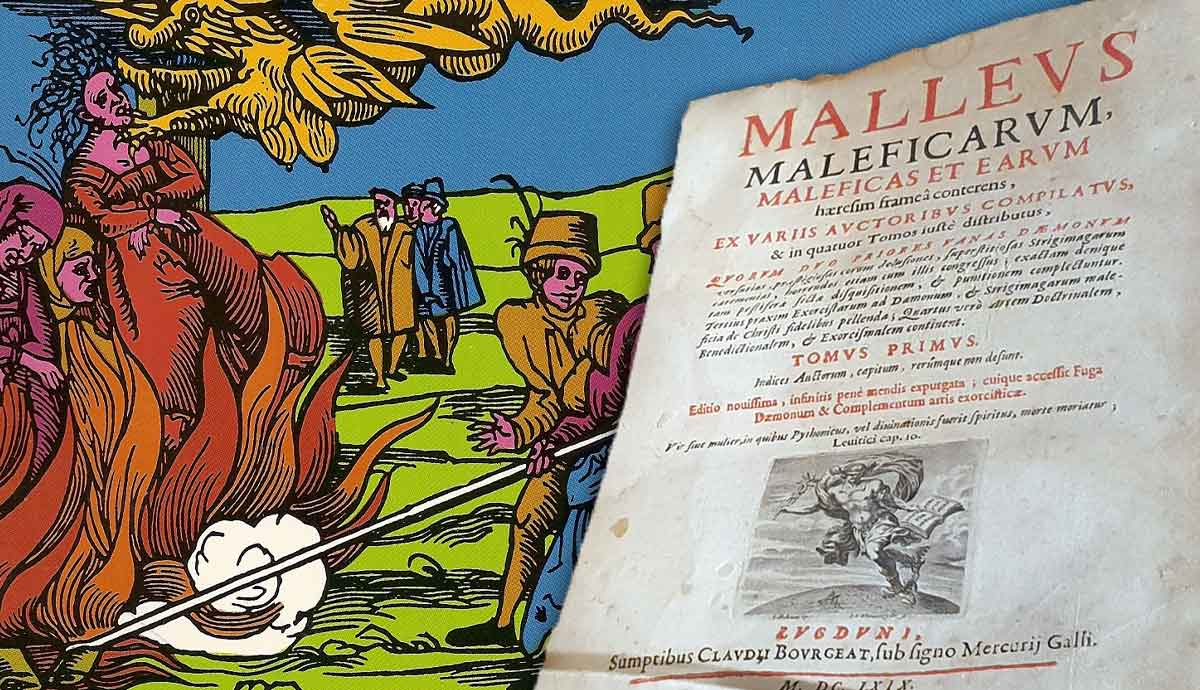
From the mid-15th to the mid-18th centuries, Europe was in the grip of a fanatical obsession with rooting out perceived witches and heretics. During this time, the hunts intensified. Anyone accused of sorcery or any practices involving diabolical arts could be sentenced and executed on short notice, as inquisitors, government officials, ordinary people, and even friends and neighbors eyed others with deep suspicion.At the heart of this dynamic was the Malleus Maleficarum, The Hammer of the Witches, a book that justified the craze. And at the heart of the book was its author, Heinrich Kramer, who also went by his Latinized name Henricus Institoris, a misogynistic madman with a dangerously popular following.Malleus Maleficarum: A Foundation for MadnessA portrait of Pope Innocent VIII printed in the Malleus Maleficarum. Source: Wikimedia CommonsAs a Dominican inquisitor and right-hand man of the Archbishop of Salzburg, Heinrich Kramer wielded considerable influence. In 1484, Pope Innocent VIII issued a papal bull, Summis desiderantes, which gave Kramer and his fellow inquisitor Jacob Sprenger jurisdiction to prosecute witch hunts in Upper Germany. Kramer, however, was not given a warm welcome there. Although his sermons drew crowds, there were those who acquired a distaste for his zealous methods and his firebrand preaching.Specifically, his arrival was met with disgust by a woman named Helena Scheuberin, who spat at him in the street. She encouraged people not to attend Kramers sermons and disrupted one sermon, claiming that Kramer was in league with the Devil. Thus, she made an enemy of the inquisitor, who subsequently leveled charges of witchcraft against her, along with six others. Seeing this scandal, and the zealous conjecture spouted by Kramer, Bishop of Brixen, Georg Golser ordered the inquisitor to leave the diocese. Kramer relented and returned to Cologne. In response, Kramer wrote the Malleus Maleficarum as a treatise to give himself and others like him the authority to persecute witches.Kramer published his work in 1486 and added authority to it in later editions, citing Jacob Sprenger as a co-author and using the papal bull as a preface (a role for which it was not intended). With the recent invention of the printing press, Kramers work spread quickly and found fertile ground in Europe.Defeating Diabolism: The Doctrine of the Malleus MaleficarumThe Witch Hunt by Henry Ossawa Tanner, ca. 1882 to 1888. Source: Wikimedia CommonsThou shalt not suffer a witch to live.From Exodus 22:18, this was the premise around which Kramers entire doctrine was written. He divided his book into three parts, with each covering a key aspect of dealing with witches.The first part explains that witchcraft is real, drawing on biblical and classical texts, as well as established church doctrine. The section further explains that not only is witchcraft heresy, but not believing in witches is heresy as well!Other statements include the idea that witches make pacts with the Devil in order to gain magic powers, and that witches cause harm around them through their magic.The second part of the book is a collection of stories detailing the activities of witches. In this, it acts as a field guide. It describes their diabolical pacts, the sexual encounters with incubi and succubi, and the supernatural abilities that witches have, such as metamorphosis and transvection (flying through the air). Kramer claimed they bewitched fertility, destroyed crops, killed babies, summoned demons, and created curses and hexes.The third section details the legal procedure for obtaining confessions and putting the accused on trial. This process includes methods of torture, which became the standard practice for dealing with supposed witches. Lying to the accused was also acceptable and justifiable because of the perceived danger that witches posed to society.A Weapon Against WomenBurning witches. Source: Wikimedia CommonsOf note is the misogyny contained within the Malleus Maleficarum. The resultant dynamic saw significantly more women being prosecuted than men. Indeed, Kramer wrote that women were far more susceptible to being deceived by the Devil.Kramer was quite scathing of women, with many passages of his book citing such in no uncertain terms. He clearly stated that since women are feebler both in mind and body, it is not surprising that they should come more under the spell of witchcraft.Kramer further accused women of being like children intellectually (by quoting Roman dramatist Terence), with weak memories, and prone to acts of impulse. He even claimed they were more carnal than men, describing their lust as insatiable. His astonishing logic is that women were made from a rib (which is bent), as opposed to men being made from straight dust, and therefore women are made with a defect, and always deceive. He added, after this claim, that the word femina comes from fe (faith) and minus (less), a fact which suggests women are weaker in preserving faith. As a result, women in society, Kramer argues, are unable to govern themselves.Of particular importance to Kramer was the subject of midwives, whom he accused of causing miscarriages, procuring abortions, and offering newborn children to devils or even devouring them upon birth. As such, midwives represent the nadir of witches and witchcraft, and receive significant attention within the pages of the Malleus Maleficarum.According to historian Robin Briggs, from 1450 to 1750, there were an estimated 100,000 witch trials resulting in 40,000 to 50,000 executions, and it is estimated that between 75% and 80% of them were women.The Law of the Malleus MaleficarumAn old copy of the Malleus Maleficarum. Source: Wikimedia CommonsSuch was the authority the book achieved that it was seen not just as a guide, but as a legal text for the implementation of activities against witches. It was perceived as justifying methods of torture and execution and was used by secular and church authorities for initiating and conducting trials, as well as torturing the accused and procuring confessions and testimonies from witnesses.There was a low bar for evidence, and suspicion and bad reputations were admitted in court as half-proofs to substantiate other claims. This much is stated as an acceptable procedure in the book. If multiple sources could be ascertained, even in the form of suspicion from the suspects enemies, this counted as strong suspicion. Various proofs could be compounded, and torture could be used to convert semi-proofs into a full proof confession. Once accused, it was extremely difficult, and in most cases, simply impossible, to prove ones innocence. Ultimately, speculation was enough for a trial and an execution in an era that can be described as Europes harshest period regarding capital punishment.A rack used to torture victims. Source: Wikimedia CommonsIf execution wasnt the final outcome, the torture was enough to leave the victims highly traumatized. While not going into any depth about specific torture devices, Kramer endorses the methods used at the time and suggests their frequent use. This would have included contraptions such as the strappado (used for hoisting victims), thumb screws, and the rack, which were all common.Unrepentant heretics, or those who had repented before and found to have relapsed, were generally convicted and sentenced to death. To preserve its non-involvement in killing, the Church and its inquisitors handed the duty over to secular courts, which would carry out the punishment. Secular courts that failed to do so were subject to excommunication and being labeled heretics.The Decline of the MadnessEngraving of Johannes Weyer. Source: Wikimedia CommonsFor centuries, the Malleus Maleficarum was a staple of legal recourse against accused witches. It was reprinted dozens of times and was widespread throughout the continent. As a result of this book, tens of thousands, mostly women, were killed, and untold suffering was inflicted upon the populations of Europe, especially in places like Germany and Switzerland.It was, however, also subject to widespread criticism in its own time, especially for the brutality it endorsed and caused. After its first printing, it was condemned by theologians at the Faculty of Cologne for being inconsistent with Catholic doctrine in demonology.When the witch hunts were in full swing, the book drew the disapproval of a physician and pioneer in psychopathology, Dutchman Johann Weyer, who published De Praestigiis Daemonum (On the Illusions of Demons) in 1563. While he did not deny the existence of witchcraft, he argued that those who were thought to be witches were, in fact, suffering from mental disorders. His groundbreaking work was pivotal in ending witchcraft trials in the Netherlands, and the country slowly abandoned the practice of witch hunts, trials, and executions; a progressive dynamic at the time.A statue of Friedrich Spee in Paderborn, Germany. Source: Wikimedia CommonsAnother critic was Friedrich Spee von Langenfeld, a Jesuit priest who witnessed first-hand the horror wrought on the accused. He comforted many of those who were charged with witchcraft and accompanied over 300 people to their executions. He published his work Cautio Criminalis in 1631, and although it received criticism from peers in theological circles, it helped move society towards a path of justice and human rights. He published the work anonymously, but his authorship was suspected. He argued that through the methods of the Malleus Maleficarum, no one could escape accusation, and as such, the treatise was completely unreasonable.In the 17th and 18th centuries, societies in Europe were influenced by Enlightenment philosophy, and an age of reason was born. Armed with new ideologies on the rights of human beings, society shifted away from the hysteria of hunting witches. To this, the judicial systems started demanding more concrete evidence, casting aspersions on confessions gained while victims were under duress.A marker in Peeblesshire in Scotland, commemorating those killed by the Witchcraft Act. Source: Wikimedia CommonsThe Malleus Maleficarum exists as a lesson on how easily populations can be swayed by populist nonsense calling for the mistreatment of the other. It was one of the most destructive works in history, especially from a feminist perspective, and it drove a continent into fear and hysteria as it chased supernatural illusions. Ultimately, it was defeated by rational thought and the vision of human rights. By the 19th century, the reign of this terrible book had come to an end.
0 Reacties
0 aandelen
4 Views

 English
 Arabic
 French
 Spanish
 Portuguese
 Deutsch
 Turkish
 Italiano
 Russian
 Romaian
 Portuguese (Brazil)
 Greek
Greek