



WWW.THECOLLECTOR.COM
How Witchcraft Has Been Portrayed in Art and Media Through the Ages
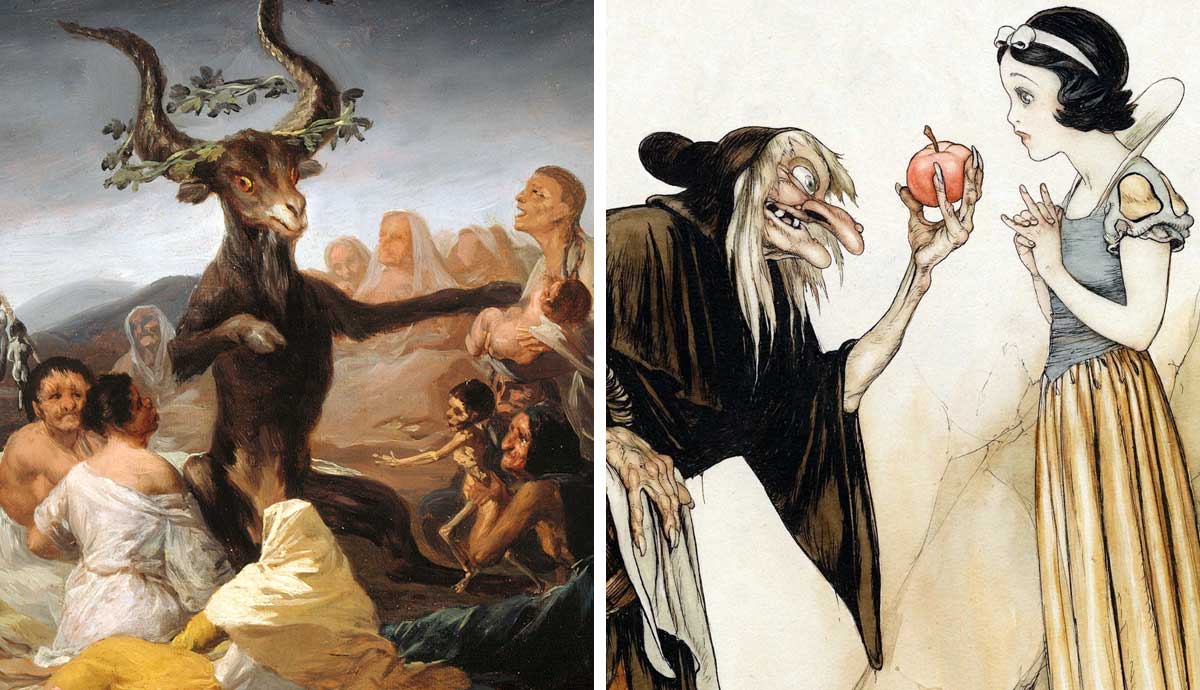
Witchcraft has been around for thousands of years. If one extends its scope to include shamanistic rituals, then it has been around since long before recorded history. Perhaps even before Homo sapiens evolved.Throughout history and across cultures and societies, it has changed as a practice and in how it has been perceived. This latter factor is crucial in examining portrayals of it in art and media.From intrinsic parts of ancient religion to night-riding, green-faced hags to empowered modern women, the portrayal of witchcraft is a topic of wide scope that reflects the beliefs and mores of the societies in which it existed and still exists today.Early Ideas of Witches and WitchcraftCirce Offering the Cup to Odysseus by John William Waterhouse, 1891. Source: Wikimedia CommonsWitches, witchcraft, magic, sorcery, and a host of other supernatural ideas have been a part of human culture and storytelling for millennia. A salient source for such myths is Homers Odyssey, which features an early archetype of sorceresses or witches. When Odysseus lands on the island of Aeaea, he is deceived by an enchantress nymph, Circe, who transforms his crew into pigs, thus beginning a long tradition of the association of witches and transmogrification, as well as deception and carnality.Another depiction is a niece of Circe, Medea, a sorceress and high priestess of the goddess Hecate. In the tale of the Argonauts, she saves Jason and later marries him, but after he plans to leave her for another woman, she murders her sons and poisons Jasons new wife, leaving her ex-husband without any heirs. Such depictions represent the sorceress as divine or of noble birth, and while they can be helpful, they are dangerous because of their control over nature and their use of magic.Both of these examples have the sorceress being particularly knowledgeable in pharmakeia, the morally neutral use of drugs. This is an association that persisted into the Middle Ages, when herbalists and healers were associated with White Magic. This tradition was inherited from Pagan practices, and was at odds with Christian virtues, which held the view that all magic was born of evil, even if used with good intent. By the Late Middle Ages, the idea of magical powers stemming from a Diabolical Pact was acted upon. Societal tolerance for folk healers and practitioners of White Magic disappeared, and the Church began radical campaigns to root out all forms of witchcraft, leading to violent purges.Demonization and DiabolismThe title page of the Malleus Maleficarum. Source: Wellcome Collections/Wikimedia CommonsIn the late 15th century, Europe became a very different place as far as witches were perceived. This was when Heinrich Kramer wrote his contentious Malleus Maleficarum, the Hammer of the Witches, a book that acted as a guide and legal authority for the persecution of those accused of witchcraft. It served as a catalyst for centuries of madness as European societies sought scapegoats for their ills and bad fortune. And women, in no small part, were the target of this deeply misogynistic text. Despite the questionable logic behind Kramers conclusions, the book was widely accepted and adopted in Europe, where it found fertile ground, influencing the entire social dynamic of a continent, being used in church and secular courts.Historian Robin Briggs notes that between 1450 and 1750, there were around 100,000 witch trials in Europe, of which 40,000 to 50,000 resulted in executions. The vast majority of the victims were women accused of superstitious nonsense.The Witches Kitchen by Frans Francken the Younger, 1606. Source: The Hermitage/Wikimedia CommonsArt played into this propaganda, and witches became associated with ugly hags and uncontrollable sexual desires. The examples are legion, and earlier depictions include works by Albrecht Drer, Hans Baldung Grien, and Frans Francken the Younger.The archetype also found its way into the performing arts, with the notable example being the Three Witches in Shakespeares Macbeth, written in the very early 17th century. These secret, black, and midnight hags are sinister beings that eventually lead to Macbeths demise. Inspiration for these characters was drawn from the Daemonologie of King James, published in 1597, in which the North Berwick witch trials of 1590 were described. The confessions of this trial proved the accused had attempted to raise a storm to sink a boat on which were King James and Queen Anne.Once these stereotypes had been propagated, they lasted and were repeated over the centuries that followed. Even long after the Malleus Maleficarum had been discredited and discarded, the archetype of the child-eating, wizened old hag with her pointed hat, flying on a broomstick, had been solidified in popular memory. And while it may be seen as fiction today, the imagery certainly persists.As such, the stereotype evolved from a religious warning to a being rooted in psychological horror, generally for the purpose of entertainment (and scaring children).A Romantic and Victorian Re-ImaginingThe Sleep of Reason Produces Monsters by Francisco Goya, ca. 1799. Source: Wikimedia CommonsWith the onset of the Enlightenment and rational thinking, the witch trials ended, yet the idea of witches persisted. Not as an immediate threat, but as characters from myth and folklore. In art, the witch was reinvented in various forms and within different contexts. Of note is Francisco Goya, who challenged religious zealotry and its creation of evil with his works as well as his words. Armed with his penchant for satire, Goya created sharp social commentaries on the dynamics and beliefs of the time. In his aquatint, The Sleep of Reason Produces Monsters, he indicates that it is the abandonment of reason that gives rise to the superstitious belief of evil creatures.Witches Sabbath by Francisco Goya, 1797/1798. Source: Wikimedia CommonsExploring the realms of emotion, Romantic poets aided in the reinvention of the witch. In La Belle Dame sans Merci (1819), the witch is a beautiful temptress with the power to lure kings, princes, and warriors to their doom of enthralment. The poem focuses on love and emotion as well as the fantastical nature of its subject.The following year, Percy Bysshe Shelley, in his The Witch of Atlas, transforms the witch into a purely benevolent, if mischievous, being, traveling the world and creating a more harmonious and just vision of it.(Left) The Beguiling of Merlin by Edward Burne-Jones, ca. 1874. Source: Wikimedia Commons; (Right) Medea by Frederick Sandys, 1868. Source: Wikimedia CommonsThe pre-Raphaelite era, from the mid-19th century, recontextualized the witch as a powerful and sexually appealing sorceress, harkening back to the ancient myths and re-presenting the archetype. Key examples in art include Circe Offering the Cup to Odysseus by John William Waterhouse, Medea by Frederick Sandys, Lady Lilith by Dante Gabriel Rossetti, and The Beguiling of Merlin and Sidonia of Bork by Edward Burne-Jones.Thus began the era of the femme-fatale, with the pre-Raphaelite movement leaving a very ambiguous statement of women and witchcraft. On the one hand, they are powerful and autonomous. They are sexually liberated and use this to their advantage. On the other hand, they are a dangerous warning that reflects the fears of women becoming more independent at the time. In this and through the depiction of witches, the movement represents the push and pull of feminism and anti-feminism.Fairytales, 20th Century Cinema, and DisneyConcept art by Gustaf Tenggren for Snow White and the Seven Dwarfs (1937). Source: Disney Enterprises, Inc., via disney.fandom.com/wikiDespite pre-Raphaelite re-imaginings, the archetype of the evil hag was one that was prevalent and was replicated in the media throughout the centuries. From the Brothers Grimm to Disney to modern Halloween decorations, it is a common archetype that has evolved little, or at least it can be said to have remained, while other archetypes have been born and evolved.Based on earlier folk tales, the story of Hansel and Gretel was first published in 1812 and has since solidified the image of a nasty old hag luring children to her den with the intention of eating them. According to literary scholar Jack Zipes, the tale took form in the Late Middle Ages. This would have put the creation in the same time frame as the rising tension, which led to witch hunts and the publication of the Malleus Maleficarum. Also recorded by the Brothers Grimm, wicked witches are a feature in Sleeping Beauty and Rapunzel, while predating them is the Slavic tale of Baba Yaga, alternately presented as either a ferocious old hag who eats children or a nice old woman who helps people. Despite the existence of the latter, the former is the presentation most associated with the character.Picked up by Walt Disney, the Grimm stories and the witches contained therein were brought to the silver screen, starting with Snow White and the Seven Dwarfs in 1937, which represented the Evil Queen taking the form of a hag who deceives the eponymous character with a poisoned apple. Of note is Disneys Sleeping Beauty (1959), which gave a name to the villain, Maleficent, derived from the Latin malefica, literally, witch or sorceress.Half a century later, she would have her own story toldIdeas and Depictions of the Modern WitchShowtimes Sabrina the Teenage Witch (1996). Source: Showtime via IMDbIn the 20th century, several archetypes emerged and existed with the stereotypical hag-style witch that was already cemented in the public conscience. This depiction continued, and continues to enjoy popularity as is evident in films such as The Wizard of Oz (1939), and the particularly memorable The Witches (1990), based on Roald Dahls 1983 book of the same name. Alongside these depictions, however, other ideas for witches emerged.The domestic and comedic witch archetype emerged in the 1960s with Bewitched (1964-1972), featuring an attractive young witch, Samantha (played by Elizabeth Montgomery), who marries into the American suburban lifestyle. The quirky comedy ran for eight seasons (254 episodes).In the realm of comic books, the Archie Comics character, Sabrina Spellman, had her own series as Sabrina the Teenage Witch, which was adapted into several television series and films over the years, both animated and live-action. The latest incarnation is The Chilling Adventures of Sabrina, a Netflix series which ran for four seasons (or two seasons, each split into two parts, for fans demanding technical accuracy!) from 2018 to 2020.The Craft (1996), Columbia Pictures. Source: IMDbThe comedic aspect for young witches was ditched in The Craft (1996), which presents four high school girls (played by significantly older actresses) being caught up in the dangerous and deadly world of the dark arts. With its goth influence and its themes of female empowerment, the film has become a cult classic over the years, and encapsulates the changing perceptions of witches in media. Following this was the incredibly popular series Charmed (1998 to 2006), which features three powerful witches who use their abilities to fight evil.Meanwhile, in the real world, witchcraft is a real practice with modern witches synonymous with the Wiccan movement, becoming popular in the 20th century, and being introduced to the public on a widespread scale in 1954. To this, both men and women practice magic (or magick) with generally benevolent intent, using stereotypical accoutrements such as wands, chalices, and pentacles.Continuing Re-InterpretationsPoster for Maleficent (2014) starring Angelina Jolie as the titular character. Source: Disney/IMDbIn the decades since, the evolution of witches has accelerated, informed by such things as Wicca, feminist movements, and the widening acceptance of the fantasy genre as a mainstream phenomenon. In 2014, Disney released the movie Maleficent, starring Angelina Jolie and centered on the villain from Sleeping Beauty. In this version, she is no longer purely a villain, but a tragic figure with justification for her vengeful actions. In this, the witch is portrayed as a heroine rather than the traditional antagonist of the original tales.Modern versions have presented witches as complex, three-dimensional characters far removed from the bland sorceresses of tradition, and many depictions have become vectors for feminism and commentary on patriarchal systems. In the Harry Potter series, Hermione Granger is a magic-wielding sorceress who is a co-protagonist. Throughout her arc from child to young woman, she is a symbol of knowledge, loyalty, and standing up for the marginalized in society. Fittingly, the actress, Emma Watson, became a powerful voice for the HeForShe movement, which reaches out to men in the fight for womens equality.(Left) The cover of Malefic (New Remastered Edition) by Luis Royo. Image sourced from Amazon; (Right) Star Witch by Brom. Artwork copyright Brom, used with permission.Of course, television and cinema screens arent the only places where modern witches are displayed. As they have done for millennia, they are portrayed on canvas and paper, in paint and print. And here too, they have undergone evolution, from powerful sorceresses to evil hags, to comedic cartoon characters, and back to powerful sorceresses. Like real human beings, they can be evil, benign, or benevolent.In the art world, witches and sorceresses (an often grey and murky definition) are a common theme in fantasy genres, and here they have become noticeable examples of the male gaze, coming full circle and representing the powerful and irresistibly sexual figures of Greek myth. Some of the most famous fantasy artists, such as Frank Frazetta, Boris Vallejo, Julie Bell, Brom, and Luis Royo, have all used witches as subjects, with the latter appropriately creating a body of work entitled Malefic, named after the character he created.Magic Circle by John William Waterhouse, 1886. Source: Tate Britain/Wikimedia CommonsAlthough characters of myth and legend, witches have reflected real-world relations and perceptions. From being feared to being reviled to being respected and loved, the journey of witches in human society and how they are depicted is a story that is surely unfinished. How they will evolve depends very much on the dynamics of human society.
0 Yorumlar
0 hisse senetleri
18 Views







 English
 Arabic
 French
 Spanish
 Portuguese
 Deutsch
 Dutch
Dutch
 Italiano
 Russian
 Romaian
 Portuguese (Brazil)
 Greek
Greek