• Subnautica 2 multiplayer explained - crossplay and four-player co-op
    Subnautica 2 multiplayer explained - crossplay and four-player co-op How does multiplayer work in Subnautica 2? There's one feature that Subnautica fans have been asking for since the first game was released, and with the early access release of Subnautica 2, it's about to become a reality. For the first time in the series, players will be able to dive in with their friends and experience...
    0 Comentários 0 Compartilhamentos 94 Visualizações
  • The MacBook Neo just dropped to a new best price ever: get it for only $589.99
    MacBook Neo deal: get the base model for a best-ever $589.99 at Amazon It's not the biggest discount, but it's the best one we've seen.  By ...
    0 Comentários 0 Compartilhamentos 88 Visualizações
  • The Shure MoveMic Two Kit is down to a record-low price at Amazon — save over $150
    Best wireless mic deal: Take 30% off the Shure MoveMic Two Kit SAVE $165: The Shure MoveMic Two Kit is on sale at Amazon for $384, down from the normal price of $549. That's a 30% discount and a record-low price at Amazon. $384 at Amazon...
    0 Comentários 0 Compartilhamentos 92 Visualizações
  • 0 Comentários 0 Compartilhamentos 37 Visualizações
  • WWW.IFLSCIENCE.COM
    NASA Head Jared Isaacman Responds To Child Who Wants To Make Pluto A Planet Again
    "Please make Pluto a planet again. I really want it to be a planet again," Kayla begins, eliciting a response from the NASA Administrator.
    0 Comentários 0 Compartilhamentos 37 Visualizações
  • WWW.IFLSCIENCE.COM
    Can AI Help Us Talk To Animals? We Asked The Experts
    Is artificial intelligence the next Dr Dolittle?
    0 Comentários 0 Compartilhamentos 37 Visualizações
  • WWW.THECOLLECTOR.COM
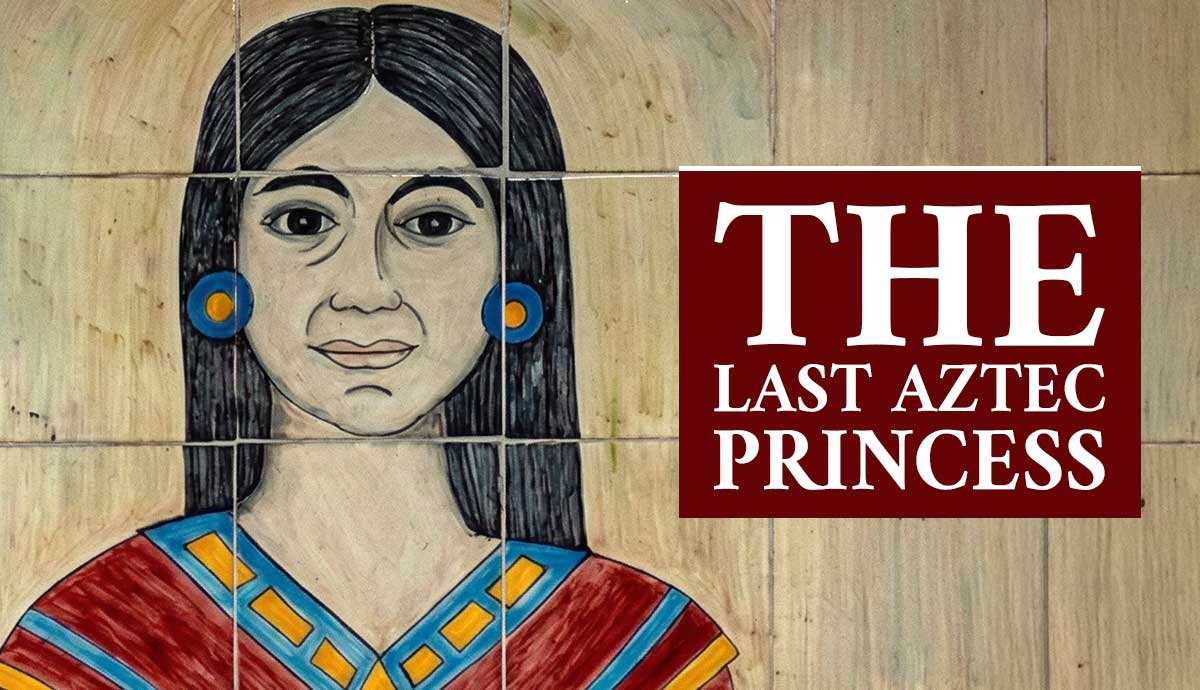
    The Unbelievable Life of Isabel Moctezuma, the Last Aztec Princess
    When the Spanish arrived in Tenochtitlan, the Aztec were ruled by Motecuhzoma Xocoyotzin, better and less accurately known as Moctezuma II, the powerful huey tlatoani who had expanded the empire to its greatest extent. Chroniclers marveled at his many wives, lesser wives and concubines, as well as his numerous children, with one claiming he had at least 100. History recorded just a few, however, including two sons who died during the conquest and one legitimate daughter, often called the last Aztec princess: Isabel.The Favorite DaughterIllustration of Moctezuma II from Historia de la benida de los Yndios a poblar a Mexico de las partes remotas de Occidente, or Codex Tovar, late 16th century AD, Juan de Tovar. Source: latinamericanstudies.orgLittle is known for certain about Isabels life before the arrival of the Spanish colonizers. Her birth year, which of Moctezumas many wives was her mother, or even the correct translation of her Nahuatl name, are unknown. Some contemporary records and documents kept by the Spanish give her birth year as 1510, which would have made her just 9 years old at the time the conquest began in 1519, and when she first married. Others describe her as a maiden, suggesting she was not a child but a girl of marriageable age, while still others indicate she was born before Moctezuma became huey tlatoani, which occurred in 1503, making her a young adult when Hernn Corts and his contingent of conquistadors arrived.Contemporary accounts are equally unclear about her lineage, with some suggesting she was the daughter of Moctezumas first wife and others indicating she was born of one of his secondary wives. Marriages were often undertaken to cement alliances with neighboring groups, while marrying within family groups to preserve the noble or semi-divine bloodline was also common, ultimately making either wife an equally likely candidate for a child considered his heir. The ruler also had many concubines, though records do seem to agree that Isabel was not the result of any of those unions; some half-siblings who would later come to challenge her status as Moctezumas heir were.Illustration of Moctezuma with his daughter, Tecuichpoch, and son, later baptized Pedro, from the Codex Cozcatn. Source: Bibliothque Nationale de FranceSome recollections of Indigenous servants in the palace that were recorded by the Spanish decades after the conquest indicate that Isabel was Moctezumas favorite daughter, and at the very least she seems to have been the oldest of his legitimate children. However, no evidence exists of the relationship, preferential or otherwise, that the father and daughter had. Prior to the conquest, Isabel was reportedly married off to the son of Ahuitzotl, the huey tlatoani who preceded Moctezuma, which might indicate she was considered valuable enough to help cement her fathers accession to the throne. When her husband died in 1520, so too did the first of six marriages she would undertake in her lifetime.The Dowager PrincessThe Meeting of Corts and Moctezuma, artist unknown, c. late 17th century. Source: Library of CongressSpanish chronicles report that when Corts arrived in Tenochtitlan, Moctezuma offered him several of his daughters, including Isabel. This was generally considered an act of good faith, designed to show peaceful intentions, though whether they were offered as wives, concubines or hostages is unclear. Isabel remained in the palace with her father during his captivity. As relations between the powers deteriorated and the Spanish ultimately attempted to flee the city after Moctezumas death, on what became known as the Noche Triste, Corts escaped with Isabel, but she later slipped free and returned to her people. Some Spanish accounts also claim that Moctezuma specifically asked Corts to protect his daughters as he lay dying, but of course, there is no way to confirm this version of the events.Though Moctezuma is widely considered the last true Aztec emperor, he was in fact succeeded by two Mexica leaders as the conquest raged. Neither ruled for very long, nor wielded much power in a rapidly crumbling empire, but they became Isabels second and third husbands, each marriage ending in death.First was Cuitlhuac, her uncle, crowned huey tlatoani after Moctezumas death. He lived only a few months, felled by smallpox or another European disease that was sweeping through the capital. Isabel was then married to his successor and her cousin, Cuauhtmoc, who continued the increasingly futile battle against the Spanish until Tenochtitlan fell in 1521. Though Isabel and her husband attempted to escape, they were captured and Cuauhtmoc was ultimately executed in 1525. He was Isabels last Mexica husband.Perpetual WidowCommemorative plaque of Isabel Moctezuma Tecuichpo Ixcaxochitzin. Pantitln station of Line 9 of the Mexico City Metro. Source: Wikimedia CommonsWith the fall and ultimate destruction of Tenochtitlan, Isabel was at the mercy of the Spanish who, perhaps surprisingly, maintained some level of respect for the remaining nobility. Though, with most of the men killed in battle or later executed, the nobility were largely women and children who may have been seen as little threat. Scholars also argue that establishing alliances with remaining nobility aided in pacifying, and Christianizing, the conquered peoples, giving the colonial government a veil of legitimacy.Isabel remained Cortss ward, or perhaps captive, for a period, during which she converted to Christianity and adopted her new Spanish name. Whether any of this was voluntary is unknown but she was described later in life as a very pious woman in various Spanish accounts. By 1528, Corts had arranged yet another marriage for Isabel, this time with a Spaniard. She was also granted a generous dowry: an encomienda as part of Spains system of almost-slavery for their new Indigenous subjects. Encomiendas were land grants that included a number of Indigenous vassals who provided tribute and labor to their encomenderos in exchange for Christianization and protection. Isabels encomienda, Tacuba (once Tlacopan), was one of the largest in the region, presumably in tacit recognition of her status as Moctezumas legitimate heir. Some scholars theorize her grant was also large to discourage her from seeking any additional property that she would technically be due under Spanish law.Portrait of Hernn Corts, c. 1525, unknown artist. Source: Museo Nacional de Historia, MexicoWhen Isabels fourth husband died after less than a year of marriage, Corts brought her back into his own household and shortly thereafter she became pregnant with his child. She gave birth to his daughter in 1528. Whether their relationship was consensual is unknown, but, perhaps tellingly, Isabel refused to recognize Leonor, who was given to another Spanish family to raise. Isabel and the next Spanish husband Corts arranged for her finally produced a legitimate heir around 1530. The event was reportedly widely celebrated, but joy was short lived; husband number five died the same year.EncomenderaMexican President Claudia Sheinbaum at an even commemorating the founding of Tenochtitlan and showcasing the new Tecuichpo Ixcaxochitzin Fountain in Mexico City, 2025. Source: Government of MexicoIsabel now found herself a widow yet again, this time with a child. She also found herself constantly defending her encomienda against covetous conquistadors and even her half-siblings who repeatedly brought legal challenges to her ownership, while being unable to represent herself in court because she was both a woman and Indigenous.However, with her royal lineage and, perhaps most importantly, the significant parcel of territory she had largely managed to retain despite these many challenges, Isabel was an attractive partner for New Spains bachelors. She soon married for the final time, presumably to a man of her own choosing. Juan Cano de Saavedra became her sixth and last husband in 1532 and by all accounts, he was not a friend of Corts, having initially fought in an expedition against him before joining the battle for Tenochtitlan.The pair went on to have five children and he, with better standing as both a man and a Spaniard, as well as being part of Spains lower nobility, fought rigorously to defend her inheritance. Together they also sought to have all the lands once owned by Moctezuma returned to her as his heir but were unsuccessful during her lifetime. After her death in 1550, Spanish courts finally recognized Isabel as Moctezumas sole surviving and legitimate heir but refused to restore the lands in question to her children, citing the difficulty of dispossessing their current owners.In her will, Isabel freed all of the Indigenous vassals on her encomienda and provided them back pay, ensuring they had the means to live after the end of their servitude. Other elements of her will, including her desired division of assets among her children, specifically her daughters, were negated under Spanish law, which favored male heirs.The Mother of MestizajeCatalina Delgado-Trunk, Tecuichpoch/Doa Isabel de MoctezumaMadre del Mestizaje, 2016, hand cut paper and collage over paper. Photo: Maria Trunk and Chuck Kooshian. Source: University of TexasBeyond her many marriages and the ongoing controversy surrounding her encomienda, little is known about Isabel herself beyond general descriptions of her as kind and charitable. Her last husband once described her as gifted in conversation and devoted to Catholicism to a historian of the time, but any details of how she balanced her life as both an Indigenous and Spanish noblewoman, or how she felt about the unique challenges she faced in such a position have been lost to time.Isabels ability to adapt to her new reality was essential to her self-preservation but has also earned her criticism from those who feel she betrayed her Indigenous heritage by submitting rather than fighting. Speaking of both the controversial La Malinche and Isabel Moctezuma, Mara Castaeda de la Paz, Spanish historian and researcher at the Universidad Autnoma de Mxico argues: what they did was act in accordance with their times, they had children and established matrimonial alliances to secure political positions. But we should never see them as traitors: they simply followed the dictates of their fathers or husbands, as women had done throughout history.Like La Malinche, who also bore a child to Corts, Isabel Moctezuma was a bridge between two worlds, uniting, however unwillingly, Indigenous and Spanish. Her unique position as heir to the huey tlatoani made her conversion to Catholicism and submission to Spanish rule particularly influential. Whether she hoped simply to save herself or to model for her people the only means of self-preservation available in the face of overwhelming Spanish force, well never know.
    0 Comentários 0 Compartilhamentos 35 Visualizações
  • WWW.THECOLLECTOR.COM
    10 Iconic Examples of American Architecture Through History
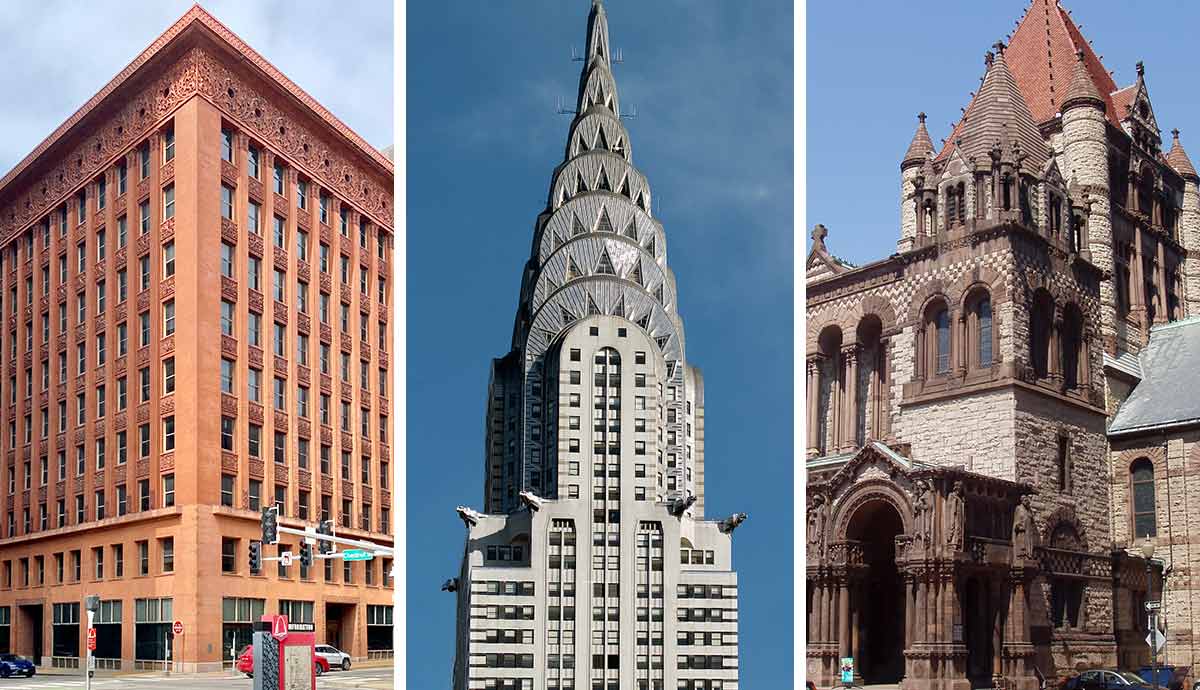
    Architecture throughout history is a physical reminder of a nations ambitions, ideologies, and imagination. The United States, throughout its turbulent life, has produced many such works, from revolutionary classicism influenced by European mores to modern movements that can be defined as being unashamedly American.Here are 10 examples of American architecture that exemplify the American story from the early days of the republic to the bustling metropolises that defined the 20th century and beyond.1. Independence Hall, Philadelphia, PA: A Nod to European InfluenceIndependence Hall. Source: Library of CongressDesigned by Andrew Hamilton and Edmund Woolley, Independence Hall in Philadelphia is a grand example of Georgian architecture, built between 1732 and 1753 for an American purpose. In the decades that followed, much of the structure was demolished, rebuilt, and renovated, with the notable addition being the steeple, rebuilt by William Strickland in 1828, replacing the original wooden structure, which had rotted to an unsafe degree and been removed decades earlier. Nevertheless, much of the original interior woodwork and exterior brickwork remains.Of great importance, Independence Hall played a pivotal role in American history, as it was where the Declaration of Independence and the Constitution were signed, marking the birth of an independent nation, free from British control.2. Monticello, Charlottesville, VA: The Home of Thomas JeffersonMonticello. Source: Wikimedia CommonsRepresenting a work in progress throughout much of Thomas Jeffersons adult life, Monticello was a plantation home designed by the Founding Father and former president, and built between 1769 and 1809. With its dome and porticos supported by Doric columns, Monticello is an example of Neoclassicism and the Enlightenment ideals that shaped the US republic. Jefferson remodeled the structure with French influences and used a combination of free workers, indentured servants, and slave labor.This National Historic Landmark and UNESCO World Heritage Site was a place of learning and authority that serves as a link to Americas past, but it also exists today as a symbol of the horrific inequality that was so prevalent at the time of its construction.3. The Capitol Building, Washington, DC: An Icon of American GovernanceThe east facade of the Capitol. Source: Wikimedia CommonsCertainly one of the most recognizable buildings in the United States, the Capitol is considered the home of American democracy, as this is where Congress meets to deliberate and pass laws. Situated on the eastern end of the National Mall, the original design was put forth by architect William Thornton, and construction began in 1793 with George Washington laying the cornerstone. Architect Benjamin Henry Latrobe oversaw the initial construction, and later reconstruction, followed by Charles Bulfinch, who took charge of rebuilding the dome.The building had a difficult start to its history, as slow construction was punctuated by the British burning it down in 1814. It was, however, rebuilt and underwent alterations and expansions in the decades that followed, reflecting the growth of the United States. A new dome replaced the old one, which had become disproportionately small atop the growing structure beneath it. Expansions continued in the 20th century, and today the Capitol still retains the features of its Neoclassical design, reflecting democracy and authority in the classical Greek and Roman traditions.4. Trinity Church, Boston, MA: Uniquely AmericanTrinity Church. Source: Wikimedia CommonsSignifying a major break from European architectural tradition, Henry Hobson Richardson designed the church and parish house of Trinity Church in a unique style that has come to be seen as Richardsonian Romanesque. The polychromatic building was finished in 1877 and features arches, a clay roof, and rough Dedham granite. The style became popular, and many public buildings across the country were influenced by its design.Of note is the link between architecture and the broader American art scene, as the church features the work of American artist John La Farge, in the form of murals and intricate stained-glass windows.Located in Copley Square, Trinity Church is a major attraction in Boston and a centerpiece of the citys fascinating history.5. Wainwright Building, St. Louis, MO: One of the First SkyscrapersThe Wainwright Building. Source: Wikimedia CommonsLocated at 709 Chestnut Street in downtown St. Louis, the Wainwright Building is a 135-foot high (41 meters) terra cotta office building with 10 storeys. It may look unassuming amongst the buildings that tower around it, but the Wainwright building represents an important part of American architectural history.Designed by Dankmar Adler and Louis Sullivan, the building was named after businessman and socialite Ellis Wainwright. Finished in 1891, the structure forewent the Neoclassical style that Sullivan disliked, and eschews a more utilitarian purpose. Nevertheless, the building features beautiful friezes along its spandrels, giving it an air of sophistication that complements the structures pragmatic function.Described by famed architect Frank Lloyd Wright, the Wainwright Building exists as the very first human expression of a tall steel office-building as Architecture.6. Fallingwater, Mill Run, PA: Modern InnovationThe entrance side of Fallingwater in Pennsylvania. Source: Wikimedia CommonsA modern residential masterpiece designed by Frank Lloyd Wright and built in the late 1930s, Fallingwater is an incredible vision of architectural imagination nestled within the natural beauty of the Pennsylvania woodland.Built from stone, reinforced concrete, plate glass, and steel, the most striking feature of the house is the cantilevered terraces, which overhang a waterfall on Bear Run Stream. The house is angular, with a flat roof, and was built for businessman Edgar J. Kaufman and his family as a weekend retreat. Eventually, the house came under the management of the Western Pennsylvania Conservancy, which has hosted tours since 1964. In 1979, a visitor center was added.Today, the house also serves as a museum and is a US National Historic Landmark as well as a UNESCO World Heritage site.7. The Chrysler Building, New York, NY: An Art Deco IconThe unmistakable spire of the Chrysler Building. Source: Library of CongressWith its unmistakable facade, the Chrysler Building is one of the many architectural landmarks that give New York City its unique architectural heritage. Located in the East Midtown neighborhood of Manhattan, the Chrysler Buildings 77 floors reach 1,046 feet (319 meters). It was designed by William van Alen, and construction finished in May 1930, after which it held the record of being the worlds tallest building for 11 months until it was surpassed by the Empire State Building in 1931.Commissioned by Walter P. Chrysler, the structure is an exemplar of 1920s Art Deco design, and its features mimic elements of the automotive industry, with its shiny exterior clad in Nirosta steel, which contains chrome, and punctuated by steel gargoyles reminiscent of hood ornamentation that was so popular on American cars. The most striking feature of the building is its 125-foot (38.1-meter) spire, which incorporates seven radiating arches that taper to the pinnacle, and in which are set triangular windows.When it opened, the building received mixed commentary, with some saying it was unoriginal, while others praised its iconic modernism. Today, the building is an integral part of New Yorks skyline, adding to the citys complex culture and history. It was designated a National Historic Landmark in 1976.8. The Seagram Building, New York, NY: A Template for Modern Corporate TowersThe Seagram Building in Manhattan, New York. Source: Wikimedia CommonsWith 38 floors and standing at 515 feet (157 meters), the simple rectangular form of the Seagram Building in New York is an example of the International Style, radiating austerity, functionality, and utilitarianism.The primary architect behind the construction was Ludwig Mies van der Rohe. The design was also heavily influenced by Phyllis Lambert, the daughter of the Seagram CEO. The structure got its name for the fact that it served as the headquarters for the Canadian distilling company, Seagram, in 1958 when the building opened.Built around a steel frame, the Seagram Building has a glass facade of large windows separated by bronze mullions and steel spandrels, giving it a shiny look that inspired many other monuments to corporate America.9. The Guggenheim Museum, New York, NY: Sculpture As ArchitectureThe Solomon R. Guggenheim Museum in New York. Source: Wikimedia CommonsThe first of several Guggenheim museums, the Solomon R. Guggenheim Museum served as a template for several of its sister buildings in its rejection of the austere facades of the International style, and its adoption of flowing forms that create a sense of organic movement.An institution of art on the outside as well as on the inside, the Guggenheim was designed by Frank Lloyd Wright from a commission in 1943, and was built from 1956 to 1959. As Wrights health declined, much of the architectural work was delegated to his son-in-law, William Wesley Peters. Neither of them visited the site much, and William Short of the architectural firm, Holden, McLaughlin & Associates, managed the project. Sadly for Wright, he died just six months before the opening of the museum.The Guggenheim is a 6-story bowl-shaped building with a helical ramp running around the perimeter, lit by a central skylight. Unique in its vision, the Guggenheim holds pride of place among New Yorks most iconic buildings.10. The Vanna Venturi House, Philadelphia, PA: A Statement Against ModernismThe front facade of the Vanna Venturi House. Source: Wikimedia CommonsLocated in the neighborhood of Chestnut Hill, Philadelphia, the Vanna Venturi House, designed by Robert Venturi, is one of the first examples of the Postmodern architectural movement in the United States. True to his ideas on architecture, Venturi designed the house to be a mix of paradoxical complexity that challenges the orthodoxy of modernist unity. While the International style championed function and simplicity with the slogan, less is more, Venturi countered with less is a bore, and drew on familiar historical elements, presenting them in an unfamiliar way.This deliberate act of architectural rebellion was intended to make an intellectual statement, challenging the elitism of high modernism. The house embodies contradiction through its mix of flat surfaces and Mannerist forms; elements that have historically not been used together.The Vanna Venturi House was built between 1962 and 1964, and has been drawing praise and criticism from artists and architects alike ever since.

    0 Comentários 0 Compartilhamentos 35 Visualizações
  • WWW.THECOLLECTOR.COM
    How Did Governments in Europe Respond to the Black Death?
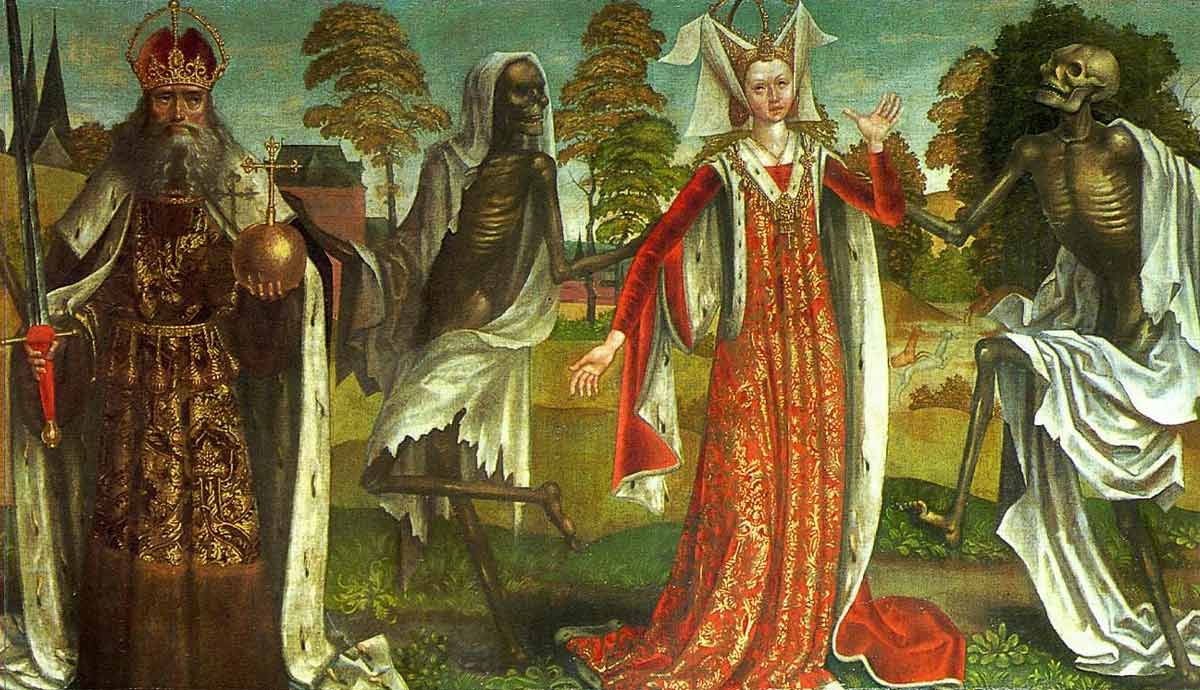
    In October 1347, twelve Genoese trading ships docked at the Sicilian port of Messina after traveling from the Black Sea through the Mediterranean. However, many of the people onboard were either dead or covered in oozing black boils. Local authorities quickly ordered the fleet out of the harbor, but by that time, the sickness, called the Black Death, had already started to spread in the town. Over the next five years, the plague killed between 30 and 60 percent of the total population in Europe, as governments struggled to contain the problem.Italian City-States Enacted Public Health Protocols13461353 spread of the Black Death in Europe map. Source: WikipediaIn the early months of 1348, the infection reached the Italian mainland and spread through the busy trade routes. Italys port cities faced the first wave of the malady and had to act without any prior experience. Officials in Venice soon formed a health committee on 30 March, 1348 to oversee the disposal of dead bodies. The group organized the transport of corpses to isolated islands like San Marco in Boccalama where workers buried thousands of victims in deep mass graves.At the same time, the Venetian Great Council, the main governing body of the Republic of Venice, began searching for ways to manage ships that arrived with sick passengers. Some historians date the start of public health protocols to those frantic months in Italy, as in May 1348, the leaders of Pistoia released a set of ordinances designed to control the spread of the sickness.Labor Reforms Emerged in EnglandPosthumous drawing of King Edward III as head of the Order of the Garter, c.14301440 in the Bruges Garter Book. Source: WikipediaAcross the English Channel, King Edward III faced a massive labor shortage as the plague decimated the peasantry in 1349. Farm laborers soon began demanding higher wages as demand for the few workers available increased. To rein in the situation, the King issued the Ordinance of Labourers on 18 June, 1349 to freeze pay at pre-plague levels. The law forced every able-bodied person under the age of sixty to work for anyone who required his or her services. Landowners welcomed the help but the poor felt the weight of the new royal restrictions. As a result, many workers simply ignored the rules and moved to different villages for better pay.Two years later, the English Parliament passed the more formal Statute of Labourers in 1351. The document added specific monetary penalties for anyone who accepted wages higher than those of 1346. It also punished masters who paid too much to their servants and workers. Local courts soon spent much of their time prosecuting thousands of common workers for taking extra pennies. Over time, however, the laws were scrapped as workers organized protests and fought back, eventually leading to labor reforms.The Development of Quarantine and Isolation PoliciesThe lazaretto at Livorno, Italy. Coloured etching by P. Lapi, 18th century. Source: Wellcome CollectionAs the second wave of the plague returned in later decades, governments across Europe developed more sophisticated containment measures. In 1377, the officials in the port of Ragusa established a 30-day isolation period for arriving travelers. They called the practice a trentina and forced visitors to stay on nearby islands or in designated health centers. Eventually, the city of Venice extended the waiting time to forty days by the early 15th century. The longer period became known as a quarantine and served as a blueprint for other European ports. Soon, governments built large complexes called lazarettos to house the sick and those suspected to be ill. The buildings often featured high walls, barred windows, guard towers, and strict entry controls.Governments Had to Deal With Radical Religious MovementsThe people of Tournai bury victims of the Black Death, 1353. Source: BaLatGovernments in Europe also had to deal with the religious movements that emerged during the height of the Black Death. Groups of flagellants traveled from town to town and whipped themselves to seek Gods mercy. Many local councils initially allowed the groups to enter because the people saw them as holy men. However, the Pope and various kings soon realized that the roaming fanatics also caused social unrest and disorder. By 1349, King Philip VI of France and other leaders began banning the flagellant processions from their territories. They feared that the groups would challenge the authority of the Church and the State.Governments Scrambled to Quell Uprisings Against the Jewish CommunityCity dwellers flee from Black Death into the Country, 1625, Source: Science MagazineIn many parts of Europe, people blamed Jewish communities for poisoning the town wells and causing the Black Death. Consequently, violent mobs frequently attacked Jewish neighborhoods in cities like Strasbourg, Mainz, and Cologne in the 1340s. The situation prompted some rulers such as Pope Clement VI and King Casimir III of Poland, to protect the victims from the angry crowds. Casimir III even invited Jewish refugees to settle in Poland and help rebuild his kingdom. On the flip side, many local mayors and town councils did nothing to stop the hostilities. Such actions represented a dark period in the history of European government responses.
    0 Comentários 0 Compartilhamentos 35 Visualizações
  • 0 Comentários 0 Compartilhamentos 37 Visualizações