How the Storming of the Bastille Sparked the French Revolution
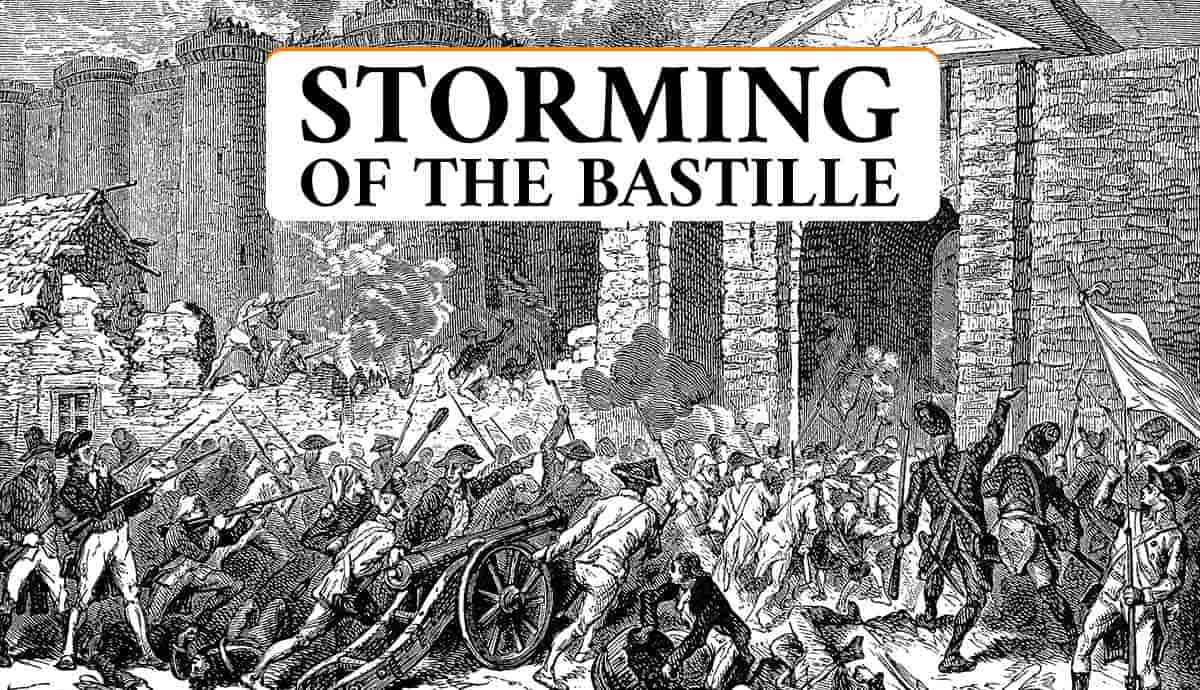
The fall of the Bastille on July 14, 1789, marked a violent rupture between the France of the traditional Ancien Rgime and the nascent revolutionary forces. In the words of historian Frank Jacob, the event not only marked the point of no return within the French Revolutions process but swiftly turned into an almost mythical point of reference in the revolutionary tradition and Frances national history (2024, 217). In this article, well zoom in on the events of that fateful July day in 1789 and separate the expectations from reality.What Led to the Storming of the Bastille?Reveil du tiers etat, (The Awakening of the Third Estate), 1789. Source: Wikimedia Commons/The Library of Congress, Washington DCThe 1780s were a turbulent decade in France. According to historian Larrie Ferreiro, French intervention against the British in the American Revolutionary War beginning in 1778 marked a race against the clock to weaken Frances traditional rival before the onset of a massive economic crisis (2017).Unfortunately for King Louis XVI and his ministers, that race to stabilize the economy and address the countrys mounting debts soon blended with additional challenges to the absolutist Ancien Rgime.For starters, Enlightenment ideas challenged traditional government structures. They spread to many segments of French society, thanks in part to stories of those who fought for liberty in the American Revolution.However, widespread hunger brought on by increasingly poor harvests and bread shortages posed an even greater threat to the status quo in pre-1789 France.Growing discontent over bread prices, coupled with the emergence of a confident middle class prepared to challenge the privileged noble and clerical orders, gave rise to a new legislative body in June 1789: the National Assembly. According to historian William Doyle, the creation of the National Assembly was the founding act of the French Revolution (2001, 40).Despite this revolutionary act, the fact remained that King Louis XVI had a massive army poised to crush any opposition. At any given moment, troops could be unleashed on the new National Assembly. Parisians would thus be called upon to defend this revolutionary movement. However, they first needed weapons and ammunition.This is where the Bastille enters the story of the French Revolution.The Bastille: Why Was It a Symbol of Royal Tyranny and Despotism?Eastern facade of the Bastille, drawing c. 1790-1791. Source: Wikimedia Commons/Gallica Digital LibraryScholars Hans-Jrgen Lsebrink and Rolf Reichardt note that multiple bastilles existed across France at different moments in history. In fact, they point out that a bastille initially referred to defensive towers built during the Hundred Years War (1997, 6).Yet by 1789, the term Bastille was associated with the royal fortress in Paris. Lsebrink and Reichardt argue that the Parisian Bastille became an increasingly loathed and feared symbol of royal power and the Ancien Rgime in the decades leading up to the crises that culminated in the French Revolution of 1789 (1997, 7-8).Many believed that countless prisoners languished in the prison, including in secret dungeons. The truth, as we will see, was quite different. Indeed, in July 1789, there were only seven prisoners housed inside the fortress.The Bastilles governor in 1789 was Bernard-Ren Jourdan, Marquis de Launay. He was actually born inside the Bastille because his father, at the time, served as its governor. According to historian Simon Schama, de Launay was described by contemporaries as a considerate and patient official (1989, 399).In July 1789, the fortress contained far more stores of weapons and ammunition than prisoners of King Louis XVI. Indeed, as historian William Doyle notes, the Bastille and its 30 cannons commanded the entire east side of Paris (2001, 42).The Road to the Bastille: Paris in RevoltPortrait of Gilbert Motier, the Marquis De La Fayette as a Lieutenant General, 1791, by Joseph-Dsir Court, 1834. Source: Wikimedia Commons/Palace of Versailles, FranceWeapons, ammunition, and food were what hungry Parisians needed to resist any advances by the 20,000-strong Royal Army in the vicinity. By July 12, 1789, many believed a violent showdown was unavoidable. At this point, historian William Doyle explains, it appeared as though a conservative coup was prepared to crush the National Assembly and reassert absolutist rule (2001).Paris thus rose in revolt over the course of July 12-14, 1789. Revolutionary crowds were bolstered by the organization of a bourgeois militia from the various districts of Paris under the command of the Marquis de Lafayette on July 13. This militia soon became known as the National Guard.By the morning of Tuesday, July 14, Parisians were especially enraged to learn that the price of bread soared to new highs. Crowds formed and darted across the city in search of stores of weapons, ammunition, and flour. Historian Jeremy Popkin notes that they also destroyed the tax-collection barriers that formed a wall around Paris, which indicated that they demanded concrete changes to social conditions (2015, 27).The Htel des Invalides and its massive arsenal of weapons and ammunition became the primary target. According to historian Tim Blanning, the decision to move on the Invalides and Bastille demonstrated that the Parisian insurgents recognized the need to monopolize the use of force to give the uprising any chance of success (2008, 339).While the weapons remained and were duly seized by the insurgents, the gunpowder had previously been moved to the Bastille.Who Stormed the Bastille and Who Were Its Defenders?Portrait presumed to be the Marquis de Launay, by an unknown artist, undated. Source: Wikimedia Commons/Muse Carnavalet, ParisGeneral histories often mention the mob or Parisian insurgents storming the Bastille on July 14, 1789. However, we rarely learn more about the people who took to the streets of Paris and marched on the notorious Bastille prison on that day.Estimates suggest roughly 1,000 people participated in the attack on the Bastille. Historian Simon Schama points out that the official record lists 954 names. Participants came from various social backgrounds and occupations. However, most were local artisans, shopkeepers, army deserters, and even brewers and wine merchants (1989, 400).The Marquis de Launay commanded the defenders. Instead of active-duty Royal troops, Launay had only 82 invalids (veterans) who were unfit for regular military duties. Roughly 32 Swiss mercenary troops reinforced him. Launay also had 30 cannons stationed in the fortress.Attacking the BastilleThe Storming of the Bastille on 14 July 1789, by Charles Thvenin, c. 1793. Source: Wikimedia Commons/Muse Carnavalet, ParisFollowing the raid on the Invalides, where they acquired a store of weapons, the revolutionary wave reached the Bastille by mid-morning. Initially, as William Doyle explains, the goal was not to destroy the Bastille, but rather to demand gunpowder and the withdrawal of the cannons (2001, 42).After lengthy but inconclusive negotiations, the restless crowd surged into the Bastilles inner courtyard. While troops initially urged those inside to leave, the noise and confusion soon gave way to gunfire.Despite being vastly outnumbered, the Bastilles defenders had the advantage of not only a strong defensive position but also the use of heavy artillery. Another of de Launays advantages, of commanding military professionals facing civilians, would be lost by that afternoon as deserters from the elite French Guards, the Parisian permanent garrison, joined the assault and brought several cannons to fire on the fortress.As the fighting raged for roughly four hours, the Royal Army stationed nearby did not intervene. Around 5:00 PM, de Launay ordered the defenders to cease firing. Within a half hour, the insurgents or vainqueurs (conquerors) seized control of the Bastille.The attackers lost 98 in taking the Bastille. De Launays defenders suffered around nine casualties, and the remaining troops were captured. De Launay and the Parisian equivalent of the mayor, Jacques de Flesselles, would become the next casualties in the immediate chaos and confusion of the moment.What Happened in the Aftermath?Photograph of the keys of the Bastille. Source: Wikimedia Commons/Muse Carnavalet, ParisDe Launay and de Flesselles were killed and beheaded at the Place de Grve outside the Htel de Ville. Historian Jeremy Popkin points out that the angry crowd also killed the remaining officers of the Bastille garrison (2015, 28).There was much confusion in the aftermath of the bloody confrontation at the Bastille and the subsequent killing of leading officials like the Marquis de Launay.However, it was clear that any conservative reaction against the National Assembly had been defeated with the fall of the Bastille. Indeed, King Louis XVI decided to withdraw troops from Paris after being advised that more soldiers might desert and join the uprising.People began to dismantle the Bastille immediately after its fall. However, historian P.M. Jones notes that Lafayette tasked the building contractor Pierre-Franois Palloy with overseeing the demolition. Palloys work was also meant to serve as revolutionary propaganda (2022, 32).Indeed, the myth of the Bastille as a notorious prison led to tours of its interior, where Jones notes that Palloy embellished the story by adding a dungeon and a skeleton (2022, 32). Visitors were charged an admission fee and urged to donate to the families of those lost during the attack.More importantly, pieces of the Bastille were distributed throughout France to serve as symbols of the revolutionary triumph. For example, Jones explains that the city of Lyons received more than 700 lbs (342 kgs) of relics, including a miniature Bastille made from parts of the actual fortress (2002, 32).Reactions and Early Reportage on the Storming of the BastilleOfficial Presidential Portrait of Thomas Jefferson, by Rembrandt Peale, 1800. Source: Wikimedia Commons/White House, Washington DCNews of the fall of the Bastille electrified observers across Europe and North America. Reactions were decidedly mixed. However, it was clear in the immediate aftermath of the Bastilles fall that people were discussing an event that would never be forgotten in France and indeed the world.Historian Jeremy Popkin notes that Europes leading paper at the time, the Dutch Gazette de Leyde, struck a cautious tone. It warned readers that the arbitrary power of the multitude was more dangerous than absolute monarchy (2015, 29).A confidential report from the British Ambassador, dated July 30, 1789, attempted to downplay the role of the Bastilles attackers. The ambassador was convinced either the misconduct or the pusillanimity of the Garrison (which indeed consisted of not more than eighty invalids) rendered the capture of the Bastille a work of no great difficulty nor of long duration.Thomas Jefferson, Americas Minister to the Court of Versailles, was an early prominent supporter of the French Revolution. In a series of letters that summer, Jefferson moved from caution to enthusiastic support for the Bastille attackers. We know from his Memorandum Book from 1789 that Jefferson also paid the admission fee to see the interior of the Bastille in the days after its fall, and donated towards relief efforts for the widows and families of those killed.References and Further ReadingBlanning, T.C.W. (2008). The Pursuit of Glory: Europe 1648-1815. Penguin.Doyle, W. (2001). The French Revolution: A Very Short Introduction. Oxford University Press.Ferreiro, L.D. (2017). Brothers at Arms: American Independence and the Men of France and Spain Who Saved It. Vintage.Jacob, F. (2024). Revolution and the Global Struggle for Modernity: Volume 1, The Atlantic Revolutions. Anthem.Jones, P.M. (2022). The French Revolution, 1787-1804. Fourth Edition. Routledge.Lsebrink, H-J & Reichardt, R. (1997). The Bastille: A History of a Symbol of Despotism and Freedom (N. Schrer Trans.). Duke University Press. (Original work published 1997).Popkin, J.D. (2015). A Short History of the French Revolution. Routledge.Schama, S. (1989). Citizens: A Chronicle of the French Revolution. Viking.










 English
 Arabic
 French
 Spanish
 Portuguese
 Deutsch
 Turkish
 Italiano
 Russian
 Romaian
 Portuguese (Brazil)
 Greek
Greek